
Reviewed · MUSEUMS
Vienna: Kunsthistorisches Museum Guided Tour incl. admission
Art history gets personal here. Vienna’s Kunsthistorisches Museum combines grand Habsburg collections, famous Old Masters, and wonderfully odd objects in one splendid setting. This 135-minute English tour takes you through the picture gallery and Kunstkammer with a group capped at 15 people.
I especially like the small group size, which leaves room for questions and can sometimes turn the visit into a private tour. I also like the smart choice of highlights, from Bruegel’s Tower of Babel to Vermeer’s The Art of Painting. The main drawback is that this is a fast introduction, not a full museum day, and some famous works may be on loan or under restoration.
In This Review
- Key points to know before you go
- Why the Kunsthistorisches Museum deserves your time
- Meeting your guide at Maria-Theresien-Platz
- The picture gallery and its Old Masters
- Caravaggio, Raphael, and the value of guided looking
- The Kunstkammer: gold, sculpture, and strange treasures
- What 135 minutes really gives you
- Is $116 a fair price?
- Practical details that can shape your visit
- Who should book this museum tour?
- Should you book the Kunsthistorisches Museum tour?
- FAQ
- How long does the Kunsthistorisches Museum guided tour last?
- What is included in the price?
- How large is the tour group?
- Which museum collections does the tour visit?
- Which famous artworks may be included?
- Where do I meet the guide?
- How early should I arrive?
- Can I take photographs inside?
- Is the tour suitable for wheelchair users?
- What must younger visitors bring?
- Can I cancel the booking?
- What happens if too few people book?
Key points to know before you go
- Two collections in one tour: See major European paintings in the picture gallery, then explore rare decorative objects in the Kunstkammer.
- A maximum of 15 people: Smaller numbers make it easier to hear the guide and ask about works that catch your eye.
- Skip-the-line admission included: You do not need to wait in the regular ticket line before starting the visit.
- Famous works have star billing: Bruegel, Vermeer, Caravaggio, Raphael, Rembrandt, Rubens, Dürer, and Cellini are among the names covered.
- Allow extra time afterward: Your ticket lets you remain in the museum and see the Greek, Roman, and Egyptian collections.
- Plan for the entrance rules: Arrive 15 minutes early, leave backpacks and umbrellas in the cloakroom, and bring photo ID for anyone aged 0 to 18.
Why the Kunsthistorisches Museum deserves your time
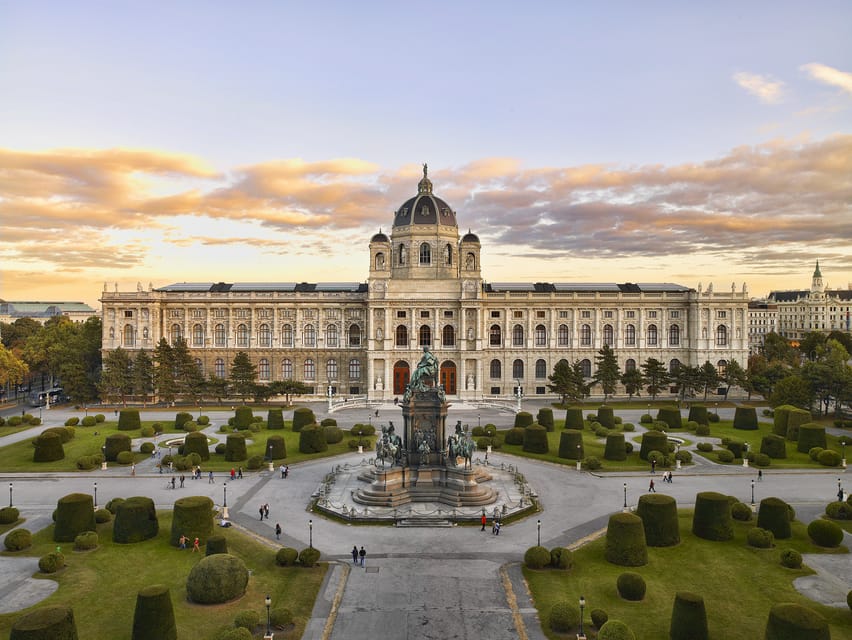
Vienna has no shortage of grand museums, but the Kunsthistorisches Museum has a special advantage: it feels like both a palace and a cabinet of treasures. The collection grew from the art holdings of the Habsburg family, so you are not simply walking through a modern gallery arranged by one neat idea. You are seeing centuries of royal collecting under one richly decorated roof.
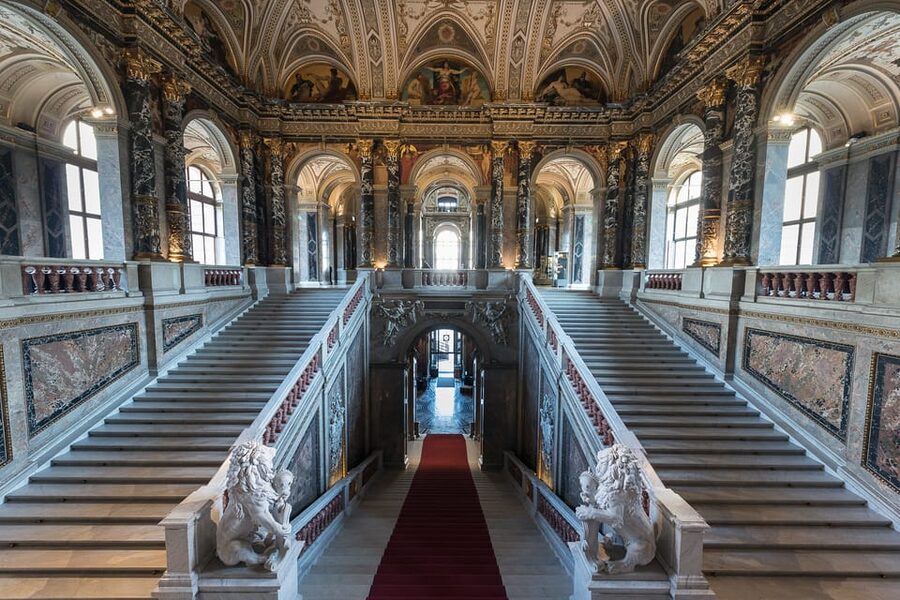
The building itself is part of the experience. Even before the first painting, you are surrounded by formal architecture designed to signal power, taste, and imperial ambition. That setting matters because the collection was assembled not only to preserve art, but also to show the reach of the Habsburg court.
I would not try to see every room on a first visit without a plan. The museum is large enough to become tiring, especially if you stop at every portrait, religious scene, and decorative object. The guided route gives you a useful framework and helps you spend your energy on works with real artistic and historical importance.
The tour focuses on two key sections: the picture gallery and the Kunstkammer. Afterward, you can stay and continue on your own, including in the galleries devoted to ancient Greek, Roman, and Egyptian art.
More Museum Tours in Vienna:
- Vienna: Skip-the-Line Sisi Museum, Hofburg and Gardens Tour
★ 4.8 · 5,918 reviews - Vienna Kunsthistorisches Museum Day Admission Ticket
★ 4.6 · 3,690 reviews - Tickets for the Albertina Exhibitions
★ 4.7 · 2,126 reviews
Meeting your guide at Maria-Theresien-Platz
The meeting point is outside the museum at Maria-Theresien-Platz, 1010 Vienna. Find the right end of the stairs leading to the entrance, beside the group ticket counter marked Container 2.
Your guide wears a red-white-red badge identifying the Austria Guide service. Arrive at least 15 minutes before the scheduled start. That extra time is useful because the museum entrance, stairs, ticket area, and security arrangements can be confusing if you arrive at the last moment.
The tour is offered in English. Hotel pickup and drop-off are not included, so you make your own way to the museum. Once you reach the meeting point, the skip-the-line arrangement saves you from joining the standard ticket queue.
The group limit is 15 people. That is not the same as a private tour, but it is small enough for the guide to keep the group together and respond to questions. On some dates, only one or two people book. In that case, the experience can become an informal private visit without a private-tour price.
The picture gallery and its Old Masters
The picture gallery is the heart of the tour. Here you encounter major European painters in a collection that rewards close looking rather than a quick checklist.
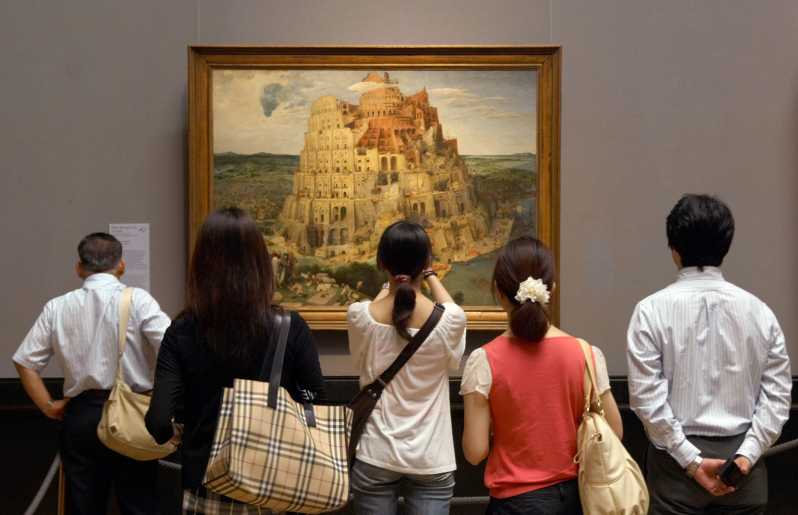
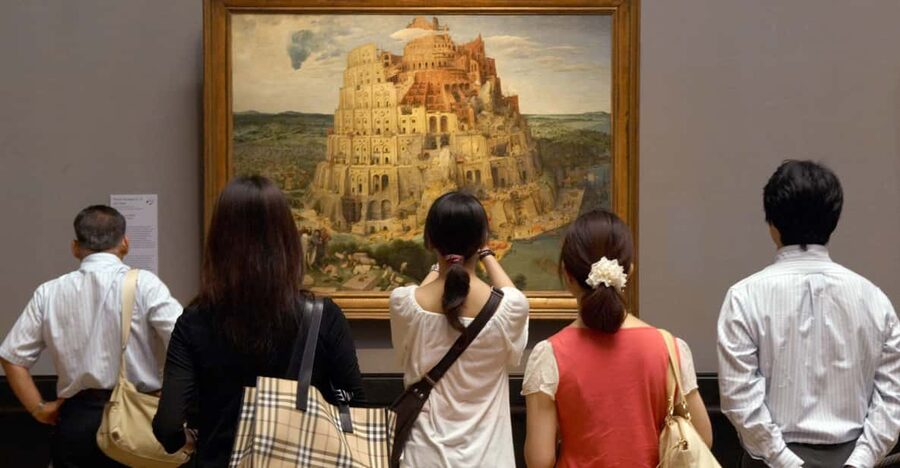
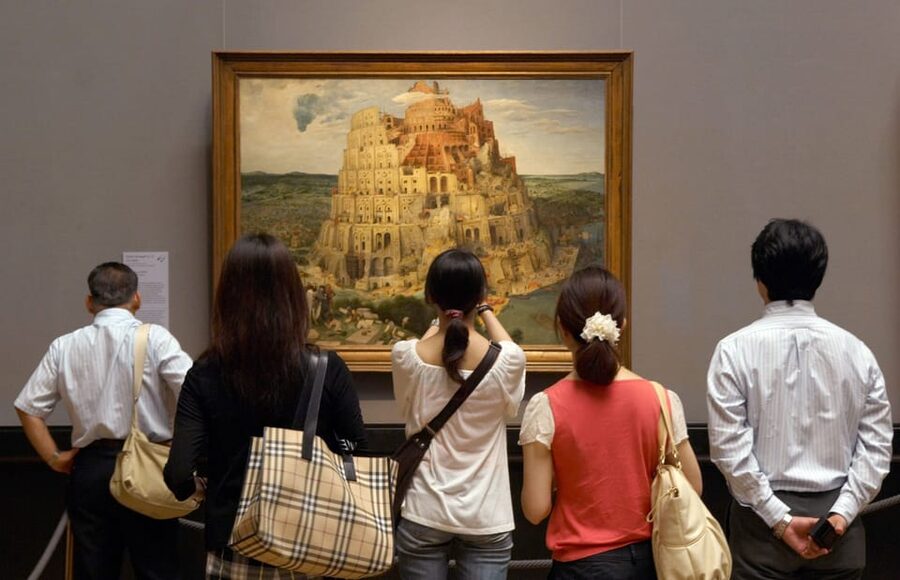
Peter Bruegel the Elder is one of the biggest reasons to take this route. His Tower of Babel is not simply a picture of a biblical construction project. It is packed with tiny workers, tools, buildings, and signs of human ambition. A guide can help you understand how to read such a crowded scene, where a casual glance reveals only a fraction of what is happening.
Vermeer’s The Art of Painting offers a very different experience. The scene is quiet and controlled, with careful light, space, and detail. It is the sort of work that can look simple until someone points out how deliberately every element has been placed.
The tour also generally includes Rubens’ Assumption, a large and energetic religious painting. Rubens gives you movement, color, and physical force, making it a useful contrast to Vermeer’s calm interior and Bruegel’s busy narrative world.
Other likely highlights include Raphael’s Madonna of the Meadow, Rembrandt’s Self Portrait, and Albrecht Dürer’s Avarice. Each brings a different way of thinking about portraiture, religious art, or human character.
The precise selection can change. A painting may be on loan, being restored, or unavailable on the day of your visit. The listed works are best understood as the usual highlights, not an absolute promise that every one will be visible.
Caravaggio, Raphael, and the value of guided looking
Caravaggio’s Crowning with the Thorns is another major work generally included in the route. Caravaggio is famous for his dramatic treatment of light and his direct, human presentation of religious subjects. In a museum full of celebrated names, this painting gives you a chance to see how intensity can come from a tightly controlled scene rather than a huge composition.
This is where an informed guide adds real value. You can recognize Caravaggio, Vermeer, or Rembrandt from a picture book, but recognition is not the same as understanding. A good explanation can direct your attention to gesture, light, texture, symbolism, and the choices that separate one painter from another.
The guides praised most warmly for this tour include Dieter, Cornelia, Tolga, Achim, and Brenda. Their strengths differ. Dieter was described as strong on both art history and the technical side of painting. Achim, who is an artist himself, brought an artist’s viewpoint. Brenda was appreciated for mixing humor, stories, and clear answers.
That variety is worth noting because the guide shapes the experience. The route is fixed in broad terms, but the tone and depth may differ depending on who leads your group. The consistently positive response to several different guides suggests that the provider has a solid group of people rather than relying on one star performer.
A few more options to weigh up in Vienna
- Vienna: Vivaldi’s Four Seasons Concert in Karlskirche
★ 4.7 · 14,951 reviews - Vienna: Spanish Riding School Training
★ 3.9 · 9,281 reviews - Vienna: Schönbrunn Palace & Gardens Skip-the-Line Tour
★ 4.7 · 7,739 reviews - Vienna: Light of Creation Votive Church Immersive Light Show
★ 4.8 · 6,779 reviews
The Kunstkammer: gold, sculpture, and strange treasures
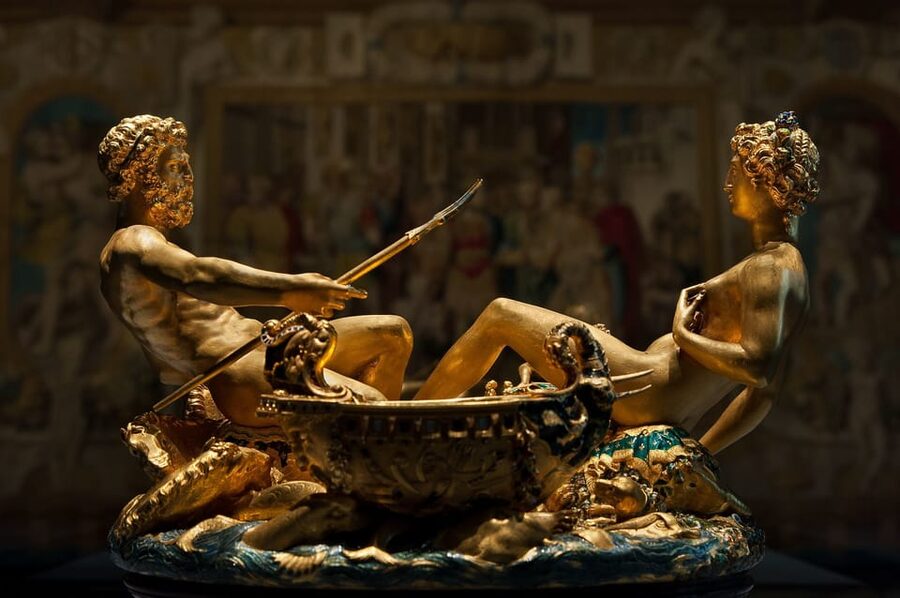
The Kunstkammer is the part I would not skip. Its name means art chamber, but the collection is less about large paintings and more about rare, expensive, unusual, and sometimes downright peculiar objects collected by rulers and aristocrats.
The famous golden Saliera by Benvenuto Cellini is a key sight. This elaborate salt cellar is a small object with the presence of a major sculpture. Its precious materials and detailed design tell you a great deal about court culture, where even a dining accessory could become a display of wealth and artistic ambition.
The Madonna of Krumau offers a different kind of surprise. It is a devotional sculpture with a distinctive form and presence. Seeing it beside luxury objects helps you understand the broad range of the Kunstkammer. This is not a collection of ordinary household items. It is a record of what powerful people considered worthy of collecting, displaying, and protecting.
The Kunstkammer also helps balance the painting-heavy part of the visit. If you are not already comfortable with Old Master art, the objects give you another way into the museum. You can think about materials, craftsmanship, rarity, and the stories attached to objects rather than judging every work by painting technique.
A guide is especially helpful here because many of these pieces lack the instant recognition of a Vermeer or Rembrandt. Without context, you might walk past a small object and wonder why it matters. With context, its purpose and rarity become much clearer.
What 135 minutes really gives you
The advertised duration is 135 minutes, or two hours and 15 minutes. The general description also describes the visit as lasting two to two and a half hours, so you should plan around the stated 135-minute duration and treat any extra time as a possibility rather than a guarantee.
That is enough time for a well-paced introduction to the two main collections. It is not enough for every gallery, a slow study of each painting, and the ancient collections afterward. The route works best if you want an intelligent overview of the museum’s most important works.
I like this length for a first museum visit. Two hours of concentrated looking can be tiring, and the guide has to keep the group moving. Several people found the timing just right for seeing the masterpieces without feeling trapped in an all-day lecture.
The trade-off is clear. If you already know European painting well and want to spend 20 minutes with one specific work, a self-guided visit may suit you better. If you want help deciding what matters and why, the time is well used.
After the guided portion, you are free to remain in the museum and continue through the other rooms. That extra access improves the value, especially if you want to see ancient Greek, Roman, and Egyptian art at your own pace.
Is $116 a fair price?
At $116 per person, this is not a budget museum entrance. You are paying for admission, a professional English-speaking guide, skip-the-line access, and a small group capped at 15.
The value depends on how you use the guide. If you would otherwise enter the museum, wander without knowing where to focus, and leave after seeing a few famous paintings, the tour can justify its price. You are buying structure and interpretation, not just a ticket.
The price looks especially reasonable if your group is small on the day. Several bookings resulted in a one-person or two-person tour, which allowed the guide to adjust the pace and answer specific questions. You should not book expecting a private visit, but the small-group format gives you a real chance of a more personal experience.
The value is weaker if you are already an art specialist, plan to spend a full day reading every label, or want access to temporary exhibitions. Temporary exhibitions are not included, so check the museum’s current program separately if a special show is important to you.
Practical details that can shape your visit
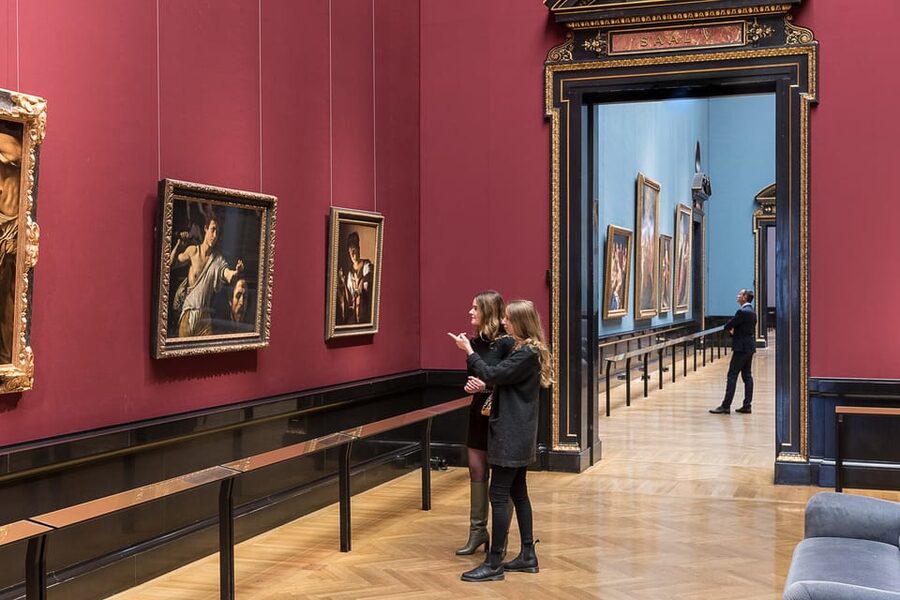
The museum allows photography without flash. That is useful for remembering details, but you should still follow any room-specific instructions from staff.
Umbrellas, backpacks, and raincoats must go to the cloakroom. Pack lightly. A small bag that can be stored easily will save time and make the gallery portion more comfortable.
Anyone aged 0 to 18 must bring valid photo identification for the security check. This is an easy detail to miss, especially if you are visiting with teenagers or children. Bring the required ID rather than hoping another document will be accepted.
The tour is not suitable for people with mobility impairments or wheelchair users. That restriction should guide your choice before booking, since the experience is not designed to accommodate wheelchair access.
Cancellation is free up to 24 hours before the start time, and you can reserve now and pay later. The tour needs at least four participants to operate. If that minimum is not reached, you will be offered another date or a full refund.
Who should book this museum tour?
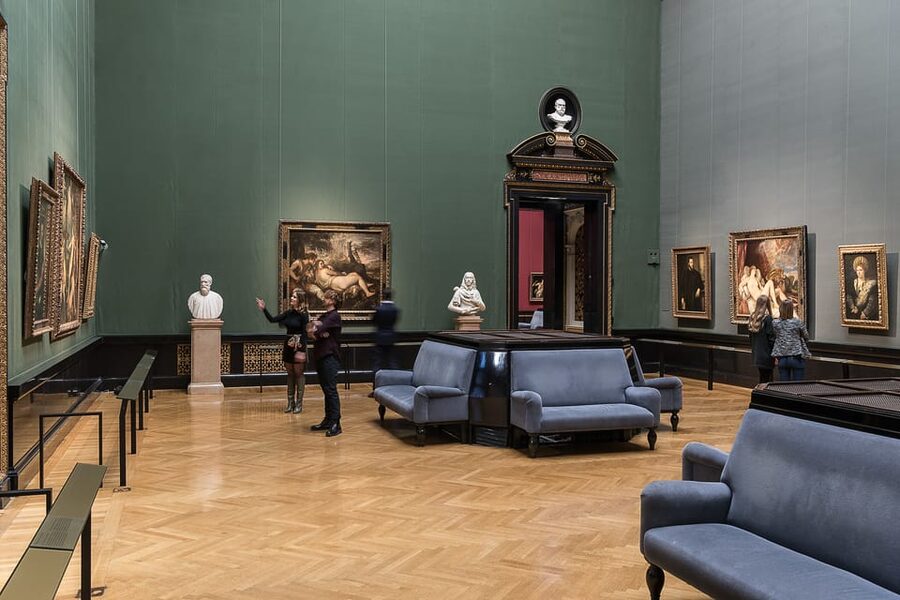
I would recommend this tour most strongly if you are visiting Vienna for a short stay, care about art but do not want to plan your own museum route, or enjoy learning through stories and comparisons.
It is also a good choice for couples and small families who want a focused visit without committing an entire day. The English guide can connect the paintings to broader events around the Alps and Europe, which is useful if you want more than isolated facts about individual artists.
You may prefer a self-guided visit if you need wheelchair access, want to concentrate on temporary exhibitions, or have a very specific research interest. You should also consider going alone if you dislike fixed pacing, since the group must move together through the selected rooms.
For most first-time visitors, the combination of famous paintings and unusual Kunstkammer objects is stronger than a painting-only tour. You get the headline works, but also the less predictable side of the Habsburg collection.
Should you book the Kunsthistorisches Museum tour?
Book it if you want the museum’s essential works explained clearly and you value a small group. The strongest part is not simply seeing Bruegel, Vermeer, Caravaggio, Raphael, Rembrandt, and Rubens. It is learning how to look at them, then discovering the strange and precious objects in the Kunstkammer.
Arrive early, pack lightly, bring photo ID for younger visitors, and leave time after the tour for the ancient collections. If the $116 price fits your budget, this is a sensible way to make a large museum feel manageable without reducing it to a quick list of famous paintings.
FAQ
How long does the Kunsthistorisches Museum guided tour last?
The activity duration is 135 minutes, or two hours and 15 minutes. The tour description also refers to a two to two and a half hour visit, so plan on at least 135 minutes.
What is included in the price?
The price includes admission, a professional English-speaking guide, skip-the-line entry, and a small-group museum tour.
How large is the tour group?
The group never exceeds 15 people. On some dates, the number may be smaller, and the tour can sometimes operate with only one or two participants.
Which museum collections does the tour visit?
The guided route covers the picture gallery and the Kunstkammer. Afterward, you may remain in the museum and visit the ancient Greek, Roman, and Egyptian collections.
Which famous artworks may be included?
The usual highlights include Bruegel’s Tower of Babel, Vermeer’s The Art of Painting, Caravaggio’s Crowning with the Thorns, Rubens’ Assumption, Raphael’s Madonna of the Meadow, Rembrandt’s Self Portrait, and Dürer’s Avarice. Works can be unavailable because of loans or restoration.
Where do I meet the guide?
Meet outside the Kunsthistorisches Museum Wien at Maria-Theresien-Platz, at the right end of the stairs leading to the entrance, beside the group ticket counter marked Container 2.
How early should I arrive?
Arrive at least 15 minutes before the scheduled start time. Look for a guide wearing a red-white-red badge marked Austria Guide.
Can I take photographs inside?
Yes. Photography without flash is permitted in the museum.
Is the tour suitable for wheelchair users?
No. The activity is not suitable for wheelchair users or people with mobility impairments.
What must younger visitors bring?
Everyone aged 0 to 18 must bring valid photo identification for the security check.
Can I cancel the booking?
You can cancel up to 24 hours before the tour for a full refund. The reserve-now, pay-later option is also available.
What happens if too few people book?
The tour requires a minimum of four participants. If that minimum is not met, you will be offered a different date or a full refund.
Just added in Vienna
- Vienna: Austrian Wine Tasting Experience★ 4.2 · 2 reviews
- World War II History Vienna Old Town Private Walking Tour★ 4.8 · 9 reviews
- Vienna_ Meet Beethoven Life Private Guided Walking Tour★ 5.0 · 1 review
- Vienna: Wine Tasting Tour★ 4.8 · 61 reviews
- Vienna: Wine Tasting E-Bike Tour★ 4.9 · 46 reviews
- Vienna: Wine Tasting at Schönbrunn Palace★ 4.3 · 71 reviews
- Vienna: Winery and Wine Tasting Tour with a Wine Expert★ 5.0 · 5 reviews
- Vienna: Concert by the Vienna Baroque Orchestra★ 4.6 · 56 reviews
Museums, compared.

Skip-the-Line Sisi Museum, Hofburg and Gardens Tour
Read our review →
Vienna Kunsthistorisches Museum Day Admission Ticket
Read our review →

Chocolate Workshop in Chocolate Museum w/ Tasting
Read our review →
St. Stephen’s Cathedral & Dom Museum Wien Tickets
Read our review →
Browse the lists this tour appears in