
Reviewed · FOOD & DRINK
Vienna: Chocolate Workshop in Chocolate Museum w/ Tasting
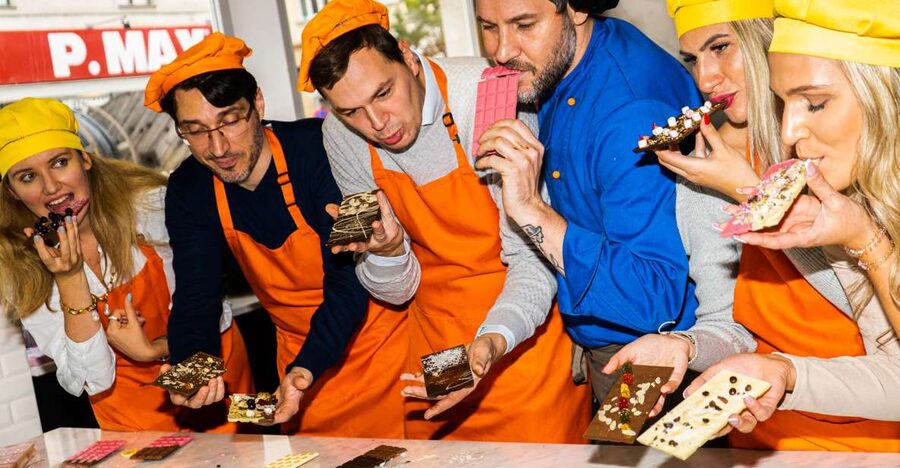
Chocolate is better when you make it yourself. At Vienna’s Chocolate Museum, this 90-minute workshop combines a short lesson on cacao with tastings, three custom chocolate bars, and a traditional Aztec-style hot chocolate. I especially like the use of a professional tempering machine and the freedom to choose your own toppings. The signed BO-YO certificate and free museum entry add a pleasant finishing touch.
The main consideration is scale. The museum is small, and this is not a bean-to-bar class. You will not learn to process cacao pods or temper chocolate at home. At $55 per person, the workshop makes the most sense if you value the three full-size bars, tastings, instruction, and a playful activity rather than a long museum visit.
In This Review
- Key Points at a Glance
- What the Vienna Chocolate Workshop Is Really Like
- Starting with Cacao, Chocolate Types, and Tasting
- Using the Tempering Machine Like a Chocolatier
- Designing Three Chocolate Bars
- Making the Aztec-Style Hot Chocolate
- Visiting the Small Interactive Museum
- How Much Value Do You Get for $55?
- Best for Families, Teens, and Curious Adults
- Location and Getting There from Pilgramgasse
- Small Drawbacks to Keep in Mind
- Booking Details and Practical Advice
- Should You Book the Vienna Chocolate Workshop?
- FAQ
- How long does the Vienna Chocolate Workshop last?
- What do you make during the workshop?
- Can I take the chocolate bars home?
- Is museum admission included?
- Do I need previous cooking experience?
- Is the workshop suitable for children?
- Which languages are available?
- Where is the Chocolate Museum Vienna?
Key Points at a Glance
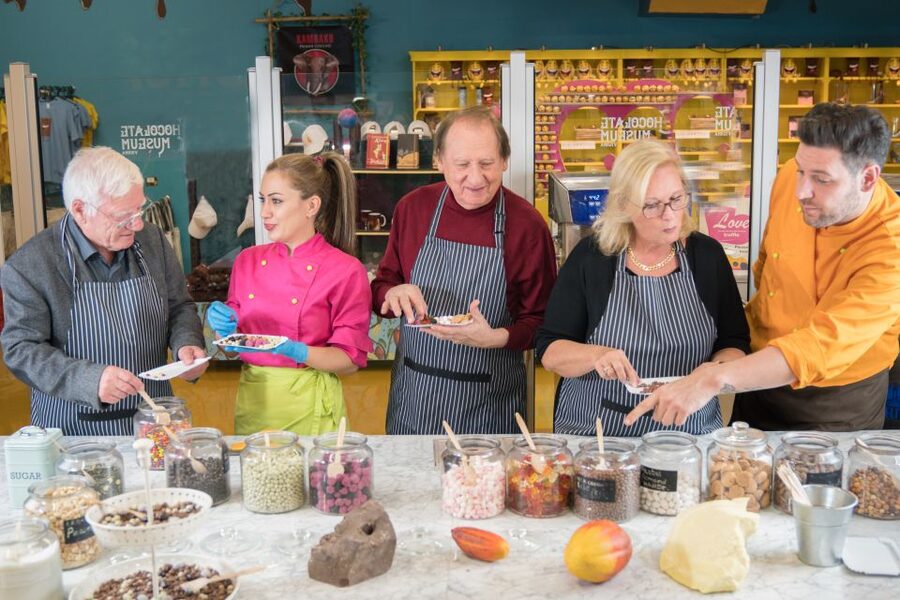
- Three full-size chocolate bars: Choose from several chocolate types, then decorate each bar with toppings and ingredients.
- Professional tempering machine: You get to use commercial equipment rather than simply watching a chocolatier work.
- Aztec-style hot chocolate: Prepare and taste the original Xocolate using cocoa, sugar, milk powder, and traditional tools.
- A small but interactive museum: Learn about cacao’s origins and enjoy photo opportunities after the workshop.
- Good for mixed ages: Children, teenagers, and adults can all take part, though children under ten need a ticketed adult with them.
- Useful location: The museum is a three-minute walk from Pilgramgasse U-Bahn station on the green U4 line.
What the Vienna Chocolate Workshop Is Really Like
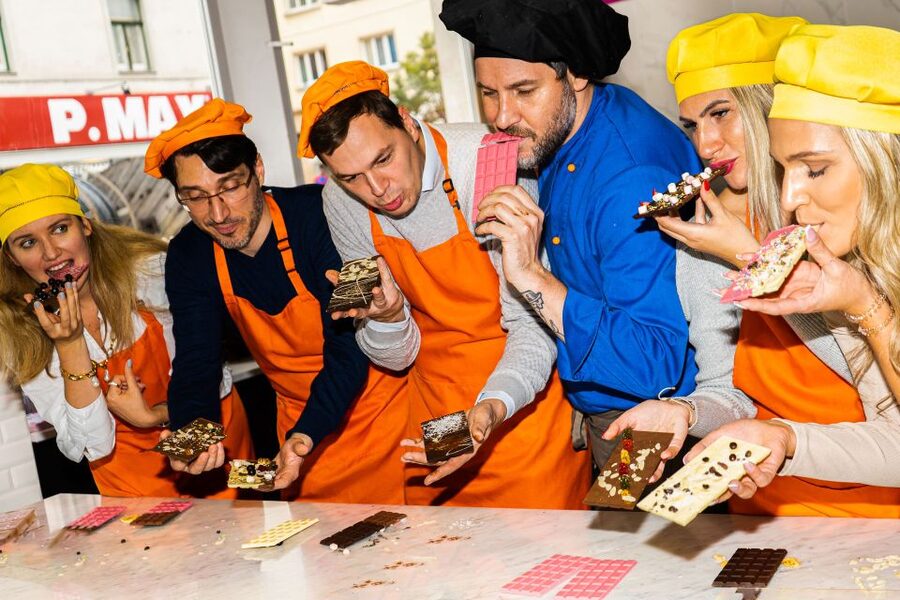
This is less a formal cooking class and more a guided chocolate playground with a useful history lesson folded in. You receive the cookware, ingredients, recipes, molds, and help you need, so you can take part without any kitchen experience.
The class is taught in English or German. Past instructors have included Janya, Dimi, Tania, Selma, and other friendly chocolatiers who keep the tone relaxed and light. The best guides do more than give instructions. They explain what you are doing, answer questions, and keep children involved without making adults feel they have wandered into a children’s party.
The advertised duration is 90 minutes. The detailed timing describes about 60 minutes for the workshop and around 15 minutes for the museum, with the remaining time used for tasting, transitions, and finishing your chocolate. Plan on roughly an hour and a half at the venue.
More cake and pastry stops in Austria:
- Vienna Coffee, Cake & Pastries Tour with Local Stories
★ 5.0 · 470 reviews - Chocolate workshop in Chocolate Museum Vienna “BO-YO”
★ 4.5 · 352 reviews - Vienna: 2.5-Hour Viennese Coffee, Cake, and Chocolate Tour
★ 4.6 · 44 reviews
Starting with Cacao, Chocolate Types, and Tasting
The workshop begins with an introduction to cacao and the main types of chocolate. You learn how dark, milk, white, and pink chocolate differ, then taste several varieties before making your own.
This opening matters because it gives you a basis for choosing your chocolate later. If you usually reach for milk chocolate, you can compare it with darker styles instead of guessing. Some people will find the dark chocolate pleasantly bitter, while others will prefer the milk or white chocolate. The flexibility to choose is part of the fun.
You also learn the seven steps of chocolate consumption. That sounds grand for a confectionery class, but it helps you slow down and pay attention to aroma, texture, and finish instead of simply eating the sample in front of you.
The lesson is not a technical seminar. If you are hoping for detailed instruction on cacao fermentation, industrial production, or professional confectionery, you may find it light. For a family activity or a short break from sightseeing, the level is about right.
Using the Tempering Machine Like a Chocolatier
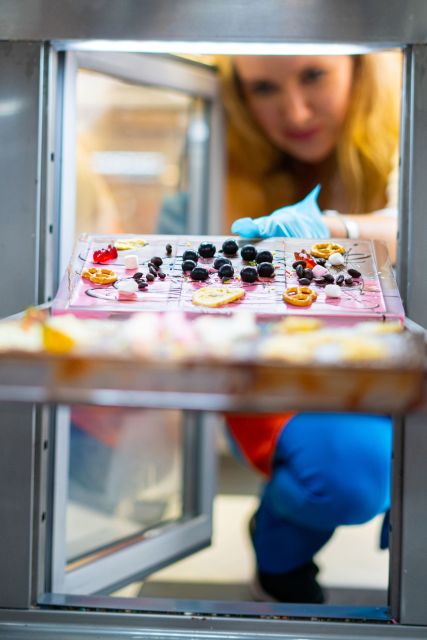
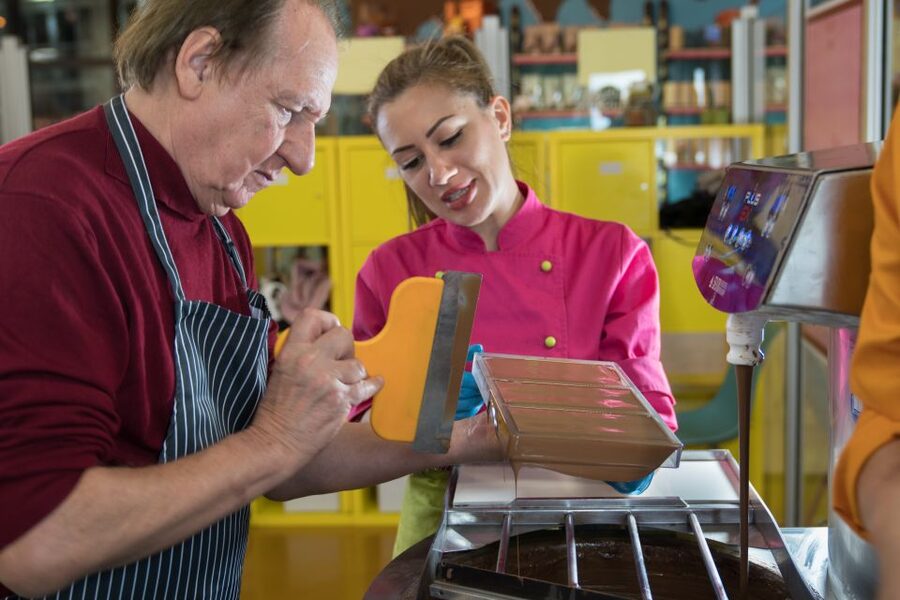
The most distinctive part of the class is using a professional chocolate tempering machine. Rather than receiving a ready-made bar to decorate, you pour and spread chocolate into your own molds with guidance from the instructor.
Tempering gives chocolate a smooth finish and a satisfying snap, but it can be fussy. The machine takes care of much of the temperature control, making the process manageable for beginners. You still have to distribute the chocolate properly, and that can be trickier than it looks.
That small challenge is useful. You are doing real work, not pressing a button and collecting a souvenir. The instructor demonstrates the process, then helps you correct uneven pours or stray chocolate. The activity stays accessible for children while giving adults enough involvement to remain interested.
Do not expect to learn how to temper chocolate in your own kitchen. The workshop uses professional equipment, and the class specifically does not teach home tempering. Think of it as a chance to try commercial tools, not a complete technical course.
Designing Three Chocolate Bars
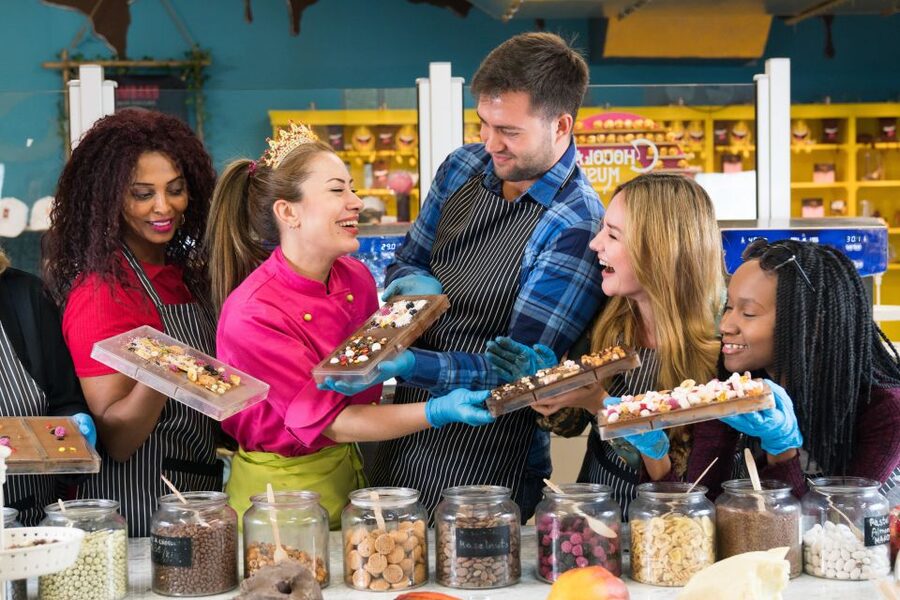
After selecting your chocolate, you create three bars and decorate them with toppings and ingredients. Depending on the available choices, you might combine different textures and flavors, such as granola, gummy sweets, or other toppings.
This is where the class becomes personal. One person can make a simple milk chocolate bar, while another can add a chaotic mix of colors and crunchy or chewy toppings. Children enjoy the freedom, and adults often get just as serious about arranging their designs.
The molds are prepared at the workshop, and the finished bars are chilled so they can set. You take all three handmade bars home. That makes the $55 price easier to justify, particularly if you are looking for edible souvenirs or an activity that produces something tangible.
The chocolate bars are also a good reason to think about timing. If you are taking them back to a hotel, apartment, or nearby destination, they should be easier to manage than delicate pastries, but chocolate can still suffer in heat. Keep the bars out of direct warmth and pack them carefully for the rest of your day.
More Food Tours in Austria:
- Vienna for Food Lovers: Cafés, Markets & Austrian Cuisine
★ 5.0 · 1,063 reviews - Wachau Valley Wine Tasting Bike Tour from Vienna
★ 5.0 · 829 reviews - Vienna: Gerstner KuK Hofzuckerbäcker Baking Show & Tasting
★ 4.8 · 823 reviews - Authentic Vienna Food Tour inc. lunch, street food, 3 drinks
★ 5.0 · 749 reviews
Making the Aztec-Style Hot Chocolate
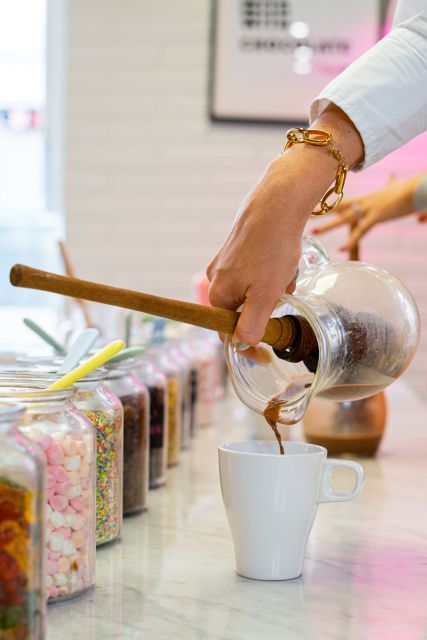
The second major activity is preparing a traditional hot chocolate inspired by Aztec techniques. You use cocoa, sugar, milk powder, and ancient-style tools to make the drink rather than simply receiving a finished cup.
This part adds cultural context to the workshop. Modern European hot chocolate is often thick, sweet, and dessert-like. The Aztec preparation gives you a different reference point and shows that cacao has long been used as a drink, not just as a solid sweet.
The result is described as rich and very tasty, though the exact flavor will depend on how much sugar and cocoa you use. It is also a good group activity because everyone can follow the same basic method while adjusting the balance to personal taste.
I like that the drink is made from scratch, even if the lesson remains short. You are not just sampling chocolate products. You are using the ingredients in a separate form and seeing how preparation changes the final taste.
Visiting the Small Interactive Museum
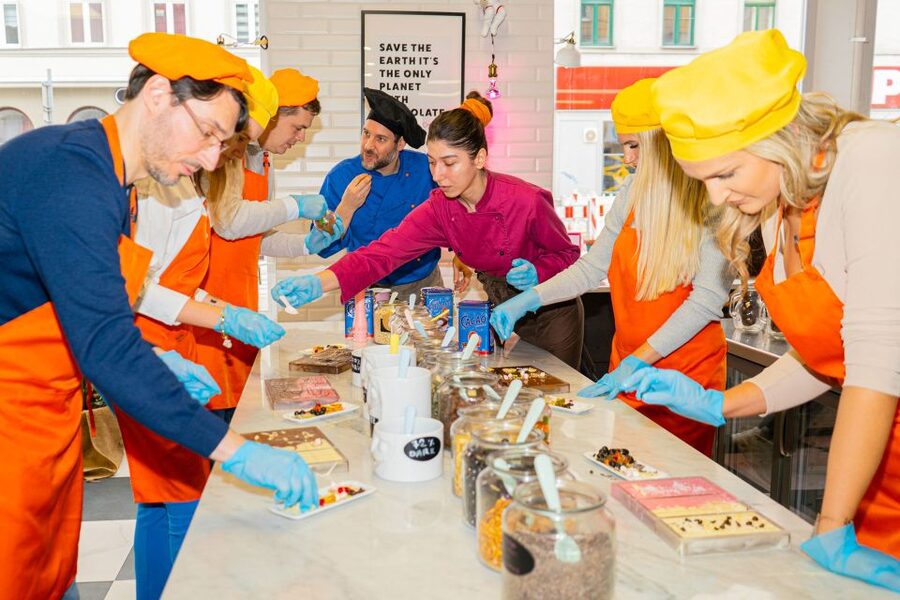
The museum visit takes about 15 minutes, either before or after the workshop depending on the schedule. It covers the origins of cacao and includes interactive features and photo opportunities.
Keep your expectations realistic. This is a small museum, not a major Vienna attraction that requires half a day. Its displays are best treated as a compact introduction to cacao, with the workshop providing most of the substance.
That balance is important when judging value. If you are paying mainly for a museum, $55 would feel high for such a short visit. If you are paying for the class and regard museum admission as an extra, the arrangement works better.
The interactive features help keep the museum useful for families. After the practical work, children can still look around and take photos instead of facing a wall of dense text. Adults who already know the basic story of cacao may find the displays familiar, but the visit rounds out the session.
How Much Value Do You Get for $55?
At $55 per person, this is not a cheap snack stop. It is a scheduled activity with an instructor, ingredients, equipment, tastings, museum entry, and three chocolate bars to take away.
The strongest value comes from the amount you make. Three full-size bars are more substantial than a single small sample, and the hot chocolate adds another tasting. You also avoid buying cookware or ingredients, and you receive help throughout the process.
The price feels less convincing if you only want a brief taste of Austrian sweets or a large museum with extensive exhibits. You could spend less at a café and still enjoy hot chocolate. You could also visit shops for chocolate souvenirs without committing to a workshop.
I would judge the value this way:
- Good value for families: Several people can share a lively activity, and each participant creates three souvenirs.
- Good value for hands-on learners: You use molds and a professional machine rather than watching a demonstration only.
- Fair value for couples and friends: The class gives you something structured to do, especially on a rainy day.
- Less compelling for museum fans: The museum itself is small and takes only about 15 minutes.
- Less compelling for serious confectioners: You will not make chocolate from cacao beans or learn home tempering.
The signed certificate is a charming extra, especially for children. It is not worth the admission price by itself, but it gives the workshop a finished, celebratory feeling.
Best for Families, Teens, and Curious Adults
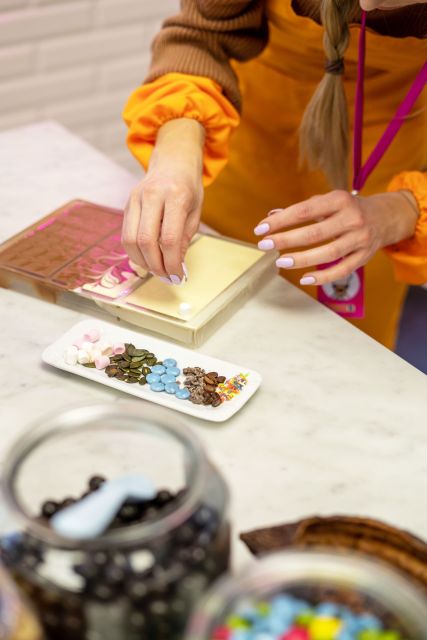
The class is designed for children and adults, and that mix seems to work well. Children can pour chocolate, choose toppings, and make a drink, while adults can pay attention to the cacao lesson and tasting.
Children under five are not recommended for the workshop. Children under ten must be accompanied by an adult, and the adult also needs a ticket. That rule matters when planning a family booking.
Teens are a particularly good fit. They are old enough to follow the instructions and make thoughtful flavor choices, but young enough to enjoy the novelty of designing a bar. The workshop also works for adults traveling together. Several adults attending without children have found the activity genuinely enjoyable rather than merely family-oriented.
I would also consider it for a mother and daughter outing, a birthday activity, or a low-pressure rainy morning. The instructor’s role is important here. Names such as Dimi, Janya, and Selma have been praised for being patient, clear, and good at keeping the group engaged.
The class may be less suitable if you dislike group activities, have a serious chocolate allergy, or want a quiet tasting without participation. The supplied information does not provide allergy guidance, so ask the provider directly before booking if that is relevant to you.
Location and Getting There from Pilgramgasse
The Chocolate Museum Vienna is on the corner of Schönbrunner Straße and Reinprechtsdorfer Straße. From Pilgramgasse U-Bahn station, it is about a three-minute walk.
The station is served by Vienna’s green U4 line. Buses 14A and 12A also serve the area, with a stop directly in front of the museum. Look for the entrance door on the corner rather than assuming the museum is set back from the street.
This central transport link makes the workshop easy to add to a Vienna day. You do not need to build a complicated sightseeing plan around it. The activity can work as a morning stop, a rainy-day break, or a family-friendly change of pace between major city sights.
Arrive with enough time to find the entrance and settle in. The class uses shared equipment and has a set starting time, so arriving late could mean missing the introduction or the first demonstration.
Small Drawbacks to Keep in Mind
The biggest limitation is that the museum portion is brief. You should not book this expecting a large collection, a full factory tour, or a bean-to-bar production lesson.
The class can also feel slightly basic for anyone who already makes chocolate at home. The tempering machine helps beginners, but the workshop does not explain how to recreate that process without professional equipment.
Group size can affect the rhythm. A small class may feel almost private, while a larger group can make the topping and pouring stages more crowded. The instructors have handled big groups well, but you may have less individual attention when the room is full.
Finally, the dark chocolate may taste bitter if you prefer sweeter styles. Fortunately, you can choose milk, white, or pink chocolate where available. Toppings help personalize the result, but they do not change the base chocolate itself.
Booking Details and Practical Advice
The experience costs $55 per person and lasts about 90 minutes. It includes museum entrance, free tastings, snacks, chocolate decorating, ingredients, cookware, recipes, the three handmade bars, hot chocolate preparation, and a certificate.
The workshop is offered in English and German. You can cancel up to 24 hours ahead for a full refund, and the reserve-now, pay-later option lets you keep your plans flexible.
A few practical tips will improve the visit:
- Book a ticket for every participating adult and child.
- Allow the full 90 minutes, even though the workshop itself is described as about 60 minutes.
- Wear something you do not mind getting a little chocolate on, particularly with younger children.
- Leave room in your day for the three finished bars.
- If you want a drink or extra sweets, the counter is a good place to get coffee, hot chocolate, or other treats before or after the class.
- Choose milk chocolate if you prefer a sweeter, smoother bar. Choose dark if you like a firmer, more bitter taste.
Should You Book the Vienna Chocolate Workshop?
I would book this if you want a short, cheerful activity that combines learning with making. The strongest reasons are the three substantial bars, the professional tempering machine, the Aztec-style hot chocolate, and the patient instructors who work well with both children and adults.
I would skip it if your main goal is a large museum, advanced confectionery instruction, or a tour of chocolate production from cacao bean to finished bar. The museum is modest, and the technical lesson is intentionally beginner-friendly.
For families, teens, chocolate fans, and anyone needing a pleasant break from Vienna’s grand palaces and museums, this is an easy choice. You leave with sweets, a certificate, and a better sense of how chocolate behaves. That is a pretty good souvenir for an hour and a half.
FAQ
How long does the Vienna Chocolate Workshop last?
The experience is advertised as 90 minutes. The workshop itself takes approximately 60 minutes, and the museum visit takes about 15 minutes, with additional time for tasting and transitions.
What do you make during the workshop?
You make three chocolate bars, decorate them with your chosen toppings and ingredients, and prepare an Aztec-style hot chocolate drink.
Can I take the chocolate bars home?
Yes. You take all three of your handmade chocolate bars home after the workshop.
Is museum admission included?
Yes. Your workshop ticket includes free admission to the Chocolate Museum Vienna.
Do I need previous cooking experience?
No. The provider supplies the cookware, ingredients, and recipes, and instructors assist you throughout the activity.
Is the workshop suitable for children?
The activity is designed for children and adults. It is not recommended for children under five, and children under ten must attend with an adult who also has a ticket.
Which languages are available?
The workshop is offered in English and German.
Where is the Chocolate Museum Vienna?
The entrance is on the corner of Schönbrunner Straße and Reinprechtsdorfer Straße. It is a three-minute walk from Pilgramgasse U-Bahn station on the U4 line, and buses 14A and 12A stop directly in front of the museum.
More Museum Tours in Austria
- Vienna: Skip-the-Line Sisi Museum, Hofburg and Gardens Tour
★ 4.8 · 5,918 reviews - Vienna Kunsthistorisches Museum Day Admission Ticket
★ 4.6 · 3,690 reviews - Tickets for the Albertina Exhibitions
★ 4.7 · 2,126 reviews - Sigmund Freud Museum Ticket
★ 4.6 · 1,668 reviews
Just added in Austria
- Zurich: Private Liechtenstein, Austria, and Germany Day Trip★ 5.0 · 16 reviews
- Zurich: Liechtenstein, Austria, Germany and Swiss Day Trip★ 5.0 · 2 reviews
- Zell am See: Paragliding Tandem Flight★ 5.0 · 31 reviews
- Vienna: Austrian Wine Tasting Experience★ 4.2 · 2 reviews
- Zurich: Liechtenstein, Austria and Germany Private Day Tour★ 5.0 · 6 reviews
- Vienna: UNESCO Schönbrunn Palace Guided Tour with Entry★ 4.5 · 94 reviews
- World War II History Vienna Old Town Private Walking Tour★ 4.8 · 9 reviews
- From Krems: Wachau Valley River Cruise on the Danube★ 4.6 · 95 reviews
Food & Drink, compared.
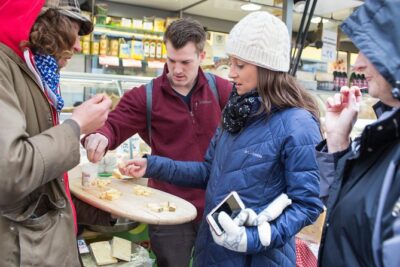
Vienna for Food Lovers: Cafés, Markets & Austrian Cuisine
Read our review →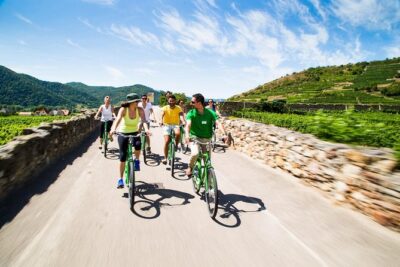
Wachau Valley Wine Tasting Bike Tour from Vienna
Read our review →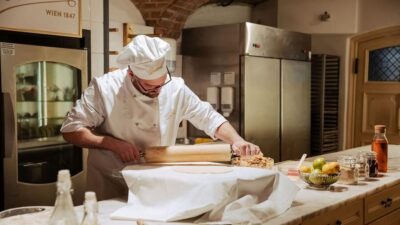
Gerstner KuK Hofzuckerbäcker Baking Show & Tasting
Read our review →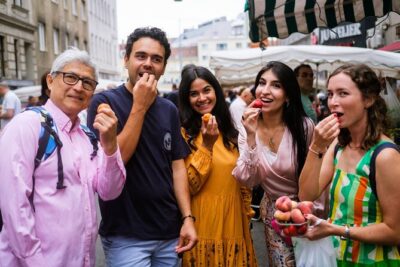
Authentic Vienna Food Tour inc. lunch, street food, 3 drinks
Read our review →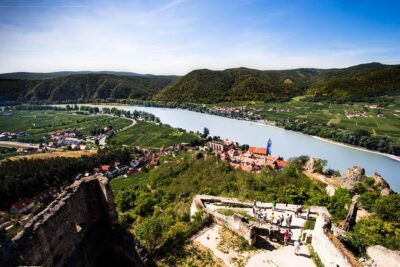
Wachau Valley Small-Group Tour and Wine Tasting from Vienna
Read our review →
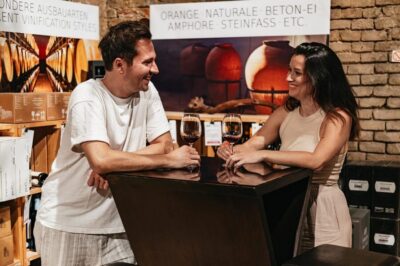
Wine Tasting Experience in a Private Wine Cellar
Read our review →
Browse the lists this tour appears in