
Reviewed · HISTORICAL TOURS
World War II History Vienna Old Town Private Walking Tour
Vienna’s grand center carries some very dark memories. This private two-hour walk connects the assassination of Franz Ferdinand, Hitler’s annexation of Austria, Nazi terror, the Holocaust, the bombing of Vienna, and the city’s liberation in one focused route through the Old Town. I like the way the tour links famous sights with difficult history, and I especially like that your guide can shape the discussion around your interests. The main drawback is the price: at $214 per person, this is a costly two-hour walk unless you value a private guide and a language choice.
The guides also seem to make a real difference. Peter earned praise for detailed explanations and patience with a family traveling with a two-year-old, while Sanda, Alexander, and Frau Heuberger were also singled out for professionalism or strong personal attention. On hot days, Frau Heuberger adjusted the pace and added shade and rest stops, a small but useful sign of thoughtful guiding.
In This Review
- Key Points Before You Book
- Why This Two-Hour Walk Works
- Starting at Morzinplatz and the Former Gestapo Site
- Through Vienna’s Old Town and the Holocaust Memorial
- Hofburg, Heldenplatz, and Imperial Memory
- Burggarten and Franz Joseph I
- St. Stephen’s Cathedral and the Shape of Wartime Vienna
- Ending Near the Vienna State Opera
- Guide Quality and Personal Attention
- Language Choices and Tour Pace
- Is $214 Per Person Good Value?
- Who Should Book This Vienna History Tour?
- Final Verdict: A Serious, Useful Walk Through Central Vienna
- FAQ
- Where does the World War II history tour begin?
- Where does the tour end?
- How long does the tour last?
- Is this a private tour?
- How many people can join one guide?
- What languages are available?
- Does the tour include entry to Hofburg?
- Which historical subjects does the guide cover?
- Is the tour suitable for children?
- What should I wear?
Key Points Before You Book
- Begin at Morzinplatz: The tour starts beside the memorial to victims of Nazi terror, near the former site of Vienna’s Gestapo headquarters.
- Follow the story through the Old Town: You connect WWI, Austrofascism, Hitler’s annexation of Austria, Nazi rule, the Holocaust, and the war’s final months.
- See major landmarks in a new light: Hofburg, Heldenplatz, St. Stephen’s Cathedral, Burggarten, and the Vienna State Opera all gain wartime context.
- Expect a private format: Your group can include up to 25 people per guide, with extra guides arranged for larger groups at a higher price.
- Choose from many languages: Tours are offered in English, German, Italian, French, Spanish, Russian, Polish, Chinese, Japanese, Croatian, Portuguese, and Arabic.
- Plan for a serious subject: This is not a light sightseeing stroll. It deals directly with Nazi terror, the Holocaust, political propaganda, and wartime destruction.
Why This Two-Hour Walk Works
Vienna is often presented through imperial palaces, classical music, coffeehouses, and elegant streets. Those are real parts of the city, but they can hide the political violence that shaped modern Austria. This tour helps correct that imbalance.
I like the broad time span. You are not dropped into 1938 without context. The guide begins with the events surrounding Franz Ferdinand’s assassination and the causes and consequences of World War I. From there, the story moves through Austria’s political changes, Austrofascism, Hitler’s rise, the annexation of Austria, Nazi rule, the Holocaust, and the bombing and liberation of Vienna.
That structure matters. It helps you see World War II as a chain of political choices and consequences, not as a disconnected list of dates. You also learn about Adolf Hitler, Ernst Kaltenbrunner, and other Austrian Nazis, along with the effect of propaganda and occupation on everyday life.
The tour is especially useful if you have already seen Vienna’s major monuments but want to understand what happened around them. The guide does not simply point out a building and recite its name. The aim is to show how public spaces, memorials, and surviving architecture preserve clues from the wartime period.
More Walking Tours in Vienna
- Vienna: Guided Walking Tour of City Center Highlights
★ 4.7 · 4,989 reviews - Vienna: Vienna Central Cemetery Guided Walking Tour
★ 4.8 · 3,307 reviews - Vienna: Guided Walking Tour of City Highlights & Hidden Gems
★ 4.9 · 2,180 reviews
Starting at Morzinplatz and the Former Gestapo Site
You meet your guide at the Memorial to the Victims of Nazi Terror at Morzinplatz 4. This is a fitting place to begin because it puts victims, rather than military glory or imperial ceremony, at the center of the tour.
The memorial is near the site of the former Hotel Metropol, which was used as the Gestapo headquarters in Vienna from 1939. The building itself no longer provides the full visual impact of the former headquarters, so the guide’s explanation is important. You learn what the site represented and how Nazi repression operated in the Austrian capital.
I find this opening stronger than beginning with a famous palace. It sets the tone immediately. You are here to understand the machinery of terror and the people harmed by it, not simply to collect attractive photographs.
Because the tour starts with a memorial, this is also a place where your group may want to pause. Two hours is not a long time for such a large subject, so the guide has to balance explanation with movement. A private format helps here. You can ask for more detail about the Gestapo, political resistance, or the memorial itself without waiting for a large public group to move on.
Through Vienna’s Old Town and the Holocaust Memorial
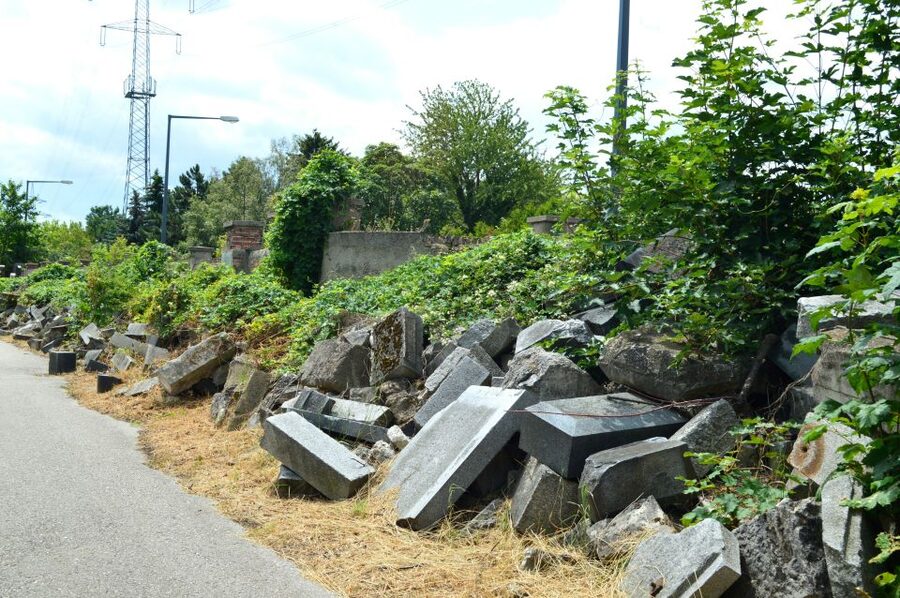
From Morzinplatz, the route continues through the Inner Stadt, Vienna’s central Old Town. This part of the walk combines ordinary city streets with the difficult story of Jewish persecution.
You pass the Holocaust Memorial and several Remembrance Stones. These markers bring the subject down to a human scale. Large political events can feel distant, but individual names and memorials placed within the city make it harder to treat the Holocaust as an abstract chapter in a textbook.
The guide also discusses the tragic fate of Vienna’s Jewish citizens and the way propaganda shaped life under German occupation. That combination is valuable. It covers both the policies imposed from above and the effect on people living in neighborhoods, homes, and streets that still form part of modern Vienna.
I would pay close attention here, since some of the memorials may be easy to miss when walking independently. One German-speaking participant praised the guide for pointing out architectural witnesses that a person might not find alone. That is one of the clearest reasons to choose a guide for this subject: the meaning is often not obvious from the street.
The Old Town route also has a practical advantage. You are seeing central Vienna at the same time as you are learning its wartime story. The walk does not require a separate trip to a distant museum or memorial site.
Hofburg, Heldenplatz, and Imperial Memory
The Hofburg appears on the route from the outside. This huge palace complex is closely tied to Austria’s imperial past, but its public spaces also carry the political story of the 20th century.
At Heldenplatz, you see the Memorial Crypt dedicated to victims of World War I and World War II. The setting is important because Heldenplatz is not just an open square in front of the Hofburg. It is also a place where political power and mass public events have been displayed.
The guide uses this area to explain Austria’s position before, during, and after the two world wars. You learn about the political conditions that shaped Austria’s involvement in the conflicts and about the consequences of Hitler’s annexation of his homeland.
Since the tour includes only the exterior of Hofburg, you should not book it expecting palace rooms or an indoor museum visit. The value here is the setting and the explanation. If you want a full imperial palace tour, you will need a separate ticket and more time.
This stop also shows the tour’s central idea: Vienna’s most famous sights are not separate from its modern history. The palace, square, monuments, and surrounding streets were part of the same political city where power was announced, celebrated, contested, and later remembered.
More History Tours in Vienna:
- Vienna: Time Travel and Magic Vienna History Tour
★ 4.6 · 3,879 reviews - Vienna: World War II Historical Walking Tour
★ 4.8 · 1,772 reviews - Vienna Historic Center Small Group Walking Tour
★ 5.0 · 1,746 reviews - Time Travel-Magic Vienna History Tour Ticket
★ 4.5 · 1,099 reviews
Burggarten and Franz Joseph I
The route includes the monument to Emperor Franz Joseph I in Burggarten. At first glance, this may seem like a detour into imperial history rather than a WWII stop, but the connection is useful.
Understanding the late Habsburg period helps explain the political world that existed before World War I. The assassination of Franz Ferdinand, the collapse of empire, and the later development of Austria all belong to one long story. The monument gives the guide a place to discuss that transition.
I like this kind of chronological pause. Without it, the tour could become a rush from Nazi memorial to Nazi memorial. By returning to the imperial past, the guide can show how Vienna changed from the center of a vast empire into the capital of a smaller republic, then into a country absorbed by Nazi Germany.
The stop is outdoors and part of a walking route, so the pace may depend on weather and group needs. On a hot day, one guide was praised for finding shaded places and building in proper breaks. That matters because the subject requires concentration, and two hours of standing in full sun is not a test of historical commitment.
St. Stephen’s Cathedral and the Shape of Wartime Vienna
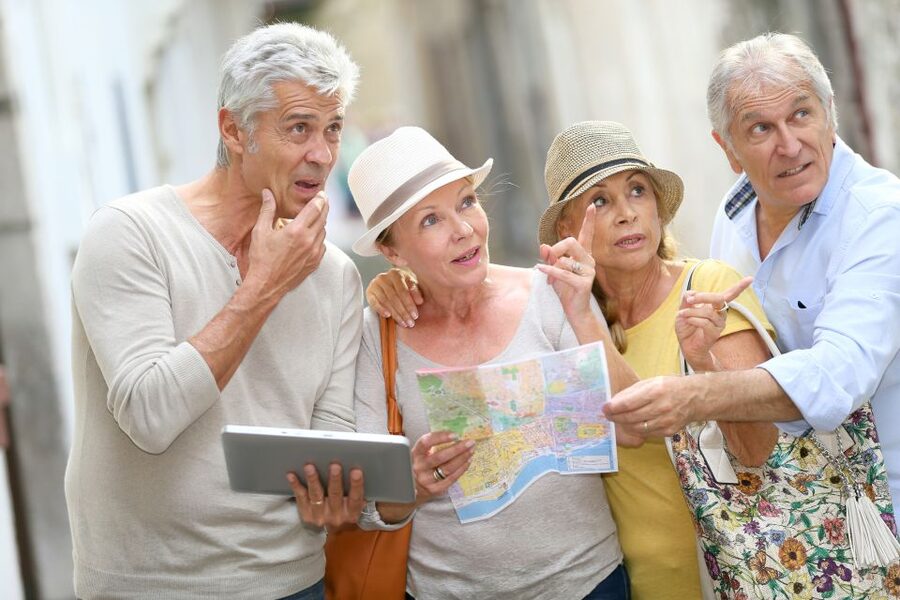
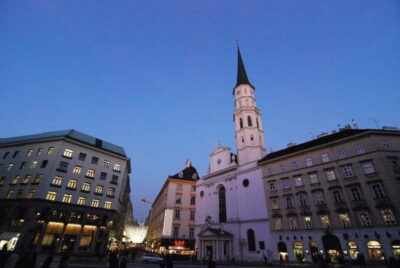
St. Stephen’s Cathedral is another major sight along the route. The cathedral is one of Vienna’s most recognizable landmarks, and its inclusion gives you a chance to consider how the war affected the city’s religious and civic center.
The tour does not promise an interior visit, so think of this as an exterior sightseeing stop with historical commentary. The guide explains the wartime setting and the wider changes taking place in Vienna, rather than offering a standard cathedral tour.
The cathedral also helps break up the heavier memorial sites. You continue learning about the Holocaust, occupation, and wartime life, but you remain oriented in the central city. For a first visit to Vienna, that mix can be helpful. You are not choosing between sightseeing and history; the two are presented together.
Still, the short duration places limits on the level of detail. World War I, World War II, Austrofascism, Nazi leadership, the Holocaust, bombing, and liberation could fill several days of study. In two hours, you should expect a well-shaped overview with selected places, not a complete academic treatment.
Ending Near the Vienna State Opera
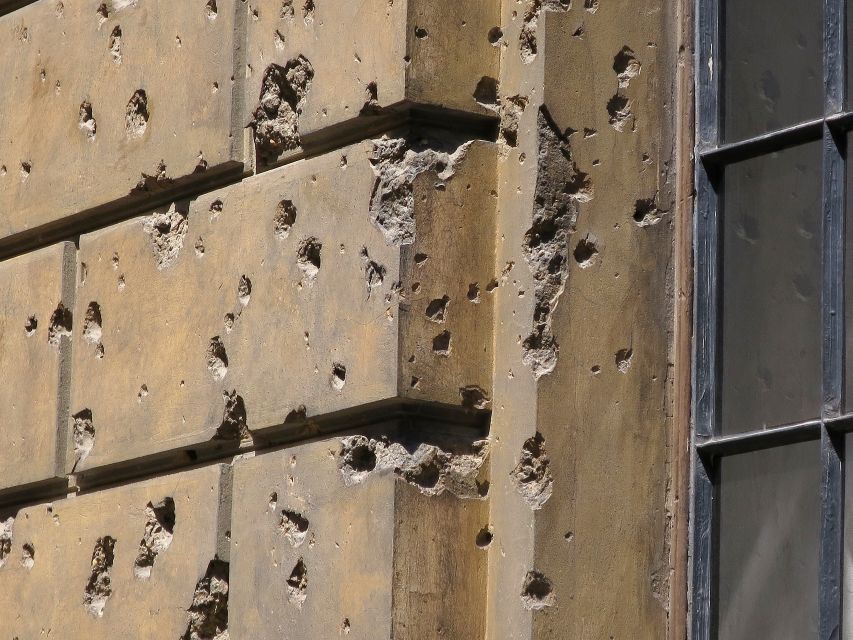
The tour ends at the Monument Against War and Fascism near the Vienna State Opera. The opera house was heavily damaged by the 1945 bombing, which gives the final stop a direct link to the closing phase of the war in Vienna.
The monument offers a strong ending because it looks beyond one regime or one battle. Its subject is war and fascism more broadly, and the nearby damage to the opera house connects public culture with the physical cost of the conflict.
By this point, the route has moved from the former Gestapo headquarters, through Holocaust memorials and imperial spaces, to a monument opposing war and fascism. That progression gives the walk a clear shape. It begins with terror, places that terror within the political history of Austria, and ends with remembrance.
The ending near the State Opera is also convenient for continuing your day in central Vienna. You can remain in the Old Town, visit another nearby sight, or stop for food and rest. The tour itself does not include meals, transport, or entry to attractions, so plan your next activity separately.
Guide Quality and Personal Attention
A private history walk rises or falls with its guide. The strongest praise here is for clear explanation, professionalism, patience, and flexibility.
Peter was praised for answering questions in detail and for showing patience with a family traveling with a small child. That is worth noting if you are visiting with children. The topic is serious, but the tour can apparently accommodate pauses when family needs take priority.
Sanda was described as highly professional, while Alexander received simple but strong praise for being excellent. Frau Heuberger adjusted the walk to the heat, balancing talking, sightseeing, and well-earned breaks between shaded locations.
These details suggest a useful benefit of the private format. You are not locked into one fixed speaking pace. You can ask questions, request more attention to a particular period, or signal that the group needs a break.
The group limit is one to 25 people per guide. That is a wide range. A private booking for two or four people should feel quite personal, while a group near the upper limit may feel less intimate even with a private arrangement. Groups larger than 25 require additional guides, and the price rises.
Language Choices and Tour Pace
The tour is available in 12 languages: English, German, Italian, French, Spanish, Russian, Polish, Chinese, Japanese, Croatian, Portuguese, and Arabic. A history tour works best when you can follow names, dates, political ideas, and moral questions without struggling with the language.
You should also remember that this is a walking tour. Comfortable shoes are a must, and you should dress for the weather. There are no details provided about indoor seating, so prepare to spend the two hours on city streets and at outdoor stops.
The pace may be manageable, but the content is dense. I would avoid scheduling this directly before another activity that requires you to rush across Vienna. Give yourself time to reach the meeting point at Morzinplatz and to absorb the material afterward.
If weather is very hot, rain is expected, or someone in your group tires easily, contact the provider ahead of time if possible. The available information confirms that guides can respond to conditions, but it does not promise a specific indoor alternative.
Is $214 Per Person Good Value?
At $214 per person, this is not a budget walking tour. For a two-hour experience, the price is high compared with a standard group city walk.
The value depends on how many people are in your private group and how much you care about language, flexibility, and focused discussion. For a couple or small family, the per-person cost buys a private guide who can answer questions and adjust the emphasis. For a larger group sharing the cost, the price may feel easier to justify, though groups of more than 25 require extra guides and a higher total.
You are also paying for a specialist subject rather than general sightseeing. The tour covers two world wars, Austria’s political development, Nazi terror, the Holocaust, and wartime destruction. If this is a main reason for visiting Vienna, the cost may be worthwhile.
The activity includes the private walk, a licensed five-star guide, commentary in your chosen language, sightseeing at WWII-related places and monuments, and a route tailored to your interests. It does not include attraction entry, food, or transportation.
The free cancellation policy allows a full refund when you cancel at least 24 hours in advance, and you can reserve now and pay later. Those terms make planning easier, but they do not change the basic price question. You should book for the private historical attention, not because it is a cheap way to see the center.
Who Should Book This Vienna History Tour?
I would recommend this walk to anyone who wants the political story behind Vienna’s grand architecture. It is a good fit if you have already visited the city’s basic sights and now want to understand Austria’s role in the 20th century.
It also suits families who prefer a private pace. Peter’s patience with a two-year-old and Frau Heuberger’s sensible handling of heat suggest that guides can adjust when needed, though the subject matter may be too heavy for very young children to understand fully.
You should also consider it if you want a tour in a language other than English. The long list of language options is a real strength, especially for a subject involving complex names and difficult events.
I would skip it if you want an entertaining general tour, an indoor museum experience, or a low-cost introduction to Vienna. I would also avoid it if you have only two hours and are more interested in music, art, or imperial interiors than modern political history.
Final Verdict: A Serious, Useful Walk Through Central Vienna
This tour gives Vienna’s Old Town a second layer. Hofburg, St. Stephen’s Cathedral, Burggarten, Heldenplatz, and the State Opera are not just pretty stops. With the right explanation, they become part of a story about empire, nationalism, dictatorship, persecution, war, and remembrance.
The strongest reasons to book are the private format, the wide language choice, the focused route, and the guides’ apparent willingness to adjust for questions, children, heat, and individual interests. The main warning is the cost, along with the fact that two hours can cover only an overview of such a large subject.
If you want a serious introduction to Vienna’s WWI and WWII history and can accept the premium price, I would book it. Wear good shoes, arrive ready for a thoughtful walk, and check your email the day before for the latest meeting information.
FAQ
Where does the World War II history tour begin?
The meeting point is in front of the Memorial to the Victims of Nazi Terror at Morzinplatz 4, 1010 Vienna, Austria.
Where does the tour end?
The walk ends at the Monument Against War and Fascism near the Vienna State Opera.
How long does the tour last?
The tour lasts two hours.
Is this a private tour?
Yes. It is offered as a private group experience.
How many people can join one guide?
The recommended group size is between one and 25 people per guide. Larger groups require additional guides, and the price will be higher.
What languages are available?
You can choose English, German, Italian, French, Spanish, Russian, Polish, Chinese, Japanese, Croatian, Portuguese, or Arabic.
Does the tour include entry to Hofburg?
No. Hofburg is viewed from the outside only.
Which historical subjects does the guide cover?
The tour covers World War I, World War II, the assassination of Franz Ferdinand, Austrofascism, Hitler’s annexation of Austria, Nazi terror, the Holocaust, wartime bombing, and the liberation of Vienna.
Is the tour suitable for children?
The tour is a walking experience with serious historical content. A guide has shown patience with a family traveling with a two-year-old, but parents should consider whether the Holocaust and Nazi terror are suitable subjects for their children.
What should I wear?
Wear comfortable shoes and dress appropriately for the weather, since the experience takes place on foot through Vienna’s Old Town.
Just added in Vienna
- Vienna: Austrian Wine Tasting Experience★ 4.2 · 2 reviews
- Vienna_ Meet Beethoven Life Private Guided Walking Tour★ 5.0 · 1 review
- Vienna: Wine Tasting Tour★ 4.8 · 61 reviews
- Vienna: Wine Tasting E-Bike Tour★ 4.9 · 46 reviews
- Vienna: Wine Tasting at Schönbrunn Palace★ 4.3 · 71 reviews
- Vienna: Winery and Wine Tasting Tour with a Wine Expert★ 5.0 · 5 reviews
- Vienna: Concert by the Vienna Baroque Orchestra★ 4.6 · 56 reviews
- Vienna: Unforgettable Private City Tour★ 5.0 · 7 reviews
Historical Tours, compared.
Vienna Historic Center Small Group Walking Tour
Read our review →
Skip-the-Line Schonbrunn Palace Guided Tour and Vienna Historical City Tour
Read our review →
Vienna Mozart Concert in Historical Costumes at the Musikverein
Read our review →
Browse the lists this tour appears in