
Reviewed · MUSEUMS
Vienna: Museum of Illusions Vienna Admission Ticket
Expect your sense of balance to misbehave. Vienna’s Museum of Illusions turns simple visual tricks into a hands-on outing, with more than 70 exhibits built for looking, touching, testing, and taking photos. I like the mix of light entertainment and brain exercise, especially the chance to see how easily your eyes can fool your mind.
I also like that this is an easy family activity when Vienna’s grand museums begin to feel heavy. The main drawback is size: several people find it fun but fairly short, and you may wish there were more rooms or more exhibits for the $18 admission.
In This Review
- Key points before you go
- What the Museum of Illusions in Vienna is really like
- Starting with the visual tricks and brain puzzles
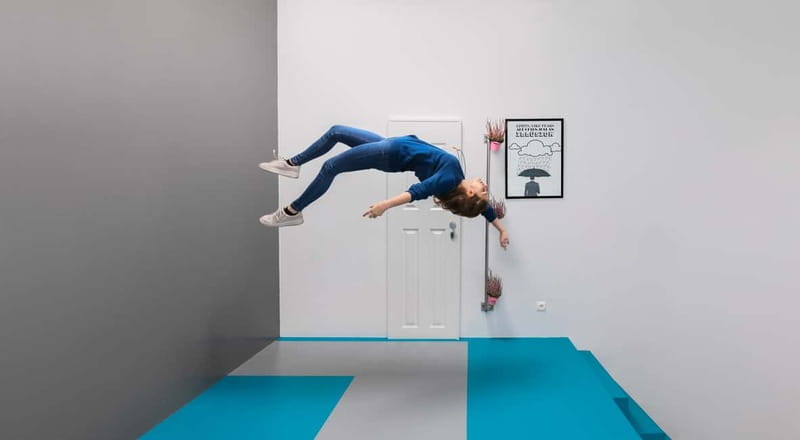
- The inclined room and the loss of ordinary balance
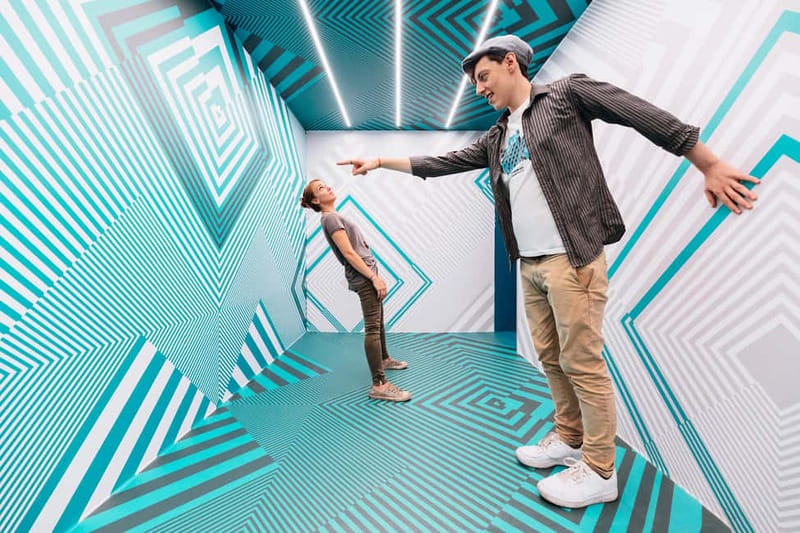
- The Ames room makes size look completely wrong
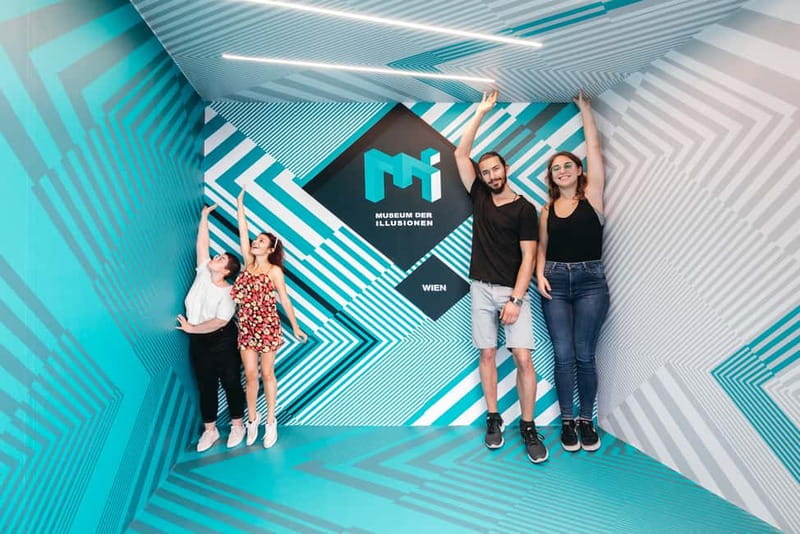
- The vortex tunnel tests your confidence
- The Infinity Room and the best photo stops
- How long the visit feels for the $18 price
- Who will enjoy this most
- Practical planning for your visit
- What the overall experience gets right
- Should you book the Museum of Illusions Vienna?
- FAQ
- How much does admission to the Museum of Illusions Vienna cost?
- How long is the ticket valid?
- Does the ticket include anything besides admission?
- How many exhibits are at the museum?
- Is the Museum of Illusions suitable for children?
- Can I take photos inside the museum?
- Is the museum wheelchair accessible?
- Can I cancel my booking?
Key points before you go
- More than 70 interactive exhibits: You are not simply walking past display cases. You test puzzles, perspective tricks, rooms, and visual effects.
- The Infinity Room is made for photos: Bring a charged smartphone or camera for unusual perspective shots.
- The Ames room changes apparent size: Family members and friends can look strangely tall or small depending on where they stand.
- The vortex tunnel challenges your footing: It gives you the feeling that the floor is moving, even when it is not.
- A good change of pace in Vienna: This suits families, friends, and anyone wanting a light activity between grand cultural sights.
- Accessible and flexible booking: The museum is wheelchair accessible, and you can cancel up to 24 hours ahead for a full refund.
What the Museum of Illusions in Vienna is really like
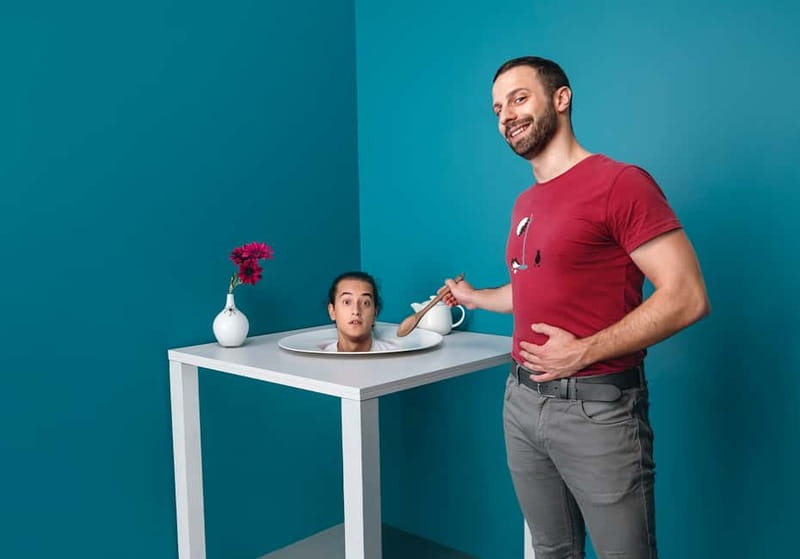
This is not a traditional museum where you quietly study paintings or read long labels. It is a compact, interactive attraction built around perception, balance, scale, and problem-solving.
You move from one exhibit to the next and become part of the demonstration. You may stand in the right spot to make a photograph work, try to keep your balance in a room that appears tilted, or challenge yourself with a wooden puzzle that looks easier than it is.
That active format is the main reason I would consider this place for a family day. Younger children can enjoy the visual tricks, while older children and adults can think through the mechanics behind them. It gives everyone something to do instead of asking the group to admire the same object for several minutes.
The experience is also useful when you need a break from Vienna’s serious side. The city is filled with imperial rooms, historic collections, and formal galleries. Those sights matter, but a playful museum can reset your energy, especially during a longer trip.
More Museum Tours in Austria:
- Vienna: Skip-the-Line Sisi Museum, Hofburg and Gardens Tour
★ 4.8 · 5,918 reviews - Vienna Kunsthistorisches Museum Day Admission Ticket
★ 4.6 · 3,690 reviews - Tickets for the Albertina Exhibitions
★ 4.7 · 2,126 reviews
Starting with the visual tricks and brain puzzles
The exhibits are designed to challenge your first impression. You see one thing, then discover that the room, object, or image is working against your assumptions.
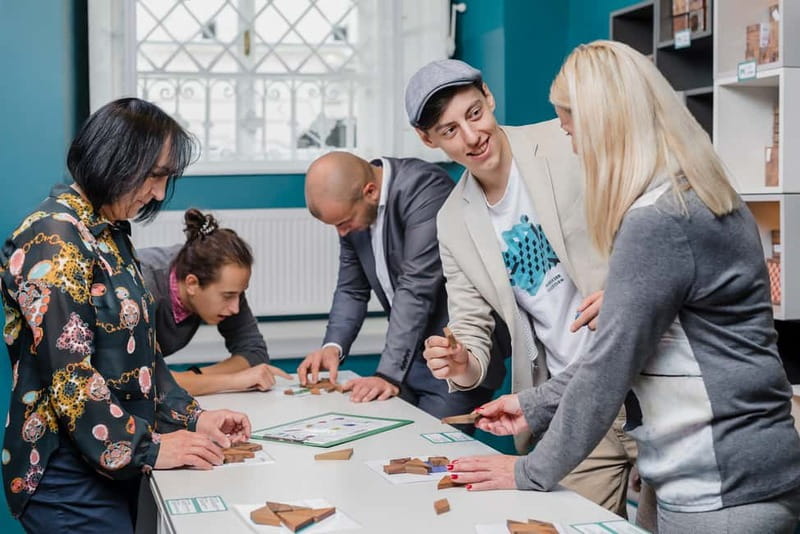
The wooden games are a good example of the museum’s hands-on approach. You try to solve them by changing your angle, testing a pattern, or thinking in a less obvious way. They are small challenges, but they encourage patience and creative thinking rather than passive sightseeing.
I would give children enough time to try each puzzle without rushing them. Adults may find themselves just as determined to solve a stubborn wooden game, which is part of the fun. The museum works best when you treat each station as a shared challenge, not a quick photo stop.
The educational value is modest but real. You are not taking a formal science lesson, yet the exhibits show how the brain interprets light, space, movement, and proportion. The hands-on format makes those ideas easier to understand than a written explanation alone.
The inclined room and the loss of ordinary balance
The inclined room is one of the clearest examples of how the museum plays with your expectations. The room is built to make you feel as if gravity is behaving differently, even though your body knows the floor should be level.
This kind of exhibit is particularly effective in photographs. A person can appear to lean at an impossible angle, while another person nearby looks more ordinary. The result is silly rather than frightening, and it gives families a simple way to create a memorable picture together.
You may need a moment to adjust before moving on. That is not a flaw. The point is to notice how quickly your senses accept a strange setting as normal.
If you have balance concerns, take your time and use sensible caution. The attraction is wheelchair accessible, but the supplied information does not describe the details of every individual exhibit. If you need specific access arrangements, ask the museum before booking.
The Ames room makes size look completely wrong
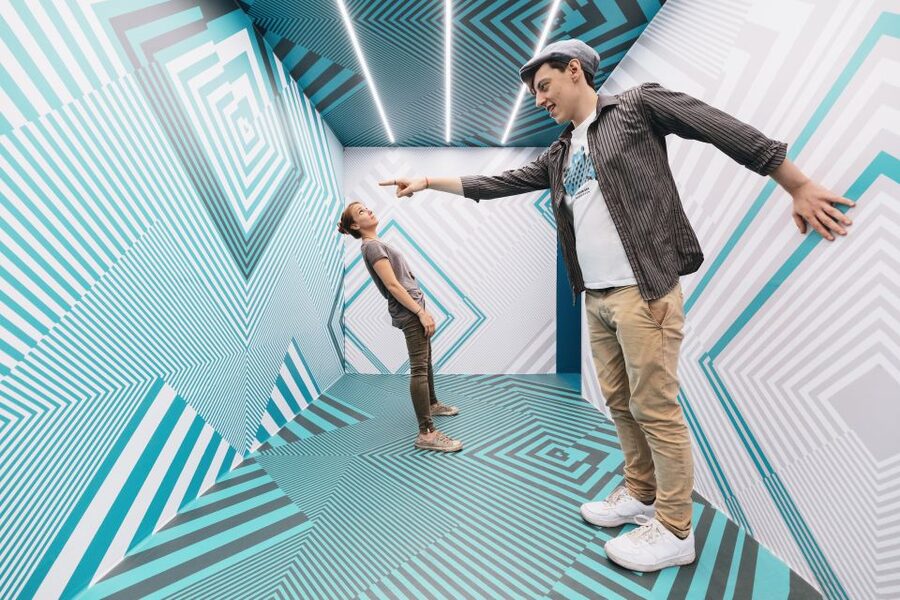
The Ames room is another major photo opportunity. Its design makes people appear to grow or shrink depending on where they stand.
This works best with two or more people, so it is a good stop for families or friends. One person can look much larger than another even though the difference is only an effect of perspective and room design.
I like this exhibit because it combines the photo with a clear lesson. You do not need a technical explanation to understand that your eyes can be persuaded by lines, angles, and distance. The result is immediate, and the picture gives you a souvenir that explains the trick better than a paragraph of text.
You should plan to take several photos from the suggested viewing point. Small changes in position can affect the result, so do not settle for the first picture if the effect is not obvious.
A few more options to weigh up in Austria
- Vienna: Classic Ensemble Vienna in St. Peter’s Church Ticket
★ 4.7 · 4,819 reviews - Vienna: Tickets for Mozarthaus Vienna with Audio Guide
★ 4.2 · 2,344 reviews - Vienna: Skip-the-Line Entrance Ticket to the Danube Tower
★ 4.5 · 2,303 reviews - Salzburg: Hohensalzburg Fortress Admission Ticket
★ 4.6 · 2,236 reviews
The vortex tunnel tests your confidence
The vortex tunnel is meant to make you feel as if the ground is shifting beneath your feet. The tunnel itself creates the sensation, but your body reacts as if you are crossing an unstable surface.
This can be one of the more memorable stops because it involves more than sight. Your eyes tell you that the surroundings are moving, and your balance responds to that message.
Go slowly. The experience is meant to be playful, not a race. If you feel unsteady, pause and let other people pass. The tunnel may be especially amusing for older children, but each person should decide how comfortable they feel.
This exhibit also shows why the museum is more than a collection of funny photographs. The visual effect changes your physical response. You get a quick lesson in how strongly your brain relies on visual information to guide movement.
The Infinity Room and the best photo stops
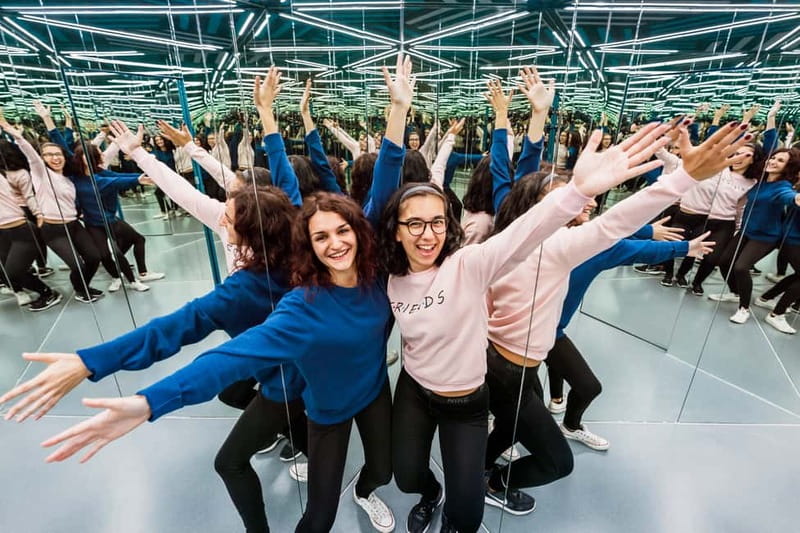
The Infinity Room is the exhibit I would prioritize if you want distinctive pictures. Its design creates a repeated, seemingly endless visual effect, making the room look much larger and stranger than it really is.
Bring your smartphone or camera, and keep it ready throughout the visit. Many exhibits offer unusual angles, but the Infinity Room is specifically highlighted as a strong place for perspective photos.
A phone is enough for the basic idea. You do not need special equipment, though a second person can help you frame the shot and capture the full effect.
Do not judge the museum only by how long you spend in each room. Some exhibits are quick to understand, but the photo-taking process can add time. If you are visiting with children, you may spend several minutes trying different poses and positions.
The photo element also makes this a useful stop for friends. It gives you an activity to share, rather than simply another room to walk through. Still, the attraction is not a professional photography studio. The value comes from the playful result, not from a long, carefully staged shoot.
How long the visit feels for the $18 price
The ticket costs $18 per person and is valid for one day. The important question is not only the price, but how you use the visit.
For a family or group of friends, the ticket can be worthwhile because the exhibits encourage participation. You are paying for a shared activity, several photo opportunities, and a break from more formal sightseeing.
The concern is that the museum may feel small if you expect a full-day attraction. Some people find it light-hearted and fun but wish there were more rooms. I would not plan your entire day around it.
Think of it as a short Vienna activity that fits between larger plans. It can work well when the weather is poor, when children need a change of pace, or when you want something less demanding after a long morning.
The value improves if you enjoy solving puzzles and taking pictures. It is less convincing if you prefer large collections, detailed historical interpretation, or a long guided program.
Who will enjoy this most
Families are the clearest match. Children can move, test, pose, and experiment, while adults can join in instead of standing nearby waiting.
Friends also have good reason to visit. The Ames room and Infinity Room create group photographs, and the puzzles give you easy conversation starters. It is a different kind of outing from a concert, café stop, or historic sight.
I would also suggest it for visitors who have already spent much of the day with Vienna’s cultural and historical attractions. This museum provides a mental reset without requiring another serious block of concentration.
It may be less satisfying for someone who has visited several Museum of Illusions locations. The overall concept is familiar, and the exhibits may feel similar to those found in other cities. If this is your first visit to one, the experience is easier to recommend.
Practical planning for your visit
The ticket is valid for one day, with starting times subject to availability. Check the available time before making firm plans, especially if you are fitting the museum between meals, transportation, or another timed attraction.
You receive admission only. The ticket does not include a guide, food, transport, or any additional service. That keeps the arrangement simple, but you should plan the rest of your outing separately.
The museum is wheelchair accessible. The available information does not give a complete breakdown of every exhibit’s physical layout, so anyone who needs precise access details should contact the experience provider before visiting.
The booking terms are helpful if your Vienna schedule may change. You can reserve now and pay later, and cancellation is free up to 24 hours in advance for a full refund. That flexibility is useful during a city break when weather, tired children, or changing plans can affect your day.
What the overall experience gets right
The museum’s strongest feature is participation. You do not need specialist knowledge, a long attention span, or an interest in art history. You simply need to be willing to test what your eyes and balance are telling you.
I also value the way the exhibits suit mixed-age groups. A child may enjoy the funny result, while an adult thinks about the visual trick behind it. That overlap is not always easy to find in a city attraction.
The staff have also been described as helpful, which matters in a place where the right viewing position can make or break an illusion. If you are unsure how an exhibit works, ask rather than moving on too quickly.
The weak point is depth. The museum is a small, focused outing, not a major collection. Its best moments are quick, visual, and playful. If you want more rooms or a longer visit, you may feel the admission is a little high.
Should you book the Museum of Illusions Vienna?
I would book it if you are visiting with children, friends, or anyone who likes interactive activities and unusual photos. The Infinity Room, Ames room, vortex tunnel, and inclined room give you several clear highlights, while the wooden puzzles add a bit of thought to the silliness.
I would skip it if your schedule is already packed with Vienna’s major museums or if you expect a large, detailed attraction. At $18, the ticket makes the most sense as a compact change of pace, not as the main cultural event of your day.
For a first Museum of Illusions visit, the experience offers good shared fun and a welcome break from formal sightseeing. Just allow for a shorter outing, bring your camera, and judge the value by the laughs and photos you take home.
FAQ
How much does admission to the Museum of Illusions Vienna cost?
Admission costs $18 per person.
How long is the ticket valid?
The admission ticket is valid for one day.
Does the ticket include anything besides admission?
The ticket includes admission to the Museum of Illusions. No other inclusions are specified.
How many exhibits are at the museum?
The museum has more than 70 exhibition pieces.
Is the Museum of Illusions suitable for children?
Yes. The experience is described as family-friendly and suitable for all ages.
Can I take photos inside the museum?
Yes. You are encouraged to bring a smartphone or camera because the museum has many unusual photo opportunities, including the Infinity Room.
Is the museum wheelchair accessible?
Yes, the Museum of Illusions Vienna is wheelchair accessible.
Can I cancel my booking?
Yes. You can cancel up to 24 hours in advance for a full refund. You can also reserve now and pay later.
Just added in Austria
- Zurich: Private Liechtenstein, Austria, and Germany Day Trip★ 5.0 · 16 reviews
- Zurich: Liechtenstein, Austria, Germany and Swiss Day Trip★ 5.0 · 2 reviews
- Zell am See: Paragliding Tandem Flight★ 5.0 · 31 reviews
- Vienna: Austrian Wine Tasting Experience★ 4.2 · 2 reviews
- Zurich: Liechtenstein, Austria and Germany Private Day Tour★ 5.0 · 6 reviews
- Vienna: UNESCO Schönbrunn Palace Guided Tour with Entry★ 4.5 · 94 reviews
- World War II History Vienna Old Town Private Walking Tour★ 4.8 · 9 reviews
- From Krems: Wachau Valley River Cruise on the Danube★ 4.6 · 95 reviews
Museums, compared.

Skip-the-Line Sisi Museum, Hofburg and Gardens Tour
Read our review →
Vienna Kunsthistorisches Museum Day Admission Ticket
Read our review →

Chocolate Workshop in Chocolate Museum w/ Tasting
Read our review →
St. Stephen’s Cathedral & Dom Museum Wien Tickets
Read our review →
Browse the lists this tour appears in