
Reviewed · MUSEUMS
Vienna: Jewish Museum Vienna and Museum Judenplatz Tickets
Jewish Vienna tells a fuller story. This $17 ticket links two museums near the city center, pairing the elegant Dorotheergasse house with the archaeological remains at Judenplatz. I especially like the way the visit moves from medieval Vienna to the present day, and I like that temporary exhibitions add fresh subjects beyond the permanent displays. The main caution is that some sections ask you to read a great deal, so visitors who prefer highly interactive museums may find parts a little slow.
Give yourself a morning, or split the museums across separate days. Both locations are close to major sights around St. Stephen’s Cathedral, and the ticket includes an audio guide in English or German. Feedback has singled out guides named Miki, Wolfgang, and Victoria for clear explanations, though the standard ticket information specifically promises audio guides rather than a personal guide.
In This Review
- Key points to know before you go
- Why these two museums belong on your Vienna plan
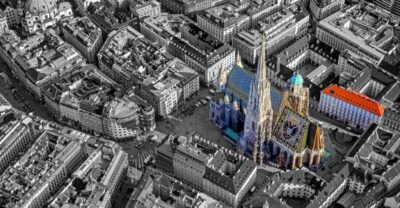
- Starting at Dorotheergasse near St. Stephen’s Cathedral
- Moving backward from modern Vienna to the Middle Ages
- Judenplatz and the footprint of a medieval synagogue
- Temporary exhibitions and changing subjects
- How long to spend and how to arrange the visit
- What the audio guide adds
- The difficult sections, handled with care
- Is the $17 ticket good value?
- Who should choose this museum ticket?
- Should you book it?
- FAQ
- What does the Jewish Museum Vienna ticket include?
- Where are the two museums located?
- How long is the ticket valid?
- Is an audio guide included?
- What can I see at the Museum Judenplatz?
- Is the museum ticket wheelchair accessible?
- Can I cancel the booking?
- Does the ticket include a personal guide?
Key points to know before you go
- Two museums, one central Vienna ticket: Visit the Dorotheergasse museum and the Museum Judenplatz with one admission.
- A rare 3D view of medieval Jewish Vienna: Judenplatz presents the foundations of a medieval synagogue along with a reconstruction that helps you picture the vanished building.
- The story begins again after 1945: The main exhibition starts with Jewish life in postwar Vienna, then works backward to the Middle Ages and the Holocaust.
- The tone is frank, not sensational: The museums address persecution and suffering while also showing how Jewish communities built lives, institutions, and traditions.
- Plan for reading: One visitor found the presentation somewhat like reading a book, a fair warning for anyone seeking constant action.
- Flexible timing: The ticket is described as valid for three days from first activation, while the inclusion details say four days from the date of issue, so check the exact validity printed with your booking.
Why these two museums belong on your Vienna plan
Vienna is full of grand imperial buildings, musical associations, and polished coffeehouse traditions. That familiar picture leaves out much of the city’s Jewish past. This museum ticket gives you a way to correct the picture without spending a full day in a single large institution.
I like the pairing because the two sites do different jobs. The Dorotheergasse museum gives you a broad account of Jewish religion, family life, collecting, persecution, and the postwar community. Judenplatz takes you to one specific place, where the foundations of a medieval synagogue connect the wider story to actual ground beneath your feet.
The museums also avoid reducing Jewish history to the Holocaust alone. The Holocaust is treated directly, as it should be, but the exhibitions also show Jewish life before and after it. That wider frame matters. You see a community not only as a victim of events, but as a group that created homes, worshipped, worked, collected objects, preserved customs, and rebuilt after near-total destruction.
More Museum Tours in Vienna:
- Vienna: Skip-the-Line Sisi Museum, Hofburg and Gardens Tour
★ 4.8 · 5,918 reviews - Vienna Kunsthistorisches Museum Day Admission Ticket
★ 4.6 · 3,690 reviews - Tickets for the Albertina Exhibitions
★ 4.7 · 2,126 reviews
Starting at Dorotheergasse near St. Stephen’s Cathedral
The main Jewish Museum Vienna is at Dorotheergasse 11, 1010 Vienna, in an old palace near St. Stephen’s Cathedral. This is a very convenient place to begin if you are already exploring central Vienna. You can combine it with a walk through the historic center rather than arranging a separate trip across town.
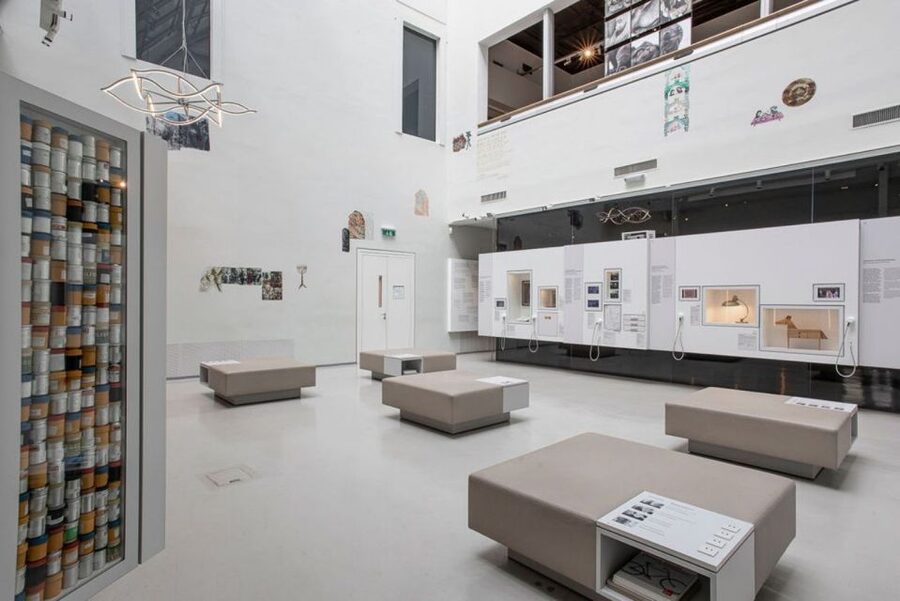
The building itself sets a different mood from the museum’s subject. You enter an old Viennese palace, then move into galleries that examine a community repeatedly shaped by expulsion, discrimination, religious life, political pressure, and renewal. The contrast between refined surroundings and difficult material is part of the visit’s impact.
The permanent exhibition at Dorotheergasse is called Our City! Jewish Vienna: Then to Now. Its structure is especially useful for visitors who do not know the basic timeline. Instead of beginning with a long chronological march, the exhibition starts with Jewish Vienna from 1945 to the present.
That choice makes you face the aftermath first. Vienna’s Jewish community had been almost completely destroyed, and the exhibition shows how a modest but varied community developed in the decades after the war. It also addresses the resistance of Austrian postwar policies, giving you a more honest picture than a simple story of recovery.
This opening section helps explain that 1945 was not a clean break. Survival did not automatically bring comfort, acceptance, or a full return to earlier life. You see the work involved in maintaining Jewish identity and community under difficult conditions.
Moving backward from modern Vienna to the Middle Ages
After the postwar and present-day material, the exhibition takes you back in time on the second floor. You move from the modern community to Jewish Vienna from the Middle Ages through the Holocaust.
I find this reverse order effective because you first meet Jewish Vienna as a living community. The earlier galleries then become more than distant dates. They show the long background of the people, customs, institutions, and places that shaped the city before the catastrophe of the 20th century.
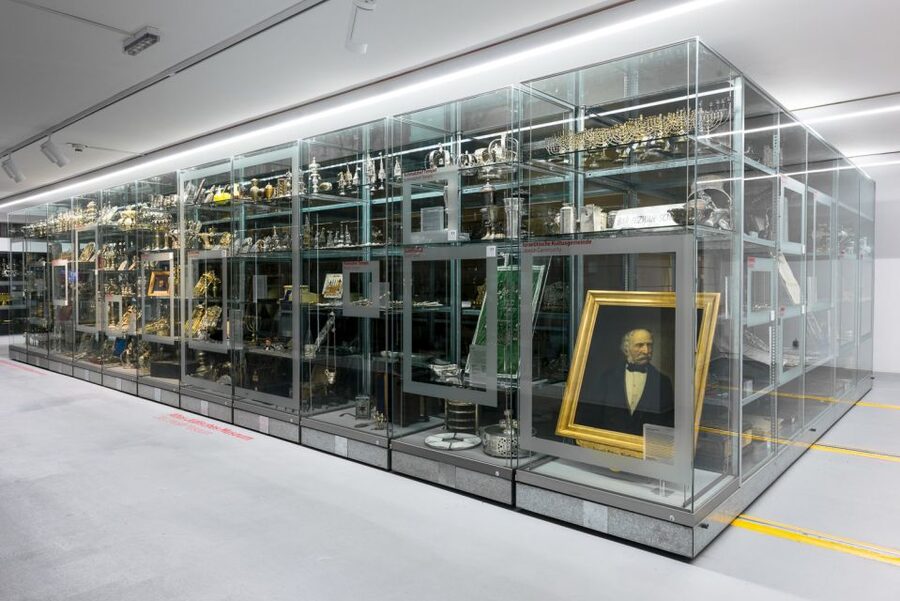
The displays place objects in historical context and connect them with their places of origin. Some came from synagogues. Others are linked to collectors such as Max Berger or Martin Schlaff. Those details matter because an object in a glass case can otherwise feel detached from real life. Here, you are encouraged to think about where it was used, who preserved it, and how it reached the museum.
The collection covers Jewish history, religion, and traditions in Austria. You might find yourself spending more time than expected with labels and background explanations, particularly if this is your first introduction to Jewish Austrian history. A multimedia guide adds further perspectives in the galleries, and the included audio guide is available in English and German.
There is a tradeoff. One visitor described the museum as informative but a little like reading a book. That is a reasonable criticism. The strength is depth and clarity, not nonstop spectacle. I would choose this museum for careful attention, not for a quick series of dramatic displays.
Judenplatz and the footprint of a medieval synagogue
The second location is the Museum Judenplatz at Judenplatz 8, 1010 Vienna. This museum focuses on the medieval Jewish community and presents the foundations of a medieval synagogue.
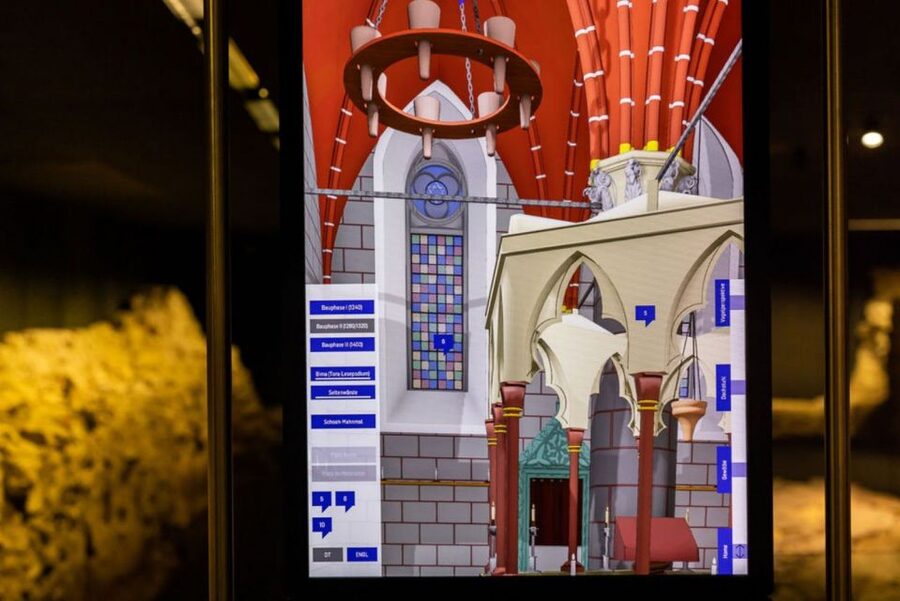
This is where the ticket becomes more than a standard museum admission. The foundations give you a physical connection to a Jewish building that no longer survives above ground. A 3D reconstruction helps you picture the synagogue as a functioning place rather than a set of stones.
The reconstruction is particularly useful if you do not have much background in medieval architecture. Ruins can be hard to read on their own. The model gives scale and form to the remains, helping you understand how the site fit into Jewish life in medieval Vienna.
Judenplatz also changes the rhythm of the visit. After the broader galleries at Dorotheergasse, this smaller, more focused museum gives you a specific site and period to consider. I would not treat it as an optional extra. The ticket covers both locations, and the two museums work best together.
Allow enough time to look closely rather than rushing in for a few minutes. The site is part of the story, not merely a second collection. You are seeing evidence of a community that once lived, worshipped, and organized its life in this part of Vienna.
A few more options to weigh up in Vienna
- Vienna: Vivaldi’s Four Seasons Concert in Karlskirche
★ 4.7 · 14,951 reviews - Vienna: Spanish Riding School Training
★ 3.9 · 9,281 reviews - Vienna: Schönbrunn Palace & Gardens Skip-the-Line Tour
★ 4.7 · 7,739 reviews - Vienna: Light of Creation Votive Church Immersive Light Show
★ 4.8 · 6,779 reviews
Temporary exhibitions and changing subjects
Both Dorotheergasse and Judenplatz offer temporary exhibitions and events. These displays can shift the focus away from the main chronology and explore particular people, objects, themes, or periods in greater detail.
That matters if you have visited a Jewish museum elsewhere. The permanent galleries give you the basic structure, while temporary exhibitions can add subjects that would not fit easily into a general survey. If you have already been to the museum before, check what is currently showing before deciding how much time to allow.
The supplied information does not list the current temporary exhibition titles, so you should not assume that a particular subject will be on display during your visit. Still, the changing program is a reason to revisit or to leave room in your schedule instead of treating the ticket as a quick one-time stop.
The museum also offers events at both locations. A ticket alone does not guarantee a special event or a personal tour, so check the details of your booking if you are looking for a hosted program. The regular admission includes the museums and audio guide.
How long to spend and how to arrange the visit
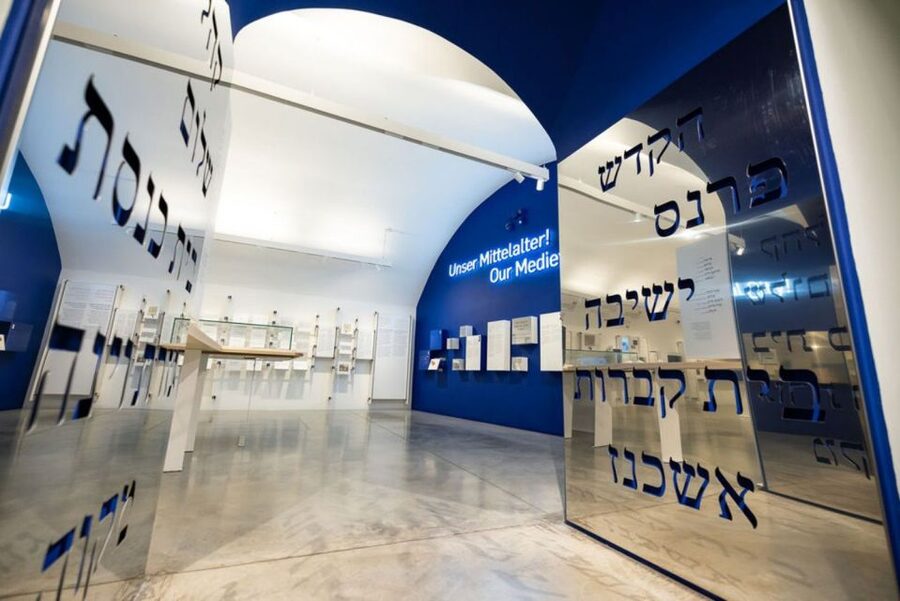
The activity is listed with a three-day duration, and the ticket is intended to give you flexibility rather than force both museums into one timed sitting. The inclusion details describe admission as valid for four days from the date of issue, while the activity information says three days from first activation. Because those statements differ, check the validity shown when you receive the ticket.
In practical terms, you can visit both museums in one morning. That pace works if you read selectively and already know something about the subject. I would give yourself longer if you want to follow the timeline, listen to the audio guide, and think about the temporary displays.
You can also split the visit. Start at Dorotheergasse when you have more energy for the larger historical presentation, then visit Judenplatz later in the day or on another day. The central locations make this easy to combine with other sightseeing.
There is seating in both museums, which helps if you want to take your time or need a break. The museums are also wheelchair accessible according to the activity details. The main meeting points are Dorotheergasse 11 and Judenplatz 8, both in Vienna’s first district.
One practical weakness is arrival guidance. A visitor wanted clearer instructions on arrival, so read the meeting-point information before setting out. If you are booking a guided version or an event rather than standard admission, pay particular attention to where that part begins.
What the audio guide adds
The audio guide is included in English and German. That is important here because the written material can be substantial, and an audio explanation can help you decide which objects deserve closer attention.
The museum’s multimedia material offers additional perspectives on the exhibits. Use it as a guide rather than trying to hear every word. If you listen to everything and read every label, the visit can become tiring.
Some feedback praises personal guides, including Miki for a thorough explanation, Wolfgang for creative and entertaining accounts of Jewish life in Vienna, and Victoria for explaining the background and current events connected with a synagogue. Those comments suggest that guided interpretation can add warmth and structure, but you should distinguish it from the regular museum ticket, which specifically includes an audio guide.
For an independent visit, I would begin by getting the basic timeline. Then use the audio material to follow objects or themes that catch your attention. This keeps the museum from feeling like a textbook while still giving you the context needed to understand what you are seeing.
The difficult sections, handled with care
The museums discuss discrimination, persecution, the Holocaust, and the destruction of Jewish life in Vienna. You should expect serious material and allow yourself time to pause.
The tone described by the supplied feedback is direct about suffering without becoming morbid. That balance is valuable. The subject does not need theatrical treatment, and the exhibitions appear to keep attention on people, community life, and historical facts.
I also appreciate the emphasis on Jewish work and endurance across the centuries. The displays do not present Jewish history only as a sequence of attacks from outside. They show the effort to build and maintain a life despite constant pressure.
This makes the visit suitable for adults, teenagers, and children, according to one detailed assessment. Younger children may not follow every historical point, but the museums can support a family conversation about religion, discrimination, memory, and how communities survive.
The experience can also be personally challenging if you know little about Jewish history in Central Europe. That is not a reason to avoid it. It simply means you should not pack the museums into a rushed schedule between two major attractions.
Is the $17 ticket good value?
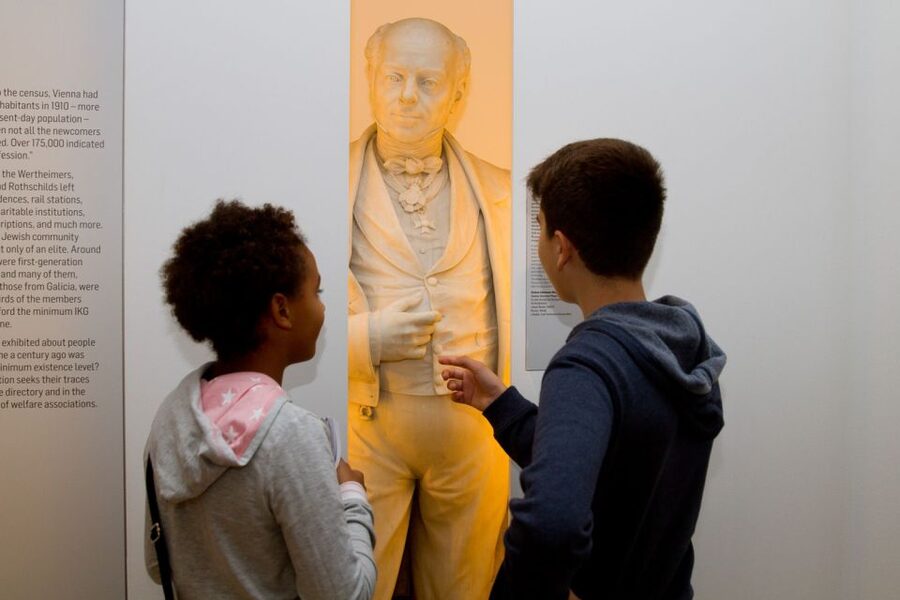
At $17 per person, the ticket is good value if you visit both locations. You are not paying for one small display. You get access to the main Dorotheergasse museum, the Museum Judenplatz, permanent exhibitions, temporary exhibitions available during your visit, and an audio guide in English or German.
The value improves if you use the flexible validity and split the museums across more than one day. It is less compelling if you only have time for a very short visit to one site, especially since much of the experience depends on reading and context.
Free cancellation up to 24 hours in advance and reserve-now, pay-later booking make the ticket easier to fit around changing plans. Those terms are useful in Vienna, where weather and museum schedules can alter your day, but check the final booking conditions and validity dates carefully because the supplied duration details are not perfectly consistent.
Who should choose this museum ticket?
I would recommend it most strongly if you want a fuller account of Vienna than imperial palaces and music history can provide. It suits first-time visitors who want context, repeat visitors seeking a different side of the city, and anyone interested in Jewish religion, traditions, and community life in Austria.
It is also a good choice for families with older children and teenagers, thanks to the clear layout, seating, and serious but measured approach. History students, museum fans, and visitors with personal or academic interest in Central Europe will likely want more than a quick morning.
You may enjoy it less if you want a light, highly visual attraction with minimal reading. The exhibitions are well organized and illustrated, but they ask for attention. If that sounds tiring, visit one site first and use the multi-day validity rather than forcing both into a single sprint.
Should you book it?
Book this ticket if you want to understand Jewish Vienna across several centuries, not just see a memorial or a collection of objects. The combination of the postwar community, earlier Jewish life, Holocaust history, synagogue remains, and 3D reconstruction gives the city a more honest shape.
I would make both locations part of the plan, since Judenplatz supplies the physical setting that the larger museum cannot. Allow a morning at minimum, use the English audio guide, and confirm the ticket’s exact validity period before activating it. For $17, this is a thoughtful and worthwhile addition to a central Vienna sightseeing day.
FAQ
What does the Jewish Museum Vienna ticket include?
The ticket includes admission to both the Jewish Museum Vienna at Dorotheergasse and the Museum Judenplatz. Temporary exhibitions and events may be available at the two locations during your visit.
Where are the two museums located?
The Jewish Museum Vienna is at Dorotheergasse 11, 1010 Vienna. The Museum Judenplatz is at Judenplatz 8, 1010 Vienna.
How long is the ticket valid?
The activity details say the ticket is valid for three days from first activation. The inclusion details say admission is valid for four days from the date of issue, so check the exact validity stated with your booking.
Is an audio guide included?
Yes. An audio guide is included in English and German. The museum also provides multimedia material with additional perspectives on the exhibits.
What can I see at the Museum Judenplatz?
You can see the foundations of a medieval synagogue and a 3D reconstruction that helps show what the synagogue may have looked like.
Is the museum ticket wheelchair accessible?
Yes. The activity information states that the experience is wheelchair accessible.
Can I cancel the booking?
You can cancel up to 24 hours in advance for a full refund, according to the booking terms provided.
Does the ticket include a personal guide?
The standard activity information specifies an audio guide in English and German, not a personal guide. Some bookings or related visits may include guides, so check the exact option you select if you want a hosted tour.
Just added in Vienna
- Vienna: Austrian Wine Tasting Experience★ 4.2 · 2 reviews
- World War II History Vienna Old Town Private Walking Tour★ 4.8 · 9 reviews
- Vienna_ Meet Beethoven Life Private Guided Walking Tour★ 5.0 · 1 review
- Vienna: Wine Tasting Tour★ 4.8 · 61 reviews
- Vienna: Winery and Wine Tasting Tour with a Wine Expert★ 5.0 · 5 reviews
- Vienna: Wine Tasting E-Bike Tour★ 4.9 · 46 reviews
- Vienna: Wine Tasting at Schönbrunn Palace★ 4.3 · 71 reviews
- Vienna: Concert by the Vienna Baroque Orchestra★ 4.6 · 56 reviews
Museums, compared.

Skip-the-Line Sisi Museum, Hofburg and Gardens Tour
Read our review →
Vienna Kunsthistorisches Museum Day Admission Ticket
Read our review →

Chocolate Workshop in Chocolate Museum w/ Tasting
Read our review →
St. Stephen’s Cathedral & Dom Museum Wien Tickets
Read our review →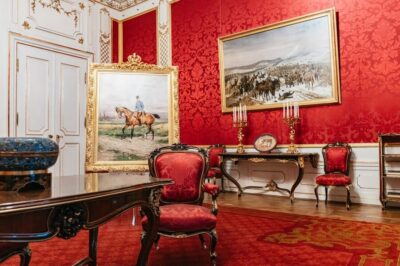
Browse the lists this tour appears in