
Reviewed · HISTORICAL TOURS
Private tour of historical Vienna with Jan
Vienna makes a fine first lesson. Jan’s private walking tour turns the old town into a readable story, linking palace courtyards, grand squares, churches, coffeehouses, and everyday city life. I especially like the small-group format, which lets you ask questions and shape the pace, and the way Jan connects architecture with the political choices that changed Austria. The main consideration is time: at two to three hours, this is an excellent orientation, not a full visit inside Vienna’s major museums and palaces.
I also like the human touches. Jan may help you sort out public transport, suggest places for cake or dinner, or adjust the route for children and personal interests. He is a state-licensed guide with strong English and a gift for storytelling. The price of $432.53 is a serious outlay for one or two people, though it becomes good value for a larger group of up to ten.
In This Review
- Key points at a glance
- Why this private Vienna walk works so well
- Stephansplatz gives you Vienna’s center of gravity
- The Hofburg explains how the Habsburgs ruled
- Heldenplatz and Maria Theresien Square widen the story
- Conditorei Sluka brings in coffeehouse culture
- St. Stephen’s and the Jesuit Church show two kinds of grandeur
- Stadtpark offers a useful breath of fresh air
- Graben and Kohlmarkt mix shopping with public memory
- The walk ends at Naschmarkt, not back at the start
- What the $432.53 price really means
- Who will get the most from Jan’s tour
- Timing, pickup, and comfort
- Should you book this private Vienna walking tour?
- FAQ
- How long does the private Vienna tour last?
- How much does the tour cost?
- Where does the tour start and end?
- Is the tour offered in English?
- Are admission tickets included?
- Can I cancel the tour for a refund?
Key points at a glance
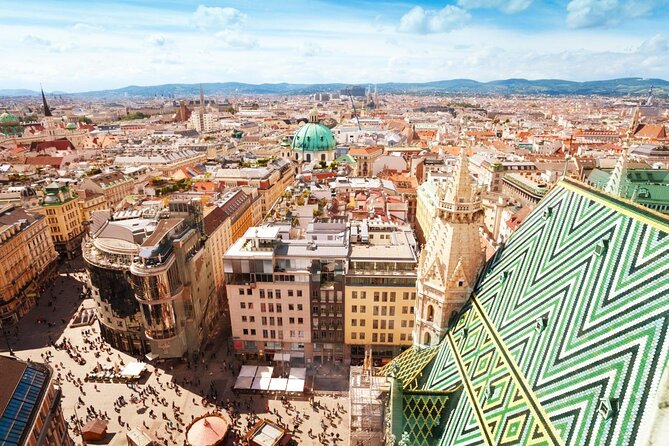
- Jan brings the Habsburg story to life through the Hofburg courtyards, Heldenplatz, and Maria Theresien Square.
- The route covers major Vienna landmarks while also pointing out shopping streets, cafés, transport links, and local places to eat.
- A coffee-and-cake break at Conditorei Sluka adds a real taste of Viennese café culture.
- The private format suits families and mixed-age groups, with room for questions, food stops, and changes in emphasis.
- The tour begins at Stephansplatz and ends at Naschmarkt, giving you a useful route across central Vienna.
- The cost works best for groups, since the $432.53 fee covers up to 10 people rather than charging each person separately.
Why this private Vienna walk works so well
Vienna can feel grand to the point of confusion. One palace leads to another, a monumental square opens into a museum district, and a church may contain centuries of political and religious change. A good guide helps you see how the pieces connect.
That is the main strength here. Jan does not simply point at a building and name it. He explains why Vienna looks the way it does, how the Habsburg rulers shaped the city, and how war and reconstruction affected its people. You get a broad picture without being trapped in a large group with a flag to follow.
The private setup matters. Your group alone takes part, and the tour can respond to your interests. You can ask about architecture, Austrian rulers, food, shopping, public transport, or places to visit later. Families can keep moving when young legs tire, while history fans can spend longer on a palace or church.
The tour has earned a perfect rating from 43 submitted evaluations, with every participant recommending it. The praise focuses on the same points again and again: Jan’s clear English, his warm manner, his command of history, and his ability to tell a story without making difficult subjects feel heavy.
More History Tours in Vienna:
- Vienna: Time Travel and Magic Vienna History Tour
★ 4.6 · 3,879 reviews - Vienna: World War II Historical Walking Tour
★ 4.8 · 1,772 reviews - Vienna Historic Center Small Group Walking Tour
★ 5.0 · 1,746 reviews
Stephansplatz gives you Vienna’s center of gravity
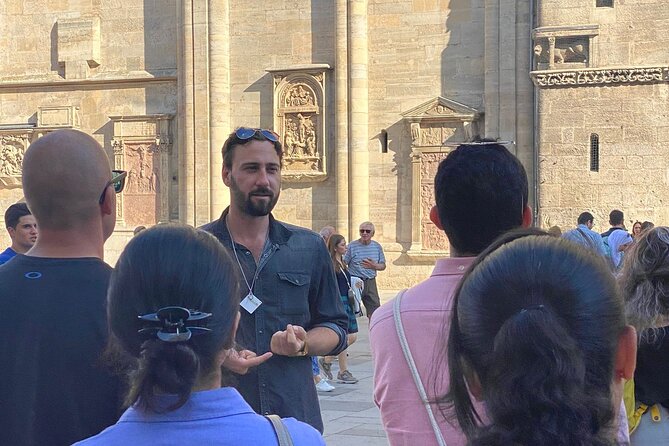
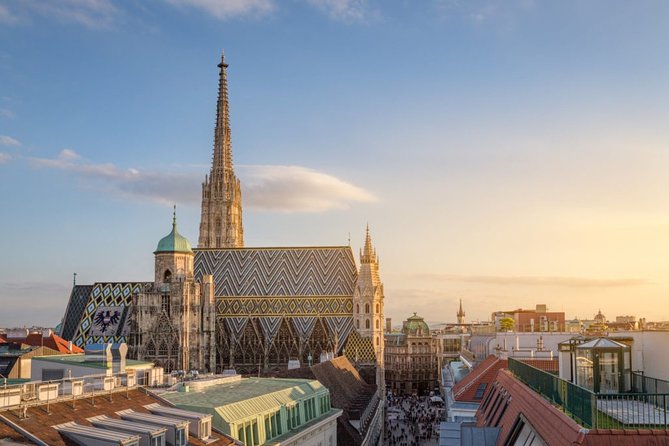
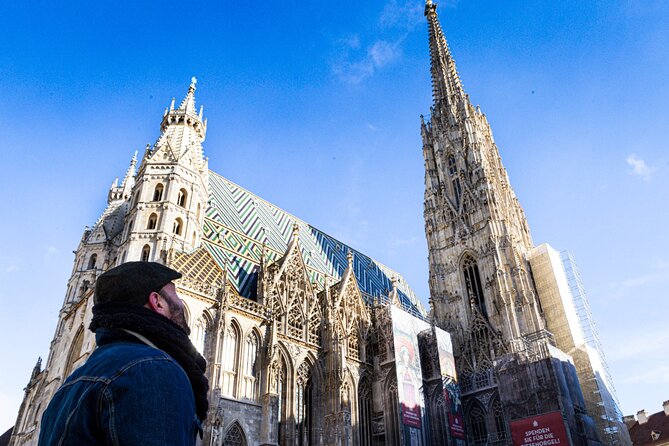
The walk begins at Stephansplatz, in front of St. Stephen’s Cathedral. This is an excellent starting point because it puts you right in the geographical and spiritual center of the city.
The cathedral itself receives a short formal stop later in the route, listed at about 10 minutes. That may sound brief, but Jan uses the time to explain the building’s long construction, its mixture of styles, and the story of its postwar rebuilding. The rebuilding story is especially useful because it moves beyond dates and rulers. It shows a city trying to repair both its buildings and its sense of shared purpose after war.
You should not expect a full cathedral visit during this walk. The tour fee covers the guide, and the listed stops have no admission charge. If you want to climb a tower, visit a paid exhibition, or spend a long time inside, plan that separately.
From Stephansplatz, Jan also helps you understand the old town as a working city rather than a museum set. Shopping, cafés, streets, and major sights sit close together here. His practical suggestions can help you decide where to return later, when you are ready to explore without a guide.
The Hofburg explains how the Habsburgs ruled
The Hofburg is not one tidy palace. It is a collection of wings and buildings added by different rulers over many periods. That patchwork quality is part of the lesson.
You spend about 30 minutes in the outer courtyards, where Jan explains the Habsburg dynasty and the role of the palace in Austrian life. This is one of the strongest portions of the tour for first-time visitors because the political story can otherwise seem like a long list of names.
Look for the way the palace grew over time. Each addition reflects changing needs, tastes, and ambitions. Jan’s approach, based on the descriptions of his tours, is to explain the reasons behind those changes rather than asking you to memorize them.
The tour stays in the exterior courtyards. That keeps the walk efficient and avoids the time needed for palace interiors. It also means you will not see every museum collection or royal apartment. If the empress Elisabeth exhibitions or imperial rooms are your main reason for visiting Vienna, set aside a separate visit.
Heldenplatz and Maria Theresien Square widen the story
At Heldenplatz, you get about 15 minutes to take in one of Vienna’s grandest architectural settings. The square frames the power of the Austrian Empire, with the Hofburg and the National Library palace helping create its monumental scale.
Jan uses the square to tell stories about military heroes and imperial ambition. This is a good place to pause and consider how public spaces can shape a national story. The grand buildings are not merely decoration. They were designed to project authority.
Maria Theresien Square follows with another 15-minute stop. The square is framed by the Natural History Museum and the Art History Museum, with a large memorial to Maria Theresia at its center.
Jan presents Maria Theresia as a ruler who faced serious challenges while strengthening Habsburg control. He also connects her government with Austria’s move toward modernization, a more centralized state, and the growth of a bureaucratic middle class. That social angle makes the stop more useful than a simple monument photograph.
The drawback is again one of timing. Fifteen minutes gives you the setting and the main story, but not the museum interiors. The two museums deserve hours on their own. Think of this walk as a way to decide which one deserves your return visit.
A few more options to weigh up in Vienna
- Vienna: Vivaldi’s Four Seasons Concert in Karlskirche
★ 4.7 · 14,951 reviews - Vienna: Spanish Riding School Training
★ 3.9 · 9,281 reviews - Vienna: Schönbrunn Palace & Gardens Skip-the-Line Tour
★ 4.7 · 7,739 reviews - Vienna: Light of Creation Votive Church Immersive Light Show
★ 4.8 · 6,779 reviews
Conditorei Sluka brings in coffeehouse culture
Vienna’s story is not complete without cake and coffee. The planned 30-minute break at Conditorei Sluka gives the tour a welcome change of pace.
Sluka is a traditional Viennese coffeehouse with an attractive end-of-the-century Art Nouveau interior. This is not just a rest stop. It introduces one of the city’s most important social customs, the café as a place to sit, talk, read, and linger.
Several people who took the tour especially appreciated the coffee-and-cake break. Jan has also been praised for suggesting bakeries, cafés, and places serving strudel. One family received a food stop when a child became hungry, which shows how the private format can make the day easier.
Food and drinks are not listed among the included services, so budget to pay for your own order. The precise café timing may also depend on the day and the pace of your group. Still, this pause is one of the tour’s most appealing details. It keeps the walk from becoming a nonstop march through stone and dates.
St. Stephen’s and the Jesuit Church show two kinds of grandeur
After the coffee break, the route returns to major religious buildings. St. Stephen’s Cathedral is the city’s best-known church, but the Church of the Jesuits offers a quieter contrast.
The cathedral’s 10-minute stop focuses on its construction across different periods and architectural styles. Jan also discusses the postwar reconstruction, a useful reminder that Vienna’s historic buildings have not simply survived untouched. Some had to be repaired through cooperation and shared effort.
The Church of the Jesuits receives another 10-minute visit. It is described as one of Vienna’s finest but least visited Baroque churches. Inside, the style is dramatic and highly decorative. You can expect this stop to focus on visual details and the character of Austrian Baroque rather than a long religious history lesson.
These short church visits work best if you want a quick introduction. They are less suitable if you prefer quiet time for prayer, photography, or close study of art. Ask Jan for advice about returning later if one of the churches catches your attention.
Stadtpark offers a useful breath of fresh air
Vienna’s old town can feel dense, especially after several hours among palaces and churches. The 15-minute stop at Stadtpark gives you a break from narrow streets.
The park lies along the southern part of the Ringstrasse, the grand boulevard that helped reshape Vienna. It is linked with painters, musicians, and politicians from the city’s golden age. Jan uses the park to bring those cultural figures into the wider story of the city.
This stop may not be essential for a visitor with only one afternoon in Vienna, but it helps vary the pace. You get greenery, open space, and a chance to think about the city beyond its imperial center. For families, that breathing room can be particularly welcome.
Graben and Kohlmarkt mix shopping with public memory
Graben and Kohlmarkt are Vienna’s high-end shopping streets. Luxury brands and coffeehouses dominate, but the streets also carry historical meaning.
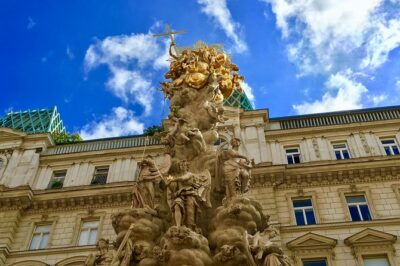
Graben’s Baroque plague column commemorates survival after a devastating plague at the end of the 17th century. Jan can use the column to connect public art with fear, faith, and civic memory. It is a good example of how Vienna often places serious history directly in the middle of daily shopping streets.
The planned stop here lasts about 10 minutes. That is enough to understand the main story and see the street’s architecture, but not enough for serious shopping. If you want time in the shops or a café, return later.
The walk ends at Naschmarkt, not back at the start
The tour finishes at Naschmarkt, Vienna’s famous open-air food market. This is a useful ending because you finish near food, public transport, and another lively part of the city rather than being returned to the starting point.
The route therefore works as a gentle east-to-west or central-city orientation, beginning near St. Stephen’s and ending farther southwest. Check your plans before booking. If you have a train, museum reservation, or dinner appointment immediately afterward, allow extra time to reach it.
Naschmarkt is also a practical place to continue your day. You can browse food stalls, plan a meal, or use the end of the tour as a springboard for more exploring. The exact amount of time spent at the market is not specified, so treat it as the finishing location rather than a guided market tour.
What the $432.53 price really means
The price is $432.53 per group of up to 10 people. That is expensive for a couple, but the calculation changes quickly with a family or larger party.
For two people, the cost is about $216 per person. For four, it is roughly $108 each. For ten, it works out to about $43 per person. The fee covers a qualified, state-licensed guide, and the private format is the key value. You are paying for personal attention, a flexible pace, and a guide who can answer questions as they arise.
Admission tickets are not part of the tour because the listed stops are free exterior or public-space visits. Coffee, cake, and other food are also not listed as included. That keeps the price clear, but you should plan for extra spending during the Sluka break or at Naschmarkt.
I would consider this good value for a family, two couples, or a group of friends who want one shared guide. For a solo visitor or couple on a tight budget, a public walking tour may cost less, though it will not offer the same private attention.
Who will get the most from Jan’s tour
I would choose this tour for:
- First-time visitors who want a clear map of central Vienna
- Families needing a flexible pace and occasional food stops
- History fans interested in the Habsburgs and city development
- Visitors who want practical suggestions for cafés, bakeries, shopping, and public transport
- Small groups who prefer questions and conversation over a fixed script
- People arriving after a long journey who want a gentle, useful first afternoon
Jan also seems well suited to visitors who enjoy storytelling. His explanations cover architecture, rulers, war, reconstruction, culture, and daily life. He has been praised for keeping dark subjects approachable without ignoring them.
I would be more cautious if your main goal is extended interior visits. This is a walking orientation with exterior courtyards and short church stops, not a palace-and-museum admission tour. You will need separate tickets and more time for the Hofburg museums, the Art History Museum, the Natural History Museum, or cathedral towers.
Timing, pickup, and comfort
The advertised duration is about two to three hours, and the listed stops add up to roughly three hours. The pace includes several walking sections, so comfortable shoes make sense.
Pickup is offered, and one group arranged to meet Jan at its hotel. Confirm the exact pickup details when booking, since the stated starting point is Stephansplatz and the usual end is Naschmarkt.
The tour is offered in English and uses a mobile ticket. Confirmation is sent within 48 hours, subject to availability. It is near public transport, service animals are allowed, and most people can participate.
You can cancel for a full refund up to 24 hours before the start time. Changes or cancellations inside that window are not accepted for a refund. Gratuity is not included, so plan to tip if Jan’s work adds real value to your day.
Should you book this private Vienna walking tour?
Book it if you want Vienna to make sense quickly. Jan’s strongest qualities are his storytelling, his command of Viennese history, his clear English, and his willingness to tailor the walk. The route gives you the city’s essential imperial sights, but it also includes coffeehouse culture, public transport help, food suggestions, and small details that can improve the rest of your stay.
I would book it early if your dates are fixed, since the tour is often reserved well ahead of time. It is especially worthwhile on your first day, when a few hours of orientation can save you from wandering past important buildings without understanding what you are seeing.
Skip it if you only want museum interiors or a low-cost group activity. For everyone else, especially a group of four or more, this is a thoughtful and practical introduction to Vienna.
FAQ
How long does the private Vienna tour last?
The tour lasts approximately two to three hours. The listed stops and coffee break together are planned around a three-hour experience.
How much does the tour cost?
The price is $432.53 per group, with up to 10 people included.
Where does the tour start and end?
The stated starting point is Stephansplatz in central Vienna. The tour ends at Naschmarkt, the open-air food market.
Is the tour offered in English?
Yes. The tour is offered in English and includes a qualified, state-licensed guide.
Are admission tickets included?
The listed stops have no admission charge, and the experience does not include paid museum or palace admission tickets. The route focuses on public areas, courtyards, squares, streets, and short church visits.
Can I cancel the tour for a refund?
Yes. You can cancel at least 24 hours before the local start time for a full refund. Cancellations or changes made less than 24 hours before the start time are not accepted for a refund.
Just added in Vienna
- Vienna: Austrian Wine Tasting Experience★ 4.2 · 2 reviews
- World War II History Vienna Old Town Private Walking Tour★ 4.8 · 9 reviews
- Vienna_ Meet Beethoven Life Private Guided Walking Tour★ 5.0 · 1 review
- Vienna: Wine Tasting Tour★ 4.8 · 61 reviews
- Vienna: Wine Tasting E-Bike Tour★ 4.9 · 46 reviews
- Vienna: Wine Tasting at Schönbrunn Palace★ 4.3 · 71 reviews
- Vienna: Winery and Wine Tasting Tour with a Wine Expert★ 5.0 · 5 reviews
- Vienna: Concert by the Vienna Baroque Orchestra★ 4.6 · 56 reviews
Historical Tours, compared.
Vienna Historic Center Small Group Walking Tour
Read our review →
Skip-the-Line Schonbrunn Palace Guided Tour and Vienna Historical City Tour
Read our review →
Vienna Mozart Concert in Historical Costumes at the Musikverein
Read our review →
Browse the lists this tour appears in