
Reviewed · HISTORICAL TOURS
Vienna: History Highlight Walking Tour
Vienna rewards curious walkers. This two-hour history tour links Roman ruins, Habsburg palaces, grand squares, war memorials, and the city’s great cathedral with stories that make the stonework easier to understand. I especially like the small-group format and the guide’s mix of solid history, humor, and useful advice for the rest of your stay. The main consideration is pace: you cover a lot of central Vienna without entering the sights, and the route is not suited to people with mobility impairments.
The tour is strongest when the guide adds human details to imposing buildings. Herbert Stojaspal receives repeated praise for his humor, visual aids, and ability to connect architecture with the people who used these places. Wolfgang is also praised for his energy and clear explanations. If you want a quick orientation before choosing museums and palaces, this is a smart first-day activity.
In This Review
- Key points to know before booking
- Why this two-hour walk works well in Vienna
- Michaelerplatz and Vienna’s Roman foundations
- St. Michael’s Church and the first Habsburg clues
- Hofburg Palace and Heroes’ Square
- The Imperial Treasury and the logic of power
- Austrian National Library and Joseph Square
- Habsburg weddings and the church ceremony
- Albertina, war memory, and the city’s darker side
- The State Opera, Hotel Sacher, and a vanished theater
- Neuer Markt, the Imperial Crypt, and Habsburg burial customs
- St. Stephen’s Cathedral and the final wartime story
- What the guides do best
- Who should book this walk?
- Should you book the Vienna History Highlight Walking Tour?
- FAQ
- How long does the Vienna History Highlight Walking Tour last?
- Where does the tour meet?
- How close is the meeting point to public transportation?
- Which languages are available?
- Are entrance fees included?
- Is the tour suitable for children or people with mobility impairments?
- Can I cancel the booking?
Key points to know before booking
- Roman ruins begin the story: The tour starts at Michaelerplatz, where Vienna’s ancient foundations help explain why this location mattered.
- Imperial Vienna gets human treatment: Hofburg Palace, Heroes’ Square, the Imperial Treasury, and the Imperial Crypt come with stories about rulers, marriages, ceremony, and burial customs.
- You see more than grand facades: The guide points out symbols, vanished buildings, architectural clues, and details you could easily pass without context.
- World War II is not skipped: The Albertina and Monument Against War and Fascism introduce the city’s darker twentieth-century past.
- The route ends at St. Stephen’s Cathedral: You hear about wartime damage, the cathedral’s importance, and a commonly repeated story that is not quite correct.
- Practical limits matter: Entrance fees are extra, large bags and recording are not allowed, and the tour runs in all weather.
Why this two-hour walk works well in Vienna
Vienna can feel easy to explore because its center is compact and full of beautiful buildings. The catch is that the city’s imperial architecture often tells only half the story. A palace facade may look impressive, but without a guide you can miss why the building is there, which ruler used it, or what happened behind the formal ceremonies.
This walking tour gives you that framework in a short period. It focuses on central Vienna, so you are not spending time getting from one district to another. Instead, you move through the old imperial core, stopping often for explanations and anecdotes.
I would use this tour as an introduction, not as a replacement for Vienna’s museums. It helps you decide where to spend your own time afterward. One attendee specifically found the background useful before visiting the Imperial Treasury, while others used the guide’s suggestions to plan museums and attractions later that day.
The tour costs $33 per person. That is fair value if you want a live guide who can answer questions and explain details as you walk. It is less attractive if you only want to see interiors, since admission fees are not included and the tour generally presents the sights from outside.
More Walking Tours in Vienna
- Vienna: Guided Walking Tour of City Center Highlights
★ 4.7 · 4,989 reviews - Vienna: Vienna Central Cemetery Guided Walking Tour
★ 4.8 · 3,307 reviews - Vienna: Guided Walking Tour of City Highlights & Hidden Gems
★ 4.9 · 2,180 reviews
Michaelerplatz and Vienna’s Roman foundations
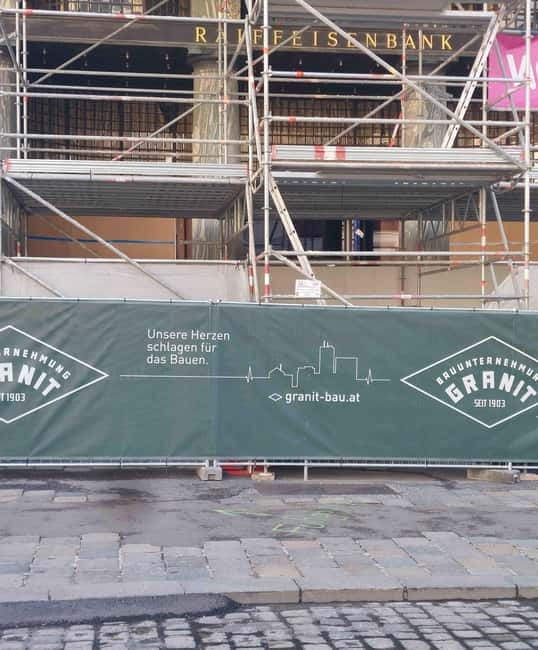
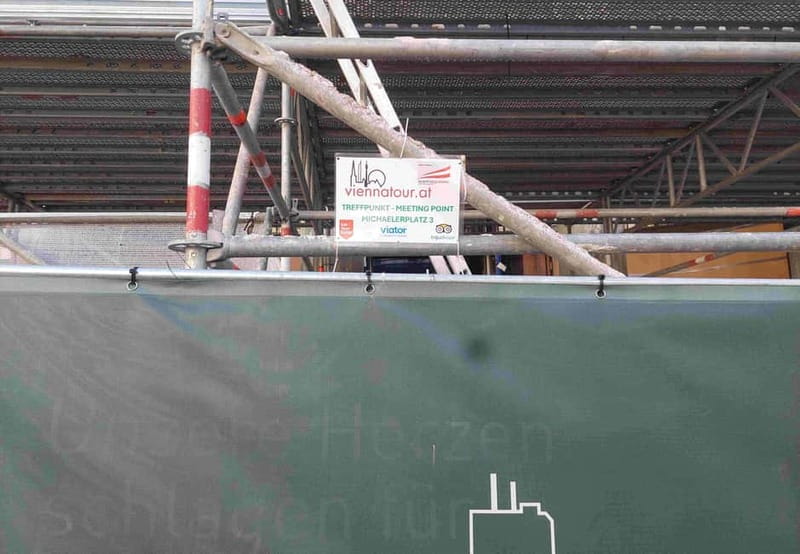
The meeting point is in front of the Loos Haus at Michaelerplatz 3, 1010 Vienna. Look for the building between Kohlmarkt and Herrengasse, with Raiffeisenbank on the facade. The Herrengasse station on the U3 metro line is about a three-minute walk away.
This is a useful starting point because Michaelerplatz brings several layers of Vienna together. The tour begins with Roman Vienna and asks why a castle was built here. That opening question gives the rest of the walk a clear purpose: you are not simply collecting famous buildings, you are following the reasons this part of the city became a center of power.
The Michaelerplatz excavations offer a glimpse of earlier settlement beneath the modern city. You will not get a long archaeological visit, but the stop helps you see Vienna as a place built in layers. The grand imperial center did not appear all at once.
The square can be visually busy, with traffic, pedestrians, and large buildings surrounding the open space. A small group helps here because you can usually stay close to the guide. Still, pay attention when crossing streets and wear shoes that can handle several kinds of pavement.
St. Michael’s Church and the first Habsburg clues
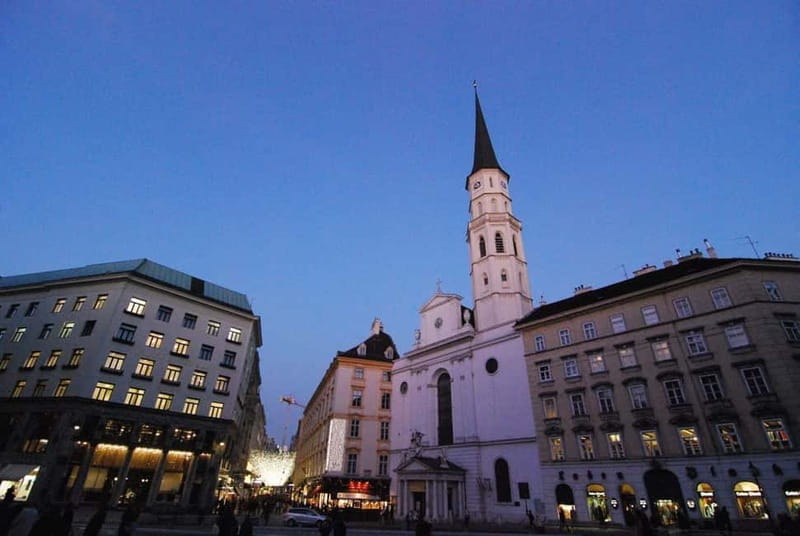
St. Michael’s Church is described as Vienna’s third-oldest church, and its appearance reflects three different architectural styles. That combination is more useful than a simple date because it shows how buildings change over time rather than belonging neatly to one period.
The guide uses the church to explain Vienna’s religious and political development. It is also a good reminder that the city’s most important buildings are not all imperial palaces. Churches served as places of worship, ceremony, music, and public identity.
The tour’s approach is interpretive rather than exhaustive. You should not expect a full church history or a long interior visit. Instead, you get enough context to recognize the church’s importance when you return on your own.
Hofburg Palace and Heroes’ Square
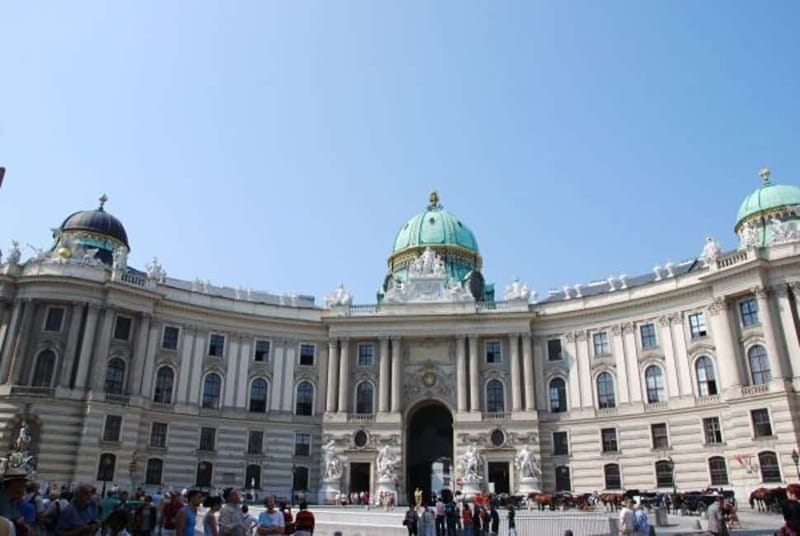
The Hofburg is the central event of the walk. The palace complex covers an enormous 555,000 square meters, and the guide explains why its size matters. This was not just a royal residence. It was a working center of government, ceremony, religion, administration, and court life.
I like this part of the tour because the guide connects the buildings to individual rulers rather than presenting the Habsburgs as one long blur of names. The information helps you separate the different functions of the palace and understand why Vienna’s political center grew so large.
Heroes’ Square, or Heldenplatz, gives you room to appreciate the scale of the imperial project. The open space can look simple at first, but the guide explains what lies behind the surrounding facades and why the square was designed to impress.
Large spaces are difficult to interpret alone. You can photograph the architecture, but you may not understand how the square was used or why its size carries political meaning. This is one place where a guide adds real value.
The drawback is that much of the Hofburg experience here is external. If you want apartments, museums, or formal collections, plan a separate visit. The walking tour gives you the map and the background, but not the full indoor experience.
More History Tours in Vienna:
- Vienna: Time Travel and Magic Vienna History Tour
★ 4.6 · 3,879 reviews - Vienna: World War II Historical Walking Tour
★ 4.8 · 1,772 reviews - Vienna Historic Center Small Group Walking Tour
★ 5.0 · 1,746 reviews - Time Travel-Magic Vienna History Tour Ticket
★ 4.5 · 1,099 reviews
The Imperial Treasury and the logic of power
The Imperial Treasury is one of the most useful stops for planning the rest of your Vienna visit. The guide explains why it deserves attention and what you can expect to see inside, but the entrance fee is not part of the $33 tour.
That arrangement can work in your favor. You receive an introduction before deciding if the collection fits your interests. You also avoid wandering into a museum without understanding why its objects mattered to the Habsburg court.
I would make a note of the guide’s recommendations during this section. Several people found the advice about museums and attractions helpful, especially because Vienna offers more choices than most short visits can handle. The tour helps you sort the essential stops from the optional ones.
Austrian National Library and Joseph Square
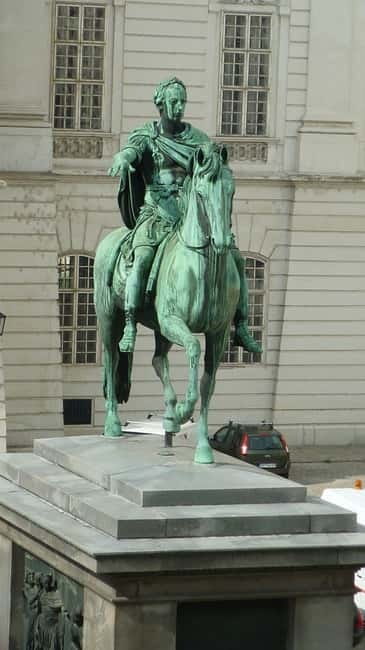
The walk continues past the Austrian National Library, including its famous state room. The guide points out the symbol on the roof and explains why the square is named after Emperor Joseph II.
These small details are exactly what make a city walk worthwhile. You may notice a roof symbol or read a square’s name, but without an explanation, the clue disappears into the background. Here, the guide turns decoration and place names into evidence of imperial ideas.
The state room itself is not included as an interior visit. If you want to see it, you will need a separate ticket. The tour still gives you a reason to return, which is often the best use of a short orientation walk.
Habsburg weddings and the church ceremony
Another stop focuses on the church where Habsburg weddings were held. It is closed on Sundays and public holidays, so the tour’s visit or explanation may be limited on those days. Check your timing if seeing the interior matters to you.
The stories here are more personal than architectural. You learn why the groom was not present at some royal weddings, a detail that makes dynastic marriage feel less like a romantic ceremony and more like a political arrangement.
This is one of the tour’s strongest themes: grand history becomes easier to remember when connected to odd customs and real human choices. The guide does not treat the Habsburgs as names carved in stone. You hear about the rituals that shaped their public and private lives.
Albertina, war memory, and the city’s darker side
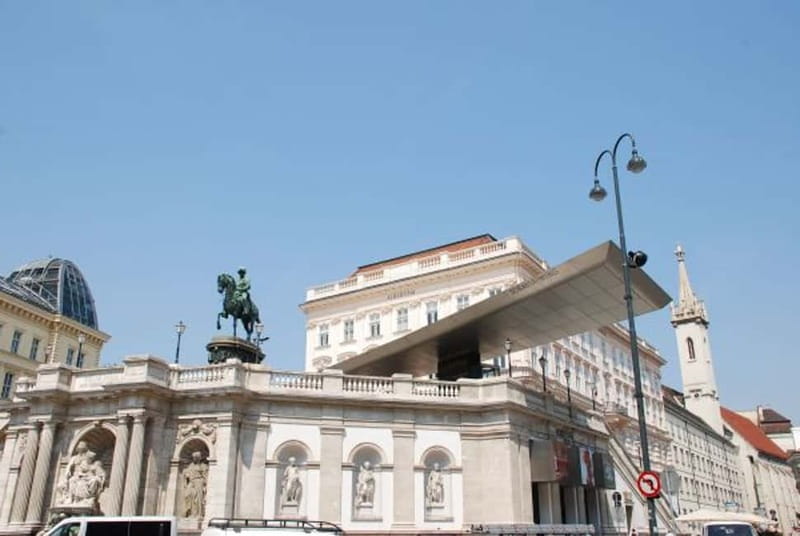
The Albertina is another major landmark on the route. It is home to one of the world’s largest graphic collections, though the tour does not include museum admission. The exterior is impressive, but the more important part of this stop is the transition from imperial grandeur to twentieth-century tragedy.
Nearby, the Monument Against War and Fascism confronts Vienna’s experience during the Second World War. This section prevents the walk from becoming a parade of palace stories. The city’s past includes destruction, political violence, and difficult memory, and the guide makes room for that part of the story.
A particularly useful feature is the use of historical images on an iPad. The guide Herbert has been praised for showing how buildings looked after the war. That visual comparison can make wartime damage easier to understand than a spoken description alone.
The tone changes here, appropriately. You should expect a serious discussion rather than a string of amusing anecdotes. That balance gives the tour more credibility.
The State Opera, Hotel Sacher, and a vanished theater
At the State Opera, you hear why Hotel Sacher now occupies the site of the former Carinthian Gate Theatre. This is a good example of Vienna’s habit of layering new institutions over old ones.
The point is not only the opera house itself. The guide shows how a city changes when buildings disappear, roads are altered, and famous businesses take over sites with older stories. You begin to see central Vienna as a record of demolition, rebuilding, and changing taste.
This stop also works as a practical orientation point. The opera is close to several major attractions and shopping streets, so you can easily return later. The tour does not include a performance or interior tour, and anyone interested in opera should arrange that separately.
Neuer Markt, the Imperial Crypt, and Habsburg burial customs
At Neuer Markt, the Providentia Fountain becomes the setting for another local anecdote. Fountains can be easy to overlook, especially in a city packed with palaces and churches. A short story gives this one a place in your memory.
The Imperial Crypt introduces a different side of Habsburg ceremony. The guide explains the burial ritual used for members of the dynasty, including the unusual customs surrounding their remains. It is a striking counterpoint to the grand public spaces visited earlier.
Entrance to the Imperial Crypt is extra, so treat this stop as an introduction unless you plan to return. If you are interested in the Habsburgs, the explanation may encourage you to visit on your own. If you prefer art and architecture to dynastic customs, this section may feel less essential.
St. Stephen’s Cathedral and the final wartime story
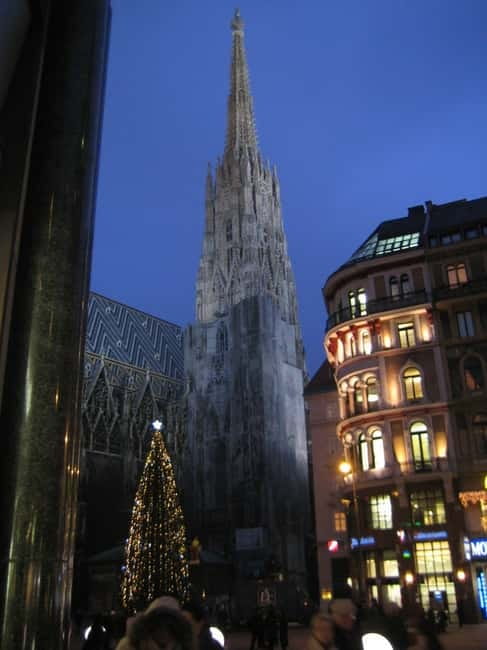
The route finishes at St. Stephen’s Cathedral, Vienna’s best-known landmark. The cathedral is a fitting endpoint because it brings together religion, civic identity, architecture, and wartime memory.
You hear about the cathedral’s partial destruction during the Second World War. The guide also challenges a story often taught in school, explaining why the familiar version is not fully accurate. That kind of correction is useful because it shows how national stories are shaped and repeated.
The provided end information is slightly inconsistent: the route description places the finish at Stephansplatz by St. Stephen’s Cathedral, while the meeting details say the activity ends back at the meeting point. Confirm the exact end location when booking. Either way, Stephansplatz is a practical place to continue exploring central Vienna.
What the guides do best
The strongest praise is directed at the guides’ delivery. Herbert Stojaspal is repeatedly described as funny, friendly, engaging, and full of historical detail. People also value his ability to answer questions, adjust the conversation to the group, and offer suggestions for the rest of a Vienna visit.
One small private group found that Herbert used their interests to shape the conversation. Another group appreciated that he kept the detail level high without allowing the tour to become dull. Those qualities matter because two hours can feel very long if a guide simply recites dates.
Wolfgang also receives positive comments for his energy, clear historical explanations, and ability to make the walk accessible to people from different language backgrounds. The advertised languages are English and German.
The group size is kept small, although the exact maximum is not provided. Some departures may feel almost private, while others will include several people. Either way, the format should be easier to follow than a large coach tour.
Who should book this walk?
I would recommend it most strongly to first-time visitors who want a clear introduction to Vienna’s central district. It is also a good choice if you have only a short stay and want to understand what you are seeing before spending money on palace and museum tickets.
You will get the most from it if you enjoy:
- European dynastic history
- Architecture and city planning
- Short anecdotes tied to real places
- Museum suggestions and practical sightseeing advice
- Walking at a steady pace for two hours
It is less suitable for children under 12, according to the activity restrictions. It is also not suitable for people with mobility impairments. Large bags and luggage are not allowed, and video or audio recording is prohibited.
The tour operates in all weather. Bring suitable clothing and shoes, since rain or cold will not cancel the walk. You should also remember that entrance fees are separate, so budget for any museums or crypts you decide to visit afterward.
Should you book the Vienna History Highlight Walking Tour?
Book it if you want context, personality, and a fast orientation rather than a series of photo stops. At $33, the price is reasonable for a small-group walk led by a guide who can explain architecture, answer questions, and point you toward worthwhile museums.
I would schedule it near the beginning of your stay. That way, advice about the Imperial Treasury, National Library, Lipizzaner performances, museums, and local attractions can shape your plans. Do not book it expecting extended interior visits or a relaxed stroll with little walking.
For a first look at Vienna’s imperial center, this tour delivers a lot in two hours. The buildings provide the spectacle, but the guide’s stories explain why they matter.
FAQ
How long does the Vienna History Highlight Walking Tour last?
The tour lasts two hours. Starting times vary, so check availability for the date you want.
Where does the tour meet?
It meets in front of Loos Haus at Michaelerplatz 3, 1010 Vienna. The building is between Kohlmarkt and Herrengasse, and the facade displays the name Raiffeisenbank.
How close is the meeting point to public transportation?
The meeting point is about a three-minute walk from the Herrengasse metro station on the U3 line.
Which languages are available?
The tour is offered in English and German.
Are entrance fees included?
No. Entrance fees are not included in the $33 price, so you will need separate tickets for attractions you choose to enter.
Is the tour suitable for children or people with mobility impairments?
The activity is not suitable for children under 12 or for people with mobility impairments.
Can I cancel the booking?
Yes. You can cancel up to 24 hours in advance for a full refund. The reserve-now, pay-later option lets you hold a place without paying immediately.
Just added in Vienna
- Vienna: Austrian Wine Tasting Experience★ 4.2 · 2 reviews
- World War II History Vienna Old Town Private Walking Tour★ 4.8 · 9 reviews
- Vienna_ Meet Beethoven Life Private Guided Walking Tour★ 5.0 · 1 review
- Vienna: Wine Tasting Tour★ 4.8 · 61 reviews
- Vienna: Winery and Wine Tasting Tour with a Wine Expert★ 5.0 · 5 reviews
- Vienna: Wine Tasting E-Bike Tour★ 4.9 · 46 reviews
- Vienna: Wine Tasting at Schönbrunn Palace★ 4.3 · 71 reviews
- Vienna: Concert by the Vienna Baroque Orchestra★ 4.6 · 56 reviews
Historical Tours, compared.
Vienna Historic Center Small Group Walking Tour
Read our review →
Skip-the-Line Schonbrunn Palace Guided Tour and Vienna Historical City Tour
Read our review →
Vienna Mozart Concert in Historical Costumes at the Musikverein
Read our review →
Browse the lists this tour appears in