
Reviewed · HISTORICAL TOURS
Vienna: World War II Historical Walking Tour
History leaves marks on Vienna. This 2.5-hour walking tour connects Hitler’s early years, the Nazi takeover, Jewish persecution, wartime destruction, and the city’s unusual postwar division. I like the route’s focus on real places rather than a classroom lecture, and I especially like that it treats Austria’s role with care instead of offering a simple good-versus-evil story.
The tour also makes difficult history easier to follow. The surviving synagogue and Vienna’s Holocaust memorial give the subject a human focus, while the evidence of bombing and occupation shows how the war changed the city itself. The main drawback is the length: you cover about 4 kilometers, and most of the experience takes place outdoors, so comfortable shoes and suitable clothing matter.
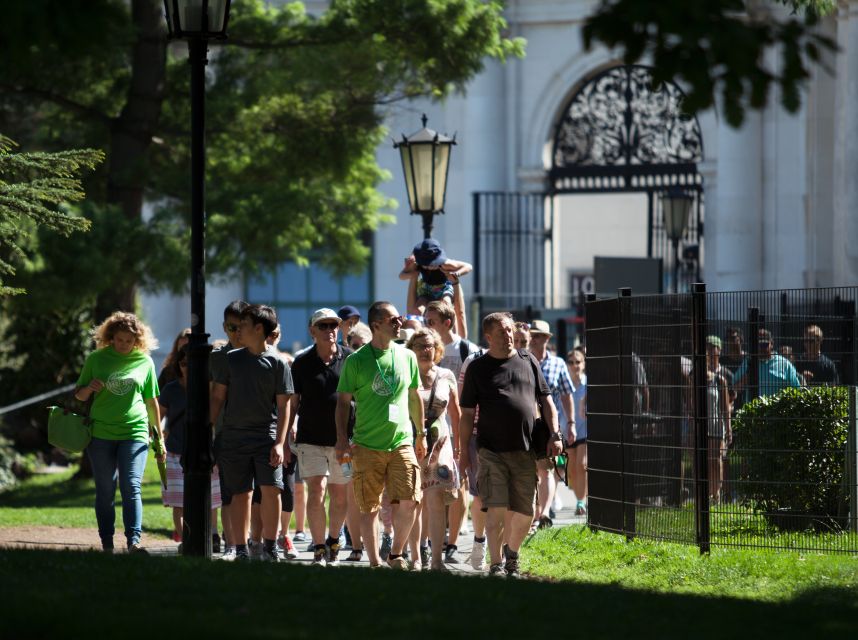
The meeting point is easy to find: look for the green umbrella at Albrechtsbrunnen, below the Albertina Museum beside the Opera House. Guides such as Dieter, Stefan, Wolfgang, Michael, Charles, Florian, and Siggi have been praised for clear storytelling, thoughtful answers, and sensitive handling of the subject. Some groups use headsets, which makes a major difference on busy streets.
In This Review
- Key points to know before you book
- Why Vienna is the right place for this WWII tour
- Starting at the Albertina and the Opera House
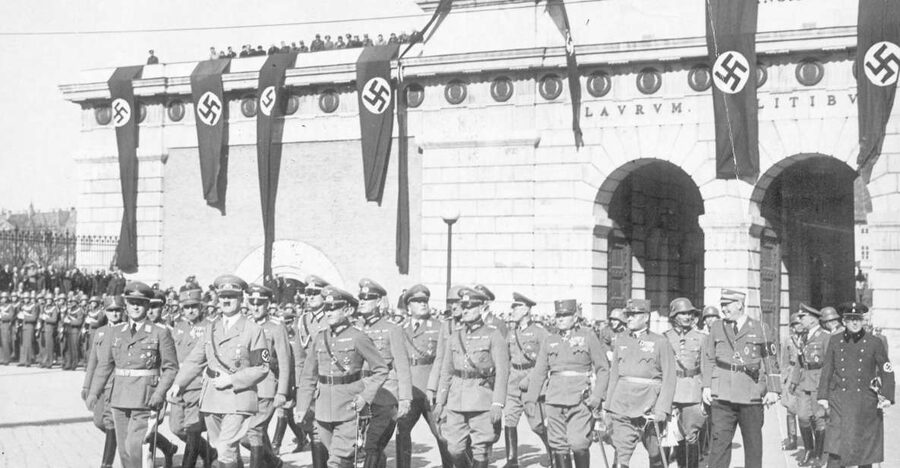
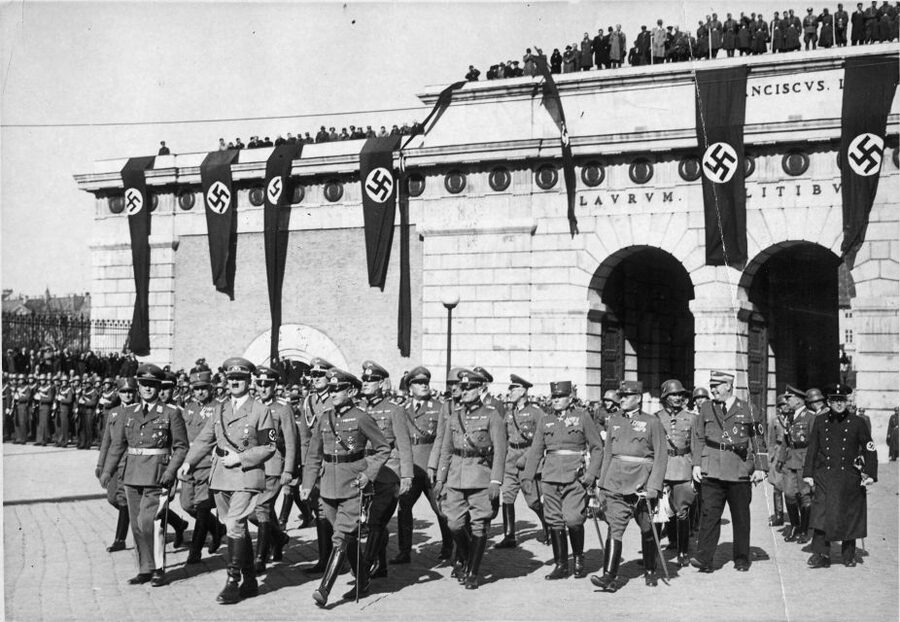
- Following Hitler’s Vienna and the road to annexation
- Vienna’s Jewish community and the surviving synagogue
- The Holocaust memorial and the weight of absence
- Bomb damage, liberation, and Vienna after 1945
- A walking pace that leaves room for thought
- Why the headsets improve the experience
- The guides make the difference
- Is $31 good value?
- Who should book this tour?
- Should you book the Vienna WWII Historical Walking Tour?
- FAQ
- How long is the Vienna World War II Historical Walking Tour?
- What language is the tour conducted in?
- Where does the tour meet?
- What places are covered on the tour?
- Is admission to attractions included?
- Does the tour return to the Albertina Museum?
- How much walking is involved?
- Can I cancel the booking?
Key points to know before you book
- The tour begins beside the Opera House: Meet at Albrechtsbrunnen, the fountain downstairs from the Albertina Museum, near Karlsplatz/Oper subway station.
- Vienna’s only surviving synagogue is a central stop: You learn why this building survived when so much of the city’s Jewish religious life was destroyed.
- The Holocaust memorial gives the tour its most solemn moment: The visit shifts the story from politics and military events to the people targeted by Nazi persecution.
- The route covers around 4 kilometers: The walking is manageable for many people, but the 150-minute duration calls for good shoes and weather-ready clothing.
- Headsets help you hear every word: This is especially useful in a large group or on noisy central streets.
- The tour ends away from the starting point: A nearby metro stop makes it easier to continue your day, but do not expect to finish back at the Albertina.
Why Vienna is the right place for this WWII tour
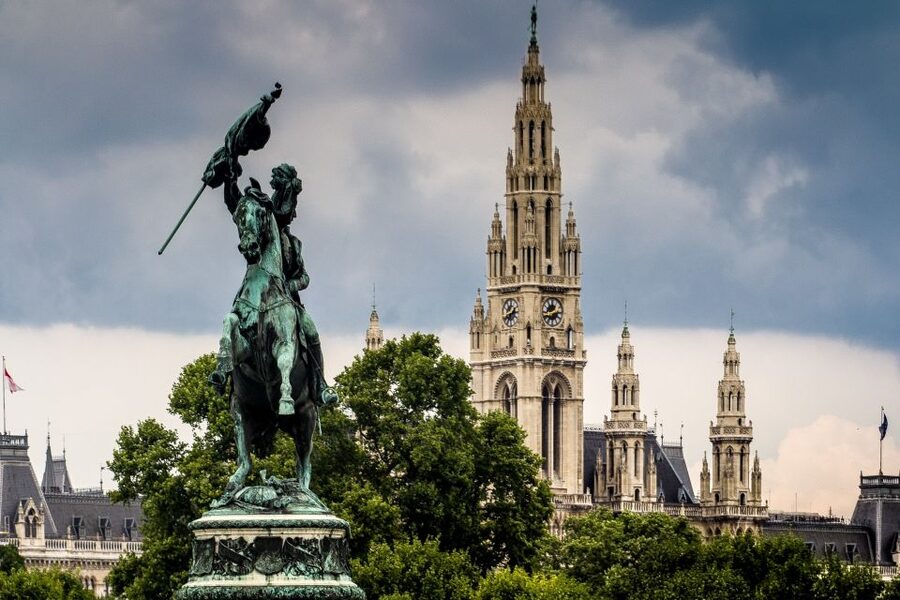
Vienna is often introduced through imperial palaces, music, cafés, and grand museums. Those sights are important, but they can hide the city’s troubled 20th-century story. This walk changes your view of familiar streets by asking what happened here before, during, and after the Second World War.
The tour begins with Vienna’s social and political climate and follows the forces that shaped a young Adolf Hitler during his years in the city. You do not simply hear a list of dates. The guide explains how an art student developed an ideology that later became a machinery of dictatorship, war, and mass murder.
That framing matters because Hitler’s rise can seem disconnected from ordinary urban life. In Vienna, the subject is tied to streets, public buildings, political movements, ethnic rivalry, fear, and the treatment of the city’s Jewish population. The guide’s job is to connect those pieces without pretending that one city or one influence explains everything.
I particularly value the Austrian viewpoint. The tour covers Hitler’s annexation of Austria, Vienna under Nazi rule, the liberation of the city, and the complicated question of how Austrians understood their own role. Several guides, including Dieter and Wolfgang, have been praised for giving context and interpretation rather than merely reciting facts.
More Walking Tours in Vienna
- Vienna: Guided Walking Tour of City Center Highlights
★ 4.7 · 4,989 reviews - Vienna: Vienna Central Cemetery Guided Walking Tour
★ 4.8 · 3,307 reviews - Vienna: Guided Walking Tour of City Highlights & Hidden Gems
★ 4.9 · 2,180 reviews
Starting at the Albertina and the Opera House
You meet in front of the Albertina Museum, next to Vienna’s famous Opera House. The precise meeting point is Albrechtsbrunnen, the fountain downstairs at the Albertina, and the green umbrella is the visual marker to look for.
This is a smart beginning. You start in one of Vienna’s grandest central areas, surrounded by the polished image of imperial culture. From there, the guide begins to peel back the layers and explain the political and social pressures beneath the city’s elegant surface.
The location is also practical. Karlsplatz/Oper is a major subway stop, so you can reach the meeting point without a complicated transfer through unfamiliar streets. Arrive with enough time to identify the fountain and umbrella, especially if the square is crowded.
The opening discussion sets up the rest of the walk. You hear about Hitler’s early years and the ideas that influenced his view of society. The guide then links this background to later events, including Austria’s annexation and Vienna’s place within the Nazi state.
Following Hitler’s Vienna and the road to annexation
The early part of the route focuses on the political climate of Vienna and Hitler’s development before he became Germany’s dictator. This is one of the tour’s strongest features because it avoids treating his youth as a dramatic legend detached from its surroundings.
You learn why Vienna mattered to him and how the city’s tensions helped shape the setting in which his ideas developed. The guide also explains how the art student became a feared political leader. The subject is grim, but the walking format helps break it into manageable sections.
Good guides make this part feel like a conversation rather than a speech. Dieter has been praised for answering questions and joining the different pieces together. Stefan has been singled out for using location-specific stories and thought-provoking questions. Siggi has also used historical photographs to make past events easier to picture.
The quality of the guide matters greatly here. This is not a tour where the buildings alone tell the story. You need someone who can explain cause, context, and consequence without turning the subject into spectacle. The guides praised for this experience appear to handle that balance well.
Vienna’s Jewish community and the surviving synagogue
The synagogue stop brings the human cost of the period into sharp focus. Vienna once had a large Jewish community, but ethnic hostility, fear, and Nazi persecution transformed the city. The tour explains what happened to Jewish residents and how their community was attacked and dismantled.
You visit the only synagogue in Vienna that survived the Nazi regime. That fact makes the stop especially important, but it also requires careful interpretation. The building is not simply a lucky survivor or an attractive historic site. Its survival points to the destruction around it and to the religious and cultural life that was lost.
The stop gives you a chance to move from broad political events to a specific place connected with Jewish Vienna. That change in scale is valuable. You are not only hearing about persecution as a distant event. You are standing in the city where people lived, worshipped, worked, and faced growing restrictions and danger.
The tour does not list synagogue details or promise an interior visit, so you should think of this as a guided historical stop rather than a guaranteed museum entrance. Entrances to attractions are not included. The guide’s explanation is the main experience here.
More History Tours in Vienna:
- Vienna: Time Travel and Magic Vienna History Tour
★ 4.6 · 3,879 reviews - Vienna Historic Center Small Group Walking Tour
★ 5.0 · 1,746 reviews - Time Travel-Magic Vienna History Tour Ticket
★ 4.5 · 1,099 reviews - Skip-the-Line Schonbrunn Palace Guided Tour and Vienna Historical City Tour
★ 3.5 · 940 reviews
The Holocaust memorial and the weight of absence
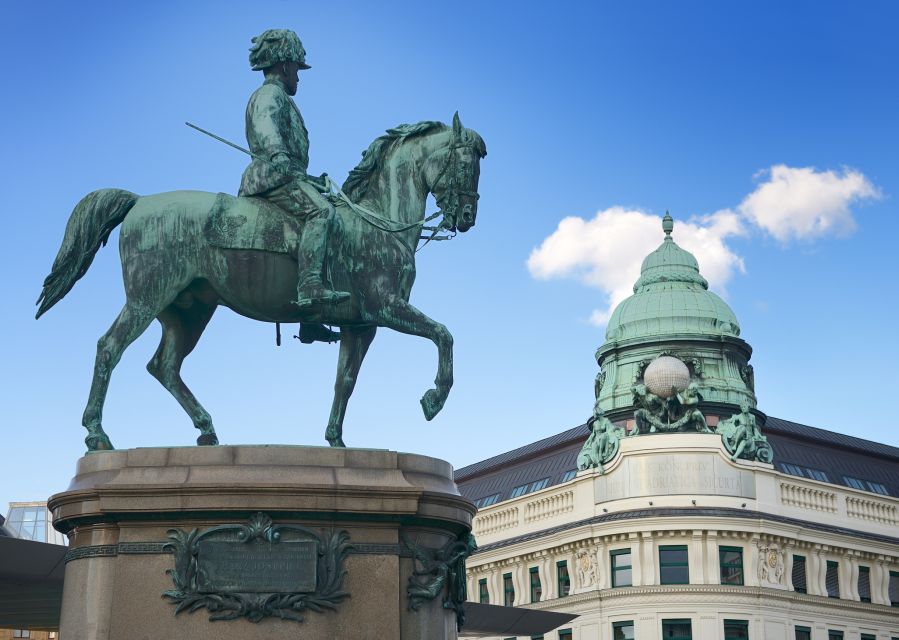
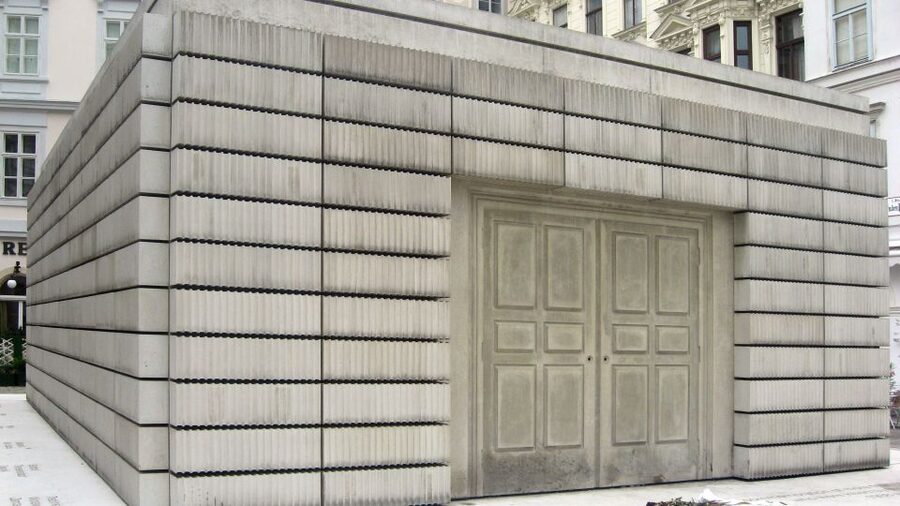
Vienna’s Holocaust memorial is likely to be the quietest and most serious stop on the route. After discussions of ideology, annexation, and persecution, the memorial brings the subject back to the people who were murdered.
The memorial is somber by design. It does not offer an easy emotional release or a neat ending. Instead, it asks you to pause and confront the scale of what happened to Vienna’s Jewish population.
This is where a sensitive guide makes a real difference. Charles has been praised for discussing difficult history with care and intelligence. Laura described Dieter as passionate and sympathetic in his delivery, while other participants valued guides who encouraged questions without losing sight of the subject’s moral seriousness.
I would not choose this tour for light sightseeing between cafés. The memorial and the synagogue require attention, and the experience may feel heavy. That is not a flaw, but it is something you should understand before booking. You will come away with more than photographs and city facts.
Bomb damage, liberation, and Vienna after 1945
The tour also examines the physical damage caused by the war. More than 100,000 bombs affected Vienna, and the route points out scars of WWII and surviving signs of the city’s postwar condition.
You may see these traces in a city that otherwise looks carefully restored and grand. The contrast is useful. Vienna’s historic center can seem untouched at first glance, but wartime destruction and reconstruction changed the city in ways that are easier to grasp when a guide points them out.
The story then moves to liberation and the years that followed. Vienna was divided among the Allied powers after the war, and it was the only city where the four Allied powers managed a shared zone together. This unusual arrangement helps explain why Vienna’s postwar political story was different from that of many other European cities.
The tour’s title points to WWII, but its scope reaches beyond 1945. You learn about the remains of a divided city and how occupation affected Vienna. That extra context is important because wars do not end neatly when the fighting stops. Buildings, borders, institutions, and public memory continue to change.
A walking pace that leaves room for thought
The stated duration is 150 minutes, and the route covers roughly 4 kilometers according to one detailed account. That is not a strenuous hike, but it is a substantial city walk with repeated periods of standing and listening.
The pacing appears to be one of the tour’s best practical features. Guides have built in pauses, places to sit, bathroom opportunities, and occasional shelter from cold or rain. One guide adjusted the route and timing during heavy rain, while another found warm places for pauses in winter.
That flexibility can make or break a historical walking tour. You need enough time at each stop to absorb the information, but not so much standing that your attention disappears. The reported balance of walking, sitting, and short explanations sounds well judged.
Still, bring comfortable shoes. Wear clothing suited to the forecast, and remember that much of the tour takes place outside. If you have mobility concerns, the roughly 4-kilometer distance may be manageable, but you should consider your own stamina because the tour does not provide a separate accessibility description.
The route does not return to the Albertina. A subway stop is close to the end, so you can continue to another part of Vienna, but plan your next activity with the finish point in mind.
Why the headsets improve the experience
The use of headsets is a small feature with a large payoff. On an ordinary walking tour, you often have to stay within a few feet of the guide, crowd around a doorway, or miss part of a sentence when a tram or bus passes.
Here, the guide can speak while the group spreads out along the pavement. You can look at a building, take a photograph, or keep a safe distance from other pedestrians without losing the explanation.
Headsets are especially useful for larger groups. They also help people who do not want to strain to hear an English-speaking guide outdoors. Several participants described the audio equipment as a major improvement, and that assessment makes sense.
The technology is not the reason to book the tour, but it supports the storytelling. You can pay attention to the location instead of worrying about whether you caught the last sentence.
The guides make the difference
The experience is delivered in English by a live guide, and the individual guide can shape the tone of the afternoon. Dieter appears often in the strongest accounts, praised for his broad command of Vienna’s past, thoughtful answers, and strong storytelling.
Stefan is also described as entertaining and precise, with a talent for using stories tied to particular locations. Wolfgang has been praised for adding interpretation and evaluating the importance of different events. Michael, Charles, Florian, and Siggi are each described as clear, friendly, and attentive.
That range suggests a well-developed tour rather than one that depends on a single personality. You may receive a slightly different emphasis depending on who leads your group, but the core subjects remain the same.
I also like the reports of guides using printed photographs and inviting questions. Visual material can help you understand how the city looked during the war, while questions allow the guide to adjust the discussion to the group’s interests.
Is $31 good value?
At $31 per person, this tour offers solid value if you want historical context rather than entrance tickets. The price covers a live English-language guide and the walking tour, but it does not include admission to attractions or transportation.
That distinction is important. You are paying for interpretation, route planning, local context, and access to a guide who can connect scattered sites into one clear story. If you tried to study the same subjects alone, you could visit memorials and historic streets, but you would lose the links between them.
The value is strongest for a first visit to Vienna. One participant recommended taking the tour early in the trip because it helps you understand the city and notice more during later sightseeing.
The price is less attractive if you want a museum-heavy experience or a short introduction to Vienna. This is a serious, focused walk. You should book it because you want to think about the city’s wartime past, not because you are simply looking for another way to see central Vienna.
Who should book this tour?
I recommend it to adults and older teenagers with a real interest in WWII, the Holocaust, Hitler’s early years, Austria under Nazi rule, or postwar Europe. It is also a good choice if you prefer learning through places and stories rather than sitting in a museum.
You will get the most from it if you ask questions and stay engaged with the guide’s explanations. The experience suits people who want an Austrian perspective and who appreciate careful discussion of responsibility, fear, political pressure, and memory.
I would hesitate to recommend it for very young children, visitors seeking cheerful sightseeing, or anyone uncomfortable with a long outdoor walk. The material is painful, and the memorial stop in particular deserves a respectful frame of mind.
Should you book the Vienna WWII Historical Walking Tour?
Book it if you want to understand how Vienna moved from Hitler’s formative years to annexation, persecution, wartime destruction, liberation, and Allied occupation. The route covers major themes without requiring a museum entrance fee, and the guides appear to be the strongest part of the experience.
Go early in your stay if you can. You will see Vienna’s center differently afterward, and the nearby subway connections make it easy to continue exploring. Bring good shoes, check the weather, and allow for a serious afternoon rather than a casual stroll.
At $31, the tour is a worthwhile purchase for history-minded visitors who value clear explanation and human stories. It is not a light city walk, but that is precisely why it can become one of the most meaningful activities in Vienna.
FAQ
How long is the Vienna World War II Historical Walking Tour?
The tour lasts 150 minutes, or 2.5 hours.
What language is the tour conducted in?
The live guided tour is conducted in English.
Where does the tour meet?
Meet at Albrechtsbrunnen, the fountain downstairs at the Albertina Museum beside the Opera House. Look for the green umbrella near the Karlsplatz/Oper subway stop.
What places are covered on the tour?
The tour includes a synagogue that survived the Nazi regime, Vienna’s Holocaust memorial, sites connected with Hitler’s early years, evidence of WWII damage, and places linked with Vienna’s postwar division.
Is admission to attractions included?
No. Entrances to attractions are not included in the tour price.
Does the tour return to the Albertina Museum?
No. The tour does not return to its starting point, but a metro stop is close to the end.
How much walking is involved?
The tour covers about 4 kilometers over 2.5 hours. You should wear comfortable shoes and prepare for outdoor conditions.
Can I cancel the booking?
Yes. You can cancel up to 24 hours in advance for a full refund. You can also reserve now and pay later.
Just added in Vienna
- Vienna: Austrian Wine Tasting Experience★ 4.2 · 2 reviews
- World War II History Vienna Old Town Private Walking Tour★ 4.8 · 9 reviews
- Vienna_ Meet Beethoven Life Private Guided Walking Tour★ 5.0 · 1 review
- Vienna: Wine Tasting Tour★ 4.8 · 61 reviews
- Vienna: Wine Tasting E-Bike Tour★ 4.9 · 46 reviews
- Vienna: Wine Tasting at Schönbrunn Palace★ 4.3 · 71 reviews
- Vienna: Winery and Wine Tasting Tour with a Wine Expert★ 5.0 · 5 reviews
- Vienna: Concert by the Vienna Baroque Orchestra★ 4.6 · 56 reviews
Historical Tours, compared.

Vienna Historic Center Small Group Walking Tour
Read our review →
Skip-the-Line Schonbrunn Palace Guided Tour and Vienna Historical City Tour
Read our review →
Vienna Mozart Concert in Historical Costumes at the Musikverein
Read our review →
Browse the lists this tour appears in