
Reviewed · HISTORICAL TOURS
Exciting history tour and discovery of Vienna’s secrets
Vienna reveals itself slowly. This private tour makes the city easier to read, linking Stephansdom and the Hofburg with Mozart, Beethoven, churches, gardens, and imperial Austria. I like the personal format, and I like that admission fees are covered at several major stops. The main consideration is its broad scope: the shorter version can feel brisk, while Belvedere and Schönbrunn require extra time.
Guides Walter and David are praised for lively storytelling and sharp knowledge of both old and modern Vienna. You can ask questions freely, adjust the pace, and get practical ideas for the rest of your visit. Still, this is primarily a walking experience, and the tour requires good weather.
In This Review
- Key things to know before booking
- Start at Stephansdom, Vienna’s great city marker
- Follow Mozart through Vienna’s musical center
- Meet the Lipizzaners at the Spanish Riding School
- Read imperial Vienna at the Hofburg
- Walk the Ringstrasse and its public monuments
- Visit the Schottenstift and its Rococo church
- Pause among roses in the Volksgarten
- See Vienna’s Orthodox architecture
- Add Belvedere for Klimt and Prince Eugen
- Extend the day to Schönbrunn
- What the $118.82 price really buys you
- Who should book this Vienna walk?
- Should you book it?
- FAQ
- Where does the tour begin?
- Where does the tour end?
- How long does the experience last?
- Is this a private tour?
- Are attraction admission fees included?
- Is transportation included?
- Can I add Schönbrunn or book a longer tour?
Key things to know before booking
- A private guide for your group: You are not folded into a large sightseeing crowd, so questions and conversation are part of the experience.
- Vienna’s music story is built into the route: Mozart, Beethoven, Brahms, and Schubert all appear alongside the State Opera and major concert halls.
- The city’s most important sights are connected: Stephansdom, the Hofburg, Ringstrasse, Volksgarten, and several churches form the core route.
- The Spanish Riding School visit is more than a street view: You see the Lipizzaner stallions in their stables and watch a film about the horses and baroque arena.
- Longer versions add major palace sights: Belvedere and Schönbrunn are available if you arrange extra time, with separate pricing for the longer options.
- The tour is best for curious walkers: The total duration ranges from about two to eight hours, including travel time, depending on the version you choose.
Start at Stephansdom, Vienna’s great city marker
The meeting point is Graben 32 in central Vienna, a useful location near the city’s best-known pedestrian streets. From here, the tour begins at Stephansdom, where the guide focuses on details many people miss when they simply step inside, take a photo, and leave.
You will see the ancient rear section of the cathedral, the Gothic south side, and the tower that was considered the tallest in the world during the Middle Ages. That tower gives you an immediate sense of the cathedral’s former importance. Stephansdom was not merely a place of worship. It was a statement of Vienna’s wealth, power, and place in medieval Europe.
Inside, the guide points out medieval and baroque frescoes and explains how the building changed over time. The scheduled visit is about 20 minutes, with admission included. That is enough for an introduction, but not enough for every corner of the cathedral. If you want a long look at chapels, art, and architectural details, you may need to return independently.
This opening stop suits you if you prefer context to a quick photo stop. The cathedral is familiar from guidebooks, but the rear and side views can make it feel newly discovered.
More History Tours in Vienna:
- Vienna: Time Travel and Magic Vienna History Tour
★ 4.6 · 3,879 reviews - Vienna: World War II Historical Walking Tour
★ 4.8 · 1,772 reviews - Vienna Historic Center Small Group Walking Tour
★ 5.0 · 1,746 reviews
Follow Mozart through Vienna’s musical center
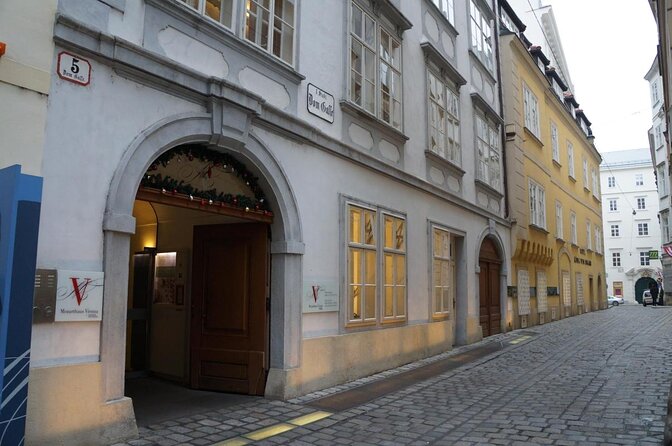
The next section turns Vienna into the capital of classical music. At Mozarthaus Vienna, your guide connects the composer’s life to the city around him. The stop is listed at about 10 minutes, with admission included, so think of it as a focused introduction rather than an extended museum visit.
The route also brings in Beethoven, Brahms, and Schubert, along with Beethoven’s monument and residence. The exact amount of time spent at each place depends on the length of your booking and the pace of your group. You will also see the State Opera and important concert halls, which helps place Vienna’s music tradition in the city’s daily setting.
I like this part because it avoids treating composers as names on a timeline. The guide connects people, buildings, and musical institutions. Walter is praised for explaining not only Vienna’s past but also what shapes Austria today, and that wider view is especially useful here. You can ask how the city’s musical identity continues beyond the famous portraits and concert posters.
If music is central to your trip, tell the guide early. The published route is broad, and a short booking cannot give equal attention to every composer and venue.
Meet the Lipizzaners at the Spanish Riding School
The Spanish Riding School provides one of the tour’s most distinctive stops. You visit the white Lipizzaner stallions in their stables and watch a film about the baroque riding arena and the horses. Admission is listed as free, but this is not the full performance experience with a ticketed public show.
That distinction matters. You are seeing the stable setting and learning about the tradition, not necessarily watching the famous horses perform their full exercises in the arena. For many people, the stable visit is a more grounded way to understand the institution. You get close to the horses’ working home rather than only seeing a polished spectacle.
Afterward, the route continues through baroque streets in the old town. The guide points out original shop displays from the monarchy and several baroque churches. These details add texture to the grand palace story. A shopfront can tell you about old commercial life, while a church reveals how decoration and belief shaped the city.
The stop is scheduled for about 10 minutes, so expect a compact visit. The school can be busy, and the experience may feel too short if horses are your main reason for booking. Still, it is a strong addition to a central Vienna walk.
Read imperial Vienna at the Hofburg
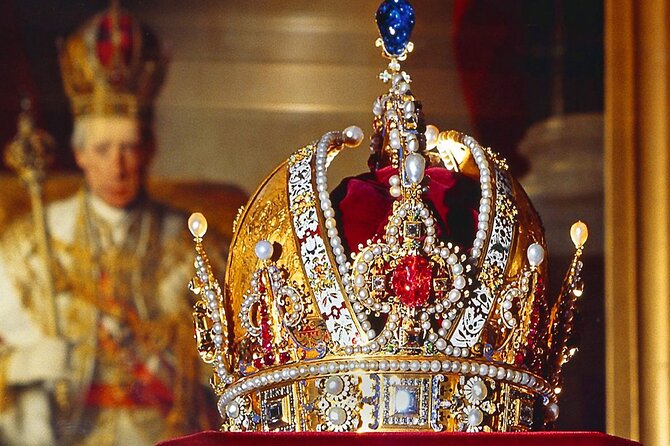
The Hofburg receives about 30 minutes, making it one of the more substantial stops. The palace complex is described as Europe’s largest non-sacred building, and your guide begins at Heroes’ Square, where monumental equestrian statues frame the imperial setting.
You then enter the palace courtyard and see the medieval castle within the larger complex. The story reaches back to Richard the Lionheart and his imprisonment in Austria, giving the medieval section a dramatic edge before the tour returns to Habsburg Vienna.
At Michaelerplatz, you see the Hofburg from one of its most striking sides and hear about what is described as the first modern building in the world. The route also includes the National Library, the church where Empress Elisabeth, known as Sisi, married, and the place associated with the imperial family’s heart.
The Albertina and palace gardens are included in the broad Hofburg section. Because the Hofburg is not one single museum but a large group of buildings and courtyards, your guide’s explanation is useful. Without a plan, it is easy to treat the complex as one grand facade and miss the different periods behind it.
The limitation is time. Thirty minutes is enough for orientation and selected interiors, not a full examination of every imperial collection. If you want the Sisi Museum or a long visit to the National Library, ask exactly what your chosen tour length includes before booking.
A few more options to weigh up in Vienna
- Vienna: Vivaldi’s Four Seasons Concert in Karlskirche
★ 4.7 · 14,951 reviews - Vienna: Spanish Riding School Training
★ 3.9 · 9,281 reviews - Vienna: Schönbrunn Palace & Gardens Skip-the-Line Tour
★ 4.7 · 7,739 reviews - Vienna: Light of Creation Votive Church Immersive Light Show
★ 4.8 · 6,779 reviews
Walk the Ringstrasse and its public monuments
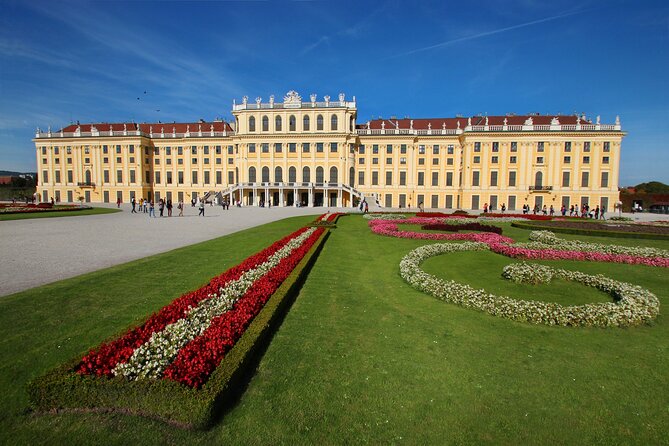
The Ringstrasse section takes about 20 minutes and offers a concentrated look at Vienna’s grand boulevard. You walk past museums, cathedrals, the Parliament, Town Hall, the University, gardens, and palaces.
This is where the city’s nineteenth-century ambitions become clear. The Ringstrasse gathers culture, government, education, and ceremony into one sweeping urban display. Your guide can help you understand why these buildings were placed together and how the boulevard differs from the older lanes of the inner city.
I find this section valuable because it gives the central sights a larger frame. Instead of seeing the Parliament or Town Hall as isolated photo stops, you see them as part of Vienna’s civic identity. The walk is short, so you will not explore each building inside. It works best as a guided overview that helps you decide where to return later.
Visit the Schottenstift and its Rococo church
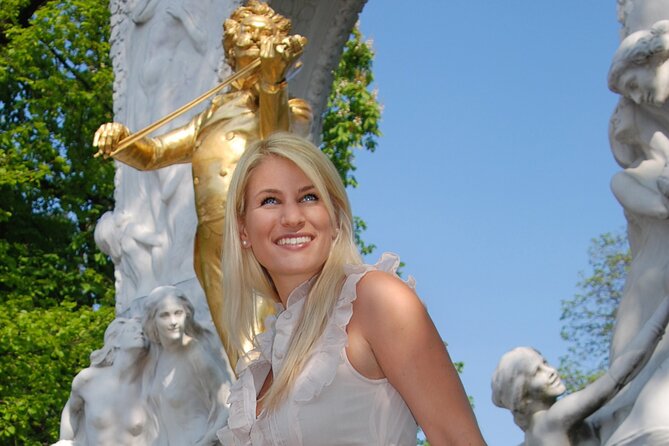
The Museum Schottenstift is a smaller stop with a different feel. You enter the Scottish Convent, see its green courtyard, and then visit the Rococo church. The guide explains the first monks and points out depictions connected with Vienna’s past.
At about 10 minutes, this is not a full museum visit. Its value lies in the access and explanation. A quiet courtyard and decorated church can easily be overlooked when you are focused on Stephansdom and the Hofburg. The stop gives the route a more local, less monumental pause.
This is also a good example of why a private guide helps. You can ask why the convent matters, what the artwork represents, and how the religious foundation fits into the city’s development. Without that conversation, you might see attractive decoration but miss the story.
Pause among roses in the Volksgarten
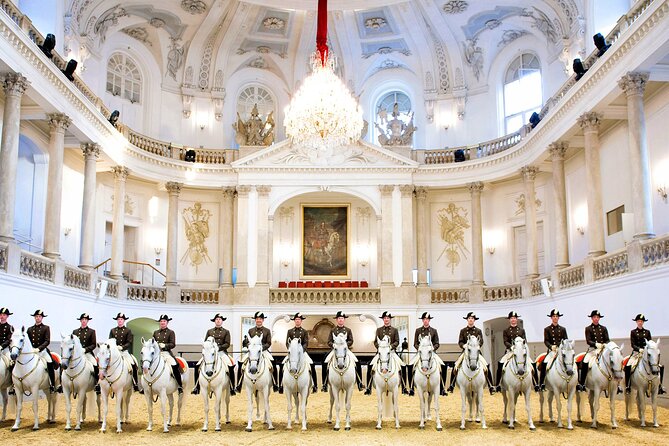
The Volksgarten offers a softer break from palaces and churches. Your guide leads you through a celebrated rose garden with monuments to Empress Elisabeth, poets, and temple structures. Baroque ornaments and formal planting give the garden a carefully arranged look.
The visit lasts about 10 minutes. That is enough to cross the garden, hear the key stories, and enjoy the setting, but not enough for a leisurely sit among the roses. If the garden matters to you, note the weather requirement and the season of your visit. The tour must take place in good weather, and the garden’s appeal naturally depends on conditions.
I like the change of pace here. Vienna is not only grand interiors and imperial ceremony. A formal garden shows how the court and city made room for beauty, rest, and public display.
See Vienna’s Orthodox architecture
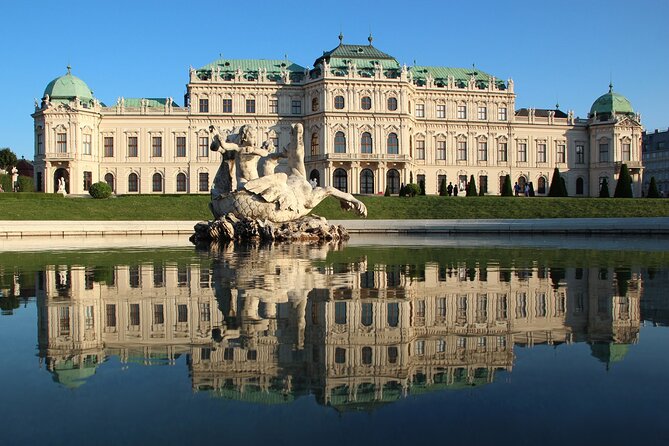
The Romanian Orthodox Church in Vienna is another brief but unusual stop. The description identifies it as the cathedral of the Greek Orthodox bishop of Vienna and highlights its oriental architecture and Orthodox tradition.
The wording combines Romanian and Greek Orthodox references, so you may want to ask the guide for clarification about the institution and denomination during the visit. What is clear is the architectural contrast. After Gothic Stephansdom, baroque churches, and imperial buildings, an Orthodox interior gives you a different visual language and a reminder that Vienna’s religious life is not limited to its Catholic monuments.
The visit is listed at about eight minutes, with admission included. It is a quick stop, but one that broadens the tour beyond the familiar imperial route.
Add Belvedere for Klimt and Prince Eugen
Belvedere is offered if you have more time. The longer route walks from the old town past Karlskirche, attractive squares, and gardens before reaching the palace grounds. There, the focus turns to Prince Eugen and one of Vienna’s finest baroque palace settings.
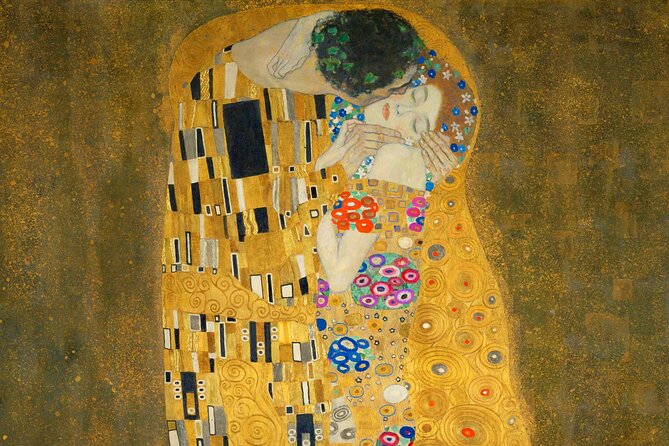
The gardens provide views toward Vienna’s famous baroque cityscape. You also have the chance to see world-famous paintings by Gustav Klimt at Belvedere Palace. The supplied schedule gives this stop only one minute, which clearly signals that Belvedere is an optional extension rather than a meaningful museum visit in the shortest version.
If you want to see Klimt properly, arrange the longer tour and confirm how much interior time is included. A quick exterior look and a museum visit are very different experiences. The added time can be worthwhile for first-time visitors who want both the old center and a major palace collection in one day.
The extra half-day option is quoted at 180 euros, while the main experience is priced at $118.82 per person. Compare the cost with your group size and interests. A private guide becomes better value when you want questions answered and several major sights connected, but a museum-focused visitor may prefer to buy a standard museum ticket and spend more time inside one collection.
Extend the day to Schönbrunn
Schönbrunn is another optional addition. A separate two-hour Schönbrunn tour is listed at 80 euros, while a five-hour half-day option is listed at 180 euros. You need to arrange these longer versions directly using the supplied contact details.
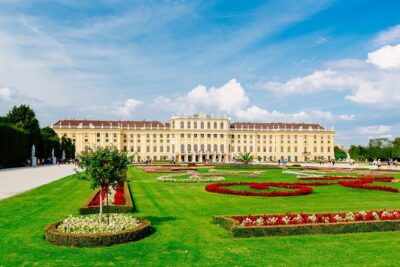
The palace gardens include colorful floral designs, fountains, monuments, the Palm House, and the Gloriette at the highest point. From the Gloriette, you can look across Vienna. The tour also mentions the imperial carriages and the world’s oldest zoo, as well as coffee and Viennese cake with the view.
Again, the one-minute schedule for Schönbrunn should not be read as a full visit. It is a note about an optional extension. If Schönbrunn is high on your list, book the separate two-hour version or ask for the half-day arrangement rather than trying to squeeze it into the short central walk.
What the $118.82 price really buys you
At $118.82 per person, the price is not simply payment for a walking route. You are paying for a private guide, a flexible conversation, and admission to included attractions. The value is strongest when you want a personal introduction to Vienna and would otherwise spend time researching how the cathedral, music sites, Hofburg, churches, and Ringstrasse fit together.
The tour does not include coffee or tea, and private transportation is not included. Pickup is offered, but the meeting point is Graben 32 and the route itself is primarily on foot. The total duration includes travel time, and the experience can last from about two to eight hours depending on the version.
I would compare the price with the number of people in your group. For a couple or family that wants a private guide, the cost may make sense, especially with several admissions included. For a solo visitor on a tight budget, a self-guided walk and individual museum tickets may cost less, though you give up the conversation and local interpretation.
The full experience has received a five-star rating from all 23 submitted ratings, with particular praise for Walter and David. The repeated strengths are clear: enthusiasm, strong command of Vienna’s past, insight into modern Austria, and the ability to keep a long walk interesting even in steady drizzle. That does not remove the practical need for comfortable shoes and weather planning.
Who should book this Vienna walk?
I would choose this tour if you are visiting Vienna for the first time and want a fast but thoughtful orientation. It also suits you if you have visited before but feel you have only seen the obvious sights. One person who had returned to Vienna for 15 years found that the tour revealed details that had been easy to overlook, and that is a useful description of its purpose.
It is especially good for:
- People who prefer a private guide to a large group
- Classical music fans who want Mozart, Beethoven, Brahms, and Schubert placed in context
- History fans who enjoy medieval, baroque, and imperial stories in one route
- Couples and families who want to ask questions without holding up strangers
- Visitors who may add Belvedere or Schönbrunn to a longer day
It is less suitable if you want a slow museum tour, a full Lipizzaner performance, or extensive time inside every palace. The route covers a lot. Its strength is connection, not exhaustive time at each attraction.
The experience is not suitable for deaf and mute people or for those with visual impairments, according to the stated conditions. Service animals are allowed, public transportation is nearby, and most people can participate. Free cancellation is available up to 24 hours before the start time, while poor weather can lead to a different date or a full refund.
Should you book it?
Book this tour if you want Vienna explained by a passionate person rather than reduced to a checklist. Walter or David can give you a personal introduction to the city’s music, palaces, churches, gardens, and less obvious corners, with useful ideas for what to see afterward.
Choose the longer option if Belvedere or Schönbrunn matters to you. Choose the shorter central route if you mainly need orientation. The key is to confirm the exact duration and optional palace arrangements before paying, because the advertised route covers far more than a two-hour walk can properly explore.
FAQ
Where does the tour begin?
The meeting point is Graben 32, 1010 Vienna, Austria.
Where does the tour end?
The activity ends back at the meeting point.
How long does the experience last?
The total duration is approximately two to eight hours. It includes travel time and depends on the version you book.
Is this a private tour?
Yes. Only your group participates, with a private guide dedicated to your party.
Are attraction admission fees included?
Admission is included for several listed stops, including Stephansdom, Mozarthaus Vienna, the Hofburg, Museum Schottenstift, Volksgarten, the Romanian Orthodox Church, and the optional Belvedere visit. The Spanish Riding School stop lists admission as free. Schönbrunn’s listed garden visit also shows no admission charge.
Is transportation included?
Private transportation is not included. Pickup is offered, and the meeting point is near public transportation.
Can I add Schönbrunn or book a longer tour?
Yes. A five-hour half-day option is listed at 180 euros, and a separate two-hour Schönbrunn tour is listed at 80 euros. You should arrange these options directly using the provided contact details.
Just added in Vienna
- Vienna: Austrian Wine Tasting Experience★ 4.2 · 2 reviews
- World War II History Vienna Old Town Private Walking Tour★ 4.8 · 9 reviews
- Vienna_ Meet Beethoven Life Private Guided Walking Tour★ 5.0 · 1 review
- Vienna: Wine Tasting Tour★ 4.8 · 61 reviews
- Vienna: Wine Tasting E-Bike Tour★ 4.9 · 46 reviews
- Vienna: Wine Tasting at Schönbrunn Palace★ 4.3 · 71 reviews
- Vienna: Winery and Wine Tasting Tour with a Wine Expert★ 5.0 · 5 reviews
- Vienna: Concert by the Vienna Baroque Orchestra★ 4.6 · 56 reviews
Historical Tours, compared.
Vienna Historic Center Small Group Walking Tour
Read our review →
Skip-the-Line Schonbrunn Palace Guided Tour and Vienna Historical City Tour
Read our review →
Vienna Mozart Concert in Historical Costumes at the Musikverein
Read our review →
Browse the lists this tour appears in