
Reviewed · MUSEUMS
Albertina Art Museum: Private Tour of Masterpieces | Tickets incl
Art makes more sense with someone beside you. This private Albertina tour gives you two useful advantages: a professional art historian to guide the conversation and museum admission already included. I also like that the tour can follow your interests instead of forcing every visitor through the same script. The main consideration is price: at $226.37 per person, this is a serious splurge for two hours.
You’ll get a focused introduction to modern art, with the original works in front of you rather than pictures in a guidebook. Julia, whose warm response to one guest emphasizes time for questions and personal explanation, appears to be one of the guides connected with the experience. The possible drawback is that the Albertina’s most famous works may not always be on view, so you should book this for interpretation and access, not a guaranteed checklist of icons.
In This Review
- Key points at a glance
- Entering the Albertina at Albertinaplatz 1
- A two-hour crash course in modern art
- Why the Albertina’s less famous works can help you learn
- Talking about art instead of just collecting facts
- What you should expect from the Albertina collection
- Price, private attention, and the question of value
- Who will get the most from this experience
- Small details that make the visit easier
- Should you book the Albertina private tour?
- FAQ
- Where does the Albertina private tour begin?
- Where does the tour finish?
- How long does the tour last?
- Is museum admission included?
- Is this a private activity?
- What language is offered?
- Can I show an electronic voucher?
- Do I need a certain level of physical fitness?
- Can I cancel for a full refund?
Key points at a glance
- Two private hours inside the Albertina: Only your group takes part, so the pace and questions can be personal.
- A guided lesson in modern art: The tour uses modernist and avant-garde works to explain major artistic movements.
- Museum entry is included: Your guide carries the tickets, which removes one small but useful task.
- A flexible conversation: You can focus discussion on the parts of art that interest you most.
- A better way to face difficult art: The collection can help you understand ideas such as repetition, context, artistic intention, and personality.
- A high price for a short visit: The value depends on how much you want personal attention from an art specialist.
Entering the Albertina at Albertinaplatz 1
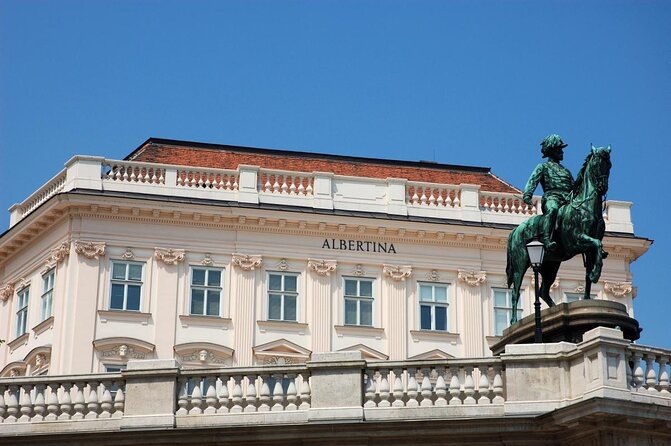
The tour begins at Albertinapl. 1 in Vienna’s 1010 district, at the Albertina itself. This is a practical arrangement. You do not spend the first part of your paid time crossing the city or searching for a second meeting point. You simply arrive at the museum and meet your guide there.
The Albertina is especially known for its graphic collection, yet only part of that material is regularly shown to the public. This matters because the museum name and the tour title might lead you to expect a parade of universally recognized masterpieces. In reality, access to the most famous pieces may depend on a particular exhibition, and waiting for the right presentation can take years.
That is not necessarily a reason to skip the visit. It is a reason to set the right goal. You are booking a guided reading of the collection, not a promise that every famous Albertina work will be hanging on the wall that day. The museum’s public displays include modernist and avant-garde art, and those works provide plenty to discuss even when the best-known names are absent.
Your guide has the tickets, and you can show either a paper or electronic voucher. That makes the arrival fairly simple. The tour ends back at the starting point, so you are not left trying to find your way to a separate finish.
More Museum Tours in Vienna:
- Vienna: Skip-the-Line Sisi Museum, Hofburg and Gardens Tour
★ 4.8 · 5,918 reviews - Vienna Kunsthistorisches Museum Day Admission Ticket
★ 4.6 · 3,690 reviews - Tickets for the Albertina Exhibitions
★ 4.7 · 2,126 reviews
A two-hour crash course in modern art
Two hours is short enough to fit neatly into a Vienna sightseeing day, but long enough for a real conversation. This is not designed as an all-day museum marathon. Instead, it works as a concentrated introduction to how modern art developed and how you might look at it without waiting for a label to tell you what to think.
The tour focuses on original art in front of you. That changes the experience. Reproductions can explain color and composition, but they flatten the physical presence of a work. In a museum, your guide can point to the details that make a piece worth considering, then give you time to form your own response.
The private format is the key feature. You are not sharing the guide with a large group, and the discussion can follow your questions. If one work confuses you, you can stay with it. If you are fascinated by a certain movement, you can ask for more context instead of waiting for the group to move along.
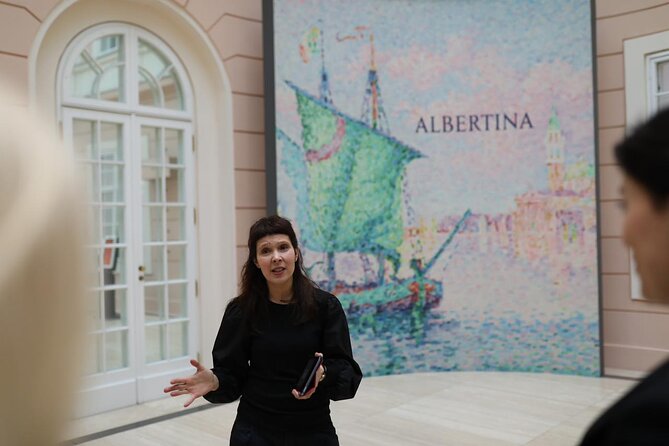
Julia’s written reply to a guest highlights this exact strength: she values allowing people to ask questions, explain their reactions, and enjoy the art at their own pace. That is a useful sign for anyone who dislikes tours that feel like a lecture delivered at walking speed.
Still, two hours places a limit on what you can cover. You will not receive a complete survey of every room, artist, and movement. Think of the tour as a strong starting point. Afterward, you might want to continue alone, but the guide should help you know what deserves a closer look.
Why the Albertina’s less famous works can help you learn
There is an odd advantage in viewing art that has not been declared a masterpiece by every textbook. You can respond to it without feeling that your answer must match an expert’s opinion.
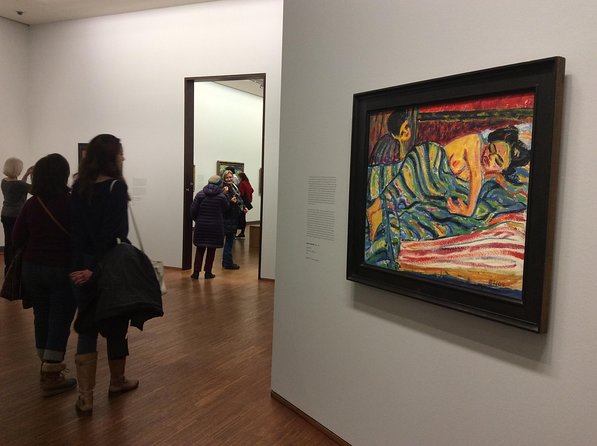
The Albertina’s Batliner collection is presented as a useful setting for studying the artistic isms around the turn of the 20th century. The works may not all occupy the highest ranks of Western art history, but that can make them easier to approach. You can pay attention to your own reaction while the guide explains the choices behind the work.
That approach is valuable for first-time modern art visitors. You do not need to pretend that a painting moved you. You can say that you dislike it, find it confusing, or notice only one detail. A good private guide can use that response as the beginning of the discussion.
The visit also helps with ideas that are easy to miss when you look at one painting for only a few seconds. The tour may address:
- Seriation: how repetition or a series changes the meaning of an image.
- Context: how a work’s setting, period, or neighboring works affects what you see.
- Intention: what the artist may have been trying to do.
- Personality: how the artist’s character and working habits can shape the result.
- Personal response: how your own feelings become part of looking at art.
The supplied description makes an interesting connection between Henri de Toulouse-Lautrec’s tenderness toward his horse, Gazelle, and the challenge of approaching artists such as Tracey Emin and Hermann Nitsch. You do not need to know these artists in advance. The point is that a personal emotional response can be a bridge into art that initially seems strange or difficult.
Talking about art instead of just collecting facts
Many museum tours give you names, dates, and movements. Those facts have value, but they do not always teach you how to look. This experience aims to make the conversation more personal.
You can ask why a work feels uncomfortable, why a repeated form matters, or why an artist chose an unusual material or subject. The guide can then connect your reaction to the larger history of modern art. That is a better use of two hours than memorizing a list you will forget by dinner.
The private setting also protects you from a common museum problem: embarrassment. You may hesitate to ask a basic question in a crowded group. Here, you can say exactly what you do not understand. A question that seems simple may open the best discussion of the tour.
I especially like the idea of using the museum’s collection as a lesson in how modern art works. You are not asked to admire everything. You are asked to notice the choices, the structure, the context, and your response. That is a useful skill for the Albertina and for every modern art museum you visit afterward.
A few more options to weigh up in Vienna
- Vienna: Vivaldi’s Four Seasons Concert in Karlskirche
★ 4.7 · 14,951 reviews - Vienna: Spanish Riding School Training
★ 3.9 · 9,281 reviews - Vienna: Schönbrunn Palace & Gardens Skip-the-Line Tour
★ 4.7 · 7,739 reviews - Vienna: Light of Creation Votive Church Immersive Light Show
★ 4.8 · 6,779 reviews
What you should expect from the Albertina collection
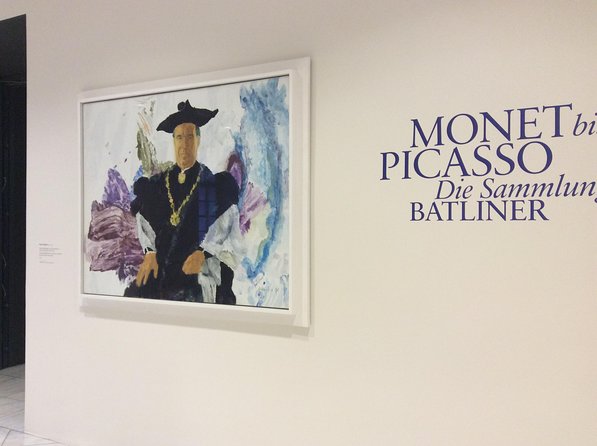
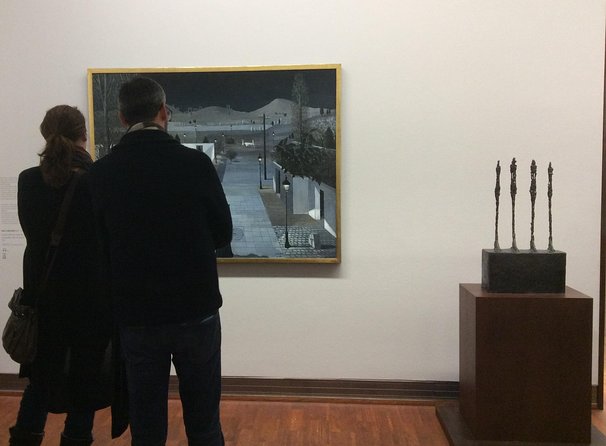
The museum’s graphic collection is known around the world, but public displays are limited and can change. Some of the most famous pieces may be available only during a specific exhibition. You might instead see copies or works from the modern and avant-garde collections.
That distinction should shape your expectations. If your main purpose is to see one exact famous drawing, check the current exhibition information before booking. This private tour does not promise a specific artist or artwork, and the supplied details make clear that availability can be complicated.
If your goal is to understand how art moved toward modernism, the collection may be a better fit. You can study broad shifts in style and attitude without relying only on famous names. A guide can help you notice how one work relates to another and why a piece belongs in a particular artistic category.
There is also a useful tension here. Some visitors want instant recognition. Others enjoy finding meaning in works that do not come with a ready-made reputation. If you belong to the second group, the Albertina’s less predictable selection may reward you.
Price, private attention, and the question of value
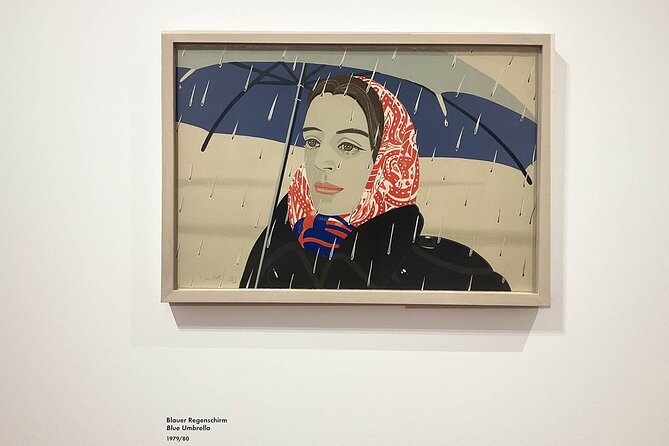
At $226.37 per person, this is expensive for a two-hour museum visit. You are paying for more than admission, but you should be clear about what that extra money buys.
The value is strongest when you want personal instruction. A private art historian can adjust the pace, answer your questions, and spend more time on the works that hold your attention. For someone who feels lost in modern art, that personal guidance can make the museum far more useful than a solo visit.
The value is weaker if you prefer wandering alone or already have a solid understanding of modern art. You may find two hours too structured, even with a flexible guide. The museum ticket is included, but the ticket itself does not explain the full cost. The premium comes from private access to a specialist and a discussion shaped around your group.
Group discounts are available, which may improve the price for a larger party. Since the activity is private, you should also consider the group size when calculating value. A family or small group splitting the cost may find the arrangement more reasonable than one person paying alone.
The tour is booked, on average, 26 days ahead. That suggests you should plan it before arriving in Vienna, especially if your dates are fixed. Confirmation arrives at booking, and the provider offers free cancellation if you cancel at least 24 hours before the start time.
Who will get the most from this experience
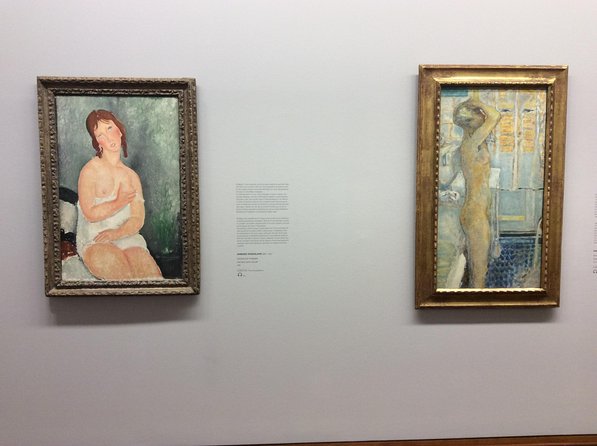
This tour suits you best if you want to understand modern art rather than simply photograph a famous room. It is also a good choice if you enjoy asking questions and prefer a conversation to a standard group lecture.
It may work well for:
- First-time modern art visitors who want a clear introduction.
- Couples or families with different levels of art interest.
- Art students and curious adults who want to examine ideas in person.
- Visitors who dislike large group tours.
- People who have a specific interest they want to discuss with a guide.
You may want to skip it if you are mainly chasing a particular Albertina masterpiece. The public presentation of famous graphic works can depend on changing exhibitions, and this tour does not guarantee one exact selection.
You should also be comfortable with a moderate level of walking and standing. The activity lists a moderate physical fitness level, and a museum tour requires moving through the galleries for about two hours. The Albertina is near public transportation, so getting to the meeting point is straightforward, but the tour itself remains an active museum visit.
Small details that make the visit easier
Bring the voucher in whichever format suits you. Both paper and electronic versions are accepted, and your guide carries the admission tickets.
Arrive at the Albertina meeting point with enough time to find Albertinaplatz 1. The exact start procedure is simple on paper, but a busy city square can still cost you minutes if you arrive at the last second.
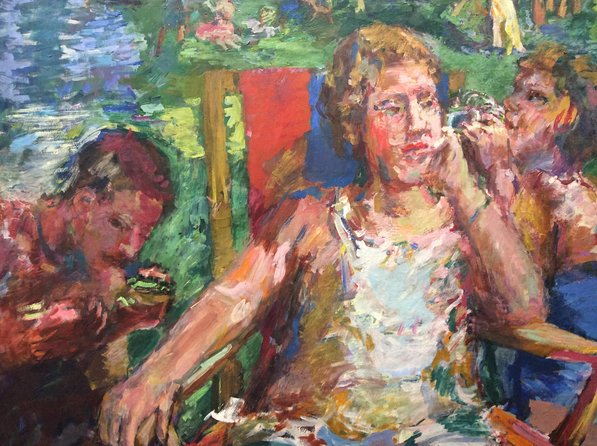
Keep your expectations flexible about the collection. The most famous works may not be displayed, and copies or other selections may appear instead. That does not make the visit pointless, but it changes the experience from famous-object hunting to guided interpretation.
Finally, use your private format. Come with two or three questions, even if they are basic. Ask about the movement you find most interesting, the work you dislike, or the detail you cannot understand. The tour is designed to give you room for that exchange.
Should you book the Albertina private tour?
Book it if personal attention matters more to you than keeping costs low. The included ticket, private format, art historian guide, and flexible discussion create a focused way to approach modern and avant-garde art. The strongest praise connected with the experience centers on explanation, questions, and the freedom to look at your own pace.
Think twice if you want a guaranteed parade of famous masterpieces or a low-cost museum introduction. The Albertina’s best-known graphic works may not be on view, and $226.37 per person is a large payment for two hours.
For an intellectually curious visitor who wants modern art to feel less distant, this is a worthwhile splurge. For everyone else, a regular museum ticket and independent visit may offer better value.
FAQ
Where does the Albertina private tour begin?
It begins at Albertinapl. 1, 1010 Wien, Austria, at the Albertina Museum.
Where does the tour finish?
The activity ends back at the meeting point at the Albertina.
How long does the tour last?
The tour lasts approximately two hours.
Is museum admission included?
Yes. The Albertina admission ticket is included, and the guide carries the tickets.
Is this a private activity?
Yes. Only your group participates in the tour.
What language is offered?
The experience is offered in English.
Can I show an electronic voucher?
Yes. You can present either a paper voucher or an electronic voucher.
Do I need a certain level of physical fitness?
A moderate physical fitness level is recommended for the activity.
Can I cancel for a full refund?
Yes, if you cancel at least 24 hours before the experience start time. Cancellations or changes made less than 24 hours before the start are not accepted for a refund.
Just added in Vienna
- Vienna: Austrian Wine Tasting Experience★ 4.2 · 2 reviews
- World War II History Vienna Old Town Private Walking Tour★ 4.8 · 9 reviews
- Vienna_ Meet Beethoven Life Private Guided Walking Tour★ 5.0 · 1 review
- Vienna: Wine Tasting Tour★ 4.8 · 61 reviews
- Vienna: Wine Tasting E-Bike Tour★ 4.9 · 46 reviews
- Vienna: Wine Tasting at Schönbrunn Palace★ 4.3 · 71 reviews
- Vienna: Winery and Wine Tasting Tour with a Wine Expert★ 5.0 · 5 reviews
- Vienna: Concert by the Vienna Baroque Orchestra★ 4.6 · 56 reviews
Museums, compared.

Skip-the-Line Sisi Museum, Hofburg and Gardens Tour
Read our review →
Vienna Kunsthistorisches Museum Day Admission Ticket
Read our review →

Chocolate Workshop in Chocolate Museum w/ Tasting
Read our review →
St. Stephen’s Cathedral & Dom Museum Wien Tickets
Read our review →
Browse the lists this tour appears in