
Reviewed · 2-HOUR EXPERIENCES
Vienna’s Highlights in two hours (two options)
Vienna keeps secrets in plain sight. This private two-hour walk links the city’s Greek Quarter with old legends, early printing, Habsburg history, and little-known Art Nouveau buildings. I like the unusual route, especially the chance to hear about Augustin, the basilisk saga, Greek merchants, and Vienna’s oldest residential tower. I also like the silent headsets, which make it easier to follow the guide in city streets.
The main consideration is that this is a focused walking tour, not a grand survey of Vienna’s famous sights. You will not cover every major landmark, and the tour is not suitable for wheelchair users. Still, at $24 per person, I think it offers good value if you want local stories and architectural details rather than a basic introduction to Schönbrunn, the Hofburg, or St. Stephen’s Cathedral.
In This Review
- Key reasons to consider this Vienna walk
- What this two-hour experience is really about
- Meeting near Stubentor and entering the historic center
- Fleischmarkt and Vienna’s lesser-known Art Nouveau
- The Greek Quarter and the road toward independence
- Augustin, the plague, and the role of music
- Schönlaterngasse and the basilisk legend
- Vienna’s oldest residential tower
- Lugeck and the history of books and rulers
- Guide Nicole, headsets, and the private format
- Is $24 good value for two hours?
- Who should book this tour?
- Should you book Vienna’s Highlights in Two Hours?
- FAQ
- How long does the tour last?
- What languages are available?
- Where does the tour meet?
- Is hotel pickup available?
- Is this a private tour?
- Does the tour include headsets?
- Is the tour underground?
- Is the walk physically difficult?
- Is the tour suitable for wheelchair users?
- Can I cancel for a refund?
- Does the tour operate in bad weather?
- What are the possible end points?
Key reasons to consider this Vienna walk
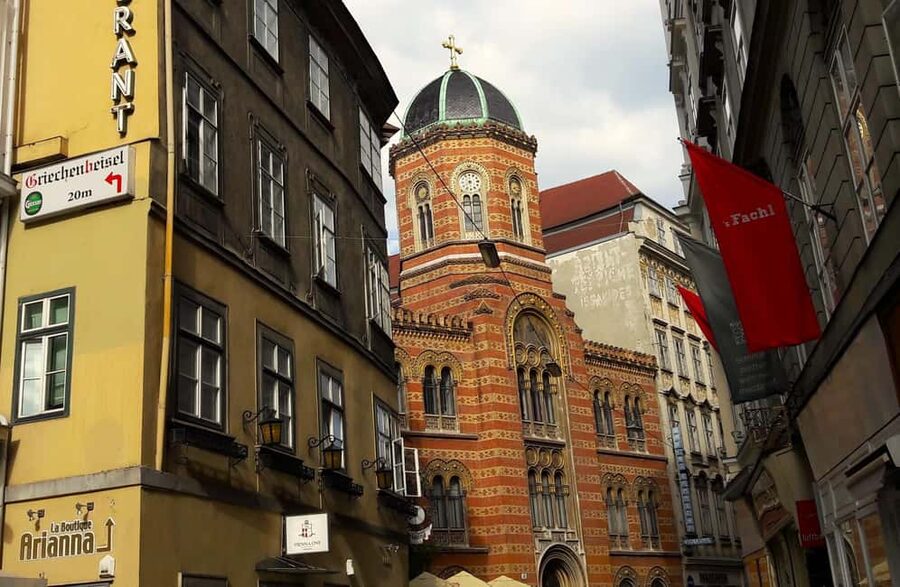
- The Greek Quarter reveals a lesser-known side of Vienna: Learn how Greek merchants and intellectuals shaped this central neighborhood in the 18th century.
- Augustin’s legend adds a human story: Hear how the famous musician gave people hope during the plague.
- Fleischmarkt mixes Art Nouveau with printing history: The facades are easy to miss without someone pointing out their details and connections.
- Schönlaterngasse brings legends to life: This street is linked with the basilisk story and tales of medieval alchemists.
- A private format keeps the pace flexible: You can ask questions and discuss details directly with your guide.
- The two-hour length suits a busy Vienna schedule: It gives you a strong taste of the first district without taking up half your day.
What this two-hour experience is really about
This is not a checklist tour of Vienna’s grandest monuments. It is a story-led walk through a small part of the historic center, where old streets, religious buildings, merchant houses, printing workshops, music, folklore, and newer architecture meet.
I see the appeal in that approach. Vienna can feel polished and grand at first glance, but its smaller lanes often explain how the city actually worked. This route follows the links between trade, religion, books, music, plague legends, and the early Habsburg era.
The tour is private, so your guide can respond to your questions instead of delivering a fixed speech to a large group. The silent guide system with headsets should also help you hear clearly while standing near busy streets or moving between buildings.
You can choose between two options. One uses the agreed central meeting arrangement, while the pickup option begins at your hotel lobby or at a public transport station agreed by email. Pickup does not mean a private car or bus. You and the guide use public transport to reach Vienna’s first district.
A few more options to weigh up in Vienna
- Vienna: Vivaldi’s Four Seasons Concert in Karlskirche
★ 4.7 · 14,951 reviews - Vienna: Spanish Riding School Training
★ 3.9 · 9,281 reviews - Vienna: Schönbrunn Palace & Gardens Skip-the-Line Tour
★ 4.7 · 7,739 reviews
Meeting near Stubentor and entering the historic center
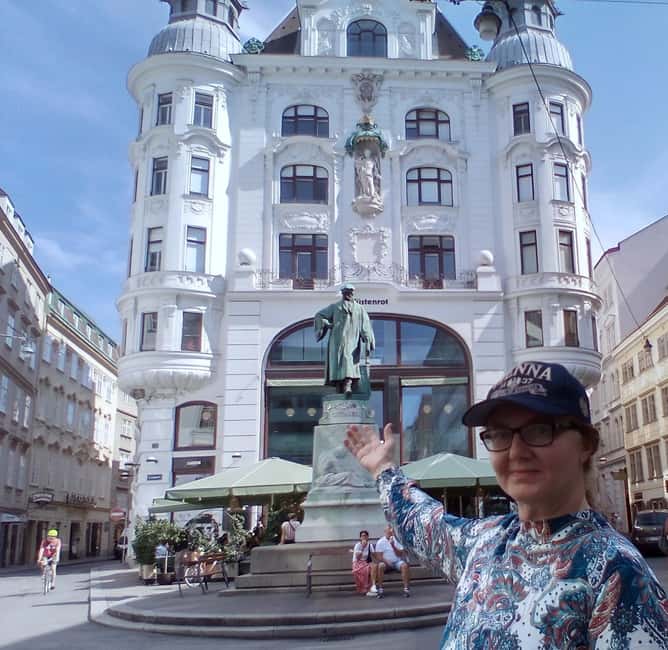
The usual meeting point is near the Dr. Karl Lueger monument, close to Stubentor subway station. This is a practical place to begin because it puts you near the old city center and makes the starting point accessible by public transport.
If you choose pickup, contact the guide in advance at [email protected]. You can arrange to meet in your hotel lobby or at a public transport station. Since there is no car or bus pickup, allow enough time for the public transport connection before the two-hour walk begins.
The exact starting arrangement depends on the option you select. I would confirm the meeting details before setting out, especially if you have chosen hotel pickup. Vienna has several central streets with similar names, and a clear meeting plan prevents a rushed start.
The route itself is described as easy and not strenuous. You will not be covering a large distance at a fast pace. That makes this a useful choice if you want a cultural walk but do not want a physically demanding sightseeing session.
Fleischmarkt and Vienna’s lesser-known Art Nouveau
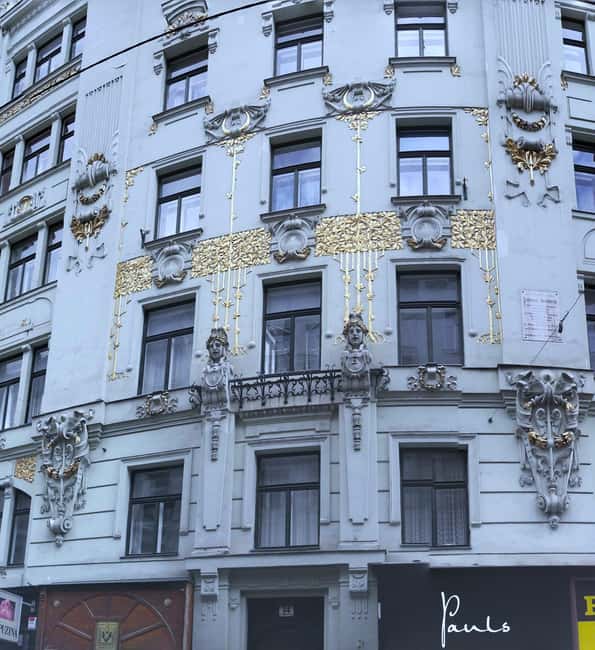
Fleischmarkt is one of the most interesting parts of the route because it brings together old and new Vienna in a small area. Here, the guide points out Art Nouveau facades that many people pass without a second look.
The value is in the explanation. Art Nouveau is often associated with Vienna’s famous Secession building and grand decorative works, but the city has less familiar examples tucked into ordinary streets. On this walk, you can examine those facades while learning how they connect with earlier buildings and with the city’s printing story.
Fleischmarkt also helps explain how Vienna’s neighborhoods changed over time. A street can carry medieval associations, religious connections, and commercial activity, then gain a new architectural layer in the 19th century. You are not simply looking at pretty decoration. You are learning to read the city as a record of different periods.
The guide also points out links to Vienna’s first printing houses. That connection gives the walk extra substance. Books and printing affected education, religion, politics, and the spread of ideas, so this part of the tour helps place Vienna’s streets within a wider European story.
The Greek Quarter and the road toward independence
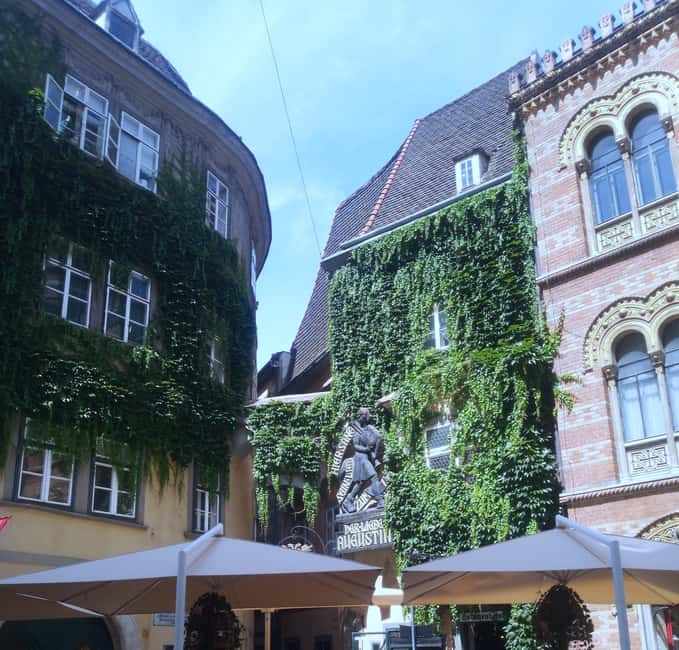
Griechengasse and the surrounding Greek Quarter form the heart of this experience. The area is closely tied to Greek merchants and intellectuals who were active in Vienna during the 18th century.
The neighborhood’s importance is not limited to restaurants or church facades. It was a place where trade, culture, and political thought met. The tour explains how the area helped prepare the way for Greek independence, giving you a connection between a Vienna street and a major chapter in southeastern European history.
The Greek Quarter also had a border-like position along the Danube. That detail helps explain why merchants and visitors passed through the area. Vienna was not isolated from the wider region. Its river connections brought people, goods, languages, and ideas into the city.
I like this section because it offers a different view of Vienna’s past. The city’s story is often told through emperors, palaces, and composers. Here, you also hear about merchants, immigrants, printers, and intellectual networks. That makes the experience feel more grounded in ordinary urban life.
You can expect churches, taverns, old commercial buildings, and architectural details along the way. The guide may also point out secret passages and features that are difficult to notice on your own. These small discoveries are one reason a private guide adds value to a short walk.
A completely different kind of day:
- Vienna: Light of Creation Votive Church Immersive Light Show
★ 4.8 · 6,779 reviews - Vienna Spanish Riding School Guided Tour
★ 4.7 · 6,765 reviews - Vienna: Classical Concert in the World-Famous Musikverein
★ 4.6 · 6,673 reviews - Vienna: Skip-the-Line Sisi Museum, Hofburg and Gardens Tour
★ 4.8 · 5,918 reviews
Augustin, the plague, and the role of music
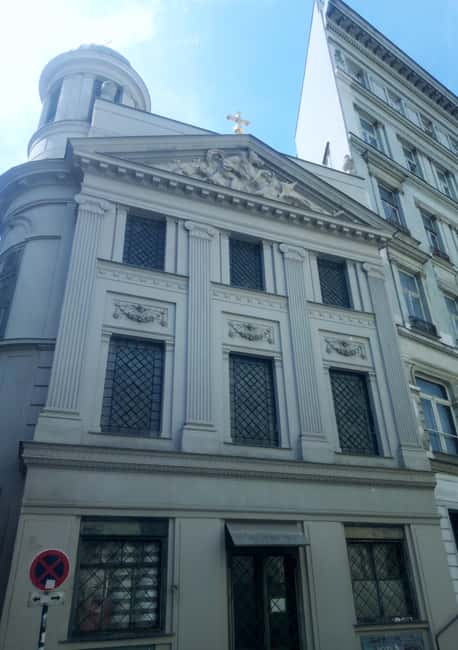
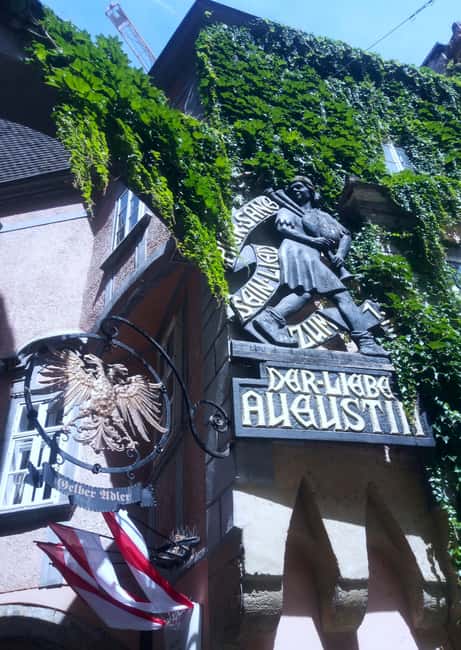
The legend of Augustin is one of the route’s most memorable human stories. The tour connects him with the plague and with the hope he gave to people trying to survive a frightening period.
That story adds emotional weight to the streets. You begin to see music not only as entertainment for wealthy patrons, but also as something that could lift spirits during hard times. Vienna’s musical identity is usually presented through famous composers and concert halls. This tale gives it a more popular, street-level dimension.
The route also explains that well-known musicians made music in this part of the city and that their patrons lived nearby and supported them financially. That detail helps clarify how music functioned in old Vienna. Artistic careers depended on personal networks, wealthy supporters, churches, and urban neighborhoods.
I would pay close attention during this section because legends and historical facts are presented together. The stories are part of the character of the area, while the surrounding buildings help anchor them in real places. If you enjoy folklore, music, and human stories, this will likely be one of the strongest parts of the tour.
Schönlaterngasse and the basilisk legend
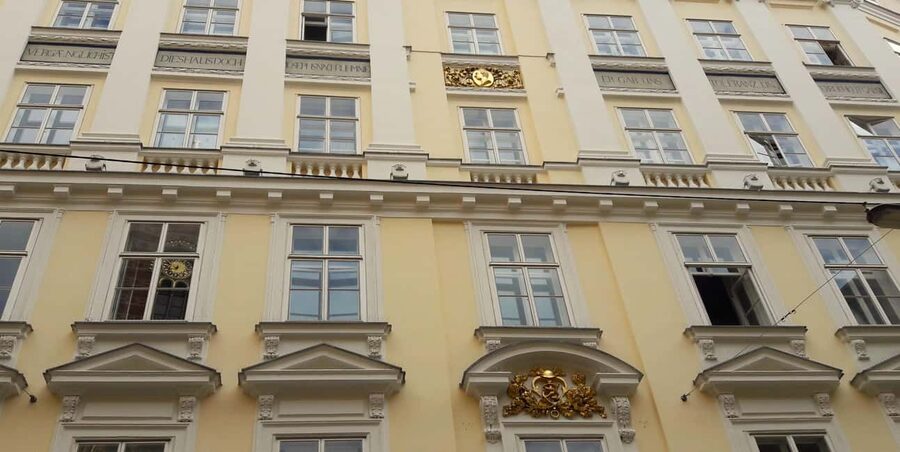
Schönlaterngasse brings a more mysterious tone to the walk. The street is associated with legends, including the saga of the basilisk, a creature said to have terrified the neighborhood.
You will also hear stories connected with alchemists and medieval scientists. These tales show how people once tried to understand nature, medicine, metals, and the unknown. Vienna’s old streets were not only settings for official religion and court life. They were also places where superstition, experiment, rumor, and learning crossed paths.
The guide’s role matters here. A narrow street or old facade may not seem especially significant without context. With the story attached, you can picture how residents understood their surroundings in earlier centuries.
The basilisk tale is not the reason to book the tour by itself, but it adds variety. The route moves from architecture to trade, from printing to music, and then into folklore. That change of mood keeps the two hours from feeling like a long list of dates and names.
Vienna’s oldest residential tower
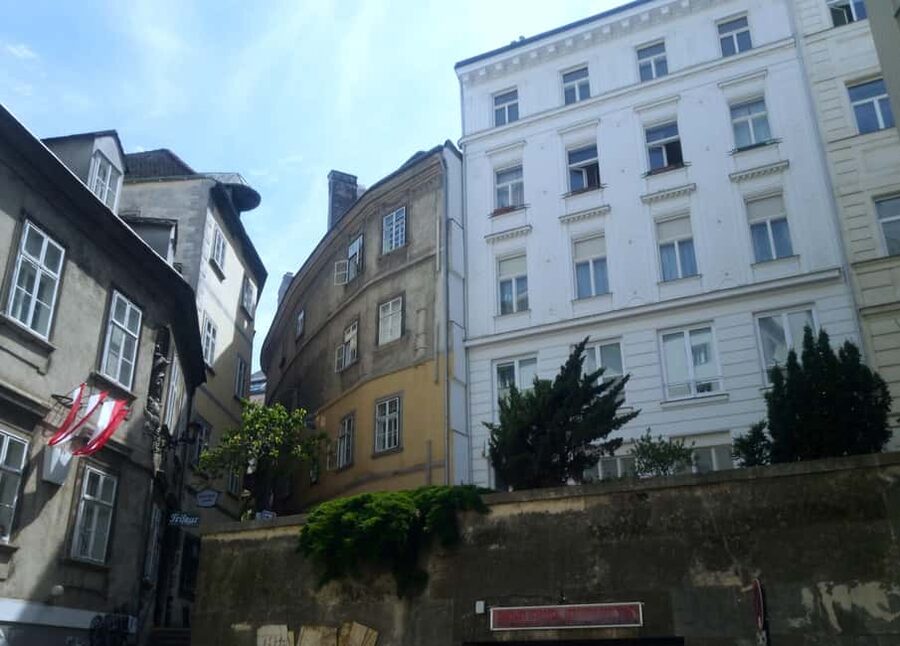
The route includes what is described as the oldest residential tower in Vienna. This is an important stop because it gives you a direct link to the city’s medieval building history.
You should not expect a museum visit or an underground exploration. The experience takes place above ground, and the tower is viewed as part of the street route. The guide explains why it matters and places it within the development of the historic center.
This is also where the contrast between old and new architecture becomes clear. Vienna’s first district is not frozen in one century. Medieval structures, later facades, and 19th-century design often sit close together. The walk helps you notice those layers instead of treating the city center as one uniform style.
The tour is specifically not an underground tour. If you are looking for crypts, tunnels, or excavated ruins, this is not the right choice. If you prefer street-level history with manageable walking, the format should suit you better.
Lugeck and the history of books and rulers
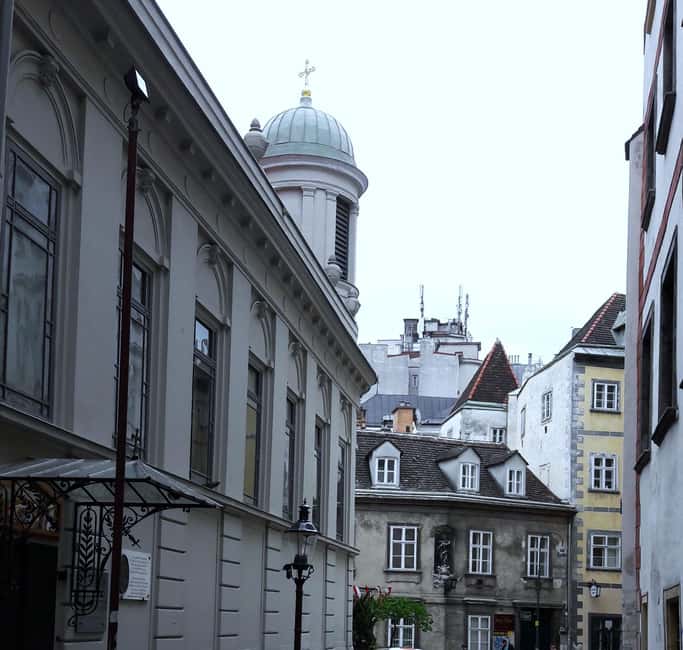
Lugeck connects the history of printing with the early Habsburg monarchy and with the legends that run through the route. This is a useful closing section because it draws several themes together.
By this point, you have heard how Vienna’s streets carried merchants, religious communities, artists, printers, and political ideas. Lugeck gives the guide a chance to relate those local details to the wider development of the city and the monarchy.
The listed route can finish near Lugeck 6 or at the Austrian Parliament, depending on the selected option. The general meeting information also says the activity ends back at the meeting point, so check the exact end arrangement when booking. The important practical point is that you finish in central Vienna, with easy access to continue sightseeing or return by public transport.
A useful extra is the illustrated map of Vienna’s historic center. The guide provided one after the tour, and I would treat it as more than a souvenir. A map with building illustrations can help you plan later walks and recognize places you pass again.
Guide Nicole, headsets, and the private format
The guide is identified as Nicole from Guide from Vienna, RAXI Tours. The experience is offered in English, German, or Italian.
The private format is a major advantage for this route. Because the subject matter includes legends, architectural details, and historical connections, you may want to stop and ask why a building matters or how one story connects to another. A private guide can adjust the conversation more easily than a large group tour.
The silent headsets are another practical feature. Streets in the first district can be active, and it is frustrating to lose half an explanation while crossing a road or standing near other groups. The headset system should keep the guide’s voice clear.
The main limitation is that the quality of the experience depends strongly on the guide’s storytelling. This is not a self-guided audio walk where every stop follows a fixed script. If you enjoy conversation and questions, that is a plus. If you prefer complete independence, you may find the guided structure less appealing.
Is $24 good value for two hours?
At $24 per person, I consider this a fair price for a private, guide-led walk focused on a less familiar part of Vienna. The value comes from access to interpretation, not from entry tickets, transport, or a long list of famous monuments.
You are paying for two hours of focused attention, a multilingual live guide, headsets, and a route built around details that are easy to miss. The price looks especially reasonable if you enjoy architecture, urban history, legends, or the Greek connection to Vienna.
It is less suitable if you want admission to interiors, a full city overview, or transport included by private vehicle. This is a walking experience, and the cost should be judged against that purpose.
Free cancellation is available up to 24 hours before the tour for a full refund. You can also reserve now and pay later, which helps if your Vienna schedule is still changing. The tour operates rain or shine, so bring suitable clothing and shoes for the forecast.
Who should book this tour?
I would recommend it to first-time visitors who already plan to see Vienna’s main sights and want a more unusual story route. It also suits repeat visitors who have seen the Hofburg and cathedral area but want to understand another corner of the center.
History fans, architecture students, photography-minded visitors, and people interested in Greek culture should find plenty to enjoy. The route is easy and not strenuous, so it can also work well for anyone who wants a slower outing.
Families may enjoy the basilisk and Augustin legends, though the tour also includes serious material about printing, political history, and architecture. The two-hour length makes it easier to fit around museums, meals, or an evening concert.
You should reconsider it if you need wheelchair access, want a vehicle pickup, or expect a major attraction inside the tour. The activity is not suitable for wheelchair users, and no car or bus pickup is offered.
Should you book Vienna’s Highlights in Two Hours?
Book it if you want stories beneath Vienna’s polished surface. The Greek Quarter, Fleischmarkt, Schönlaterngasse, and Lugeck create a compact route with more character than a standard postcard tour.
I especially like the mix of Art Nouveau, medieval architecture, printing history, Greek independence, music, and folklore. Confirm the meeting and ending details, choose your language, and allow for rain. For $24, this is a sensible way to spend two hours if you value local context over a parade of famous sights.
FAQ
How long does the tour last?
The tour lasts two hours.
What languages are available?
The live guide is available in English, German, and Italian.
Where does the tour meet?
The usual meeting point is near the Dr. Karl Lueger monument, close to the Stubentor subway station.
Is hotel pickup available?
Optional pickup is available from your hotel lobby or an agreed public transport station. Pickup uses public transport, not a private car or bus.
Is this a private tour?
Yes. The activity is a private tour.
Does the tour include headsets?
Yes. Silent guide headsets are included so you can hear the guide clearly.
Is the tour underground?
No. This is not an underground tour.
Is the walk physically difficult?
The walk is described as easy, with limited walking, and is not strenuous.
Is the tour suitable for wheelchair users?
No. The activity is not suitable for wheelchair users.
Can I cancel for a refund?
You can cancel up to 24 hours in advance for a full refund.
Does the tour operate in bad weather?
Yes. The tour takes place rain or shine.
What are the possible end points?
The listed end points include Lugeck 6 and the Austrian Parliament. The general meeting information also says the activity ends back at the meeting point, so confirm the exact arrangement for your chosen option.
Just added in Vienna
- Vienna: Austrian Wine Tasting Experience★ 4.2 · 2 reviews
- World War II History Vienna Old Town Private Walking Tour★ 4.8 · 9 reviews
- Vienna_ Meet Beethoven Life Private Guided Walking Tour★ 5.0 · 1 review
- Vienna: Wine Tasting Tour★ 4.8 · 61 reviews
- Vienna: Wine Tasting E-Bike Tour★ 4.9 · 46 reviews
- Vienna: Wine Tasting at Schönbrunn Palace★ 4.3 · 71 reviews
- Vienna: Winery and Wine Tasting Tour with a Wine Expert★ 5.0 · 5 reviews
- Vienna: Concert by the Vienna Baroque Orchestra★ 4.6 · 56 reviews
2-Hour Experiences, compared.
Jewish Life in Leopoldstadt 2-Hour Walking Tour
Read our review →
Browse the lists this tour appears in