
Reviewed · SPANISH RIDING SCHOOL TOURS
Vienna Spanish Riding School Guided Tour
The horses are only part of the show. Vienna’s Spanish Riding School Guided Tour takes you behind the polished performances and into the Winter Riding School, the Stallburg stables, and the Summer Riding School. In 55 minutes, you learn how Lipizzaner stallions are bred, trained, housed, and prepared for classical equitation.
I like the close view of the horses and the chance to see working spaces that performance tickets do not cover. I also like the guides’ mix of history, practical horse care, and humor. The main drawback is simple: there is no riding demonstration, and cameras, video, and touching the horses are not allowed.
At $28 per person, this is a sensible choice if you want more than a quick look at an ornate building. It suits horse lovers best, but several guides have made the tour enjoyable for people who know little about horses. Large groups can make it hard to hear at times, so staying near the guide is worth the effort.
In This Review
- Key points to know before you go
- Why the Spanish Riding School is worth your time
- Starting at the Winter Riding School
- The Summer Riding School and its unusual horse walker
- Entering the Stallburg and its Renaissance courtyard
- The tack room and the practical side of performance
- What you learn about the Lipizzaner stallions
- A tour for horse lovers, and for complete beginners
- The $28 price and what you receive
- Rules, accessibility, and useful planning advice
- Should you book the Spanish Riding School tour?
- FAQ
- How long does the guided tour last?
- What areas does the tour visit?
- Are morning exercise tickets included?
- Can I take photos or videos?
- Can I touch the Lipizzaner horses?
- Is the tour wheelchair accessible?
Key points to know before you go
- Three different spaces in 55 minutes: See the Baroque Winter Riding School, the Summer Riding School, and the Stallburg stables.
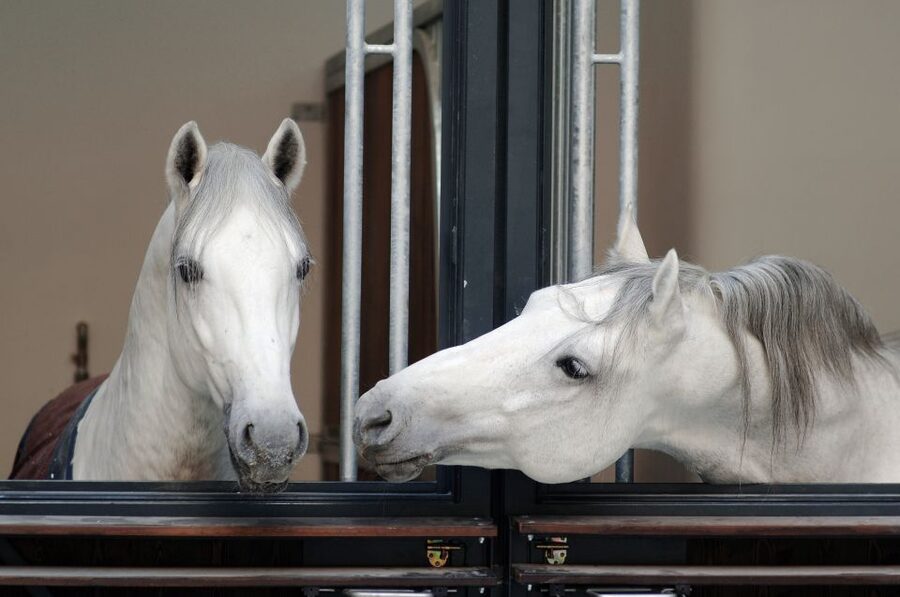
- Up-close Lipizzaner viewing: You can see the stallions in their stalls, but you cannot pet them, photograph them, or record video.
- The Stallburg is a rare architectural stop: Its arcade courtyard and Renaissance stables remain part of the working school.
- Guides shape the experience: English and German tours are offered, with guides such as Sisi, Natasha, Inga, Lorelei, and others praised for clear explanations and good humor.
- This is not a performance ticket: Morning exercise tickets are not included, so book a separate event if you want to see the horses working.
- Plan for practical limits: The tour is not wheelchair accessible, children under 3 cannot join, and you must exchange your mobile voucher for a paper ticket.
Why the Spanish Riding School is worth your time
The Spanish Riding School is not simply a place where horses perform tricks. It has operated for more than 450 years and continues the Renaissance tradition of classical equitation known as the Haute Ecole.
That long continuity gives the tour its substance. You are not just looking at white horses in handsome stalls. You are learning about a system that links breeding, rider training, horse care, discipline, architecture, and public performance.
I find the behind-the-scenes angle more useful than a quick photo stop. You see where the horses live and train, then hear how riders and stallions progress through years of work. Even if you have never ridden a horse, the tour explains why the famous movements require so much patience and control.
The school also offers a useful contrast between ceremony and daily routine. The Winter Riding School is grand and formal, but the stables and tack room show the practical side of the institution. That change of mood makes the visit feel less like a museum tour and more like a working operation.
More Spanish Riding School tickets:
- Vienna: Spanish Riding School Training
★ 3.9 · 9,281 reviews - Performance Of The Lipizzans At Spanish Riding School
4,190 reviews - Vienna: Spanish Riding School 45-Minute Performance Show
★ 3.9 · 731 reviews
Starting at the Winter Riding School
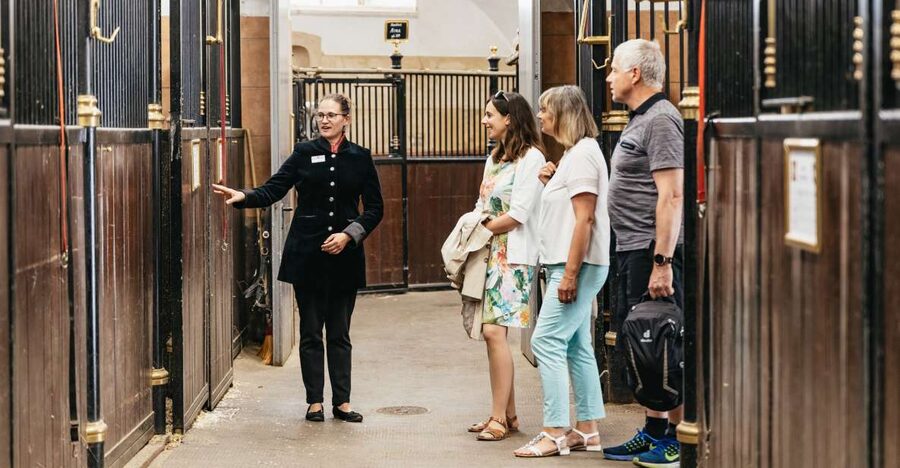
The tour begins at the Spanish Riding School’s main entrance on Michaelerplatz 1. After you exchange your mobile voucher at the ticket counter, the guide leads the group into the Winter Riding School.
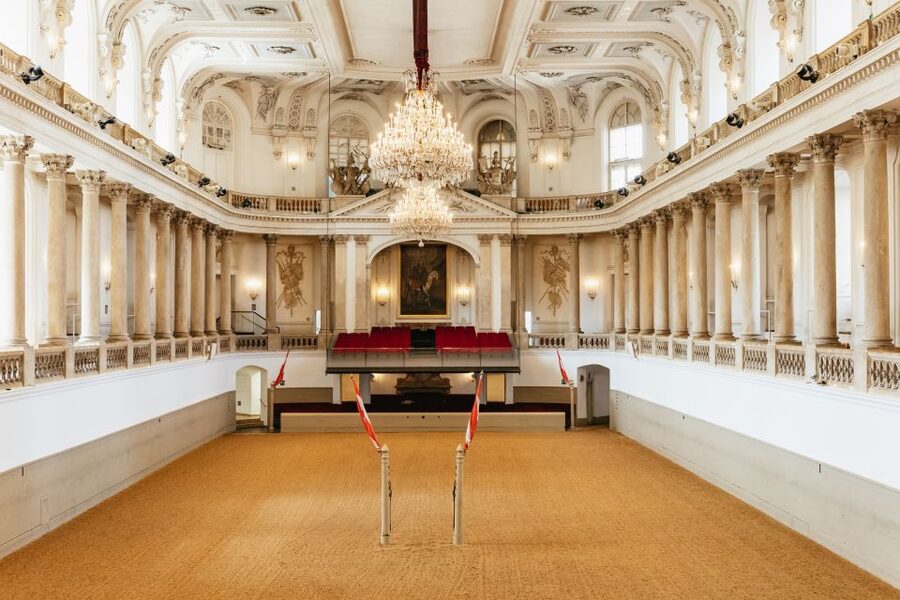
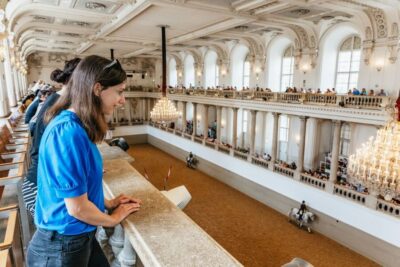
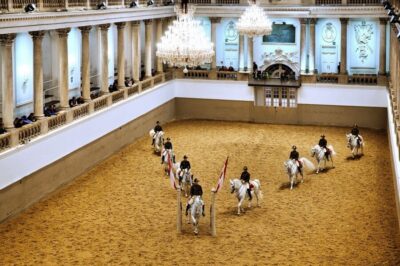
The Winter Riding School is the architectural centerpiece. Its Baroque design, elegant proportions, and performance setting explain why so many people want to visit even when they cannot attend a show. Sitting in the arena while the guide explains the school’s origins gives the building a purpose beyond decoration.
This is also where the tour sets up the basics. You learn about the school’s history, the role of the riders, and the training methods used with the Lipizzaner stallions. Several guides have been praised for making this part lively rather than turning it into a long lecture.
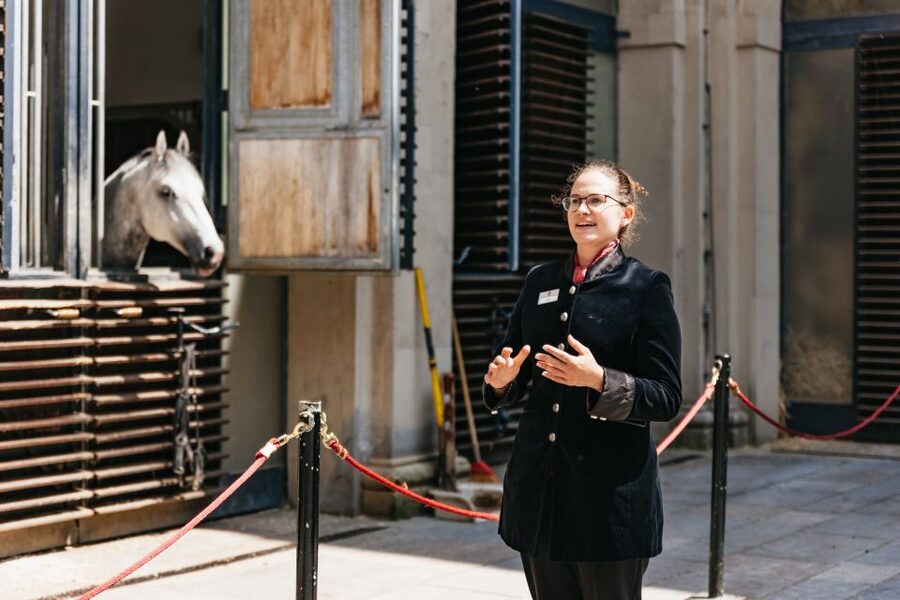
Guides may add humor and personal enthusiasm. Sisi, Natasha, Inga, Lorelei, and other English-speaking guides have been singled out for answering questions and explaining difficult points clearly. A guide does not need to be an active rider to make this section work. One highly praised guide described himself as a historian, and that perspective suited the historical setting.
If your group is large, hearing can be the weak spot. One-hour tours move through several areas, and the guide may need to speak over the movement of the group. Stay close, especially in the arena and during transitions, and ask questions when the guide pauses.
The Summer Riding School and its unusual horse walker
The next stop is the Summer Riding School. Its main claim to fame is the world’s largest oval horse walker, an impressive piece of equipment that gives you a sense of how much daily movement and conditioning matter to the school.
This part helps connect the formal arena with the horses’ routine. A Lipizzaner does not simply appear in a performance-ready state. The horse needs regular exercise, careful handling, and a long training process. Seeing the exercise area makes that work easier to understand.
The Summer Riding School can feel less theatrical than the Winter Riding School, but that is exactly its value. You are seeing another part of the institution’s working system rather than another decorated hall.
Conditions can vary depending on the season and the school’s schedule. In summer, many horses may be away on their countryside break, so you might see fewer stallions than expected. Tours held while the horses are away can still include horses of different ages, but you should not assume every stall will be occupied.
That seasonal point matters if your main goal is horse viewing. The tour remains worthwhile for the architecture and explanation, but a horse lover hoping to see a full set of Lipizzaners should understand that the animals are not kept in the city year-round.
Entering the Stallburg and its Renaissance courtyard
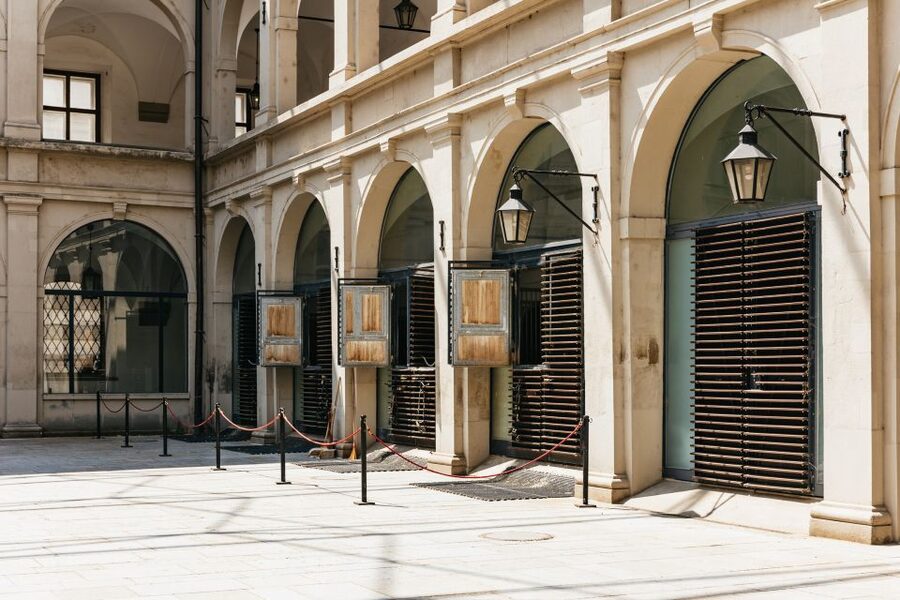
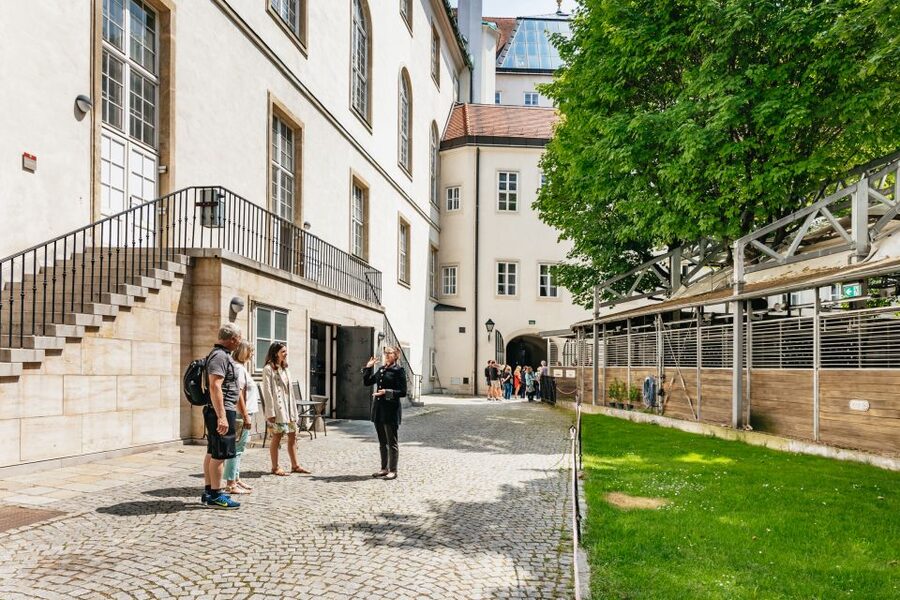
The Stallburg is one of the most memorable parts of the visit. It is Vienna’s most significant Renaissance building and includes an arcade courtyard with the historical stables of the Lipizzaner stallions.
The courtyard provides a strong visual change from the Baroque arena. Here, the school feels older, more enclosed, and more practical. The architecture is not separate from the horse tradition. It has housed the animals and supported the institution’s work for generations.
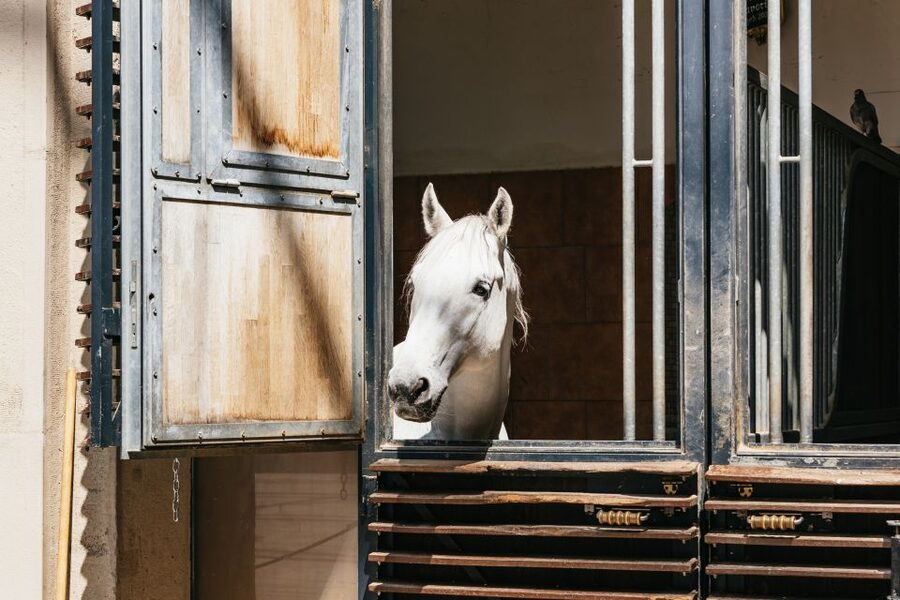
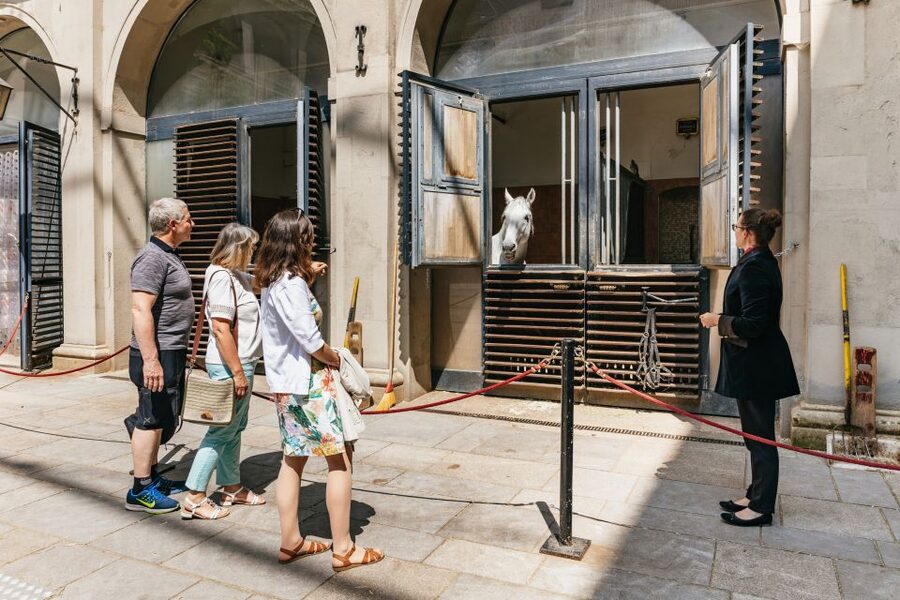
This is usually the point where the tour feels most personal. You can see stallions close up in their stalls and observe the calm, ordered setting in which they are cared for. You cannot touch the horses, and the no-photo rule applies, but the distance is still close enough to appreciate their size, posture, and quiet presence.
The horses are the stars of the tour, and even people without much equestrian interest tend to understand the appeal. Guides explain the animals’ breeding, names, lineage, care, and training. You may also hear about the different stages of a horse’s development.
One unusual detail adds a bit of character: working cats help control mice around the school. Their presence can be a welcome comic break during a serious discussion of bloodlines and training. Do not be surprised if a cat treats the entire tour group as background scenery.
A few more options to weigh up in Vienna
- Vienna: Vivaldi’s Four Seasons Concert in Karlskirche
★ 4.7 · 14,951 reviews - Vienna: Schönbrunn Palace & Gardens Skip-the-Line Tour
★ 4.7 · 7,739 reviews - Vienna: Light of Creation Votive Church Immersive Light Show
★ 4.8 · 6,779 reviews - Vienna: Classical Concert in the World-Famous Musikverein
★ 4.6 · 6,673 reviews
The tack room and the practical side of performance
The tack room adds another useful layer. You see training equipment and performance equipment, which helps explain how the school prepares horses and riders for the arena.
This stop is especially helpful if you plan to attend a performance later. Without context, the equipment can look like a collection of straps, saddles, and formal gear. With the guide’s explanation, you begin to see how each item fits into the school’s methods and presentation.
Horse owners and experienced riders may already know some of the basics, but the guides are generally ready for detailed questions. People who work with horses have found the explanations accurate and interesting, while beginners can ask about the fundamentals without needing prior knowledge.
The tack room also shows that the school’s polished image depends on unglamorous daily work. Training and performance require care, preparation, and consistency. That practical lesson is one of the tour’s strongest features.
What you learn about the Lipizzaner stallions
The Lipizzaner stallions receive most of the attention, rightly so. The tour explains their breeding, lineage, care, and training, along with the work required from the riders.
The white coat is part of the breed’s famous image, but not every horse looks the same at every stage. One memorable detail from the tour experience is the chance to see a rare bay horse that did not turn white. That kind of detail makes the breeding story more concrete and gives you something distinctive to watch for.
You also learn that the horses are not left in the city continuously. They spend time in the countryside, including seasonal breaks, which gives the animals a change from the urban stables and performance schedule.
That point may matter to you if you are concerned about animal welfare and daily care. The tour explains how the school manages training, rest, breeding, and time away from the city. It does not turn the visit into a debate, but it gives you a clearer picture of the institution’s routines.
The horses remain protected from direct contact. You cannot stroke them, and guides are firm about respecting the rule. That may disappoint children or anyone hoping for a hands-on animal encounter, but it keeps the horses calm and prevents the visit from becoming disruptive.
A tour for horse lovers, and for complete beginners
You do not need to know anything about dressage to enjoy this tour. One person joined mainly to see the building because performance times did not fit a flight schedule, then found the history and current practices genuinely interesting.
That is a useful clue about the tour’s reach. The guide explains the horses and riders in ordinary language, and questions are encouraged. You can ask about training, naming, breeding, care, or the school’s daily operation without feeling that you need specialist knowledge.
Horse lovers get the strongest payoff. Seeing the stallions in their stalls and hearing about their long training can make the visit feel special, particularly if attending a performance is not possible.
Families should check the age rule carefully. Children under 3 are not permitted on guided tours, and the no-touch, no-camera rules may be hard for very young children to accept. Older children who enjoy animals and can listen quietly may get a lot from the stable visit.
The tour is also a good fit if you have limited time in Vienna. At 55 minutes, it is long enough to cover the main spaces without taking half a day. You can place it between other central Vienna sights, though you should allow extra time to collect your ticket and find the entrance.
The $28 price and what you receive
At $28 per person, the tour offers solid value for a short central Vienna activity. You receive a guided visit through the arena, exercise spaces, stables, and tack room, rather than paying only to enter one historic room.
The price makes most sense when you value explanation. If you only want a photograph of the Winter Riding School, you may find the tour more than you need. If you want to understand how the school operates and see the horses up close, the cost is easier to justify.
The tour does not include morning exercise tickets. That distinction is important. The guided visit lets you learn about the horses and see their home, but it does not give you the experience of watching a training session or a public performance.
If you are deciding between this tour and a performance, they serve different purposes. The performance shows the finished work in the grand arena. The guided tour explains the people, horses, equipment, and spaces behind it. If your schedule and budget allow only one, choose the tour for access and context, and choose the performance for spectacle.
Free cancellation up to 24 hours before the activity and a reserve-now, pay-later option also make the booking easier to fit around a changing Vienna schedule. You still need to check the available starting time and collect the ticket at the cashier.
Rules, accessibility, and useful planning advice
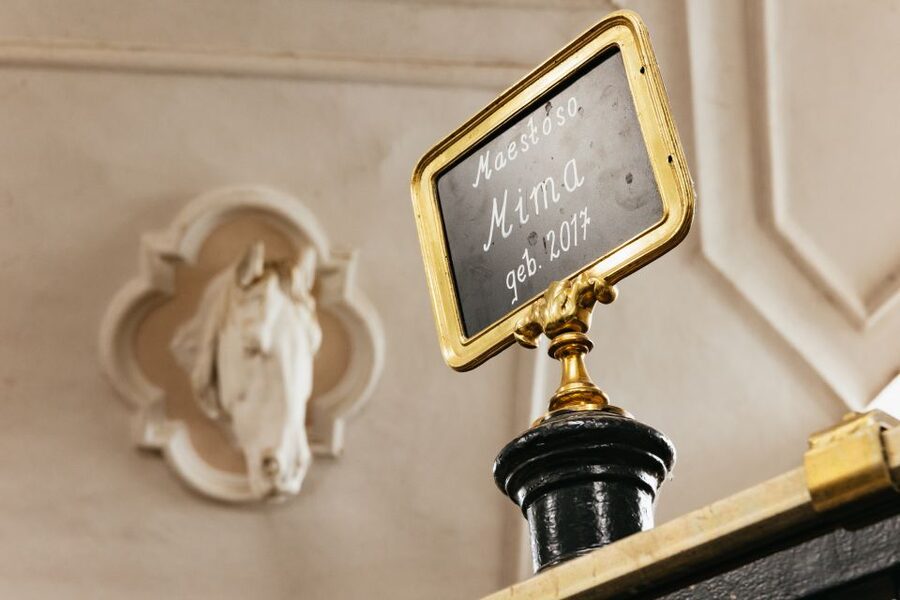
Meet at Michaelerplatz 1, at the main entrance of the Spanish Riding School. You must show your voucher at the ticket counter and exchange the mobile voucher for a ticket.
Ticket pickup is available from one hour before the activity at the earliest. Do not arrive expecting to collect it much earlier. Give yourself enough time to find the entrance, complete the exchange, and join the group without a last-minute rush.
English and German tours are available. Make sure you select the language that suits you when checking times, as separate language groups may operate.
Cameras and video recording are not permitted. The safest approach is to leave your camera put away for the entire tour and follow the guide’s instructions. Even if you notice an open courtyard where a photo might appear possible, the stated rule is no photography or video.
The guided tour is not wheelchair accessible. It is also not suitable for wheelchair users, and children under 3 are not allowed. Pets are not permitted.
Wear comfortable shoes. The tour moves through several parts of the school, and you will get more from it if you can stay with the guide rather than lag behind at each stop.
Should you book the Spanish Riding School tour?
Book it if you want to see the working side of Vienna’s famous riding school, especially the Stallburg stables and Lipizzaner stallions. It is also a smart choice if show tickets are sold out, performance times do not fit your plans, or you want useful context before attending a performance.
You may want to skip it if you need wheelchair access, require photography, or expect to ride or pet a horse. It is also less suitable if your only goal is to watch horses perform, since morning exercise and performance tickets are separate.
For most visitors, $28 is fair for the amount of access and explanation packed into 55 minutes. The best guides bring the place to life with history, humor, and clear answers. Stay near the guide, respect the stable rules, and treat the tour as an introduction to a centuries-old working tradition rather than a substitute for the full show.
FAQ
How long does the guided tour last?
The tour lasts 55 minutes.
What areas does the tour visit?
You visit the Winter Riding School, the Summer Riding School, and the Stallburg stables. The route also includes the arena, exercise area, and tack room.
Are morning exercise tickets included?
No. Morning exercise tickets are not included with the guided tour.
Can I take photos or videos?
No. Cameras and video recording are not permitted during the tour.
Can I touch the Lipizzaner horses?
No. You can see the horses close up in their stalls, but touching them is not allowed.
Is the tour wheelchair accessible?
No. The guided tour is not accessible by wheelchair and is not suitable for wheelchair users.
Just added in Vienna
- Vienna: Austrian Wine Tasting Experience★ 4.2 · 2 reviews
- World War II History Vienna Old Town Private Walking Tour★ 4.8 · 9 reviews
- Vienna_ Meet Beethoven Life Private Guided Walking Tour★ 5.0 · 1 review
- Vienna: Wine Tasting Tour★ 4.8 · 61 reviews
- Vienna: Wine Tasting E-Bike Tour★ 4.9 · 46 reviews
- Vienna: Wine Tasting at Schönbrunn Palace★ 4.3 · 71 reviews
- Vienna: Winery and Wine Tasting Tour with a Wine Expert★ 5.0 · 5 reviews
- Vienna: Concert by the Vienna Baroque Orchestra★ 4.6 · 56 reviews
Spanish Riding School Tours, compared.
Spanish Riding School 45-Minute Performance Show
Read our review →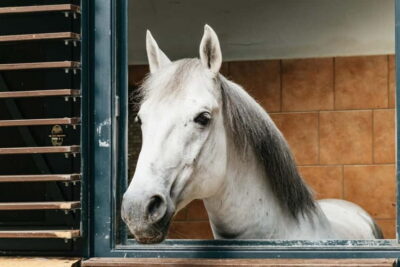
Spanish Riding School Guided Architectural Tour
Read our review →Browse the lists this tour appears in