Reviewed · TICKETS
Vienna: Tickets to Haus der Musik
Music museums can be quiet affairs. This one wants your attention. Haus der Musik turns Vienna’s musical past, sound science, and hands-on games into a lively visit that works for serious classical fans and families alike. You can explore composers, test a virtual orchestra, hear a Mozart-style version of your name, and learn why sound behaves the way it does.
I like the wide age range here. Children can push buttons, conduct, and experiment, while adults can spend time with historic documents and composer displays. I also like the mix of art and science, since the museum does not treat music as only a parade of famous names.
The main consideration is time. This is not a quick room-and-exit museum. Four floors offer a lot to read, hear, and try, so a rushed visit will leave plenty behind. At $22 per person, the price is reasonable if you stay for several hours, but less attractive if you only have time for a brief look.
In This Review
- Key Things to Know Before You Go
- Finding Haus der Musik in Central Vienna
- The Vienna Philharmonic Floor and Its Musical Legacy
- Seven Composers Across Vienna’s Musical Past
- The Conductor Challenge With the Vienna Philharmonic
- Sound Science, Instruments, and the Namadeus Game
- Temporary Exhibitions in the Inner Courtyard
- How Long to Allow and How to Pace the Visit
- Is $22 a Fair Price?
- Access, Family Needs, and Practical Details
- Who Will Get the Most From Haus der Musik?
- Should You Book Haus der Musik?
- FAQ
- Where is Haus der Musik located?
- How long is the ticket valid?
- What is included with admission?
- Do I need to bring headphones?
- Is Haus der Musik wheelchair accessible?
- Are young children admitted free?
- Is the Namadeus certificate included?
Key Things to Know Before You Go
- Conduct a virtual Vienna Philharmonic performance: Test your timing and gestures against the world-famous orchestra.
- Meet seven major composers: Haydn, Mozart, Beethoven, Schubert, Strauss, Mahler, and Schönberg receive dedicated attention.
- Hear your name as Mozart might have written it: The Namadeus Game creates an original-sounding musical version of your name.
- Build a waltz with dice: A playful composition activity shows how chance can shape a piece of music.
- Explore four floors of music and sound: The museum covers musical history, the science of hearing, instruments, and interactive installations.
- Plan for a longer stop: Some visitors finish in a couple of hours, while others spend four hours and still wish they had more time.
Finding Haus der Musik in Central Vienna
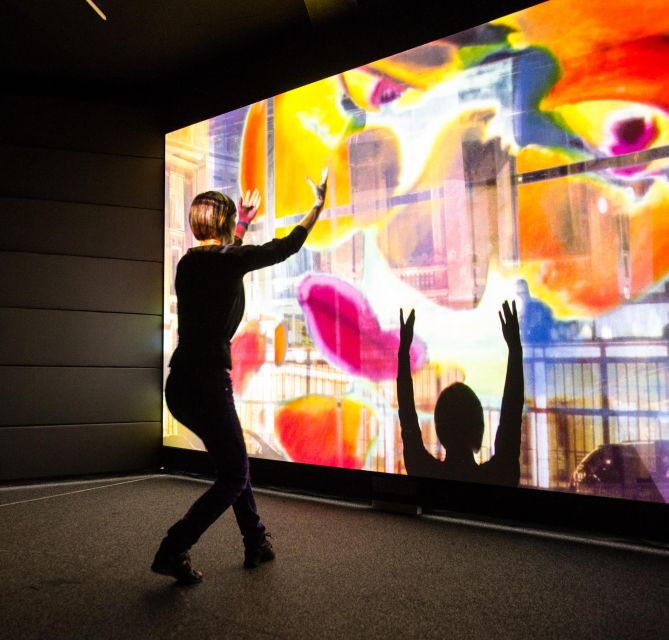
Haus der Musik is at Seilerstätte 30 in Vienna’s 1010 district, right in the city center. That makes it easy to add to a day of sightseeing around central Vienna. You do not need a separate transfer, and the experience begins at the museum itself.
The building has an important musical connection. It was once the Palais of Archduke Charles, and Otto Nicolai lived here when he founded the Vienna Philharmonic Orchestra in 1842. The museum’s location is not just a convenient address. The walls connect directly to one of Vienna’s most famous musical institutions.
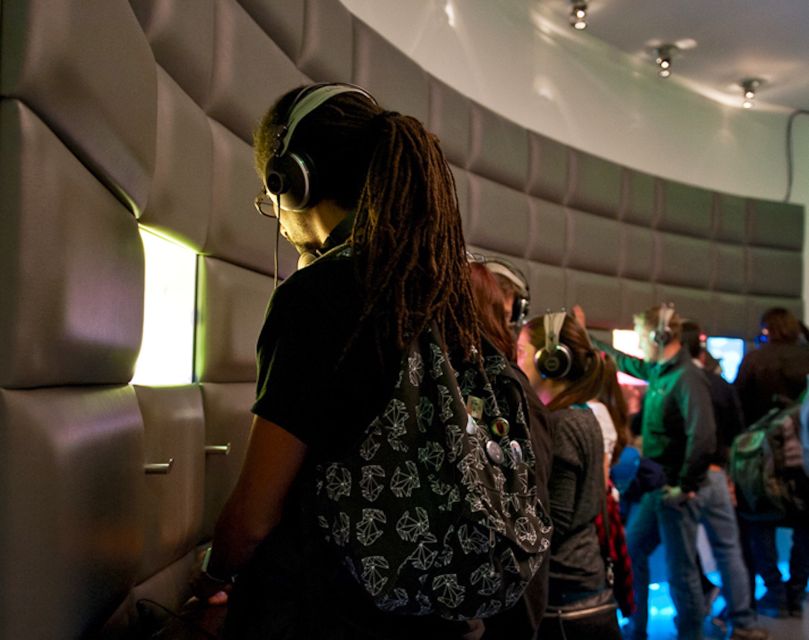
At the entrance, you can pick up a museum map and access the free smartphone guide. The app guide is offered in eight languages, with a children’s app in two languages. Bring headphones if you want to use the guide or hear the museum’s audio material comfortably.
The museum also has a coat check, which is useful during Vienna’s colder months. Food and drinks are not included, so plan to eat before or after your visit rather than expecting a café stop to form part of the experience.
A few more options to weigh up in Vienna
- Vienna: Vivaldi’s Four Seasons Concert in Karlskirche
★ 4.7 · 14,951 reviews - Vienna: Spanish Riding School Training
★ 3.9 · 9,281 reviews - Vienna: Schönbrunn Palace & Gardens Skip-the-Line Tour
★ 4.7 · 7,739 reviews
The Vienna Philharmonic Floor and Its Musical Legacy
One of the first major sections focuses on the Vienna Philharmonic Orchestra. This is where the museum feels most tied to Vienna rather than simply being a general music center.
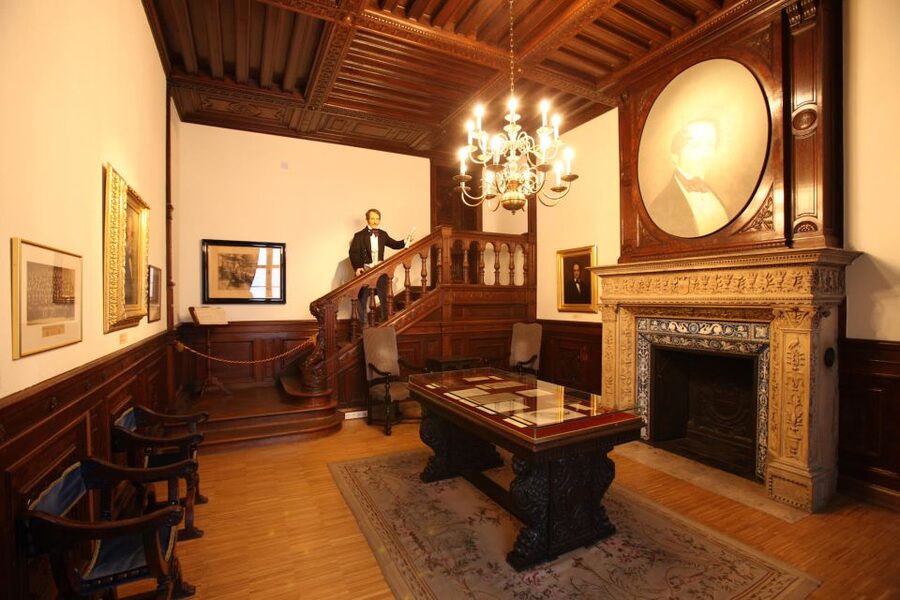
You can see documents and personal items connected with the orchestra’s past. The display helps explain how a group founded in 1842 became such a major part of Vienna’s cultural identity. If you know the orchestra mainly from recordings or the annual New Year’s Concert, this section gives that tradition a physical setting.
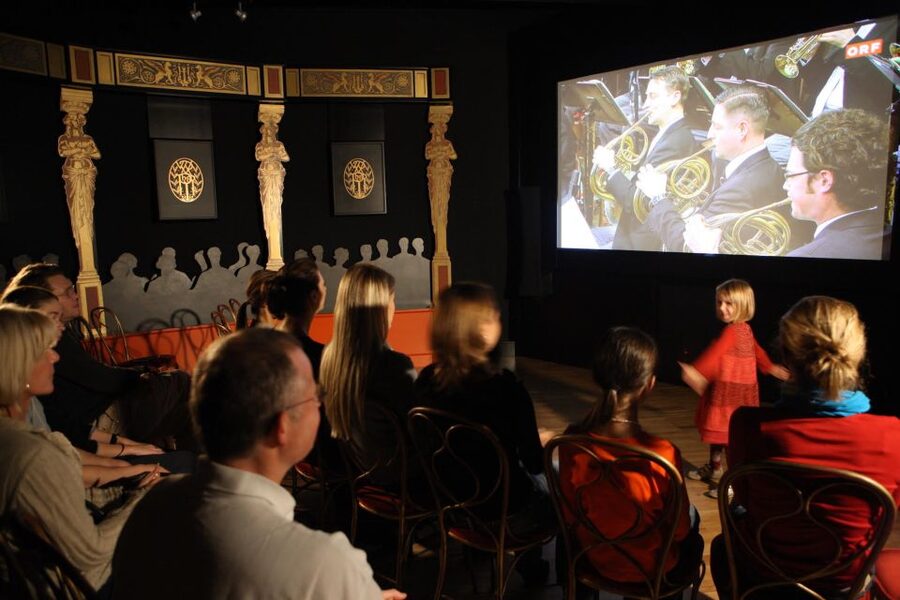
A highlight is the chance to listen to the Vienna Philharmonic’s New Year’s Concert in HD quality. It is a smart choice for the museum because the concert is one of Vienna’s best-known musical exports. The experience lets you focus on the performance without needing a concert ticket or formal concert-hall setting.
The orchestra section is more traditional than some of the later exhibits. You will find documents, objects, and historical material rather than constant buttons and games. That change of pace is helpful. It gives you a chance to understand the institution before you start playing with the interactive displays.
Seven Composers Across Vienna’s Musical Past
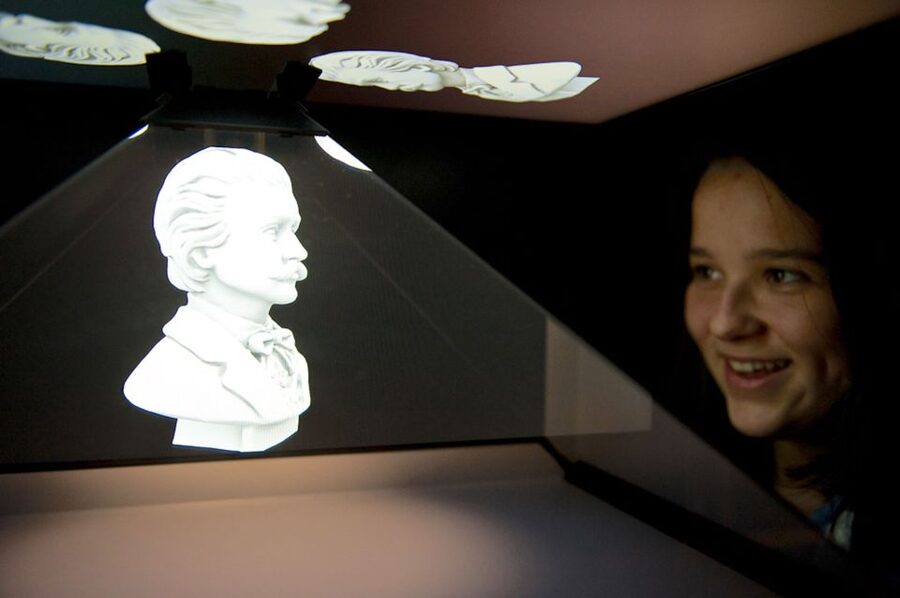
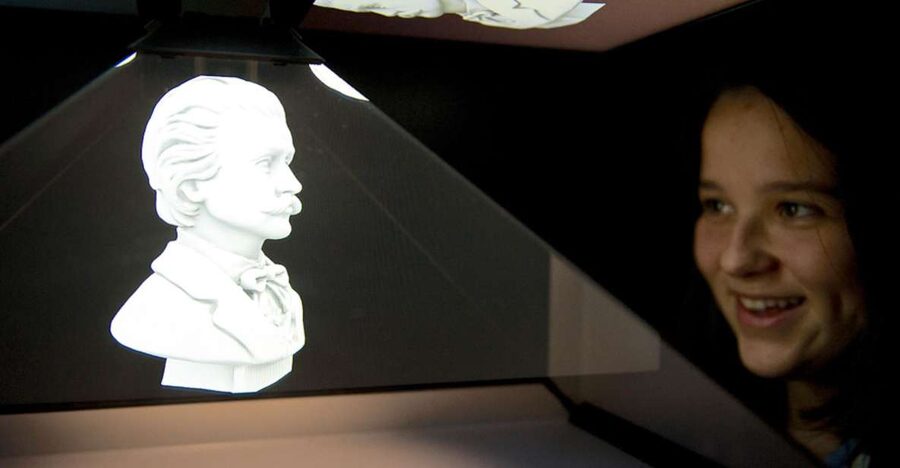
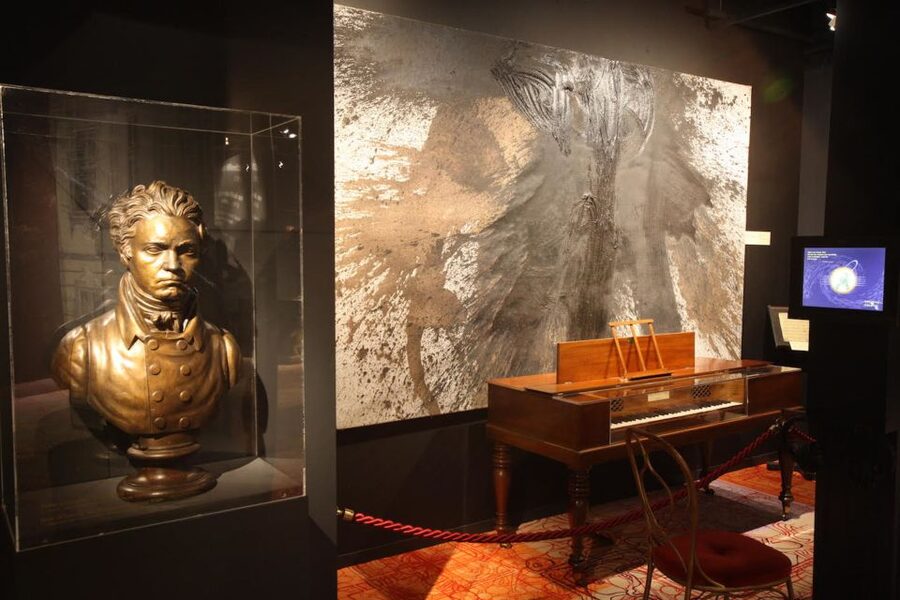
The composer section introduces Haydn, Mozart, Beethoven, Schubert, Strauss, Mahler, and Schönberg. These are not presented as floating names from a textbook. The museum places them in their own times through historic documents, models, costumes, personal belongings, and modern installations.
I find this approach useful because it connects music with people and place. You get more than a list of famous works. The objects and settings help you think about how these composers lived, worked, and fit into Vienna’s changing culture.
Mozart receives particular attention, including a room that many people find especially impressive. The Mozart material works well for both first-time learners and people who already know his music. You can pause for the written information or move along to the interactive parts if you prefer a faster visit.
Beethoven and Schubert add another layer to Vienna’s musical story, while Strauss brings in the waltz tradition that many people associate with the city. Mahler and Schönberg show that Vienna’s musical identity did not end with the classical era. Together, the displays create a timeline that moves from familiar classical figures toward later experimentation.
Do not expect every composer area to feel identical. Some sections reward close reading, while others rely more on images, objects, sound, or installation design. That variety keeps the floor from becoming a long sequence of portraits and dates.
The Conductor Challenge With the Vienna Philharmonic
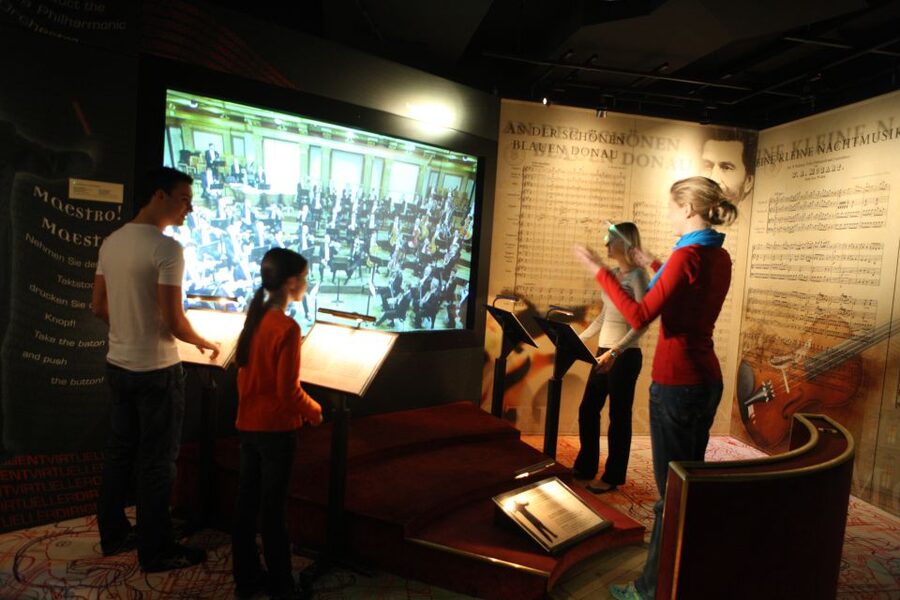
The virtual conducting activity is one of the museum’s strongest attractions. You stand before a screen and try to guide a performance by moving your arms and keeping the music on track.
This is not a serious conducting lesson, and that is part of its charm. You do not need musical training to enjoy it. The challenge turns an abstract idea, keeping an orchestra together, into something physical and funny. You quickly learn that waving your arms is not the same as controlling tempo.
I especially recommend this for families and couples. It gives children a clear task, while adults often become just as competitive. Even people who do not listen to classical music can understand the basic goal immediately.
The activity can also make a concert feel less mysterious. Conductors are often seen from a distance, and their gestures can look ceremonial. Here, you get a simple sense of how movement, timing, and attention affect a performance.
Because this is one of the most popular hands-on areas, you may need to wait for a turn if the museum is busy. The available information does not give a fixed queue system or time limit, so it is best to keep your schedule flexible rather than planning the entire visit around one activity.
A completely different kind of day:
- Vienna: Light of Creation Votive Church Immersive Light Show
★ 4.8 · 6,779 reviews - Vienna Spanish Riding School Guided Tour
★ 4.7 · 6,765 reviews - Vienna: Classical Concert in the World-Famous Musikverein
★ 4.6 · 6,673 reviews - Vienna: Skip-the-Line Sisi Museum, Hofburg and Gardens Tour
★ 4.8 · 5,918 reviews
Sound Science, Instruments, and the Namadeus Game
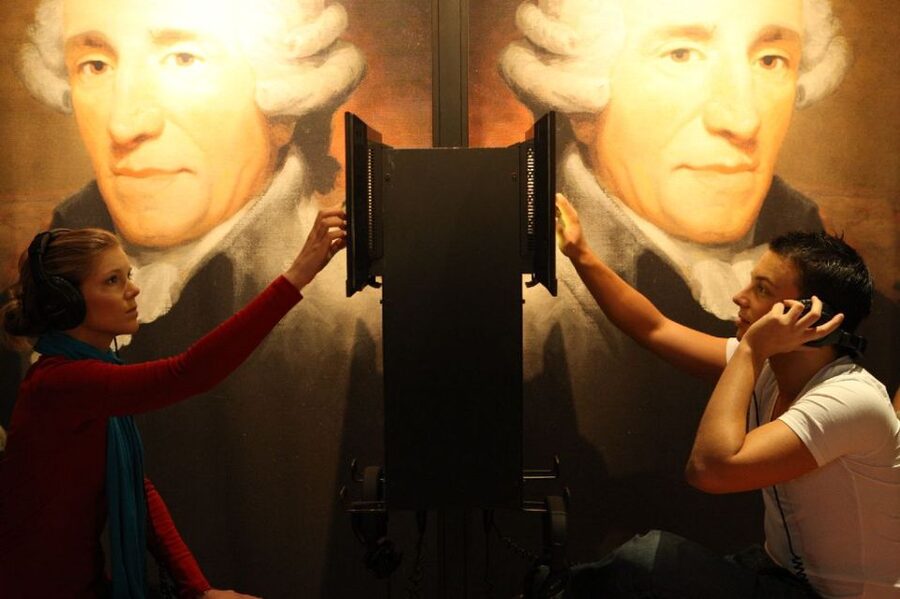
The science of sound section changes the mood again. Here, you can experiment with sound, noise, hearing, and instruments through interactive displays. The exhibits connect the physical side of music with the creative side.
This section is a good reason to come even if you are not a classical music fan. You do not need to recognize a symphony or know the difference between composers. You can approach sound as a physical subject, with experiments and demonstrations that make the ideas easier to grasp.
The displays also work well for children because they encourage action rather than passive reading. At the same time, adults can find enough information about sound and hearing to make the activities feel worthwhile, not merely decorative.
The Namadeus Game is one of the most unusual features. You enter your name and hear it transformed into an original Mozart-style composition. It is playful, personal, and easy to understand. If you want a printed or formal Namadeus certificate, that costs extra and is not part of admission.
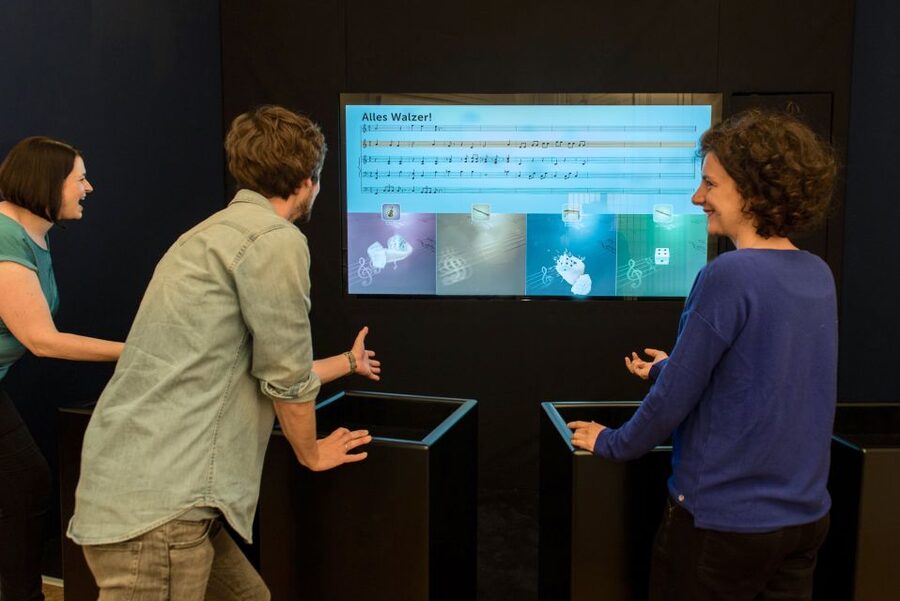
Another musical game lets you compose a waltz with a throw of the dice. The result introduces chance into composition without turning the activity into a lesson. You may not create the next great Viennese waltz, but you will see how small musical choices can alter a piece.
These activities give the museum a welcome sense of humor. Vienna’s musical culture can sometimes feel formal and grand. Haus der Musik brings it down to eye level and lets you make a little noise.
Temporary Exhibitions in the Inner Courtyard
Along with the permanent floors, Haus der Musik presents temporary exhibitions in the inner courtyard. These focus on notable musicians or specific music-history subjects, including Viennese Modernism.
This part of the museum may change over time, so it is worth checking what is on display when you plan your visit. A temporary exhibition can add depth to a return visit, but you should not book solely for a particular theme unless you have confirmed that it is currently showing.
The courtyard location also breaks up the indoor route. After several rooms of sound, screens, text, and objects, a change in setting can help you reset before continuing upstairs.
How Long to Allow and How to Pace the Visit
The ticket is valid for one day from first activation, so you have room to set your own pace. The museum does not require you to absorb everything in one hurried sweep.
For a short visit, allow at least a couple of hours and focus on the orchestra collection, composer floor, conducting challenge, and one or two sound experiments. That will give you a clear sense of the museum without trying to read every panel.
If music interests you, four hours is more realistic. One teacher with a background in expressive arts spent more than four hours and still felt there was more to explore. That makes sense because the museum serves several kinds of curiosity at once: biography, music history, physics, hearing, performance, and play.
Families should avoid treating the museum as a strict march from floor one to floor four. Let children spend time with the activities that catch them, then return to the written displays when attention improves. Adults may want to divide the visit, with one person helping younger children while another reads the composer material.
The museum can also work well on a rainy or very hot day. Since the activities are indoors and spread across four floors, you get a substantial cultural stop without committing to a formal concert or long guided tour.
Is $22 a Fair Price?
At $22 per person, Haus der Musik sits above the price of a small traditional museum but offers far more than a quick collection of objects. The value comes from the range of the visit. You are paying for several floors, historic material, interactive technology, sound experiments, and the chance to engage with the Vienna Philharmonic in a virtual setting.
The price is easiest to justify if you stay for two to four hours. It is also a good choice for families because adults and children can use the museum in different ways. A child may spend time with the Namadeus Game while a parent studies Mozart’s documents, then everyone can meet at the conductor station.
The value is weaker if you dislike screens, interactive stations, or museums that ask you to participate. Some displays are traditional and text-heavy, while others depend on technology. If you want only an original concert performance, this is not a replacement for a concert hall.
Still, the museum avoids being a narrow classical-music attraction. Its science content and playful exhibits broaden the appeal. That makes the admission more useful for mixed groups where one person loves composers and another would rather experiment with sound.
Access, Family Needs, and Practical Details
Haus der Musik is wheelchair accessible. The main and side entrances have step-free access, automatic sliding doors, and wheelchair-accessible elevators. Wheelchair-accessible toilets are available in the inner courtyard and on the top floor.
A person accompanying a visitor with a visual impairment or a wheelchair can enter free of charge. Guide dogs are permitted. Children under three also receive free admission.
Free floor plans are available at the ticket office in the same languages used for the museum information. The smartphone guide is free, but you should bring headphones for a more comfortable experience.
The museum is suitable for families, but it is not only a children’s attraction. Adults who want historical detail can spend time with the composer displays, orchestra documents, and sound explanations. Couples can enjoy the interactive challenges together, and solo visitors can move at their own speed.
Free cancellation is available up to 24 hours in advance, and you can reserve now while paying later. Those terms are useful if your Vienna plans are still shifting, though the main reason to choose this museum should be the content, not the booking flexibility.
Who Will Get the Most From Haus der Musik?
I would put this near the top of the list for families seeking an indoor activity with real cultural substance. Children get movement and games, but they also encounter instruments, composers, and basic sound science without sitting through a formal lecture.
It is also a strong choice for classical music beginners. You can arrive knowing little about Haydn, Mozart, or Mahler and leave with a clearer sense of who they were and why Vienna matters to music.
Music lovers will find enough documents, recordings, and composer material to reward a careful visit. The virtual conducting station and New Year’s Concert provide a different angle on the Vienna Philharmonic, while the temporary displays may add a current theme.
I would be less enthusiastic for someone who wants a quiet, object-focused museum with no interactive technology. Haus der Musik asks you to press, listen, move, and experiment. That is its strength, but it will not suit every museum mood.
Should You Book Haus der Musik?
Yes, if you want more than a display of old instruments and portraits. The museum connects Vienna’s composers with the Vienna Philharmonic, then adds sound science and hands-on activities that make the subject easier to grasp.
Book it if you are traveling with children, mixing music lovers with non-music lovers, or looking for a flexible indoor stop in central Vienna. Plan enough time to use the conductor challenge, try the sound exhibits, and read at least some of the composer displays.
Skip it only if you have very little time or strongly prefer live performance over interactive museum exhibits. For most people, $22 buys a substantial and varied visit, especially when you stay for several hours.
FAQ
Where is Haus der Musik located?
Haus der Musik is at Seilerstätte 30 in Vienna’s 1010 district.
How long is the ticket valid?
The ticket is valid for one day from the time you first activate it.
What is included with admission?
Admission includes entry, a museum map, coat check, and a free app guide for your smartphone in eight languages. A children’s app is available in two languages.
Do I need to bring headphones?
Yes. Headphones are listed as an item to bring, particularly for using the smartphone guide and listening to audio content.
Is Haus der Musik wheelchair accessible?
Yes. The museum has step-free access at the main and side entrances, automatic sliding doors, wheelchair-accessible elevators, and accessible toilets in the inner courtyard and on the top floor.
Are young children admitted free?
Children under the age of three receive free admission.
Is the Namadeus certificate included?
No. The Namadeus Game is part of the museum experience, but the Namadeus certificate is not included and costs extra.
Just added in Vienna
- Vienna: Austrian Wine Tasting Experience★ 4.2 · 2 reviews
- World War II History Vienna Old Town Private Walking Tour★ 4.8 · 9 reviews
- Vienna_ Meet Beethoven Life Private Guided Walking Tour★ 5.0 · 1 review
- Vienna: Wine Tasting Tour★ 4.8 · 61 reviews
- Vienna: Wine Tasting at Schönbrunn Palace★ 4.3 · 71 reviews
- Vienna: Winery and Wine Tasting Tour with a Wine Expert★ 5.0 · 5 reviews
- Vienna: Wine Tasting E-Bike Tour★ 4.9 · 46 reviews
- Vienna: Concert by the Vienna Baroque Orchestra★ 4.6 · 56 reviews
Tickets, compared.

Classic Ensemble Vienna in St. Peter’s Church Ticket
Read our review →
Vienna Kunsthistorisches Museum Day Admission Ticket
Read our review →
Tickets for Mozarthaus Vienna with Audio Guide
Read our review →
Skip-the-Line Entrance Ticket to the Danube Tower
Read our review →