Reviewed · GUIDED
Vienna – the making of a Weltstadt – guided Citytour
Vienna rewards a slower first walk. This two-hour city tour connects Roman beginnings, imperial power, music, and daily city life in a way that helps Vienna make sense. I like the focus on both famous sights and lesser-known corners, and I like that a real Viennese guide leads the way. The main drawback is practical: the tour is conducted in German and is not suitable for people with mobility impairments.
The route also covers a lot of ground in a short time. You will see major landmarks rather than enter every one, so this is best for getting your bearings and learning the story behind the streets, not for a long museum visit. Christian Grausam has received particular praise for making complicated periods clear, lively, and connected to the buildings around you.
In This Review
- Key points at a glance
- Why this tour helps Vienna make sense
- From Schottenkirche and Freyung to Vienna’s older layers
- Kohlmarkt, Michaelerplatz, and the approach to power
- The Hofburg and Vienna’s imperial identity
- Heldenplatz, Burggarten, and Josefsplatz
- Albertina and the Capuchin Crypt
- Franziskanerkirche, Domgasse, and Vienna’s musical life
- St. Stephen’s Cathedral, Vienna’s emotional center
- What makes the guide important
- Is $35 a fair price for two hours?
- Timing, walking conditions, and what to bring
- Who should book this Vienna walk?
- Should you book it?
- FAQ
- How long does the Vienna city tour last?
- How much does the tour cost?
- What language is the tour conducted in?
- Who guides the experience?
- Where does the tour meet?
- What landmarks are included?
- Can I bring luggage or cancel my booking?
Key points at a glance
- Two thousand years in two hours: Follow Vienna from a small Roman fort to a major Central European capital.
- A local perspective: The tour is led by a certified Viennese guide, with Christian Grausam specifically praised for his clear and engaging approach.
- Imperial Vienna in one walk: The Hofburg, Heldenplatz, Josefsplatz, and the Capuchin Crypt explain how the Habsburg rulers shaped the city.
- Music is part of the city story: Mozart, Beethoven, and Josef Haydn appear as part of Vienna’s artistic and political development.
- Famous sights plus quieter corners: The route includes Schottenkirche, Freyung, Franziskanerplatz, and Domgasse as well as St. Stephen’s Cathedral.
- Useful planning details: The tour lasts two hours, costs $35 per person, runs rain or shine, and requires you to arrive 10 minutes early without large bags.
Why this tour helps Vienna make sense
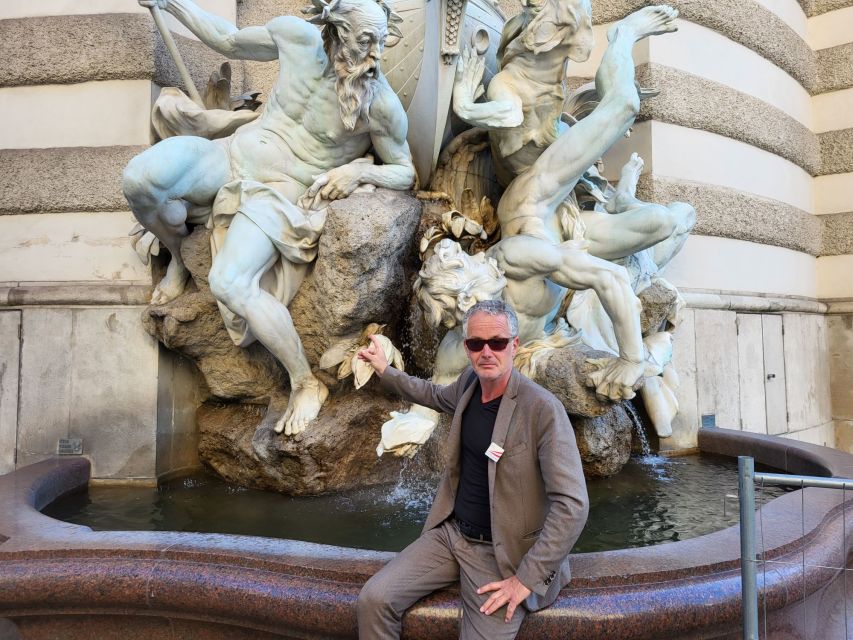
Vienna can feel like several cities placed on top of one another. Roman remains sit below medieval streets. Baroque churches face grand imperial squares. Coffeehouse culture, classical music, and modern city life all share the same compact center.
That is the central strength of this walk. Instead of treating each building as an isolated photo stop, the guide traces the forces that shaped Vienna. You move from a Roman military settlement to a medieval town, then to the residence of the Habsburg rulers and finally to the capital of a major 19th-century empire.
I especially like this approach for a first day in Vienna. You get a broad framework before visiting the interiors of the Hofburg, a museum, or a church. Once you understand how the center fits together, later visits become easier and more rewarding.
The tour also asks architectural questions. Which buildings show medieval Vienna? Where did Baroque taste take over? How did imperial ambitions change the streets? You are not simply collecting names. You are learning to read the city through its walls, squares, churches, and palaces.
A few more options to weigh up in Vienna
- Vienna: Vivaldi’s Four Seasons Concert in Karlskirche
★ 4.7 · 14,951 reviews - Vienna: Spanish Riding School Training
★ 3.9 · 9,281 reviews - Vienna: Schönbrunn Palace & Gardens Skip-the-Line Tour
★ 4.7 · 7,739 reviews
From Schottenkirche and Freyung to Vienna’s older layers
When the meeting point is Freyung, the walk begins near Schottenkirche, one of the city center’s important historic churches. From there, the route moves through Freyung and Am Hof, places that help introduce Vienna beyond the most obvious imperial landmarks.
This section is useful because it gives the city a sense of age before the grand palace stops arrive. Vienna is often reduced to the Hofburg and St. Stephen’s Cathedral, but the older squares help you see how civic, religious, and political life developed together.
Freyung and Am Hof also provide a change of pace from the main shopping streets. You might find the explanations here particularly helpful if you want to understand how Vienna grew from a fortified settlement into a dense urban center.
The exact meeting point can vary with the option booked, so check your confirmation carefully. Do not assume every departure begins at Freyung. Arriving 10 minutes early is wise, especially since the starting location may change.
Kohlmarkt, Michaelerplatz, and the approach to power
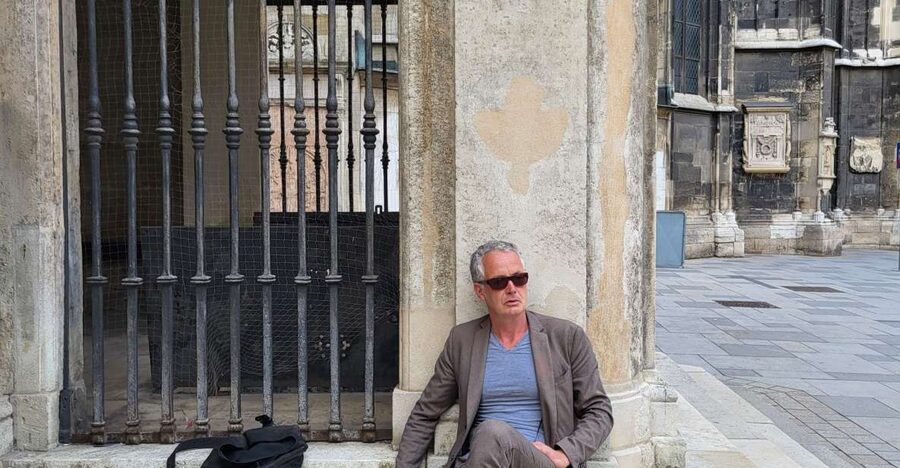
The walk continues toward Kohlmarkt and Michaelerplatz, a transition from older urban Vienna into the imperial heart of the city. These streets lead you toward the Hofburg, and the route uses that movement to explain Vienna as a residential city.
That phrase matters. The Hofburg was not simply a palace built for occasional ceremonies. It was a working center of government and court life, tied to the rulers who controlled a large part of Central Europe for centuries.
At Michaelerplatz, the contrast between different architectural periods becomes especially useful. The city does not present its history in a neat row. Older and newer styles meet, and the guide helps you see how each period left its mark.
This is also where the tour’s broad time span begins to feel manageable. Rather than listing rulers and dates, the walk links figures such as Charles V, Franz Josef, and Elisabeth to the city they occupied. You get a clearer idea of why Vienna’s center feels grand, ceremonial, and unusually concentrated.
The Hofburg and Vienna’s imperial identity
The Hofburg is the main historical anchor of the tour. You should expect to learn why Vienna became the residence city of the Habsburg rulers and how that role shaped its buildings, streets, and public spaces.
The palace complex is large, and two hours cannot explain every wing or enter every room. That is not a flaw so much as a sign of the tour’s purpose. You are given the larger story first, then you can decide if an interior visit deserves time later.
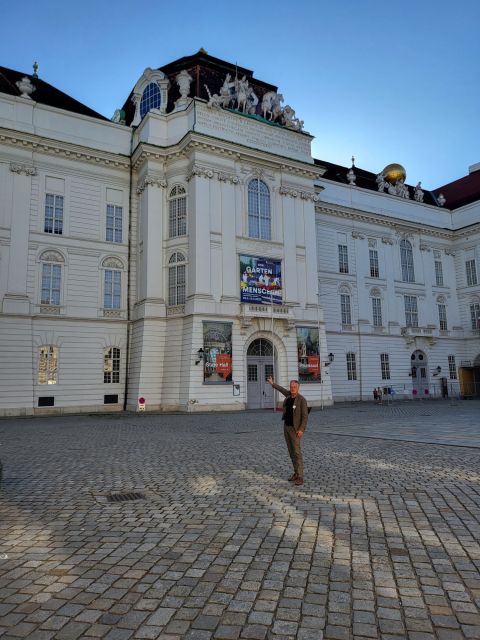
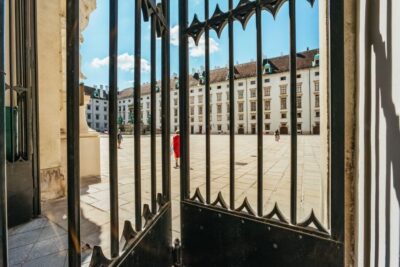
Heldenplatz carries the imperial story into an open public space. Burggarten and Josefsplatz add more pieces to the picture, showing how court life, ceremony, gardens, and public memory were arranged around the palace.
I like this part for visitors who want more than a list of royal names. The tour links rulers to places, which makes the politics easier to follow. Charles V represents an earlier stage of Habsburg power, while Franz Josef and Elisabeth bring you into the better-known 19th-century period.
The treatment of Elisabeth, often called Sisi, is also placed within the wider story rather than treated as a stand-alone celebrity tale. That gives you a better sense of why she matters to Vienna and why the imperial family still shapes the city’s image.
A completely different kind of day:
- Vienna: Light of Creation Votive Church Immersive Light Show
★ 4.8 · 6,779 reviews - Vienna Spanish Riding School Guided Tour
★ 4.7 · 6,765 reviews - Vienna: Classical Concert in the World-Famous Musikverein
★ 4.6 · 6,673 reviews - Vienna: Skip-the-Line Sisi Museum, Hofburg and Gardens Tour
★ 4.8 · 5,918 reviews
Heldenplatz, Burggarten, and Josefsplatz
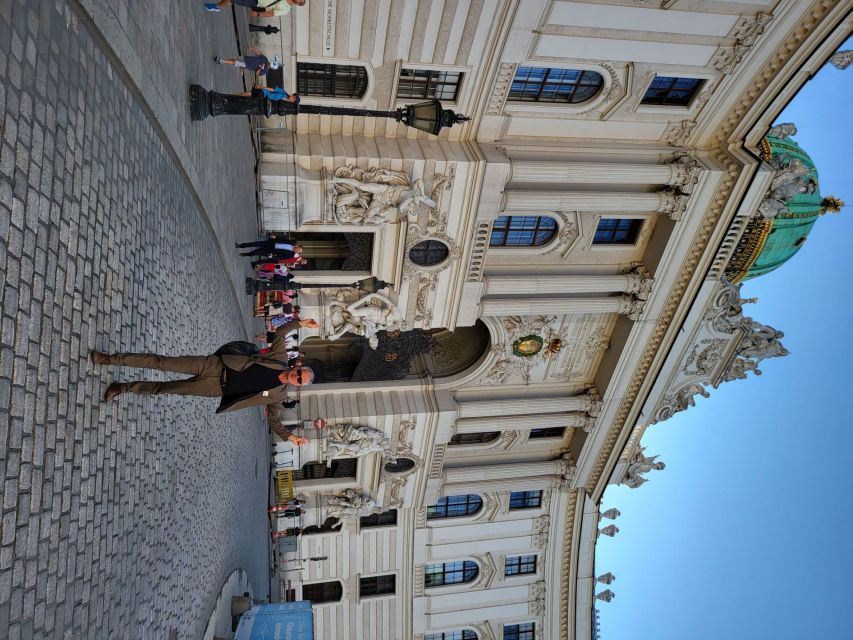
These three stops help show how the Hofburg functioned as more than a private home. Ceremonial spaces, gardens, and adjoining squares made imperial authority visible in everyday city life.
Heldenplatz is particularly important for reading Vienna as a capital. The scale is larger than the older lanes nearby, and the open space reflects the ambition of the ruling house. Your guide can use the setting to explain how architecture helped project power.
Burggarten offers a softer view of the palace district. It reminds you that the imperial center included gardens and places of leisure as well as formal courtyards and official buildings.
Josefsplatz brings you back to a more controlled, architectural setting. Taken together, these stops show the range of the Hofburg area. You move from public ceremony to courtly life, then to the buildings tied to dynastic memory.
If you are interested in photography, this part of the route gives you several strong exterior views. Still, the guide’s explanations are the reason to keep listening. A quick photograph without the context can make these spaces blur together.
Albertina and the Capuchin Crypt
The Albertina adds an artistic note to the imperial story. Vienna is not only a city of rulers and churches. It is also a major center of art, and the Albertina helps connect cultural life with the city’s historic center.
The route then reaches the Capuchin Crypt, associated with the burial of members of the Habsburg family. This is a meaningful stop because it gives the imperial story a human scale. The rulers introduced in grand squares eventually became ancestors, names, and memorials.
The crypt itself is not simply another palace attraction. It changes the mood of the walk and shows how dynastic memory was preserved. You should expect an exterior explanation or a brief contextual stop as part of the city walk, rather than a lengthy interior visit.
That distinction is important when planning your day. This tour points out the places and explains their meaning. It does not replace a dedicated visit to every site.
Franziskanerkirche, Domgasse, and Vienna’s musical life
The route later turns toward Franziskanerplatz and Domgasse, bringing the story closer to Vienna’s artistic identity. These streets offer a more intimate contrast to the large imperial squares.
Mozart and Beethoven lived and worked in Vienna, and music forms a major part of the tour’s story. You will hear how the city became a center for composers and performance, not simply a political capital.
Domgasse is especially relevant to Mozart’s time in Vienna. The stop helps place the composer within the city rather than leaving him as a name on a concert poster. You can better understand how music, aristocratic patronage, churches, and city life met in the same streets.
Josef Haydn also enters the story. The tour connects his work to a melody that is important to Germany today, adding a cross-border detail to Vienna’s musical history.
I appreciate that the music section is not separated from the rest of the tour. The same city that produced imperial ceremony also supported composers, churches, patrons, and public audiences. That connection is one of the more useful ideas you take away from the walk.
St. Stephen’s Cathedral, Vienna’s emotional center
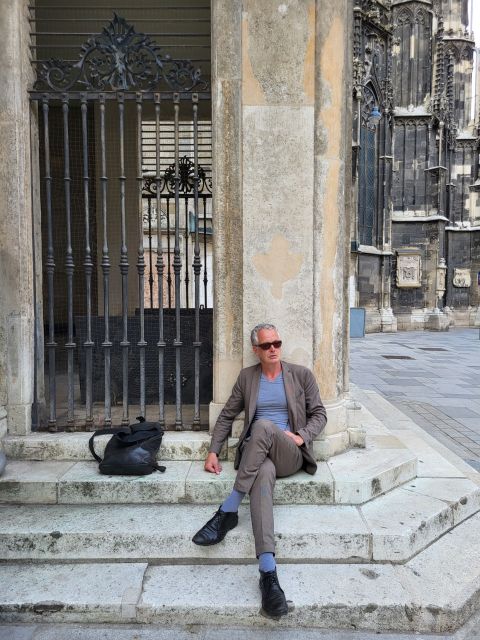
The final major stop is St. Stephen’s Cathedral, the geographical and emotional center of Vienna. Its position makes it a fitting end to a walk that began with Roman roots and moved through medieval, imperial, and modern chapters.
The cathedral represents a different kind of power from the Hofburg. The palace expresses dynastic government, while St. Stephen’s connects Vienna to religious life, civic identity, and the older urban core.
You will likely hear why the cathedral matters beyond its appearance. Its location helps explain the structure of central Vienna, and its long history offers a final reminder that the city was not created all at once by the Habsburgs.
As with the other landmarks, the value here is the explanation rather than a full interior visit. If you want to explore the cathedral in detail, set aside separate time. The guided walk gives you the context to make that later visit more meaningful.
What makes the guide important
A tour covering two millennia can easily become a parade of dates. The guide’s skill determines whether the story feels connected or scattered.
Christian Grausam has been praised for linking periods of Vienna’s history to the buildings in front of you. That is the most important quality to look for on this route. The city has plenty of facts, but facts become useful when you can see how they relate to a square, palace, church, or street.
His approach has also been described as lively, pleasant, and easy to follow. That matters during a two-hour walk, especially when the subject includes rulers from Charles V to Franz Josef, several architectural periods, and the careers of Mozart, Beethoven, and Haydn.
You may also receive suggestions for what to do next in Vienna. Treat those tips as a helpful bonus, particularly if this is your first visit and you still need to decide how to spend the rest of your day.
The tour is in German only. If you do not understand German well, the historical detail that makes this experience valuable will be difficult to follow.
Is $35 a fair price for two hours?
At $35 per person, this is a reasonable price for a two-hour guided orientation, especially if you value historical context and a certified local guide. You are paying for a focused walk through many of Vienna’s most important central areas, not for admission to a palace, crypt, museum, or cathedral.
The value is strongest when you are new to Vienna. A good introduction can save you from wandering past major sites without understanding their role. It can also help you choose which interiors deserve your admission fees and limited holiday time.
The price may feel less attractive if you already know Vienna well or want detailed access to the buildings. This is an exterior city walk with historical interpretation, not a private palace tour or a specialist music tour.
The high rating of 5 from 313 reviews, along with repeated praise for the clear historical overview and Christian Grausam’s presentation, supports the price. Still, value depends on language and expectations. Book it for the story and orientation, not for lengthy stops inside each landmark.
Timing, walking conditions, and what to bring
The tour lasts two hours and operates rain or shine. Wear shoes suited to city walking and check the forecast, since the experience is outdoors and there is no weather cancellation stated.
Large bags and luggage are not allowed. If you are arriving directly from a train station or leaving Vienna that day, arrange storage before you come to the meeting point.
Arrive 10 minutes early. Since the meeting point can vary depending on the option booked, this small buffer matters. A late arrival could mean missing the opening explanation or struggling to find the group.
The tour is not suitable for people with mobility impairments. The route includes city streets and several historic areas, so anyone who has difficulty walking should consider a different format.
Free cancellation is available up to 24 hours before the start for a full refund. You can also reserve now and pay later, which is useful if your Vienna schedule is still changing.
Who should book this Vienna walk?
I would choose this tour for a first or second visit, especially if you want to understand the city before exploring it on your own. It suits history-minded visitors, classical music fans, and anyone who finds Vienna’s imperial center impressive but a little hard to place.
It is also a good fit if you prefer a local guide over an audio guide. The chance to ask questions and receive suggestions for later activities adds practical value.
I would be cautious if you need an English-language tour, want to spend time inside each attraction, or have limited walking ability. The German-only format is the clearest restriction, and the two-hour schedule favors breadth over close study.
Should you book it?
Book this tour if you want Vienna’s major sights tied into one clear story. The strongest reason to go is the combination of local guidance, historical range, and a route that includes both headline attractions and quieter central squares.
Skip it if you want a museum-heavy experience or cannot follow German. For everyone else, $35 buys a useful first map of Vienna in both the geographic and historical sense. You leave with a better idea of why the Hofburg matters, why St. Stephen’s feels central, and how rulers, churches, composers, and city streets shaped one another.
FAQ
How long does the Vienna city tour last?
The tour lasts two hours.
How much does the tour cost?
The price is $35 per person.
What language is the tour conducted in?
The live guided tour is conducted in German.
Who guides the experience?
A local certified tourist guide leads the tour. Christian Grausam is identified as the experience provider and has been praised for making Vienna’s history lively and easy to follow.
Where does the tour meet?
The meeting point depends on the option booked. Freyung is listed as a meeting point for one option, with a route including Schottenkirche, Freyung, and Am Hof.
What landmarks are included?
The route can include Schottenkirche, Freyung, Am Hof, Kohlmarkt, Michaelerplatz, the Hofburg, Heldenplatz, Burggarten, Josefsplatz, the Albertina, the Capuchin Crypt, Franziskanerplatz, Domgasse, and St. Stephen’s Cathedral.
Can I bring luggage or cancel my booking?
Large bags and luggage are not allowed. You can cancel up to 24 hours before the tour for a full refund, and the reserve now, pay later option is available.
Just added in Vienna
- Vienna: Austrian Wine Tasting Experience★ 4.2 · 2 reviews
- World War II History Vienna Old Town Private Walking Tour★ 4.8 · 9 reviews
- Vienna_ Meet Beethoven Life Private Guided Walking Tour★ 5.0 · 1 review
- Vienna: Wine Tasting Tour★ 4.8 · 61 reviews
- Vienna: Wine Tasting E-Bike Tour★ 4.9 · 46 reviews
- Vienna: Wine Tasting at Schönbrunn Palace★ 4.3 · 71 reviews
- Vienna: Winery and Wine Tasting Tour with a Wine Expert★ 5.0 · 5 reviews
- Vienna: Concert by the Vienna Baroque Orchestra★ 4.6 · 56 reviews
Guided, compared.
Guided Walking Tour of City Center Highlights
Read our review →
Bus & Schönbrunn Palace Skip-the-Line Guided Tour
Read our review →
Tickets for Mozarthaus Vienna with Audio Guide
Read our review →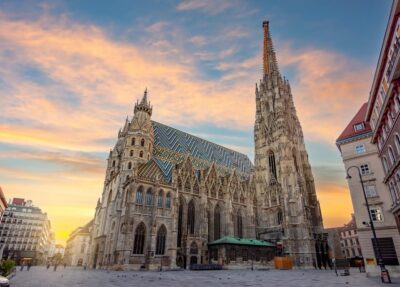
Guided Walking Tour of City Highlights & Hidden Gems
Read our review →