
Reviewed · CITY TOURS
Vienna: Guided Walking Tour of City Highlights & Hidden Gems
Vienna reveals itself on foot. I like the way this $27 tour links the city’s key sights in a compact two-hour route, and I especially like the guide’s mix of imperial history, local stories, and practical tips. The main catch is clear: you see the landmarks from outside, and two hours leaves little time for lingering.
This is a strong first-day activity if you want to get your bearings fast. Guides such as Michael, Petra, Max, Celine, and Ivo have earned praise for clear storytelling and lively delivery, while listening earpieces help you follow along in a large group. Bring warm clothes in winter, though. Several people enjoyed the tour in freezing weather, but cold and wind can make a long outdoor walk feel longer.
In This Review
- Key points to know before you book
- Why this two-hour Vienna walk works well
- Meeting the guide at Minoritenplatz
- The Minoriten Church and its Last Supper mosaic
- Michaelerplatz and the Hofburg entrance
- Heldenplatz and imperial Vienna
- The Spanish Riding School and Vienna’s traditions
- The Albertina and the Vienna State Opera
- Ending at St. Stephen’s Cathedral
- Guides, group size, and hearing the stories
- Who will enjoy this Vienna walking tour
- Practical value at $27 per person
- Should you book it?
- FAQ
- How long does the Vienna walking tour last?
- What language is the tour offered in?
- Where does the tour start?
- How can I reach Minoritenplatz?
- Where does the tour finish?
- Do I enter the museums and palaces?
- Can I enter the Minoriten Church?
- Is the tour suitable for wheelchair users?
- What should I bring?
Key points to know before you book
- The route covers Vienna’s historic center: You walk from Minoritenplatz through Michaelerplatz, the Hofburg area, Heldenplatz, the Spanish Riding School, the Albertina, the State Opera, and St. Stephen’s Cathedral.
- The Minoriten Church adds a special opening stop: The Last Supper mosaic gives you something more unusual than a standard palace-and-cathedral walk.
- This is an exterior tour: You do not enter the Hofburg, Spanish Riding School, Albertina Museum, Vienna State Opera, or St. Stephen’s Cathedral.
- Listening equipment can make a big difference: Guides use a microphone and earpieces on some tours, which is helpful when the group is large or the streets are noisy.
- The finish is useful: Ending at St. Stephen’s Cathedral puts you near Stephansplatz, restaurants, and central public transport.
- It suits active visitors best: The tour involves steady walking and is not suitable for wheelchair users or people with mobility impairments.
Why this two-hour Vienna walk works well
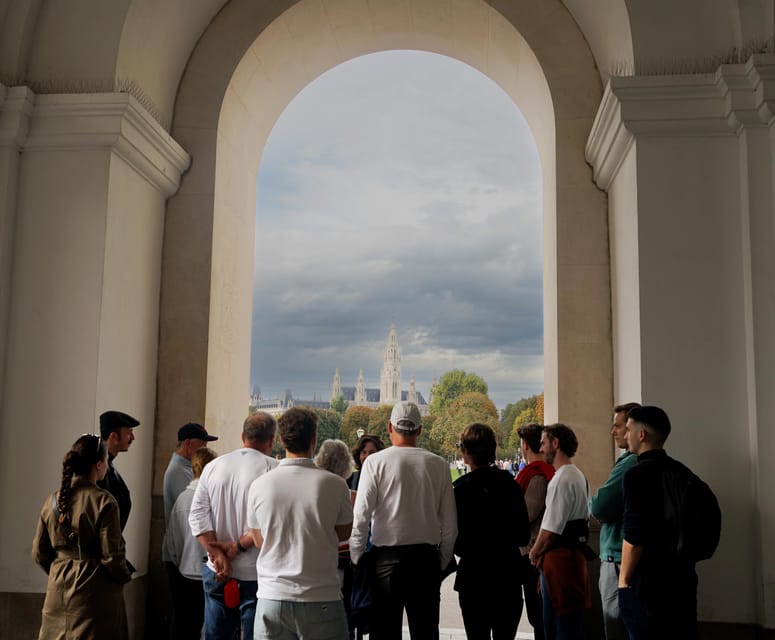
Vienna’s center is packed with grand buildings, but the city can feel like a series of impressive facades unless someone explains how the pieces fit together. This walk gives you a basic map of central Vienna while connecting the Habsburg court, music, religion, and public life.
At $27 per person, the price is reasonable for a two-hour guided walk, especially if your guide is as engaging as Michael, Max, Petra, Celine, or Ivo. You are paying for structure and interpretation rather than admission tickets. That distinction matters: the tour does not take you inside the museums or palaces.
I would use it as an introduction, not as a complete visit to Vienna’s main attractions. Afterward, you will know which interiors deserve your time and which places you can simply admire from the street.
The route is also efficient. It stays within the central district and finishes at St. Stephen’s Cathedral, so you are not spending half the tour on buses or long transfers. It is a practical choice for a short stay, a first morning, or a day when you want to understand the city before choosing your museums and cafés.
More Walking Tours in Vienna
- Vienna: Guided Walking Tour of City Center Highlights
★ 4.7 · 4,989 reviews - Vienna: Vienna Central Cemetery Guided Walking Tour
★ 4.8 · 3,307 reviews - Vienna: Viennese Underworld Guided Walking Tour
★ 4.7 · 1,865 reviews
Meeting the guide at Minoritenplatz
The starting point is the Leopold-Figl statue in Minoritenplatz. This square is about a 10-minute walk from Stephansplatz, so it is reasonably easy to reach if you are already in the central area.
You can also take the U3 subway to Herrengasse station, then follow the signs to Minoritenplatz. Look for the guide near the statue rather than assuming the church entrance is the meeting point.
Arrive on time. A latecomer and no-show policy applies, and a walking group cannot always wait. Wear shoes that can handle two hours on city streets, and check the weather before leaving your hotel. The tour runs in rain, cold, and other conditions.
The Minoriten Church and its Last Supper mosaic
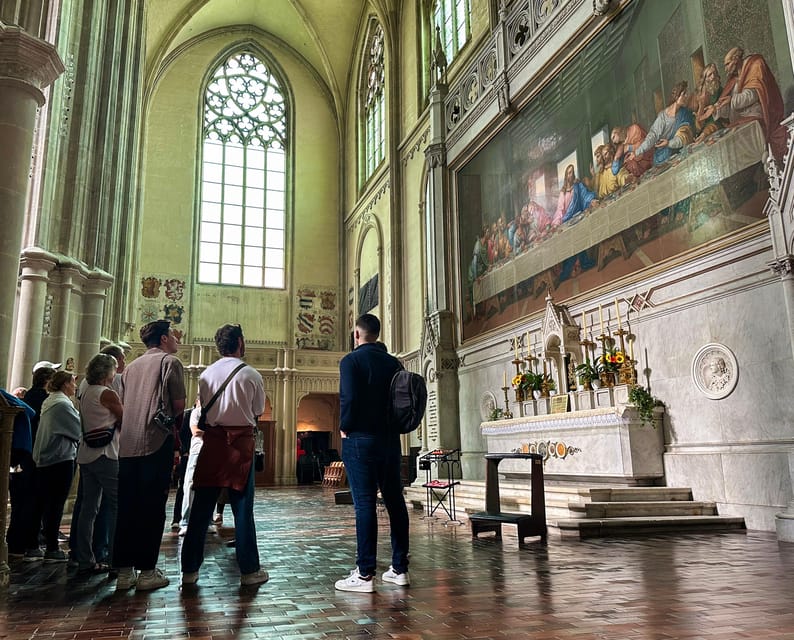
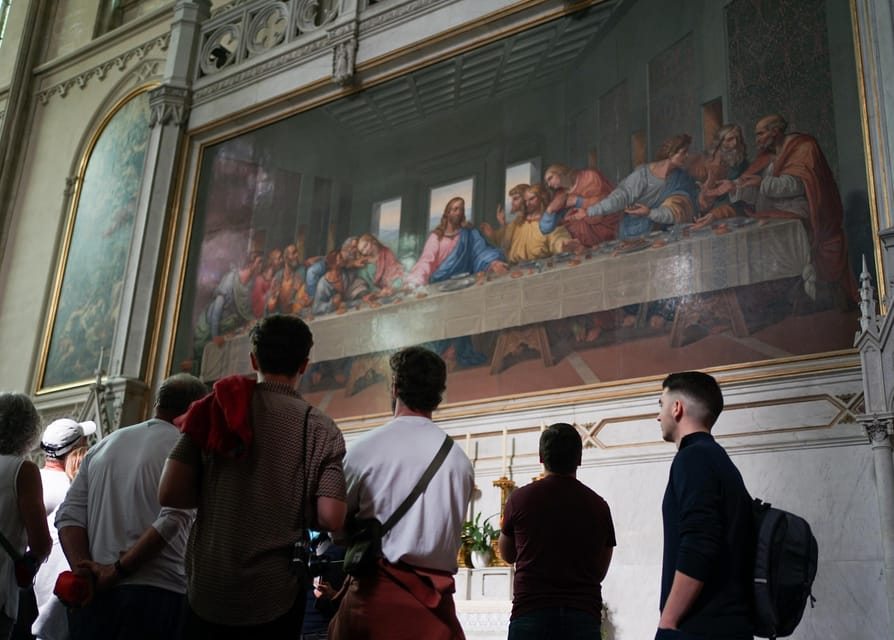
The first major stop is the Church of the Minorities, also called Minoritenkirche. Its most unusual feature on this route is a mosaic reproduction of Leonardo da Vinci’s Last Supper.
This gives the tour an appealing start. You are not simply looking at another imperial facade. You begin with a church, a work of religious art, and a reminder that Vienna’s center is shaped by more than palaces and opera houses.
The church visit depends on services. If Mass is taking place, you cannot enter, so the opening stop may be limited to an exterior explanation. That is a small but important point if this artwork is the main reason you are booking.
Once inside, the mosaic is a worthwhile detail to notice rather than rushing past. Your guide can provide the context, while you get a visual introduction to Vienna’s religious and artistic side before the route turns toward imperial spaces.
Michaelerplatz and the Hofburg entrance
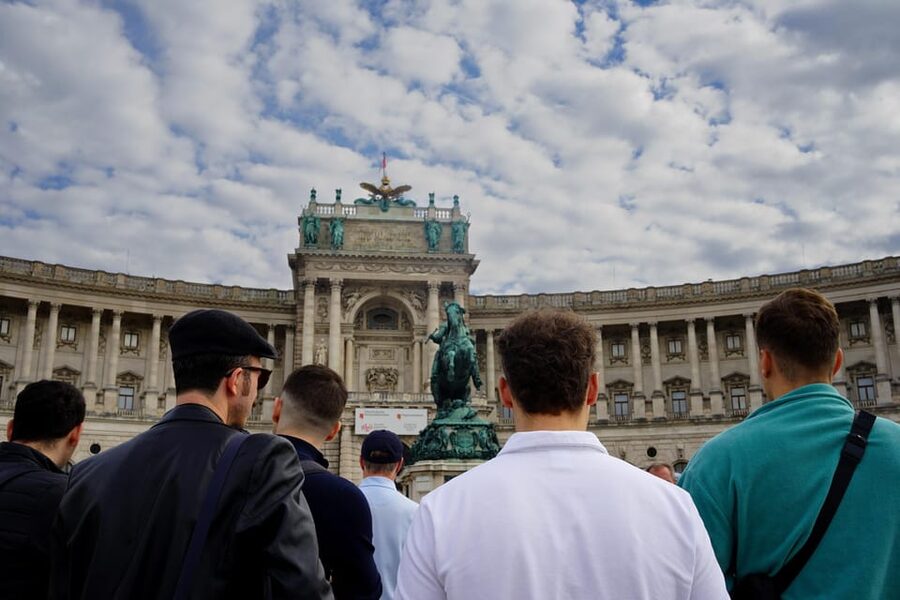
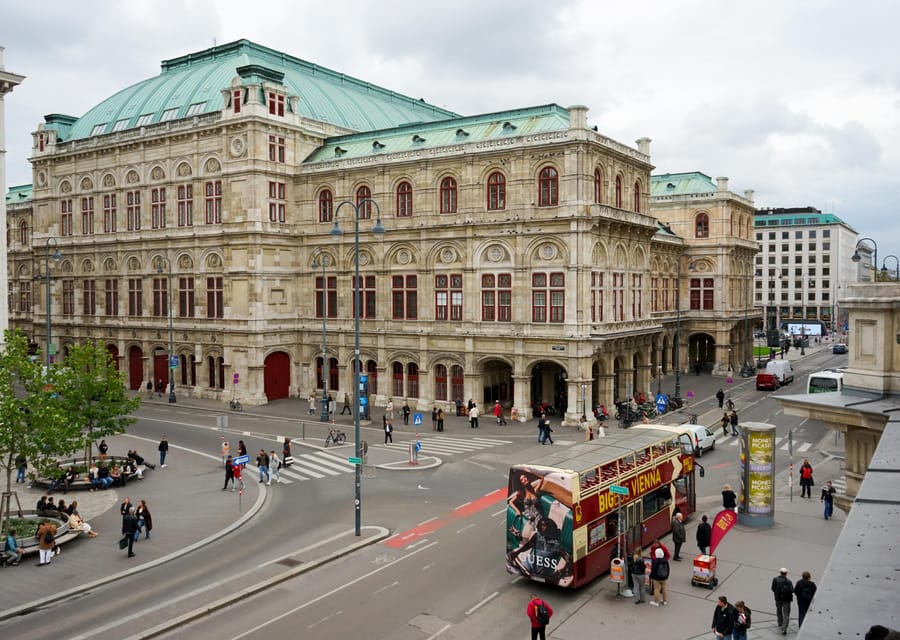
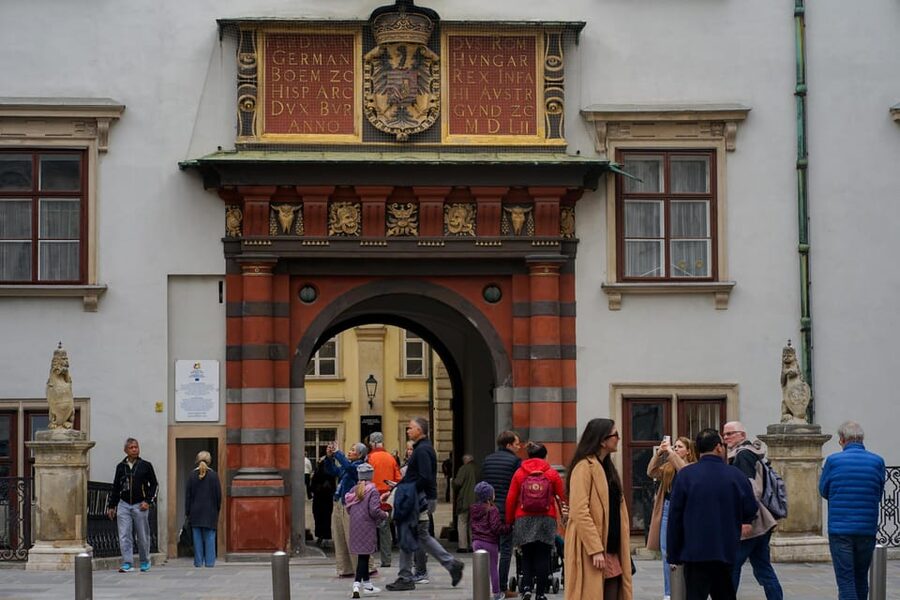
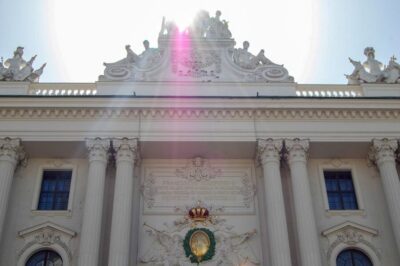
From the church, the group walks to Michaelerplatz. This is one of the most memorable urban spaces in central Vienna, largely because it gives you the grand entrance to the Hofburg Palace.
The approach helps you understand the scale of Vienna’s former imperial center. The Hofburg is not one isolated building. It is a large complex built and altered over many years, and Michaelerplatz offers a strong public view of its formal entrance.
Here, I would pay attention to the relationship between the open square and the palace front. The setting is as important as the doorway itself. Your guide explains how the court used this part of the city and how Vienna’s political power was concentrated around these buildings.
The drawback is that the stop can feel hurried. Two hours is enough to hear the main story and take photographs, but not enough to study every facade. If you want detailed palace architecture or access to the imperial apartments, you will need a separate visit and an entrance ticket.
A completely different kind of day:
- Vienna: Vivaldi’s Four Seasons Concert in Karlskirche
★ 4.7 · 14,951 reviews - Vienna: Spanish Riding School Training
★ 3.9 · 9,281 reviews - Vienna: Schönbrunn Palace & Gardens Skip-the-Line Tour
★ 4.7 · 7,739 reviews - Vienna: Light of Creation Votive Church Immersive Light Show
★ 4.8 · 6,779 reviews
Heldenplatz and imperial Vienna
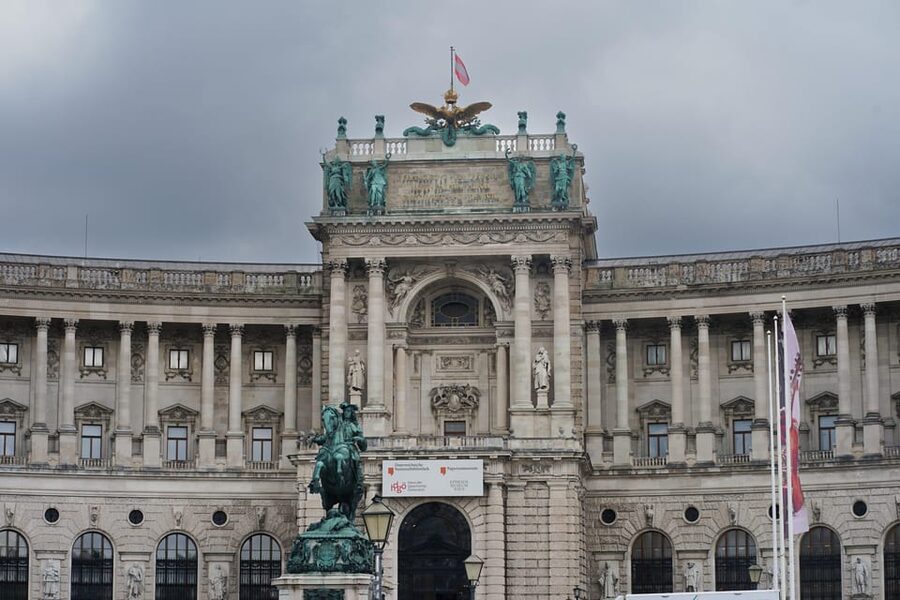
The walk continues to Heldenplatz, a broad ceremonial space beside the Hofburg. This is where the imperial story becomes more public and theatrical.
A good guide can help you read the square as more than a large open area. You will hear about Austria’s rulers, public ceremonies, and the way power was displayed through architecture. The square also gives you room to step back and see how the Hofburg complex extends beyond the entrance at Michaelerplatz.
This is one of the tour’s best history stops because it links buildings with events and personalities. Guides praised for humor and personal storytelling, including Max and Ivo, appear to be particularly effective in this kind of setting. They can make a large square easier to understand without turning the walk into a lecture.
Take a moment for photographs here, but stay close to the group. A large tour can spread out quickly, especially in an open square.
The Spanish Riding School and Vienna’s traditions
The Spanish Riding School is one of Vienna’s best-known traditions, and the route pauses outside to explain its role in the city’s imperial past.
You will learn about the school’s connection to the court and its long-standing equestrian culture. The point is not a performance. You do not enter for a training session or a show, and no riding-school admission is included.
That makes this stop useful for planning. If the Lipizzaner horses or the Baroque riding hall interest you, you will know to arrange a separate ticket. The walking tour gives you the background first, which can make a later visit more meaningful.
This part of the walk also shows how Vienna turns ceremony into daily identity. The Spanish Riding School is not just another historic building. It represents the city’s continuing link with imperial customs, polished ritual, and formal display.
The Albertina and the Vienna State Opera
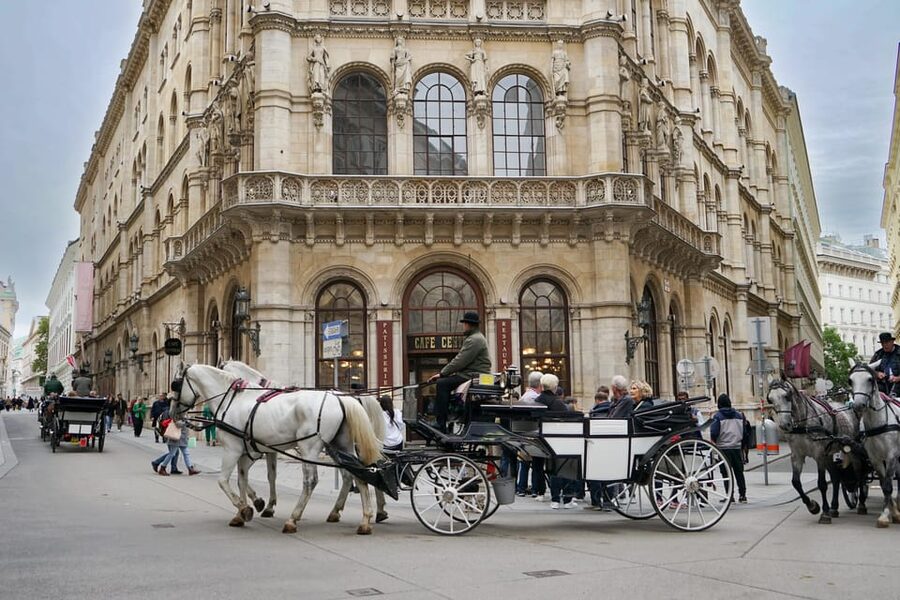
The next stretch brings you toward the Albertina Museum and the Vienna State Opera. You see both from outside, with the guide explaining their place in Vienna’s art and music culture.
The Albertina is a natural point to discuss the city’s artistic life. The building itself is part of the former palace district, so the stop connects art collections with the architecture of the old court. If you plan to visit the museum later, this is a useful orientation, but it does not replace time inside its galleries.
The Vienna State Opera gives the tour a change of tone. After palace power and religious art, you reach a building linked to Vienna’s musical identity. Its exterior is worth photographing, but the real benefit of the stop is the explanation of why opera matters so much here.
Again, keep your expectations realistic. You are not going inside, touring backstage areas, or attending a performance. You are getting a concise introduction and a chance to decide if an opera visit belongs in your schedule.
The walking order is sensible. These sights are close enough to connect on foot, and the guide can keep the story moving. Several people appreciated that the pace remained comfortable even with a larger group.
Ending at St. Stephen’s Cathedral
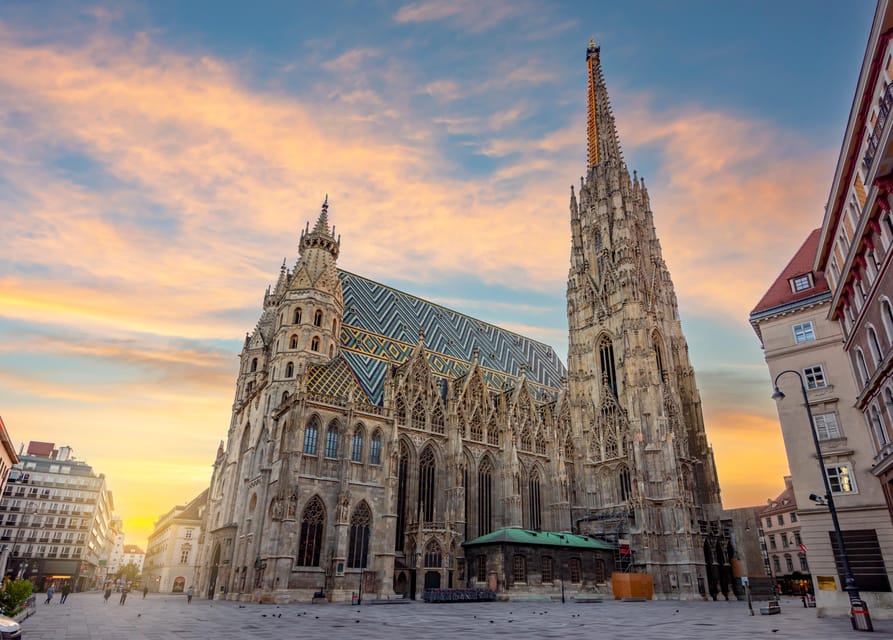
The final stop is St. Stephen’s Cathedral, where the tour ends. Its Gothic design provides a strong finish after the formal palace buildings and elegant opera architecture.
The cathedral is one of the easiest landmarks in Vienna to recognize, but seeing it at the end of a guided route gives it added context. By this point, you have encountered religious Vienna, imperial Vienna, artistic Vienna, and musical Vienna. St. Stephen’s brings those themes back to the city’s spiritual and civic center.
You can admire the exterior and then continue exploring on your own. The location is especially convenient for food afterward, and one person specifically liked finishing here because it was easy to find somewhere to eat. The surrounding Stephansplatz area also gives you a practical base for the rest of your day.
Since the tour finishes at the cathedral rather than returning you to Minoritenplatz, plan your next move in advance. That is an advantage if you want to continue sightseeing, but it is worth knowing if you need to return to your hotel.
Guides, group size, and hearing the stories
The strongest feature of this experience is the guide. The names that appear repeatedly in the feedback include Michael, Max, Petra, Celine, Ivo, Marlene, and Karl, with praise for clear explanations, humor, warmth, and enthusiasm.
Michael is especially praised for keeping a large group moving while still telling good stories. Max combines personal memories of growing up in Vienna with historical explanation. Petra is described as lively and easy to follow, while Celine used earpieces so the whole group could hear her without strain.
That equipment is more than a small convenience. One group numbered about 30 people, and a microphone with listening pieces made it easier to stay connected. You do not have to crowd around the guide or worry as much about missing a sentence when the group moves between stops.
Group size can still affect the mood. A private group is available, but the standard experience may be shared with many people. If you prefer a quiet, highly personal conversation, private guiding will suit you better. If you want an affordable overview, the regular format offers good value.
One practical note: the walk does not appear to include a scheduled restroom break. For a two-hour route, use facilities before you meet the guide.
Who will enjoy this Vienna walking tour
I would recommend this tour most strongly to first-time visitors, short-stay visitors, and anyone who wants a clear introduction before tackling Vienna’s museums.
It is also useful if you are traveling alone. One person initially felt unsure about joining a group alone, then found the experience comfortable and social. The steady route and guide-led format give you something to do without requiring advance knowledge of the city.
You should also consider it if you want historical context rather than a list of photo stops. The best guides add anecdotes, local suggestions, and connections between the buildings. That extra explanation is what turns a walk into a useful orientation.
This tour is less suitable if you want to enter several attractions in one morning. The Hofburg, Albertina, State Opera, Spanish Riding School, and cathedral are all exterior stops. You will need separate admission fees and extra time for interiors.
It is not suitable for wheelchair users or people with mobility impairments according to the activity information. Anyone with limited stamina should also think carefully about the continuous walking and outdoor conditions.
Practical value at $27 per person
The $27 price makes sense if you value a guide who can organize the center’s major sights into one readable story. You cover a lot of ground without paying for several separate admissions, and you finish near food, shops, and transport.
The value drops if you already know central Vienna well or plan to visit only one landmark. In that case, an unguided walk may be enough. But for a first visit, the cost is modest compared with the time saved choosing a route and researching the background yourself.
Free cancellation up to 24 hours before the start and reserve-now, pay-later booking also make it easier to fit the walk into a changeable schedule. The key decision is not price. It is accepting that this is a guided outdoor overview, not an all-access sightseeing ticket.
Should you book it?
Book this walk if you want a quick, well-explained introduction to Vienna and can manage two hours on foot. It is especially good on your first full day, when you can use the guide’s restaurant and sightseeing suggestions for the rest of your stay.
Choose a private option if you want more time for questions or dislike larger groups. Skip it if your priority is entering museums and palaces immediately.
At $27, the route is fairly priced, the finish at St. Stephen’s is convenient, and the guides appear to be the deciding strength. Dress for the weather, wear proper shoes, and treat the walk as your city orientation. Then return to the places that deserve more time.
FAQ
How long does the Vienna walking tour last?
The tour lasts two hours.
What language is the tour offered in?
The live guide is available in German, Italian, and English.
Where does the tour start?
It starts in front of the Leopold-Figl statue at Minoritenplatz.
How can I reach Minoritenplatz?
Minoritenplatz is about a 10-minute walk from Stephansplatz. You can also take the U3 subway to Herrengasse station and follow the signs.
Where does the tour finish?
The tour finishes at St. Stephen’s Cathedral.
Do I enter the museums and palaces?
No. The tour focuses on exterior visits, and museum entrance fees are not included.
Can I enter the Minoriten Church?
The Last Supper mosaic visit is included, but entry may not be possible during Mass.
Is the tour suitable for wheelchair users?
No. The activity is not suitable for wheelchair users or people with mobility impairments.
What should I bring?
Bring comfortable shoes, a camera, and clothing suitable for the weather. The tour operates in all weather conditions.
Just added in Vienna
- Vienna: Austrian Wine Tasting Experience★ 4.2 · 2 reviews
- World War II History Vienna Old Town Private Walking Tour★ 4.8 · 9 reviews
- Vienna_ Meet Beethoven Life Private Guided Walking Tour★ 5.0 · 1 review
- Vienna: Wine Tasting Tour★ 4.8 · 61 reviews
- Vienna: Winery and Wine Tasting Tour with a Wine Expert★ 5.0 · 5 reviews
- Vienna: Wine Tasting E-Bike Tour★ 4.9 · 46 reviews
- Vienna: Wine Tasting at Schönbrunn Palace★ 4.3 · 71 reviews
- Vienna: Concert by the Vienna Baroque Orchestra★ 4.6 · 56 reviews
City Tours, compared.
Guided Walking Tour of City Center Highlights
Read our review →
City Sightseeing Tour in an Electro Vintage Car
Read our review →
Skip-the-Line Schonbrunn Palace Guided Tour and Vienna Historical City Tour
Read our review →
Browse the lists this tour appears in