
Reviewed · WALKING TOURS
Vienna: Private Walking Tour of the Central Cemetery
Death has a Viennese sense of style. This two-hour private walk through Vienna Central Cemetery turns a place of mourning into a thoughtful, often funny lesson in the city’s past, with grand tombs, war memorials, and an elegant Art Nouveau church. I especially like the personal format and the guide’s use of Viennese humor, praised repeatedly in connection with Christian Pacic. The main drawback is clear: the tour is in German, so you need strong German skills to get the full value.
I also like the range of stories. You move from famous graves and grand memorials to the victims of the 1881 Ringtheater fire, Soviet soldiers killed in 1945, and a modern forest cemetery. That mix gives you more than a parade of names. It shows how Vienna remembers glory, disaster, war, and changing ideas about burial.
In This Review
- Key Points to Know Before You Book
- Why Vienna Central Cemetery Is Worth Your Time
- Meeting at the Second Gate
- Famous Tombs and Vienna’s Social Record
- The Ringtheater Fire Memorial
- Soviet Soldiers and the Battle of Vienna
- The Cemetery Church and Its Viennese Art Nouveau
- Finishing at the Forest Cemetery
- Christian Pacic’s Guiding Style
- Is $217 Good Value for Two Hours?
- Who Will Enjoy This Cemetery Walk?
- Practical Details That Matter
- Should You Book the Vienna Central Cemetery Tour?
- FAQ
- How long is the Vienna Central Cemetery tour?
- What language is the tour in?
- How many people can join the private tour?
- Where is the meeting point?
- Is admission to the cemetery church included?
- Is there an extra fee on site?
Key Points to Know Before You Book
- A private tour for up to 10 people: The $217 group price can be good value for a larger party, especially compared with paying per person.
- German is the tour language: The guide is live and state-certified, but no English option is provided in the details.
- The Art Nouveau cemetery church is a central stop: Admission is included, and the guide explains its architectural story.
- You will see both famous and less celebrated memorials: The route includes monumental tombs, Ringtheater victims, Soviet soldiers, and the forest cemetery.
- Meet at the second gate: After entering, look to the right for the water hydrant, where the city guide waits.
- A €3 solidarity contribution is paid on site: This is charged per person before the tour, in addition to the booked price.
Why Vienna Central Cemetery Is Worth Your Time
Vienna Central Cemetery is not a quick churchyard tucked behind a parish building. It is described as the second largest cemetery in Europe and the most significant burial place in Vienna. Its scale helps explain why a guide is useful. Without one, you could see impressive stonework and long rows of graves without understanding who is remembered, why certain memorials matter, or how the cemetery reflects Vienna’s social order.
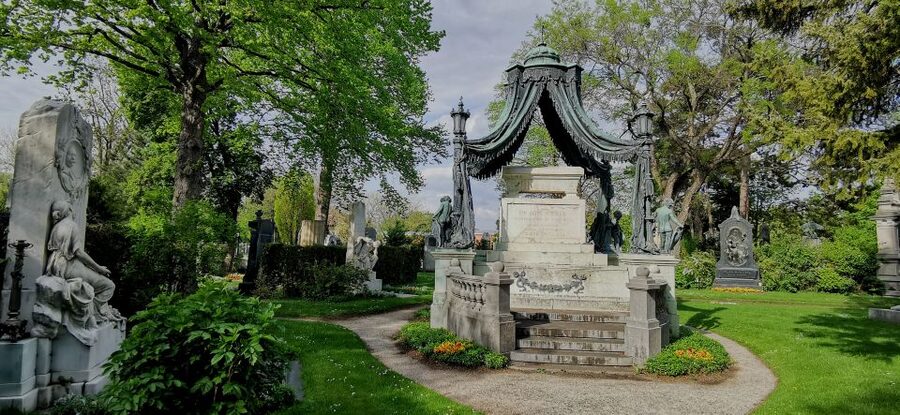
The place began with criticism. A cemetery this large was not instantly loved, yet it later became one of Vienna’s most beautiful burial grounds. That change gives the tour an interesting starting point. Vienna has a habit of turning practical civic projects into grand statements, and the Central Cemetery is a fine example.
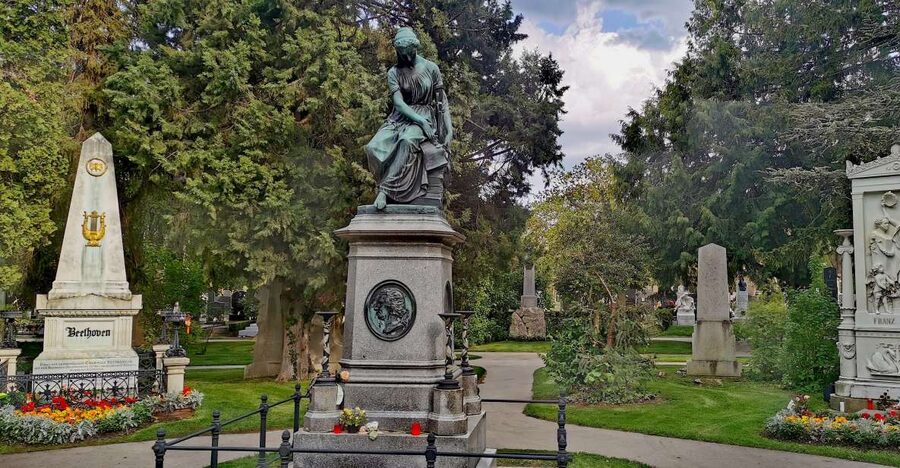
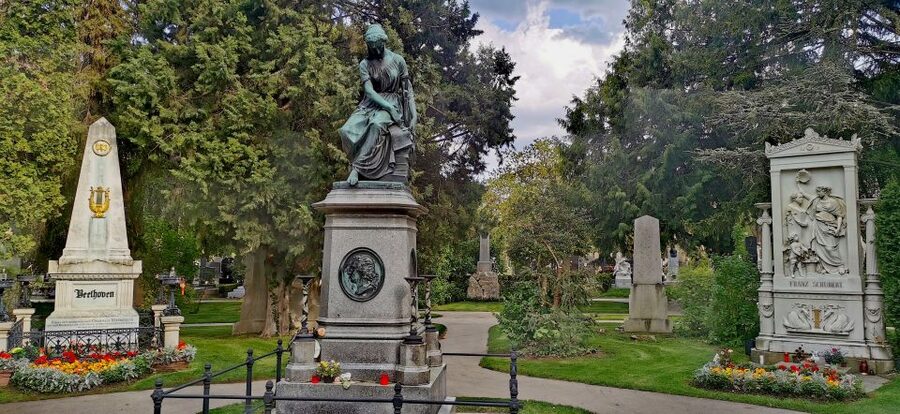
The old saying that everyone is equal in death needs a small Viennese correction here. Below the ground, perhaps. Above it, wealth, fame, status, and family pride remain visible in stone. Monumental tombs record the public lives of important people, while simpler graves tell a quieter story. I like that contrast because it keeps the tour from becoming only a procession of famous names.
You should also expect a respectful approach rather than a horror show. The description promises a morbid encounter, but the focus is on stories from the realm of the dead, architecture, memory, and the way modern society handles burial. The humor praised in connection with Christian Pacic appears to be Viennese rather than crude. That matters in a cemetery, where a light touch can make difficult subjects easier to approach without making them feel cheap.
More Walking Tours in Vienna
- Vienna: Guided Walking Tour of City Center Highlights
★ 4.7 · 4,989 reviews - Vienna: Vienna Central Cemetery Guided Walking Tour
★ 4.8 · 3,307 reviews - Vienna: Guided Walking Tour of City Highlights & Hidden Gems
★ 4.9 · 2,180 reviews
Meeting at the Second Gate
Your starting point is the cemetery’s second gate. After you enter, the guide is on the right at the water hydrant. This is an unusually specific meeting instruction, which is helpful in a large cemetery, but you should still allow time to find the correct gate and get oriented.
The details provided do not include transport instructions or a precise address beyond the second gate. I would check the meeting information carefully before leaving your hotel. Once inside, the water hydrant gives you a clear landmark, so you should not need to search through the grounds for a vague meeting spot.
The tour lasts two hours. That is long enough for a focused introduction and several important stops, but not long enough to cover every corner of a place of this size. You are getting a selected route, not a complete survey. That is a good thing for most people. A guided walk with a clear theme is easier to enjoy than an exhausting attempt to see everything.
The experience is private, so you can keep the group together and hear the guide without competing with strangers. The maximum is 10 people, making it suitable for a family, a group of friends, or a small company outing. For groups of 15 or more, headsets are provided, but that does not apply to this private group limit.
Famous Tombs and Vienna’s Social Record

The monumental tombs are likely to be the first major attraction for anyone interested in public figures. The information does not provide a complete list of people buried here, and that is actually a useful warning. Do not book this walk expecting a fixed celebrity checklist unless you receive one separately.
Instead, expect the guide to explain how the cemetery presents fame. Large tombs and elaborate memorials preserve reputation after death. The architecture can tell you about a person’s standing, family, profession, and place in Viennese society. Christian Pacic is praised for combining historical knowledge with a charming Viennese manner, which should help these details feel connected rather than like a dry list of dates.
I like this part of the experience because the cemetery itself becomes a document. The city’s values are visible in the difference between a grand family monument and a modest marker. You can think about who received public remembrance, who could afford a prominent memorial, and how the living use stone to shape the memory of the dead.
The private format also helps here. If you have a question about a name, design, or custom, you can ask it directly. A large group often keeps a tour moving at one fixed pace. With a small private party, the guide can respond to the interests of your group, within the two-hour limit.
The Ringtheater Fire Memorial
The graves for victims of the Ringtheater fire in 1881 bring a painful event into the tour. This is one of the most valuable stops because it shifts attention away from celebrated individuals and toward collective loss.
The memorial is not simply a place to pause for a date. It raises questions about public safety, grief, and how a city remembers people who died in a senseless disaster. The tour description presents these memorials as both eternal remembrance and a warning against meaningless death. That wording points to the wider purpose of the cemetery: it is not only a place to honor the dead, but also a place to make the living think.
You may find this section more affecting than the grand tombs. A famous monument can impress you, but a memorial to disaster can make you consider ordinary lives and shared tragedy. The contrast gives the walk emotional range.
This is also where a guide’s tone matters most. The strong praise for the guide’s humor should not lead you to expect jokes at every stop. The useful kind of Viennese humor can make the subject approachable, while the memorial itself keeps the mood serious. If you prefer a solemn cemetery visit with no lighter moments, this tour may feel more relaxed than you expect.
A completely different kind of day:
- Vienna: Vivaldi’s Four Seasons Concert in Karlskirche
★ 4.7 · 14,951 reviews - Vienna: Spanish Riding School Training
★ 3.9 · 9,281 reviews - Vienna: Schönbrunn Palace & Gardens Skip-the-Line Tour
★ 4.7 · 7,739 reviews - Vienna: Light of Creation Votive Church Immersive Light Show
★ 4.8 · 6,779 reviews
Soviet Soldiers and the Battle of Vienna
The graves of Soviet soldiers who died during the Battle of Vienna in 1945 add a wartime layer to the walk. This stop connects the cemetery with the final phase of the Second World War and with the city’s difficult twentieth-century memory.
Again, the value is in the link between the individual grave and the larger event. You are not only hearing about military history in the abstract. You are seeing a place where the dead of that conflict were given a physical memorial.
The supplied information does not specify the exact design of this memorial or the full story the guide tells there, so you should not expect a detailed military tour. Instead, think of it as one part of a broader account of Vienna’s death culture. The route moves from personal fame to mass tragedy and wartime loss, showing how different groups are remembered within the same cemetery.
For anyone interested in Vienna beyond palaces and coffeehouses, this is an important reason to book. The cemetery adds a serious layer to the city’s past that is easy to miss during a standard central sightseeing walk.
The Cemetery Church and Its Viennese Art Nouveau
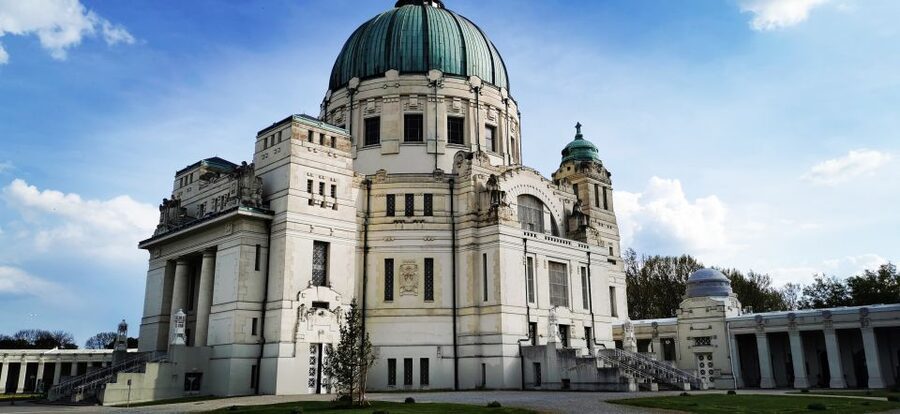
Near the cemetery’s center, in a dominant position, is the magnificent cemetery church. Its location alone tells you something. It rules the grounds visually, making the church the architectural focus of the whole site.
The church is in Viennese Art Nouveau, a style closely linked with Vienna’s artistic identity. During the guided visit, you learn about the building’s architectural history, and admission is included. That combination is one of the tour’s strongest practical features. You get an interior stop, a change from walking among graves, and a clear explanation of why the building looks the way it does without paying another entrance fee.
I would pay close attention to this portion even if your main interest is history rather than architecture. A building in a cemetery can reveal how the city wanted mourning to feel and look. The grand placement and decorative style make death part of a larger civic design.
The church also provides a useful midpoint in the walk. Two hours in a large cemetery can feel repetitive if every stop involves another tomb. The architectural change gives your attention a reset.
Wheelchair users can take part because the experience is listed as wheelchair accessible. Still, the details do not describe the surface conditions or the exact route through every memorial area. If you need a highly specific accessibility plan, confirm those points before booking.
Finishing at the Forest Cemetery
The final stop is the forest cemetery, where modern burial has arrived in Austrian society. This is a smart ending because it moves the tour from the past into the present.
After seeing monumental tombs and formal memorials, you encounter a newer approach to remembrance. The forest cemetery suggests a less monumental relationship with death, one shaped by modern preferences and changing ideas about land, nature, and memorials. The information does not give exact details about the design or burial process, so the guide’s explanation will be especially important here.
I like the contrast. The Central Cemetery is famous for stone, status, and formal memory, yet its story does not stop in the nineteenth or twentieth century. The forest cemetery shows that burial customs continue to change. You leave with a question rather than a final statue: how will today’s society choose to remember people in the future?
That makes the ending more thoughtful than simply stopping at the most famous grave. The tour begins with death as a civic and social subject, then finishes by showing that the subject is still changing.
Christian Pacic’s Guiding Style
The strongest praise centers on the guide’s delivery. Christian Pacic is described as friendly, entertaining, historically well informed, and gifted with Wiener Schmäh, the dry, distinctive Viennese style of humor. People who took private tours with him in groups of three and six found the walk informative, lively, and easy to follow.
One particularly useful detail is that a business outing found the tour both technically strong and genuinely funny. That suggests the experience can work for adults with different interests, not just for cemetery enthusiasts. Another group said the time passed so well that they could have listened longer. That is high praise for a two-hour walking tour.
You should keep the language issue in mind. The tour is listed in German, and the reviews praising the guide are in German. If you understand only basic German, you may miss the jokes, historical links, and small details that make a private guide worthwhile.
The tone also seems to change with the guide and the group. A sunny day was described as adding to the enjoyment, but the cemetery’s appeal does not depend on perfect weather. Still, this is an outdoor walking experience, so comfortable shoes and weather-appropriate clothing make sense, even though the supplied information does not prescribe a dress code.
Is $217 Good Value for Two Hours?
The price is $217 per group of up to 10 people. At the maximum size, that works out to about $21.70 per person before the €3 solidarity contribution. For a group of six, the guide cost is about $36.17 per person. For three people, it rises to about $72.33 each.
That makes the tour most attractive for a larger party. A couple may find the total price high for two hours, while a family or group of friends can spread the cost and gain the benefit of a private guide. The price includes a state-certified Austrian guide and free admission to the cemetery church.
Remember the extra €3 per person charged on site before the tour. It is not included in the headline group price. This is a small addition for a large group, but it matters more for two or three people.
The value rests less on the number of stops than on the interpretation. You can enter the cemetery without a paid guide, but you will not automatically know the stories behind the Ringtheater memorial, the Soviet graves, the church’s architecture, or the changing burial customs. If those subjects interest you, the guide adds real value.
Who Will Enjoy This Cemetery Walk?
I would recommend it most strongly to you if you enjoy:
- Viennese history beyond imperial palaces
- Memorials, funerary art, and architecture
- Small private tours with room for questions
- Stories that mix serious events with local humor
- A two-hour activity that does not require a full day
It also suits a company outing or family group. The private format avoids the awkwardness of joining a large public group, and the guide’s entertaining style can keep the subject accessible.
You may want to skip it if you dislike cemeteries, find discussions of fire and war too heavy, or need an English-language tour. The experience is not presented as a general Vienna highlights walk. It is focused, unusual, and tied to one large burial ground.
Practical Details That Matter
The exact meeting point is the second gate. After you enter, find the guide on the right at the water hydrant. The duration is two hours, and starting times depend on availability.
The tour is private and wheelchair accessible. The live guide language is German. Headsets are listed for groups from 15 people, but the private group size is capped at 10, so you should not count on headsets being part of this booking.
You can cancel up to 24 hours in advance for a full refund, and you can reserve now and pay later. A €3 solidarity contribution per person is paid at the cemetery before the walk.
Should You Book the Vienna Central Cemetery Tour?
Book it if you want a side of Vienna that is personal, historical, and a little unconventional. The cemetery church, monumental tombs, Ringtheater victims, Soviet soldiers, and forest cemetery create a well-shaped story about how the city honors the dead.
The best value comes with a group of four to 10 people, when the private price becomes easier to justify. Make sure German is comfortable for you, and remember the extra €3 contribution. If those points work, this tour offers a thoughtful break from Vienna’s grand living attractions, with Christian Pacic’s humor and historical skill adding warmth to a serious subject.
FAQ
How long is the Vienna Central Cemetery tour?
The tour lasts two hours.
What language is the tour in?
The live guided tour is in German.
How many people can join the private tour?
The private group can include up to 10 people.
Where is the meeting point?
Meet at the second gate. After entering the cemetery, the guide is on the right at the water hydrant.
Is admission to the cemetery church included?
Yes. Free admission to the cemetery church is included.
Is there an extra fee on site?
Yes. A €3 solidarity contribution per person is charged on site before the tour.
Just added in Vienna
- Vienna: Austrian Wine Tasting Experience★ 4.2 · 2 reviews
- World War II History Vienna Old Town Private Walking Tour★ 4.8 · 9 reviews
- Vienna_ Meet Beethoven Life Private Guided Walking Tour★ 5.0 · 1 review
- Vienna: Wine Tasting Tour★ 4.8 · 61 reviews
- Vienna: Wine Tasting E-Bike Tour★ 4.9 · 46 reviews
- Vienna: Wine Tasting at Schönbrunn Palace★ 4.3 · 71 reviews
- Vienna: Winery and Wine Tasting Tour with a Wine Expert★ 5.0 · 5 reviews
- Vienna: Concert by the Vienna Baroque Orchestra★ 4.6 · 56 reviews
Walking Tours, compared.
Guided Walking Tour of City Center Highlights
Read our review →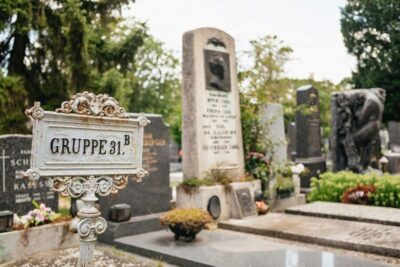
Guided Walking Tour of City Highlights & Hidden Gems
Read our review →
Vienna Historic Center Small Group Walking Tour
Read our review →
Browse the lists this tour appears in