
Reviewed · WALKING TOURS
Vienna: 1.5-Hour Underground Walking Tour
Vienna has a secret below street level. This 100-minute walking tour leads you from the Roman remains at Michaelerplatz into old cellars and the Baroque crypt of St. Michael’s Church, where well-preserved mummies give Vienna’s past an unusually human face. I like the mix of archaeology and storytelling, and I like that the tour reaches places you could not sensibly find on your own. The main catch is important: the live tour is in German, with occasional English help rather than a regular English-language option.
The $32 price feels fair because entrance fees are included, and the crypt alone gives the outing real weight. I would bring a sweater, leave your camera and large bag behind, and allow extra mental space for the setting. Underground rooms can be chilly, dark, and a little stark, which is part of the appeal but not ideal for every visitor.
In This Review
- Key points to know before you book
- Why Vienna’s underground is worth your time
- Starting at Michaelerplatz and the Roman remains
- Entering St. Michael’s crypt
- The old cellars and additional basements
- German language and the guide’s role
- Is $32 a fair price?
- Who will enjoy this underground tour?
- Practical tips for a smoother visit
- Should you book Vienna’s underground tour?
- FAQ
- How long does the Vienna underground walking tour last?
- What language is the tour conducted in?
- Where does the tour meet?
- What will I see on the tour?
- Are cameras and large bags allowed?
- Is the tour wheelchair accessible?
- What is included in the $32 price?
Key points to know before you book
- Michaelerplatz reveals several layers of Vienna: You can see Roman remains, part of a 17th-century cellar, and a section of the old city wall in one central square.
- St. Michael’s crypt is the emotional center: More than 4,000 people are buried below the church, including prominent Viennese citizens whose mummified remains are unusually well preserved.
- The tour is conducted in German: Guides have sometimes offered short English explanations, but you should not book this expecting a full English tour.
- The underground spaces are cooler than the street: A light sweater is a smart addition, even in warmer weather.
- You visit more than one basement: The route gives you a look at several underground spaces, though the amount of tunnel access is limited.
- It is good value for a different side of Vienna: At $32, included admission and a strong guide make this a reasonable choice for history-minded visitors.
Why Vienna’s underground is worth your time
Vienna is usually presented through imperial palaces, grand churches, concert halls, and coffeehouses. Those sights matter, but they can make the city feel polished and complete. This tour adds the missing lower layer: the remains, cellars, burial rooms, and working spaces beneath the grand center.
I like the way the experience connects ordinary construction work with major history. The archaeological remains at Michaelerplatz are not isolated museum pieces. They sit in the middle of the city, beside some of Vienna’s most famous architecture, reminding you that the modern street plan rests on much older foundations.
The tour also avoids the usual postcard view of Vienna. You are not simply looking at an elegant church exterior or hearing another story about royalty. You are looking at evidence of earlier city life, then standing near the remains of people who lived and died in that city.
That makes the tour especially useful early in your Vienna visit. It gives you a sense of time and place that can sharpen what you see afterward at the Hofburg, St. Stephen’s Cathedral, or the surrounding old town.
More Walking Tours in Vienna
- Vienna: Guided Walking Tour of City Center Highlights
★ 4.7 · 4,989 reviews - Vienna: Vienna Central Cemetery Guided Walking Tour
★ 4.8 · 3,307 reviews - Vienna: Guided Walking Tour of City Highlights & Hidden Gems
★ 4.9 · 2,180 reviews
Starting at Michaelerplatz and the Roman remains
You meet in front of the main entrance of St. Michael’s Catholic Church. The location is central and easy to pair with other sightseeing, but be sure you identify the church entrance rather than simply waiting somewhere in the broad square.
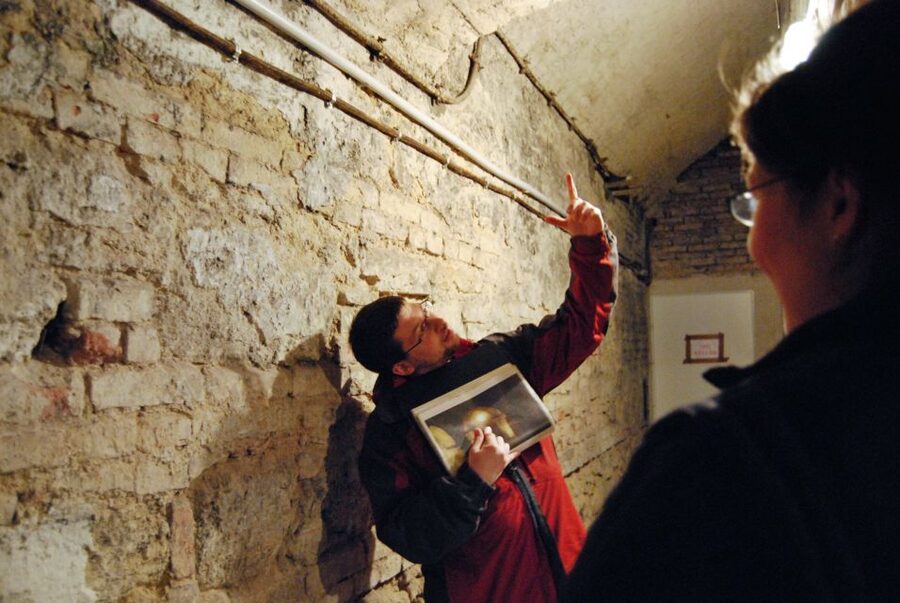
The first stop is Michaelerplatz, where building work exposed part of Vienna’s former Roman settlement. You can see archaeological remains in the center of the city, along with a 17th-century cellar and a section of the old city wall.
What I value here is the physical scale. A history book can tell you that Vienna has around 2,000 years of urban development. At Michaelerplatz, you get a direct visual reminder. Roman-era remains, later defensive structures, and newer buildings occupy the same small area.
Your guide’s explanation matters a lot at this point. Without context, archaeological fragments can look like a collection of old stones. With a good guide, the site becomes a lesson in how cities grow, rebuild, and bury their earlier selves.
The tour provider is Vienna Walks & Talks, and several guides have received praise for bringing humor and enthusiasm to the subject. Christopher is specifically remembered as an excellent guide, while Bridgett led an earlier tour with an historian’s grasp of lesser-known Viennese subjects. Guide quality can vary from one departure to another, but this experience clearly depends on a person who can turn quiet remains into a story.
Entering St. Michael’s crypt
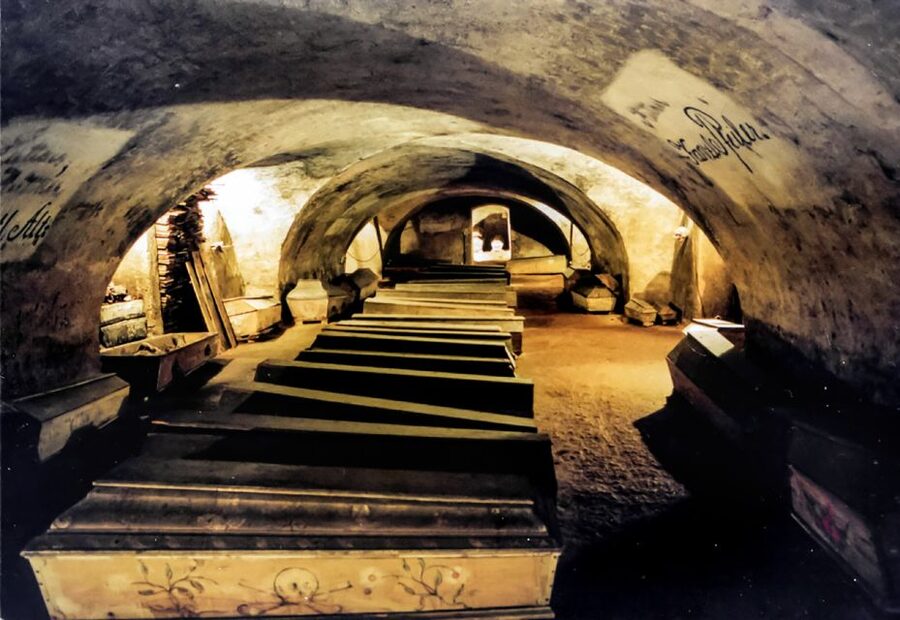
The crypt beneath St. Michael’s Church is the major reason to choose this tour. More than 4,000 people are buried there, and the rooms contain mummies of wealthy and prominent Viennese citizens.
This is not a glossy attraction. The setting is solemn, enclosed, and direct. You see human remains rather than a polished display about death, and that gives the stop a force that grand monuments often lack. It shows how social status, religious custom, and burial practice shaped Vienna.
The mummies are especially striking because of their preservation. You should expect an unusual historical experience, not a theatrical haunted-house visit. The value comes from seeing actual people connected with the city’s past, while your guide explains what the crypt represents.
I would be careful about bringing young children unless you already know they can handle this kind of subject. The tour is educational, but the mummies may feel unsettling. Some adults will find the crypt fascinating; others may prefer Vienna’s art museums and palaces.
You also need to follow the camera rule. Cameras are not allowed, so do not plan to document the crypt or archaeological spaces. That restriction may feel inconvenient, but it keeps the focus on the guide and the rooms themselves.
The old cellars and additional basements
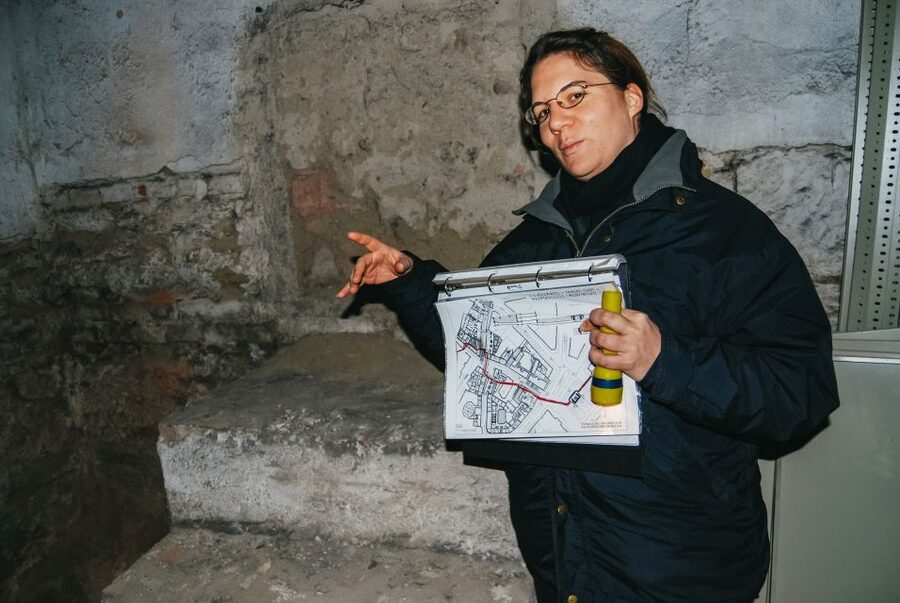
After Michaelerplatz and the crypt, the guide takes you through several more basements. This portion gives the tour its sense of discovery, though you should keep your expectations measured.
You are not promised a huge underground maze. The route includes a few rooms and cellar areas, and one earlier assessment wished for access farther into the tunnels. That is a fair point. If you imagine a long subterranean expedition, the actual visit may feel more contained.
Still, I think the limited route works for a 100-minute city tour. You get a focused look at places that are normally closed or easy to miss, without spending an entire afternoon underground. The charm is in the contrast between Vienna’s busy center above you and its quiet, rougher spaces below.
The basements also broaden the story beyond burial customs. You see how different periods used the underground parts of the city. The Roman remains, old wall, 17th-century cellar, church crypt, and later basement spaces do not all tell the same story. Together, they show how Vienna’s center has been altered layer by layer.
One practical note: some participants found the tour lasted close to three hours, although the stated duration is 100 minutes. Do not depend on a longer visit, especially if you have a train, concert, or timed museum ticket afterward. But if the guide takes extra time with questions, you may get more than the advertised minimum.
A completely different kind of day:
- Vienna: Vivaldi’s Four Seasons Concert in Karlskirche
★ 4.7 · 14,951 reviews - Vienna: Spanish Riding School Training
★ 3.9 · 9,281 reviews - Vienna: Schönbrunn Palace & Gardens Skip-the-Line Tour
★ 4.7 · 7,739 reviews - Vienna: Light of Creation Votive Church Immersive Light Show
★ 4.8 · 6,779 reviews
German language and the guide’s role
Language is the biggest decision point. The tour is conducted in German, and the provided information lists German as the available language. There is no regular English tour stated here.
Some guides have helped non-German speakers with short English summaries. One Canadian visitor found the crypt worth the price even with only some English provided. Other English speakers used Google Translate voice functions and understood part of the presentation, though underground areas sometimes lacked enough data for translation.
That means I would book this only if you can follow German reasonably well, or if you are comfortable accepting a partial experience. You may still enjoy the visual side of the crypt and archaeological sites, but the explanations are the heart of the tour. Translation apps can help, yet they can also distract you from the guide and miss jokes, names, and quick comments.
The good news is that the guides appear willing to help when possible. An Italian participant received occasional clarification, and another English-speaking couple said the guide paused to give summarized explanations. Treat that as a kindness, not a guarantee of bilingual service.
If an English tour becomes available in the future, this would be an easy recommendation for a much wider audience. For now, German speakers have the clear advantage.
Is $32 a fair price?
At $32 per person, the cost is sensible if you care about history, archaeology, or unusual city experiences. Entrance fees are included, and there are no extra food, drink, or transfer costs because neither is part of the plan.
The price is strongest when you think of the crypt as a separate admission experience plus a guided walk through several underground sites. You are paying for access and interpretation. Without the guide, you might see Michaelerplatz and notice that it has archaeological remains, but you would miss much of the meaning and would not know where to find the other basements.
I would not compare this directly with a free orientation walk. It is a specialist tour with a narrower subject and more unusual access. A visitor who wants only the major landmarks may find it less useful than a general old-town walk, but someone who has already seen the Hofburg and St. Stephen’s Cathedral may find this a refreshing change.
The strong overall rating of 4.9 from 1,146 ratings supports the idea that the experience delivers what it promises, especially when the guide is engaging. The most consistent praise goes to the guides’ enthusiasm, humor, and command of Viennese history. That is good news because the quality of the spoken explanation matters more here than scenery.
Who will enjoy this underground tour?
I would recommend it most strongly to:
- History fans who want Roman remains, city walls, church burial customs, and old urban spaces.
- Repeat visitors to Vienna who have already covered the main palaces and want a less familiar subject.
- German speakers who can follow a detailed guided talk.
- Adults and older children who are comfortable seeing mummies and discussing death.
- Visitors with a free half-day who do not want another standard museum or palace visit.
I would be more cautious if you use a wheelchair, since the tour is not wheelchair accessible. Leave pets, smoking materials, cameras, luggage, and large bags behind, as these are not allowed.
The tour is also a poor match if you need a fully English presentation. You might receive some English assistance, but you should not count on every story being translated.
Practical tips for a smoother visit
Arrive at the main entrance of St. Michael’s Church with enough time to locate the meeting point. Michaelerplatz is central, but central Vienna can be crowded with pedestrians and sightseeing groups.
Wear comfortable shoes. This is a walking tour, and you will move between the square, church, crypt, and other basement areas. The underground rooms can be chilly, so bring a sweater even if the weather above ground is warm.
Do not bring a large bag. The rules exclude luggage and large bags, and the underground spaces are not a good place for bulky belongings anyway. Cameras are also prohibited, so enjoy the details while you are there instead of planning a photo stop.
Keep your schedule flexible after the tour. The official duration is 100 minutes, but one account described an outing of nearly three hours. That may reflect a particular guide or group, yet it is wise not to place a tight appointment immediately afterward.
For groups of 15 or more, contact the provider before booking. Group tours have different arrangements and may need another day or time.
Cancellation is flexible if your plans change: you can cancel up to 24 hours before the tour for a full refund. You can also reserve now and pay later, which helps if you are still adjusting your Vienna schedule.
Should you book Vienna’s underground tour?
Book it if you want a serious, unusual look at the city beneath its famous streets. The Roman remains at Michaelerplatz give you a clear starting point, the crypt provides the strongest visual and emotional moment, and the additional cellars add useful context. At $32, included admission makes the cost reasonable.
I would make the decision mainly on language. German speakers should find this one of Vienna’s more distinctive short tours. English speakers can still enjoy it, especially if a guide offers summaries, but you need to accept that you may understand only part of the talk.
Bring a sweater, leave the camera and large bag at your accommodation, and allow more time than the stated 100 minutes if your day permits. If that sounds like your kind of history, this is a worthwhile way to see Vienna from below.
FAQ
How long does the Vienna underground walking tour last?
The stated duration is 100 minutes, or about one and a half hours. One account described a tour lasting nearly three hours, so you should allow some extra time if your schedule is flexible.
What language is the tour conducted in?
The live tour guide speaks German. Some guides have provided short explanations in English, but a full English-language tour is not stated as available.
Where does the tour meet?
Meet in front of the main entrance of St. Michael’s Catholic Church at Michaelerplatz.
What will I see on the tour?
You will see archaeological remains at Michaelerplatz, including part of the old Roman city, a 17th-century cellar, and part of the old city wall. The route also includes St. Michael’s crypt, preserved mummies, and several additional basements.
Are cameras and large bags allowed?
No. Cameras, luggage, and large bags are not allowed. Pets and smoking are also prohibited.
Is the tour wheelchair accessible?
No. The tour is not suitable for wheelchair users.
What is included in the $32 price?
Entrance fees are included. Transfers, food, and drinks are not included.
Just added in Vienna
- Vienna: Austrian Wine Tasting Experience★ 4.2 · 2 reviews
- World War II History Vienna Old Town Private Walking Tour★ 4.8 · 9 reviews
- Vienna_ Meet Beethoven Life Private Guided Walking Tour★ 5.0 · 1 review
- Vienna: Wine Tasting Tour★ 4.8 · 61 reviews
- Vienna: Wine Tasting E-Bike Tour★ 4.9 · 46 reviews
- Vienna: Wine Tasting at Schönbrunn Palace★ 4.3 · 71 reviews
- Vienna: Winery and Wine Tasting Tour with a Wine Expert★ 5.0 · 5 reviews
- Vienna: Concert by the Vienna Baroque Orchestra★ 4.6 · 56 reviews
Walking Tours, compared.
Guided Walking Tour of City Center Highlights
Read our review →
Guided Walking Tour of City Highlights & Hidden Gems
Read our review →
Vienna Historic Center Small Group Walking Tour
Read our review →
Ghosts and Legends Guided Nighttime Walking Tour
Read our review →Browse the lists this tour appears in