
Reviewed · WALKING TOURS
Vienna: Private Walking Tour
Vienna rewards anyone who enjoys a good story. This private walk links Roman Vindobona, medieval Vienna, and the Habsburg court in a compact route through the city center. I like the clear historical sweep, and I like that your own guide can adjust the tour on the spot. The main tradeoff is time: two hours gives you a fine introduction, but not enough for extended visits inside major buildings.
The route also brings Vienna’s musical past into focus, from Mozart and Haydn to Beethoven, Schubert, the Strausses, Brahms, and Mahler. I especially like the contrast between the grand State Opera House and the older lanes around Michaelerkirche and Stephansplatz. Since entrance fees are not included, this works best as an orientation walk rather than a full sightseeing day.
In This Review
- Key points at a glance
- Starting at Stephansplatz, Vienna’s great crossroads
- From Vindobona to medieval Vienna
- Graben and the story of Richard the Lionheart
- Michaelerkirche and the imperial doorway
- The Hofburg and the rise of Habsburg Vienna
- Museums, opera, and Vienna’s cultural boom
- Mozart Monument and the public face of imperial culture
- Peterskirche and the final approach to Stephansdom
- Why the private format matters
- Is two hours enough for Vienna’s story?
- Who will get the most from this walk?
- Practical details before you book
- Should you book this Vienna walking tour?
- FAQ
- Where does the private Vienna walking tour meet?
- How long does the tour last?
- How much does the tour cost?
- Is the tour private?
- Which languages are available?
- Are entrance fees included?
- Can the route be customized?
- Can I cancel for a full refund?
- Do I need to pay when I book?
Key points at a glance
- Roman and medieval Vienna in one walk: See traces of Vindobona, old walls, Roman ruins, and the former Burg Theatre area.
- A private guide for your group only: The booking covers up to 15 people, with possible changes to the route during the tour.
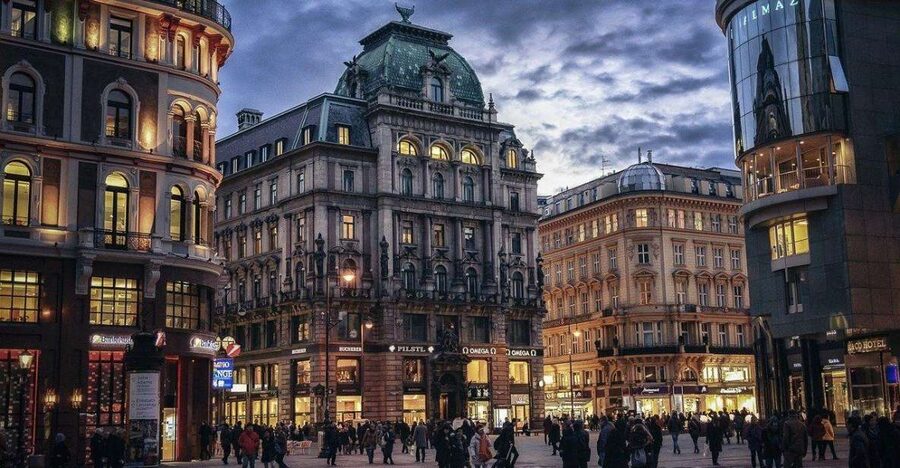
- Vienna’s imperial center: Walk past the Hofburg, Michaelerkirche, the Natural History Museum, and the Art History Museum.
- A strong music story: Connect the State Opera House with Mozart, Mahler, Karajan, Abbado, and Vienna’s long operatic tradition.
- The city’s signature finish: Reach Stephansplatz and Stephansdom, Vienna’s great Roman-Gothic cathedral.
- Useful booking flexibility: Cancellation is free up to 24 hours before the tour, and you can reserve now and pay later.
Starting at Stephansplatz, Vienna’s great crossroads
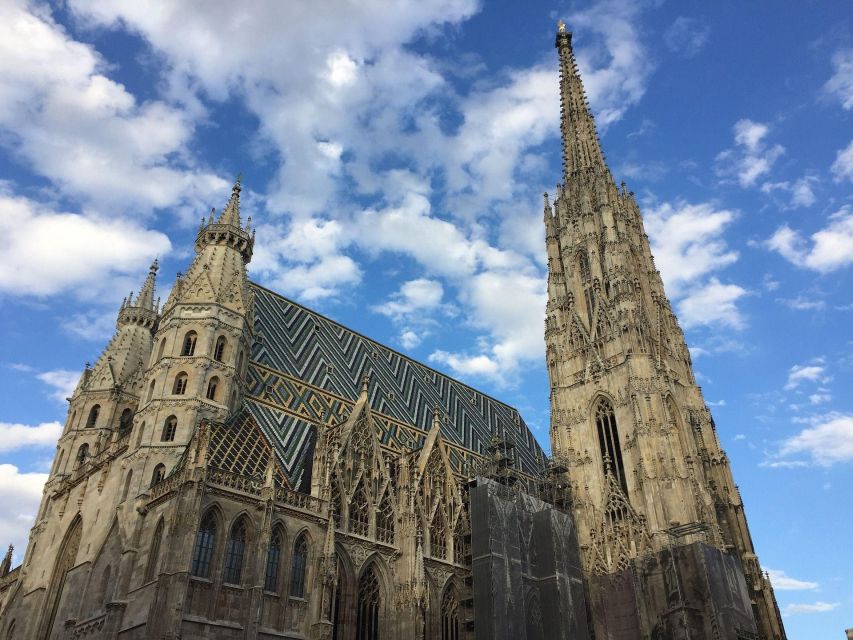
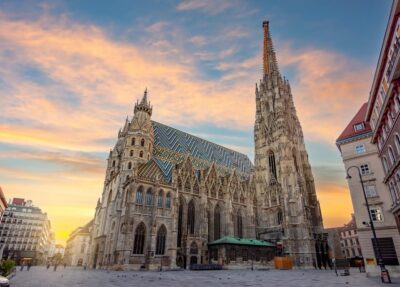
The meeting point is Stephansplatz 8A, in the heart of central Vienna. That is a practical place to begin because Stephansplatz already gives you one of the city’s strongest first impressions: Stephansdom, with its tall Gothic form and patterned roof, dominates the square.
The cathedral is described as one of the tallest churches in the world and one of Vienna’s most important Roman-Gothic buildings. You should expect the opening part of the walk to feel grand and urban, with the cathedral acting as a useful landmark before the guide leads you into earlier layers of the city.
Starting here also saves time. You are not spending the first part of the tour on a long transfer from a distant neighborhood. If your guide finishes elsewhere in the center, you will already be near many major sights, shops, cafés, and public transport connections.
More Walking Tours in Vienna
- Vienna: Guided Walking Tour of City Center Highlights
★ 4.7 · 4,989 reviews - Vienna: Vienna Central Cemetery Guided Walking Tour
★ 4.8 · 3,307 reviews - Vienna: Guided Walking Tour of City Highlights & Hidden Gems
★ 4.9 · 2,180 reviews
From Vindobona to medieval Vienna
One of the most useful features of this walk is its long timeline. Vienna is not presented only as an imperial capital. The route reaches back to Roman Vindobona, the settlement that helped establish the city’s early importance.
You will see ancient Roman remains in the center of a square, along with medieval walls and remnants connected to the old Burg Theatre. These fragments can be easy to overlook when you are focused on grand palaces and church towers. A guide gives them a place in the larger story.
The route also includes the Babenberg era, the dynasty that ruled Austria before the Habsburgs became the dominant force. This helps explain that Vienna’s political role did not begin with the imperial court. The city developed through several ruling families, military pressures, trade routes, and changes in power.
I find this early section particularly useful if you are new to Austrian history. Names such as Babenberg and Vindobona can seem remote in a museum caption, but they become easier to remember when tied to streets, ruins, gates, and squares.
Graben and the story of Richard the Lionheart
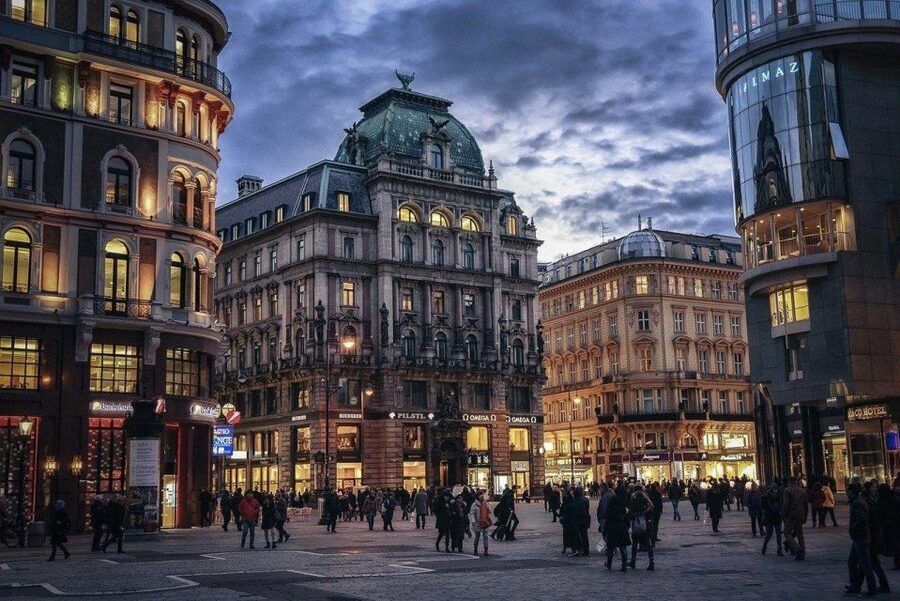
Graben, or Der Graben, is one of the route’s most interesting street stops. Its origins reach back to the Roman period, and it later became part of the medieval city’s busy public life.
The street is also linked with Richard the Lionheart, who used it to enter Vienna. That episode adds a dramatic flash to the walk. Medieval politics can sound abstract until you connect them with a real city entrance and a street you can walk along today.
Graben is not simply a place to pause for a photograph. It helps show how Vienna’s center changed from a defensive Roman settlement into a medieval and then imperial capital. You get the sense of old routes being reused by new rulers, armies, merchants, and ordinary city life.
The stop may be less satisfying if you expect a quiet archaeological site. Graben is a central city street, so the experience is about reading the past through the present rather than seeing a perfectly preserved medieval setting.
Michaelerkirche and the imperial doorway
The walk continues toward Michaelerkirche, or the Church of St. Michael, near the Michaelertor gate. For centuries, this was the official church of the emperors. Its location beside the Hofburg makes its role easy to understand: religion, court ceremony, and royal power all met in this part of the city.
Passing through or near Michaelertor brings you close to the old entrance to the Habsburg complex. The setting helps you picture the Hofburg not as one isolated palace, but as a large group of buildings that expanded over centuries.
The church is also a useful counterpoint to the grand imperial facades. It offers a reminder that Habsburg Vienna depended on institutions, ceremonies, and religious tradition as much as on palaces and military authority.
Do not expect admission to be part of the standard price. Entrance fees are not included, so the guide’s role here is mainly to explain the site from the walking route unless you arrange and pay for any separate entry yourself.
A completely different kind of day:
- Vienna: Vivaldi’s Four Seasons Concert in Karlskirche
★ 4.7 · 14,951 reviews - Vienna: Spanish Riding School Training
★ 3.9 · 9,281 reviews - Vienna: Schönbrunn Palace & Gardens Skip-the-Line Tour
★ 4.7 · 7,739 reviews - Vienna: Light of Creation Votive Church Immersive Light Show
★ 4.8 · 6,779 reviews
The Hofburg and the rise of Habsburg Vienna
The Hofburg is the central imperial stop. For centuries, it served as the opulent home of the Habsburg Empire, and its buildings reflect the dynasty’s long growth rather than one single period of design.
The tour connects the Habsburg rise with major events and rulers, including the changing balance of power in Europe and the Ottoman Siege of Vienna. These stories matter because Vienna was not simply a court city enjoying luxury. Its position placed it near the front line of major political and military struggles.
The route also covers the transition from Babenberg rule to Habsburg power, then the development of Austro-Hungarian grandeur. This gives you a framework for later sightseeing. When you visit a palace, museum, or church elsewhere in Vienna, you will have a better idea of which political period shaped it.
The drawback is that a two-hour walk cannot explain every emperor, marriage, war, and succession in detail. The guide has to choose. That is a strength for a first visit, but history-minded visitors may want a longer museum visit afterward.
Museums, opera, and Vienna’s cultural boom
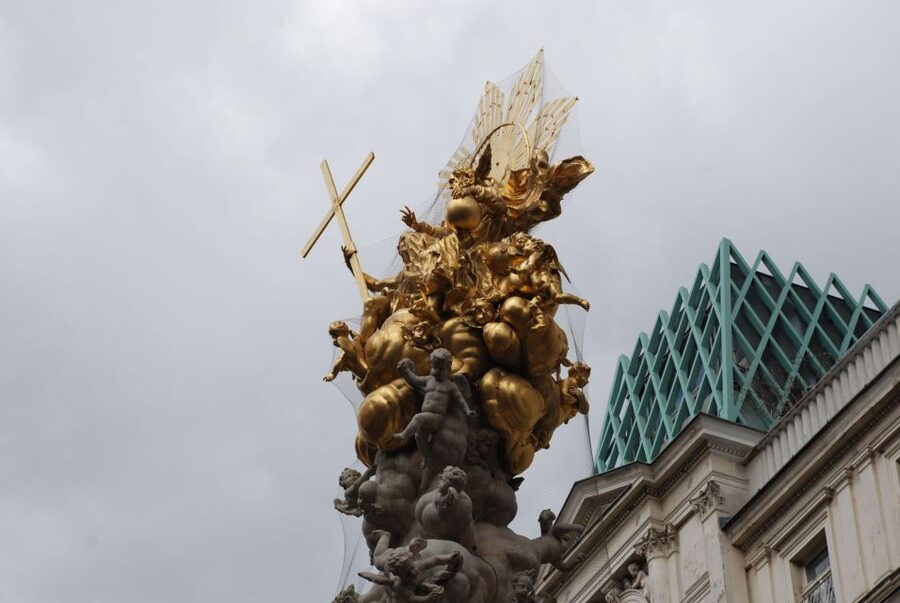
Near the Hofburg, you will see the impressive facades of the Natural History Museum and the Art History Museum. Even from outside, the buildings show the confidence of nineteenth-century imperial Vienna.
The walk places these institutions within the city’s cultural expansion during the nineteenth and twentieth centuries. Vienna was not only a place of court ceremony. It became a major center for art, scholarship, architecture, music, and public culture.
The State Opera House is another major stop. Built in the 1860s, it became a home for works including La Traviata, La Clemenza di Tito, and Verdi’s Don Carlo. Its story also includes major conductors such as Gustav Mahler, Herbert von Karajan, and Claudio Abbado.
This is where the tour’s music theme becomes especially effective. Vienna’s musical reputation is not limited to one famous composer. The walk connects Mozart, Josef Haydn, Ludwig van Beethoven, Franz Schubert, Johann Strauss the father and son, Johannes Brahms, and Gustav Mahler with the city’s institutions and streets.
You should think of this as an exterior introduction, not an opera performance or backstage visit. The value comes from seeing the building in its urban setting and learning how it fits into Vienna’s cultural story.
Mozart Monument and the public face of imperial culture
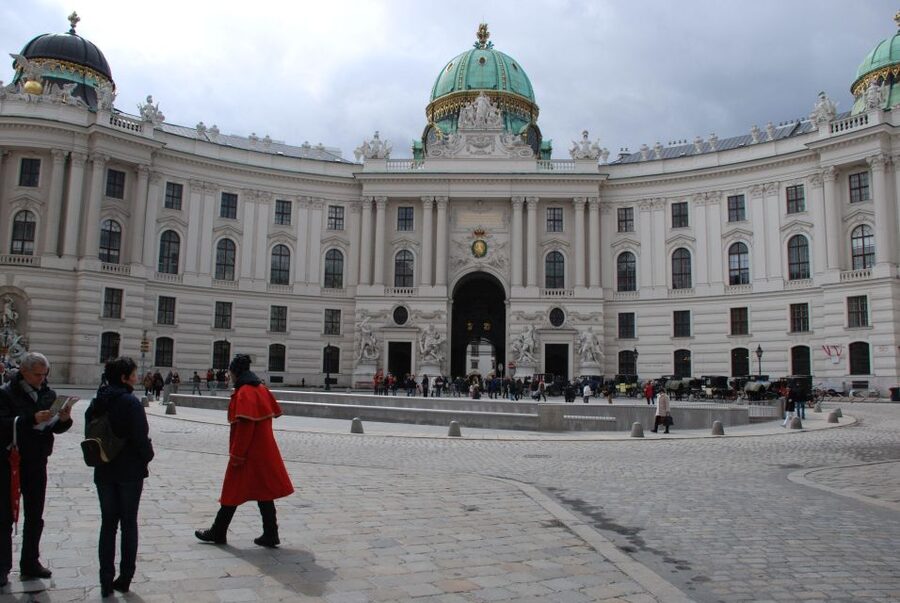
The Mozart Monument adds a more personal stop to the route. After hearing about royal power and major institutions, you get a reminder that Vienna’s cultural identity also rests on individual artists.
The monument helps connect the city’s public spaces with its musical memory. It is a useful pause in a walk that otherwise emphasizes dynasties, wars, churches, and government buildings.
The surrounding facades also show how Vienna used architecture to present itself. Monumental buildings were not only functional. They projected order, education, wealth, and imperial confidence.
Because the tour moves through the central district, you will see the contrast between formal squares and older streets at close range. That contrast is one of the walk’s best qualities. Vienna’s character comes from the way grand nineteenth-century projects sit beside Roman traces and medieval remnants.
Peterskirche and the final approach to Stephansdom
Peterskirche, or St. Peter’s Church, adds another religious landmark to the route. The site is described as reaching back to the fourth century, giving it a very early place in Vienna’s story.
From there, the walk reaches Stephansplatz and Stephansdom. Ending at or near the cathedral makes good practical sense. You finish beside the city’s most recognizable church, after moving through several layers of Vienna’s political and cultural past.
Stephansdom is more than a postcard subject. Its size and design show the importance Vienna gained over time. The cathedral’s Roman-Gothic form connects the city to medieval religious and civic ambition, while its place in the modern center shows how old Vienna remains part of daily life.
As with the other major buildings, remember that the tour price does not include entry fees. If you want to go inside, check the cost and opening arrangements separately. The walking tour itself is built around seeing and understanding the city from the streets.
Why the private format matters
The price is $313 per group of up to 15 people. If you fill all 15 places, that works out to about $20.87 per person. For a couple or a small group, the per-person cost is much higher, so the value depends heavily on your group size.
The private format gives you something a large public tour cannot: the guide is with your group only. You can ask questions without competing with a crowd, and the route may be adjusted on the spot. That flexibility is useful if your group has a strong interest in opera, Habsburg politics, medieval Vienna, or church architecture.
It also gives you control over the pace, within the limits of the two-hour schedule. A group that wants more time at the Hofburg may need to move faster elsewhere. A group focused on Roman remains may prefer a different balance. The possibility of customizing the tour is therefore one of the clearest reasons to choose this option.
The price is harder to justify for one or two people who only want a quick orientation. For a family, group of friends, or small organization, the fixed group rate becomes more attractive.
Is two hours enough for Vienna’s story?
Two hours is enough to build a useful mental map of central Vienna. You can connect Stephansplatz, Graben, Michaelerkirche, the Hofburg, the museums, the State Opera House, Peterskirche, and the main music and imperial themes.
It is not enough to explore the interiors of all these sights. You will not receive a full course in Habsburg history, and the tour cannot give equal attention to every composer, war, dynasty, and building.
I would treat the walk as a first chapter. Afterward, you can decide which places deserve more time. The State Opera House, Hofburg, museums, churches, and cathedral each offer separate reasons to return.
The final historical theme, Austria’s path toward World War I and the country’s later transformation, is especially helpful. It prevents the tour from ending with a simple picture of elegant palaces and waltzes. Vienna’s imperial glory had a complicated political end, and that change shaped modern Austria.
Who will get the most from this walk?
I would recommend this tour to first-time visitors who want a strong overview without joining a large group. It suits people who enjoy connecting buildings with political events, rather than simply collecting photographs.
It is also a good fit for families or friends who want to set the pace and ask their own questions. The private group limit of 15 allows a fairly large party to stay together under one booking.
Music lovers will appreciate the route’s attention to Mozart, Haydn, Beethoven, Schubert, the Strausses, Brahms, Mahler, and the opera tradition. People with a stronger interest in military history will value the references to the Ottoman Siege of Vienna and the political pressures that shaped the Habsburg world.
You may want something else if you prefer long indoor visits, a specialized museum tour, or a full-day history program. Since entry fees are separate and the route lasts only two hours, this is best for context and orientation.
Practical details before you book
The guide speaks English or German, and the tour is conducted as a private group experience. Check the available starting times when booking, since the exact schedule is not fixed here.
You can cancel up to 24 hours in advance for a full refund. You can also reserve now and pay later, which helps if your Vienna plans are still changing.
Wear comfortable shoes. The route connects several central sights on foot, and the value comes from moving through the city rather than sitting in one location. Since the meeting point is at Stephansplatz 8A, allow enough time to find the correct spot in this busy central area.
Should you book this Vienna walking tour?
Book it if you want a private, story-led introduction to Vienna’s center, especially if your group can share the $313 cost. The combination of Roman remains, medieval streets, Habsburg power, famous churches, museums, opera, and music gives you a useful picture of why Vienna became such an important European capital.
Skip it if you mainly want interior access or a narrow specialist subject. For most first visits, though, the route offers a sensible starting point, and the guide’s ability to adjust the walk can make the two hours feel much more personal than a standard city overview.
FAQ
Where does the private Vienna walking tour meet?
The meeting point is Stephansplatz 8A, 1010 Wien, Austria.
How long does the tour last?
The tour lasts two hours.
How much does the tour cost?
The price is $313 per private group of up to 15 people.
Is the tour private?
Yes. The tour is for a private group, and the local professional guide will be with your group only.
Which languages are available?
The live tour guide is available in English and German.
Are entrance fees included?
No. Entrance fees are not included in the tour price.
Can the route be customized?
Possible customization is available with your local guide on the spot.
Can I cancel for a full refund?
Yes. You can cancel up to 24 hours in advance for a full refund.
Do I need to pay when I book?
No. The reserve now and pay later option lets you book without paying immediately.
Just added in Vienna
- Vienna: Austrian Wine Tasting Experience★ 4.2 · 2 reviews
- World War II History Vienna Old Town Private Walking Tour★ 4.8 · 9 reviews
- Vienna_ Meet Beethoven Life Private Guided Walking Tour★ 5.0 · 1 review
- Vienna: Wine Tasting Tour★ 4.8 · 61 reviews
- Vienna: Wine Tasting E-Bike Tour★ 4.9 · 46 reviews
- Vienna: Wine Tasting at Schönbrunn Palace★ 4.3 · 71 reviews
- Vienna: Winery and Wine Tasting Tour with a Wine Expert★ 5.0 · 5 reviews
- Vienna: Concert by the Vienna Baroque Orchestra★ 4.6 · 56 reviews
Walking Tours, compared.
Guided Walking Tour of City Center Highlights
Read our review →
Guided Walking Tour of City Highlights & Hidden Gems
Read our review →
Vienna Historic Center Small Group Walking Tour
Read our review →
Browse the lists this tour appears in