
Reviewed · WALKING TOURS
Vienna Old Town Walking Tour
Vienna rewards slow footsteps. This two-hour walk gives you a clear route through the city’s grandest sights, from St. Stephen’s Cathedral and the Hofburg to medieval lanes, old courtyards, and the Greek Quarter. I like the way it links imperial Vienna with the older city beneath it, rather than treating the center as one long parade of palaces.
I especially like the compact route and the guide’s focus on quirky stories, statues, and small details. David Sterrer also gets praise for his friendly manner, useful information, and comfortable pace. The main consideration is time: two hours is enough for an introduction, but not enough for inside visits or a slow look at every major building.
In This Review
- Key points to know before you book
- Starting under the tiled roof of St. Stephen’s Cathedral
- The Graben, the plague column, and Vienna’s grand shopping streets
- Entering the Hofburg through its inner courtyards
- Michaelerplatz, Demel, and one of Vienna’s last baroque lanes
- Judenplatz and Hoher Markt, where medieval Vienna comes forward
- Seitenstettengasse and St. Rupert’s Square
- The Greek Quarter and Vienna’s through houses
- What the $31 price really gives you
- Who will get the most from this Vienna walk
- Should you book the Vienna Old Town Walking Tour?
- FAQ
- Where does the Vienna Old Town Walking Tour begin?
- Where does the tour end?
- How long does the walking tour last?
- How much does the tour cost?
- Is the tour available with a mobile ticket?
- Who leads the tour?
- How large is the tour group?
- Are admission tickets included?
- Can I cancel for a full refund?
Key points to know before you book
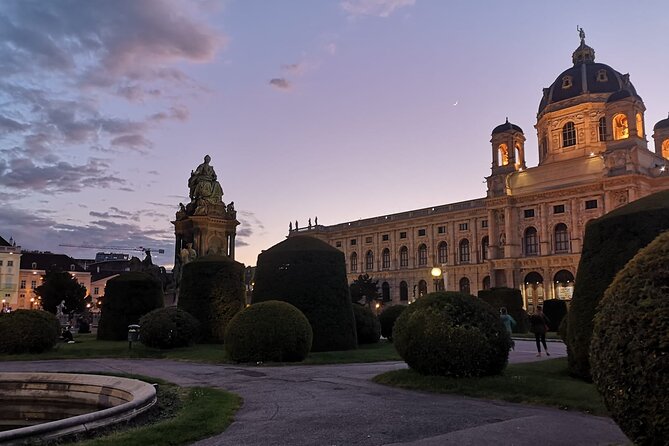
- A strong first look at central Vienna: The route covers St. Stephen’s Cathedral, the Graben, Kohlmarkt, the Hofburg, Judenplatz, Hoher Markt, and the old Greek Quarter.
- David Sterrer leads the walk: His style is friendly and informative, with extra stories about statues and sights.
- The tour stays outdoors: The listed stops have no admission charge, but this is a walking tour rather than a ticketed interior tour.
- The group is capped at 20 people: That is small enough to feel more personal than a large city walk.
- The pace is manageable: The walk lasts about two hours and returns to Stephansplatz.
- The price is $31: I see the best value for first-time visitors who want orientation, context, and a sensible route through the old town.
Starting under the tiled roof of St. Stephen’s Cathedral
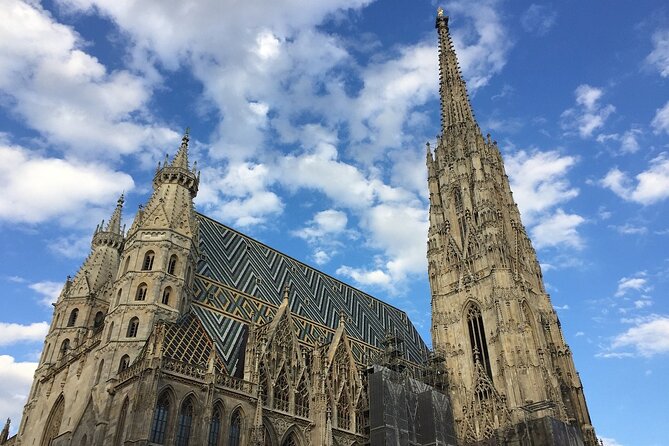
The tour begins at Stephansplatz 9, right beside St. Stephen’s Cathedral. This is a practical meeting point because the cathedral marks the center of Vienna, and the square gives you an immediate sense of the city’s scale and energy.
The cathedral itself reaches back about 900 years. Even if you only have ten minutes here, the setting does useful work: you begin with Vienna’s religious and civic center rather than with a distant palace or museum. The church’s long presence also sets up the main theme of the walk, a modern European capital built over layers of older city life.
The stop is listed as free admission, but you should not expect a full interior visit as part of this experience. The tour uses the cathedral as a starting landmark and historical anchor. If you want to climb a tower, see the catacombs, or study the interior at length, you would need separate time.
I like this opening because it is easy to find and hard to misunderstand. You are not being sent to a hotel lobby or an obscure side street. You meet at one of Vienna’s most recognizable places, then head into the old town on foot.
More Walking Tours in Vienna
- Vienna: Guided Walking Tour of City Center Highlights
★ 4.7 · 4,989 reviews - Vienna: Vienna Central Cemetery Guided Walking Tour
★ 4.8 · 3,307 reviews - Vienna: Guided Walking Tour of City Highlights & Hidden Gems
★ 4.9 · 2,180 reviews
The Graben, the plague column, and Vienna’s grand shopping streets
From St. Stephen’s, the route moves along the Graben and toward Kohlmarkt. The Graben began as the moat beside the Roman city wall and later became one of the city’s main public streets. That change tells you something important about Vienna: old defensive lines often became elegant civic spaces.
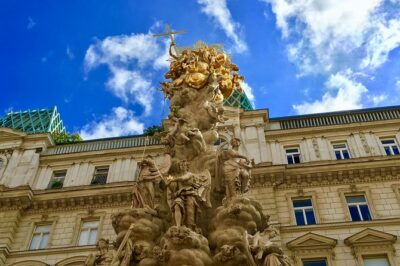
The Graben is also where the tour shifts from medieval roots to imperial display. Its broad layout, grand façades, and central plague column make it one of the easiest places to see Vienna’s public memory in stone. The column recalls the plague years and the religious response to them, giving the street more weight than a simple shopping stop.
The visit here lasts about ten minutes. That is enough for a short explanation and a look around, but you will need to keep moving. The Graben and Kohlmarkt can be busy, so stay close to the guide and watch your footing while listening.
The route through these streets is valuable because you get more than isolated landmarks. You see how Vienna’s old center connects churches, commerce, monuments, and palace roads. I would pay attention to the change in street width and building style as you walk. The city often reveals itself through these transitions.
Entering the Hofburg through its inner courtyards
The Hofburg is the largest stop, with about 30 minutes devoted to the old imperial palace. Instead of treating it as a single façade, the route takes you through its inner yards and past reminders of the Habsburg past.
That choice matters. From the outside, the Hofburg can feel like an enormous collection of wings and grand entrances. Inner courtyards help you understand how the palace functioned as a working center of power. You are moving through spaces that connect the imperial residence with the streets around it, not simply stopping for a quick photograph.
The Hofburg is also where the tour’s two historical time scales meet. Vienna’s old town reaches back roughly two thousand years, yet the palace points to the city’s later role as the center of an empire. The walk presents Vienna as a living modern capital, not a museum frozen in imperial costume.
The 30-minute timing is sensible for an overview. You can see the courtyards and hear the main explanation without spending half the day at the palace. The tradeoff is that no museum or palace interior admission is included in the listed stops. If you want the Imperial Apartments, the Sisi Museum, or other Hofburg collections, plan a separate visit.
This is likely the most useful part of the route for anyone who wants context. The guide can connect the buildings to the city around them, which is harder to do when you explore the Hofburg alone with only a map.
Michaelerplatz, Demel, and one of Vienna’s last baroque lanes
The walk continues via Bräunerstraße to Michaelerplatz, then down Kohlmarkt. This section gives you a change of mood. The Hofburg feels official and ceremonial, while the streets near Michaelerplatz bring together cafés, elegant shops, historic façades, and the everyday movement of central Vienna.
You pass the famous Café Demel before reaching Kurrentgasse, described as one of the last remaining baroque streets in Vienna. That detail makes this section especially worthwhile. A grand square is easy to notice, but a surviving street pattern can tell you more about how the old city actually looked and worked.
The stop at Michaelerplatz lasts about 15 minutes. I would use the time to look up and also down. Vienna’s most polished architecture is often at eye level or above, while the narrow streets and gateways show how much of the old city remains tucked between larger public spaces.
Café Demel is passed, not presented as a scheduled tasting stop. You should not book this tour expecting food or drink. Its value here is as a recognizable landmark along the route, and as a reminder that Vienna’s café culture sits inside the same old urban fabric as the palace and church.
A completely different kind of day:
- Vienna: Vivaldi’s Four Seasons Concert in Karlskirche
★ 4.7 · 14,951 reviews - Vienna: Spanish Riding School Training
★ 3.9 · 9,281 reviews - Vienna: Schönbrunn Palace & Gardens Skip-the-Line Tour
★ 4.7 · 7,739 reviews - Vienna: Light of Creation Votive Church Immersive Light Show
★ 4.8 · 6,779 reviews
Judenplatz and Hoher Markt, where medieval Vienna comes forward
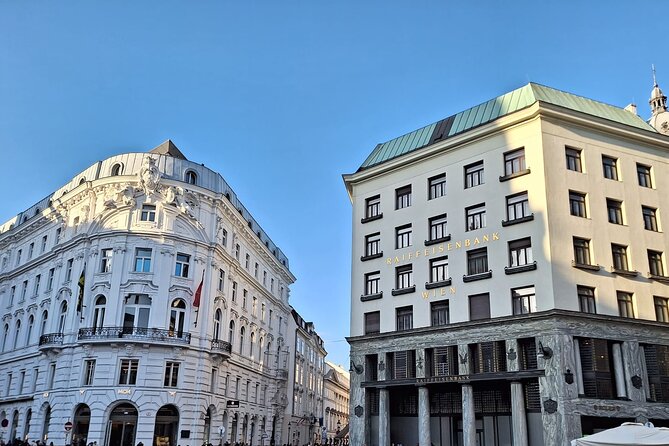
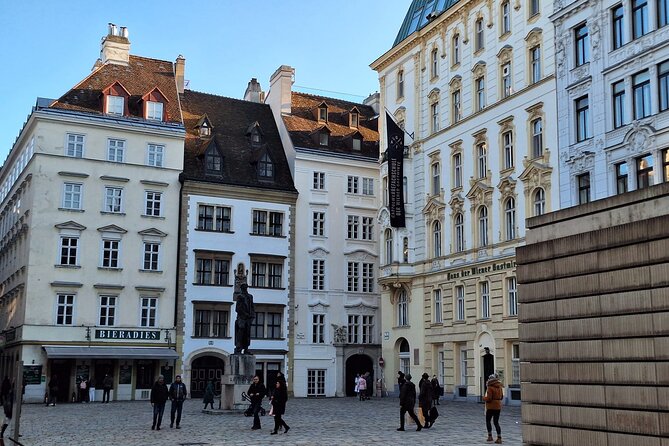
The route then turns toward Judenplatz and Hoher Markt, two places that bring the medieval center into sharper focus. The Judenplatz Holocaust Memorial adds a sober layer to the walk. Its presence makes clear that Vienna’s past cannot be reduced to imperial buildings, music, and decorative façades.
This is one of the tour’s most important stops because it asks you to look at the city with care. The memorial is not just another photo point. It gives the old town a connection to the twentieth century and to the Jewish life and destruction that are part of Vienna’s story.
The listed time at Judenplatz is about ten minutes, followed by another 15 minutes around Hoher Markt. That division gives the route room to move from remembrance to the older medieval street plan. You might find the change in tone abrupt, but that is part of the point. Vienna’s layers sit close together.
Hoher Markt helps you picture the old center as a place of daily activity, not only royal ceremony. The tour does not spend hours on one square, so I would listen for the guide’s explanation of how the medieval center fits into the modern city. If you want a slower look at the memorial or the surrounding architecture, return on your own after the walk.
Seitenstettengasse and St. Rupert’s Square
Next comes Seitenstettengasse and St. Rupert’s Square. Here you see what is described as Vienna’s oldest still-standing church, along with one of the city’s liveliest areas today.
That pairing is typical of this walking tour. You are not only shown old monuments in isolation. You also see how older streets remain part of present-day city life. The square’s current energy helps prevent the past from feeling sealed behind glass.
The stop lasts about 15 minutes. As with the other short sections, you get an explanation and a chance to take in the setting, but not an extended church visit. The tour is best for understanding relationships between places, not for detailed architectural study of one building.
I like this part because it breaks up the run of imperial sights. After the cathedral, shopping streets, and Hofburg, the smaller lanes around Seitenstettengasse bring the scale down again. You get a better sense of Vienna as a walkable old city rather than a sequence of monumental attractions.
The Greek Quarter and Vienna’s through houses
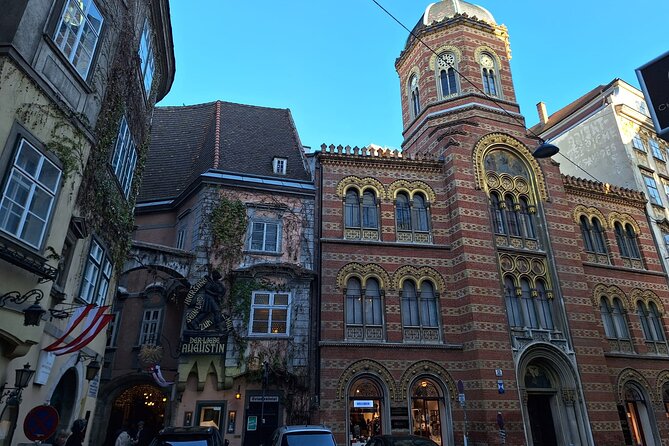
The final section goes through Griechengasse, the old Greek Quarter, before returning to St. Stephen’s Cathedral. Along the way, the group uses some typical through houses, gateways and passages that connect one street to another through the middle of old buildings.
These passages are exactly the sort of detail you can miss on a standard sightseeing route. They do not need a grand façade or a famous name to be interesting. They show how the old center is stitched together, with routes that are easy to overlook unless someone points them out.
The Greek Quarter also adds another social and cultural layer to the walk. By this point, you have seen religious, imperial, medieval, commercial, and memorial sites. The final streets help bring those pieces back toward the cathedral and the central square.
The tour ends where it began. That makes planning simple, especially if you are using the walk to orient yourself on your first day. You can continue to another nearby sight, return to your hotel, or revisit one of the stops without having to arrange transport from a distant ending point.
What the $31 price really gives you
At $31, this is not the cheapest way to walk around Vienna. You can see many of these streets on your own for nothing. The value comes from the route, the explanation, and the small details that connect one place to the next.
I would consider the price fair if you want a structured introduction and do not want to spend your first hours in Vienna constantly checking a map. The walk covers a lot of ground in about two hours, and the route includes both famous landmarks and less obvious passages.
The listed stops have free admission, so your payment is mainly for the guided experience rather than entry tickets. That is useful for budget planning. You will not be paying $31 plus a collection of surprise entrance fees during the walk, but you also should not expect palace museums or cathedral tower visits to be included.
The group limit of 20 people helps support the price. It is not a private tour, yet it should be easier to hear and follow than a huge group spread across busy streets. The one direct rating available gives the tour five stars, with particular praise for David’s friendly approach, extra information, quirky stories, and walking pace.
Those comments point to the tour’s real strength. It is not trying to be an exhaustive history lecture. It aims to make the streets more readable and memorable.
Who will get the most from this Vienna walk
I would recommend this tour most strongly to first-time visitors, people with a short stay, and anyone who wants an early orientation before visiting museums or palaces. The central meeting point and circular route make it easy to fit into a day of sightseeing.
It also suits you if you enjoy stories about statues, gateways, and odd city details as much as famous buildings. David’s praised habit of adding quirky information may appeal to you more than a strictly formal lecture.
The walk may be less suitable if you need extensive interior access. The itinerary lists outdoor stops with free admission, and the two-hour schedule keeps the group moving. If your main goal is the Hofburg museums, St. Stephen’s interior, or a long café break at Demel, you will need separate plans.
You should also be comfortable walking through central streets for about two hours. Most people can participate, service animals are allowed, and the route is near public transportation. Still, the experience is built around walking, standing, and keeping pace with a group.
Free cancellation is available if you cancel at least 24 hours before the start time. Inside that window, the payment is not refunded, and changes are not accepted. The experience also requires a minimum number of participants, so a cancellation for that reason comes with a different date or experience, or a full refund.
Should you book the Vienna Old Town Walking Tour?
Book it if you want a well-shaped first walk through Vienna, with major sights, smaller lanes, and historical connections in one compact route. The combination of St. Stephen’s Cathedral, the Hofburg courtyards, Judenplatz, Hoher Markt, and the through houses gives you a broader picture than a palace-only visit.
I would especially choose it early in a Vienna stay. Afterward, you will know where the old center fits together and can return to the places that deserve more time. David Sterrer’s friendly pace and quirky stories add the human touch that can turn a route into a memorable introduction.
Skip it if you prefer exploring alone, need lengthy interior visits, or already know central Vienna well. For most first-time visitors, though, $31 is a reasonable price for two hours of focused orientation in one of Europe’s most layered city centers.
FAQ
Where does the Vienna Old Town Walking Tour begin?
The tour begins at Stephansplatz 9, 1010 Wien, Austria.
Where does the tour end?
The activity ends back at the meeting point near St. Stephen’s Cathedral.
How long does the walking tour last?
The tour lasts approximately two hours.
How much does the tour cost?
The listed price is $31.
Is the tour available with a mobile ticket?
Yes, the experience features a mobile ticket.
Who leads the tour?
The experience provider is David Sterrer.
How large is the tour group?
The tour has a maximum of 20 participants.
Are admission tickets included?
The listed stops show free admission. The experience is a walking tour through the old town, and separate admission for attractions or museum interiors is not listed.
Can I cancel for a full refund?
Yes. You can cancel at least 24 hours before the start time for a full refund. Cancellations made less than 24 hours before the start time are not refunded.
Just added in Vienna
- Vienna: Austrian Wine Tasting Experience★ 4.2 · 2 reviews
- World War II History Vienna Old Town Private Walking Tour★ 4.8 · 9 reviews
- Vienna_ Meet Beethoven Life Private Guided Walking Tour★ 5.0 · 1 review
- Vienna: Wine Tasting Tour★ 4.8 · 61 reviews
- Vienna: Wine Tasting E-Bike Tour★ 4.9 · 46 reviews
- Vienna: Wine Tasting at Schönbrunn Palace★ 4.3 · 71 reviews
- Vienna: Winery and Wine Tasting Tour with a Wine Expert★ 5.0 · 5 reviews
- Vienna: Concert by the Vienna Baroque Orchestra★ 4.6 · 56 reviews
Walking Tours, compared.
Guided Walking Tour of City Center Highlights
Read our review →
Guided Walking Tour of City Highlights & Hidden Gems
Read our review →
Vienna Historic Center Small Group Walking Tour
Read our review →
Browse the lists this tour appears in