Reviewed · TICKETS
Vienna: Imperial Crypt Entrance Ticket
Royal power sleeps beneath a modest church. Vienna’s Imperial Crypt offers a quiet, atmospheric look at the Habsburg dynasty, with ten vaults holding the sarcophagi, urns, and funerary monuments of roughly 150 family members. I especially like the extraordinary metalwork on the tombs and the chance to stand near the burial places of Emperor Franz Joseph, Empress Elisabeth, Maria Theresia, and other major figures.
I also like the freedom to take your time in this central Vienna sight, with visits ranging from about 30 minutes to 1.5 hours. The main drawback is the limited explanation on site. If you do not already know much about the Habsburgs, the lack of a standard audio guide or full English commentary can leave you with questions.
In This Review
- Key points to know before you go
- Beneath the Capuchin Church in central Vienna
- Ten vaults and four centuries of expansion
- The tombs of Franz Joseph, Sisi, and Maria Theresia
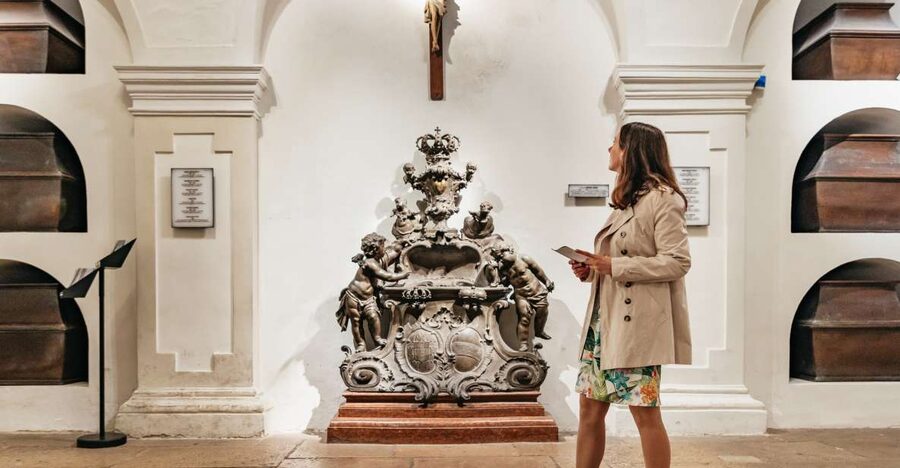
- The craftsmanship is the real visual reward
- How long should you spend inside?
- Why a guided visit can be worth the extra €3
- A surprising detail about Habsburg burial customs
- Rules that protect the atmosphere
- Is the $17 ticket good value?
- Who will enjoy the Imperial Crypt most?
- Should you book the Imperial Crypt?
- FAQ
- Where is the Imperial Crypt?
- Who is buried in the Imperial Crypt?
- How many vaults are inside the crypt?
- How much does admission cost?
- How long is the visit?
- Is the Imperial Crypt wheelchair accessible?
- Can I take photographs or bring a large bag?
Key points to know before you go
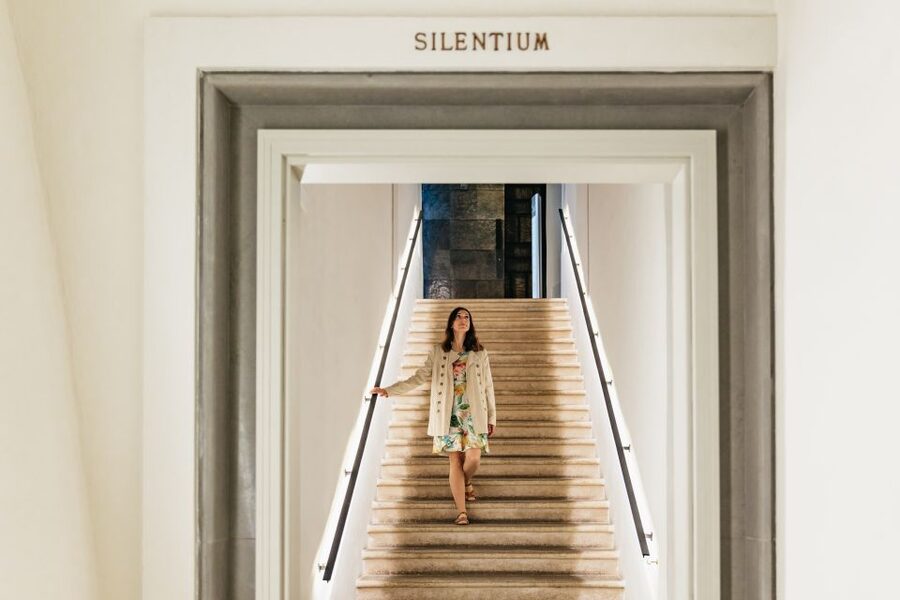
- Ten connected vaults: The crypt grew through several additions over more than 400 years.
- About 150 Habsburg burials: Emperors, empresses, children, and other family members rest here.
- The famous tombs: Franz Joseph, Empress Elisabeth, Maria Theresia, and Rudolph are among the best-known names.
- Entry costs $17: That is fair value if you appreciate history, sculpture, and unusual city sights.
- A guided option may help: An English guided tour can be arranged directly at the ticket office for an additional €3.
- Photography is not allowed: Leave cameras and phones in your pocket, and bring no large bags or luggage.
Beneath the Capuchin Church in central Vienna
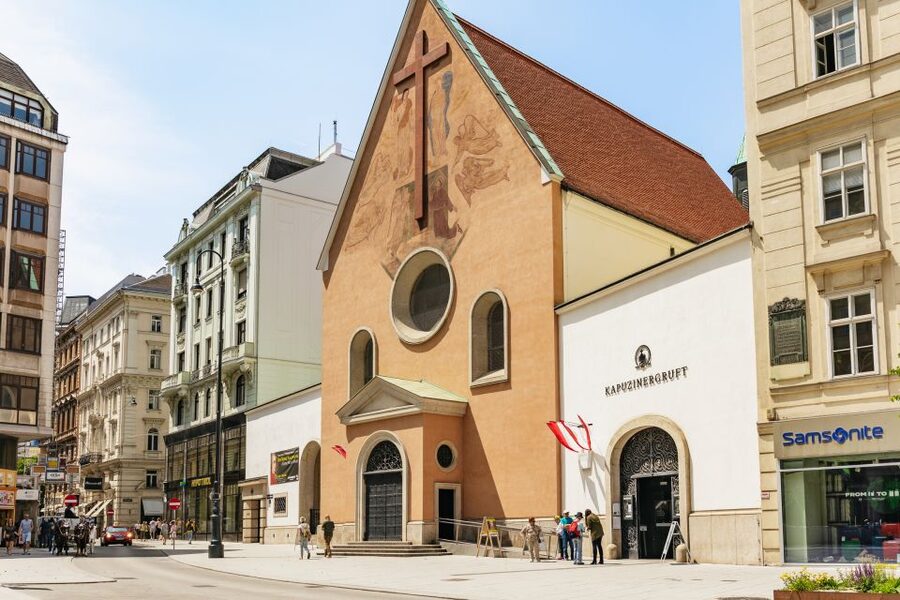
The Imperial Crypt sits below the Capuchin Church and monastery in Vienna’s city center. That setting shapes the whole visit. You do not enter through an enormous palace or grand museum gate. Instead, you pass into a religious building whose plain exterior gives little warning of the elaborate tombs below.
That contrast is part of the appeal. The Habsburgs ruled a large empire, yet their final resting place is tied to the Capuchin Order and its church. The crypt remains under the care of the Capuchin friars, giving the site a religious purpose as well as a historical one.
Once inside, the mood is quiet and solemn. This is not a theatrical attraction, and it should not be treated like one. The space is a working place of remembrance, with flowers and notes still left for some members of the family.
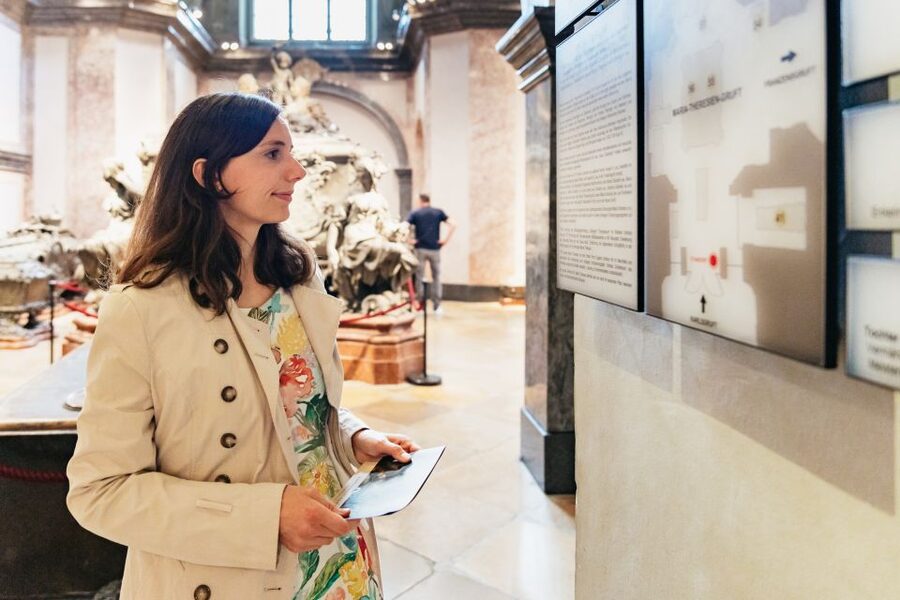
The crypt is wheelchair accessible, which makes this unusual historic site easier to include in a Vienna schedule. Pets, luggage, and large bags are not allowed, so plan to arrive with only what you need.
A few more options to weigh up in Vienna
- Vienna: Vivaldi’s Four Seasons Concert in Karlskirche
★ 4.7 · 14,951 reviews - Vienna: Spanish Riding School Training
★ 3.9 · 9,281 reviews - Vienna: Schönbrunn Palace & Gardens Skip-the-Line Tour
★ 4.7 · 7,739 reviews
Ten vaults and four centuries of expansion
The Imperial Crypt is not one single room filled with coffins. It is a system of ten vaults, formed through repeated extensions and changes over a period of more than four centuries.
That slow growth tells you something about the Habsburg dynasty. As new generations died, the crypt had to expand. The result is a series of spaces with different designs, materials, and moods rather than one uniform hall.
You move through rooms containing sarcophagi, urns, and funerary monuments. Some areas feel restrained and devotional. Others are crowded with elaborate decoration, heavy forms, and carefully worked surfaces. The variety keeps the visit from becoming a simple procession of similar tombs.
I find the scale useful for understanding the dynasty. The Habsburg story can feel too large when studied through palaces, wars, marriages, and maps. Here, the family becomes a succession of individual people. Each name represents a life within that long imperial story.
The crypt also gives attention to the designers and creators of its rooms. You are not only seeing who was buried here, but also how later generations shaped the place around them.
The tombs of Franz Joseph, Sisi, and Maria Theresia
The best-known burials give the visit its strongest focus. Emperor Franz Joseph rests here with his wife, Empress Elisabeth, widely known as Sisi, and their son Rudolph.
Sisi’s tomb is an important stop for anyone who has visited Vienna’s museums or palace sites connected with her life. Her public image often centers on beauty, travel, and tragedy. Seeing her burial place adds a quieter, more human note to that familiar story.
Franz Joseph represents a different side of the dynasty. His long reign is closely tied to Vienna’s imperial identity, and his tomb helps connect the crypt with the city’s broader Habsburg sights.
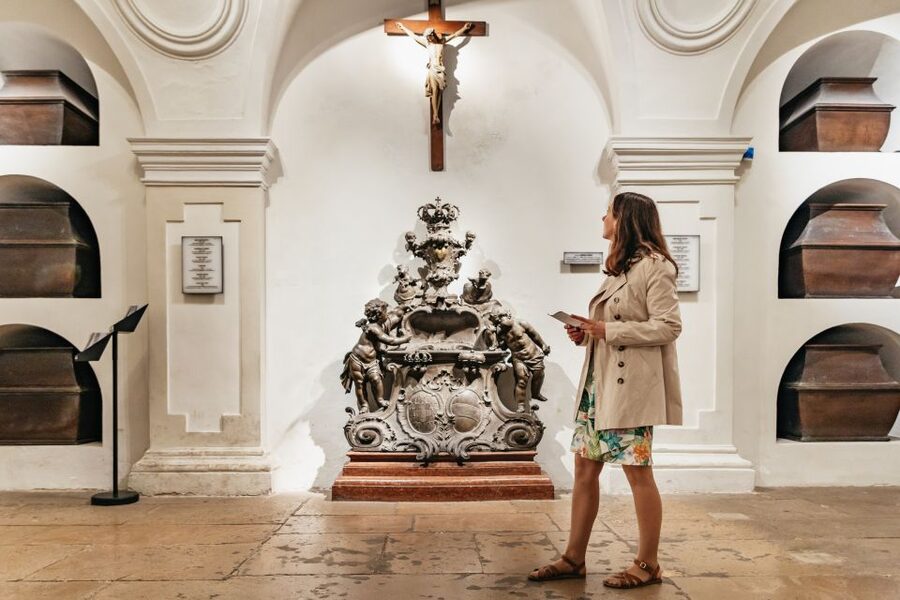
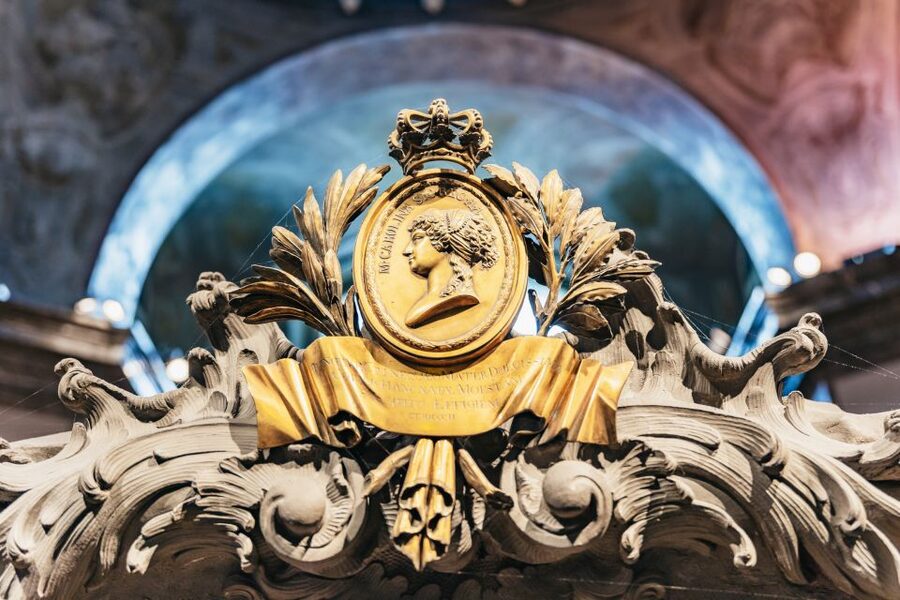
Maria Theresia is another major figure. Her tomb is among the most ornate in the crypt, and the workmanship is a major reason to visit even if you know little about her reign. You will see metal coffins made from tin, copper, and bronze, with silver and gold details used on some of the most elaborate pieces.
Rudolph’s burial place adds a reminder that this is a family crypt, not only a royal monument. The rooms include rulers, spouses, children, and other relatives. The mix of public power and private loss gives the site much of its emotional force.
The craftsmanship is the real visual reward
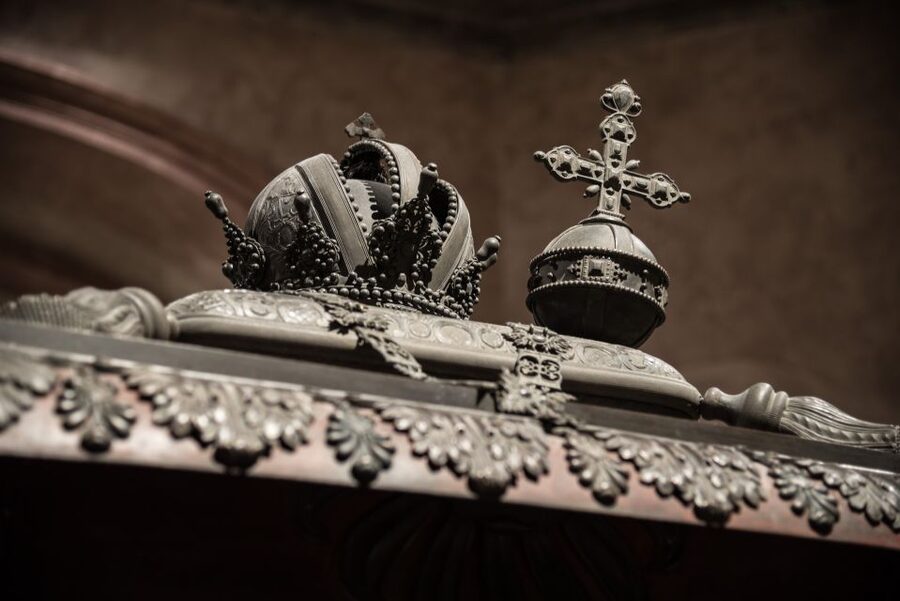
If you enjoy decorative arts, you may find the tombs more memorable than the written history. Their surfaces, shapes, and ornaments reward close inspection.
Some sarcophagi are restrained, while others are highly ornate. Look for the metalwork, raised decoration, symbolic details, and the way each piece occupies its room. The craftsmanship can be startling, especially when you remember that these are funerary objects rather than palace furniture.
The artistic quality also helps explain why people with limited knowledge of the Habsburgs still enjoy the crypt. You can appreciate the workmanship immediately, then add historical meaning as you read.
Still, the site does not offer a full explanation beside every person. Signs provide information, but the amount and language coverage may not satisfy everyone. English speakers have found the available material uneven, and some visitors would prefer a proper audio guide.
That is the main practical weakness of the experience. If you arrive expecting a guided museum tour, you may feel underprepared. If you treat it as a quiet visual visit and read what is available, the crypt works much better.
A completely different kind of day:
- Vienna: Light of Creation Votive Church Immersive Light Show
★ 4.8 · 6,779 reviews - Vienna Spanish Riding School Guided Tour
★ 4.7 · 6,765 reviews - Vienna: Classical Concert in the World-Famous Musikverein
★ 4.6 · 6,673 reviews - Vienna: Skip-the-Line Sisi Museum, Hofburg and Gardens Tour
★ 4.8 · 5,918 reviews
How long should you spend inside?
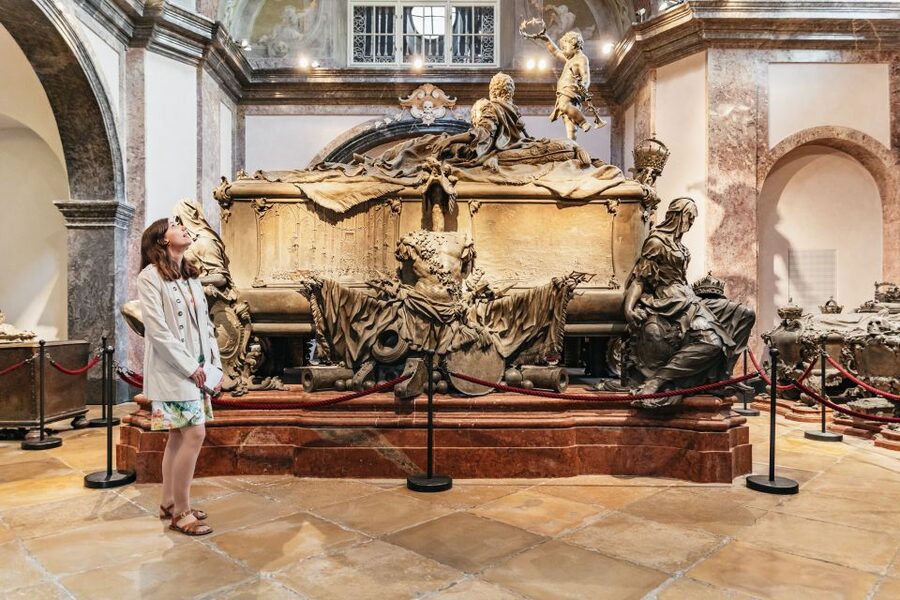
The official activity is valid for one day, but the actual visit is self-paced. You can make a short stop of around 30 minutes, or spend 1.5 hours reading names and studying the tomb designs.
I would allow at least 45 minutes if you have a real interest in the family. Thirty minutes is enough to see the principal areas, but it can feel rushed if you want to read the signs or compare the different vaults.
History enthusiasts may want several hours, especially if they arrive with background knowledge. The crypt rewards patience because the small decorative details are easy to miss when you simply walk from room to room.
Your timing also matters near closing. The published booking time is not necessarily the only moment you can enter during the day, according to an on-site ticket desk tip, but you should confirm this when you arrive. One useful example is a visitor booked for 5:30 p.m. who was able to enter at 4:30 p.m. and avoid a rushed final visit. Since the crypt closes at 6 p.m., do not count on arriving at the last minute.
The visit is usually quiet, but it can become busy. If the rooms are crowded, reading every sign will take longer and the solemn atmosphere may be harder to maintain.
Why a guided visit can be worth the extra €3
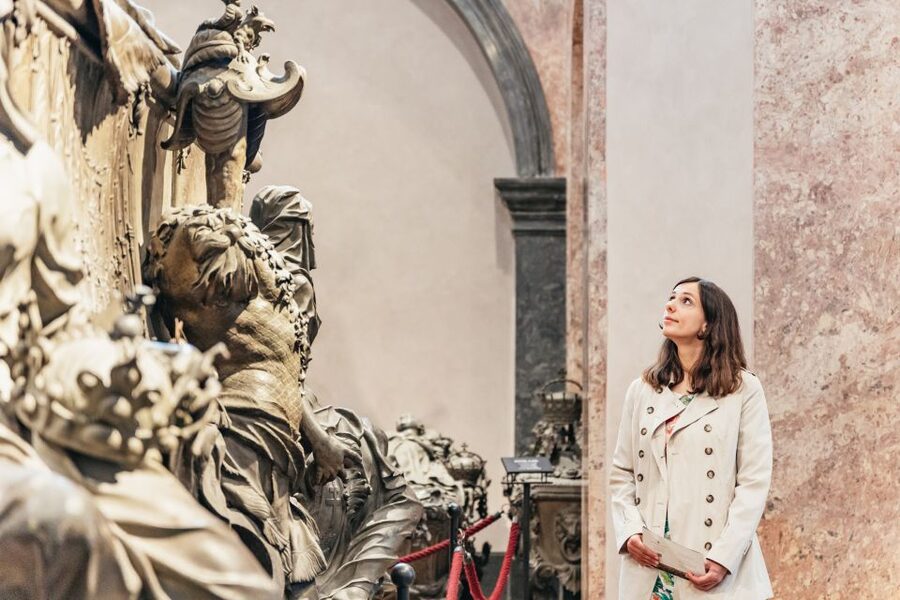
The basic ticket gives you entry, not a full tour. For a $17 admission price, that is reasonable, but the value depends on how much context you want.
An additional guided tour can be booked directly at the ticket office for €3. That is a small supplement compared with many guided Vienna attractions, and it may be the best choice if the Habsburg family tree is new to you.
A guide can explain why certain people matter, how the crypt expanded, and how the burial customs relate to the dynasty. Without that help, you may recognize famous names but miss the connections between them.
You should also know that the available guidance may not cover every language equally. English information has been described as limited, and a guided tour is especially useful if you do not read German.
If no tour is available when you visit, take your time with the printed material and signs. A little preparation before entering can make a large difference. Even a basic understanding of Maria Theresia, Franz Joseph, Sisi, and Rudolph will give the rooms more meaning.
A surprising detail about Habsburg burial customs
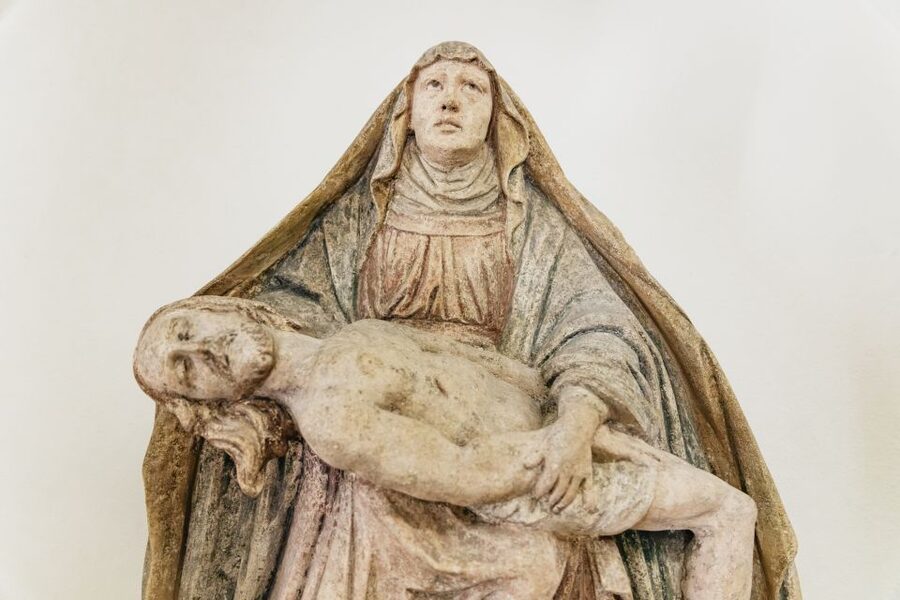
The crypt is only one part of the Habsburg burial tradition. The hearts of some members of the monarchy are not kept with the bodies in the crypt, but inside the monastery.
That detail makes the visit more than a collection of impressive coffins. It points to the unusual customs and separate burial practices associated with the dynasty. You do not need to turn this into a full research project, but knowing it beforehand adds an extra layer to what you see.
The Imperial Crypt also continues to serve as the final resting place of Habsburg family members today. That link between past and present is unusual. You are not visiting a sealed monument that belongs only to a finished era.
At the same time, the crypt is not macabre in the usual sense. Its atmosphere is peaceful and respectful. The ornate tombs may look dramatic, but the quiet setting and religious care keep the experience reflective rather than sensational.
Rules that protect the atmosphere
Video recording is not allowed, and photography is prohibited. You may notice people ignoring the rule, but you should not copy them. The ban is intended to respect the dead, and taking selfies beside the tombs is especially out of place.
Sleeveless shirts are also not allowed, so dress with the church setting in mind. Pets and large bags cannot enter. Lockers have been available for small belongings with a refundable €1 or €2 coin deposit, and free toilets are also available.
These rules are simple, but they matter here more than at a typical museum. The crypt is both a historic attraction and a burial place. Your behavior affects the experience for everyone in the narrow rooms.
Is the $17 ticket good value?
At $17 per person, the Imperial Crypt is not the cheapest short stop in Vienna, but it is fairly priced for a distinctive central sight. You are paying for access to a place that cannot be replaced by a general palace museum display.
The value is strongest for:
- People interested in the Habsburg dynasty
- Visitors who enjoy sculpture, metalwork, and funerary art
- Anyone looking for a quiet break from Vienna’s grand palaces
- History enthusiasts who are happy to read and explore independently
- Visitors already planning a route through central Vienna
The value is weaker if you want a polished, fully narrated tour. Entry alone provides less historical explanation than some people need, and the visit can feel small if you are only looking to fill time.
There is also a possible combo ticket that pairs the crypt with an A Little Night Music concert afterward. That could make sense if the concert fits your evening plans, but judge the package by the full cost and schedule. The concert is an add-on option, not part of the standard entrance ticket.
Who will enjoy the Imperial Crypt most?
I would recommend this place to you if names such as Maria Theresia, Franz Joseph, and Sisi already interest you. It is also a strong choice if you like seeing the less polished side of imperial history, where power ends in a quiet family burial place.
You do not need to be an expert. The tombs themselves are visually striking, and the crypt is compact enough to visit without giving up half a day. Still, you will get more from it if you read a little about the Habsburgs before arriving.
Families with young children may find the subject matter difficult to explain, especially because the visit centers on burial and death. The crypt is peaceful, but it is not designed as a playful attraction.
It is also not the best pick for someone who dislikes ornate decoration or has little interest in history. One visitor described the site as small and more suited to people who already care about the Capuchins and Habsburgs. That is fair. The crypt is focused rather than broad.
Should you book the Imperial Crypt?
Book it if you want a short, unusual look at Vienna’s imperial past, especially if ornate sarcophagi and royal history appeal to you. The craftsmanship is excellent, the central location is convenient, and the chance to see the burial places of Franz Joseph, Sisi, Maria Theresia, and Rudolph is genuinely memorable.
For the best experience, add the €3 guided option if you can arrange it, avoid the final minutes before closing, and enter prepared for a quiet site with limited explanation. Respect the no-photography rule and leave your large bags behind.
Skip it if you want a large museum with extensive displays or a guaranteed English audio tour. For the right visitor, though, this is one of Vienna’s most distinctive stops: compact, solemn, beautifully made, and full of four centuries of Habsburg family history.
FAQ
Where is the Imperial Crypt?
The Imperial Crypt is beneath the Capuchin Church and monastery in central Vienna, Austria.
Who is buried in the Imperial Crypt?
About 150 Habsburg personalities are buried there, including Emperor Franz Joseph, Empress Elisabeth, their son Rudolph, and Maria Theresia.
How many vaults are inside the crypt?
The Imperial Crypt consists of ten vaults created through extensions and modifications over more than 400 years.
How much does admission cost?
The entrance ticket costs $17 per person.
How long is the visit?
The ticket is valid for one day, and you can explore at your own pace. Some visits take about 30 minutes, while others last around 1.5 hours or longer.
Is the Imperial Crypt wheelchair accessible?
Yes, the activity information states that the Imperial Crypt is wheelchair accessible.
Can I take photographs or bring a large bag?
Photography and video recording are not allowed. Pets, luggage, and large bags are also prohibited. Sleeveless shirts are not allowed, so dress appropriately for the church setting.
Just added in Vienna
- Vienna: Austrian Wine Tasting Experience★ 4.2 · 2 reviews
- World War II History Vienna Old Town Private Walking Tour★ 4.8 · 9 reviews
- Vienna_ Meet Beethoven Life Private Guided Walking Tour★ 5.0 · 1 review
- Vienna: Wine Tasting Tour★ 4.8 · 61 reviews
- Vienna: Wine Tasting E-Bike Tour★ 4.9 · 46 reviews
- Vienna: Wine Tasting at Schönbrunn Palace★ 4.3 · 71 reviews
- Vienna: Winery and Wine Tasting Tour with a Wine Expert★ 5.0 · 5 reviews
- Vienna: Concert by the Vienna Baroque Orchestra★ 4.6 · 56 reviews
Tickets, compared.
Classic Ensemble Vienna in St. Peter’s Church Ticket
Read our review →
Vienna Kunsthistorisches Museum Day Admission Ticket
Read our review →
Tickets for Mozarthaus Vienna with Audio Guide
Read our review →
Skip-the-Line Entrance Ticket to the Danube Tower
Read our review →