
Reviewed · WALKING TOURS
Vienna Highlight Tour – yue walk
Vienna reveals itself quickly on foot. This two-hour walk links the Opera, Hofburg, grand squares, cafés, and St. Stephen’s Cathedral while Yue Mayr adds stories, humor, and useful advice. I especially like the compact route and the small maximum of six people, which should make questions and photos easier. The main catch is pace: at $106.20 per person, you pay for a guided orientation rather than museum entry, and several stops receive only five minutes.
The tour earns a 4.9 rating from 58 ratings, with 98 percent of customers recommending it. I like that Yue connects buildings to people, from the Habsburg court to Sisi and Maria Theresa, instead of treating Vienna as a string of pretty façades. Still, one customer reported difficulty understanding the information and questioned some facts, so anyone booking in a last-minute language change should confirm that English is suitable.
In This Review
- Key details before you book
- Starting beneath the Vienna State Opera
- War, fascism, and difficult memories
- Lobkowitzplatz and the court’s cultural world
- Josefsplatz, Augustine Church, and the imperial court
- From Stallburg to the Court Music Chapel
- The Hofburg reveals Vienna’s imperial center
- Heldenplatz and Maria Theresien Square
- Sisi, Michaelerplatz, and the edge of the old court
- Kohlmarkt, Demel, and the grand shopping streets
- Graben and St. Stephen’s Cathedral
- What Yue adds to the walk
- Is $106.20 a fair price?
- Who should book the Vienna Highlight Tour?
- Should you book it?
- FAQ
- How long is the Vienna Highlight Tour?
- What time does the tour start?
- Where does the tour begin?
- Where does the tour end?
- What language is offered?
- How many people can join?
- Is a guide included?
- Are admission tickets included?
- Can I cancel for a full refund?
- Is the tour available in poor weather?
Key details before you book
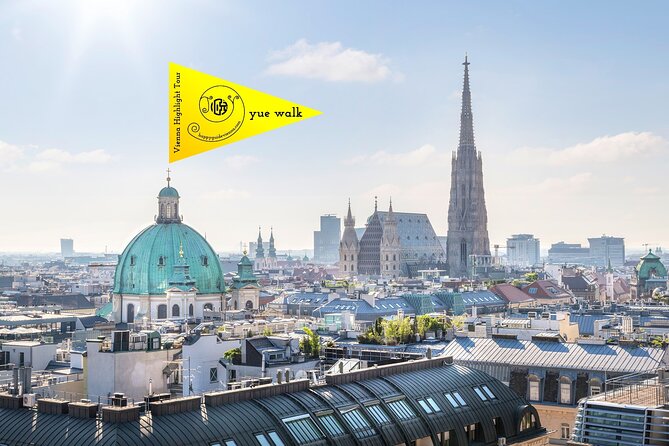
- Fourteen central Vienna sights in about two hours: The route covers the Opera, Hofburg, Heldenplatz, Maria Theresien Square, Graben, and St. Stephen’s Cathedral.
- A maximum of six people: This is far more manageable than a large group around the Hofburg, especially when you want to ask questions.
- Yue brings warmth and humor: Her strongest qualities are her energy, storytelling, photo help, and practical suggestions for food, shopping, and later sightseeing.
- The tour is mainly an exterior orientation: Augustine Church is listed for an interior visit, but admission to several museums and buildings is not included.
- An excellent first-day walk: The route helps you understand how Vienna’s historical center fits together before you choose which interiors deserve more time.
- Start and finish near major transit points: You meet at the State Opera and finish near Stephansplatz U-Bahn station.
Starting beneath the Vienna State Opera
The meeting point is Herbert-von-Karajan-Platz, beside the Vienna State Opera, at 10 a.m. This is a sensible beginning. The Opera gives you an immediate lesson in Vienna’s imperial taste, public culture, and musical identity.
The building dates from 1869 and uses the Neo-Renaissance style. You’ll also hear about Palais Todesco and the colorful story that Johann Strauss stole his first wife there. Nearby, the Sacher Hotel brings the conversation from aristocratic gossip to Vienna’s famous Sacher Torte.
The stop lasts about five minutes, and admission is not included. That means you should not expect a performance or a long interior visit. Think of this as a visual and historical starting point, not an Opera tour.
I like this opening because it quickly gives you several threads to follow: music, court society, architecture, and café culture. Yue’s style also seems well suited to a place where a dry list of dates would miss the fun.
More Walking Tours in Vienna
- Vienna: Guided Walking Tour of City Center Highlights
★ 4.7 · 4,989 reviews - Vienna: Vienna Central Cemetery Guided Walking Tour
★ 4.8 · 3,307 reviews - Vienna: Guided Walking Tour of City Highlights & Hidden Gems
★ 4.9 · 2,180 reviews
War, fascism, and difficult memories
The next stop is the Memorial Against War and Fascism. Its elements include a Jewish statue, the Gate of Hell, and the Independence Declaration Stone.
This is one of the most serious moments on the walk. Vienna is not only palaces and coffeehouses, and the memorial puts war, persecution, and Austria’s political past into the route. The Jewish statue and the monument’s stark language make this a useful pause between the polished Opera district and the imperial center.
You’ll spend about five minutes here, with no admission charge. That is enough to introduce the memorial, though not enough for a long discussion of every symbol. If you want more time with difficult historical subjects, note the location and return later.
Lobkowitzplatz and the court’s cultural world
At Lobkowitzplatz, the route gathers several architectural clues close together. You’ll see the Albertina Palace and Museum, the tower of Augustine Church, the Baroque Lobkowitz Palace, and an Art Deco building associated with Otto Wagner.
This is a good example of why a guide helps. Without context, these façades can blur into one grand Viennese view. With Yue’s explanations, you can compare Baroque court architecture with the later Art Deco style and begin to see how the city changed over time.
The stop is listed at five minutes and does not include admission. That keeps the walk moving, but it also means the Albertina is only a landmark here. If art is your priority, plan a separate visit rather than expecting this tour to cover its collections.
Josefsplatz, Augustine Church, and the imperial court
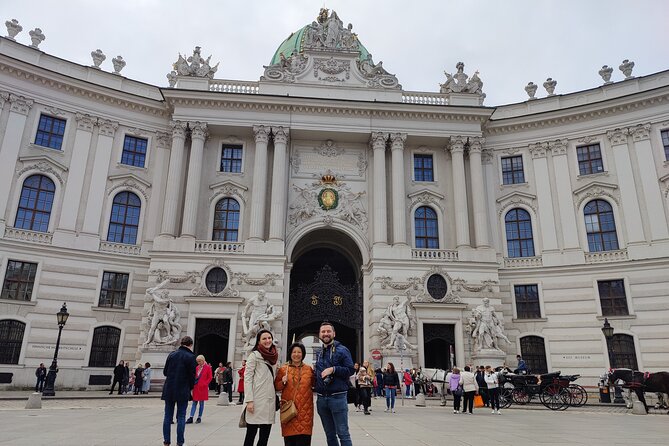
Josefsplatz receives about fifteen minutes, the longest stop on the first half of the route. That extra time makes sense. The square brings together Augustine Church, the statue of Emperor Joseph II, the Court Library, Pallavicini Palace, and the Spanish Riding School.
Augustine Church is listed for an interior visit, while admission is free. This is one of the few places where you may go beyond a quick exterior explanation. The square also helps explain how religion, scholarship, ceremony, and court life operated side by side in the Habsburg center.
The Spanish Riding School is nearby, but this walking tour does not include a performance. You should also not count on seeing the Lipizzaner horses up close. The next stop, Stallburg, offers a brief look connected with the famous horses, but admission is not included.
That distinction matters. The tour introduces the riding school and Lipizzaners as part of Vienna’s identity. It is not a horse show or stable visit.
A completely different kind of day:
- Vienna: Vivaldi’s Four Seasons Concert in Karlskirche
★ 4.7 · 14,951 reviews - Vienna: Spanish Riding School Training
★ 3.9 · 9,281 reviews - Vienna: Schönbrunn Palace & Gardens Skip-the-Line Tour
★ 4.7 · 7,739 reviews - Vienna: Light of Creation Votive Church Immersive Light Show
★ 4.8 · 6,779 reviews
From Stallburg to the Court Music Chapel
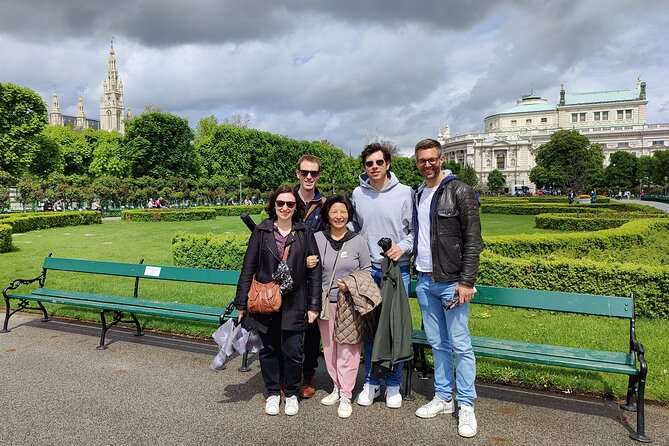
Stallburg receives roughly five minutes. The focus is Lipizzaner horses, a subject that will appeal to anyone curious about Vienna’s ceremonial traditions. Since the stop is short and admission is excluded, treat it as a glimpse and a useful marker for a future visit.
The Wiener Hofmusikkapelle follows, with the Imperial Treasury Museum, Court Music Chapel, and Renaissance Gate in the surrounding area. These sights point toward the Habsburg court’s religious and ceremonial life.
Again, the tour does not include admission to the museum or chapel. That is not a flaw if you want an efficient first look, but it affects the price calculation. At $106.20, the value comes from Yue’s guidance and the number of sights covered, not from bundled entry tickets.
The Hofburg reveals Vienna’s imperial center
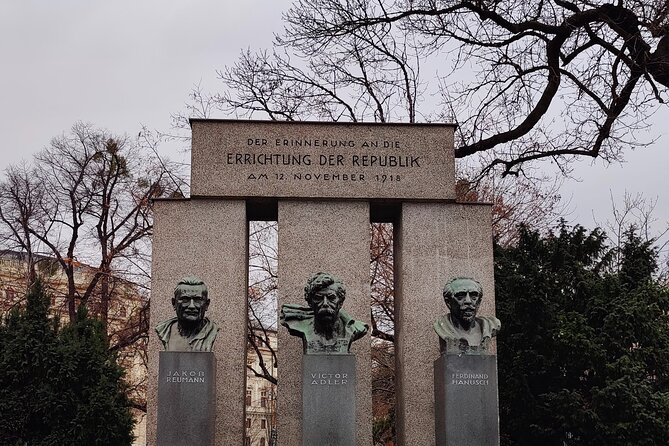
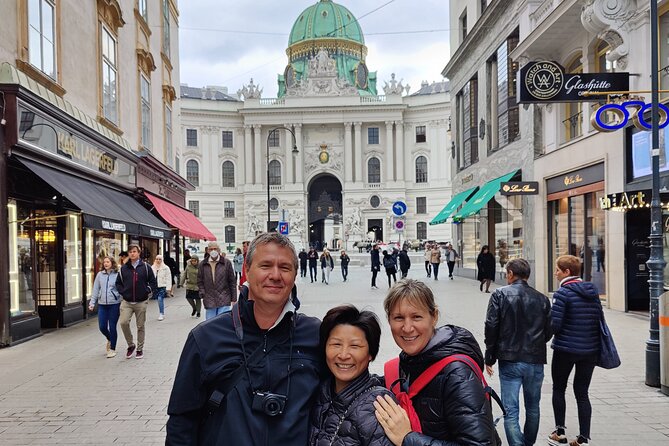
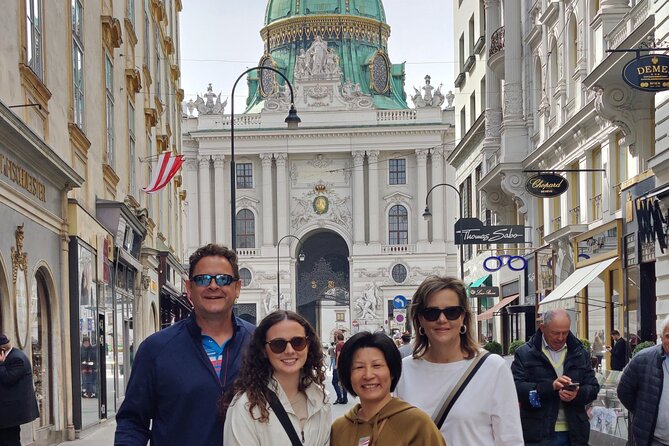
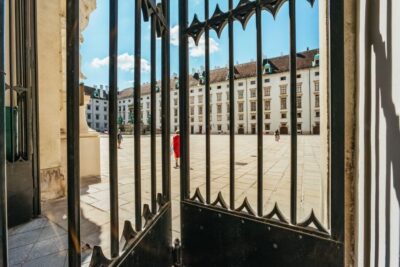
The Hofburg is the core of the tour. In the Inner Court, you’ll see the statue of Franz II and I, the Amalien Wing, the Leopoldinischer Wing, and the Reichskanzlei Wing.
The names may sound like a lot to absorb in ten minutes. The practical value is that Yue can tell you what each section represents and help you read the palace as a working center of power, not just a collection of formal buildings.
The Hofburg is free to view from the route, but the tour does not include entry to its paid museums. That includes places connected with the Imperial Treasury and Sisi Museum. If you want palace interiors, allow extra time after the walk or on another day.
The best part of a short stop here is orientation. Once you understand the Hofburg’s position, several later sights make more sense, including Heldenplatz, Michaelerplatz, the National Library, and the Spanish Riding School.
Heldenplatz and Maria Theresien Square
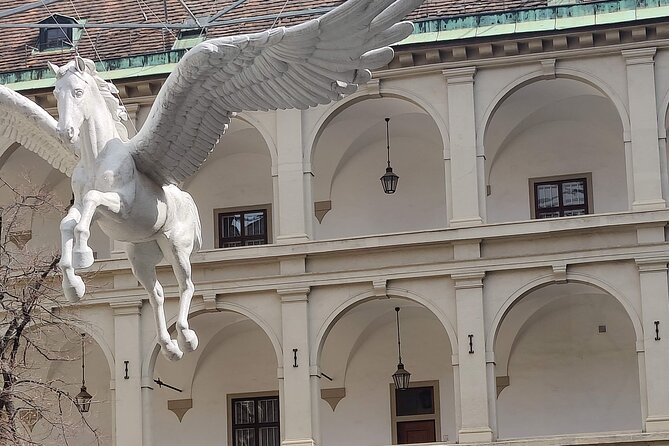
Heldenplatz gets about ten minutes. You’ll see the statues of Karl and Prince Eugen, along with views toward the National Library, the OSCE, Burgtor, City Hall, and Parliament.
This is one of Vienna’s grandest open spaces, and the large scale can be hard to grasp from photographs. A guide helps point out what belongs to the imperial complex and what belongs to the later civic city. You’ll also hear how the surrounding buildings connect to Austria’s political story.
The route then crosses to Maria Theresien Square, another ten-minute stop. The centerpiece is the imposing statue of Maria Theresa, described here as the most powerful female Habsburg ruler. The square is framed by the museums of art and natural history.
This is a strong pause for understanding Maria Theresa’s influence and the way rulers use architecture to project power. The museums themselves are not part of the tour, so use this stop to decide if you want to return for their collections.
Sisi, Michaelerplatz, and the edge of the old court
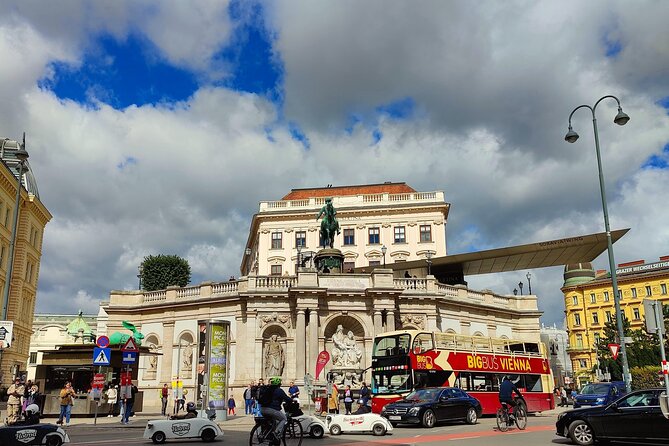
The Sisi Museum receives about ten minutes, with admission not included. Sisi, or Empress Elisabeth, became one of Austria’s best-known royal figures after her death. Yue’s focus is on Sisi’s personality, her life, and the way her character shaped her fate.
That approach should suit you if you prefer people and stories to a strict parade of dates. It also gives useful context before you visit the museum on your own. Since the museum is paid entry, ten minutes here means an introduction, not an exhibition visit.
At Michaelerplatz, the route takes in Michaelerkirche, the Michaeler Gate, the Loos House, and archaeological excavations. The square is especially useful for showing Vienna’s layers. Medieval remains, imperial entrances, and modern architecture share the same view.
The Loos House is a reminder that Vienna did not stop developing when the Habsburg court faded. The excavations add another time period beneath the pavement. You get about five minutes here, so listen for the main connections and save detailed architectural questions for a longer return visit.
Kohlmarkt, Demel, and the grand shopping streets
Kohlmarkt brings the tour into Vienna’s polished shopping district. The route includes Café Demel and the luxury streets lined with splendid buildings.
Demel is an important stop for anyone interested in Viennese café culture and sweets. You may want to return later for a closer look, since the walk does not promise a tasting or a reserved table. The tour simply places the café within the city’s courtly and commercial story.
This section is also practical. You’ll learn where the elegant shopping streets begin, and you can use the route as a guide for a later stroll. Yue’s personal recommendations for food, shopping, and other sights were repeatedly praised, which adds value after the formal tour ends.
Graben and St. Stephen’s Cathedral
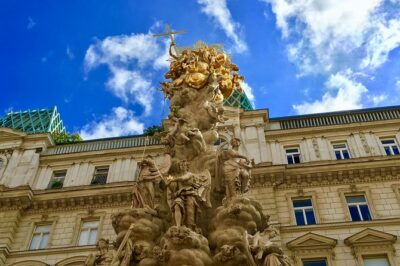
The final stretch reaches the Plague Column, or Pestsäule, on Graben. You’ll also see Grabenhof and Ankerhaus. The Plague Column is a major Baroque monument, and the surrounding buildings show how Vienna turned a central thoroughfare into a stage for both devotion and commerce.
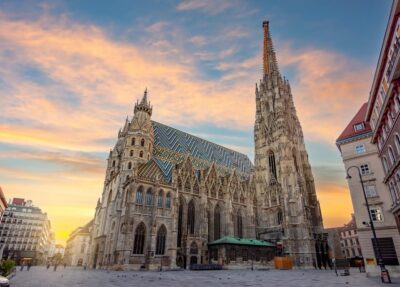
The last stop is St. Stephen’s Cathedral, a landmark built and altered from the twelfth through the sixteenth centuries. Its tallest tower dominates the city center. The listed stop lasts about five minutes and is free from the outside.
Five minutes is enough to identify the cathedral and explain its importance, but not enough to study its interior, chapels, roof, or tower views. If St. Stephen’s is high on your list, plan a separate visit. The tour ends near the Stephansplatz U-Bahn station, close to the cathedral and the Wien Museum Virgilkapelle.
What Yue adds to the walk
The strongest thread in the customer feedback is Yue’s personality. She is described as funny, energetic, punctual, friendly, and willing to answer questions. Several people valued her ability to connect individual buildings to the larger story of Vienna and Europe.
That matters on a short city walk. You need a guide who can choose what to leave out, keep the route moving, and explain why a statue or palace matters. Yue also takes photos for the group and points out useful angles, a small service that can make the experience feel more personal.
Her food, shopping, and sightseeing suggestions are another plus. If you book this for your first day, you can use those ideas to shape the rest of your stay. One person enjoyed the walk enough to book Yue’s Schönbrunn Palace tour afterward, particularly praising the detailed explanations of the rooms, residents, and relationships.
The tone may not suit everyone. One negative account described unclear language and disputed facts after a last-minute request in German, while the booking is offered in English. The practical lesson is simple: choose the stated language and avoid assuming that a rushed language switch will work well.
Is $106.20 a fair price?
The cost is not cheap for a two-hour walk. You are paying about $53 per hour, and entry to several important museums and sites is not included.
The price makes more sense if you value a small group and a guide who provides context, humor, photos, and follow-up advice. A maximum of six people is a real advantage over a large group, especially in narrow streets or crowded squares. Some bookings may also feel close to a private tour, though the stated format is a small group rather than a guaranteed private booking.
I would not choose this tour if your main goal is included access to the Sisi Museum, Imperial Treasury, Albertina, or Spanish Riding School. In that case, compare the total cost of separate tickets and allow enough time for the interiors.
I would choose it if you have only a short stay, want to get oriented quickly, or prefer a human guide to an audio app. The route covers a large number of major sights in two hours, but it does so through short explanations and exterior views.
Who should book the Vienna Highlight Tour?
This walk suits a first visit, a short stay, and anyone who wants the city center explained in plain terms. Families may appreciate Yue’s humor and the fact that she has been praised for working well with children.
It is also a good choice for anyone who enjoys stories about rulers, musicians, palaces, and court life. You will hear about Johann Strauss, Maria Theresa, Sisi, the Habsburg court, the Lipizzaners, and the city’s religious and political landmarks.
You should look elsewhere if you need a slow architectural study, extensive museum time, or a German-language tour arranged at the last minute. The pace is brisk, and the tour’s strength is breadth.
Free cancellation is available when you cancel at least 24 hours before the 10 a.m. start. Changes made within 24 hours are not accepted, and poor weather can lead to a new date or a full refund. Service animals are allowed, public transportation is nearby, and most people can participate.
Should you book it?
Book this tour if you want a lively first look at central Vienna, especially with limited time. Yue’s humor, historical connections, photo help, and local suggestions are the main reasons to choose it, while the six-person limit keeps the experience personal.
Skip it if you want museum admissions, long interior visits, or a slow pace. For most first-time visitors who need to get their bearings fast, this is a useful and entertaining introduction, as long as you understand that the grand buildings are mostly viewed from outside.
FAQ
How long is the Vienna Highlight Tour?
The tour lasts approximately two hours.
What time does the tour start?
The stated start time is 10 a.m.
Where does the tour begin?
It begins at Herbert-von-Karajan-Platz beside the Vienna State Opera, 1010 Vienna.
Where does the tour end?
It ends near the Wien Museum Virgilkapelle and Stephansplatz U-Bahn station, 1010 Vienna.
What language is offered?
The tour is offered in English.
How many people can join?
The maximum group size is six people.
Is a guide included?
Yes. A licensed tour guide is included.
Are admission tickets included?
No. Admission is not included for several stops, including the Vienna State Opera, Stallburg, Wiener Hofmusikkapelle area, and Sisi Museum. The itinerary lists free admission for some exterior or church stops.
Can I cancel for a full refund?
Yes, if you cancel at least 24 hours before the experience start time. Cancellations made less than 24 hours in advance are not refunded.
Is the tour available in poor weather?
The experience requires good weather. If it is canceled because of poor weather, you will be offered another date or a full refund.
Just added in Vienna
- Vienna: Austrian Wine Tasting Experience★ 4.2 · 2 reviews
- World War II History Vienna Old Town Private Walking Tour★ 4.8 · 9 reviews
- Vienna_ Meet Beethoven Life Private Guided Walking Tour★ 5.0 · 1 review
- Vienna: Wine Tasting Tour★ 4.8 · 61 reviews
- Vienna: Wine Tasting E-Bike Tour★ 4.9 · 46 reviews
- Vienna: Wine Tasting at Schönbrunn Palace★ 4.3 · 71 reviews
- Vienna: Winery and Wine Tasting Tour with a Wine Expert★ 5.0 · 5 reviews
- Vienna: Concert by the Vienna Baroque Orchestra★ 4.6 · 56 reviews
Walking Tours, compared.
Guided Walking Tour of City Center Highlights
Read our review →
Guided Walking Tour of City Highlights & Hidden Gems
Read our review →
Vienna Historic Center Small Group Walking Tour
Read our review →
Browse the lists this tour appears in