
Reviewed · WALKING TOURS
Vienna Art Nouveau Walking Tour
Vienna’s subway has a royal story. This small-group Art Nouveau tour links Otto Wagner’s metro stations with landmark buildings, giving you a clear picture of Vienna around 1900. I especially like the visit to the unusual imperial station and the chance to see how art, politics, and public transport met in one city project. The main consideration is price: at $180.04 per person, it makes the most sense for serious art and architecture fans.
The route is mostly on foot, with a short metro ride, and the maximum group size is eight. Guides such as Jan, Stefan, Suzanne, Ilse, Angelina, and Wolfgang Augsten have been praised for strong subject knowledge, warmth, and flexibility. In cold or rainy weather, confirm how the tour will operate, since one guide offered a car transfer to keep the group dry.
In This Review
- Key things to know before booking
- Why Vienna’s Art Nouveau deserves a focused tour
- Starting at the Otto Wagner Pavilion Karlsplatz
- Stadtpark station and the Little Vienna River
- The Secession Building and the argument for modern art
- Otto Wagner’s apartment houses along the route
- Kettenbrücke station and the short U4 ride
- The imperial station near Schönbrunn
- What the guides add to the experience
- Price, timing, and practical value
- Who should book the Vienna Art Nouveau Walking Tour?
- Should you book it?
- FAQ
- How long does the Vienna Art Nouveau Walking Tour last?
- Where does the tour begin?
- Where does the tour end?
- Is the Otto Wagner Pavilion admission included?
- Can I see Klimt’s Beethoven Frieze?
- How many people can join the tour?
- Is cancellation free?
Key things to know before booking
- Otto Wagner’s metro design is the main event: You see original stations still tied to Vienna’s daily transport system.
- The Secession Building adds Klimt: Tuesday through Sunday, you can pay extra to see the famous Beethoven Frieze.
- The imperial station gives the tour a dramatic finish: Built for the emperor near Schönbrunn, it shows Art Nouveau dressed for court life.
- The group is capped at eight people: That allows for questions and route changes without the feel of a large tour.
- Entry fees are extra: Plan for €5 at the Otto Wagner Pavilion when open, plus €9.50 for the Secession House and Beethoven Frieze for adults.
- It works best for art and history enthusiasts: The guide’s explanation is as important as the buildings themselves.
Why Vienna’s Art Nouveau deserves a focused tour
Vienna’s Art Nouveau, often called Jugendstil, is easy to admire and easy to misunderstand. You may notice curved lines, decorative metalwork, patterned tiles, and gold details, but the style was more than pretty ornament. It was part of a wider argument about how modern Vienna should look and function.
Otto Wagner is central to that story. When Vienna expanded its city railway, he designed stations and related structures that treated public transport as serious civic architecture. The result was practical infrastructure with unusual care in its materials, proportions, and decoration.
I like this tour because it does not confine Art Nouveau to museums. You see stations, apartment buildings, an exhibition hall, and a building created for the emperor. That variety helps you understand the movement as part of city life rather than as a collection of isolated masterpieces.
The route also gives you useful orientation. You move through central Vienna, walk beside Stadtpark, visit the Secession Building, and use the U4 line. One guide helped a group understand Vienna’s public transport, which is a useful bonus early in a stay.
More Walking Tours in Vienna
- Vienna: Guided Walking Tour of City Center Highlights
★ 4.7 · 4,989 reviews - Vienna: Vienna Central Cemetery Guided Walking Tour
★ 4.8 · 3,307 reviews - Vienna: Guided Walking Tour of City Highlights & Hidden Gems
★ 4.9 · 2,180 reviews
Starting at the Otto Wagner Pavilion Karlsplatz
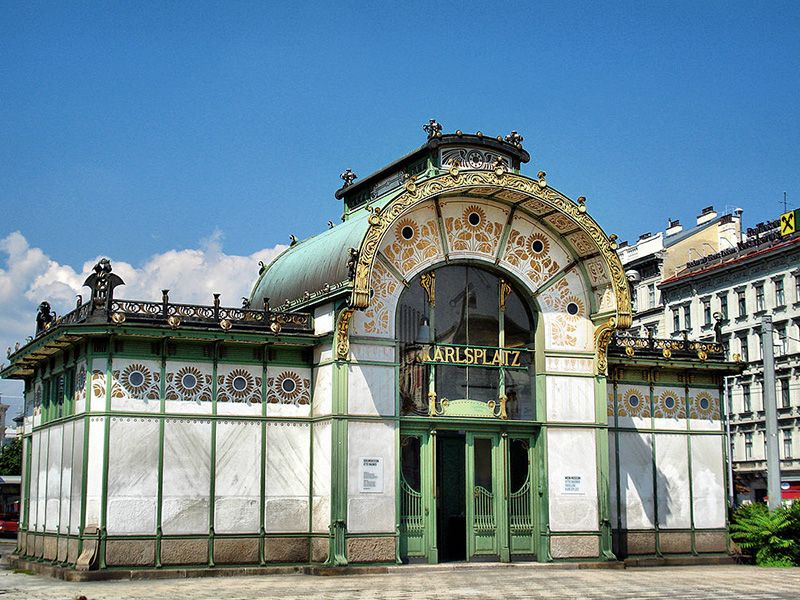
The tour begins at Operngasse 7 in central Vienna, near public transportation. From there, the opening stop is the Otto Wagner Pavilion at Karlsplatz, a small but highly distinctive structure with pale metal panels, decorative framing, and a formal shape that makes an ordinary transport building feel special.
The pavilion contains the Wagner Museum when it is open. This is where the guide lays out the basic ideas behind Wagner’s work and the city railway project. The setting is a good introduction because you can look closely at one station before moving through the larger story.
Admission is not always included. From April through October, when the museum is open, general admission is €5. Seniors, students, Vienna Card holders, and people with disabilities pay €4. Bring this extra cost into your budget, especially since the headline tour price does not cover it.
This opening stop is compact, so do not expect a long museum visit. Its value comes from the guide’s explanation and from learning what to notice later: the balance between function and decoration, the use of materials, and the way Wagner made transport architecture fit the identity of Vienna.
Stadtpark station and the Little Vienna River
From Karlsplatz, the group walks toward Stadtpark station. This station is described as the best-preserved original metro station still in use, which gives the stop a special advantage. You are not looking at a dead monument behind glass. You are seeing a historic design that remains part of the city’s transport network.
The adjoining artificial riverbed adds an unusual layer to the story. The Vienna River had to be redirected when the city railway was built, so planners had to connect the new transport route with the altered waterway. The station therefore becomes an example of urban problem-solving, not just architectural decoration.
This part of the walk is especially useful if you enjoy the practical side of history. You learn how a new railway changed the city and how engineers and architects dealt with existing streets and waterways. I find those details more memorable than a simple list of dates and building names.
The walk between stops means you should wear comfortable shoes. The tour lasts about two and a half hours, though the description also calls it a three-hour walk, so allow a little flexibility. In wet or cold weather, the outdoor portions may feel demanding. The small group can make it easier to adjust the pace, but weather remains a real factor.
The Secession Building and the argument for modern art
The next major stop is the Secession Building, Vienna’s best-known Jugendstil landmark. Its white exterior, bold geometric form, and openwork dome of gilded leaves make it unlike the imperial buildings nearby. The building was created by artists who wanted a new direction, and its design makes that break visible from the street.
Here the guide explains the philosophy behind Jugendstil and the symbols and materials favored by its artists. This is where the tour moves beyond Otto Wagner’s transport work and places architecture within Vienna’s artistic upheaval around 1900.
The Secession Building can also add a major indoor art experience. From Tuesday through Sunday, you can pay €9.50 as an adult or €6 as a student or senior to see Gustav Klimt’s Beethoven Frieze. Your guide helps with the payment.
I consider the Beethoven Frieze one of the strongest reasons to choose this tour on a Tuesday through Sunday. It gives you a direct connection between the building’s daring exterior and the period’s large-scale decorative art. The extra entrance fee is not trivial, but art lovers will likely find it worthwhile.
On Mondays, this part of the indoor visit is not available according to the provided schedule. If Klimt is your priority, check the day before booking. The tour still has value without the frieze, but the Secession visit will be more about the building and its ideas.
A completely different kind of day:
- Vienna: Vivaldi’s Four Seasons Concert in Karlskirche
★ 4.7 · 14,951 reviews - Vienna: Spanish Riding School Training
★ 3.9 · 9,281 reviews - Vienna: Schönbrunn Palace & Gardens Skip-the-Line Tour
★ 4.7 · 7,739 reviews - Vienna: Light of Creation Votive Church Immersive Light Show
★ 4.8 · 6,779 reviews
Otto Wagner’s apartment houses along the route
On the way to Kettenbrücke station, the group examines two attractive apartment buildings by Otto Wagner. These buildings are important because they show how Art Nouveau worked in everyday urban housing, not only in monuments or public projects.
The guide points out the materials, patterns, and symbols that give the facades their character. You also begin to see how Wagner’s style could be adapted to private buildings. This makes a useful contrast with the Secession Building, where the artistic message is more direct and theatrical.
I like this portion because it trains your eye for the rest of Vienna. After the tour, you may notice decorative details on apartment blocks that you would have walked past earlier. One participant specifically found that the tour shaped how they recognized Art Nouveau in other cities, including Budapest.
The apartment houses also make the route feel grounded. Vienna around 1900 was not only about grand palaces and museums. It was a growing city where new ideas appeared in homes, transit stations, and public spaces.
Kettenbrücke station and the short U4 ride
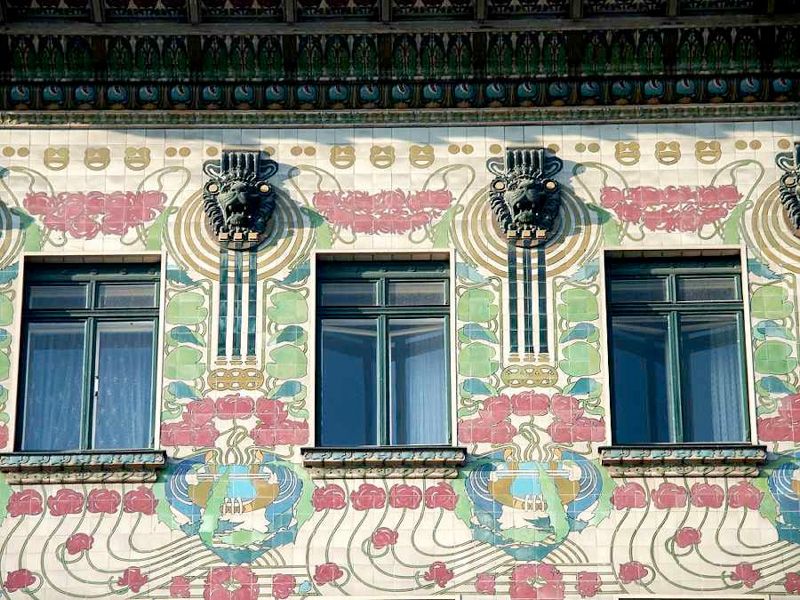
Kettenbrücke station is the last metro stop visited before the group boards the train. It provides another chance to compare Wagner’s design choices and to see how the same broad style changes from one location to another.
The metro ride is brief, but it matters. You are not simply walking from one display to the next. You use the transport line that connects the stations and experience a small part of the system the tour is discussing. A guide named Suzanne used the U4 to reduce walking and give the group a warm break on a cold day.
You should check your own public transport arrangements before setting out. The tour includes the guided visit and professional guide, but food, drinks, hotel transfers, and entrance fees are not included. The supplied details do not state that a metro ticket is included, so carry a valid ticket or pass if needed.
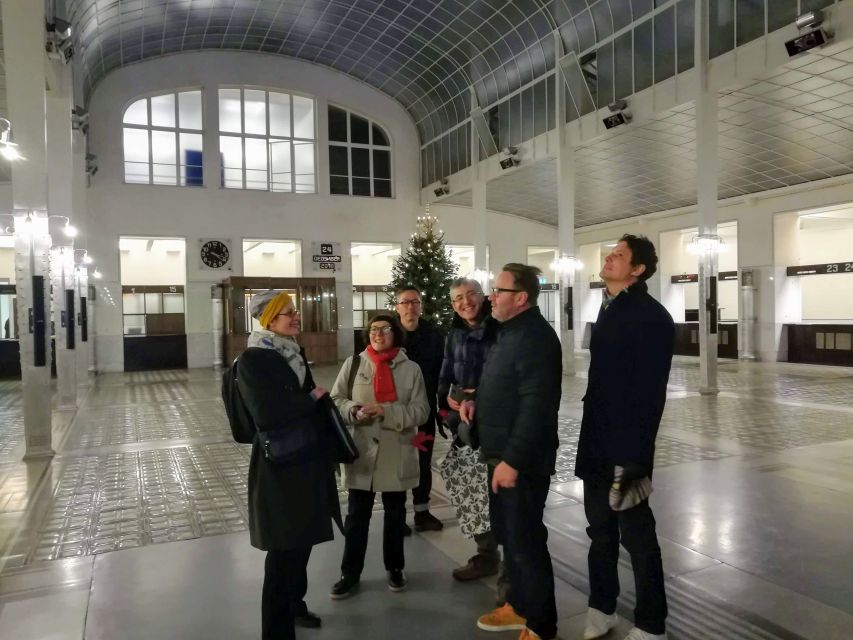
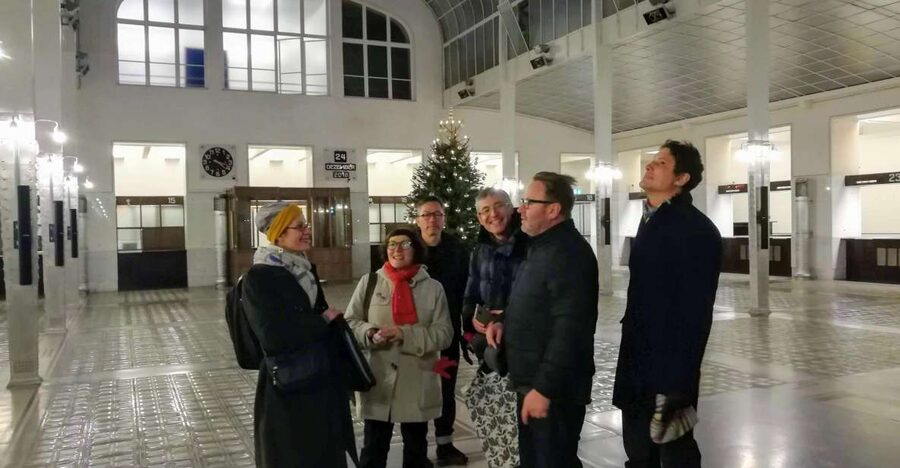
This is also where the tour’s small size helps. With no more than eight people, the guide can answer questions and adapt the pace more easily than on a large city walk. Several guides have adjusted the route to suit the group, particularly when the booking was private or had only a few participants.
The imperial station near Schönbrunn
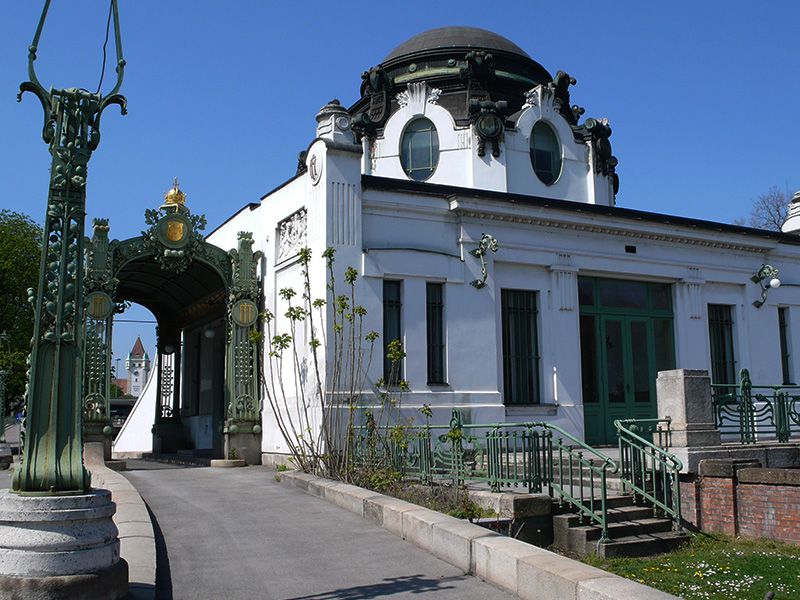
The final stop is the imperial station, built outside Schönbrunn Palace for the emperor’s private use. It is the most theatrical part of the route and a fine closing point because it gathers together the design ideas introduced at the earlier stations.
The building also carried a political message. The emperor’s support mattered because Vienna’s metro faced critics, and this station showed that the imperial household accepted the new railway. In other words, the structure served both transport and public relations.
Its design translates a generally bourgeois Art Nouveau style into something suitable for imperial use. The guide helps you spot the familiar Jugendstil elements while showing how Wagner added a more formal, courtly scale.
This stop gives the tour a satisfying contrast. The earlier stations connect modern design with ordinary city movement. The imperial station takes the same design language and gives it symbolic weight. You see how architecture can make a political statement without a speech or a monument.
The stop is also a reminder that Vienna’s modern identity was not created in one clean break. New railways, old imperial power, artistic rebellion, and urban growth all appeared together. That is the kind of connection a good guide can make clear.
What the guides add to the experience
The guide is the heart of this tour. The route itself can be followed with a map, but the meaning behind the buildings is much harder to grasp without help.
Jan has been praised for his passion for Vienna and for making the Secession Building and Beethoven Frieze memorable. Stefan helped connect Art Nouveau with practical city travel and offered suggestions for places to eat and visit. Suzanne focused on the details of Vienna around 1900, the Secession movement, and Otto Wagner’s role in a city under construction.
Other named guides include Ilse, Angelina, and Wolfgang Augsten. Ilse was described as entertaining and flexible. Angelina made an effort to show the group everything it wanted to see. Wolfgang Augsten led a highly personal walk through Vienna’s architectural past.
One especially distinctive guide was described as a lawyer with a strong interest in architecture and Austrian history. That detail suggests the company draws on guides with varied professional backgrounds, not only standard sightseeing hosts.
The strongest pattern is clear: expect an informed, personal presentation rather than a memorized speech. You should feel free to ask questions. The maximum of eight people creates the right setting for that, although the exact guide and group dynamic will vary by date.
Price, timing, and practical value
At $180.04 per person, this is an expensive walking tour by ordinary Vienna sightseeing standards. You are paying for a focused subject, an expert guide, a small group, and a route that ties several places together instead of treating them as separate photo stops.
The value improves if you care about architecture and want context. A casual visitor may be satisfied seeing the Secession Building and Otto Wagner Pavilion independently. An art student, architecture fan, or repeat visitor to Vienna is more likely to appreciate the connections between stations, apartment houses, artistic movements, and imperial politics.
The tour is booked an average of 36 days ahead, so popular dates may fill early. The booking maximum is eight people, which limits the number of places available. I would reserve ahead if you need a particular day, especially if you want the Tuesday through Sunday Secession visit.
The tour is offered in English. Most people can participate, and the meeting point is close to public transportation. Hotel pickup and drop-off are not provided, so you need to reach Operngasse 7 yourself.
Free cancellation is available up to 24 hours before the start time. Cancel later than that and the payment is not refunded. This gives you some flexibility, but the cutoff uses Vienna local time.
Who should book the Vienna Art Nouveau Walking Tour?
I would choose this tour if you want to understand why Vienna looks the way it does around 1900. It is particularly well suited to:
- Art and architecture enthusiasts
- Visitors who want more than palace interiors and grand museums
- Repeat visitors searching for less obvious buildings
- People interested in public transport and city planning
- Anyone who wants a small group and plenty of chances to ask questions
I would hesitate if you dislike walking, dislike outdoor sightseeing in uncertain weather, or mainly want a quick introduction to Vienna’s major attractions. The tour stays focused on Art Nouveau, so it does not attempt to cover the city’s full imperial or musical story.
You should also think about the extra costs. Add €5 for the Otto Wagner Pavilion when open, plus the Secession admission if you want Klimt’s Beethoven Frieze. The tour is not cheap, but those who care about the subject receive a much more useful explanation than they would from a quick look at station facades.
Should you book it?
Book this Vienna Art Nouveau tour if the names Otto Wagner, Gustav Klimt, and Secession already interest you, or if you want a strong cultural orientation early in your visit. The best features are the small group, the expert guides, the working historic metro stations, and the imperial station’s memorable ending.
Skip it if you want a broad overview of Vienna or a low-cost walk. For the right audience, though, the price buys something useful: a new way to read the city. Afterward, Vienna’s decorative facades and metro stations should look less like background scenery and more like clues to a city arguing about its future.
FAQ
How long does the Vienna Art Nouveau Walking Tour last?
The experience lasts approximately two hours and 30 minutes. It is also described as a three-hour walking tour, so allow some extra time in your schedule.
Where does the tour begin?
The listed meeting point is Operngasse 7, 1010 Vienna, Austria. It is near public transportation.
Where does the tour end?
The tour ends in Vienna, Austria. A more specific final street address is not provided.
Is the Otto Wagner Pavilion admission included?
No. From April through October, when the museum is open, general admission is €5. Seniors, students, Vienna Card holders, and people with disabilities pay €4.
Can I see Klimt’s Beethoven Frieze?
Yes, if you tour Tuesday through Sunday and choose to pay the additional admission. Adults pay €9.50, while students and seniors pay €6. Your guide can help you pay.
How many people can join the tour?
The maximum is eight people per booking and eight people for the activity.
Is cancellation free?
You can cancel for a full refund up to 24 hours before the start time. Cancellations or changes made less than 24 hours before the experience are not accepted for a refund.
Just added in Vienna
- Vienna: Austrian Wine Tasting Experience★ 4.2 · 2 reviews
- World War II History Vienna Old Town Private Walking Tour★ 4.8 · 9 reviews
- Vienna_ Meet Beethoven Life Private Guided Walking Tour★ 5.0 · 1 review
- Vienna: Wine Tasting Tour★ 4.8 · 61 reviews
- Vienna: Wine Tasting E-Bike Tour★ 4.9 · 46 reviews
- Vienna: Wine Tasting at Schönbrunn Palace★ 4.3 · 71 reviews
- Vienna: Winery and Wine Tasting Tour with a Wine Expert★ 5.0 · 5 reviews
- Vienna: Concert by the Vienna Baroque Orchestra★ 4.6 · 56 reviews
Walking Tours, compared.
Guided Walking Tour of City Center Highlights
Read our review →
Guided Walking Tour of City Highlights & Hidden Gems
Read our review →
Vienna Historic Center Small Group Walking Tour
Read our review →
Browse the lists this tour appears in