
Reviewed · WALKING TOURS
Vienna Art Nouveau Walking Tour
Vienna’s subway is an art lesson. This three-hour walking tour reveals how Otto Wagner turned a practical transport project into a citywide design statement, linking metro stations with Secession House, apartment buildings, and imperial architecture. I like the focus on real urban change, and I like that a historian guide can explain the symbols and materials instead of leaving you to admire pretty façades without context.
The main consideration is the price: at $176 per person, this is a serious splurge for a three-hour outing. You should also expect a good deal of walking, and the description gives both 2.5 hours and three hours, so confirm the exact timing when you book.
In This Review
- Key points at a glance
- Why Vienna’s metro makes a fine Art Nouveau tour
- Starting at Café Museum and Karlsplatz
- Stadtpark station and the practical side of beauty
- Secession House and Klimt’s Beethoven Frieze
- Otto Wagner’s apartment houses
- Kettenbrücke and the route’s walking demands
- The imperial station outside Schönbrunn
- Austrian Postsparkasse and Café Museum
- What the guide adds to the experience
- Price, timing, and practical value
- Who should book this Vienna architecture walk?
- Should you book the Vienna Art Nouveau Walking Tour?
- FAQ
- How long is the Vienna Art Nouveau Walking Tour?
- What language is the tour conducted in?
- Where does the tour meet?
- Is admission to the Secession Building included?
- Is admission to the Otto Wagner Pavilion included?
- Does the tour include public transportation?
- Is this a private tour?
- Can I cancel the tour for a refund?
- Can I reserve now and pay later?
Key points at a glance
- Otto Wagner’s metro vision: Learn how Vienna’s population growth led to a modern transport system designed to connect the suburbs with the Ringstrasse.
- Two original stations: Visit the Karlsplatz pavilion and Stadtpark station, one of the best-preserved Wagner stations still in use.
- Secession House and Klimt: From Tuesday through Sunday, you can enter the Secession Building to see Gustave Klimt’s famous Beethoven Frieze, for an extra fee.
- Imperial metro architecture: See the station built solely for the emperor outside Schönbrunn and learn how Wagner gave Art Nouveau a grander courtly feel.
- More than stations: The route also includes Otto Wagner apartment houses, Café Museum, the Austrian Postsparkasse, and other city architecture.
- Small-group advantage: Private and small-group options allow room for questions and, as Elizabeth’s experience with Wolfgang shows, can make the route more personal.
Why Vienna’s metro makes a fine Art Nouveau tour
Vienna’s underground railway was not simply a matter of laying tracks and digging tunnels. In the late 19th century, the city was growing fast, and suburbs needed a better connection with the center and the Ringstrasse. City leaders turned to urban planners, then selected Otto Wagner to shape the metro system.
Wagner understood that public transport would alter the look and feel of Vienna. His answer was a system that was practical but also recognizable, modern, and distinctly cosmopolitan. He worked in the international Art Nouveau style, known in Vienna as Jugendstil, using metal, glass, ornament, and carefully controlled patterns.
That idea gives the tour its real value. You are not only looking at decorative stations. You are seeing how a city presented modern life to the public. Wagner treated everyday infrastructure as part of the civic experience, a bold move at a time when railway stations and bridges were often viewed as engineering problems first and architecture second.
Your guide also discusses the ideas behind Art Nouveau. You will consider why its designers favored particular materials, how ornament related to function, and which symbols appeared in the buildings. That turns the walk into something more useful than a checklist of façades.
More Walking Tours in Vienna
- Vienna: Guided Walking Tour of City Center Highlights
★ 4.7 · 4,989 reviews - Vienna: Vienna Central Cemetery Guided Walking Tour
★ 4.8 · 3,307 reviews - Vienna: Guided Walking Tour of City Highlights & Hidden Gems
★ 4.9 · 2,180 reviews
Starting at Café Museum and Karlsplatz
The stated meeting point is Café Museum at Operngasse 7 in central Vienna. The itinerary also includes Café Museum as a guided stop, so you may begin with some orientation before moving toward the Otto Wagner Pavilion at Karlsplatz. Since starting arrangements can depend on the option you choose, check the exact meeting instructions on your booking.
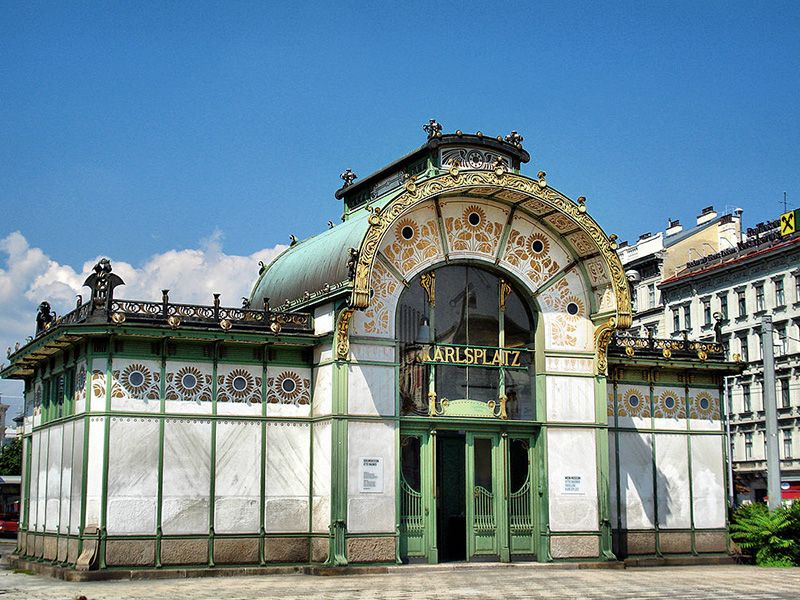
The Karlsplatz pavilion is one of the tour’s most photogenic opening scenes. Its curved metal framing, pale surfaces, and decorative details show Wagner working in a style that is elegant without being weighed down by the older historicist decoration found across Vienna.
The pavilion now houses the Wien Museum Otto Wagner Pavillon Karlsplatz. Admission is not included, so allow extra money if you want to enter. The guide can give the building meaning from the outside, but going in adds a closer look at the design and its place in the old metro system.
I would pay attention to the relationship between the pavilion and the square. Wagner was designing a public transport entrance, yet he gave it enough presence to function as a small civic monument. That balance between daily use and visual ceremony is one of the clearest themes of the tour.
Stadtpark station and the practical side of beauty
From Karlsplatz, the route continues toward Stadtpark station. This is described as the best-preserved original metro station still in use, which makes it especially useful for understanding Wagner’s working methods.
Here you can look beyond broad Art Nouveau labels. Notice how the station’s decorative treatment supports a public building that people actually use. The point is not to make the station look like a private salon. It has to guide passengers, signal an entrance, and survive contact with a working transport network.
The walk between stops is part of the experience, not dead time. You will move through central Vienna while the guide connects the buildings to the city’s growth and social changes. Peter, one of the guides praised in the supplied feedback, was especially good at answering broader questions about Austrian history and explaining architectural details that are easy to miss, including less obvious places of worship and Jewish synagogues.
That kind of conversation can be a real benefit of a private or small-group format. You can ask why a façade looks the way it does, how Art Nouveau differed from older Viennese styles, or how the metro affected the city. In a larger group, those questions can be harder to fit in.
Secession House and Klimt’s Beethoven Frieze
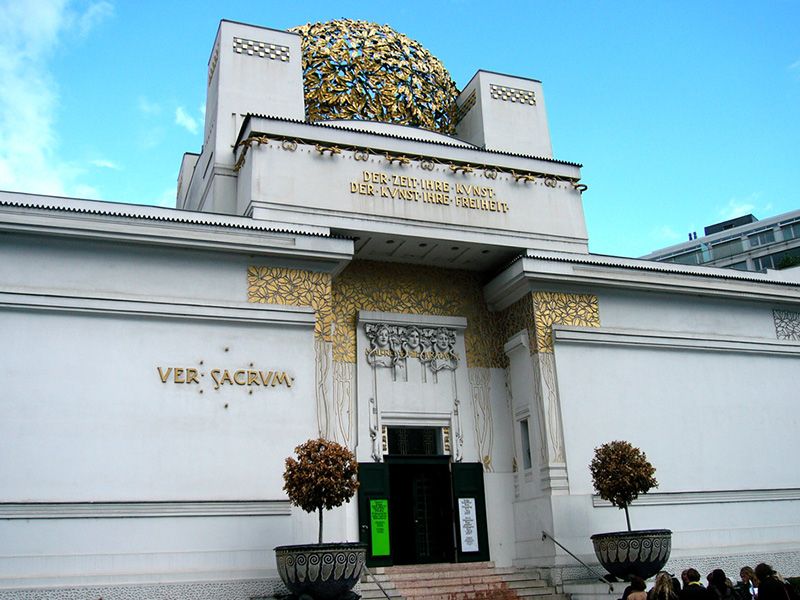
The route then reaches the Secession Building, the most famous Art Nouveau landmark on the walk. Viennese artists created the Secession movement as a break from academic convention, and the building became its architectural calling card.
Its unusual dome, often called the cabbage-head dome because of its many gilded leaves, makes the building easy to recognize. The exterior is more than decoration. It announces a new artistic position, one that favored fresh forms and ideas over simply repeating the styles of the past.
From Tuesday through Sunday, the tour includes the chance to see Gustave Klimt’s Beethoven Frieze inside. The entrance costs €9.50 for adults and €6 for students and seniors, and that payment is not included in the tour price. Your guide will help with the entry process.
This is an important extra cost, but it is also one of the strongest reasons to choose this route. The Beethoven Frieze gives you a direct look at the symbolism that shaped Viennese Jugendstil. It is not just a decorative room. The work draws on Beethoven, human longing, suffering, temptation, and the search for happiness, making it a powerful companion to the architectural discussion.
If your visit falls on a day other than Tuesday through Sunday, do not assume the interior visit is included. The information supplied for this tour specifically identifies those days for seeing the frieze. Ask before booking if the artwork is a priority.
A completely different kind of day:
- Vienna: Vivaldi’s Four Seasons Concert in Karlskirche
★ 4.7 · 14,951 reviews - Vienna: Spanish Riding School Training
★ 3.9 · 9,281 reviews - Vienna: Schönbrunn Palace & Gardens Skip-the-Line Tour
★ 4.7 · 7,739 reviews - Vienna: Light of Creation Votive Church Immersive Light Show
★ 4.8 · 6,779 reviews
Otto Wagner’s apartment houses
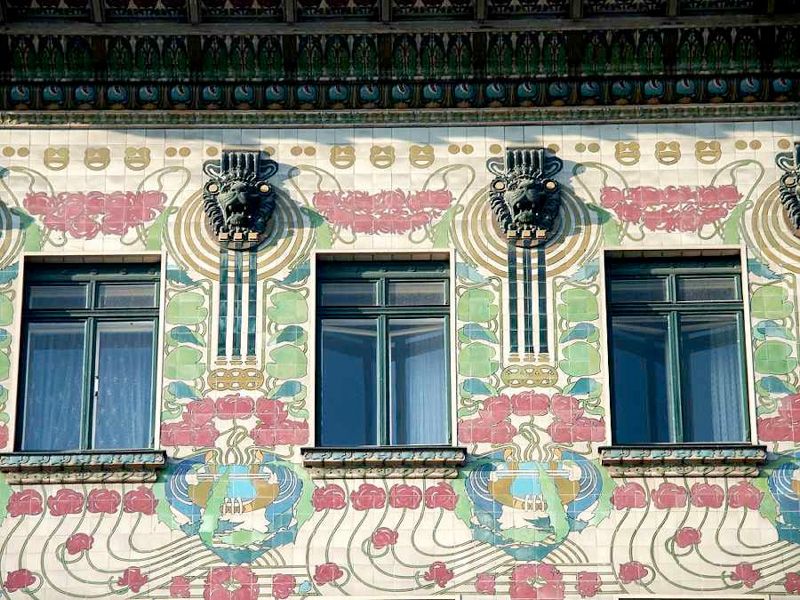
Along the way, you will also see two apartment houses designed by Otto Wagner. These stops help show that his ideas were not limited to public transport.
Apartment buildings are useful examples because they bring Art Nouveau into everyday urban life. Rather than treating the style as something reserved for a museum or grand public hall, Wagner used façades, windows, surface patterns, and structure to give ordinary city living a modern identity.
The tour’s discussion of materials and symbols should help you read these buildings more closely. Look for the contrast between repeated patterns and individual details. Art Nouveau can seem overly decorative at first glance, but Wagner’s work often depends on order and restraint as much as ornament.
This section may be less instantly famous than Secession House, but it is important. You get a fuller picture of Wagner as an architect who shaped Vienna’s streets, not just a designer associated with two pretty metro pavilions.
Kettenbrücke and the route’s walking demands
Kettenbrücke station is the next metro stop named in the tour description. The route reaches it after the Secession Building and the apartment houses, giving you a chance to compare several forms of Wagner’s work before returning to the transport system.
The walk is a meaningful part of the tour, but it can be substantial. Elizabeth’s experience with Wolfgang included walking miles, and that is useful advice for anyone planning the day. Wear comfortable shoes and avoid scheduling this immediately before another demanding walking activity.
At Kettenbrücke, the guide can bring the discussion back to the metro’s original purpose. Each station was part of a larger plan to make a growing city easier to cross. The design was not an isolated artistic exercise. It had to operate as a system, with stations that passengers could recognize and use.
The final metro ride is also included in the story of the tour. You are not simply hopping between photo stops. You are using the kind of transport network that made Wagner’s work relevant in the first place.
The imperial station outside Schönbrunn
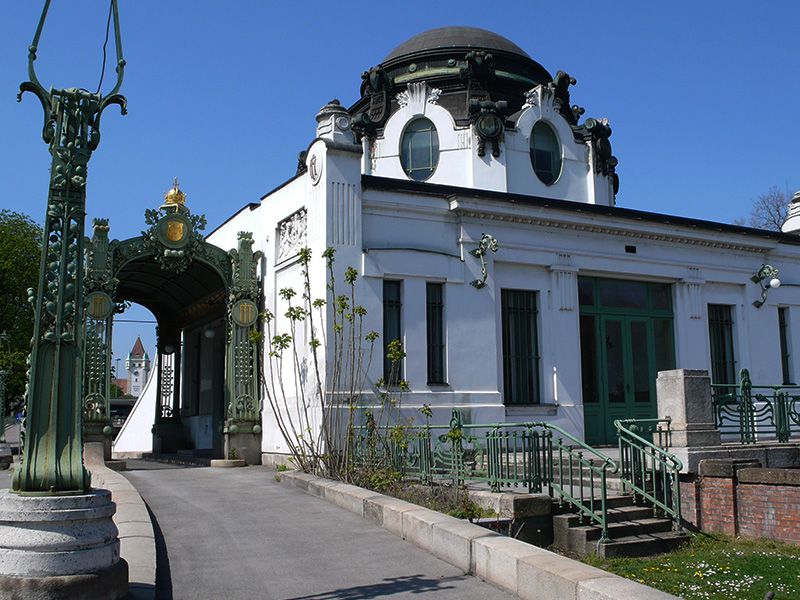
The last major architectural stop is the imperial station, identified in the itinerary as Otto Wagner Hofpavillon Hietzing. It was built outside Schönbrunn solely for the emperor.
This station is the crown jewel of the original line, but its meaning is political as well as architectural. Critics of Vienna’s metro could see the emperor’s support for the system through this building. Public transport, often linked with ordinary commuters and urban expansion, received an imperial stamp of approval.
Wagner adjusted the generally bourgeois character of Art Nouveau for a royal setting. The result was a more formal and grand treatment of the same broad style. Your guide will explain how materials, proportion, ornament, and ceremonial purpose changed when the building was intended for the emperor.
That comparison is one of the tour’s best teaching moments. Art Nouveau was often associated with modern urban life and private homes, yet here it had to communicate power and status. The station shows how flexible the style could be.
Austrian Postsparkasse and Café Museum
The itinerary also includes Österreichische Postsparkasse, or the Austrian Postal Savings Bank. This building is an important Otto Wagner work and adds a financial institution to the tour’s range of public and private architecture.
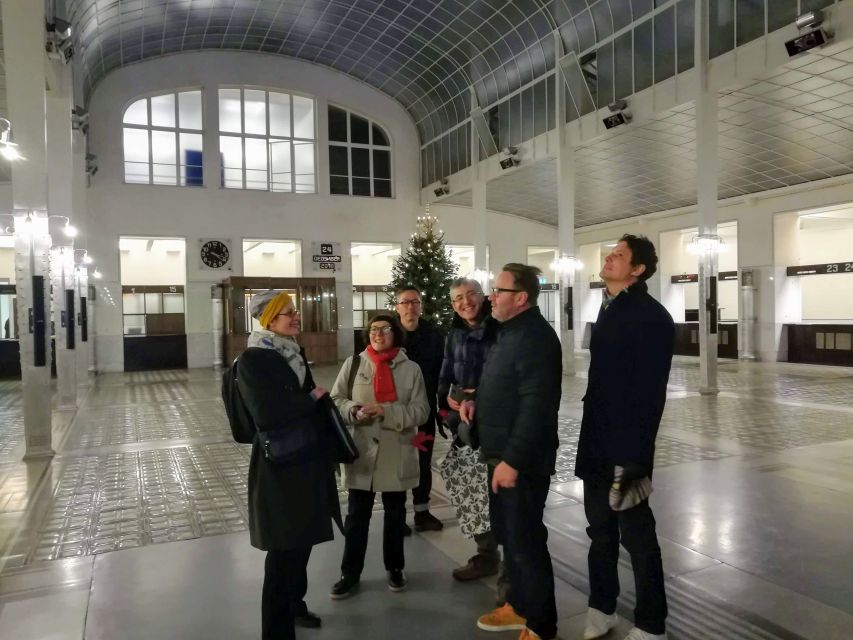
The Postsparkasse helps you see how Wagner handled a building with a large civic role. The architecture is known for its disciplined modern appearance and use of materials that express the building’s purpose. Rather than relying only on historical decoration, Wagner made the structure feel current and connected to the business of a modern city.
Because the supplied route lists both Café Museum and the Postsparkasse as guided stops, the exact order may vary by selected option and guide. The practical lesson is simple: ask at the start how your group’s route will run, especially if you want to spend extra time inside the Secession Building or the Karlsplatz pavilion.
What the guide adds to the experience
The guide is central here. Without explanation, you might see attractive stations and unusual buildings but miss the argument tying them together. With a strong guide, the route becomes a lesson in city planning, politics, art, transport, and social change.
The feedback points to guides who are engaged and flexible. Wolfgang received praise for tailoring the walk to a very small group. Peter handled many questions about Austrian history and architecture. Giuseppina was described as friendly, attentive, and highly informed about Art Nouveau.
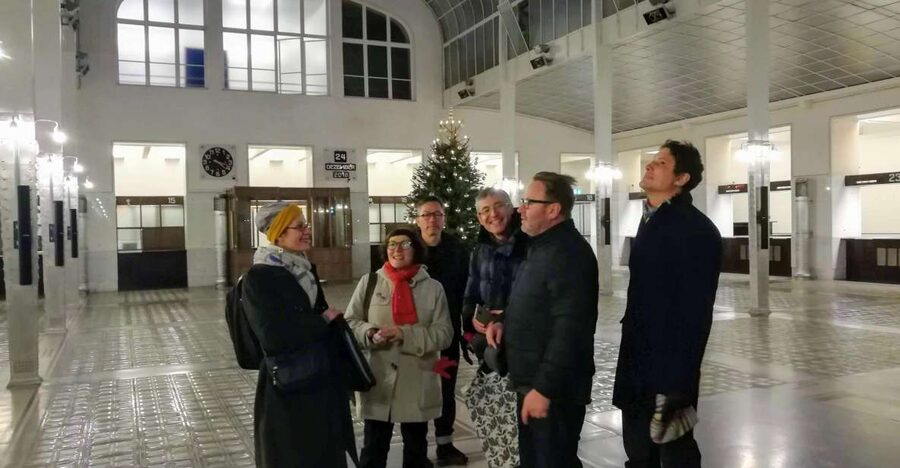
Those comments suggest that the format works best when you participate. Bring questions. Ask about symbols, materials, religious buildings, the emperor’s station, or the difference between Vienna’s Jugendstil and other Art Nouveau movements. A quiet listener will still see fine architecture, but an active group is likely to get much more from the three hours.
English is the listed tour language. Private and small-group options are available, which matters at this price. A private booking can make the cost easier to justify if you care about architecture and want a custom pace. If you are mainly looking for a quick introduction to Vienna, $176 per person may feel steep.
Price, timing, and practical value
The listed price is $176 per person. It includes a three-hour Art Nouveau tour and a historian guide, but not admission to the Otto Wagner Pavilion or Secession House. Add €9.50 for an adult Secession ticket, or €6 for a student or senior ticket, if you visit the Beethoven Frieze.
The duration needs a small note. The headline information says three hours, while the detailed description calls the guided tour 2.5 hours. That difference may reflect a rounded booking duration or a variation between options. Confirm the exact schedule before you build the rest of your day around it.
The value depends on your interests. If you already plan to visit Secession House and know Vienna’s Art Nouveau well, you may prefer to explore independently. But if you want to understand why the metro was built, how Wagner’s buildings relate to one another, and how imperial politics shaped the line, the guide adds something that a map and audio guide may not.
You can cancel up to 24 hours in advance for a full refund, and reserve now while paying later. Those terms help if your Vienna schedule is still moving, but the bigger decision is group size. Choose private or small-group treatment if personal questions and a flexible pace matter to you.
Who should book this Vienna architecture walk?
I would recommend it most strongly to anyone who already enjoys architecture, urban planning, design, or Vienna’s late 19th-century transformation. It also suits a return visitor who has seen the grand palaces and wants to understand the city’s modern side.
First-time visitors can enjoy it too, especially if you want more than the standard imperial sights. The tour connects the center, metro stations, apartment buildings, a bank, and Schönbrunn’s imperial stop in one clear story.
You should think twice if you dislike walking, have little interest in architecture, or want an outing with no added admission costs. The route covers plenty of ground, and the best parts depend on listening closely to the guide’s explanations.
Should you book the Vienna Art Nouveau Walking Tour?
Book it if you want Vienna’s Art Nouveau to make sense as part of the city’s growth, not just as a collection of pretty buildings. The combination of Otto Wagner’s metro stations, Secession House, Klimt’s Beethoven Frieze, apartment houses, the Postsparkasse, and the imperial station gives you a broad view in a short time.
I would choose a small-group or private option if the $176 price fits your budget. The strongest feedback centers on guides who answer questions, adjust the route, and bring the buildings to life. Wear good shoes, budget for the Secession entrance, and confirm whether your chosen option lasts 2.5 or three hours.
FAQ
How long is the Vienna Art Nouveau Walking Tour?
The activity is advertised as three hours, while the detailed description gives 2.5 hours. Check the selected option for the exact start and end time.
What language is the tour conducted in?
The live tour guide speaks English.
Where does the tour meet?
The stated meeting point is Café Museum at Operngasse 7, A-1010 Vienna. The exact starting location can depend on the option selected.
Is admission to the Secession Building included?
No. From Tuesday through Sunday, the tour includes a visit to see Gustave Klimt’s Beethoven Frieze, but admission costs €9.50 for adults and €6 for students and seniors.
Is admission to the Otto Wagner Pavilion included?
No. Admission to the Otto Wagner Pavillon Karlsplatz is not included in the tour price.
Does the tour include public transportation?
The route finishes with a metro ride to the imperial station, so the metro forms part of the experience. The supplied information does not specify whether a separate transport ticket is included.
Is this a private tour?
Private and small-group options are available. Select the appropriate option when booking.
Can I cancel the tour for a refund?
You can cancel up to 24 hours in advance for a full refund.
Can I reserve now and pay later?
Yes. The booking terms allow you to reserve your place and pay later, which keeps your plans flexible.
Just added in Vienna
- Vienna: Austrian Wine Tasting Experience★ 4.2 · 2 reviews
- World War II History Vienna Old Town Private Walking Tour★ 4.8 · 9 reviews
- Vienna_ Meet Beethoven Life Private Guided Walking Tour★ 5.0 · 1 review
- Vienna: Wine Tasting Tour★ 4.8 · 61 reviews
- Vienna: Wine Tasting E-Bike Tour★ 4.9 · 46 reviews
- Vienna: Wine Tasting at Schönbrunn Palace★ 4.3 · 71 reviews
- Vienna: Winery and Wine Tasting Tour with a Wine Expert★ 5.0 · 5 reviews
- Vienna: Concert by the Vienna Baroque Orchestra★ 4.6 · 56 reviews
Walking Tours, compared.
Guided Walking Tour of City Center Highlights
Read our review →
Guided Walking Tour of City Highlights & Hidden Gems
Read our review →
Vienna Historic Center Small Group Walking Tour
Read our review →
Browse the lists this tour appears in