
Reviewed · WALKING TOURS
The Ringstrasse Project Walking Tour
Vienna’s grand boulevard tells the city’s story on foot. I like the tour’s small maximum of eight people and its clear route from Rathaus to Café Schwarzenberg. I also like the choice of morning or afternoon departure, which makes it easier to fit around museum visits and concerts.
The main drawback is the price: $177.44 per person for about two and a half hours is a serious outlay for a walking tour. Food, drinks, and hotel transfers are not included, so you are paying mainly for the guide’s interpretation and the small-group setting.
In This Review
- Key points to know before you book
- Why the Ringstrasse is the right place to start
- Starting at Café Landtmann and Rathaus
- Vienna State Opera and the city’s musical identity
- Kunsthistorisches Museum and the imperial art collection
- Otto Wagner’s Postsparkasse
- Palais Todesco and the social world behind the façades
- Finishing at Café Schwarzenberg
- What the small group changes
- Morning or afternoon: choosing your departure
- Is $177.44 a fair price?
- Who should book this Ringstrasse walk?
- Should you book it?
- FAQ
- How long does the Ringstrasse Project Walking Tour last?
- Where does the tour begin?
- Where does the tour end?
- What sights are included on the walking route?
- Is food or drink included?
- How large is the tour group?
Key points to know before you book
- The tour links six major Ringstrasse sights, including Rathaus, the State Opera, the Kunsthistorisches Museum, Postsparkasse, Palais Todesco, and Café Schwarzenberg.
- The group is capped at eight people, allowing more room for questions than a large city walk.
- The route begins at Café Landtmann and finishes at Café Schwarzenberg, two useful points for understanding Vienna’s café tradition.
- Guide quality is central to the experience, with Sussana and Biljana singled out for warmth, humor, and strong knowledge of Vienna.
- A family version is available, with attention to building symbols and everyday life around 1900.
- The walk continues even with one booking, according to one booking experience, which may give you unusually personal attention.
Why the Ringstrasse is the right place to start
Vienna can feel like several cities at once. Imperial palaces, civic buildings, concert halls, museums, grand private homes, and old cafés all compete for your attention. The Ringstrasse helps you connect those pieces.
The boulevard was created as a showcase for modern Vienna in the 19th century. Along it, you see the city expressing political power, artistic ambition, civic pride, and social life through architecture. A guide can point out those links while you move between the buildings, something you may miss when looking at each sight alone.
This tour is not built around long interior visits. Admission is listed as free at every stop because the focus is on the outside of the buildings and the story they tell. That is useful if you want an orientation walk before deciding which museums or concert venues deserve more of your time.
The route lasts about two hours and 30 minutes. That is long enough to cover a lot of ground, but short enough to leave your afternoon or evening open. You should expect a steady city walk with stops for explanation, rather than a slow café crawl or a museum tour.
More Walking Tours in Vienna
- Vienna: Guided Walking Tour of City Center Highlights
★ 4.7 · 4,989 reviews - Vienna: Vienna Central Cemetery Guided Walking Tour
★ 4.8 · 3,307 reviews - Vienna: Guided Walking Tour of City Highlights & Hidden Gems
★ 4.9 · 2,180 reviews
Starting at Café Landtmann and Rathaus
The meeting point is Café Landtmann at Universitätsring 4. Starting here puts you beside one of the city’s classic coffeehouse settings and close to the Ringstrasse itself.
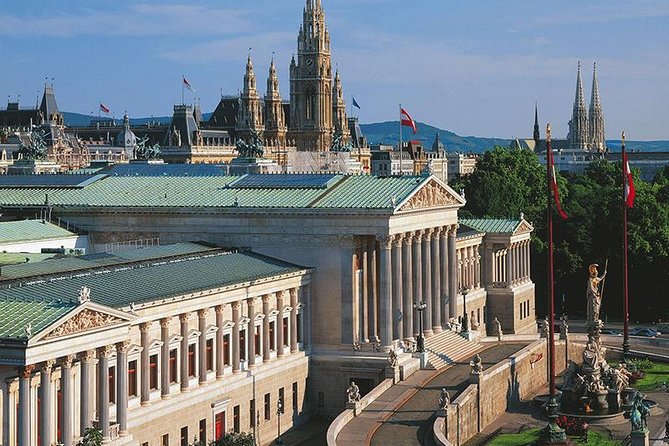
Your first formal stop is Rathaus, Vienna’s city hall. Built from 1872 to 1883 in Neo-Gothic style, it houses the mayor’s office, the city council, and the Vienna Landtag diet. The building is not just a pretty façade. It represents the city’s civic government and the confidence of Vienna during the Ringstrasse building boom.
You have about 15 minutes here. That is enough for the guide to explain the building’s role and point out its place on Rathausplatz, but not enough for an extended architectural study. If you want to explore the interior, ask about that separately, since this tour is designed around the exterior and the wider route.
This opening stop also gives the guide a good chance to explain how Vienna’s public buildings were arranged along the boulevard. With a small group, you can ask about symbols, styles, and city government without trying to catch a guide’s voice over a crowd.
Vienna State Opera and the city’s musical identity
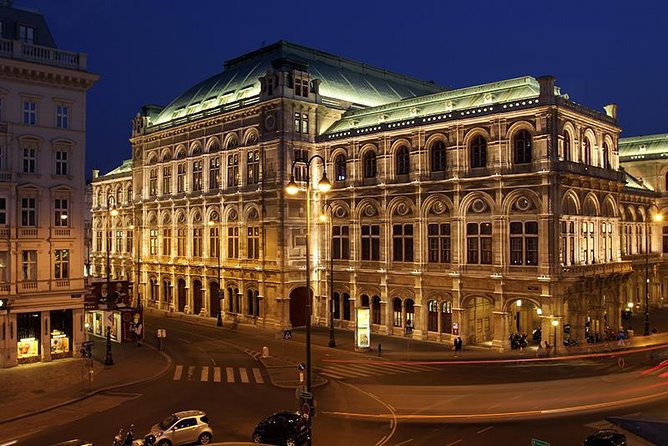
The next major stop is the Wiener Staatsoper, or Vienna State Opera. The building opened between 1861 and 1869 and was the first major building completed on the Ringstrasse.
That detail matters. Opera was not placed on the edge of Viennese life. It was given one of the boulevard’s prime positions, showing how central music was to the city’s culture and public identity.
The opera house seats 1,709 people. You will spend about 20 minutes here, enough to discuss the building’s place in Vienna’s musical tradition and the importance of the Ringstrasse location. The tour does not include an opera performance or an interior admission, so think of this as useful background for a later concert or opera visit.
I like this stop because it shifts the tour from government to culture. The buildings are not a random string of grand façades. Each one helps explain what Vienna wanted to be in the 19th century: a city of administration, art, music, and public display.
If you are booking the afternoon departure, this stop may also help you plan an evening at the opera, though the tour itself does not include tickets or reservations. You will need to arrange those separately.
Kunsthistorisches Museum and the imperial art collection
The Kunsthistorisches Museum is one of the biggest stops on the route, with about 20 minutes set aside for it. The name refers both to the institution and its main building.
It is Austria’s largest art museum and one of the most important museums in the world. Even if you plan to return later for a full visit, the outside tells you something important about Vienna’s approach to art: the museum was given a grand public home worthy of major collections.
Here, the guide’s role matters more than the clock. Twenty minutes cannot do justice to the museum’s holdings. What it can do is give you a reason to return, explain why the building belongs on the Ringstrasse, and help you place it among the city’s other cultural institutions.
I would treat this stop as an introduction, not a substitute for entering the museum. If you have limited time in Vienna, the walk helps you decide where to spend several hours later. If you already know you want to visit, the stop gives you useful context before you go inside.
The tour’s free admission at this point keeps the price from rising through multiple entry tickets, but it also means you should budget separately for any museum visit you add to your day.
A completely different kind of day:
- Vienna: Vivaldi’s Four Seasons Concert in Karlskirche
★ 4.7 · 14,951 reviews - Vienna: Spanish Riding School Training
★ 3.9 · 9,281 reviews - Vienna: Schönbrunn Palace & Gardens Skip-the-Line Tour
★ 4.7 · 7,739 reviews - Vienna: Light of Creation Votive Church Immersive Light Show
★ 4.8 · 6,779 reviews
Otto Wagner’s Postsparkasse
Postsparkasse is one of the most distinctive architectural stops. The Austrian Postal Savings Bank was designed and built by Otto Wagner and is regarded as an important work of the Vienna Secession, a branch of Art Nouveau.
This is where the route moves away from imperial grandeur and toward a newer architectural language. Wagner’s work helps show that Vienna was not simply preserving old styles. The city was also experimenting with modern design and fresh ideas about public buildings.
You have roughly 20 minutes here. That allows time to look closely and hear why the building matters, though the supplied details do not specify an interior visit. You should expect an exterior-focused explanation unless the guide tells you otherwise.
For me, this is the sort of stop that justifies taking a guided walk instead of following a map. You can photograph a building on your own, but the change from Neo-Gothic Rathaus to Wagner’s Secession design becomes more meaningful when someone points it out as part of a larger city story.
It is also a useful reminder that Vienna’s famous architecture is not all palaces and opera houses. The city’s banking and postal institutions helped shape its visual identity too.
Palais Todesco and the social world behind the façades
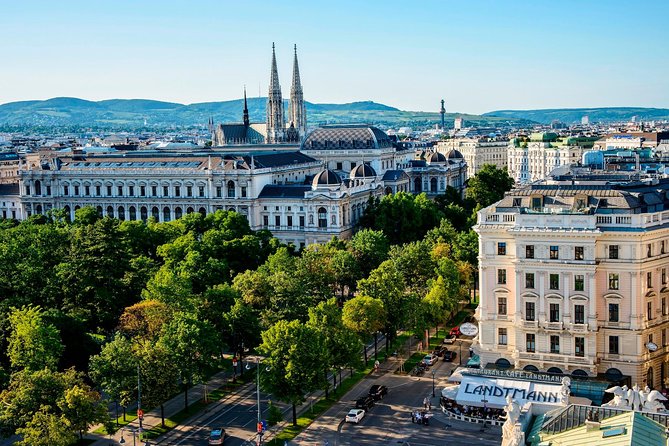
The route continues to Stadtpalais Todesco, also called Palais Todesco. Built between 1861 and 1864 for the aristocratic Todesco family, it offers a look at the private side of Ringstrasse life.
One of its notable residents was Baroness Sophie von Todesco. She established a well-known salon for artists and intellectuals, giving the building a link to Vienna’s social and cultural circles.
You spend about 15 minutes here. That shorter stop makes sense because the palace is not presented as a full interior visit. Instead, the guide can use it to explain who lived along the Ringstrasse and how private homes, social gatherings, and artistic life fitted into the boulevard’s public image.
This is a valuable counterpoint to Rathaus and the opera. The Ring was not only a parade route of official institutions. It was also a place where aristocrats hosted salons and people came to see and be seen.
You may find this stop especially useful if you like social history more than architectural dates. It puts people into the picture, including the women who shaped Vienna’s intellectual life through salons and patronage.
Finishing at Café Schwarzenberg
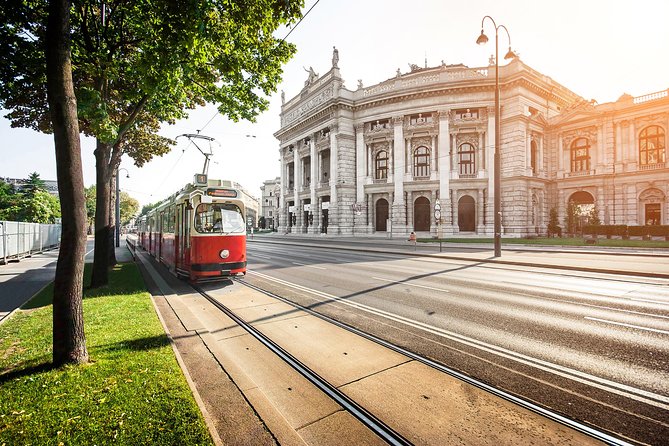
The tour ends at Café Schwarzenberg on Kärntner Ring 17. The café was established in 1861, and its interior has remained largely unchanged since it opened in the 19th century.
You have about 25 minutes here, the longest scheduled stop. Food and drinks are not included, so you should expect to pay for anything you order. Still, the setting gives the tour a fitting finish because the Ringstrasse story ends not with another official building, but with the social life that grew around the boulevard.
Vienna’s café culture was central to the city’s public life in the second half of the 19th century. Cafés offered places to read, meet, talk, work, and watch the city pass by. Café Schwarzenberg helps you picture how the Ring became a place for social display from the moment it was completed.
This is not just a final coffee suggestion. It ties together the route’s themes. Government built the city’s institutions, music gave it cultural status, museums displayed its ambitions, architects tested new styles, aristocrats hosted salons, and cafés gave people a place to gather.
If you want a drink or a pastry, allow extra money beyond the tour price. The café stop is included in the walking route, but your order is not.
What the small group changes
The maximum group size is eight. That is one of the strongest practical features because the Ringstrasse is a busy urban route with traffic, public transport, and plenty of visual distractions.
In a group this size, you have a better chance of hearing the guide clearly and asking a question at each stop. You also avoid the feeling of being one face in a large crowd. The tradeoff is that the high price becomes more noticeable. You are paying for personal service and interpretation, not for a low-cost city overview.
The guide is the heart of this experience. Sussana is praised for providing an excellent tour, while Biljana is described as professional, friendly, funny, and deeply familiar with Vienna. Those comments point to the kind of experience you should want here: not just dates and building names, but a guide who connects architecture with the city’s culture.
One unusual point is that the tour can still operate with only one person booked. That happened to one participant, who found the personal attention especially strong. You should not assume every departure will be private, but a small group is guaranteed by the eight-person limit, and a very small departure is possible.
Morning or afternoon: choosing your departure
The choice of morning or afternoon departure is simple but useful. A morning walk can give you a framework for the rest of your day. Afterward, you can return to the Kunsthistorisches Museum, explore another Ringstrasse building, or arrange an opera visit.
An afternoon walk leaves your morning open for independent sightseeing. It also places the final café stop later in the day, when a break at Café Schwarzenberg may feel more natural.
The tour lasts about two and a half hours, so do not schedule it too tightly against another timed activity. The walk ends at Café Schwarzenberg rather than returning to Café Landtmann, so plan your onward route from the final stop.
Both meeting points are near public transportation. Hotel pickup and drop-off are not included, so you will need to make your own way to Café Landtmann and continue independently from Café Schwarzenberg.
Is $177.44 a fair price?
At $177.44 per person, this is not a bargain walking tour. If you want a quick, low-cost introduction to Vienna, the price will likely feel too high.
The value improves if you care about architecture, urban history, and personal guide time. You receive a 2.5-hour guided route, six carefully chosen stops, and a group limited to eight. The guide also helps connect sights that can otherwise seem unrelated.
The price does not include food, drinks, museum admissions, or transport. That makes the tour easiest to justify early in your stay, when good orientation can save you time and help you choose later visits.
You should also consider the quality of your guide. The strong praise for Biljana and Sussana suggests that the experience depends heavily on who leads your departure. A skilled guide can turn a walk past buildings into a clear account of Vienna’s politics, art, music, architecture, and café life. A weaker guide would leave you with little more than a string of stops.
Who should book this Ringstrasse walk?
I would recommend it to you if you are visiting Vienna for the first time and want a clear introduction to the city’s grand boulevard. It also suits people who enjoy architecture but want help understanding the styles and institutions behind the façades.
Families can book a children’s version. In that format, the guide focuses on symbols on the buildings and everyday life in Vienna around 1900, which should make the walk more accessible to younger children.
This tour also suits you if you prefer small groups and questions over a large scripted outing. The walk is less suitable if you want long interior visits, a food experience, or a budget activity.
You should wear comfortable walking shoes. The route covers several city stops over two and a half hours, and the experience is built around moving between buildings rather than sitting inside them.
Free cancellation is available if you cancel at least 24 hours before the local start time. Changes or cancellations made later are not accepted for a refund.
Should you book it?
Book this tour if you want Vienna explained through its most important boulevard, with a small group and a guide who can connect civic buildings, opera, art, aristocratic life, and café culture.
Skip it if $177.44 feels too steep for an exterior walking tour or if you mainly want to enter museums and historic buildings. For the right visitor, the strongest reason to book is not the number of stops. It is the chance to see how those stops form one story, ending over coffee at Café Schwarzenberg.
FAQ
How long does the Ringstrasse Project Walking Tour last?
The tour lasts approximately two hours and 30 minutes.
Where does the tour begin?
The meeting point is Café Landtmann, Universitätsring 4, 1010 Wien, Austria.
Where does the tour end?
The tour ends at Café Schwarzenberg, Kärntner Ring 17, 1010 Wien, Austria.
What sights are included on the walking route?
The route includes Rathaus, the Vienna State Opera, the Kunsthistorisches Museum Vienna, Postsparkasse, Stadtpalais Todesco, and Café Schwarzenberg.
Is food or drink included?
No. Food and drinks are not included in the tour price.
How large is the tour group?
The tour has a maximum of eight participants. It can also be booked as a children’s family tour.
Just added in Vienna
- Vienna: Austrian Wine Tasting Experience★ 4.2 · 2 reviews
- World War II History Vienna Old Town Private Walking Tour★ 4.8 · 9 reviews
- Vienna_ Meet Beethoven Life Private Guided Walking Tour★ 5.0 · 1 review
- Vienna: Wine Tasting Tour★ 4.8 · 61 reviews
- Vienna: Wine Tasting E-Bike Tour★ 4.9 · 46 reviews
- Vienna: Wine Tasting at Schönbrunn Palace★ 4.3 · 71 reviews
- Vienna: Winery and Wine Tasting Tour with a Wine Expert★ 5.0 · 5 reviews
- Vienna: Concert by the Vienna Baroque Orchestra★ 4.6 · 56 reviews
Walking Tours, compared.
Guided Walking Tour of City Center Highlights
Read our review →
Guided Walking Tour of City Highlights & Hidden Gems
Read our review →
Vienna Historic Center Small Group Walking Tour
Read our review →
Browse the lists this tour appears in