
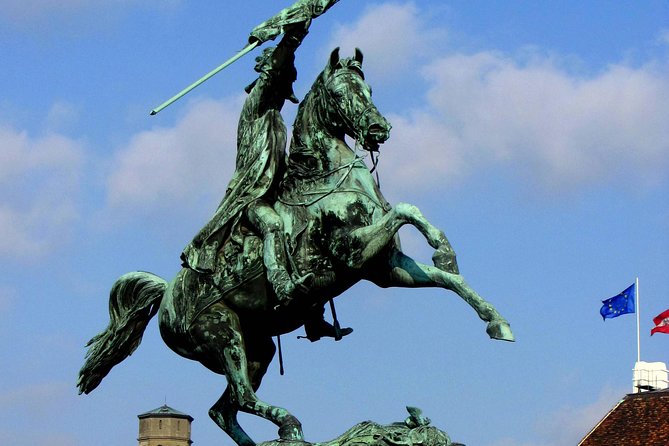
Reviewed · HISTORICAL TOURS
Private Vienna Highlights History Walk — WWII and Post War Vienna
Vienna’s past is written in its grandest squares. This private three-hour walk links WWII and postwar Vienna with imperial landmarks, giving you both the big picture and the uncomfortable details. I like the hotel pickup and the freedom to adjust the route to your interests. The main catch is that public transport, food, drinks, and hotel drop-off cost extra.
I also like the small-group format, capped at 10 people, and the chance to move by tram or subway instead of spending the whole time on foot. Guides such as Walter, Brigitte, and Alex are praised for their humor, local insight, and practical advice. Still, this is a brisk overview, not a museum tour, and poor weather can make the walking less pleasant.
In This Review
- Key points to know before booking
- Why this Vienna walk is different
- Starting at Belvedere Palace and its formal gardens
- Schwarzenbergplatz and the uneasy meaning of liberation
- Riding the Ringstraße instead of walking every block
- Burggarten, Mozart, and a troubling footnote
- MuseumsQuartier and the concrete Flak tower
- Heldenplatz and the speech that changed its meaning
- The Hofburg and seven centuries of authority
- Judenplatz and the Nameless Library
- The Plague Column and St. Stephen’s Cathedral
- How the private format affects the experience
- Is $342.40 a fair price?
- Who will get the most from this walk?
- Should you book it?
- FAQ
- How long does the Vienna history walk last?
- What start times are available?
- Where can pickup take place?
- Is public transportation included?
- Is admission to the sights included?
- What is the cancellation policy?
Key points to know before booking
- The Belvedere terrace sets the historical stage: You begin with one of Vienna’s best city views and a direct link to the birth of the Second Republic.
- WWII and postwar memory guide the route: The Soviet War Memorial, Hitler’s Anschluss speech site, the Flak tower, and the Holocaust memorial give the walk serious purpose.
- You can use Vienna’s transport system: A short tram ride along the Ringstraße helps you cover more ground without turning the tour into a three-hour march.
- The private format allows changes: Your guide can shape the walk around what you have already seen, your schedule, and your questions.
- The cost makes more sense for a group: At $342.40 for up to 10 people, the price is most attractive when shared by several people.
- This is an introduction, not a full interior tour: Most stops are viewed from outside, with admission listed as free.
Why this Vienna walk is different
Many city walks in Vienna focus on imperial ceremony, Mozart, coffeehouses, and ornate churches. This one uses those familiar sights to explain a harder story: how a city moved from Habsburg power to Nazi rule, wartime destruction, Soviet occupation, and the neutral republic that followed.
That approach gives the route a clear thread. The palaces are not just pretty buildings. The monuments are not just photo stops. You are asked to read Vienna as a city that has repeatedly changed its political meaning while keeping much of its old architecture.
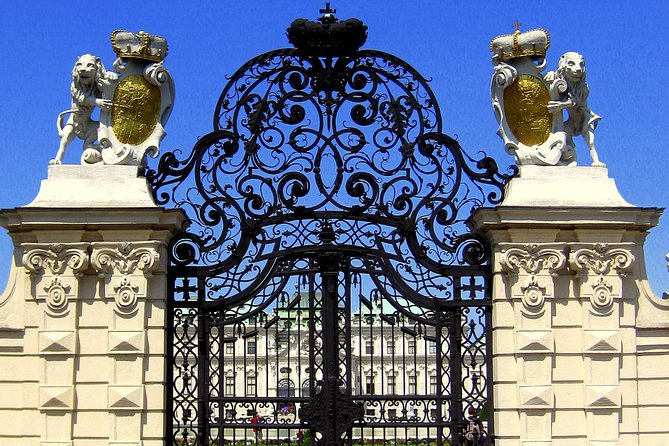
I especially like the way the walk begins at the Belvedere rather than in the old center. From the terrace, you get a broad view and a useful opening lesson. Prince Eugene built the palace as a display of military success and aristocratic power. In 1955, the same setting became tied to the signing of the Austrian State Treaty, which restored Austria’s independence and led to its policy of permanent neutrality.
That shift, from imperial ambition to postwar independence, gives the rest of the walk a strong foundation. You are not simply collecting landmarks. You are following Vienna’s change in identity.
More Walking Tours in Vienna
- Vienna: Guided Walking Tour of City Center Highlights
★ 4.7 · 4,989 reviews - Vienna: Vienna Central Cemetery Guided Walking Tour
★ 4.8 · 3,307 reviews - Vienna: Guided Walking Tour of City Highlights & Hidden Gems
★ 4.9 · 2,180 reviews
Starting at Belvedere Palace and its formal gardens
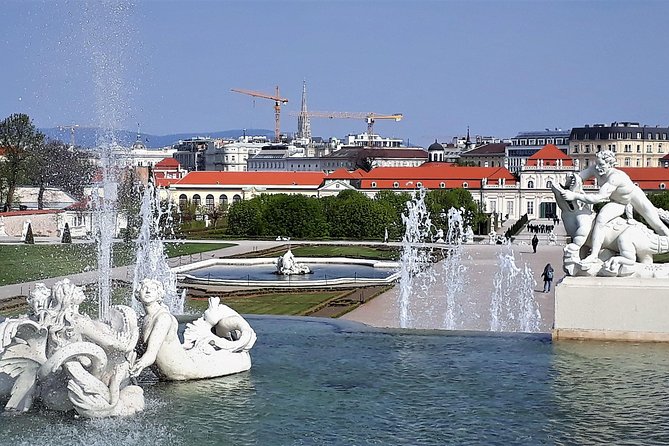
The Upper Belvedere is the first major stop, with about 20 minutes set aside for the palace and its terrace. The view is the point here. You look across the gardens and toward Vienna, with enough space to understand why this was an ideal place for a prince to display his success.
Prince Eugene never ruled Austria, but he was a major military figure. The palace reflects his rank, wealth, and ambition. Your guide uses the setting to explain how power was presented in imperial Vienna, then connects it to the political changes that followed the Second World War.
The Belvedere Gardens add another layer. Their long Baroque axis was designed around order, rank, and controlled beauty. As you descend through the gardens toward the Lower Belvedere, the design becomes a lesson in how rulers wanted society to look: carefully arranged, highly visible, and centered on authority.
The schedule allows only a short visit, so do not expect a full palace or garden tour. You may have time for photographs and an outdoor explanation rather than a leisurely visit to the art collections. That is fine if you are using this tour to get oriented, but you will want a separate visit if the Belvedere interiors are high on your list.
Schwarzenbergplatz and the uneasy meaning of liberation
At Schwarzenbergplatz, the Soviet War Memorial brings the war years into view. Built to honor Red Army soldiers who died fighting Nazi forces in Vienna, the monument carries a difficult double meaning. The Soviet army helped end Nazi rule, but Soviet forces also remained in Austria during the occupation period.
That tension is one of the best reasons to take this walk with a guide. A quick photograph cannot explain why the monument remains politically charged. You get a compact lesson in how liberation and occupation can exist in the same public memory.
The stop is scheduled for about 10 minutes. That is enough for the monument and its setting, though the topic deserves thoughtful attention. I would treat this as a place to listen rather than rush through for a picture.
Nearby, the Hochstrahlbrunnen and the French Embassy add an architectural contrast. The fountain celebrates Vienna’s Alpine water supply, while the embassy represents French diplomatic style and Allied presence. The guide connects these sights to the postwar city without turning every building into a long lecture.
Riding the Ringstraße instead of walking every block
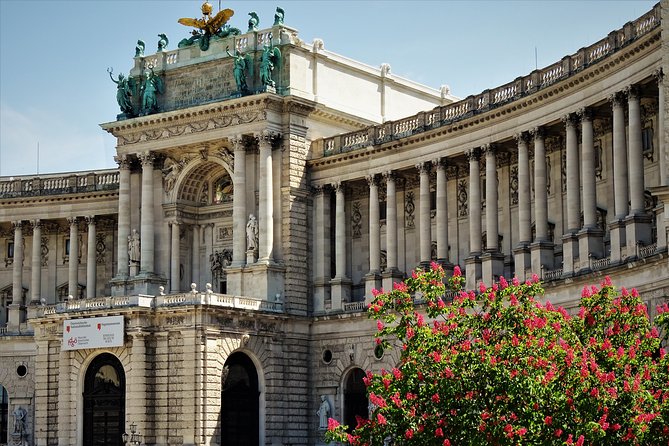
A short tram ride along the Ringstraße is one of the tour’s most practical features. Vienna’s grand circular boulevard was created in the 19th century as a showcase of imperial confidence. It later became a route through buildings that carried on despite wartime destruction.
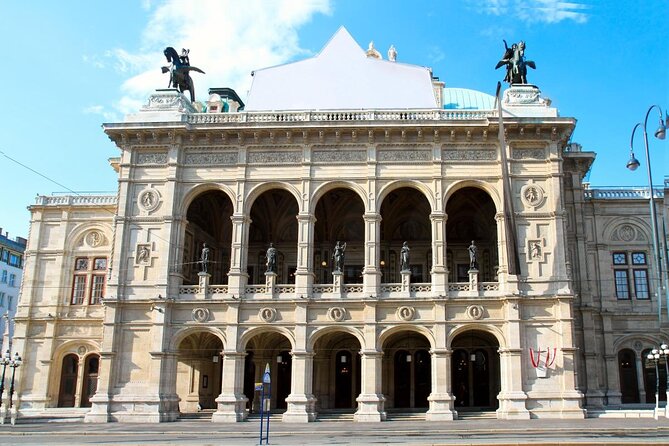
The rebuilt State Opera is especially useful as a symbol. The building represents cultural continuity after the war, when Vienna had to repair physical damage while also confronting the collapse of the old political order.
Using public transport changes the pace. You cover more of central Vienna, rest your feet, and see how the city works beyond the postcard center. The guide also helps you handle trams and subway connections, a real benefit if you are new to Vienna or visiting on a tight schedule.
Transport fares are not included, and the tour does not promise hotel drop-off. You should plan for that small extra cost and ask your guide how you will finish the route. The walk ends near St. Stephen’s Cathedral, which makes it easy to continue exploring the center, but you will need to arrange your own return.
More History Tours in Vienna:
- Vienna: Time Travel and Magic Vienna History Tour
★ 4.6 · 3,879 reviews - Vienna: World War II Historical Walking Tour
★ 4.8 · 1,772 reviews - Vienna Historic Center Small Group Walking Tour
★ 5.0 · 1,746 reviews - Time Travel-Magic Vienna History Tour Ticket
★ 4.5 · 1,099 reviews
Burggarten, Mozart, and a troubling footnote
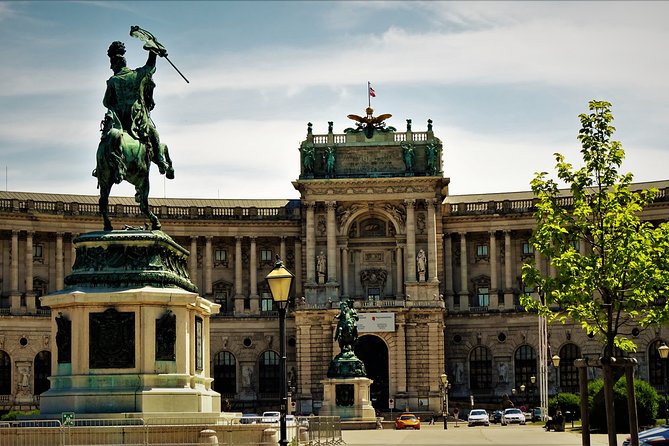
Burggarten offers a lighter pause. Mozart’s monument presides over a garden that once belonged to the imperial court, so even this pleasant green space connects back to monarchy and ceremony.
The nearby Academy of Fine Arts introduces one of Vienna’s most repeated historical footnotes: Adolf Hitler applied there and was rejected. Your guide can place that fact in context, but you should not mistake it for a complete explanation of the rise of Nazism. It is an intriguing detail, not the main subject of the tour.
The stop lasts about five minutes, so expect a brief explanation and time for a photograph. If you enjoy small details that connect famous people to ordinary city streets, this part should appeal to you.
MuseumsQuartier and the concrete Flak tower
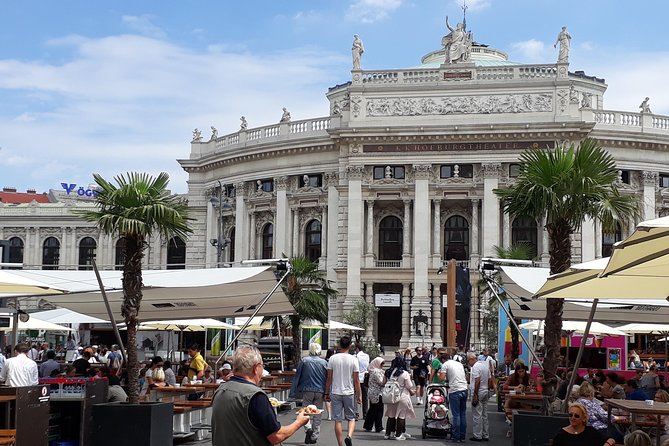
At MuseumsQuartier, Maria Theresa’s monument and the twin museums present Vienna in grand imperial form. The square is spacious and formal, with the old courtly order displayed in stone.
Then your attention shifts to one of Vienna’s six Flak towers. These enormous concrete anti-aircraft structures were built during the final years of the Nazi period. Their size and strength make them difficult to ignore, even among museums and palaces.
This is one of the most effective visual moments of the route. A Flak tower cannot be polished into a comfortable symbol. It is a reminder of a militarized city and of the destructive choices made during the war.
The tower is not treated as a museum visit. You view it from the city and discuss what it reveals about Vienna’s wartime defenses. The 10-minute stop is brief, but the contrast with the elegant museums nearby is powerful.
Heldenplatz and the speech that changed its meaning
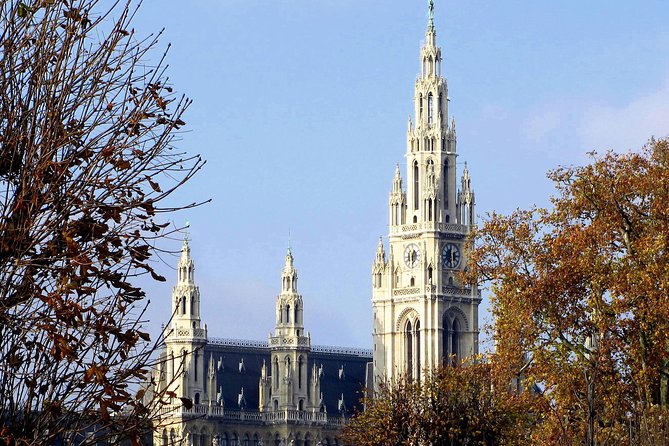
Heldenplatz is one of Vienna’s most important public squares. It was designed for imperial display and military ceremony, but its most infamous modern use came in March 1938, when Hitler addressed the crowd after the Anschluss, the annexation of Austria into Nazi Germany.
This is a place where architecture and memory collide. The square still looks monumental, but its meaning can no longer be separated from the political spectacle staged there.
The surrounding buildings create a broad panorama of Austrian power and culture. Parliament, city hall, museums, and the Burgtheater are all part of the view, while the Hofburg anchors the old imperial center. Your guide helps you understand how a space built to project confidence can also reveal the danger of mass politics.
The tour allows about 15 minutes here. That is enough to orient yourself and hear the main story, though you may wish for more time if this period interests you greatly.
The Hofburg and seven centuries of authority
The Hofburg is less one palace than a city within the city. For seven centuries, it served as a seat of power for dukes, emperors, and the Habsburg court. Today, it is tied to the Austrian presidency.
This makes it a useful bridge between monarchy and republic. You can look at the imperial façades while discussing how political authority changed after 1918 and again after 1945.
The 15-minute visit is exterior-focused. You will not get a full tour of every wing, collection, or ceremonial room. That is an important limit. I would see this walk as a way to understand the Hofburg’s role before deciding which interiors deserve your own time.
The route then moves through streets where imperial façades meet churches, shops, and present-day commercial life. That change in atmosphere matters. Vienna’s center is not a preserved stage set. It is a working district where ceremony, worship, shopping, and government share the same few blocks.
Judenplatz and the Nameless Library
Judenplatz is the quietest and most important stop on the route. The square occupies the site of Vienna’s medieval Jewish community, which was destroyed in 1421. The Holocaust memorial known as the Nameless Library commemorates the 65,000 Austrian Jews murdered during the Shoah.
The memorial’s sealed-book design makes the absence feel physical. You cannot browse the books or enter the library. The building suggests lives, stories, and names that were taken away.
About 15 minutes are scheduled here. That may seem short, but the stop does not need a long performance. I appreciate that the memorial is given a central place in the walk rather than treated as a quick addition to a list of sights.
This is also a useful reminder that Vienna’s painful past reaches far beyond 1938 to 1945. The destruction of the medieval Jewish community shows that persecution did not begin with the Nazi period. The guide can help you place the Holocaust within a much longer story of antisemitism in the city.
The Plague Column and St. Stephen’s Cathedral
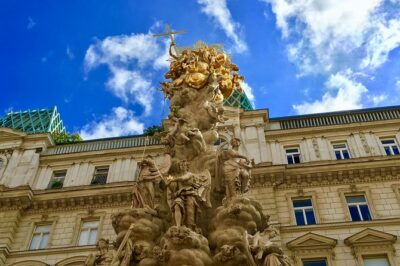
The Plague Column, or Pestsäule, brings you back to the Baroque period. Its religious imagery reflects the Counter-Reformation and Vienna’s effort to express faith and authority after a major crisis.
At five minutes, this is a short stop, but it helps you read the old center as a place shaped by both devotion and political messaging. The monument is not only a memorial to disease. It also shows how rulers and religious institutions used public art to guide how people understood catastrophe.
The final stop is St. Stephen’s Cathedral, Vienna’s Gothic heart. The cathedral’s roof and stonework give the center its most recognizable profile, but the WWII story here is grim. In April 1945, parts of the cathedral burned after looters set fire to nearby shops.
That detail makes the ending especially fitting. The walk began with a palace linked to Austria’s postwar recovery and ends with a cathedral damaged during the war’s chaotic final days. You see how Vienna survived, repaired itself, and carried its scars forward.
About 10 minutes are planned here. The tour does not include paid entry, interior exploration, or tower visits. If you want to see the cathedral inside, plan a separate visit after the walk.
How the private format affects the experience
The private setup is the strongest practical reason to choose this tour. Only your group participates, with up to 10 people, so you can ask questions without competing with a large crowd. The guide can also adjust the emphasis if you have already visited some major sights.
The schedule has been made more flexible for people arriving before or after a cruise, and pickup is available from hotels, vacation rentals, Vienna’s main train stations, the Reichsbrücke pier, and the A-Rosa pier at Handelskai 265. Start times are listed as 9:30 a.m. and 2 p.m., with other meeting points possible by arrangement.
The guides bring different personalities. Walter is praised for organization, humor, broad conversation, and his command of Vienna’s subway, train, and tram system. Brigitte is noted for warmth, local restaurant suggestions, patience, and thoughtful help beyond the formal route. Alex is described as fun and willing to chase down an answer to an off-topic question.
That personal element matters. A private guide can suggest where to eat, explain how to return to your hotel, or adjust the route around your plans. One important practical tip comes from a communication problem: if you contact the guide before the tour, identify yourself and mention that you booked through Viator. Texting may be easier than calling from an unfamiliar international number.
Is $342.40 a fair price?
The group price is $342.40 for up to 10 people. For one person, that is expensive. For two people, it is still a serious splurge. For a group of six to ten, the arithmetic changes sharply, and you are paying for a private licensed Austria Guide rather than a shared walk.
At the full group limit, the cost works out to about $34.24 per person. At four people, it is about $85.60 each. That makes this most attractive for families, couples traveling with friends, or a small cruise group that wants one flexible introduction to Vienna.
The value is not in included admissions. The listed stops are free to visit, and public transport is extra. You are paying for the guide’s time, route planning, local context, and ability to connect places that might otherwise feel unrelated.
I would not choose it mainly to save money. I would choose it if you have only a short stay, want help with transport, or prefer a private conversation over a large group format.
Who will get the most from this walk?
I think this tour suits a first visit, especially if you have three days or less in Vienna. It gives you a usable map of the center and introduces enough political background to make later museum visits more meaningful.
It also fits a day trip from Bratislava or a cruise stop. The three-hour length covers major sights without taking your entire day, and the pickup options reduce the planning burden.
You should have moderate physical fitness. The tour combines walking, outdoor standing, stairs or uneven pavement that may occur in historic areas, and public transport. Exact distances are not provided, so ask about the day’s route if mobility is a concern.
This is a good match if you enjoy WWII history, political memory, architecture, and local stories. It is less suitable if you want long interior visits, art interpretation at the Belvedere, or a slow coffeehouse afternoon. One guide did manage to fit in coffee during three hours, but you should treat that as dependent on the group and the pace.
Free cancellation is available up to 24 hours before the start time. Changes or cancellations made later are not accepted for a refund. Service animals are allowed, but pets are not permitted in some areas visited.
Should you book it?
Book this Vienna walk if you want a fast, personal introduction that treats the city as more than imperial decoration. The route covers Belvedere, the Soviet memorial, the Ringstraße, Heldenplatz, the Hofburg, Judenplatz, the Plague Column, and St. Stephen’s Cathedral, while keeping WWII and postwar Austria at its core.
I would book it for a group of four or more, particularly if Walter, Brigitte, Alex, or another guide from the team is available. Their strongest qualities are clear communication, humor, transport help, and the ability to adapt the day to your interests.
Skip it if you need a low-cost walking tour, extensive time inside museums, or a route with no public transport expense. For everyone else, it is a thoughtful way to get your bearings, understand Vienna’s difficult 20th century, and leave with a practical plan for the rest of your stay.
FAQ
How long does the Vienna history walk last?
The tour lasts approximately three hours.
What start times are available?
The listed start times are 9:30 a.m. and 2 p.m. Other meeting points can be arranged.
Where can pickup take place?
Pickup is offered from hotels and vacation rentals in town, the Reichsbrücke pier, Vienna Hauptbahnhof, Vienna West station, and the A-Rosa pier at Handelskai 265. Other meeting locations may be arranged.
Is public transportation included?
No. Public transport to and from the attractions is not included. The tour uses or may use Vienna’s tram and subway network, so you should budget separately for those fares.
Is admission to the sights included?
The listed stops have no admission charge. The experience is primarily an outdoor walking tour, and paid interior visits are not included.
What is the cancellation policy?
You can cancel up to 24 hours before the experience begins for a full refund. Cancellations or changes made less than 24 hours before the start time are not accepted for a refund.
Just added in Vienna
- Vienna: Austrian Wine Tasting Experience★ 4.2 · 2 reviews
- World War II History Vienna Old Town Private Walking Tour★ 4.8 · 9 reviews
- Vienna_ Meet Beethoven Life Private Guided Walking Tour★ 5.0 · 1 review
- Vienna: Wine Tasting Tour★ 4.8 · 61 reviews
- Vienna: Wine Tasting E-Bike Tour★ 4.9 · 46 reviews
- Vienna: Wine Tasting at Schönbrunn Palace★ 4.3 · 71 reviews
- Vienna: Winery and Wine Tasting Tour with a Wine Expert★ 5.0 · 5 reviews
- Vienna: Concert by the Vienna Baroque Orchestra★ 4.6 · 56 reviews
Historical Tours, compared.
Vienna Historic Center Small Group Walking Tour
Read our review →
Skip-the-Line Schonbrunn Palace Guided Tour and Vienna Historical City Tour
Read our review →
Vienna Mozart Concert in Historical Costumes at the Musikverein
Read our review →
Browse the lists this tour appears in