
Reviewed · WALKING TOURS
Private Vienna Art Nouveau Walking Tour
Vienna’s rebel style is hiding in plain sight. This private three-hour walk brings Vienna Secession and Jugendstil into focus, linking the Secession Building, Otto Wagner’s elegant metro stations, the Postal Savings Bank, and Naschmarkt. I especially like the private format, which lets your guide adjust the pace and answer questions across art, architecture, and city history. I also like the unusual route: Vienna’s old transit architecture becomes part of the story, not just a backdrop for photographs.
The main consideration is cost. At $490 per group of up to 10, the tour can be good value for a full group, but expensive for one or two people. You should also budget for admission to the Secession Building and, when open, the Otto Wagner Pavilion.
In This Review
- Five details that make this Vienna walk worthwhile
- Why Vienna Art Nouveau deserves a dedicated walk
- Starting near the Secession Building
- Stadtpark and the shift from art to public life
- Karlsplatz, where transit became design
- Otto Wagner Pavilion and a small museum visit
- Inside the Postal Savings Bank’s modern Vienna
- Naschmarkt adds a taste of present-day Vienna
- What the private format changes
- Extra costs and timing to plan around
- Who will enjoy this walk most
- Should you book the Vienna Art Nouveau walk?
- FAQ
- How long is the Private Vienna Art Nouveau Walking Tour?
- How many people can join the private tour?
- What is included in the price?
- Are museum admission fees included?
- How much does the Otto Wagner Pavilion cost?
- Where does the tour begin?
- Can I cancel for a full refund?
Five details that make this Vienna walk worthwhile
- Klimt’s Beethoven Frieze: The Secession Building offers the chance to see Gustav Klimt’s famous work, with admission paid separately.
- Otto Wagner’s metro architecture: Former Stadtbahn stations turn ordinary public transport design into a lesson in modern architecture.
- A truly private group: Only your party takes part, so the guide can respond to your interests and questions.
- Useful guide-led context: Guides such as Barbara, Wolfgang, and Annelie have been praised for explaining both Vienna Secession and the city around it.
- A practical city route: The walk connects Karlsplatz, Stadtpark, the Postal Savings Bank, and Naschmarkt, giving you art, architecture, and a food market in one outing.
- Simple cancellation terms: You can cancel for a full refund up to 24 hours before the start time.
Why Vienna Art Nouveau deserves a dedicated walk
Vienna’s Art Nouveau is not confined to one museum. It appears on railway pavilions, apartment façades, public buildings, exhibition halls, and decorative interiors. The local version is often called Jugendstil or Vienna Secession, and it grew from a group of artists who wanted a break from the city’s established art institutions.
That rebellion gives the style a useful story. You are not simply looking at curved lines and floral decoration. You are seeing a city at a turning point, when artists and architects were questioning old rules and looking for a modern visual language.
This tour works well because it connects those ideas to actual places. You begin with the Secession Building, move through public spaces and transport architecture, and finish near the Naschmarkt area. The result is less like a list of pretty façades and more like a lesson in how new art entered daily Viennese life.
The private setting matters here. Art Nouveau can be easy to admire without understanding. A guide can point out the materials, symbols, symmetry, and practical purpose behind each building. Barbara has been praised for handling varied questions and linking Vienna’s past with its present. Wolfgang has also guided the walk as an accessible introduction for someone new to the movement. Annelie has been singled out for her strong explanations of Vienna Secession and Vienna itself.
More Walking Tours in Vienna
- Vienna: Guided Walking Tour of City Center Highlights
★ 4.7 · 4,989 reviews - Vienna: Vienna Central Cemetery Guided Walking Tour
★ 4.8 · 3,307 reviews - Vienna: Guided Walking Tour of City Highlights & Hidden Gems
★ 4.9 · 2,180 reviews
Starting near the Secession Building
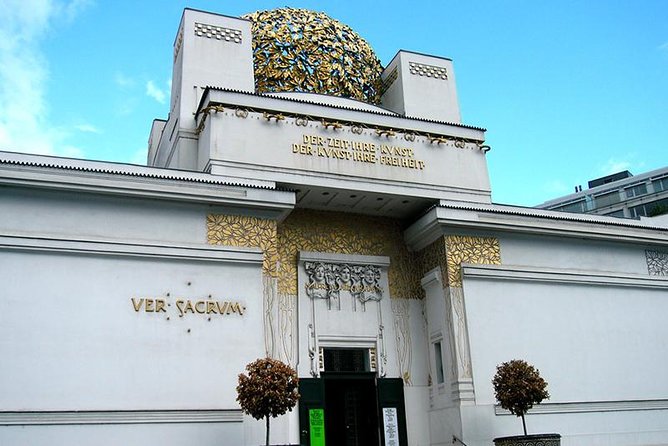
The tour begins at Operngasse 7 in Vienna’s 1010 district. The first major stop is the Secession Building, an exhibition hall completed in 1898 by Joseph Maria Olbrich.
The building was created as an architectural statement for the Vienna Secession, a group of artists who broke away from the long-established fine art institution. Its unusual design makes that point before you even enter. The building was meant to announce a new direction, and its famous dome of gilded laurel leaves gives it a memorable profile.
Inside, you may see Gustav Klimt’s Beethoven Frieze. This large work was painted for one of the original Secession exhibitions and remains the artistic centerpiece for many people on the tour. The visit is a strong reason to choose this experience if you care about Klimt, but admission is not included.
The Secession Building stop is scheduled for about 30 minutes. That is enough for an introduction and a focused visit, though you should not expect an extended museum session. If seeing the Beethoven Frieze is a priority, check the opening situation for your date. The stated admission is €9.50 for adults and €6 for students and seniors when touring Tuesday through Sunday.
This is also a place where a private guide earns the fee. You can ask why the Secessionists broke away, how the building relates to the wider Art Nouveau movement, and how Klimt’s work fits into the exhibition’s original purpose. Without that context, you might spend your time admiring the dome and miss the building’s bold cultural message.
Stadtpark and the shift from art to public life
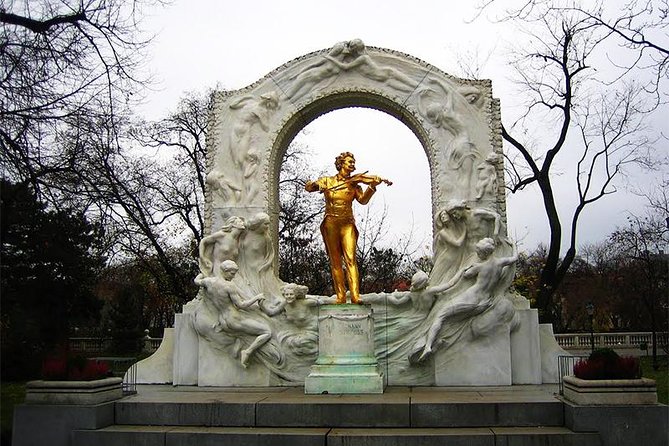
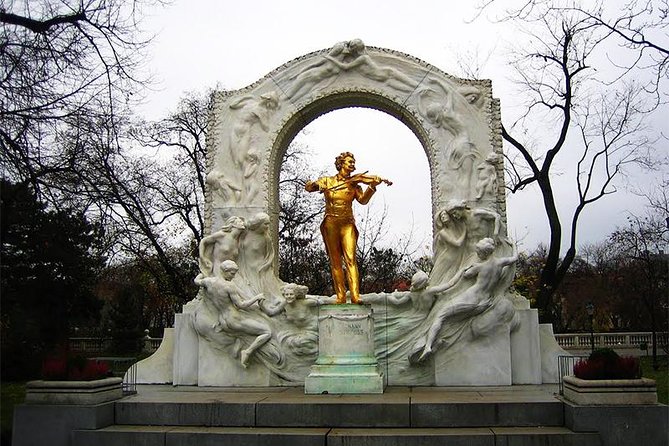
The next stop is Stadtpark, a large municipal park extending from the Ringstrasse in Vienna’s first district toward Heumarkt. The scheduled visit lasts about 15 minutes and admission is free.
This is a shorter pause, but it gives the tour breathing room. After the intensity of the Secession Building, the park shows how Vienna’s grand civic spaces fit into the city’s daily rhythm. Your guide can also use the setting to connect public planning, architecture, and the city’s changing identity.
Do not expect Stadtpark to be an Art Nouveau building visit in the same way as the Secession or Otto Wagner Pavilion. Its value is as a transition point. You are moving from a purpose-built art manifesto toward the infrastructure and public architecture that made modern Vienna possible.
The route involves walking, so comfortable shoes are sensible. The tour is near public transportation, and most people can participate, but you should be ready to spend about three hours on foot with stops along the way.
Karlsplatz, where transit became design
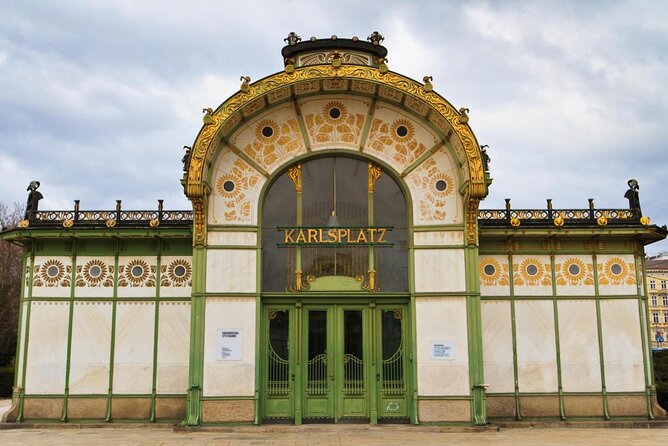
Karlsplatz is one of the tour’s most rewarding areas. The former Karlsplatz Stadtbahn Station is a well-known example of Jugendstil architecture, designed by Otto Wagner with Joseph Maria Olbrich.
Wagner was an adviser to Vienna’s Transport Commission, and his work shows that modern design was not limited to galleries or wealthy homes. He brought careful ornament and clean structure into the city’s transport system. That makes the station especially useful for understanding the movement. Art Nouveau here was not just decoration added after the fact. It was part of the public experience of moving through Vienna.
The stop at Karlsplatz lasts about 20 minutes. The above-ground station buildings are the main focus, and admission is not included. You will want your guide to explain how the station relates to the wider Stadtbahn system and why Wagner’s work remains important to Vienna’s architectural identity.
For me, this is where the tour’s theme becomes clearest. A private home can show you taste. A transit station shows you how a city wanted modern life to look.
A completely different kind of day:
- Vienna: Vivaldi’s Four Seasons Concert in Karlskirche
★ 4.7 · 14,951 reviews - Vienna: Spanish Riding School Training
★ 3.9 · 9,281 reviews - Vienna: Schönbrunn Palace & Gardens Skip-the-Line Tour
★ 4.7 · 7,739 reviews - Vienna: Light of Creation Votive Church Immersive Light Show
★ 4.8 · 6,779 reviews
Otto Wagner Pavilion and a small museum visit
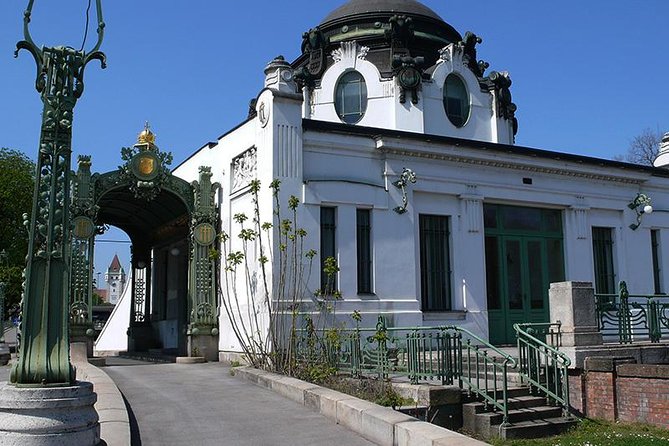
The Otto Wagner Pavilion at Karlsplatz is housed in one of the architect’s 1898 Art Nouveau station buildings. The exhibit covers Wagner’s life and work, giving you a more focused look at the man behind several of the tour’s buildings.
The scheduled stop is about 15 minutes. That is brief, but it can sharpen what you have already seen at Karlsplatz. Instead of viewing Wagner’s architecture only from the outside, you get a compact setting devoted to his work.
The Pavilion is open as a museum from April through October. Admission is listed as €5 for general admission and €4 for senior citizens, students, Vienna Card holders, and people with disabilities. Since the visit depends on the museum being open, ask about its availability if you are booking outside those months.
This stop is most useful for people who want structure and names attached to the architecture. If you already know Wagner’s work well, the Pavilion may feel quick. If you are new to him, it gives you a helpful reference point before the tour continues.
Inside the Postal Savings Bank’s modern Vienna
The Austrian Postal Savings Bank, or Postsparkasse, is another Otto Wagner building and an important work of Vienna Secession architecture. The scheduled stop lasts about 25 minutes, and admission is free.
This building helps show how the new style moved into serious civic and commercial architecture. Wagner designed it as a working institution, not a fantasy pavilion. That practical purpose makes the details more interesting. You can look at the exterior and ask how design choices serve the building’s public role.
The Postsparkasse is also a good counterpoint to the Secession Building. Olbrich’s exhibition hall announces artistic rebellion, while Wagner’s Postal Savings Bank shows modern design operating inside the city’s everyday systems.
A guide can make this stop much more than a façade photograph. Ask about the building’s place in Vienna Secession, the difference between decoration and structure, and how Wagner’s ideas appear across the route. The 25-minute timing should allow a measured explanation without turning the walk into a long architectural lecture.
Naschmarkt adds a taste of present-day Vienna
The tour continues to Naschmarkt, Vienna’s best-known culinary market. The market has around 120 colorful stalls and lively restaurants, and the scheduled stop lasts about 10 minutes.
Naschmarkt is not an Art Nouveau museum, and that is precisely why it works near the end of the walk. You finish among food stalls, restaurants, and ordinary city activity rather than at another formal monument. It gives you a chance to see the area as a living part of Vienna.
The stop is short, so do not plan on a full meal during the tour. Food and drinks are not included. If you want to return later, the market can be a useful place to continue your own exploration after the guide says goodbye.
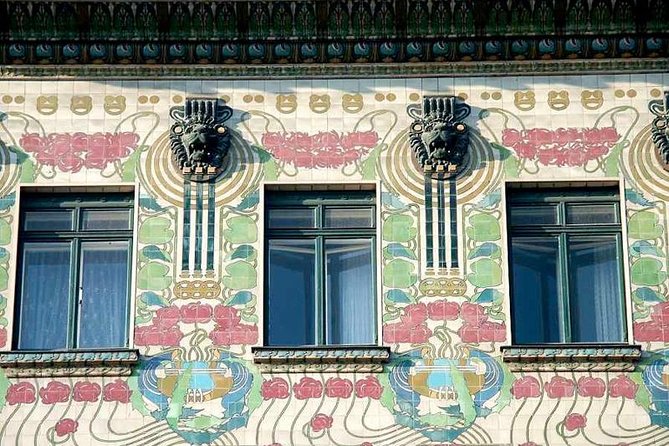
The nearby architectural sights also matter. One review specifically praised seeing the Majolica Houses near Naschmarkt, as well as the Zacherl House in central Vienna and the Beethoven Frieze at the Secession. Those buildings are not all listed as timed stops in the provided route, so you should ask your guide exactly what can be included on your date. A private format may give you more room to discuss nearby examples, but you should not assume every site is guaranteed.
What the private format changes
A private tour is not automatically better than a group tour, but this subject benefits from personal attention. You are moving between art, architecture, transportation, and city history. The right guide can adjust the balance depending on your interests.
If you care most about Klimt, you can focus questions on the Beethoven Frieze and the Secession movement. If Otto Wagner interests you more, you can spend more time comparing the Karlsplatz stations with the Postal Savings Bank. If you are new to Art Nouveau, you can ask for basic explanations without feeling you are slowing down a larger group.
The tour accommodates up to 10 people. At $490 per group, the value improves as your party gets larger. A group of 10 pays about $49 per person before entrance fees, while two people would pay $245 each. That is a steep price for a short walk if you are traveling as a couple, but more reasonable for a family or group of friends that wants a dedicated guide.
The booking pattern suggests you should plan ahead. It is booked, on average, 11 days in advance. That is not a guarantee that dates will sell out, but it is a useful reason not to leave the reservation until the last minute.
Hotel pickup and drop-off are not included. Pickup is also listed among the features, so confirm the exact meeting arrangement before booking. The stated start point is Operngasse 7, and the end point is in Vienna. Confirmation is provided when you book.
Extra costs and timing to plan around
The advertised price covers the three-hour guided walk and a professional guide. It does not cover food, drinks, or entrance fees.
The two main possible admissions are:
- The Secession House: €9.50 for adults and €6 for students and seniors, Tuesday through Sunday.
- The Otto Wagner Pavilion: €5 general admission or €4 for seniors, students, Vienna Card holders, and people with disabilities, when the museum is open from April through October.
The guide can help you pay for the Secession House, which makes that part easier. Still, carry a little extra budget for admissions, especially if both interior visits are included on your date.
The itinerary adds up to about 115 minutes of scheduled stop time, leaving the rest of the three-hour tour for walking and explanation. That is a sensible pace for central Vienna. You will see several locations, but you are not rushing through ten museums.
Who will enjoy this walk most
I would recommend this tour first to people who already know they like architecture, design, Klimt, or city planning. The route rewards curiosity. You will get more from it if you want to understand why a station looks the way it does, not only where to take a photograph.
It also suits couples, families, and small groups who want a flexible conversation rather than a fixed lecture. The private arrangement is especially useful when members of your group have different levels of interest. A guide such as Wolfgang can make the movement accessible to someone new to Art Nouveau, while a guide such as Annelie can provide more detailed discussion for someone already interested in Secessionism.
I would be less enthusiastic if you want a food tour, a full museum day, or a broad overview of all Vienna sightseeing. Naschmarkt is only a short stop, and the walk is tightly focused on Art Nouveau and related architecture. The price may also be hard to justify for one or two people unless this subject is a major priority.
Should you book the Vienna Art Nouveau walk?
Book it if you want Vienna’s design story explained by a guide who can connect Klimt, Olbrich, Wagner, public transit, and civic buildings. The route offers more substance than a simple photo walk, and the private format gives you room to ask the questions that make architecture memorable.
For the best value, bring a group of several people and reserve around two weeks ahead. Check the Secession and Pavilion opening details, set aside admission money, and wear shoes suited to three hours of walking.
If you only want to see Vienna’s famous sights from the outside, you can explore much of the route independently. If you want to understand why these places matter, this tour earns its place in your schedule.
FAQ
How long is the Private Vienna Art Nouveau Walking Tour?
The tour lasts approximately three hours.
How many people can join the private tour?
The tour is private for your group and can include up to 10 people.
What is included in the price?
The price includes the three-hour guided walk and a professional guide.
Are museum admission fees included?
No. Admission fees are separate. The Secession House and Otto Wagner Pavilion may both require payment.
How much does the Otto Wagner Pavilion cost?
From April through October, admission is listed as €5 for general admission and €4 for senior citizens, students, Vienna Card holders, and people with disabilities.
Where does the tour begin?
The stated meeting point is Operngasse 7, 1010 Wien, Austria.
Can I cancel for a full refund?
Yes. You can cancel up to 24 hours before the experience begins for a full refund. Changes or cancellations made less than 24 hours before the start time are not accepted for a refund.
Just added in Vienna
- Vienna: Austrian Wine Tasting Experience★ 4.2 · 2 reviews
- World War II History Vienna Old Town Private Walking Tour★ 4.8 · 9 reviews
- Vienna_ Meet Beethoven Life Private Guided Walking Tour★ 5.0 · 1 review
- Vienna: Wine Tasting Tour★ 4.8 · 61 reviews
- Vienna: Winery and Wine Tasting Tour with a Wine Expert★ 5.0 · 5 reviews
- Vienna: Wine Tasting E-Bike Tour★ 4.9 · 46 reviews
- Vienna: Wine Tasting at Schönbrunn Palace★ 4.3 · 71 reviews
- Vienna: Concert by the Vienna Baroque Orchestra★ 4.6 · 56 reviews
Walking Tours, compared.
Guided Walking Tour of City Center Highlights
Read our review →
Guided Walking Tour of City Highlights & Hidden Gems
Read our review →
Vienna Historic Center Small Group Walking Tour
Read our review →
Browse the lists this tour appears in