
Reviewed · WALKING TOURS
Private Ringstrasse Project Walking Tour
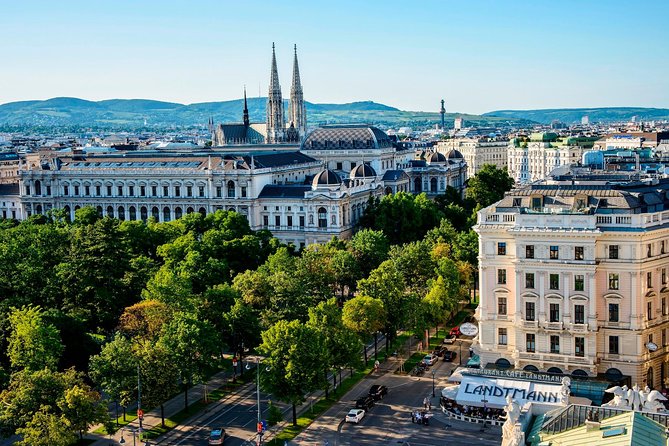
Vienna’s grand circle has plenty to say. This private, three-hour walk turns the Ringstrasse from a parade of impressive buildings into a readable story about empire, money, class, architecture, and café life. I like the historical depth, especially the explanation of why particular architectural styles were chosen. I also like the private format, which lets your guide shape the walk for your group. The main consideration is price: at $490 for up to 10 people, it makes the most sense for a family or small group, not a solo visitor.
Starting at City Hall, you follow the boulevard’s political and architectural story with a professional guide. The tour ends at Café Schwarzenberg, founded in 1861, where you get a look at Vienna’s famous coffeehouse tradition. Food and drinks cost extra, and the tour does not include hotel pickup or drop-off.
In This Review
- Key points to know before booking
- Why the Ringstrasse matters to Vienna
- Meeting at City Hall and starting the walk
- Reading Vienna’s public buildings through style
- The private apartment houses and a social gamble
- The Ringstrasse as Vienna’s public catwalk
- Finishing at Café Schwarzenberg
- A guide-led experience with room to ask questions
- Timing, transportation, and walking comfort
- What the $490 price really means
- Who will get the most from this walk
- Cancellation and booking notes
- Should you book the Private Ringstrasse Project Walking Tour?
- FAQ
- How long is the Private Ringstrasse Project Walking Tour?
- Where does the tour begin?
- Where does the tour end?
- Is this a private tour?
- What does the tour cost?
- Are food and drinks included?
- Is hotel pickup included?
- Can children join the tour?
Key points to know before booking
- The Ringstrasse becomes a history lesson: You learn why Vienna replaced its old fortifications with a grand circular boulevard and how that decision changed the city.
- City Hall is the opening landmark: The tour begins at Universitätsring 4, near the impressive Rathaus, a useful central meeting point.
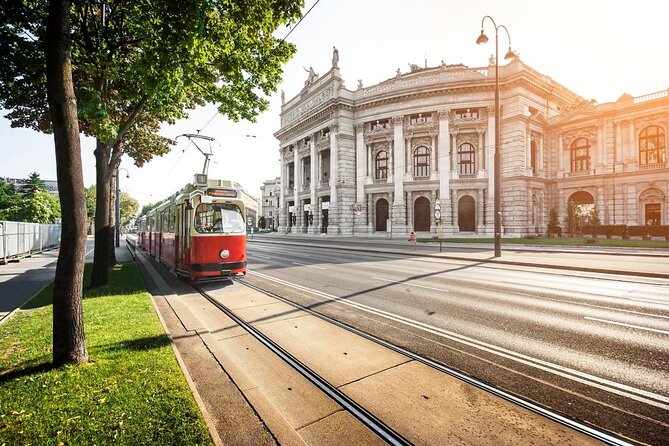
- Architecture has a political purpose: Your guide explains why public buildings used different historical styles and what those choices said about Vienna.
- Private guiding changes the pace: Only your group participates, so you can ask questions and spend more time on subjects that interest you.
- Café Schwarzenberg supplies the human finish: The walk ends with Vienna’s café culture, not just another exterior view.
- The price favors groups: $490 covers up to 10 people, making the per-person cost far better when shared.
Why the Ringstrasse matters to Vienna
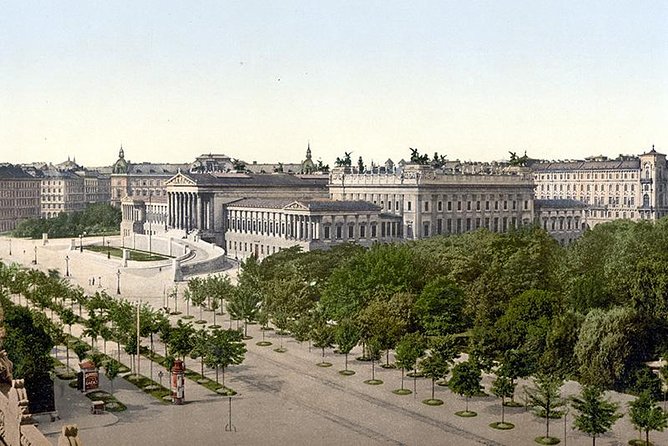
The Ringstrasse is more than a wide road around central Vienna. It was a major city project with political, social, and financial consequences. This tour focuses on those forces, which is why it offers more than a standard sightseeing loop.
The boulevard was created after Vienna’s old defensive walls lost their military purpose. The new road opened space for major public buildings and privately financed apartment houses. The plan was ambitious: turn the former edge of the old city into a grand public address.
That change affected who could live in Vienna, where people met, and how the city presented itself. The Ring became a public stage. People came to see and be seen, meet friends, attend cultural institutions, and take part in the city’s social life.
I like this approach because it gives you a way to read the buildings. Instead of simply hearing that a building is grand, you learn why it was commissioned, which style it uses, and what that style meant in the political culture of the time.
More Walking Tours in Vienna
- Vienna: Guided Walking Tour of City Center Highlights
★ 4.7 · 4,989 reviews - Vienna: Vienna Central Cemetery Guided Walking Tour
★ 4.8 · 3,307 reviews - Vienna: Guided Walking Tour of City Highlights & Hidden Gems
★ 4.9 · 2,180 reviews
Meeting at City Hall and starting the walk
The tour begins in front of Vienna’s City Hall, or Rathaus, at Universitätsring 4. This is a strong starting point because the building immediately sets the tone. It is large, formal, and designed to project civic importance.
Your guide, described as a historian, introduces the Ringstrasse project and the promise that many public buildings would line the new boulevard. From there, the walk becomes a discussion of urban planning, public power, and architectural fashion.
The exact route between the start and the café is not fully specified, so you should expect a guided walk through the Ringstrasse district rather than a fixed list of interior visits. The emphasis is on the buildings, their setting, and the story behind them.
That distinction matters. If you want admission to several museums or a tour inside City Hall, this experience may not be the right fit. If you want someone to explain what you are seeing as you walk, it fits much better.
Reading Vienna’s public buildings through style
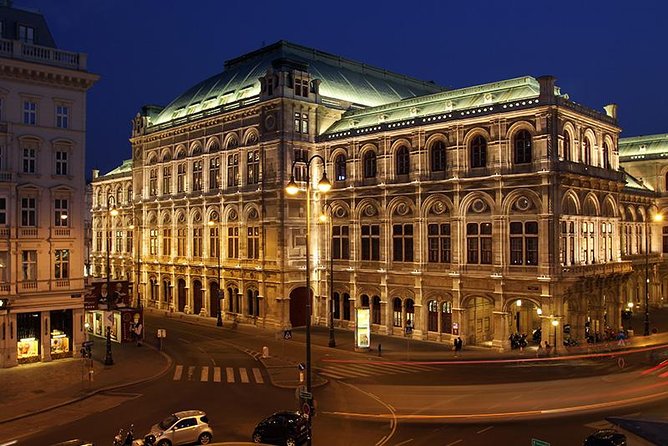
One of the best parts of this experience is the explanation of architectural style. The Ringstrasse became a place where architects could use historical forms to give new institutions a sense of authority.
Your guide discusses why certain styles were selected for particular buildings. This is not just a lesson in decoration. A building’s appearance could suggest a connection to a particular age, political tradition, or cultural ideal.
The project also gave leading architects a chance to win major commissions. Success along the Ring could transform an architect’s professional reputation. That human angle adds useful tension to the grand buildings. You are not only looking at stone and ornament. You are looking at a competitive building program that shaped careers.
I especially like this part for visitors who often feel lost in Vienna’s formal architecture. The Ringstrasse can seem like one long procession of impressive façades. A guide who explains the choices behind those façades gives you a set of questions to carry through the rest of your sightseeing.
Ask why this building looks the way it does. Ask who wanted it built. Ask what message the style was meant to send. The tour is designed to help you ask those questions.
The private apartment houses and a social gamble
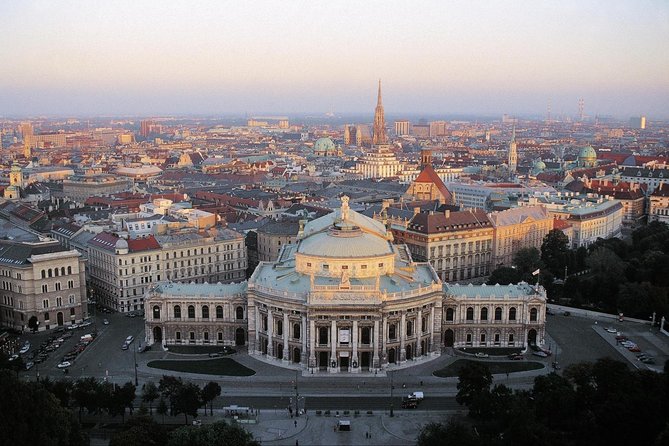
The Ringstrasse project was supposed to be financed partly through privately funded apartment houses. That plan ran into a practical problem. The boulevard would take years to finish, and few people wanted to buy into a district that was still a construction site.
There was also a social concern. Vienna’s established nobility did not know who would move into the new area. The Ring represented unfamiliar territory, and some wealthy residents worried that newly rich people could become their neighbors.
This is one of the tour’s most useful themes because it moves beyond official buildings and famous names. You begin to see the Ring as a social experiment. The question was not simply how to build a handsome boulevard. It was also how to create a new community and decide who belonged there.
Your guide connects the physical growth of Vienna with changes in class and status. That context can make the apartment houses along the route just as interesting as the grand public institutions.
For me, this is the sort of detail that justifies hiring a guide. You can walk past an apartment façade on your own, but you are unlikely to know that the early development of the Ring raised doubts about its cost, future residents, and social identity.
A completely different kind of day:
- Vienna: Vivaldi’s Four Seasons Concert in Karlskirche
★ 4.7 · 14,951 reviews - Vienna: Spanish Riding School Training
★ 3.9 · 9,281 reviews - Vienna: Schönbrunn Palace & Gardens Skip-the-Line Tour
★ 4.7 · 7,739 reviews - Vienna: Light of Creation Votive Church Immersive Light Show
★ 4.8 · 6,779 reviews
The Ringstrasse as Vienna’s public catwalk
Once the boulevard was established, it became a social meeting place. Cafés and restaurants appeared along the route, helping the Ring function as a public catwalk where people could meet, observe one another, and participate in city life.
That idea gives the tour a lighter and more human side. Vienna’s grand boulevard was not only about ministries, monuments, and official institutions. It was also about daily habits: where people paused, where they drank coffee, and how public spaces shaped social life.
The tour’s focus on places to eat, drink, and live like a Viennese is useful for a first visit. You are not simply collecting landmarks. You are getting suggestions for how to spend time in the district after the walk ends.
The phrase people watching is especially fitting here. The Ring was designed to be seen, and it was also designed for people to see one another. That social function helps explain why cafés became so important to Vienna’s identity.
Finishing at Café Schwarzenberg
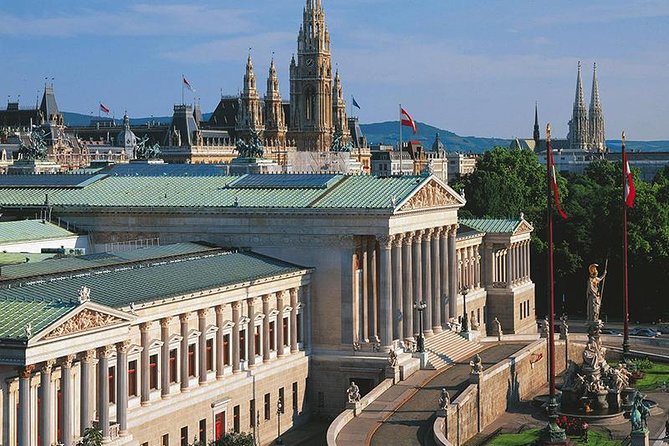
The walk ends at Café Schwarzenberg, established in 1861. This is a particularly good final stop because it connects the boulevard’s public architecture with Vienna’s café culture.
The café visit is an introduction to the role cafés played in the second half of the 19th century. You can expect discussion and atmosphere rather than a meal included in the tour price. Food and drinks are not covered, so budget separately if you want coffee, dessert, or something more substantial.
Café Schwarzenberg also gives the itinerary a welcome change of pace. Three hours of architecture and urban history can feel dense, especially if you are not used to guided walks focused on political ideas. Ending in a historic café makes the subject more tangible.
The provided details do not promise a reserved table, a tasting, or a full café service. Think of it as a stop for insight into the tradition, with any purchases handled separately.
A guide-led experience with room to ask questions
The tour is private, and only your group participates. That is the central advantage over a large group walk. You can ask about a building that catches your eye, request more detail about Vienna around 1900, or tell the guide that your family needs a simpler explanation.
One named guide connected with the experience is Ana. She received especially strong praise for providing context and depth and for being a pleasant companion. That gives you a useful sense of the intended guiding style: informed, personal, and conversational rather than rushed.
No guide can guarantee the same personality or exact route every day, but the historian-led format is promising for visitors who care about causes and consequences. You are not just being shown the Ringstrasse. You are being asked to think about why the city changed and who benefited from that change.
Families can also book this as a children’s tour. In that version, the guide focuses more on symbols found on the buildings and everyday life in Vienna around 1900. That option could make the subject easier for younger children, though the booking should clearly specify the family format.
Timing, transportation, and walking comfort
The experience lasts about three hours, with a choice of morning or afternoon departure. That flexibility helps you fit the tour around museum visits, meals, or an evening concert.
The meeting point is near public transportation, which makes the start practical for most visitors staying in central Vienna. The listed start address is Universitätsring 4, 1010 Wien. The end point is given simply as Vienna, Austria, so ask your guide for the exact finishing location if you need to plan a tight connection afterward.
Pickup is listed among the tour features, but hotel pickup and drop-off are also listed as not included. I would clarify this point before booking, especially if you are counting on door-to-door transport. The safest assumption is that you will meet the guide at the stated starting point.
This is a walking tour, so wear comfortable shoes and allow time for a steady three-hour outing. The information says most people can participate, but it does not give detailed information about step-free access, seating, or restroom breaks. If those details matter to you, ask the provider before paying.
What the $490 price really means
The price is $490 per group, for up to 10 people. That can sound high beside a standard city walking tour, but the comparison changes if you are traveling with several people.
For a group of 10, the cost works out to $49 per person. For five people, it is $98 each. For two people, it becomes $245 per person, which is a much harder value to defend unless private guiding is a major priority.
You are paying for a professional guide, a private format, a three-hour itinerary, and a focused explanation of one of Vienna’s most important urban projects. You are not paying for food, drinks, admission tickets, or hotel transfers.
I think the tour offers its best value to families and groups who want one guide to explain the city at their own pace. It is also a good choice if you have limited time in Vienna and want a strong orientation to the Ringstrasse without spending a full day on separate sights.
For a solo visitor or couple on a tight budget, the price may feel excessive. You can walk much of the Ringstrasse independently, though you would lose the organized explanation of the architecture, social changes, and café culture.
Who will get the most from this walk
I would recommend this experience to you if you enjoy:
- Architecture with historical explanation
- Political and social history
- Private tours with time for questions
- Vienna’s café tradition
- A slower introduction to the central city
- Family sightseeing that can be adjusted for children
It suits first-time visitors who want a framework for understanding Vienna. It also works for repeat visitors who have already seen the major buildings but want to understand how they fit together.
I would be more cautious if you want lots of interior sightseeing, a food tour, or a fast checklist of attractions. The walk centers on interpretation and discussion. Food and drinks are separate, and the details do not promise entry into multiple buildings.
Cancellation and booking notes
You receive confirmation at the time of booking. Free cancellation is available if you cancel at least 24 hours before the experience begins. Cancellations made less than 24 hours before the start time are not refunded, and changes inside that window are not accepted.
The cut-off follows Vienna’s local time. Keep that in mind if you are booking from another time zone or adjusting plans close to departure.
Should you book the Private Ringstrasse Project Walking Tour?
Book it if you want the Ringstrasse explained rather than merely photographed. The strongest reasons are the historian guide, the private group setting, and the focus on why Vienna’s public buildings, apartment houses, and cafés developed as they did.
The best value comes when you divide the $490 cost among a larger group. Ana’s praised guiding style suggests the experience can be warm as well as academic, but the tour still leans toward serious urban history.
Skip it if you mainly want interiors, included refreshments, or a low-cost overview. Choose it if you want to understand the forces behind Vienna’s grand boulevard and leave with better ideas about where to eat, drink, and watch the city go by.
FAQ
How long is the Private Ringstrasse Project Walking Tour?
The tour lasts approximately three hours.
Where does the tour begin?
It begins at Universitätsring 4, 1010 Wien, Austria, in front of Vienna’s City Hall area.
Where does the tour end?
The end point is listed as Vienna, Austria. You should confirm the exact finishing location with the provider if you have a scheduled appointment afterward.
Is this a private tour?
Yes. Only your group participates, with up to 10 people covered by the group price.
What does the tour cost?
The price is $490 per group of up to 10 people.
Are food and drinks included?
No. Food and drinks are not included. The tour ends at Café Schwarzenberg, where you pay separately for anything you order.
Is hotel pickup included?
No. Hotel pickup and drop-off are listed as not included. Pickup is also shown among the tour features, so clarify the arrangement with Insight Cities before booking.
Can children join the tour?
Yes. It can be booked as a children’s family tour, with the guide focusing on building symbols and everyday life in Vienna around 1900.
Just added in Vienna
- Vienna: Austrian Wine Tasting Experience★ 4.2 · 2 reviews
- World War II History Vienna Old Town Private Walking Tour★ 4.8 · 9 reviews
- Vienna_ Meet Beethoven Life Private Guided Walking Tour★ 5.0 · 1 review
- Vienna: Wine Tasting Tour★ 4.8 · 61 reviews
- Vienna: Wine Tasting E-Bike Tour★ 4.9 · 46 reviews
- Vienna: Wine Tasting at Schönbrunn Palace★ 4.3 · 71 reviews
- Vienna: Winery and Wine Tasting Tour with a Wine Expert★ 5.0 · 5 reviews
- Vienna: Concert by the Vienna Baroque Orchestra★ 4.6 · 56 reviews
Walking Tours, compared.
Guided Walking Tour of City Center Highlights
Read our review →
Guided Walking Tour of City Highlights & Hidden Gems
Read our review →
Vienna Historic Center Small Group Walking Tour
Read our review →
Browse the lists this tour appears in