Reviewed · TICKETS
Mozarthaus Vienna Admission Ticket
Mozart still speaks through these rooms. I like the chance to see the apartment where he lived from 1784 to 1787, and I like how the three-floor exhibition connects his daily life with works such as The Marriage of Figaro and Don Giovanni. The main drawback is clear: much of the display uses copies and reconstructions, not Mozart’s original household belongings.
This is a self-guided museum visit rather than a live walking tour. Allow one to two hours, use the audio guide to add context, and expect a thoughtful presentation of Mozart’s Vienna years rather than a perfectly restored historic home. At $19.27 per person, the ticket offers fair value for music lovers, though casual visitors may find the number of original objects limited.
In This Review
- Key points to know before you go
- What Mozarthaus Vienna is really about
- The first floor and Mozart’s apartment
- The second floor, composers and collaborators
- The third floor and Mozart’s personal life
- Why the audio guide matters
- Manuscripts, performances, and modern presentation
- Location and how to fit it into Vienna
- Is $19.27 a fair price?
- Who will enjoy Mozarthaus most?
- My verdict on the visit
- FAQ
- Where is Mozarthaus Vienna located?
- What are the opening hours?
- How long does a visit take?
- What is included with admission?
- How many audio guide languages are available?
- Do I need to bring headphones?
- Can I see Mozart’s actual apartment?
- Can I see original Mozart manuscripts?
- Is food or drink included?
- Can I cancel for a full refund?
Key points to know before you go
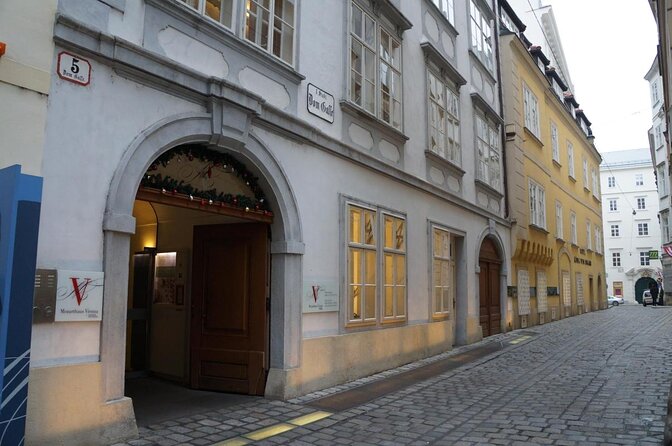
- Mozart’s Vienna apartment: See the only Mozart residence still intact, where he lived from 1784 to 1787.
- Three floors, three angles: Explore Mozart’s personal life, his musical circle, and his best-known Vienna home.
- Major works took shape here: This is where he wrote The Marriage of Figaro and three of the six Haydn Quartets.
- Audio guide included: Adult commentary is available in 13 languages, with children’s versions in eight.
- Plan for about two hours: The visit is self-paced, so you can move quickly or stop for manuscripts, performance clips, and historical notes.
- Near St. Stephen’s Cathedral: The museum fits easily into a central Vienna sightseeing day.
What Mozarthaus Vienna is really about
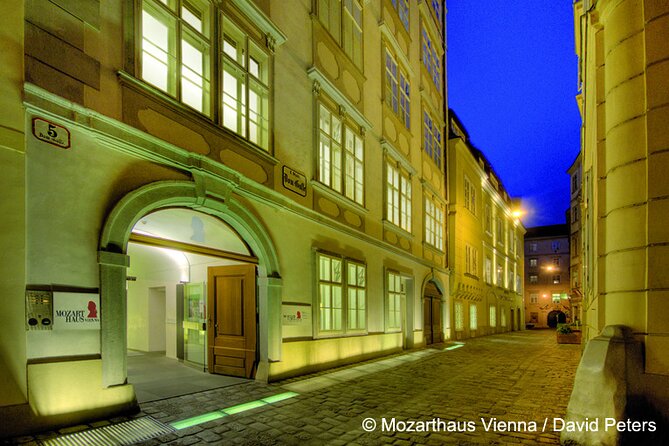
Mozarthaus Vienna is not simply a preserved apartment with a few chairs behind glass. It is a museum about Mozart’s most productive Vienna period, presented across three floors at Domgasse 5.
Mozart lived in Vienna from 1781 until his death in 1791, but this home was especially important. He and his family occupied it from 1784 to 1787, when his career was flourishing and his social circle included leading musicians, performers, and patrons.
The apartment was the largest, most elegant, and most expensive home Mozart ever occupied. That fact helps explain the setting. You are not seeing the cramped image of a struggling composer. You are entering the address of a successful artist who could afford an impressive central home and was writing some of his most important music.
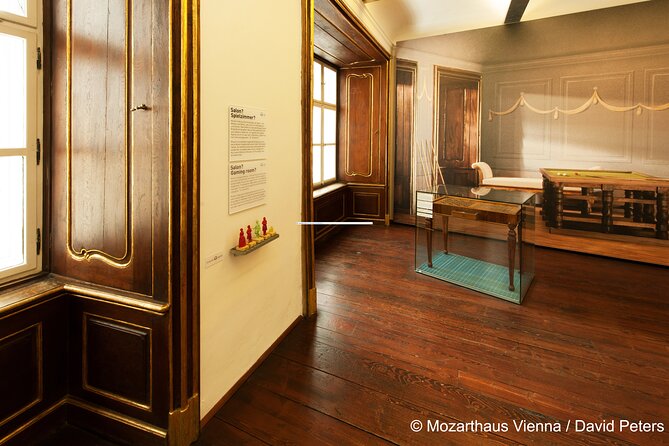
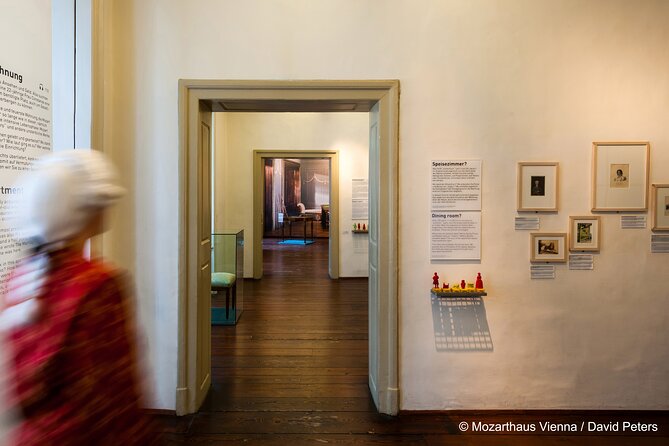
The visit works best if you arrive with modest expectations. You will not find every room restored with Mozart’s original furniture. The museum is candid about what is known and what has been reconstructed. Some displays use copies of documents, and only a small amount of furniture belongs to the period.
That does not make the apartment meaningless. It makes the audio guide and written material more important. Together, they help you picture Mozart’s life in Vienna while keeping the evidence honest.
A few more options to weigh up in Vienna
- Vienna: Vivaldi’s Four Seasons Concert in Karlskirche
★ 4.7 · 14,951 reviews - Vienna: Spanish Riding School Training
★ 3.9 · 9,281 reviews - Vienna: Schönbrunn Palace & Gardens Skip-the-Line Tour
★ 4.7 · 7,739 reviews
The first floor and Mozart’s apartment
The first floor is the heart of the visit. This is the apartment where Mozart lived and where he composed more music than anywhere else.
The emotional appeal is easy to understand. You can stand in the same home connected with The Marriage of Figaro, one of Mozart’s most admired operas. You can also connect the rooms with three of his six Haydn Quartets, works that show his close engagement with chamber music.
The apartment is significant partly because it is the only Mozart residence still intact today. Intact does not mean every object is original or that the rooms look exactly as they did in the 1780s. It means the physical apartment survives, giving you a genuine sense of place that a display case alone cannot provide.
I recommend taking your time here. Look out from the windows and consider the street life Mozart and his visitors would have seen. One visitor found this simple act surprisingly moving, using the view to imagine the people who gathered in the home and the streets Mozart walked.
Photography rules matter. Photos are not allowed inward inside the Mozart House, so do not plan on documenting every room. The restriction may disappoint you, but it also encourages you to pay attention rather than experience the apartment through a camera screen.
The apartment can feel somewhat spare if you expect a fully furnished period interior. You may see reproductions and limited furniture rather than a room-by-room recreation. For some people, that weakens the sense of stepping into Mozart’s world. For others, the surviving apartment itself is enough.
The second floor, composers and collaborators
The second-floor presentation shifts from domestic space to Mozart’s musical world in Vienna. It examines his main musical and composer colleagues and gives special attention to his work with librettist Lorenzo da Ponte.
Da Ponte is essential to understanding Mozart’s operatic success. Their cooperation produced The Marriage of Figaro and Don Giovanni, two works that remain central to opera houses around the world.
This floor is valuable because it keeps Mozart from becoming a lone genius floating above his time. Opera depended on collaboration. Composers, librettists, singers, musicians, theater managers, and audiences all shaped the final work.
The exhibition also helps connect familiar titles with the practical setting in which they were made. You are not merely reading that Mozart wrote famous operas in Vienna. You are seeing how his professional relationships and social surroundings fed into the music.
Some displays include original manuscripts or parts of manuscripts, including a section of Mozart’s Requiem. Do not expect a large collection of personal possessions. The museum’s strength is the connection between documents, interpretation, and location.
The audio guide earns its keep on this floor. Without context, names such as da Ponte or the Haydn Quartets can pass by quickly. With the commentary, the material becomes easier to follow, especially if you know Mozart’s music better than his biography.
The third floor and Mozart’s personal life
The third floor begins with Mozart’s personal and social situation in Vienna. The exhibition uses his own words about finding a magnificent place as a starting point, then builds a picture of the life he was creating in the city.
This section helps you understand the man behind the familiar portrait. Mozart was not only a composer at a desk. He was a working professional managing money, friendships, family pressures, public success, and a demanding creative schedule.
The presentation also includes images of people who influenced his life, including women connected with his personal and artistic world. One especially enthusiastic visitor found these details changed the way they thought about Mozart as a person and added a new layer to the music.
The museum does not turn the composer into a simple legend. Instead, it presents his Vienna years through social background, correspondence, music, and surviving records. That approach suits visitors who want more than a quick look at an old address.
You might find this floor less immediately dramatic than the apartment. It depends more on text, interpretation, and the audio guide. If you are short on time, prioritize the apartment and then use the upper floors to fill in the story.
A completely different kind of day:
- Vienna: Light of Creation Votive Church Immersive Light Show
★ 4.8 · 6,779 reviews - Vienna Spanish Riding School Guided Tour
★ 4.7 · 6,765 reviews - Vienna: Classical Concert in the World-Famous Musikverein
★ 4.6 · 6,673 reviews - Vienna: Skip-the-Line Sisi Museum, Hofburg and Gardens Tour
★ 4.8 · 5,918 reviews
Why the audio guide matters
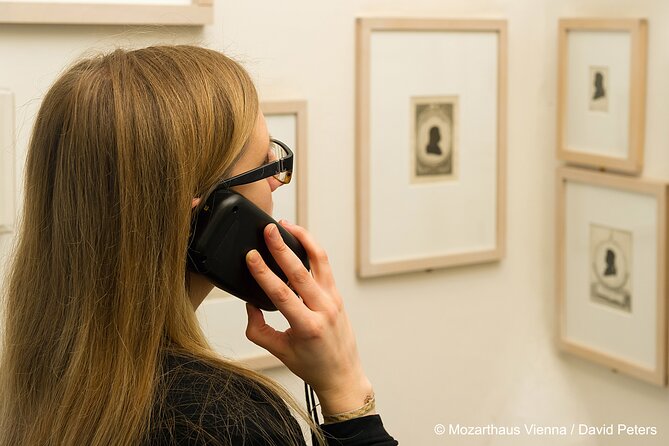
The audio guide is included with admission and is available in 13 languages for adults and eight languages for children. That makes the museum accessible to a wide range of visitors, particularly those who would otherwise struggle with German or English museum text.
You do not need to bring your own headphones. That is a useful detail for light packers and anyone moving through Vienna without extra equipment.
The guide also gives the visit a natural pace. You can stop in front of a manuscript, listen to a section, and continue when ready. There is no fixed live commentary pushing you from room to room.
The self-guided format suits independent sightseeing. You can spend extra time in Mozart’s apartment, move faster through text-heavy displays, or pause for video clips and performances. One hour may be enough for a focused visit. Two hours gives you time to listen carefully and linger.
Children can use their own audio version, which may help younger visitors connect with the material. Still, the experience is primarily about music, documents, and historical interpretation. Families should judge the visit by their child’s interest in Mozart rather than expecting a hands-on museum.
Manuscripts, performances, and modern presentation
The museum uses more than furniture and old papers. You may see original manuscript material, including part of the Requiem, along with clips from performances by the Metropolitan Opera and other companies.
These modern media pieces add energy to a subject that could otherwise become text-heavy. Hearing or seeing a work performed after learning where it was written gives the apartment a stronger connection to the music.
The presentation also includes contemporary items and imaginative displays. That may appeal to you if you prefer a museum that interprets the past rather than simply filling rooms with antiques.
At the same time, the modern approach will not please everyone. If you want a fully restored 18th-century interior, the museum may feel incomplete. Several rooms have limited period furniture, and many documents are copies. The experience is strongest when you care about Mozart’s work and want context, not when you are looking for a perfect historic house.
Occasional musical events may also be connected with the venue. An opera singer or live musicians can add a memorable cultural touch, but the standard admission ticket is for the museum visit. Do not assume a concert is included unless your booking specifically says so.
Location and how to fit it into Vienna
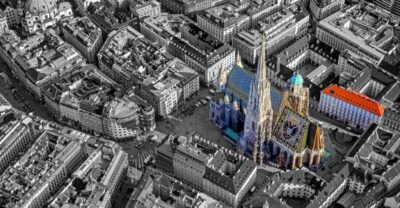
Mozarthaus Vienna is near St. Stephen’s Church, making it easy to pair with central Vienna sightseeing. The walk through this part of the city is part of the pleasure. You can visit the museum before or after seeing the cathedral and nearby streets.
The location makes this a practical stop on a day built around Vienna’s historic center. You do not need to arrange hotel pickup or drop-off, and public transportation is nearby.
Opening hours are 10:00 a.m. to 7:00 p.m. daily through the end of 2026. That broad schedule gives you room to visit in the morning, during the afternoon, or later in the day after other sights.
The ticket is mobile, which keeps the visit simple. Confirmation is provided at booking. If staff need extra time to recognize an outside booking, have your phone ready and allow a few minutes at the entrance. A brief access problem was reported by one visitor, so keeping the confirmation screen easy to find is sensible.
The stated maximum is 10 people, but this is fundamentally an admission visit with an audio guide, not a small-group guided tour. The number matters less than the freedom to move at your own pace.
Is $19.27 a fair price?
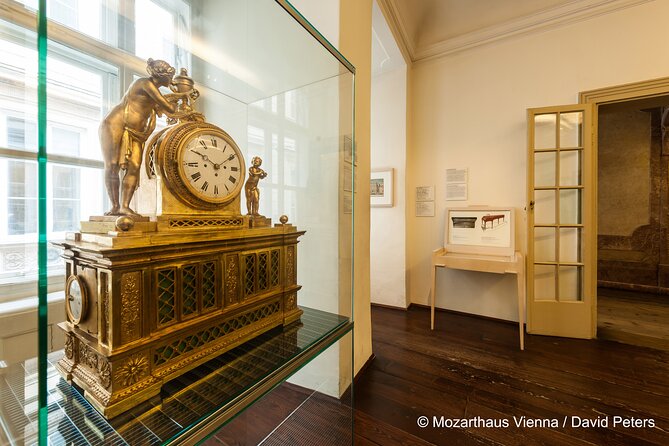
At $19.27, this is a reasonable ticket if Mozart is one of your main reasons for visiting Vienna. You receive access to three floors, the historic apartment, an audio guide, manuscript material, and performance-related displays.
The value depends on what you want from a museum. If you judge admission by the number of original objects, you may find the price less attractive. The collection has few personal belongings and limited furniture from Mozart’s time.
If you value place and musical context, the calculation looks better. Standing in the surviving apartment where The Marriage of Figaro was written cannot be replicated by listening to the opera at home. The audio guide also gives you enough background to make the visit more than a quick photo stop.
Plan to spend one to two hours so you do not feel rushed. At one hour, the ticket works as a compact central Vienna stop. At two hours, you get better value because you can hear more of the commentary and examine the displays closely.
Free cancellation is available if you cancel at least 24 hours before the experience start time. Cancellations or changes made less than 24 hours ahead do not qualify for a refund.
Who will enjoy Mozarthaus most?
I would put this near the top of the list for classical music fans, opera lovers, and anyone who wants to understand Mozart beyond the famous powdered-wig image.
It is also a good choice if you have already visited Vienna’s major imperial sights and want something more personal and focused. The museum gives you a clear subject, a manageable length, and a central location.
You will probably enjoy it less if you want a lively guide telling stories in person, a large collection of original household objects, or an elaborate recreation of every room. The audio guide is good, but the experience depends on your willingness to listen and read.
Families can make it work, especially with the children’s audio guide in eight languages. The visit is flexible, so you can leave after the essential rooms rather than follow a fixed tour schedule.
The museum is also suitable for most participants, and service animals are allowed. It is near public transportation, which makes it easy to add to a day in central Vienna.
My verdict on the visit
Mozarthaus Vienna succeeds because the address is real, the subject is important, and the museum gives you a clear path through Mozart’s Vienna years. The apartment provides the emotional center, while the upper floors explain the relationships and creative setting behind the music.
Its weakness is equally clear. You are not walking through a perfectly restored home filled with Mozart’s original possessions. Copies, modern interpretation, and limited furniture form much of the experience.
Book it if you love Mozart, opera, or the idea of connecting famous music with the rooms where it was created. If your interest is only mild, give yourself one focused hour and combine it with nearby St. Stephen’s Cathedral. Either way, use the audio guide, look carefully at the surviving apartment, and treat the museum as a place of musical context rather than a furniture collection.
FAQ
Where is Mozarthaus Vienna located?
Mozarthaus Vienna is in central Vienna, near St. Stephen’s Church. It is also near public transportation.
What are the opening hours?
The museum is open Monday through Sunday from 10:00 a.m. to 7:00 p.m. The stated hours apply through December 31, 2026.
How long does a visit take?
The visit takes approximately one to two hours. You can set your own pace because the experience is self-guided.
What is included with admission?
Admission includes entry to the three-floor Mozarthaus Vienna exhibition and an audio guide.
How many audio guide languages are available?
The adult audio guide is available in 13 languages. A children’s audio guide is available in eight languages.
Do I need to bring headphones?
You do not need to bring your own headphones. The audio guide is provided as part of the visit.
Can I see Mozart’s actual apartment?
You can visit the apartment where Mozart lived from 1784 to 1787. It is the only Mozart residence that is still intact, but it is not presented as a complete room-by-room restoration with all original furniture.
Can I see original Mozart manuscripts?
The exhibition includes original manuscript material, including part of Mozart’s Requiem. Some displayed documents are copies.
Is food or drink included?
No. Food and drinks are not included with admission.
Can I cancel for a full refund?
Yes, if you cancel at least 24 hours before the experience start time. Cancellations or changes made less than 24 hours before the start time are not refunded.
Just added in Vienna
- Vienna: Austrian Wine Tasting Experience★ 4.2 · 2 reviews
- World War II History Vienna Old Town Private Walking Tour★ 4.8 · 9 reviews
- Vienna_ Meet Beethoven Life Private Guided Walking Tour★ 5.0 · 1 review
- Vienna: Wine Tasting Tour★ 4.8 · 61 reviews
- Vienna: Wine Tasting E-Bike Tour★ 4.9 · 46 reviews
- Vienna: Wine Tasting at Schönbrunn Palace★ 4.3 · 71 reviews
- Vienna: Winery and Wine Tasting Tour with a Wine Expert★ 5.0 · 5 reviews
- Vienna: Concert by the Vienna Baroque Orchestra★ 4.6 · 56 reviews
Tickets, compared.
Classic Ensemble Vienna in St. Peter’s Church Ticket
Read our review →
Vienna Kunsthistorisches Museum Day Admission Ticket
Read our review →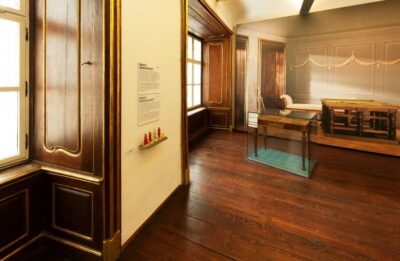
Tickets for Mozarthaus Vienna with Audio Guide
Read our review →
Skip-the-Line Entrance Ticket to the Danube Tower
Read our review →