
Reviewed · WALKING TOURS
Highlights of Vienna with Cathedral, Private Walking Tour
Vienna reveals itself in grand layers. This private walk links the Opera House, Hofburg, elegant squares, and St. Stephen’s Cathedral while an English-speaking guide explains how rulers, artists, musicians, and thinkers shaped the city. I especially like the private format, which lets you ask questions and set the pace, and the North Tower elevator visit, which adds a fine city view to the street-level tour. The main drawback is time: two hours passes quickly, and most major interiors are seen only from outside.
I also like the sensible route through central Vienna. You begin at the State Opera and finish at the cathedral, so the walk has a clear direction rather than feeling like a string of disconnected stops. At $265 per person, it is costly for a short tour, but the price can make sense if you want personal guidance, efficient sightseeing, and a strong introduction during a first visit.
In This Review
- Key points to know before you book
- Starting beneath Vienna’s grand Opera House
- Albertinaplatz and the first look at Vienna’s art world
- Josefsplatz and the world of the Lipizzaner horses
- The Hofburg from Schweizerhof to Heldenplatz
- Michaelerplatz, where imperial Vienna opens up
- Kohlmarkt and Graben, Vienna’s elegant city streets
- Inside St. Stephen’s Cathedral
- The North Tower gives the tour a strong finish
- What a private guide changes
- Pace, access, and practical planning
- Who will get the most from this Vienna walk?
- Should you book Highlights of Vienna with Cathedral?
- FAQ
- Where does the tour start?
- Where does the tour finish?
- Is the Vienna State Opera visited inside?
- Are the Lipizzaner horses included in the tour?
- Is St. Stephen’s Cathedral included?
- Is the North Tower visit guided?
Key points to know before you book
- The meeting point is easy to identify: Find the Alban Berg Memorial outside the Vienna State Opera, at Opernring and Kärntner Straße.
- The route covers Vienna’s imperial core: You walk from the Opera House through Albertinaplatz, Josefsplatz, the Hofburg, Michaelerplatz, Kohlmarkt, Graben, and St. Stephen’s Cathedral.
- The Spanish Riding School is an outside stop: You see the Lipizzaner stables area, but no riding performance or stable visit is included.
- St. Stephen’s Cathedral is visited inside: The tour ends there, with elevator access to the North Tower for an unguided city view.
- The guide speaks English: This is a private group experience, so the conversation can focus on your interests.
- The tour is wheelchair accessible: Confirm the practical route details when booking if you need particular assistance.
Starting beneath Vienna’s grand Opera House
Your guide meets you outside the Vienna State Opera, one of the city’s most recognizable buildings. The exact point is the Alban Berg Memorial, an abstract, curving silver sculpture on the east side of the opera entrance, where Opernring meets Kärntner Straße. That detail matters because the area has several entrances and plenty of foot traffic.
The Opera House dates from the 1870s and is described as hosting 350 performances of 60 shows each year. You see it from outside, not during a performance, but it is still a useful opening stop. The building introduces Vienna as a city where music, court ceremony, public life, and architecture have long been closely tied.
I like beginning here because you get your bearings quickly. The route moves on foot through the historic center, with no coach transfers or waiting for transport. Wear comfortable shoes, since the experience is a continuous walk through streets and squares.
More Walking Tours in Vienna
- Vienna: Guided Walking Tour of City Center Highlights
★ 4.7 · 4,989 reviews - Vienna: Vienna Central Cemetery Guided Walking Tour
★ 4.8 · 3,307 reviews - Vienna: Guided Walking Tour of City Highlights & Hidden Gems
★ 4.9 · 2,180 reviews
Albertinaplatz and the first look at Vienna’s art world
The first walking stop is Albertinaplatz. The square is home to a museum with Impressionist works and modern art, giving your guide a natural chance to explain Vienna’s cultural life beyond imperial palaces and classical music.
This is also where the tour begins to connect buildings with people. Vienna’s story includes Mozart, Sigmund Freud, and Gustav Klimt, along with members of the Imperial family. The guide’s job is not just to point at facades, but to explain how the city influenced European society and how important figures were shaped by life here.
The museum itself is not part of the paid visit described here, so you should not expect time for its galleries. If the art interests you, note the location for a separate visit. On this walk, Albertinaplatz works mainly as a setting for context and orientation.
Josefsplatz and the world of the Lipizzaner horses
From Albertinaplatz, you continue to Josefsplatz. This square is closely linked with the Spanish Riding School and its famous Lipizzaner horses. You see the stables from outside, and the guide explains their place in Vienna’s court tradition.
This is an enjoyable stop for anyone interested in ceremony, horses, or the former Habsburg court. It also helps you picture the daily workings of an imperial city. The grand palace was not simply a residence. It was a working center for government, household staff, military activity, and public ritual.
Keep your expectations clear here. This tour does not include a riding display, a stable tour, or a close encounter with the horses. You are seeing the setting and learning about its role. If a Spanish Riding School performance is high on your list, you will need a separate ticket and schedule.
The Hofburg from Schweizerhof to Heldenplatz
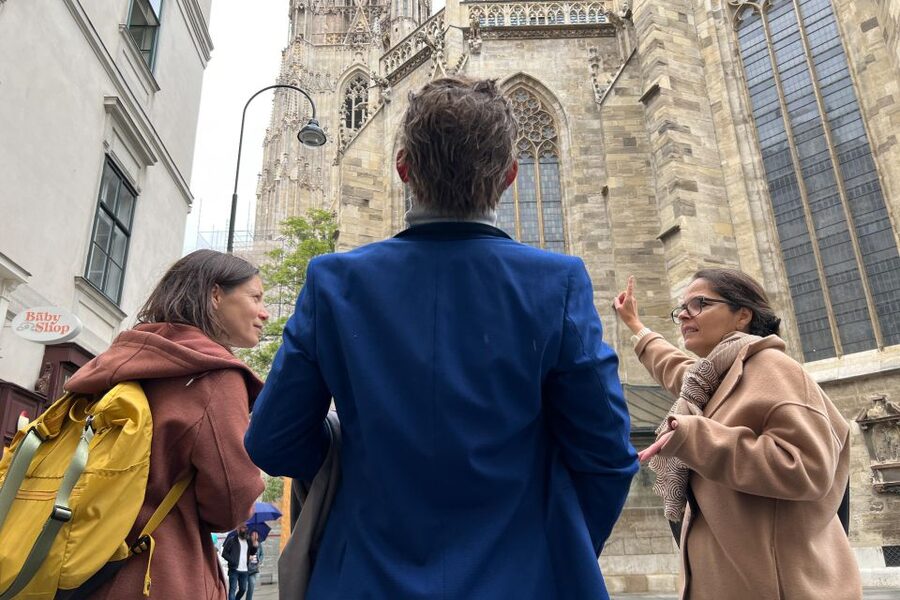
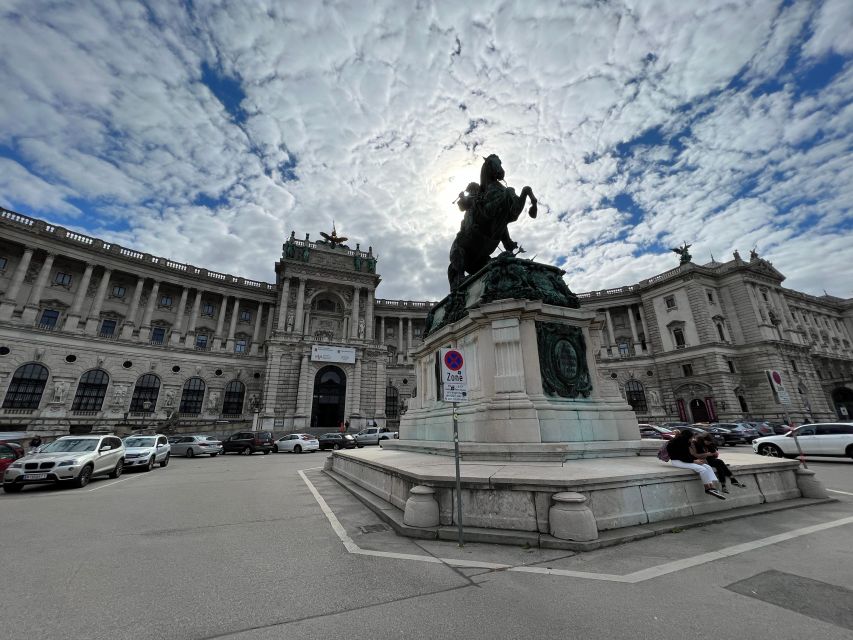
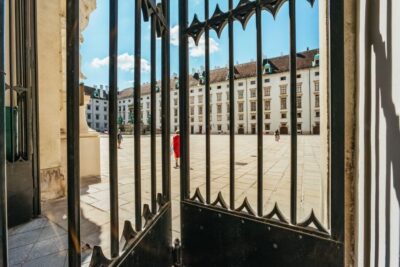
The Hofburg is the largest major section of the walk. Your route includes Schweizerhof, also called the Swiss Court, and continues toward the palace’s main facade and Heldenplatz.
The figures attached to the Hofburg can be hard to grasp from a guidebook alone. The palace has 2,600 rooms, 18 wings, and 19 courtyards. Those numbers help explain why the complex can feel like a small city within Vienna. The Imperial family left political power in 1918, but government activity still takes place within the palace complex.
I find this part especially useful with a private guide because the Hofburg can seem confusing at first. A guide can point out the relationship between courtyards, facades, and ceremonial spaces while explaining what you are actually looking at. You get a sense of the palace as a place of work and power, not only as a pretty backdrop.
The tradeoff is that the tour focuses on the exterior. The listed route does not include the Imperial Apartments, museums, or other interior collections. If you want those, plan another visit. This walk gives you the framework that makes those interiors easier to understand later.
A completely different kind of day:
- Vienna: Vivaldi’s Four Seasons Concert in Karlskirche
★ 4.7 · 14,951 reviews - Vienna: Spanish Riding School Training
★ 3.9 · 9,281 reviews - Vienna: Schönbrunn Palace & Gardens Skip-the-Line Tour
★ 4.7 · 7,739 reviews - Vienna: Light of Creation Votive Church Immersive Light Show
★ 4.8 · 6,779 reviews
Michaelerplatz, where imperial Vienna opens up
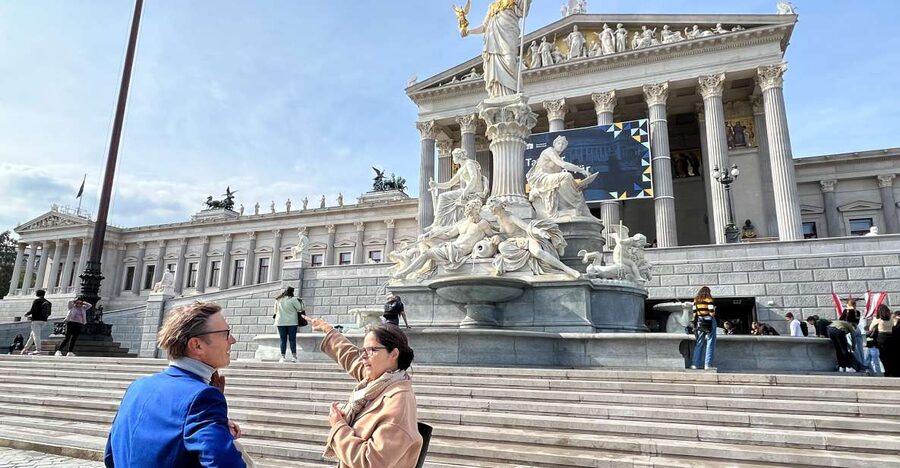
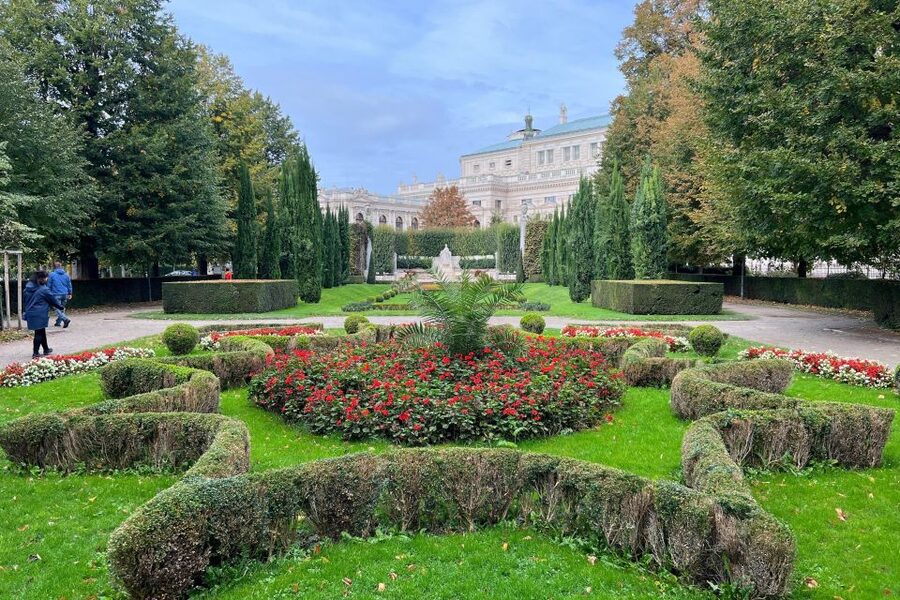
Michaelerplatz is one of the most memorable public spaces on the route. Its broad shape brings several periods of architecture together, with the Hofburg forming an imposing backdrop.
Here, the guide can help you read Vienna’s architecture instead of simply photographing it. Baroque and neo-classical forms appear across the central district, and the square shows how older imperial buildings, later additions, and modern city life share the same space.
This stop is also good for understanding scale. Vienna’s center is not made up only of isolated monuments. Palaces, churches, shops, offices, and public squares fit together into a walkable historic core. I like that the tour gives you time to move through these spaces rather than rushing from one famous building to the next.
Kohlmarkt and Graben, Vienna’s elegant city streets
Kohlmarkt leads toward Graben and is known as an upscale shopping street. You pass through an area where refined storefronts, historic facades, and heavy pedestrian traffic meet. The guide places the street within Vienna’s 17th- and 18th-century development, when the central area took on much of its polished character.
Graben is one of the city’s best-known thoroughfares. It is not a quiet museum corridor, and that is part of its appeal. You see Vienna being used as a living city, with people moving through the same spaces once shaped by court life and religious ceremony.
This section is valuable because it links the palace district to everyday urban life. You can admire the architecture, but you also get a feel for how the center functions as a public meeting place and shopping area.
The practical limitation is that a short tour cannot pause at every facade or explain every architectural detail. If you are especially interested in decorative arts, shopping, or specific buildings along Kohlmarkt and Graben, make a note of what you want to revisit after the guide departs.
Inside St. Stephen’s Cathedral
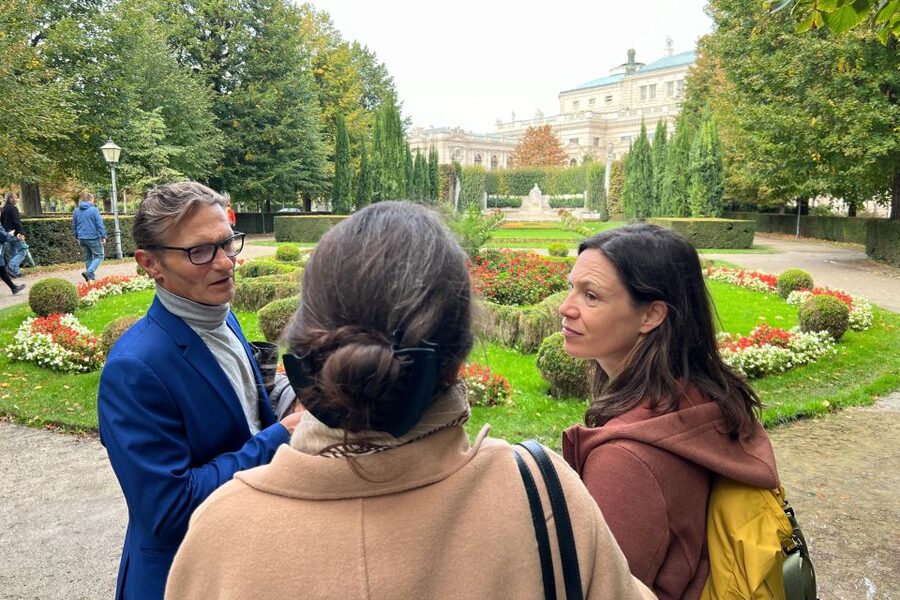
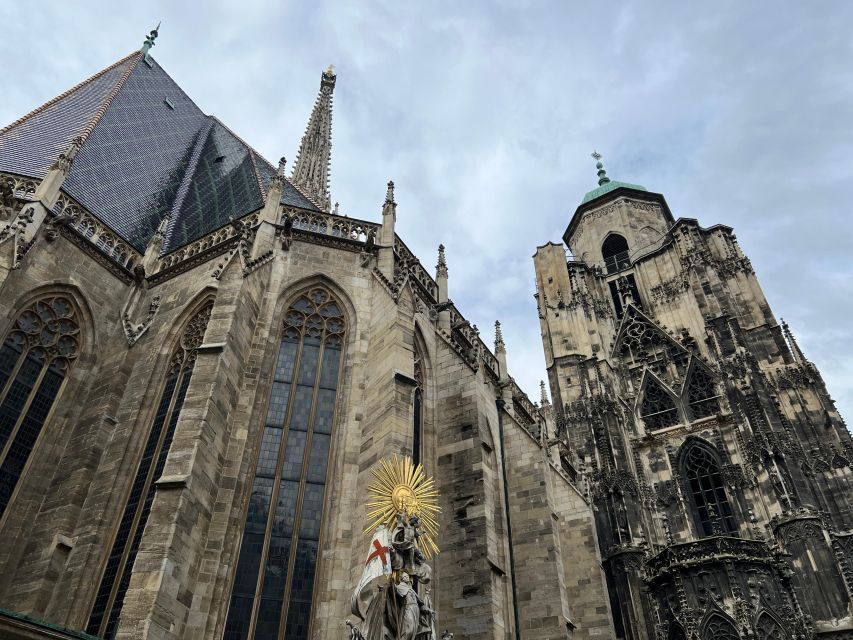
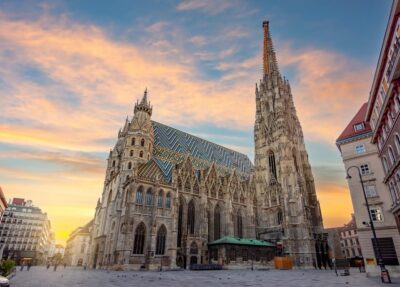
The walk ends at St. Stephen’s Cathedral, a major Gothic and Romanesque monument from the Middle Ages. Unlike the Opera House, Lipizzaner stables, and Hofburg exteriors, the cathedral is included as an inside visit.
That change of mood is welcome. After the open squares and long palace facades, the cathedral gives you a more focused encounter with Vienna’s religious past. The building helps broaden the story of the city, which can otherwise seem dominated by emperors, opera, and aristocratic ceremony.
Your guide provides the cathedral visit as part of the route, but the amount of time inside is limited by the two-hour schedule. I would treat this as an introduction rather than a full study of the church. If you want to inspect every chapel, artwork, or architectural detail, return independently.
The finish is convenient. You do not need to walk back to the Opera House or find a new meeting point. From the cathedral, you can continue exploring central Vienna on your own.
The North Tower gives the tour a strong finish
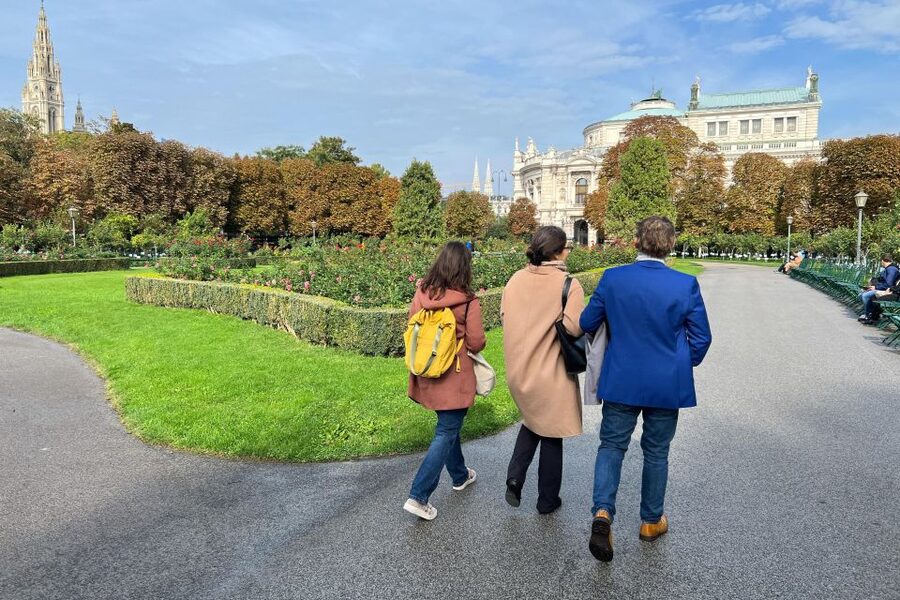
At St. Stephen’s Cathedral, the guide gives you tickets for the elevator to the North Tower. The tower visit is unguided, so you explore it independently after the walking portion.
This is one of the best features of the experience. The streets show Vienna at eye level, while the tower gives you a wider view of the city you have just crossed. Seeing the roofs, squares, and surrounding urban center from above helps you understand how tightly packed the historic core is.
The elevator also makes the tower more accessible than a long stair climb. The supplied details specifically mention elevator access, and the full activity is wheelchair accessible. If you require particular access arrangements, it is sensible to confirm them before booking, since the tower visit continues without the guide.
Because this is the final stop, plan your energy well. You may want to spend additional time around the cathedral after the tour, but the guided portion itself finishes there.
What a private guide changes
A private tour is most useful when you want conversation rather than a fixed speech. You can ask why the Imperial family mattered, how Mozart fits into the city’s story, or why Klimt and Freud remain important to Vienna’s identity. The guide can also adjust the balance between architecture, court history, art, and city life.
The English-speaking guide is described as an expert, and the tour is offered only in English. That makes it a good fit if you want a clear historical explanation without translating along the way.
The private format has a cost. At $265 per person, this is not a budget orientation walk. Its value depends on your priorities. For one person, a couple, or a small private group that wants personal attention, the cost may be worthwhile. For a larger party, the private format can become easier to justify because the price is charged per person but the experience remains focused on your group.
The two-hour duration also helps keep the price in perspective. You are paying for a concentrated introduction, not a full-day examination of Vienna. I would recommend it to someone with limited time, a first visit, or a strong preference for private guiding. If you prefer to explore at leisure and read background information yourself, you can cover much of the route independently for far less.
Pace, access, and practical planning
The experience is entirely based around walking, with the North Tower reached by elevator. There is no included transportation between stops. The route is compact, but the center can be busy, especially around shopping streets and major squares.
The stated duration is two hours, and the tour begins outside the Vienna State Opera and ends at St. Stephen’s Cathedral. That makes it easy to fit into a morning or afternoon plan. I would avoid scheduling another fixed activity immediately afterward, since you may want extra time at the cathedral or need to account for the pace of the group.
Cancellation is free up to 24 hours before the start time, and you can reserve while paying later. Those terms provide useful flexibility, especially when your Vienna schedule includes museum reservations or performances.
The activity is wheelchair accessible. Since the route includes public streets, squares, a cathedral, and a tower visit, anyone needing specific access support should confirm the details before arrival.
Who will get the most from this Vienna walk?
I would choose this tour for a first-time visitor who wants the central sights put into context. It is also a good match for a short stay, when you need to understand the city quickly before deciding which palaces, museums, and churches deserve a longer visit.
It suits you if you enjoy:
- Imperial history and palace architecture
- Classical music and the story of the Spanish Riding School
- Famous squares and central shopping streets
- A private English-speaking guide
- A city view at the end of a walking route
I would think twice if your main goal is extensive interior access. The Opera House, Lipizzaner stables, and Hofburg are outside stops, and the cathedral visit is brief within the two-hour schedule. You should also consider the price if you are comfortable navigating Vienna independently.
Should you book Highlights of Vienna with Cathedral?
Book it if you want a polished introduction to Vienna’s central sights, especially with limited time. The route is well organized, the private guide gives the history a human shape, and the North Tower view adds something beyond the usual street-level sightseeing.
Skip it if you want long museum visits, a Spanish Riding School performance, or a full tour of the Hofburg interiors. At $265 per person, the experience earns its price through private attention and efficient planning, not through the number of hours or included admissions.
For a first day in Vienna, I like the way this walk gives you a useful mental map. Start at the Opera House, follow the imperial center, and finish with the cathedral and its city view. You leave with enough context to choose your next stops wisely.
FAQ
Where does the tour start?
It starts at Opernpassage 8, at the intersection of Opernring and Kärntner Straße, outside the Vienna State Opera. Look for the Alban Berg Memorial, an abstract, curving silver statue on the east side of the opera’s main entrance.
Where does the tour finish?
The guided walk finishes at St. Stephen’s Cathedral in central Vienna.
Is the Vienna State Opera visited inside?
No. The Opera House is an outside stop on this experience.
Are the Lipizzaner horses included in the tour?
The route includes the stables of the Lipizzaner horses from outside. A riding performance or stable interior visit is not included in the stated tour details.
Is St. Stephen’s Cathedral included?
Yes. The experience includes an inside visit to St. Stephen’s Cathedral.
Is the North Tower visit guided?
The guide provides elevator tickets for the North Tower, but the tower visit itself is unguided. You explore it independently and enjoy the city views on your own.
Just added in Vienna
- Vienna: Austrian Wine Tasting Experience★ 4.2 · 2 reviews
- World War II History Vienna Old Town Private Walking Tour★ 4.8 · 9 reviews
- Vienna_ Meet Beethoven Life Private Guided Walking Tour★ 5.0 · 1 review
- Vienna: Wine Tasting Tour★ 4.8 · 61 reviews
- Vienna: Wine Tasting E-Bike Tour★ 4.9 · 46 reviews
- Vienna: Wine Tasting at Schönbrunn Palace★ 4.3 · 71 reviews
- Vienna: Winery and Wine Tasting Tour with a Wine Expert★ 5.0 · 5 reviews
- Vienna: Concert by the Vienna Baroque Orchestra★ 4.6 · 56 reviews
Walking Tours, compared.
Guided Walking Tour of City Center Highlights
Read our review →
Guided Walking Tour of City Highlights & Hidden Gems
Read our review →
Vienna Historic Center Small Group Walking Tour
Read our review →
Browse the lists this tour appears in