
Reviewed · HISTORICAL TOURS
Highlights of Vienna in a Historical & Cultural 3h Walking Tour
Vienna reveals itself one grand building at a time. This three-hour walk links Mozart’s former home, St. Stephen’s Cathedral, the Habsburg court, the Spanish Riding School, and the Vienna State Opera in one sensible route through the old city. I like that the tour mixes major sights with small cultural clues, from the Plague Column and Demel cake shop to Vienna’s long coffeehouse tradition.
I also like the small to medium group size, capped at 18 people, since that gives you a better chance to ask questions than a large coach tour. Guides such as Nikoleta, Nicoletta, and Giselle have earned especially warm praise for clear storytelling, humor, family-friendly pacing, and useful restaurant and museum advice.
The main drawback is that this is a brisk sightseeing walk, not a series of extended interior visits. Museum admission is not included, and cold or poor weather may affect the experience, so wear good shoes and check the forecast before booking.
In This Review
- Key points before you book
- Why this walking tour works well in Vienna
- Mozart begins the story at Domgasse
- St. Stephen’s Cathedral and the medieval center
- Julius Meinl and Vienna’s coffeehouse customs
- Freyung Passage and Café Central
- Parliament, Rathaus, and Vienna’s public face
- Burgtheater and the imperial museum quarter
- The Hofburg and the Habsburg court
- Lipizzaner horses at the Spanish Riding School
- Hotel Sacher and the famous cake story
- The Vienna State Opera finishes the route
- Guides, pace, and group size
- Best time to take the tour
- Who should book this Vienna walk?
- Should you book Highlights of Vienna?
- FAQ
- How long is the Vienna walking tour?
- Where does the tour begin?
- Where does the tour finish?
- What language is the tour offered in?
- How large is the group?
- Are museum entrance fees included?
- Is the tour suitable for children?
- Can I cancel for a full refund?
Key points before you book
- Mozart to the Opera: Follow a clear central route from Mozarthaus Vienna to the Vienna State Opera.
- Habsburg court context: Learn how the Hofburg, royal theater, Parliament, and museums fit together.
- Coffeehouse culture: Hear how Vienna’s coffee tradition developed while passing Julius Meinl, Café Central, Demel, and Hotel Sacher.
- Friendly group size: The tour accepts four to 18 people, with plenty of room for questions.
- Practical local advice: You receive a city map, a printed Vienna information package, and suggestions for museums, cafés, restaurants, and venues.
- Extra coffeehouse pause: A 30-minute break in a traditional Viennese coffeehouse is included.
Why this walking tour works well in Vienna
Vienna’s center is compact, but its story is not. A single street can take you from medieval church towers to imperial apartments, from Baroque sculpture to nineteenth-century government buildings. Without context, you may admire the façades and move on. With a good guide, the buildings begin to explain one another.
This tour is designed as an orientation walk. It covers a long list of central sights without asking you to spend hours inside one museum. That makes it particularly useful near the start of your stay. You can mark the places you want to revisit, then use the guide’s suggestions to plan the rest of your time.
The advertised price is $66.37 per person. That is not the cheapest way to walk around Vienna, but the value depends on how much you use the included advice. You are paying for three hours of guiding, historical context, a small group, a map, printed recommendations, and an additional coffeehouse break. Since all listed admission tickets are free in the tour description, the walk itself appears focused on exterior views and arranged stops rather than paid museum entry.
The route begins at Mozarthaus Vienna, Domgasse 5, and ends in front of the Vienna State Opera. Both points are in central Vienna and near public transportation. You will need a moderate level of fitness, since the experience is on foot and includes many stops across the historic center.
More Walking Tours in Vienna
- Vienna: Guided Walking Tour of City Center Highlights
★ 4.7 · 4,989 reviews - Vienna: Vienna Central Cemetery Guided Walking Tour
★ 4.8 · 3,307 reviews - Vienna: Guided Walking Tour of City Highlights & Hidden Gems
★ 4.9 · 2,180 reviews
Mozart begins the story at Domgasse
The first stop is Mozarthaus Vienna, where Mozart lived during an important part of his Vienna years. The stop is scheduled for about 15 minutes, enough for a compact introduction to his life, work, and place in Austrian culture.
This is a smart starting point. Mozart is often treated as a polished statue or a name on a concert poster, but his Vienna story becomes more engaging when connected to an actual residence and neighborhood. Your guide can help separate the famous image from the historical person and explain why Vienna mattered so much to his career.
Do not expect a full museum visit during this short stop. The tour lists admission as free, but the general note says museum entrance fees are not included. If you want to see the interior exhibits at length, you should plan a separate visit.
St. Stephen’s Cathedral and the medieval center
From Mozarthaus, the walk continues to St. Stephen’s Cathedral, Vienna’s main church. You get about 15 minutes to look at its medieval architecture and hear about its long place in the city’s story.
The cathedral is one of those sights that benefits from explanation. Its scale, age, and position in the center make more sense when your guide points out how Vienna grew around it. You will have time to admire the exterior and take photographs, though a three-hour route cannot offer a detailed religious or architectural study.
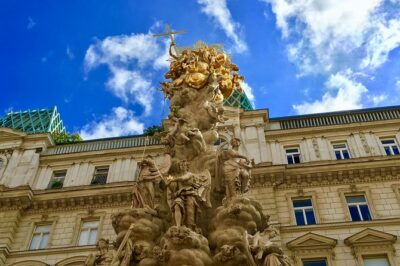
The next portion moves through the historic center for roughly 20 minutes. Saint Peter’s Church, the Plague Column, Demel cake shop, and other important sites appear along the way. This section helps connect the grand attractions with the everyday streets between them.
The Plague Column is especially useful for understanding how public monuments can reflect fear, faith, and political power. Demel, meanwhile, brings the discussion back to Vienna’s sweet side. You may not stop for cake, but you will know where the famous shop fits into the city’s café and confectionery traditions.
Julius Meinl and Vienna’s coffeehouse customs
A ten-minute stop at Julius Meinl am Graben introduces Vienna’s coffee culture, described as more than 300 years old. This is one of the tour’s most appealing cultural details because it moves beyond palaces and composers.
Coffeehouses in Vienna are not simply places to grab a drink. They are tied to reading, conversation, lingering, and the city’s social life. The guide’s explanation can help you understand why cafés such as Café Central and other historic coffeehouses matter, even if you choose a less famous place for your own break.
The experience includes an extra 30-minute pause in a traditional Viennese coffeehouse. That makes the coffee theme more than a quick roadside explanation. The exact café and timing may vary, so treat this as a chance to rest, ask questions, and try a local specialty rather than a formal tasting session.
More History Tours in Vienna:
- Vienna: Time Travel and Magic Vienna History Tour
★ 4.6 · 3,879 reviews - Vienna: World War II Historical Walking Tour
★ 4.8 · 1,772 reviews - Vienna Historic Center Small Group Walking Tour
★ 5.0 · 1,746 reviews - Time Travel-Magic Vienna History Tour Ticket
★ 4.5 · 1,099 reviews
Freyung Passage and Café Central
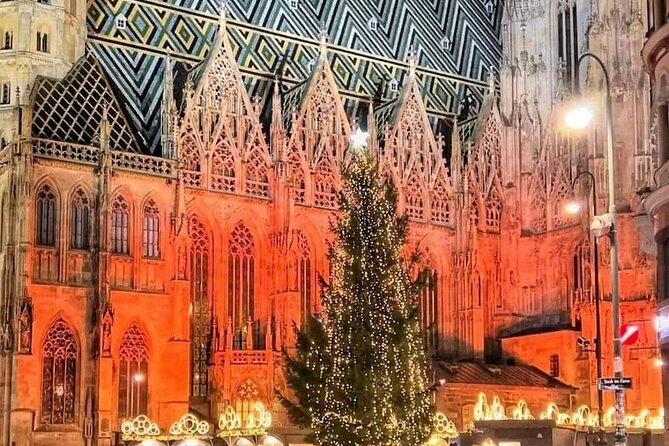
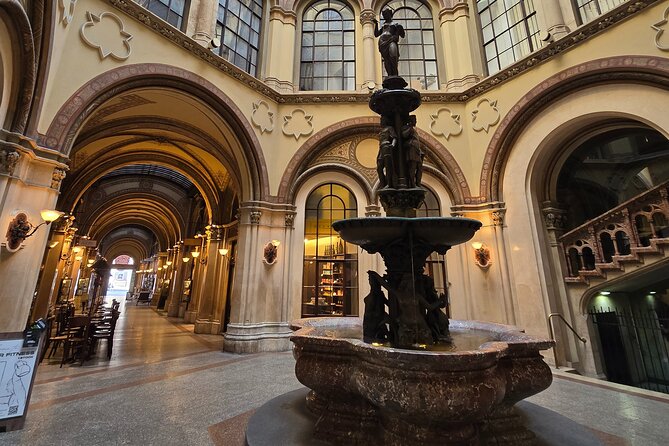
Freyung Passage receives a short five-minute stop. It is described as one of the most beautiful passages in Vienna’s historic center, with Café Central at one of its corners.
Five minutes is enough to point out the passage and explain its setting, but not enough for a long visit inside Café Central. If the café interests you, use the guide’s comments to decide if you want to return later. Famous places can be rewarding, but they can also be crowded or require patience. A short introduction lets you make that choice with better information.
This is a recurring strength of the walk: you see many places without being required to commit your whole morning to each one. For a first visit, that balance can save time.
Parliament, Rathaus, and Vienna’s public face
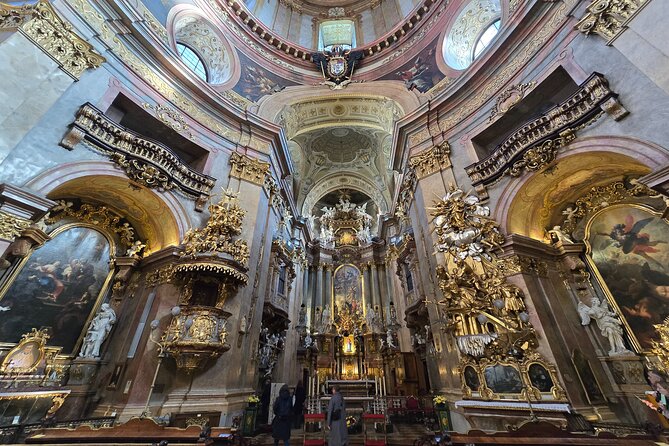
The route then heads toward the Austrian Parliament for about five minutes. You will admire its Greek-style architecture and the Pallas Athene Fountain in front.
This stop shows a different Vienna. The city is not only imperial apartments and music halls. Parliament represents the political side of the capital, while the fountain and classical design reflect the nineteenth-century taste for borrowing visual ideas from ancient Greece.
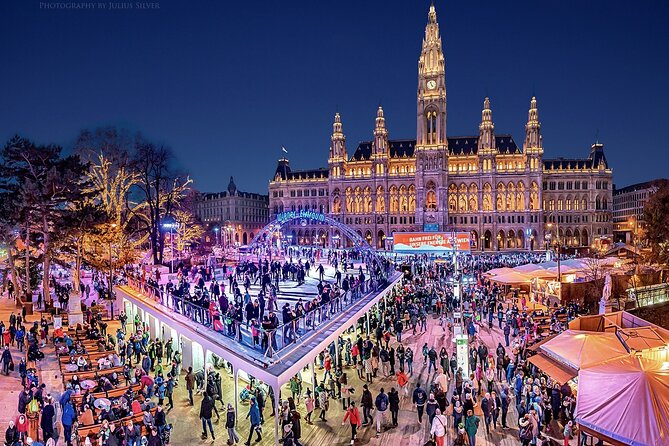
Next comes Rathaus, Vienna’s Gothic city hall, with another five-minute stop. The building’s vertical lines and ornate façade offer a strong contrast to the classical Parliament. If you visit during the Christmas season, the area may feel especially lively, and the tour may allow time at the nearby Christmas market. This has been a useful pause for hot drinks, snacks, and a restroom break.
That flexibility matters. The schedule lists short stops, but several experiences indicate that guides may slow down for children, weather, questions, or seasonal events. You should not assume the tour always runs long, but the pacing appears to have some human judgment rather than being a rigid march.
Burgtheater and the imperial museum quarter
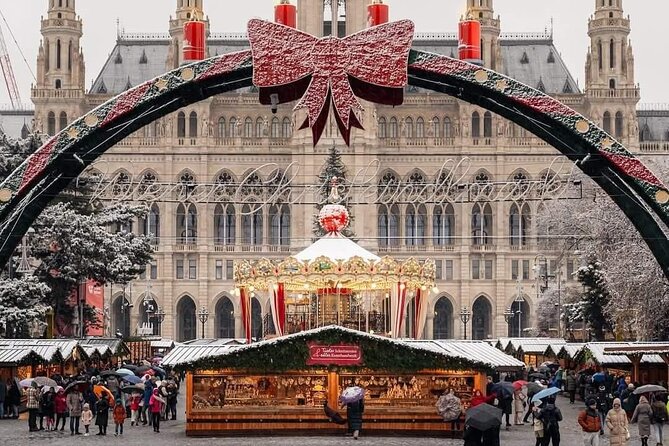
Burgtheater comes next, with about ten minutes devoted to its Renaissance-style design and royal theater background. The building dates to the era of Maria Theresa, and the stop adds a theatrical layer to Vienna’s imperial story.
The tour then pauses near the Kunsthistorisches Museum Vienna for about ten minutes. Rather than taking you through the museum’s galleries, the guide explains the 18 museums in and around the Winter Palace area and what each one offers.
That overview can save you from wandering into the wrong museum simply because its façade caught your eye. You will not leave with a detailed tour of the collections, but you should gain a clearer idea of where to spend a free afternoon. Since entrance fees are not included, this advice is most useful if you plan to return independently.
The Hofburg and the Habsburg court
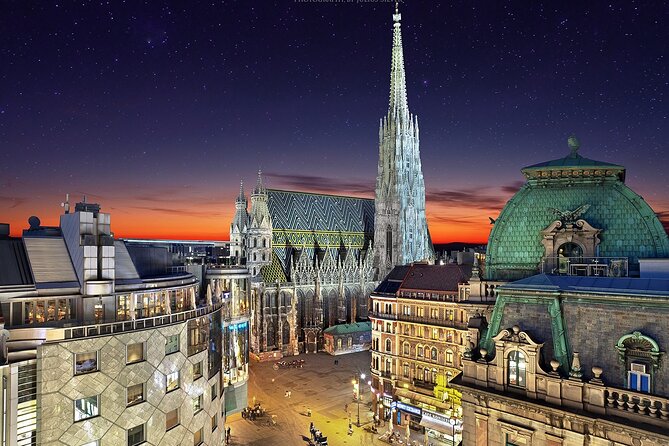
The Hofburg receives one of the longer stops, about 20 minutes. This was the Winter Palace and the Habsburg residence from the thirteenth century onward. Here, the guide introduces important emperors and empresses and explains how the palace developed into a large court complex.
The Hofburg can be confusing on your own. It is not one simple palace with one entrance and one story. It is a collection of courtyards, wings, museums, ceremonial spaces, and working institutions. A short explanation helps you read the site before deciding which interior attractions deserve your time.
This is also the historical center of the tour. Mozart, the coffeehouses, the theater, Parliament, and the museums all make more sense when you understand the power of the Habsburg court. The guide’s stories and occasional humor keep the subject from becoming a string of dates and royal names.
You should keep your expectations clear. The tour does not include a full palace interior visit, and museum entry costs extra. Think of the Hofburg stop as a guided introduction to the complex.
Lipizzaner horses at the Spanish Riding School
The Spanish Riding School follows with a ten-minute stop at the stables, where you may see the famous horses. This is one of the route’s most distinctive moments.
The school’s tradition began in the fifteenth century, and the horses provide a living link to Vienna’s court culture. Even a brief look at the stables can add something that a façade alone cannot. You are seeing an institution still connected with the city’s imperial past.
The stop is short, so it is not a substitute for attending a performance or a longer horse-related program. The tour description specifically promises a visit to the stables and a chance to see the horses, but it does not include a performance or state that every horse will be visible at close range.
Hotel Sacher and the famous cake story
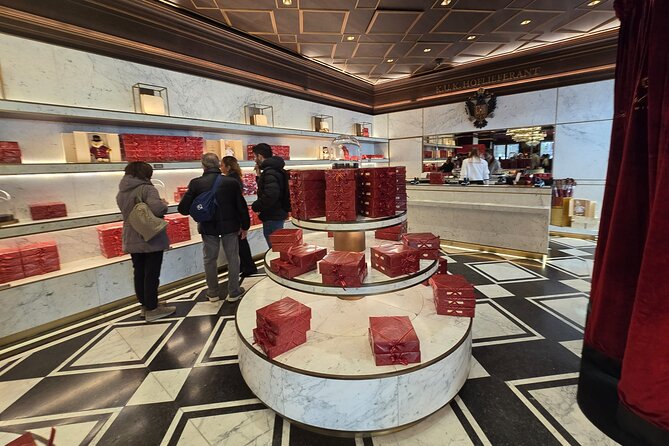
A ten-minute stop at Hotel Sacher brings the walk back to food and social history. You learn how Vienna’s most historic hotel was built and hear about the chocolate cake most associated with Austria, Sachertorte.
This is a good reminder that Vienna’s culture is not locked inside palaces. Hotels, pastry shops, cafés, and restaurants are part of the city’s identity too. If you want to try Sachertorte, the guide’s recommendations may help you decide where and when to do it.
Again, a short stop does not mean a reserved table or included dessert. You are getting the story and the location, then choosing how much time and money to spend later.
The Vienna State Opera finishes the route
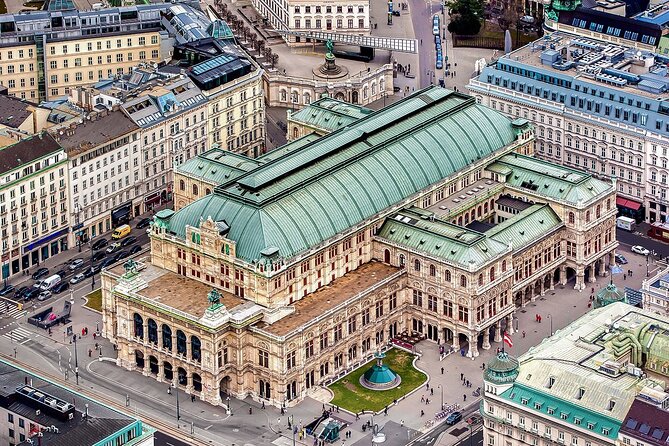
The final stop is the Wiener Staatsoper, or Vienna State Opera, scheduled for about ten minutes. The building is one of Vienna’s most admired landmarks, and the guide explains why the emperor disliked it when he first saw it, along with the consequences of his harsh criticism.
That story gives the Opera a human edge. Instead of only hearing that the building is beautiful, you learn how imperial expectations shaped public opinion and the careers of those involved. It is the kind of anecdote that makes architecture easier to remember.
The tour ends at the Opera, on Opernring 2. This is a useful finish because you are left in one of the city’s most central areas, close to public transportation and many other sights. You can continue sightseeing, return to a museum, find dinner, or simply use the map and recommendations supplied during the walk.
Guides, pace, and group size
The strongest part of the experience is the guiding. Nikoleta and Nicoletta receive repeated praise for humor, clear explanations, strong knowledge of Vienna, and the ability to make adults and children pay attention. Giselle is also described as pleasant and well informed.
The best guide style here seems to be conversational rather than formal. You can expect stories, practical suggestions, and answers to questions, rather than a lecture delivered without pauses. One guide even adjusted the route for family needs and allowed extra time when children needed breaks.
The group size ranges from four to 18 people. Four would feel almost private, while 18 is still manageable for a city walk. The smaller format is valuable at busy streets and crowded landmarks, since you can stay closer to the guide and ask questions without shouting across a crowd.
The pace may feel brisk on a cold day or when the group is moving between many stops. Several destinations receive only five or ten minutes. Wear comfortable shoes, dress for the weather, and understand that this is a broad introduction rather than a slow architectural study.
Best time to take the tour
I would book this near the beginning of your Vienna stay. The route covers the city center, and the practical advice can shape the rest of your visit. You may learn which museums fit your interests, which cafés deserve a return visit, and which famous places are better appreciated from outside.
The tour requires good weather, and the experience can be less pleasant in strong cold or rain. A cold day has not ruined the walk for everyone, but it has made the pace feel more hurried. Vienna’s weather can change, so bring layers and sensible shoes.
The tour is offered in English and uses a mobile ticket. Confirmation arrives when you book. Free cancellation is available up to 24 hours before the start time, but changes or cancellations inside that window are not accepted. If poor weather or a failure to meet the minimum number of participants cancels the tour, you are offered another date or experience, or a full refund.
Who should book this Vienna walk?
I recommend it for first-time visitors who want a clear map of central Vienna before choosing their museums and performances. It also suits families, since the guides appear willing to explain the city in an engaging way and adjust for children when needed.
It is a good fit if you enjoy history, architecture, food culture, and short stories about famous people. It is less suitable if you want long interior visits, an in-depth Mozart study, or a full Spanish Riding School experience.
At $66.37, the price makes the most sense when you use the guide’s advice beyond the three hours. If you only want to walk past buildings and take photographs, you can explore the center independently. If you want the city’s landmarks placed into a clear story, plus a coffeehouse break and practical suggestions, the cost is easier to justify.
Should you book Highlights of Vienna?
Yes, I would book this tour if you are new to Vienna and want an efficient first look at the center. The route covers an impressive range of places, from Mozart and medieval Vienna to the Habsburg court, coffeehouses, Parliament, horses, cake, and opera.
Book it early in your stay, bring weatherproof clothing, and keep your expectations focused on orientation rather than museum entry. You will get the most from it if you treat the walk as a useful first chapter, then return to the Hofburg, cathedral, museums, cafés, or Opera on your own.
FAQ
How long is the Vienna walking tour?
The tour lasts approximately three hours, with an additional 30-minute break in a traditional Viennese coffeehouse included.
Where does the tour begin?
It begins at Mozarthaus Vienna, Domgasse 5, 1010 Vienna.
Where does the tour finish?
The walk ends in front of the Vienna State Opera at Opernring 2, 1010 Vienna.
What language is the tour offered in?
The tour is offered in English.
How large is the group?
The group size ranges from four to 18 people.
Are museum entrance fees included?
No. Entrance fees to museums are not included.
Is the tour suitable for children?
The tour requires a moderate level of physical fitness. Guides have adjusted the pace and taken breaks for families with children, including a 13-year-old participant.
Can I cancel for a full refund?
Yes. You can cancel at least 24 hours before the experience begins for a full refund. Cancellations or changes made less than 24 hours before the start time are not refunded or accepted.
Just added in Vienna
- Vienna: Austrian Wine Tasting Experience★ 4.2 · 2 reviews
- World War II History Vienna Old Town Private Walking Tour★ 4.8 · 9 reviews
- Vienna_ Meet Beethoven Life Private Guided Walking Tour★ 5.0 · 1 review
- Vienna: Wine Tasting Tour★ 4.8 · 61 reviews
- Vienna: Wine Tasting E-Bike Tour★ 4.9 · 46 reviews
- Vienna: Wine Tasting at Schönbrunn Palace★ 4.3 · 71 reviews
- Vienna: Winery and Wine Tasting Tour with a Wine Expert★ 5.0 · 5 reviews
- Vienna: Concert by the Vienna Baroque Orchestra★ 4.6 · 56 reviews
Historical Tours, compared.
Vienna Historic Center Small Group Walking Tour
Read our review →
Skip-the-Line Schonbrunn Palace Guided Tour and Vienna Historical City Tour
Read our review →
Vienna Mozart Concert in Historical Costumes at the Musikverein
Read our review →
Browse the lists this tour appears in