

Reviewed · WALKING TOURS
An Introduction to Vienna Walking Tour
Vienna reveals itself on foot. This small-group walking tour links imperial squares, churches, markets, and modernist buildings while an historian guide explains how the city changed over the centuries. I like the strong mix of famous sights and less obvious details, plus the useful café and restaurant advice built into the walk. The main drawback is the price: at $181.02 per person, this is costly for a 2.5-hour tour without food or admission tickets.
I also like the chance for a highly personal outing. The group can reach eight people, with no more than six people per booking, and several guides have adjusted the pace or focus to match their groups. Guide quality is the heart of the experience, with names such as Katarina, Wolfgang, Annelie, Ilse, Christina, and Elisabeth receiving especially warm praise.
In This Review
- Key points to know before booking
- Starting at Café Hawelka and Michaelerplatz
- The Hofburg and the Habsburg story
- Ringstraße architecture and the Loos House
- Maria-Theresien-Platz and Vienna’s museums
- Secession, Klimt, and Vienna’s artistic rebellion
- Stephansdom, Kohlmarkt, and the Graben
- Naschmarkt and everyday Vienna
- The guides make or break this experience
- Is $181.02 per person a fair price?
- Timing, meeting point, and practical details
- Who should book this Vienna walk?
- Should you book it?
- FAQ
- How long is the Vienna walking tour?
- What language is the tour offered in?
- Where does the tour begin?
- Where does the tour end?
- What sights are included?
- Does the tour enter the museums or palaces?
- Is food included?
- Does the tour include hotel pickup?
- How large is the group?
- Can I cancel for a full refund?
Key points to know before booking
- A city primer with serious historical depth: Expect Austria’s Habsburg rulers, wartime memories, music, architecture, and everyday Viennese life.
- A compact route through central Vienna: The walk includes Michaelerplatz, the Hofburg, Stephansdom, the Ringstraße, Maria-Theresien-Platz, Kohlmarkt, and the Graben.
- Small numbers make a real difference: A maximum of eight people allows more questions and easier conversation with the guide.
- Look for local advice along the way: Guides have suggested coffeehouses, schnitzel, sausages, Sacher torte alternatives, and additional sights.
- Best taken early in your stay: The route gives you a useful map of central Vienna and ideas for what to explore later.
- A premium walking tour: The cost pays mainly for the guide’s time, education, and attention, not for entry to attractions.
Starting at Café Hawelka and Michaelerplatz
The tour begins at Café Hawelka on Dorotheergasse, a fitting place to start in central Vienna. From there, the walk reaches Michaelerplatz, where the Hofburg dominates the square.
This opening gives you Vienna in one glance. The Hofburg was the seat of Habsburg power from the 13th century, and its buildings reflect the dynasty’s long rule. Your guide can use the square to explain how the imperial court shaped the city, from politics and ceremony to architecture and public space.
The exact emphasis may vary by guide. That is one of the better features here. Katarina, Ilse, Wolfgang, Annelie, and the other guides are not simply reciting the same short script. Their individual interests appear to influence the experience, with some focusing more on architecture, some on political history, and others on daily life and personal stories.
Michaelerplatz also helps you get oriented. You are close to several major sights, including the Hofburg, Kohlmarkt, Graben, and Stephansdom. If Vienna feels confusing when you first arrive, this central starting point quickly gives you a mental map.
More Walking Tours in Vienna
- Vienna: Guided Walking Tour of City Center Highlights
★ 4.7 · 4,989 reviews - Vienna: Vienna Central Cemetery Guided Walking Tour
★ 4.8 · 3,307 reviews - Vienna: Guided Walking Tour of City Highlights & Hidden Gems
★ 4.9 · 2,180 reviews
The Hofburg and the Habsburg story
The Hofburg is not just another palace stop. It is the central subject of Vienna’s political story, and the tour uses it to explain the Habsburg dynasty and its influence on Austria over roughly seven centuries.
You will see the palace from the outside rather than enter as part of this walking tour. That matters if you hoped to visit the Imperial Apartments, the Sisi Museum, or the Spanish Riding School. Those are separate attractions and require their own time and admission.
Still, an exterior explanation can be valuable. A good guide turns courtyards and façades into clues about power, status, and changing tastes. One guide was praised for bringing the stories of the people who lived in these buildings to life, rather than treating the palace as a backdrop for photographs.
The historical scope can also reach beyond royal ceremony. Ilse, for example, included painful wartime memories and memorials connected with civilian deaths. That wider approach is important. Vienna’s past is not only Mozart, grand balls, and imperial elegance. It also includes political violence, war, loss, and difficult questions about Austria’s role in European history.
Ringstraße architecture and the Loos House
From the Hofburg, the route reaches the Ringstraße, the broad boulevard built in the mid-19th century. This is one of the best places to understand Vienna as a modern imperial capital.
The boulevard is lined with major public buildings and former palace residences. Many luxury hotels occupy buildings that once belonged to Vienna’s upper classes, a detail that helps you see how the city’s old social order survives in its architecture.
The tour also points out the green and gray Loos House, designed by Adolf Loos. Its plain exterior caused controversy in a city better known for ornament and grand decoration. That contrast makes the building useful as a lesson in Vienna’s turn toward modern design.
The route does not treat architecture as a parade of names and dates. At its best, it explains why a building looks the way it does and what that style says about the period. The guides have been praised for explaining architectural styles clearly, including art deco elements and the transition from imperial display to modernist restraint.
If architecture interests you, this may be one of the strongest parts of the walk. If you prefer entering buildings, take note that this is mainly an outdoor tour. Weather can shape your experience, so bring suitable clothing. One guide continued through cold, wind, and rain, but you may not find that quite as charming as the guide did.
Maria-Theresien-Platz and Vienna’s museums
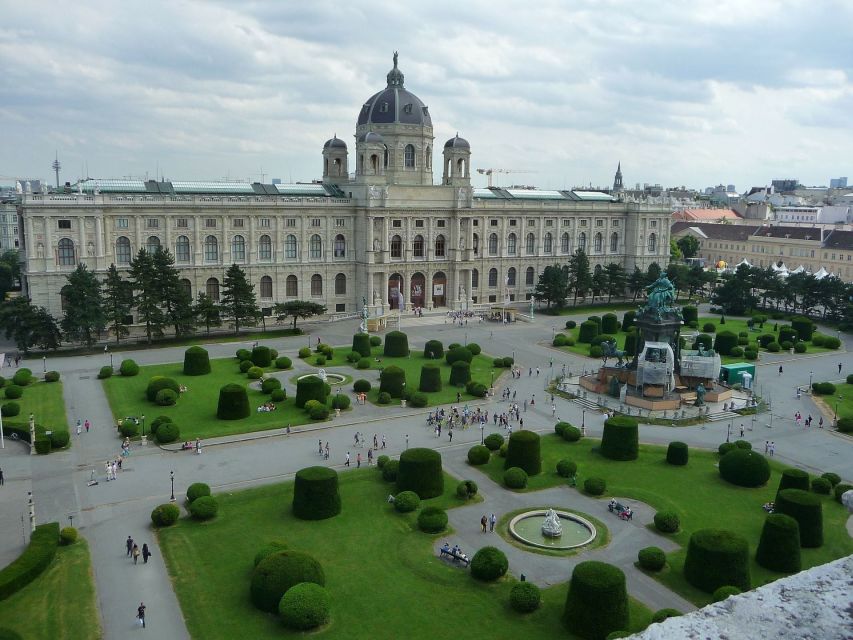
Maria-Theresien-Platz contains Vienna’s largest concentration of museums. The square offers a useful pause in the city story, linking the imperial period with Vienna’s long investment in art, scholarship, and public culture.
You should not expect a museum visit during this tour. The value here is orientation. Your guide can point out which institutions may suit your interests and help you decide where to spend another afternoon.
This is especially useful if you have only a short stay. Vienna can overwhelm you with palaces, galleries, churches, concert halls, and historic cafés. A guide’s advice can help you avoid spending half a day in a place that does not fit your tastes.
Several guides have also offered practical suggestions for additional places to visit after the walk. That kind of advice is more useful than a long list of attractions because it comes in the context of the route and your questions.
A completely different kind of day:
- Vienna: Vivaldi’s Four Seasons Concert in Karlskirche
★ 4.7 · 14,951 reviews - Vienna: Spanish Riding School Training
★ 3.9 · 9,281 reviews - Vienna: Schönbrunn Palace & Gardens Skip-the-Line Tour
★ 4.7 · 7,739 reviews - Vienna: Light of Creation Votive Church Immersive Light Show
★ 4.8 · 6,779 reviews
Secession, Klimt, and Vienna’s artistic rebellion
The Secession building gives the tour a different tone. Here, the subject shifts from imperial tradition to the city’s artistic rebellion around the turn of the 20th century.
You will hear about figures such as Gustav Klimt and Gustav Mahler, along with Vienna’s avant-garde culture. The building itself is an architectural icon, with a style that challenged older ideas about what a public monument should look like.
This stop helps prevent the tour from becoming only a Habsburg palace walk. Vienna’s identity also comes from artists, musicians, designers, and intellectuals who questioned the old order.
If Klimt is a major reason for your visit, remember that the tour provides context rather than a full art museum experience. You see the building and hear the story, but the walk does not include an art collection or indoor gallery admission.
Stephansdom, Kohlmarkt, and the Graben
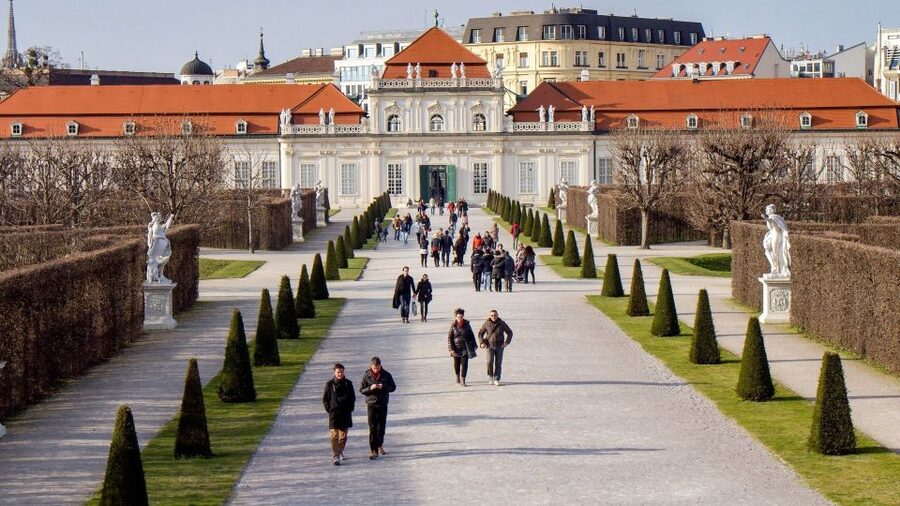
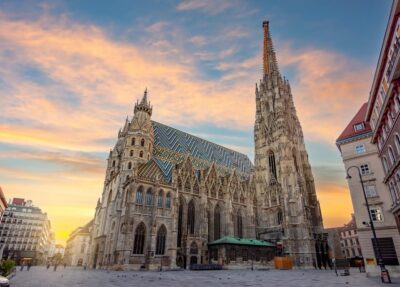
Stephansdom is Austria’s national architectural icon and one of the tour’s major visual anchors. The guide explains the cathedral as part of Vienna’s religious and civic identity, and you will have a chance to see its place in the heart of the city.
The itinerary does not promise an interior visit. If you want to explore the cathedral inside, set aside separate time. This is a recurring point with the tour: it gives you context and an exterior overview, not entry into every important building.
From there, the route moves through Kohlmarkt and the Graben, among Vienna’s most fashionable shopping streets. The polished storefronts can make this area feel modern, but the guide connects the streets to older layers of the city.
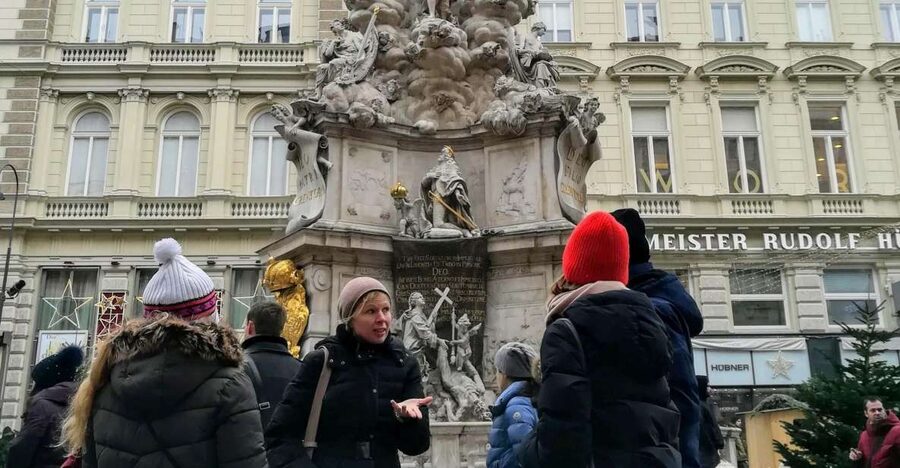
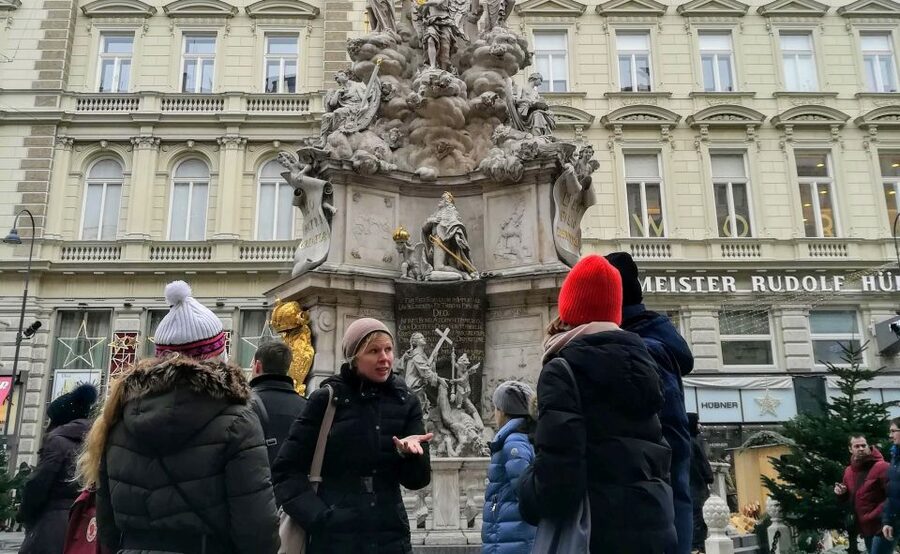
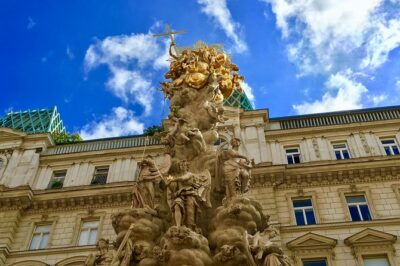
The Graben’s plague column is a particularly useful detail. It commemorates the 17th-century outbreak of bubonic plague and shows how public monuments could serve religious, political, and memorial purposes. A quick photograph misses much of that meaning. The guide’s explanation is what turns the column into part of Vienna’s story.
These streets are also practical for later wandering. You can return to them for shopping, cafés, or a second look at the buildings once you understand their place in the city.
Naschmarkt and everyday Vienna
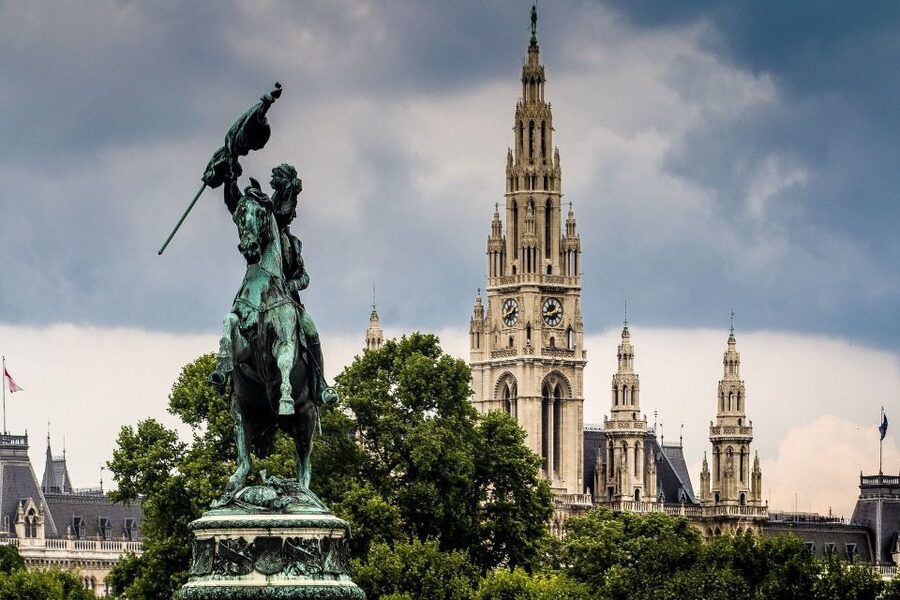
The route passes by the Naschmarkt, Vienna’s traditional food market. It is colorful, social, and different from the formal spaces around the Hofburg and Ringstraße.
You will not receive food or drinks as part of the tour unless your booking specifically says otherwise. The market is included as a place to see and understand, not as a formal tasting stop.
That distinction helps set expectations. If you want a food tour, this is not one. If you want to see where Viennese people shop, meet, and browse, the Naschmarkt adds useful variety to the route.
Food advice is one of the practical strengths of the guides. They have suggested places for schnitzel, sausages, coffee, and Sacher torte. One guide recommended alternatives to the famous Sacher Hotel, where queues and reputation can outweigh the actual experience for some visitors.
A guide may also point you toward a Viennese snack that does not appear in standard guidebooks. Those small recommendations can be more useful than another grand monument, especially when you are deciding where to eat that evening.
The guides make or break this experience
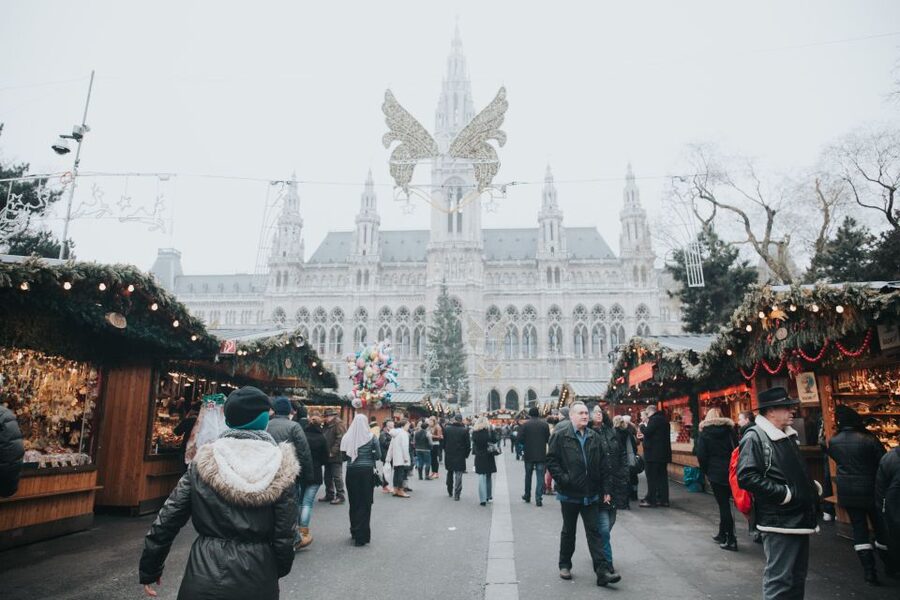
The tour is sold around an historian guide, and that is the right way to judge it. You are paying for interpretation, conversation, and personal attention rather than transportation or admission.
The strongest guide feedback centers on clear storytelling and genuine interest in Vienna. Katarina was praised for small historical details, animated explanations, and a willingness to answer questions. Wolfgang was singled out for making history feel personal and for taking groups along less touristy paths.
Annelie has received especially strong praise for combining academic knowledge with personal insight. One outing included Mozart and Haydn music, Sisi’s favorite candies, and a Viennese snack. Those touches are not guaranteed, but they show the kind of flexible, human experience the company aims to provide.
Ilse was praised for excellent English, humor, and sensitivity when discussing painful wartime subjects. Christina was described as flexible and reassuring. Elisabeth was remembered for her warmth, while other guides were praised for sharing family connections and lived experience in Vienna.
You cannot assume you will receive a particular guide unless the booking process allows a request. You can, however, expect the small format to create room for questions. Several groups ended up with only two people, or even one person, because of the day’s bookings. In those cases, a scheduled group walk became close to a private tour.
Is $181.02 per person a fair price?
At $181.02 per person, this is expensive for a 2-hour-30-minute walk. Food, drinks, hotel pickup, drop-off, and attraction admissions are not included.
The value depends on what you want from a guide. If you only need a list of sights and a few basic facts, a cheaper large-group walk may suit you better. One disappointed customer felt the tour was overpriced and wished the route had included City Hall, Parliament, the plague column, and the Holy Lance.
That criticism is fair. The itinerary is broad, and you cannot see every major Vienna sight in two and a half hours. You should check the route against your priorities before booking.
I can also see why the price appeals to some people. A group of eight or fewer allows the guide to answer questions, adjust the pace, and recommend places based on your interests. Large groups often deliver headlines. This tour aims for conversation and detail.
The price makes the most sense for first-time visitors who want a serious introduction, people with limited time, and anyone who enjoys history and architecture. It makes less sense if you plan to spend most of the walk taking photos or if you mainly want interior visits.
Timing, meeting point, and practical details
The tour begins at Café Hawelka, Dorotheergasse 6, 1010 Vienna. It ends in Vienna, but no more precise finishing point is provided, so ask for the exact end location if you need to coordinate another booking.
The walk is offered in English and is near public transportation. Most people can participate, though the experience involves two and a half hours of walking and standing. Wear comfortable shoes and prepare for changing weather.
Confirmation is provided at booking. The tour is commonly reserved well ahead, with an average booking lead time of 53 days. That does not mean you must book exactly that early, but it suggests that popular dates can fill in advance.
Free cancellation is available up to 24 hours before the start time for a full refund. Changes or cancellations inside that 24-hour window are not accepted and are not refunded.
Who should book this Vienna walk?
I would choose this tour for a first or second day in Vienna. It gives you a framework for the center, introduces the Habsburg story, and helps you choose which museums, cafés, and neighborhoods deserve more of your time.
It suits curious visitors who want more than quick facts. The strongest outings appear to come when the group asks questions and lets the guide shape the discussion.
Families, older visitors, and anyone with limited mobility should consider the walking time carefully. The information says most people can participate, but it does not promise a fully accessible route or seating throughout.
Should you book it?
Book this tour if you value a small group, serious historical context, and practical local advice. The guides appear to be the main reason the experience earns its 4.9 rating and 97 percent recommendation rate.
Skip it if $181.02 feels too high for an outdoor walk or if your priority is entering Vienna’s major palaces, churches, and museums. For the right person, though, this is a strong orientation tour that can make the rest of your Vienna visit easier, smarter, and more rewarding.
FAQ
How long is the Vienna walking tour?
The tour lasts approximately 2 hours and 30 minutes.
What language is the tour offered in?
The tour is offered in English.
Where does the tour begin?
It begins at Café Hawelka, Dorotheergasse 6, 1010 Vienna, Austria.
Where does the tour end?
The tour ends in Vienna. A more exact finishing point is not provided.
What sights are included?
The route includes the Hofburg, Stephansdom, the Ringstraße, the Loos House, Maria-Theresien-Platz, the Secession building, Naschmarkt, Kohlmarkt, and the Graben.
Does the tour enter the museums or palaces?
The provided details describe a guided walking tour and do not include admission to museums, palaces, or other attractions.
Is food included?
No. Food and drinks are not included unless specifically stated at booking.
Does the tour include hotel pickup?
No. Hotel pickup and drop-off are not included.
How large is the group?
The activity has a maximum of eight participants, with a maximum of six people per booking.
Can I cancel for a full refund?
Yes. You can cancel at least 24 hours before the experience start time for a full refund. Cancellations or changes made less than 24 hours before the start time are not accepted or refunded.
Just added in Vienna
- Vienna: Austrian Wine Tasting Experience★ 4.2 · 2 reviews
- World War II History Vienna Old Town Private Walking Tour★ 4.8 · 9 reviews
- Vienna_ Meet Beethoven Life Private Guided Walking Tour★ 5.0 · 1 review
- Vienna: Wine Tasting Tour★ 4.8 · 61 reviews
- Vienna: Wine Tasting E-Bike Tour★ 4.9 · 46 reviews
- Vienna: Wine Tasting at Schönbrunn Palace★ 4.3 · 71 reviews
- Vienna: Winery and Wine Tasting Tour with a Wine Expert★ 5.0 · 5 reviews
- Vienna: Concert by the Vienna Baroque Orchestra★ 4.6 · 56 reviews
Walking Tours, compared.
Guided Walking Tour of City Center Highlights
Read our review →
Guided Walking Tour of City Highlights & Hidden Gems
Read our review →
Vienna Historic Center Small Group Walking Tour
Read our review →
Browse the lists this tour appears in