
Reviewed · TICKETS
Skip the Line: Weltmuseum Wien Ticket
History takes a global turn here. The Weltmuseum Wien places cultural treasures from around the world inside Vienna’s Hofburg Palace, and I like the freedom to explore at your own pace and the convenience of a mobile ticket. The museum’s 14 galleries cover more than 500 years of Habsburg collecting, with standout objects from Mexico, the voyages of James Cook, and European royal collections.
I also like that the visit fits neatly into a two-hour Vienna schedule and includes entry to the museum itself, with no fixed route to follow. The main drawback is that the audio guide is not included, and some labels may be difficult to read in the darker galleries. One ticket scan has also failed for a visitor, although admission was still allowed.
In This Review
- Key Points at a Glance
- What the Weltmuseum Wien Is Like
- The Hofburg Setting and the Hall of Columns
- The Mexican Penacho and Other Major Highlights
- A Two-Hour Visit Without a Fixed Route
- Display Quality and Reading the Labels
- What the $19.25 Ticket Buys You
- Best Time to Visit and Opening Information
- The Cafe and a Break in Your Visit
- Who Will Enjoy This Museum Most
- Booking, Cancellation, and Practical Details
- Should You Book the Weltmuseum Wien Ticket?
- FAQ
- Where is the Weltmuseum Wien located?
- How much does the ticket cost?
- How long does the visit take?
- Is the ticket available on a mobile phone?
- Does the ticket include museum admission?
- Is an audio guide included?
- Is there a fixed itinerary?
- What are the listed Tuesday opening hours?
- Can I cancel for a full refund?
- Is the museum near public transportation?
Key Points at a Glance
- Fourteen galleries in the Hofburg: See cultural objects from across the world in one of Vienna’s grandest imperial settings.
- The Mexican feather headdress: The Penacho is one of the museum’s most famous objects and a major reason to visit.
- A flexible two-hour visit: There is no fixed itinerary, so you can focus on the galleries that interest you most.
- Historic Habsburg collecting: Objects linked to Emperor Rudolf II, James Cook, and 19th-century expeditions offer a look at how European courts viewed the wider world.
- Extra collections nearby: The Hall of Columns also provides access to the Imperial Armoury and the Collection of Historic Musical Instruments.
- Advance entry for $19.25: The price buys convenience and planned admission, though a same-day ticket may sometimes be sufficient.
What the Weltmuseum Wien Is Like
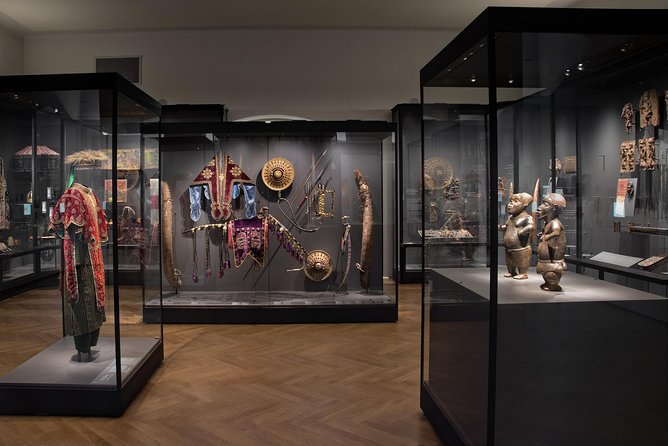
The Weltmuseum Wien is an ethnographical museum in the Hofburg Palace on Vienna’s Ringstrasse. That setting matters. You are not entering a modern building on the edge of town. You are walking into the former imperial center of Vienna, where objects from many regions are presented within a palace associated with the Habsburgs.
The museum’s purpose is to present cultural diversity, stories, and ways of life through objects. That makes the visit different from a standard art museum. You are not simply moving from one famous painting to another. The displays ask you to consider how objects were made, used, collected, and interpreted.
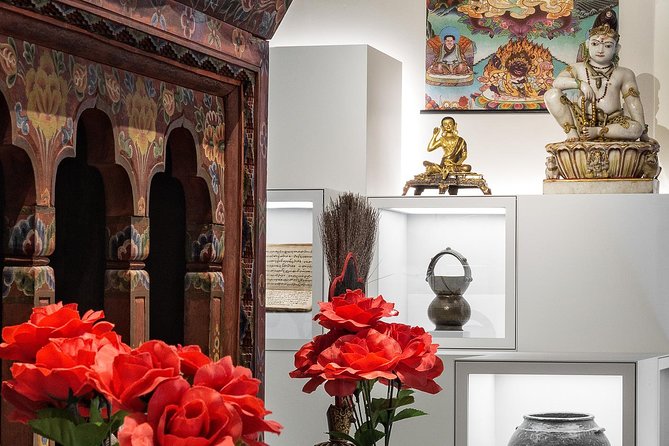
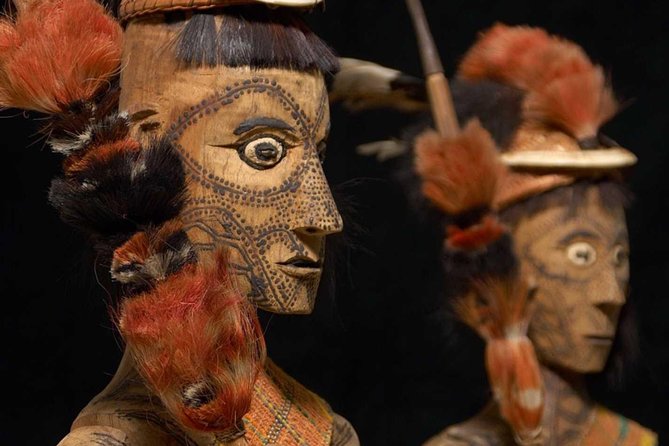
I find the museum’s broad scope both its greatest strength and its main challenge. You can see objects connected to Mexico, Asia, Africa, the Americas, and European collecting traditions in the same visit. At the same time, 14 galleries cover a great deal of ground, so you will not absorb every display in a single pass.
A map is provided, which helps you get your bearings. That small detail matters because the collection can feel extensive once you are inside. If you have two hours, use the map to identify your priorities before setting off rather than trying to inspect every case with equal attention.
A few more options to weigh up in Vienna
- Vienna: Vivaldi’s Four Seasons Concert in Karlskirche
★ 4.7 · 14,951 reviews - Vienna: Spanish Riding School Training
★ 3.9 · 9,281 reviews - Vienna: Schönbrunn Palace & Gardens Skip-the-Line Tour
★ 4.7 · 7,739 reviews
The Hofburg Setting and the Hall of Columns
The Hofburg gives the museum a strong sense of place. Vienna’s imperial palace is already part of most city sightseeing routes, so the museum is easy to combine with other central attractions. It is also near public transportation, making it practical when you are working around a tight schedule.
The Hall of Columns is one of the building’s most memorable spaces. It also acts as a gateway to two collections associated with the Kunsthistorisches Museum Vienna. This means your ticket is not limited to ethnographical displays alone. Depending on how you plan your visit, the nearby collections can add a distinctly European and court-centered contrast to the global material in the main galleries.
The Imperial Armoury contains suits of armour and decorative weapons connected with chivalry, court ceremony, and important events. If you enjoy military history, royal display, or finely made objects, this section may hold your attention longer than expected.
The Collection of Historic Musical Instruments adds another layer. It includes original instruments associated with composers such as Mozart, Haydn, and Beethoven. The museum information identifies this collection as part of the access through the Hall of Columns, so check the current arrangement when you arrive if these instruments are a priority.
This combination is useful for families and mixed-interest groups. One person can focus on global cultures, another on armour, and another on music. You do not need to follow a guide or keep to a group timetable.
The Mexican Penacho and Other Major Highlights
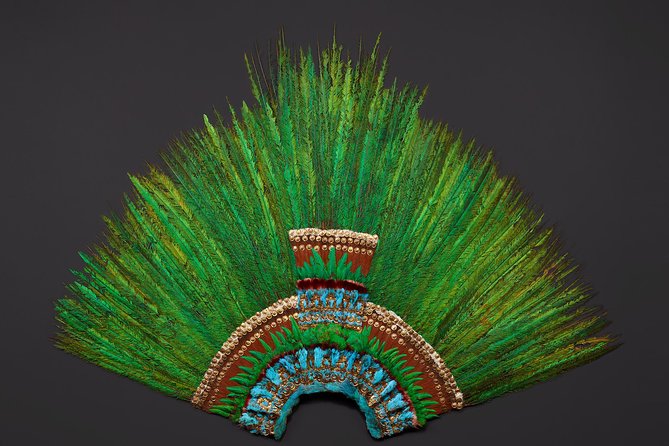
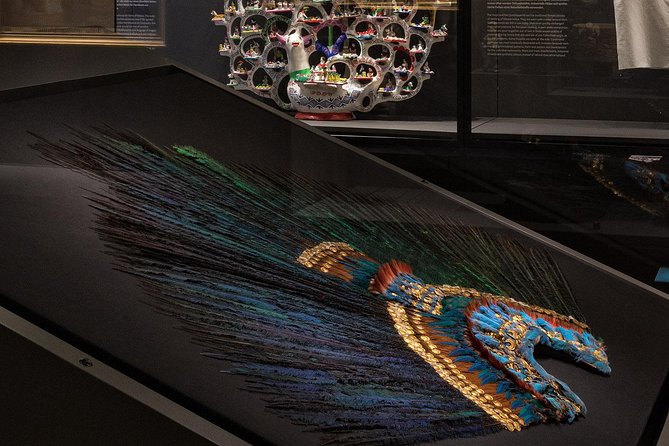
The Mexican feather headdress, known as the Penacho, is among the museum’s most important objects. It gives the visit a clear focal point, especially for anyone interested in Mexican history and Indigenous artistry.
I would make this one of your first priorities. The Penacho is a unique object, and it is easy to let a large museum visit become a blur of cases and labels. Having a few anchor pieces in mind gives the experience more shape.
Another major section draws from the Cabinet of Curiosities of Emperor Rudolf II. Cabinets of curiosities were collections assembled to display unusual, rare, or remarkable objects. Here, the connection to Rudolf II helps explain how collecting worked within the Habsburg court and how objects from distant places entered European royal collections.
The museum also presents items connected with James Cook’s famous collection and with voyages of discovery and research during the 19th century. These displays can be fascinating, but they also deserve a thoughtful eye. They reveal curiosity and careful collecting, while also showing how European powers gathered objects from other cultures and brought them into imperial institutions.
That broader context is part of the value of the museum. You are not only seeing attractive or unusual objects. You are also seeing evidence of the way European courts and researchers understood the wider world. The museum’s collections raise questions about ownership, interpretation, and the meaning attached to objects after they leave their original setting.
A Two-Hour Visit Without a Fixed Route
The advertised visit takes about two hours, and that is a sensible target for most people. You can see a substantial portion of the museum in that time without turning the experience into a race.
I would begin by checking the map and choosing three priorities. For many people, those might be the Penacho, the Rudolf II material, and the James Cook collection. If you have a strong interest in armour or classical music, add the Imperial Armoury or historic instruments instead.
The lack of a fixed itinerary is a real advantage. You can linger in a gallery that catches your eye and move quickly through a section that does not hold your interest. Families especially benefit from this freedom because young children rarely want to spend equal time in every room.
The museum is described as family-friendly, and the map makes it easier to get started. Still, the amount of material can be tiring. One visitor managed to see most of the museum but not everything, which is a useful warning. Do not treat two hours as enough for a detailed study of every gallery.
If you have more time, you can slow down and read more of the background. If you have less, focus on the major objects and enjoy the building. The ticket does not require you to follow a lecture, group, or timed route.
More skip-the-line entries in Vienna:
- Vienna: Skip-the-Line Sisi Museum, Hofburg and Gardens Tour
★ 4.8 · 5,918 reviews - Vienna: Skip-the-Line Schönbrunn Palace & Gardens Tour
★ 4.8 · 5,411 reviews - Vienna: Skip-the-Line Entrance Ticket to the Danube Tower
★ 4.5 · 2,303 reviews - Vienna: Skip the Line Schönbrunn Palace and Gardens Guided Tour
★ 4.5 · 1,540 reviews
Display Quality and Reading the Labels
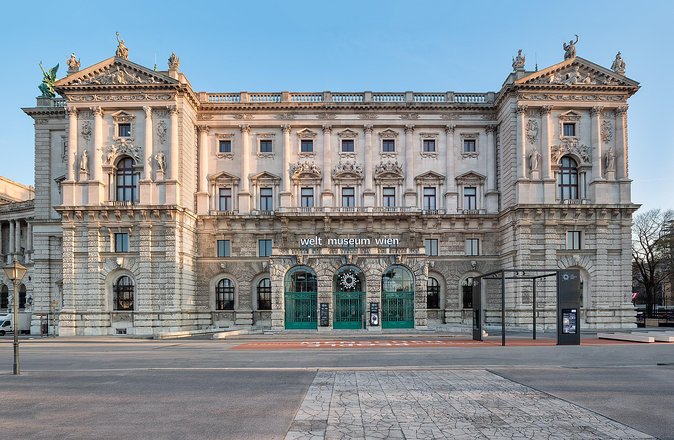
The displays are varied, and the collection covers many historical periods and cultures. That variety is what makes the museum appealing, but it also means the experience changes from gallery to gallery.
Some areas are dark, and the labels can be hard to read. This is the clearest practical weakness reported about the visit. If you care about the written explanations, allow extra time and move close to the text rather than relying on a quick glance from the center of the room.
The audio guide is not included in the ticket price. That makes the museum more dependent on your own preparation and attention. You can still enjoy the objects without one, but an audio guide could be useful if you prefer spoken context or want a more structured visit.
Because the museum presents objects from many places, labels are especially important. Without context, a small object can be visually appealing but difficult to understand. I suggest reading the introductory information in each gallery, then selecting a few objects for closer attention.
Do not feel obliged to read every label. With 14 galleries, that approach could make a two-hour visit feel like homework. Pick the objects that interest you, then let the rest provide a wider sense of the collection.
What the $19.25 Ticket Buys You
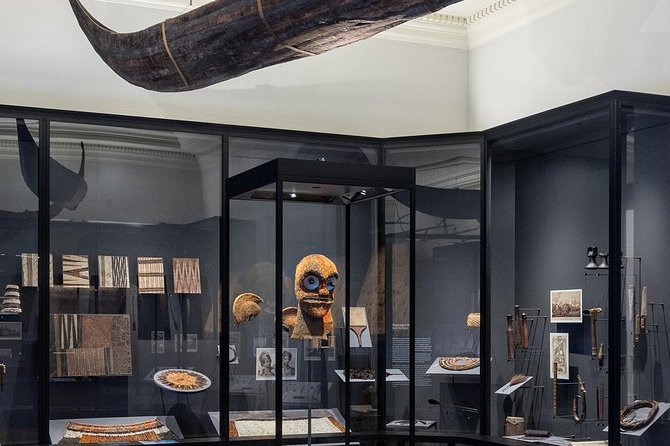
At $19.25 per person, this is a mid-priced museum ticket rather than a bargain basement attraction. The value depends on how much you want to see and how useful advance admission is during your dates in Vienna.
The ticket includes the entrance fee, and booking ahead gives you a planned admission rather than leaving the visit to chance. That can be valuable if the museum is part of a carefully arranged day, especially since the experience is booked an average of 23 days in advance. That booking pattern suggests many people plan it well before arriving in Vienna.
The skip-the-line promise is also useful when ticket queues are long. However, one important note is that an advance ticket may not always be essential. A visitor found that buying ahead was convenient but did not seem necessary at the time. Conditions can change, so I would think of the ticket as a convenience purchase rather than an automatic money saver.
There was also a report of the mobile ticket failing to scan, although entry was still granted. Keep the confirmation available on your phone and allow a little patience at the entrance. The ticket is mobile, so you do not need to arrange a paper voucher in advance.
For someone who values planning, the price is reasonable. For someone already near the Hofburg with a flexible schedule, you may prefer to check current admission conditions before committing. The strongest value comes from certainty and saved time, not from a guided experience.
Best Time to Visit and Opening Information
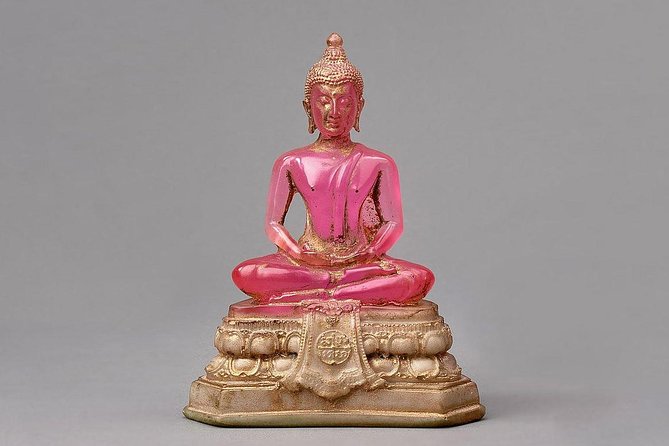
The supplied opening information lists Tuesday hours from 10:00 in the morning until 9:00 in the evening for both 2025 and 2026. Those extended Tuesday hours create a useful option for an afternoon or evening museum visit.
I would verify the hours for your chosen date before setting out, particularly if you are visiting on another day. The information provided specifically confirms Tuesday, so it should not be treated as a full weekly schedule.
A late opening can help you avoid cramming the museum into the middle of a busy sightseeing day. You might visit the Hofburg area earlier, take a break, and then come here in the evening. The museum’s approximate two-hour length also makes it easier to fit between other plans.
The central location and nearby public transportation are practical advantages. You do not need to build a separate half-day around the museum unless you want to study the collections closely.
The Cafe and a Break in Your Visit
A cafe is available, and it received unusually warm praise for its quality. The selection is limited, but the food and drink are described as excellent.
That is useful to know because museum cafes can be either a pleasant pause or an afterthought. Here, you can reasonably plan a short break without expecting a full restaurant menu. If you are visiting with family, the cafe may help divide the visit into manageable sections.
I would avoid relying on it for a specific meal unless you are comfortable with limited choices. Think of it as a convenient stop during your museum visit rather than a destination in its own right.
Who Will Enjoy This Museum Most
I would recommend the Weltmuseum Wien to several types of visitors:
- Culture-focused adults: You will find objects from many regions and plenty of material to think about.
- Families: The map, flexible route, and variety of displays make it easier to adapt the visit to different attention spans.
- Habsburg history fans: The connection to royal collecting, Rudolf II, and the Hofburg setting adds strong imperial context.
- Visitors with limited time: Two hours is enough for a satisfying introduction without taking over your day.
- People interested in Mexico: The Penacho and related material may be the main reason to book.
- Mixed-interest groups: The Armoury and musical instruments offer alternatives to the ethnographical galleries.
I would be more cautious if you want a fully guided experience. There is no fixed itinerary, and the audio guide is not part of the admission. You will get the most from the visit if you are happy to set your own pace and choose your own highlights.
Booking, Cancellation, and Practical Details
Confirmation is provided at the time of booking, and the mobile format keeps the process simple. The experience allows up to 99 participants, although the museum visit itself is self-guided rather than a traditional group tour.
Free cancellation is available if you cancel at least 24 hours before the experience’s start time. Cancellations made less than 24 hours ahead are not refunded, and changes within that period are not accepted. The cut-off follows local Vienna time.
Most people can participate, and the museum is near public transportation. Since the visit takes place inside a large palace complex, I would allow a few minutes to find the correct entrance and have your phone ready before you reach the ticket desk.
Should You Book the Weltmuseum Wien Ticket?
Book it if you want a flexible museum visit with advance admission, especially if the Penacho, Habsburg collecting, and global cultural displays appeal to you. The $19.25 price is fair for entry to a substantial museum in the Hofburg, and the two-hour format works well for a busy Vienna itinerary.
Skip the advance ticket if you are completely flexible and do not mind checking admission at the door. The booking may not save much money, and the skip-the-line benefit can depend on how busy the museum is that day.
My practical choice would be to book ahead for a fixed Vienna schedule, a short visit, or a popular travel period. Bring your mobile confirmation, use the map, choose a few priority galleries, and do not expect to see every object in detail. That approach gives you the best balance of convenience, context, and time.
FAQ
Where is the Weltmuseum Wien located?
The museum is in the Hofburg Palace on Vienna’s Ringstrasse.
How much does the ticket cost?
The listed price is $19.25 per person.
How long does the visit take?
The visit takes approximately two hours.
Is the ticket available on a mobile phone?
Yes. The experience includes a mobile ticket.
Does the ticket include museum admission?
Yes. Entrance fees are included.
Is an audio guide included?
No. The audio guide is not included in the ticket.
Is there a fixed itinerary?
No. You can explore the museum at your own pace and choose which galleries to visit.
What are the listed Tuesday opening hours?
For both 2025 and 2026, the listed Tuesday hours are 10:00 AM to 9:00 PM.
Can I cancel for a full refund?
Yes, if you cancel at least 24 hours before the experience’s start time.
Is the museum near public transportation?
Yes. The museum is listed as being near public transportation.
Just added in Vienna
- Vienna: Austrian Wine Tasting Experience★ 4.2 · 2 reviews
- World War II History Vienna Old Town Private Walking Tour★ 4.8 · 9 reviews
- Vienna_ Meet Beethoven Life Private Guided Walking Tour★ 5.0 · 1 review
- Vienna: Wine Tasting Tour★ 4.8 · 61 reviews
- Vienna: Wine Tasting E-Bike Tour★ 4.9 · 46 reviews
- Vienna: Wine Tasting at Schönbrunn Palace★ 4.3 · 71 reviews
- Vienna: Winery and Wine Tasting Tour with a Wine Expert★ 5.0 · 5 reviews
- Vienna: Concert by the Vienna Baroque Orchestra★ 4.6 · 56 reviews
Tickets, compared.
Classic Ensemble Vienna in St. Peter’s Church Ticket
Read our review →
Vienna Kunsthistorisches Museum Day Admission Ticket
Read our review →
Tickets for Mozarthaus Vienna with Audio Guide
Read our review →
Skip-the-Line Entrance Ticket to the Danube Tower
Read our review →

St. Stephen’s Cathedral & Dom Museum Wien Tickets
Read our review →Browse the lists this tour appears in