Reviewed · TOURS
Wien: Tour with locals on the trails of the Christmas Tree
Christmas trees have a surprising past. This two-hour walk links Vienna’s palace-lined center with the story of how the Christmas tree reached the city, making an unusual seasonal subject feel connected to Viennese society, architecture, and custom. I like the small group limit of 10 and the chance to receive the tour in English, Italian, or German. I also like that the guide can respond to personal interests rather than delivering only a fixed script.
The main consideration is focus. The tour includes a good deal of general Vienna history, and one participant found it hard to connect all those details with the Christmas tree theme. The walk also takes place outdoors in rain, snow, or sunshine, so warm clothing and comfortable shoes are essential.
In This Review
- Key points to know before booking
- Why Vienna’s Christmas tree story makes a good tour theme
- Meeting the guide near the Anker Clock
- Walking through Vienna’s historic center
- The first Vienna Christmas tree location
- The Albertina stop and the city’s illuminated streets
- Rathausplatz, Am Hof, and the Advent market finish
- What the $62 price really covers
- The weather, walking pace, and practical comfort
- Who will enjoy this unusual Vienna walk
- Book it or choose another Vienna activity?
- FAQ
- How long does the Vienna Christmas tree tour last?
- Where does the tour begin?
- Where does the tour finish?
- Which languages are available?
- Are food, drinks, or market punch included?
- Does the tour operate in bad weather?
Key points to know before booking
- The Christmas tree is the central subject: You learn how the custom arrived in Vienna and how local society reacted to it.
- The route links major city sights: Begin near the Anker Clock, continue through the historic center, pass the Albertina, and finish around Rathausplatz or Am Hof.
- Small groups make a difference: With no more than 10 people, it should be easier to ask questions and hear the guide.
- Guide Nicole receives especially strong praise: Her English, preparation, personal warmth, and ability to add wider social history have been singled out as major strengths.
- Advent markets add a pleasant finish: During the Christmas season, you can stop for punch and browse seasonal goods.
- It is a walking tour in all weather: There is no hotel pickup, no food or drink included, and no indoor shelter built into the plan.
Why Vienna’s Christmas tree story makes a good tour theme
At first, the subject may sound narrow. Vienna has palaces, imperial apartments, concert halls, museums, and grand squares, so why spend two hours following the story of a decorated tree?
The answer is that customs reveal how a city changes. The Christmas tree was not simply placed in Vienna one day and accepted by everyone. Its arrival touched family life, social fashion, public tradition, and the Catholic character of the city. The guide explains how Viennese people encountered the custom, why it caught their attention, and how it came into conflict with Catholic church traditions.
That gives the walk a useful angle. You are not only looking at Christmas lights. You are considering what people in 19th-century Vienna found new, attractive, or unsettling. The subject also creates a clear thread through the old center, so buildings and squares are not just pretty backdrops.
The tour does not present churches as regular stops. The route can pass near St. Peter’s Church, and the guide can discuss it if you specifically want to learn about it. If you prefer a strictly secular Christmas story, that option lets you keep the focus elsewhere.
A few more options to weigh up in Vienna
- Vienna: Vivaldi’s Four Seasons Concert in Karlskirche
★ 4.7 · 14,951 reviews - Vienna: Spanish Riding School Training
★ 3.9 · 9,281 reviews - Vienna: Schönbrunn Palace & Gardens Skip-the-Line Tour
★ 4.7 · 7,739 reviews
Meeting the guide near the Anker Clock
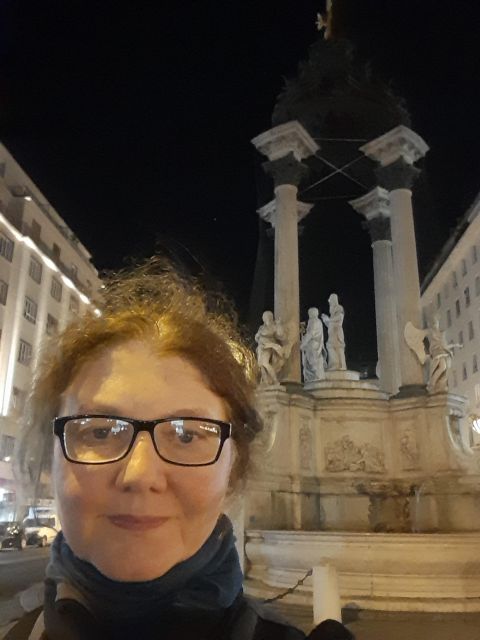
The meeting point is between the Anker Clock and the Marriage Fountain. This is a practical place to begin, but you should allow enough time to locate the exact spot. The Anker Clock is a recognizable landmark, while the fountain gives you a second reference point.
The route starts in the central city, so you do not need a hotel transfer or a separate ride to a distant suburb. That keeps the tour efficient, especially if you have only a short stay in Vienna. You can arrive on foot or by public transport, though the activity itself does not include transportation.
Nicole is the guide most strongly associated with this experience. Her best quality is not simply knowing dates and buildings. She connects the Christmas tree with the people who lived in Vienna at the time, explaining what the custom meant within the wider community.
One participant who joined with a son especially liked the way Nicole adjusted to individual interests. That flexibility matters in a small group. You can ask for more background on Vienna, focus more closely on the Christmas tradition, or request extra attention to a place along the route.
The one concern is speaking pace. A local participant found that the guide sometimes made too few rhetorical pauses, which became tiring after a while. If you need a slower delivery, say so early. A small group gives you a reasonable chance to ask for pauses or clarification.
Walking through Vienna’s historic center
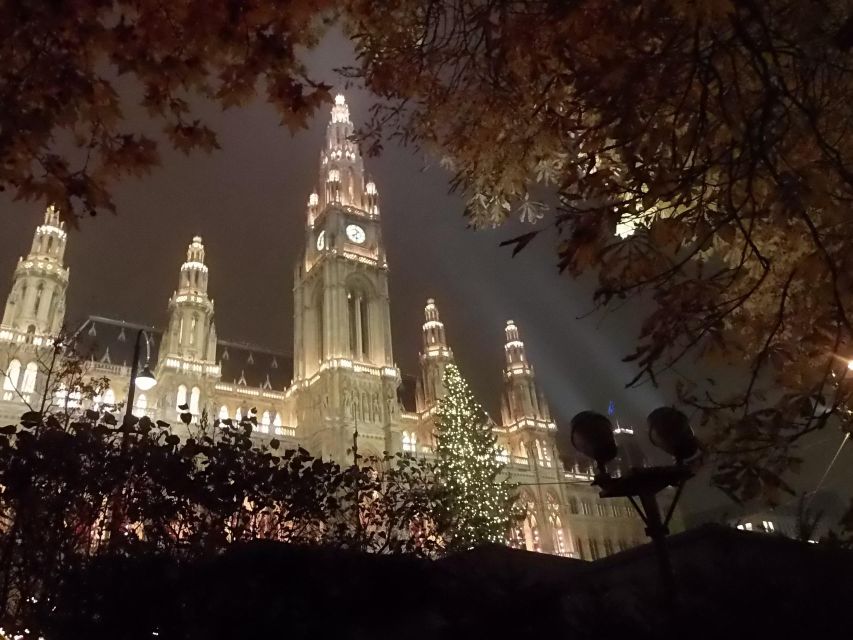
The largest part of the tour lasts about 90 minutes and takes place in Vienna’s historic center. This is where the Christmas tree story gets tied to palaces, public spaces, and the city’s grand architecture.
You will walk from palace to palace through streets decorated for Advent. The buildings provide more than a festive setting. They help explain the social world in which the Christmas tree gained attention. Vienna’s courtly culture, urban families, public traditions, and Catholic institutions all form part of the story.
The guide uses historical pictures showing people and places connected with the subject. That can make a difference when you are standing in front of a building that has changed over time. Instead of hearing only an abstract explanation, you get visual clues about how the site and its surroundings once looked.
I like this approach because it keeps the walk grounded. You are not sitting in a lecture room hearing a general account of Christmas customs. You are moving through the locations linked to Vienna’s changing habits.
Still, you should know what this tour is not. It is not a full palace interior visit, and the supplied plan does not include museum admission or access to rooms. The palaces and historic buildings function as outdoor points of reference. If you want extended time inside imperial interiors, you will need a separate visit.
The historic center portion can also feel information-heavy. Vienna has many layers of political, social, and architectural history, and the guide brings several of them into the discussion. This benefits you if you want more than Christmas lights. It may feel less satisfying if you want every minute tied directly to trees, decorations, and Advent customs.
The first Vienna Christmas tree location
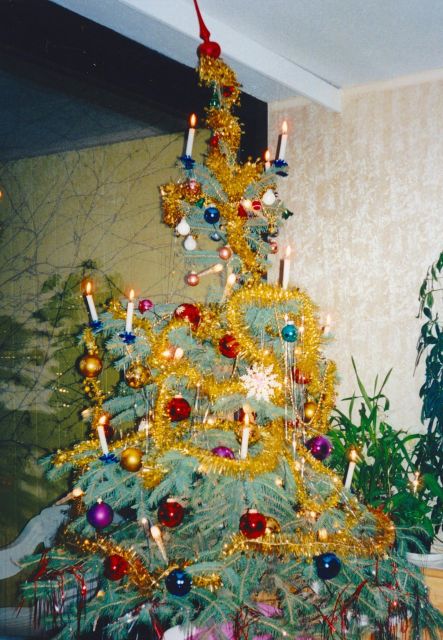
One of the most useful details in the walk is the visit to the place associated with the first Christmas tree displayed in Vienna. This gives the subject a physical anchor.
Rather than hearing only that the tradition arrived from elsewhere, you stand at a location connected with its early appearance in the city. The guide then places that event in its 19th-century setting, explaining more about Viennese society at the time.
This is the point where the tour appears to work best. A seemingly ordinary tradition becomes a story about social change. You can consider who had access to new customs, how families adopted them, and why the Christmas tree made such an impression.
Do not expect a large permanent exhibit devoted to this first tree. The value is in the guide’s explanation and the surrounding city, not in a preserved tree or a formal museum display. Historical pictures help fill in what the street itself cannot show.
A completely different kind of day:
- Vienna: Light of Creation Votive Church Immersive Light Show
★ 4.8 · 6,779 reviews - Vienna Spanish Riding School Guided Tour
★ 4.7 · 6,765 reviews - Vienna: Classical Concert in the World-Famous Musikverein
★ 4.6 · 6,673 reviews - Vienna: Skip-the-Line Sisi Museum, Hofburg and Gardens Tour
★ 4.8 · 5,918 reviews
The Albertina stop and the city’s illuminated streets
The route includes about 15 minutes of guided attention near the Albertina Museum. The museum is one of Vienna’s major cultural landmarks, and its position above the center gives this part of the walk a strong architectural setting.
The timing here is brief, so treat it as an outdoor orientation stop rather than a museum visit. Admission to the Albertina is not included, and the tour does not turn into a gallery tour.
That short stop can still be useful. It breaks up the longer central walk and adds another palace-related setting to the Christmas tree story. In Advent, the lighting around central Vienna also becomes part of the experience. You get the seasonal atmosphere without spending the entire tour inside a market.
If you are taking photographs, this section may tempt you to pause often. Keep in mind that the guide is continuing the historical explanation, and stopping too long can make it harder to follow the group. A small group helps, but the tour still has a two-hour schedule.
Rathausplatz, Am Hof, and the Advent market finish
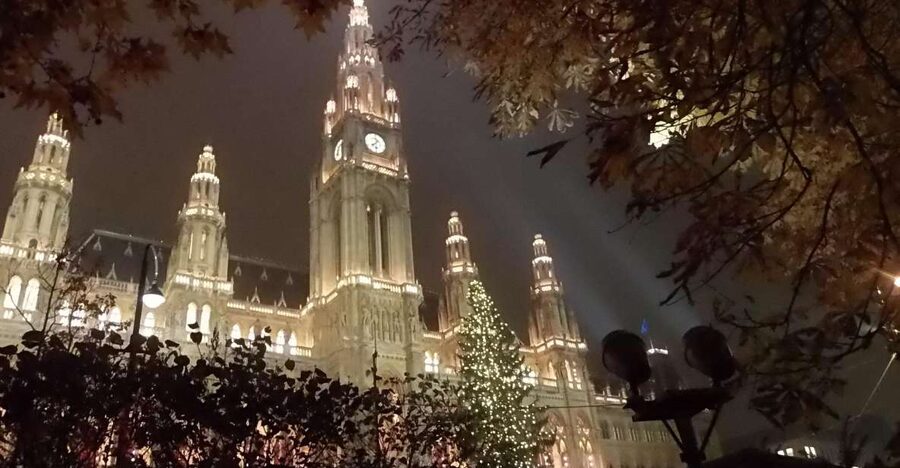
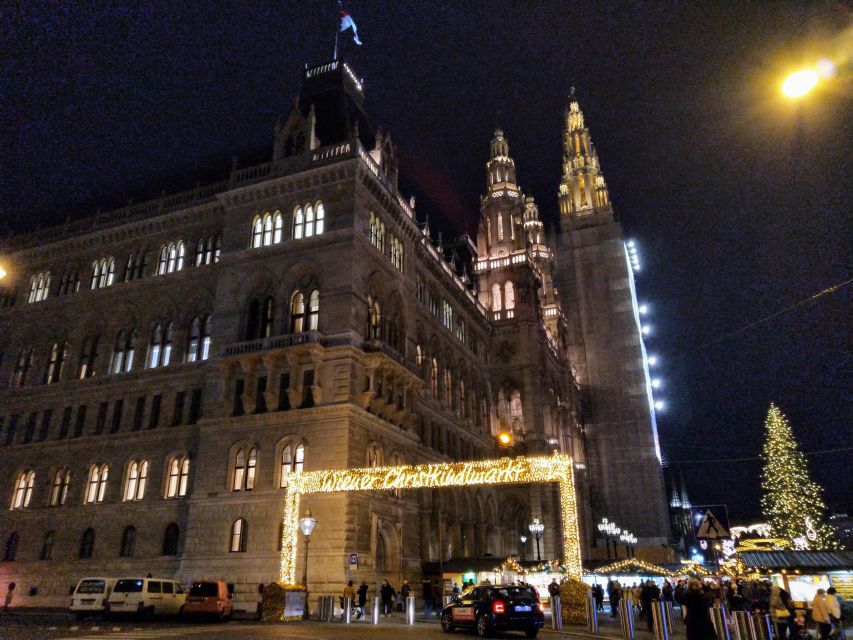
The walk includes a 15-minute guided section at Rathausplatz. Vienna’s city hall square is a natural place to end a Christmas-season outing because it is associated with one of the city’s best-known Advent settings.
The plan also allows a finish at Am Hof. These are different end points, so confirm your preferred option when arranging the tour. The supplied details describe the route as allowing you to choose between Rathausplatz and Am Hof, while the listed finish point is Am Hof. That small inconsistency is worth clarifying before you set a meeting plan or reserve a restaurant nearby.
During Advent, you can finish with a punch at one of Vienna’s markets and look through the seasonal products. Food and drinks are not included, so budget separately for anything you buy. This is a nice feature because it gives you time to continue at your own pace after the guided portion ends.
The market stop is optional in practical terms. The tour does not promise a particular stall, menu, or included tasting. Think of it as a useful suggestion for extending the evening, not as part of the paid package.
Rathausplatz may suit you if you want a grand, festive finish. Am Hof can be more convenient if you plan to continue elsewhere in the central district. Ask the guide for advice based on your plans for the rest of the evening.
What the $62 price really covers
At $62 per person, this is not a bargain-priced city orientation walk. Its value depends on how much you want a specialist subject rather than a standard introduction to Vienna.
Your fee covers a two-hour historical tour, a small group of no more than 10 people, a live guide, and historical pictures connected with the Christmas tree story. You are paying for interpretation and personal attention, not transportation, food, drinks, hotel pickup, or museum entry.
The price looks more reasonable if you are visiting Vienna during Advent and want an explanation of local customs alongside the city sights. A private group or a nearly private departure can also make the cost easier to justify, especially for families or friends who prefer to ask questions and adjust the discussion.
It is less compelling if your main goal is to visit Christmas markets quickly, take photos, or see as many famous buildings as possible. You can explore market stalls on your own for no tour fee, and a general city walk may cover more standard sights.
The strongest value comes from the guide’s personal knowledge and flexibility. Nicole has been praised for excellent English, strong preparation, and an ability to place the Christmas tree within 19th-century Viennese life. That human element is what separates this experience from simply reading a short history online.
The weather, walking pace, and practical comfort
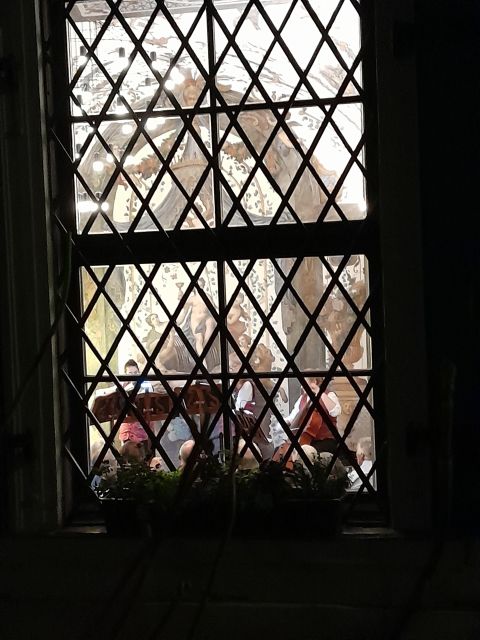
The tour operates rain, snow, or shine. Vienna in December can be cold, damp, or windy, and the evening illumination may make the weather feel more seasonal than comfortable.
Wear shoes that can handle two hours of walking on city streets. Warm layers are more useful than one bulky item because you can adjust as you move between exposed squares and busier streets. Comfortable clothing is specifically advised, and you should not count on indoor breaks.
The route is wheelchair accessible, which is an important advantage. You should still contact the activity provider if you need to discuss particular mobility requirements, since the details do not specify every surface or street condition.
The tour is offered in English, Italian, and German. English ability has been praised, though one participant found the explanations difficult to follow. If English is not your strongest language, choosing Italian or German when available may help. Even fluent English speakers should feel free to ask the guide to slow down.
Recording the guide’s explanations is prohibited because the tour content is protected by copyright. You can take your own notes and photographs where appropriate, but plan to listen rather than record the presentation.
Who will enjoy this unusual Vienna walk
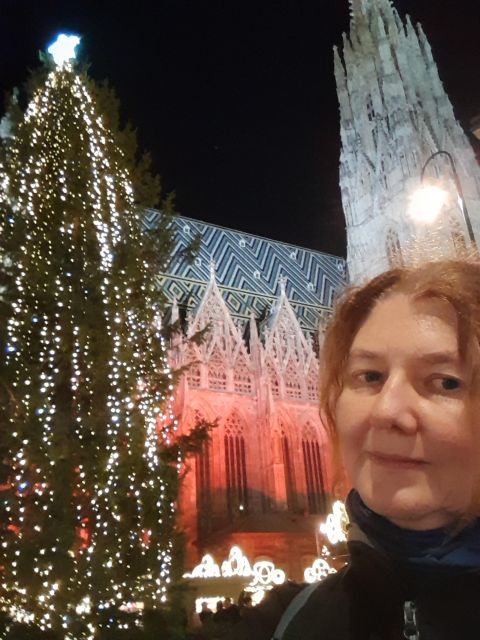
I would recommend this tour most strongly to you if you:
- Want a seasonal activity with more substance than market shopping
- Enjoy social history and stories about changing customs
- Prefer a small group over a large city tour
- Are visiting Vienna during Advent
- Like walking through the historic center while hearing about the buildings around you
- Want a guide who can adapt the discussion to your interests
- Are comfortable spending two hours outside in winter weather
Families may find the subject more engaging when children are interested in Christmas traditions, though the amount of historical detail may be demanding for younger children. The tour can also suit repeat visitors. One local participant said the walk revealed new facts about a city she already knew well.
I would be more cautious if you want a fast, visual tour with little narration. The historical background is a major part of the experience. You may also want another activity if you have difficulty standing or walking outdoors for two hours, even though the tour is wheelchair accessible.
Book it or choose another Vienna activity?
Book this walk if you want to understand how a familiar Christmas custom became part of Vienna’s social life. The best reasons are the first-tree location, the palace-to-palace route, the historical images, and Nicole’s ability to connect the topic with wider Viennese history.
Skip it if you mainly want indoor sightseeing, included refreshments, or a tour devoted entirely to market stalls and decorations. The Christmas theme is real, but the experience also includes substantial general history, and that balance may not suit everyone.
For the best experience, book during Advent, dress for the forecast, choose your language carefully, and clarify whether you want to finish at Rathausplatz or Am Hof. At $62, it is a specialized choice rather than a basic city walk, but it can give you a thoughtful way to see Vienna’s center at Christmas.
FAQ
How long does the Vienna Christmas tree tour last?
The tour lasts two hours. About 90 minutes are spent on a guided walk through Vienna’s historic center, followed by approximately 15 minutes near the Albertina and 15 minutes at Rathausplatz.
Where does the tour begin?
The meeting point is between the Anker Clock and the Marriage Fountain in central Vienna.
Where does the tour finish?
You may choose to finish at Rathausplatz or Am Hof. The listed finish address is Am Hof, so confirm your preferred ending point before the tour.
Which languages are available?
The live guide is available in English, Italian, and German.
Are food, drinks, or market punch included?
No. Food and drinks are not included. During Advent, you can buy punch at an Advent market after the guided walk.
Does the tour operate in bad weather?
Yes. The tour takes place rain, snow, or shine. Bring warm clothing and wear comfortable shoes.
Just added in Vienna
- Vienna: Austrian Wine Tasting Experience★ 4.2 · 2 reviews
- World War II History Vienna Old Town Private Walking Tour★ 4.8 · 9 reviews
- Vienna_ Meet Beethoven Life Private Guided Walking Tour★ 5.0 · 1 review
- Vienna: Wine Tasting Tour★ 4.8 · 61 reviews
- Vienna: Wine Tasting E-Bike Tour★ 4.9 · 46 reviews
- Vienna: Wine Tasting at Schönbrunn Palace★ 4.3 · 71 reviews
- Vienna: Winery and Wine Tasting Tour with a Wine Expert★ 5.0 · 5 reviews
- Vienna: Concert by the Vienna Baroque Orchestra★ 4.6 · 56 reviews
Tours, compared.
Schönbrunn Palace & Gardens Skip-the-Line Tour
Read our review →
Skip-the-Line Sisi Museum, Hofburg and Gardens Tour
Read our review →
Skip-the-Line Schönbrunn Palace & Gardens Tour
Read our review →
Guided Walking Tour of City Center Highlights
Read our review →