
Reviewed · MOZART CONCERTS
What do Mozart and Henry Ford have in common? – The freemason in Vienna
Secrets hide in plain sight. This Vienna walking tour follows Freemasonry’s traces through the city center, linking Mozart, Henry Ford, Goethe, George Washington, and other famous names to a still-existing brotherhood. I like the focused theme and the compact route, which connects major sights with a less familiar story.
I also like that the experience is private for your group, with between five and 25 people, so you can ask questions without competing with a large crowd. The main drawback is that the tour’s descriptions are brief, and the available rating of 4.3 from six entries is not supported by useful tour-specific comments. You should book it for the subject, not for a proven record of detailed guide feedback.
In This Review
- Key points to know before booking
- What this Vienna Masonic tour is really about
- Starting at Judenplatz 5
- St. Stephen’s Cathedral and the first symbol
- Rauhensteingasse and a more direct connection
- St. Michael’s Church and another Masonic link
- The Albertina from outside
- The route, pace, and private group value
- Is $49.78 a fair price?
- What the available rating can and cannot tell you
- Who will enjoy this experience most?
- Booking and cancellation advice
- Should you book this Vienna Freemasonry walk?
- FAQ
- Where does the tour begin?
- Where does the tour end?
- How long does the experience last?
- What places are included on the route?
- Is admission included?
- How many people can join?
- Is the tour available every day?
- Can I cancel for a full refund?
Key points to know before booking
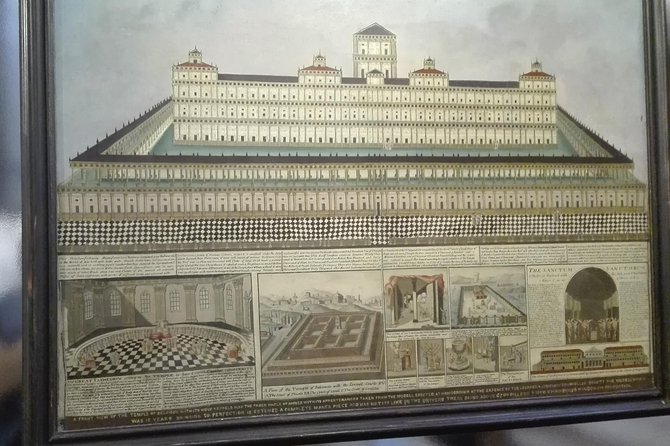
- A Masonic reading of central Vienna: St. Stephen’s Cathedral, Rauhensteingasse, St. Michael’s Church, and the Albertina become pieces of one themed walk.
- A private group format: The tour accepts a minimum of five and a maximum of 25 participants, with only your party taking part.
- A short, manageable route: The experience lasts about 1 hour and 45 minutes and finishes at Josefsplatz.
- A meeting point near major sights: You begin at Judenplatz 5 in Vienna’s first district and finish within the central area.
- No major admissions are included: The listed stops are mainly exterior or free-entry points, while the Albertina admission is not included.
- A narrow historical subject: This suits you if you enjoy symbols, personalities, secret societies, and disputed interpretations more than standard sightseeing.
What this Vienna Masonic tour is really about
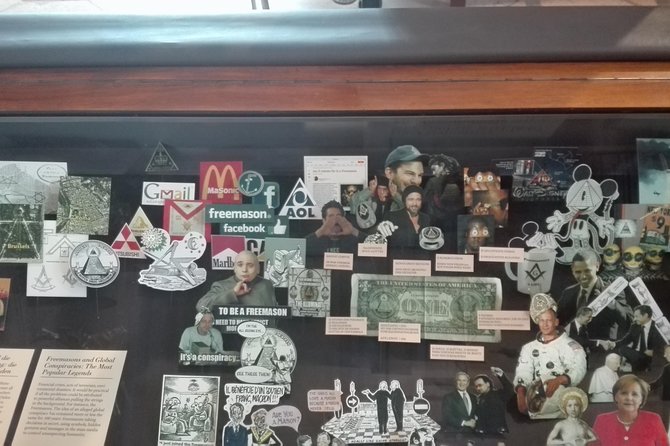
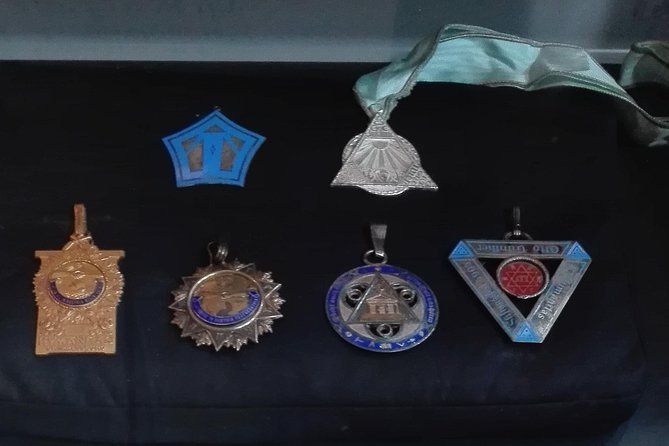
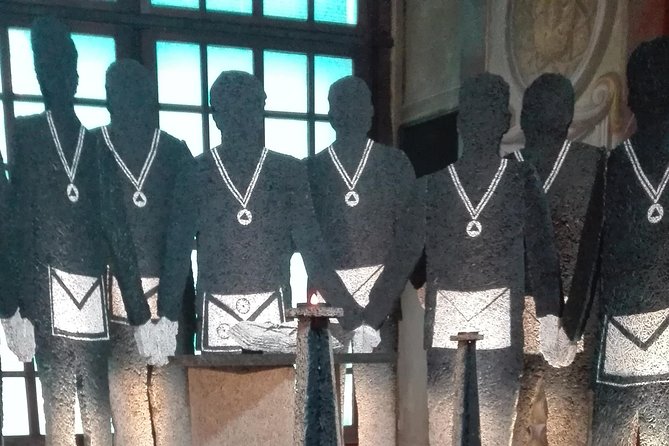
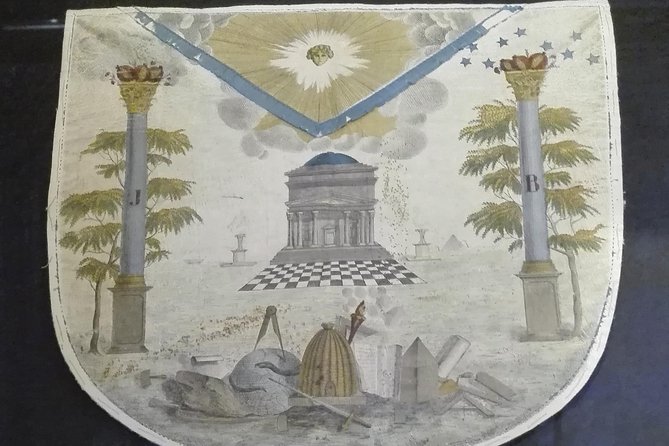
Freemasonry is often presented through mystery, coded signs, private meetings, and conspiracy theories. This walk takes a more grounded route through Vienna by pointing out places connected with Masonic figures, institutions, symbols, and stories.
The central idea is simple: famous people from very different worlds shared membership or connections with Freemasonry. The names attached to the theme include Wolfgang Amadeus Mozart, Henry Ford, J. W. Goethe, George Washington, Henri Dunant, Giacomo Puccini, Gotthold Ephraim Lessing, and Fritz Muliar.
That list is part of the appeal. You are not following only a royal palace or a famous composer. You are looking at how a private association crossed national borders and attracted artists, political figures, industrialists, writers, and public personalities.
I would approach the tour with an open but careful mind. Freemasonry is surrounded by claims that can be exaggerated, and a good experience depends on separating documented connections from speculation. The supplied information promises an introduction to members and Masonic traces in Vienna, but it does not provide a detailed account of how each claim is presented. That makes the guide’s explanations especially important.
The walk is best understood as a themed city tour, not as a visit to a functioning lodge or a museum devoted entirely to Freemasonry. You will see central Vienna through a particular lens, with familiar buildings used as clues.
More Mozart Concerts in Vienna
- Vienna: Mozart Concert at the Golden Hall
★ 4.6 · 3,986 reviews - Vienna: Classical Concert at Mozart’s First House
2,423 reviews - Vienna: Mozart and Strauss Concert at Schönbrunn
★ 4.5 · 2,364 reviews
Starting at Judenplatz 5
The meeting point is Judenplatz 5, in Vienna’s first district. This is a practical place to begin because the route stays in the historic center and finishes at Josefsplatz, also in the first district.
The starting location means you should plan to arrive with your bearings already sorted. The experience uses a mobile ticket, and confirmation is sent within 48 hours of booking, subject to availability. I would keep the ticket easy to open on your phone and allow enough time to find Judenplatz without rushing.
The private format is worth noting. Your group can contain from five to 25 people, and only your group participates. That gives the tour a different feel from a large public walk. If your party is close to 25, it may still feel fairly sizeable, but it should remain more personal than a general city tour with a much larger crowd.
The stated operating hours are Monday through Friday, from 9:00 in the morning until 8:00 in the evening, for the period listed through June 18, 2026. The experience itself lasts about 1 hour and 45 minutes. Since the schedule information is tied to the stated operating period, check the confirmed time carefully before setting your day around it.
St. Stephen’s Cathedral and the first symbol
The first stop is St. Stephen’s Cathedral, where the tour looks at an emblem in relation to Freemasonry. The stop is listed as about 10 minutes and has no admission charge.
This is a strong opening because St. Stephen’s is one of Vienna’s most recognizable buildings. You probably do not need another basic introduction to the cathedral. Instead, the Masonic angle asks you to inspect an existing landmark for a specific symbol or visual clue.
That change in focus can make a familiar sight feel new. Rather than spending the first part of the walk on a broad account of Vienna’s architecture, you begin with an interpretive question: how might a symbol be read through the lens of Freemasonry?
The limitation is time. Ten minutes is enough for an exterior explanation or a focused look at a particular emblem, but not enough for a full cathedral visit. If entering St. Stephen’s is important to you, plan that separately. The tour does not say that a cathedral admission is included, and the stop itself is marked as free admission.
You should also remember that a symbol does not prove a direct connection by itself. Ask the guide how the emblem is linked to Freemasonry and what evidence supports that interpretation. That kind of question will help you get more from the experience.
Rauhensteingasse and a more direct connection
Rauhensteingasse receives about 20 minutes, making it the longest stop listed on the route. It is described as an important address for the union, which suggests that this is where the tour moves beyond visual symbolism toward a location with a more direct organizational connection.
This stop may be the most valuable part of the experience for anyone who wants more than mysterious signs. A specific address can provide a firmer sense of how a private society existed within the ordinary city. Vienna’s center is full of grand public buildings, but associations also worked through houses, meeting places, and institutions that can be easy to pass without notice.
The supplied information does not say whether the stop involves an exterior building, a former meeting place, or another type of address. You should therefore expect the explanation to carry much of the weight. The guide’s account should clarify what happened here, when it mattered, and how it connects to the wider Masonic story.
Because the tour is private, this is a good point to ask about the difference between a historical address and a current Masonic site. The description refers to a still-existing union, but it does not say that you visit an active lodge or enter a temple. Do not assume interior access.
Twenty minutes is a useful amount of time for a close look and questions. It also gives the route a pause between the short cathedral and church stops. If your interest is mainly in documented people and places, Rauhensteingasse is likely to matter more than the broad list of famous names.
A completely different kind of day:
- Vienna: Vivaldi’s Four Seasons Concert in Karlskirche
★ 4.7 · 14,951 reviews - Vienna: Spanish Riding School Training
★ 3.9 · 9,281 reviews - Vienna: Schönbrunn Palace & Gardens Skip-the-Line Tour
★ 4.7 · 7,739 reviews - Vienna: Light of Creation Votive Church Immersive Light Show
★ 4.8 · 6,779 reviews
St. Michael’s Church and another Masonic link
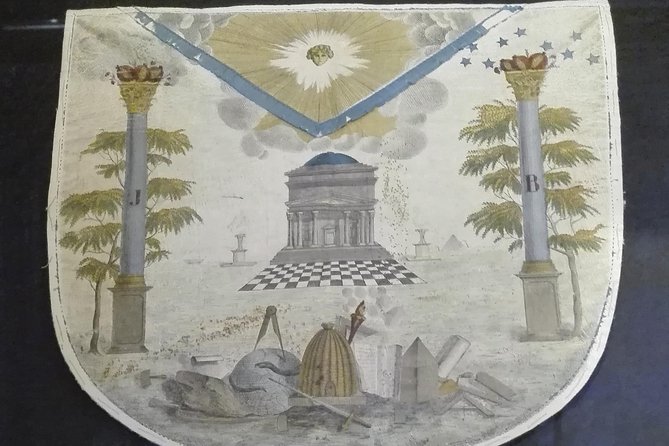
St. Michael’s Church is another short stop, listed at about 10 minutes. The church is described as related to Freemasonry, but the available details do not specify the exact connection.
As with St. Stephen’s Cathedral, the value here lies in interpretation. You will be looking at a major central church and hearing why it belongs in a Masonic-themed walk. The tour can help you notice details that a standard first visit to Vienna might leave out.
The short timing keeps the overall route moving, but it also means you should not expect a full church tour. The stop appears designed to identify and explain a connection, not to cover the church’s entire religious, artistic, or architectural story.
This is another place where a direct question improves the experience. Ask whether the connection concerns a person, a symbol, a building history, or an event. The supplied description uses broad wording, so you should let the guide establish the facts rather than fill in the gaps yourself.
The Albertina from outside
The final listed stop is the Albertina, with about 10 minutes devoted to a description from outside. Admission is not included.
That detail matters. You are not buying an Albertina museum visit as part of this experience. The stop is an exterior explanation, probably linking the building or its surroundings to the tour’s Masonic theme. If you want to see the museum’s collections, you will need a separate ticket and additional time.
The Albertina works well as a finishing point because it keeps the walk in central Vienna and leads toward Josefsplatz. It also gives the tour a final chance to connect elite culture, famous personalities, and the city’s built environment.
Still, you should keep expectations realistic. Ten minutes outside cannot replace a museum visit, and the available information does not identify a particular object, room, or collection connected with Freemasonry. The stop is best treated as the final clue in the walking narrative.
The tour ends at Josefsplatz. This is useful for continuing your day in the central district, but no onward activity or transport arrangement is included.
The route, pace, and private group value
The four listed stops add up to about 50 minutes, while the full experience lasts approximately 1 hour and 45 minutes. The remaining time presumably covers walking between locations and the guide’s explanations along the way.
That pace should suit you if you prefer a compact themed walk. You get enough time to hear a story without giving up half a day. It also leaves room for another central Vienna activity afterward.
The route appears to be urban and centered around major sights. The meeting and ending points are near public transportation, so reaching the area should be straightforward. The information does not specify the exact walking distance, pavement conditions, or number of stairs, so you should not treat the route as fully assessed for every mobility need.
Most people can participate, according to the supplied details. That is useful, but it is not a guarantee that every part of the route will suit every person. If you need specific accessibility support, confirm it before booking.
The private setup is the strongest practical feature. With only your group taking part, you can ask the guide to explain a name, symbol, or claim in more detail. You can also keep the pace suited to your party, within the limits of the fixed route and time.
Is $49.78 a fair price?
The listed price is $49.78 per person. That is not a bargain for a basic walk through streets and free-entry public sights, but price alone does not tell the whole story.
You are paying for a specialist subject, a private group arrangement, and roughly 1 hour and 45 minutes with a guide. If five people book together, the minimum group size is met, and the per-person cost may feel reasonable for a private experience. For a larger party, the format becomes more attractive because you are not sharing the guide with unrelated participants.
The value depends heavily on the quality of the explanation. The stops themselves do not require the listed admission fees, and Albertina entry is specifically excluded. If your main goal is to enter famous Vienna attractions, this is not the right purchase.
If you enjoy Freemasonry, Mozart, unusual biographies, or the way hidden associations intersect with public history, the price may be justified. You are buying a point of view and a guided interpretation rather than a collection of admissions.
I would compare it with your other Vienna plans. If you already have a general old-town tour, this could add a sharper theme without taking much time. If you are watching every euro and mainly want major interiors, spend the money on an attraction where admission is included.
What the available rating can and cannot tell you
The experience carries a rating of 4.3 from six entries, but the accompanying comments are not useful evidence about this walk. They refer to unrelated subjects, including a breakfast at Café Stephanie in Newport, service at an inn, wheelchair assistance at Portland Airport, and a complaint about Frontier Airlines.
Some comments praise friendly staff, helpful service, comfort, and clean surroundings. Those are positive qualities in general, but they do not tell you how Sandra Blum presents Vienna’s Masonic history, how accurate the explanations are, or how well the route works.
That mismatch is important. I would not use the 4.3 rating as a strong reason to book. The tour’s subject, private format, route, and cancellation terms are more useful factors when making your decision.
The experience provider is Sandra Blum, operating under Safu, exklusiv Wien entdecken. The supplied information does not identify a separate guide by name, so you should not assume that Sandra Blum personally leads every departure.
Who will enjoy this experience most?
I would recommend this walk to you if you like:
- Unusual historical themes rather than standard sightseeing
- Mozart and other famous figures viewed through a shared institution
- Symbols, buildings, private societies, and competing interpretations
- Short city walks that fit around a larger Vienna schedule
- Private tours where you can ask questions freely
- Seeing central Vienna through a less familiar subject
It may not suit you if you want extensive access to interiors, museum admissions, or a broad introduction to Vienna. It also may disappoint you if you expect dramatic secret rooms, active lodge visits, or proof of every popular conspiracy claim.
Families can take part, since most people are eligible, but the subject may appeal more to older children and adults who enjoy history and discussion. The private format lets you decide how much detail to pursue.
The best approach is to treat the tour as a guided investigation of connections, not as a sensational mystery show. Listen for clear distinctions between evidence, tradition, interpretation, and rumor.
Booking and cancellation advice
Confirmation arrives within 48 hours of booking, subject to availability. The activity requires at least five participants and accepts no more than 25 people, so confirm that your party meets the minimum before relying on the booking.
Free cancellation is available if you cancel at least 24 hours before the start time. Cancellations within 24 hours are not refunded, and changes during that same period are not accepted. The provider may also cancel if the minimum number is not reached, in which case you are offered another date or experience, or a full refund.
For a weekday booking, check the local Vienna time carefully. Keep the mobile ticket available, and arrive at Judenplatz 5 with enough time to locate the meeting point.
Should you book this Vienna Freemasonry walk?
Book it if you want a focused, private look at Vienna’s connection with Freemasonry and you enjoy asking how famous people, symbols, and city addresses fit together. The route is short, the central location is practical, and the group limit gives the experience a personal feel.
Skip it if your priority is entering Vienna’s major sights or getting a broad introduction to the city. The admissions are not the point, and the tour description leaves several connections unexplained in advance.
My advice is to book this for the theme, not the rating. Go ready to ask careful questions, especially at Rauhensteingasse and the two church stops. If the guide can clearly separate documented history from Masonic myth, $49.78 can buy an engaging change of pace from Vienna’s usual imperial highlights.
FAQ
Where does the tour begin?
The tour begins at Judenplatz 5, 1010 Vienna, Austria.
Where does the tour end?
The tour ends at Josefsplatz in Vienna’s first district.
How long does the experience last?
The tour lasts approximately 1 hour and 45 minutes.
What places are included on the route?
The route includes St. Stephen’s Cathedral, Rauhensteingasse, St. Michael’s Church, and the Albertina viewed from outside.
Is admission included?
The listed stops at St. Stephen’s Cathedral, Rauhensteingasse, and St. Michael’s Church do not require an admission ticket. Albertina admission is not included.
How many people can join?
The activity requires a minimum of five participants and allows a maximum of 25. It is private, so only your group participates.
Is the tour available every day?
The stated opening hours are Monday through Friday, from 9:00 AM to 8:00 PM, for the operating period provided through June 18, 2026.
Can I cancel for a full refund?
Yes. You can cancel at least 24 hours before the experience begins for a full refund. Cancellations or changes made less than 24 hours before the start time are not accepted for a refund.
Just added in Vienna
- Vienna: Austrian Wine Tasting Experience★ 4.2 · 2 reviews
- World War II History Vienna Old Town Private Walking Tour★ 4.8 · 9 reviews
- Vienna_ Meet Beethoven Life Private Guided Walking Tour★ 5.0 · 1 review
- Vienna: Wine Tasting Tour★ 4.8 · 61 reviews
- Vienna: Wine Tasting E-Bike Tour★ 4.9 · 46 reviews
- Vienna: Wine Tasting at Schönbrunn Palace★ 4.3 · 71 reviews
- Vienna: Winery and Wine Tasting Tour with a Wine Expert★ 5.0 · 5 reviews
- Vienna: Concert by the Vienna Baroque Orchestra★ 4.6 · 56 reviews
Mozart Concerts, compared.
Salzburg 2.5-Hour Walking Tour: Mozart, Old Town & More
Read our review →
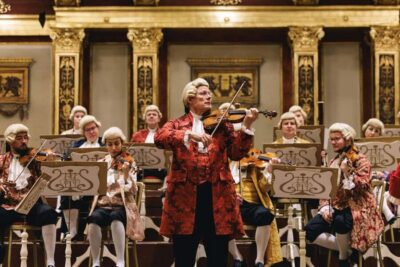
Vienna Mozart Concert in Historical Costumes at the Musikverein
Read our review →Browse the lists this tour appears in