Reviewed · TOURS
Vienna: Time Traveling Virtual Reality Sightseeing Tour
Vienna’s past comes alive at street level. I like the way this 100-minute walking tour joins real streets with six virtual reality scenes, and I also like that the route gives you a quick sense of how Vienna changed over the centuries. The main drawback is that the VR images can look a little rough and blurry, and much of the time is spent listening while walking rather than wearing the headset.
You begin near Neuer Markt and finish at the Albertina, covering about 3.2 kilometers on flat ground. The guide adds live explanation in English or German, while the included audioguide offers English, Spanish, Dutch, French, Italian, and Russian. I would book it early in a Vienna stay, especially if you want a lively introduction before visiting the city’s museums and palaces.
In This Review
- Six moments that make this Vienna tour different
- Why a virtual reality walk works well in Vienna
- Starting at Neuer Markt and getting set up
- White Sunday in 1483 near Vienna’s old center
- The Ottoman attack and Vienna under siege in 1683
- The plague, Augustin, and Vienna’s dark humor
- The Hofburg, Sisi, and Franz Joseph
- The Opera and Vienna in the golden 1920s
- St. Stephen’s Square in the final days of World War II
- What the 100 minutes feel like
- Is $45 a fair price?
- Who should book this experience?
- Should you book the Vienna Time Traveling VR Tour?
- FAQ
- How long does the Vienna VR sightseeing tour last?
- Where does the tour begin and end?
- How far do you walk?
- Which languages are available?
- Is the tour suitable for children?
- Can wheelchair users join the tour?
Six moments that make this Vienna tour different
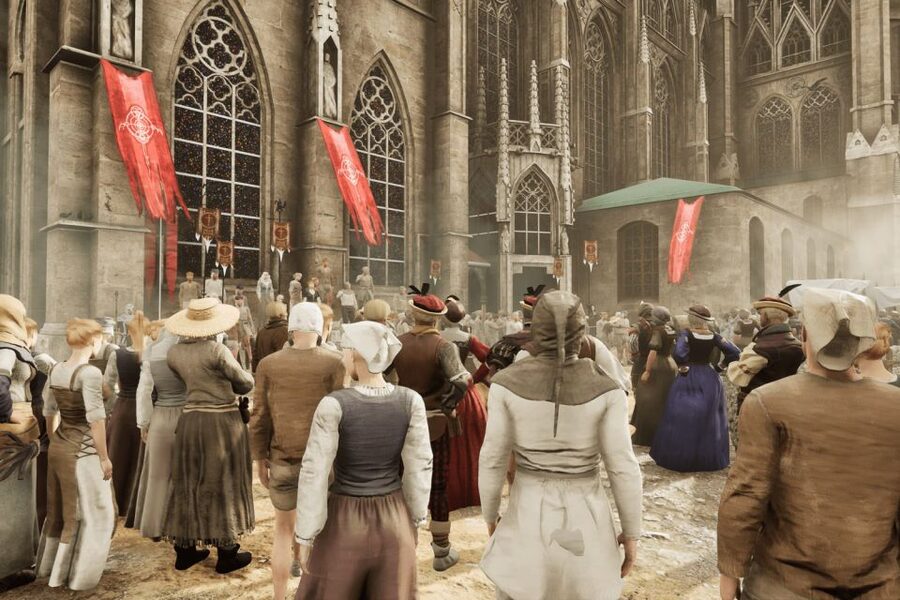
- White Sunday in 1483: Watch a religious procession and see ornaments brought out for rare public display.
- The Ottoman siege of 1683: Use the headset to witness Vienna under attack and understand the fear behind the city’s defenses.
- Augustin and the plague: Meet the singer whose humor and music offered a lift during a deadly epidemic.
- Sisi and Franz Joseph: See the imperial couple on a sunny hunting outing near the Hofburg.
- Vienna in the 1920s: Step into an opera-era scene around the city’s famous theater.
- The war’s final month: Watch St. Stephen’s Cathedral burn as Soviet forces push German troops from the square.
Why a virtual reality walk works well in Vienna
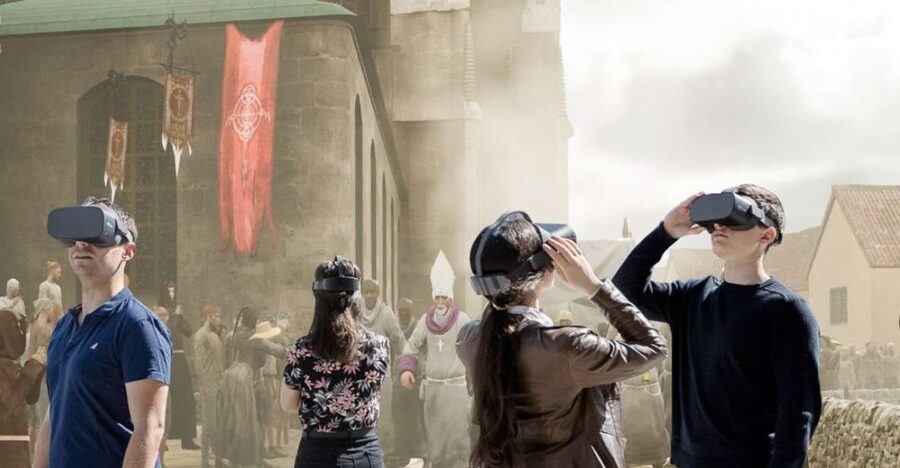
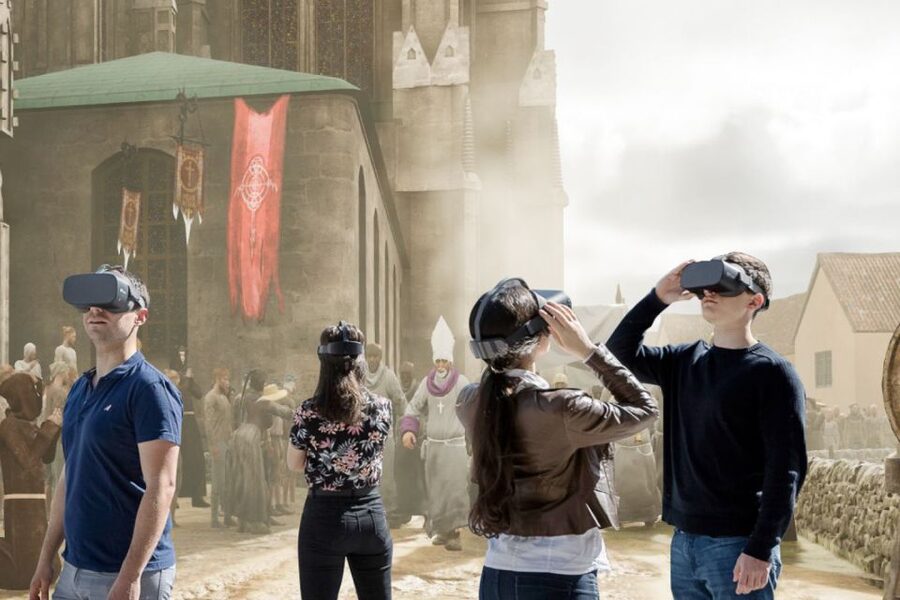
A normal walking tour can point out a church, palace, or square. This one tries to show what happened there. That is the useful idea behind the tour: you do not simply hear that Vienna survived sieges, plague, imperial ceremony, and war. You pause at the real location and see a recreated scene through a 360-degree headset.
I like this format for first-time visitors because Vienna can feel polished and finished. Its grand buildings are beautiful, but their stories are not always obvious from the pavement. Virtual reality supplies the missing layer. You can stand near St. Stephen’s Square and picture the destruction of 1945, or look around the Hofburg area while seeing an imperial carriage scene from another age.
The technology is not perfect. The headset scenes have been described as somewhat blurry, with indistinct faces and less detail than the newest VR systems. One scene set around the 1920s also feels less lively than it could, with limited action and no strong sense of dancing or period evening dress. I would treat the VR as a clever storytelling tool, not a cinema-quality production.
The walking itself matters just as much. Between headset stops, you move through Vienna’s old center with an audioguide and live commentary. That keeps the tour grounded in the city you are actually visiting rather than turning the whole experience into a screen show.
A few more options to weigh up in Vienna
- Vienna: Vivaldi’s Four Seasons Concert in Karlskirche
★ 4.7 · 14,951 reviews - Vienna: Spanish Riding School Training
★ 3.9 · 9,281 reviews - Vienna: Schönbrunn Palace & Gardens Skip-the-Line Tour
★ 4.7 · 7,739 reviews
Starting at Neuer Markt and getting set up
The meeting point is Neuer Markt 6. Arrive 15 minutes before the start and look for the turquoise entrance. You begin indoors, which is helpful in cold weather and keeps you from waiting on the street.
The staff provides the VR glasses and earphones. Your guide explains how to use the equipment before the group heads outside. That short introduction is important, since the tour works best when you can focus on the scene rather than trying to adjust the headset.
The tour lasts about 100 minutes, although the route information lists 105 minutes for the guided portion. Allow roughly an hour and 45 minutes from start to finish, with a little flexibility around the scheduled time. The route is 3.2 kilometers over flat terrain, so the physical demand is modest. You will still be on your feet for much of the experience, but there are no steep climbs built into the route.
The guide leads in English or German. If you need another language, the audio content is available in Spanish, Dutch, French, Italian, and Russian, as well as English. Mixed-language groups can require patience, since explanations may switch between English and German. A visitor named Julian received praise for speaking both languages fluently, while Dr. Reiner was singled out for being helpful and well informed.
White Sunday in 1483 near Vienna’s old center
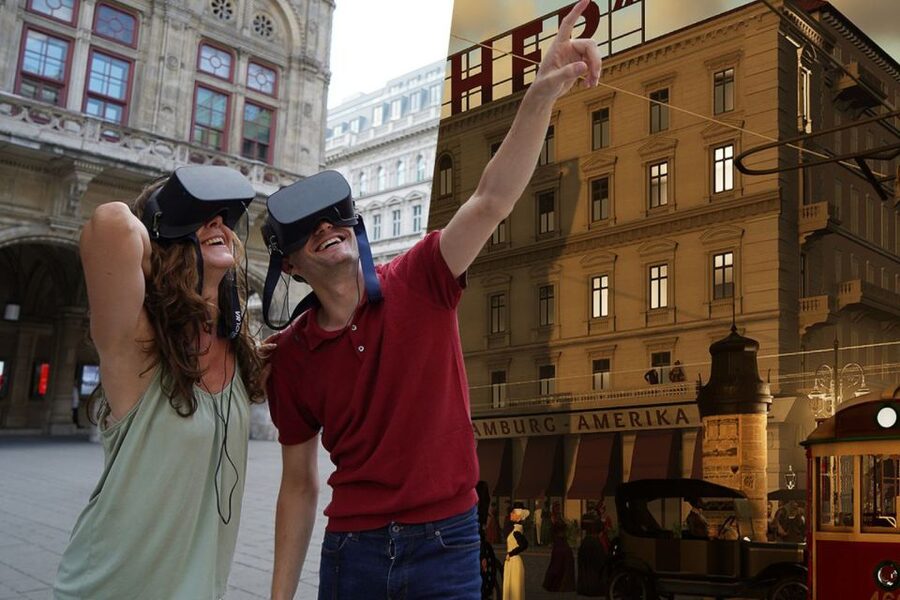
The first historical scene takes you to White Sunday in 1483. This was one of the rare occasions when religious ornaments were brought out and shown to the public, making the procession a useful window into medieval public life.
The appeal here is visual contrast. You are walking through a modern city center, then looking through the headset at a public ceremony from a time when religious processions shaped the rhythm of the city. The 360-degree view lets you look around instead of staring at one fixed image.
I find this kind of scene more useful than a long list of dates. It gives you a sense of how public space was used before Vienna became the imperial capital familiar from postcards. The guide’s spoken context matters because the images alone cannot explain the social or religious importance of the procession.
Do not expect a full medieval reenactment with endless motion. The VR scenes are short, focused moments. Their job is to make a place memorable, then let the guide fill in the meaning.
The Ottoman attack and Vienna under siege in 1683
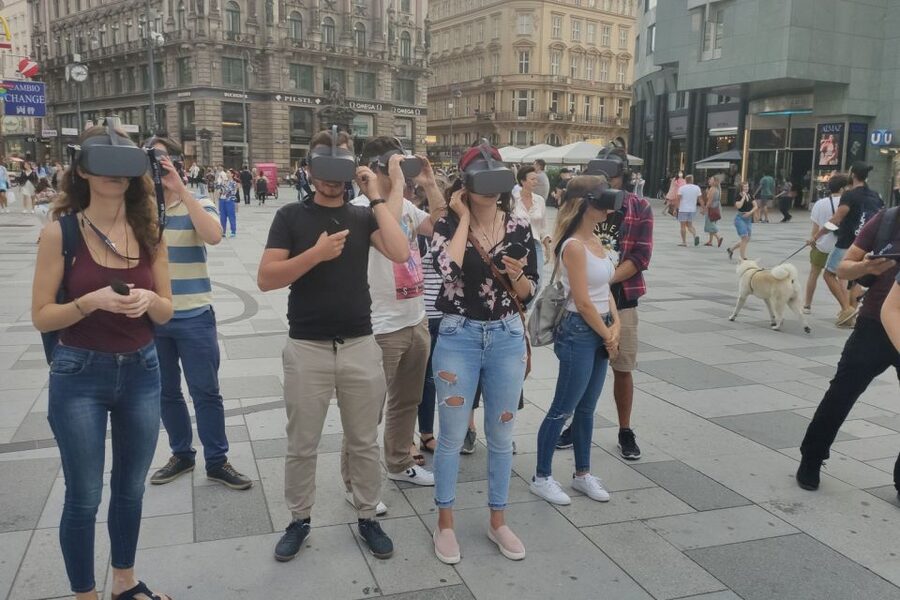
The second major scene puts you inside the second Ottoman siege of Vienna in 1683. The mood shifts quickly from ceremony to danger. You take cover as the Ottoman Empire attacks, giving the famous event a human scale.
This is one of the tour’s strongest ideas. Vienna’s old center can look calm and secure today, yet its location made it a prize in European power struggles. Seeing bombardment from street level helps you understand why walls, gates, and defensive positions mattered.
The headset’s all-round view works especially well here. You can look toward the attack, glance behind you, and get a sense of confusion rather than simply watching a flat historical clip. The scene does not replace a proper history lesson, but it gives the siege an emotional shape.
I would pay close attention to the live guide at this stop. The supplied audio and VR show you what the event felt like, while the guide connects it to Vienna’s later growth and political importance. That combination is more useful than either element alone.
A completely different kind of day:
- Vienna: Light of Creation Votive Church Immersive Light Show
★ 4.8 · 6,779 reviews - Vienna Spanish Riding School Guided Tour
★ 4.7 · 6,765 reviews - Vienna: Classical Concert in the World-Famous Musikverein
★ 4.6 · 6,673 reviews - Vienna: Skip-the-Line Sisi Museum, Hofburg and Gardens Tour
★ 4.8 · 5,918 reviews
The plague, Augustin, and Vienna’s dark humor
The plague sequence is the tour’s bleakest stop. You experience the darkness of an epidemic that killed half of Europe and hear about Augustin, a singer remembered for showing that Vienna could face terrible times with humor and music.
This moment adds welcome range to the program. The tour is not only palaces, emperors, and military victories. It also looks at ordinary suffering and the ways people tried to endure it.
Augustin gives the scene a local character. A grim plague account can become a string of frightening numbers, but the story of a singer brings in personality, wit, and the stubborn Viennese habit of finding humor in hard times. I appreciate that the tour includes this human note instead of treating the city’s past as a parade of grand rulers.
The scene may feel more atmospheric than action-packed. If you want constant movement in the headset, this section could seem subdued. If you prefer history with a personal story, it is likely to be one of the more memorable stops.
The Hofburg, Sisi, and Franz Joseph
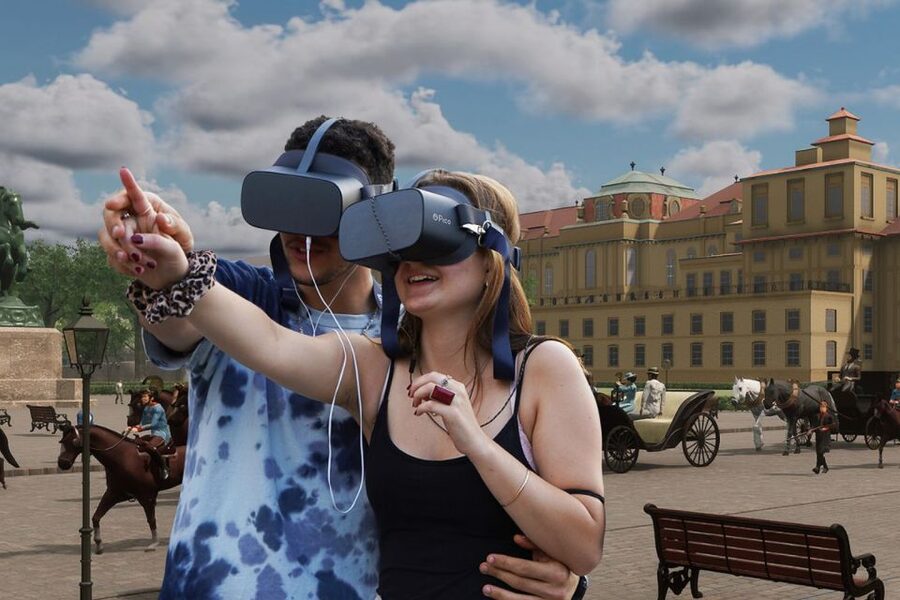
Near the Hofburg, the tour shifts into imperial Vienna. On a sunny day, you see Empress Sisi and Emperor Franz Joseph on a hunting trip. The playful instruction to wink because you are standing close to the road gives this stop a lighter touch.
Sisi and Franz Joseph are familiar names, but the scene works because it places them in an ordinary public setting rather than only inside palace rooms. You are asked to look at imperial life from the roadside, as someone in Vienna might have done.
This is a good point to remember that virtual reality is not just for war and disaster. It can also recreate ceremony, spectacle, and the distance between rulers and the public. The headset makes the imperial couple feel physically present, even if the images do not have the sharpness of modern film.
I would not choose this tour solely for Sisi fans. The scene is one part of a six-period journey, not a full exploration of her life. For a deeper look at the empress, you will need time at Vienna’s palaces and museums.
The Opera and Vienna in the golden 1920s
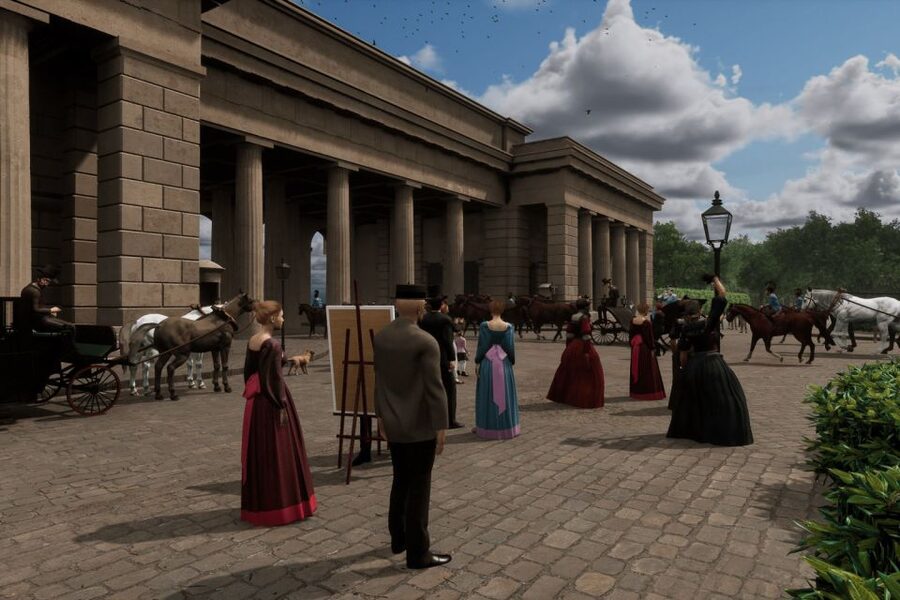
At the Opera, you move into the 1920s and see how people prepared for an opera performance. This stop presents Vienna as a cultural capital rather than a battlefield or imperial seat.
The period setting is a smart choice. Opera remains one of the city’s great symbols, and the scene helps connect the building to the people who came to see a performance. It also shows the social side of Vienna, including the clothing and customs associated with an evening out.
The weakness is that this scene may feel underfilled. The supplied experience has been criticized for not showing enough action, including a lack of dancing and limited detail in the period clothing. I would enjoy it as a brief glimpse, while keeping expectations realistic.
The audio presentation does much of the work here. Listen for the explanation around the images, since the VR alone may not communicate why the 1920s were such an important period for Vienna’s artistic identity.
St. Stephen’s Square in the final days of World War II
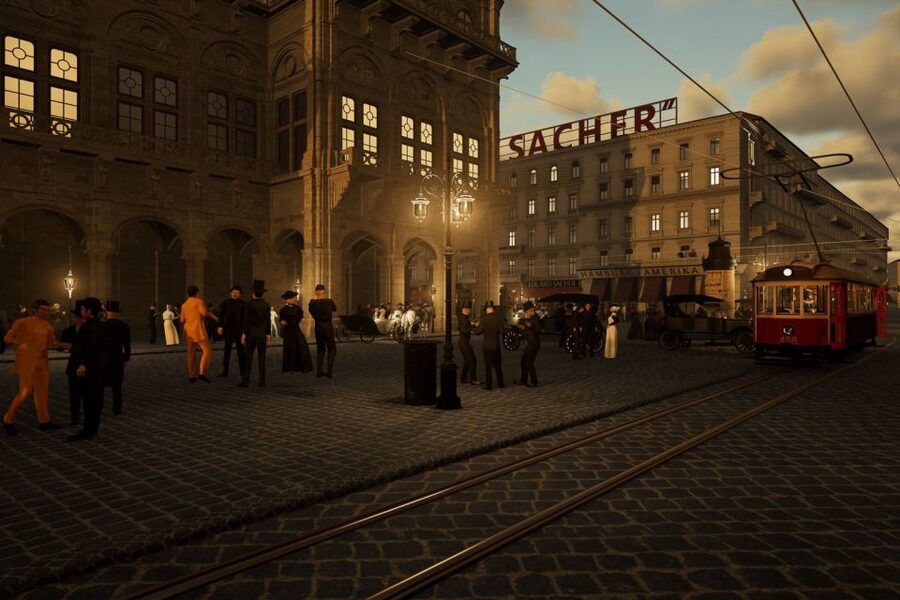
The last scene takes place at St. Stephen’s Square during the final month of World War II. You see the cathedral burning and the Soviet army driving the last German soldiers out.
This is a powerful ending because the location is so recognizable. St. Stephen’s Cathedral is one of Vienna’s central landmarks, and seeing it damaged changes the way you look at the building afterward. The scene links the elegant old center to the destruction that threatened it near the end of the war.
The Soviet tanks also show how quickly political control shifted. The tour does not leave Vienna in its imperial past. It brings the story into the twentieth century and ends with the city facing ruin and uncertain recovery.
As with the siege scene, the headset can make the event easier to picture, but the guide’s explanation gives it weight. The VR image may appear rough around the edges, yet the subject itself remains compelling because you are standing at the actual square.
What the 100 minutes feel like
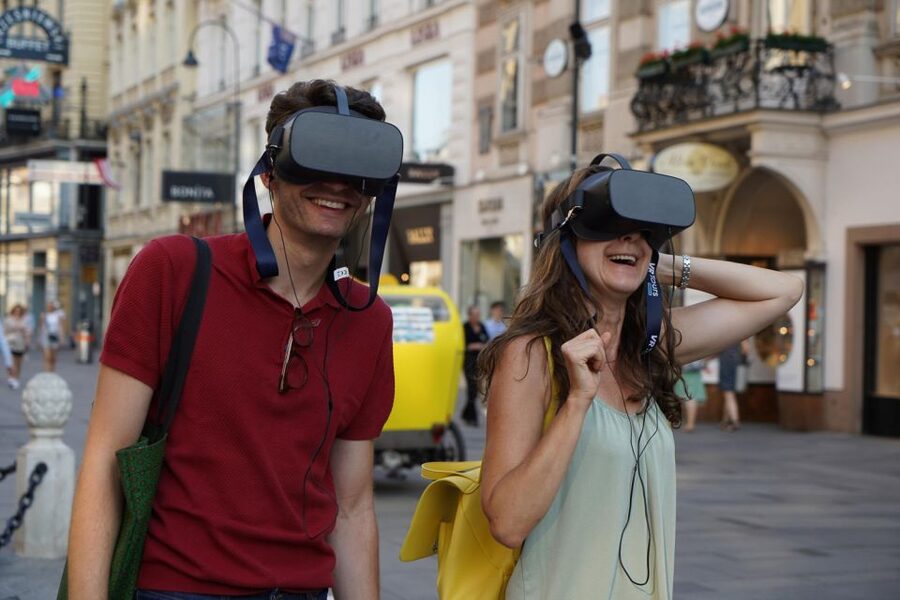
This is primarily a walking tour with selected VR stops, not a 100-minute headset session. You spend much of the route moving through central Vienna, listening to the audioguide, and looking at the buildings and streets around you.
At certain points, you stop and put on the headset for a historical scene. That rhythm keeps the tour from becoming tiring or overly screen-focused. It also means you should not book it expecting nonstop virtual reality.
The route is flat and wheelchair accessible. Children under eight cannot take part, and the experience is not suitable for people with epilepsy. Weather can also affect the schedule. Heavy rain or a storm may cause cancellation, sometimes at short notice if conditions worsen quickly.
I would wear comfortable shoes and dress for the forecast. The route is not difficult, but 3.2 kilometers with stops still calls for sensible footwear. Since the activity may be canceled in bad weather, keep a backup plan for the same day.
Is $45 a fair price?
At $45 per person, this is more expensive than a basic city walk, but it offers more than a standard audio route. You pay for a live guide, the equipment, six historical reconstructions, and a way to connect those scenes to the streets around you.
The value depends on what you want. If you already know Vienna well and prefer detailed museum displays, the rough VR may not justify the price. If you are new to the city and want an engaging overview without spending half a day indoors, the combination is easier to recommend.
I see it as an orientation tour rather than a replacement for Vienna’s major sights. It can help you decide which subjects deserve more time later, such as the Hofburg, St. Stephen’s Cathedral, the Opera, or the city’s wartime history.
The average rating is 4.6 from 672 reviews, and the strongest praise focuses on the unusual format, the useful introduction to Vienna, and the guides’ clear help with the equipment. That matches the tour’s real strength: it gives you a memorable first layer of context.
Who should book this experience?
I would choose this tour if you:
- Want a fresh way to learn basic Vienna history
- Are visiting for the first time
- Enjoy technology but still want a real walking route
- Like short historical scenes more than long museum labels
- Need a flat, wheelchair-accessible route
- Want multilingual audio support
I would think twice if you:
- Expect highly detailed, modern VR graphics
- Want to wear a headset for most of the tour
- Prefer a deep specialist history lecture
- Dislike mixed-language group commentary
- Are traveling with a child under eight
- Have epilepsy
The tour also makes sense early in your stay. It introduces the old center, the Hofburg, the Opera, and St. Stephen’s Square, giving you useful bearings for later sightseeing.
Should you book the Vienna Time Traveling VR Tour?
Book it if you want an entertaining introduction to Vienna that joins real places with past events. The six scenes cover a wide span, from 1483 to World War II, and the walking route keeps the experience tied to the city itself.
Do not book it expecting flawless graphics or nonstop headset action. The technology can be blurry, and some scenes need more movement and detail. Still, the guides, the multilingual audio, and the location-based storytelling make the $45 price reasonable for a first-day activity.
I would especially recommend it for curious first-time visitors, families with older children, and anyone who finds dates hard to remember without a strong visual setting. Start at Neuer Markt, keep an eye out for the turquoise entrance, arrive 15 minutes early, and let Vienna’s streets provide the final part of the lesson.
FAQ
How long does the Vienna VR sightseeing tour last?
The experience lasts about 100 minutes. The guided route is also listed as 105 minutes, so allow roughly one hour and 45 minutes for the activity.
Where does the tour begin and end?
It begins at Neuer Markt 6 and finishes at the Albertina.
How far do you walk?
The route covers 3.2 kilometers over flat terrain.
Which languages are available?
The live guide speaks English and German. The included audioguide is available in English, Spanish, Dutch, French, Italian, and Russian.
Is the tour suitable for children?
Children under eight years old cannot take part.
Can wheelchair users join the tour?
Yes. The experience is wheelchair accessible, and the route is over flat terrain.
Just added in Vienna
- Vienna: Austrian Wine Tasting Experience★ 4.2 · 2 reviews
- World War II History Vienna Old Town Private Walking Tour★ 4.8 · 9 reviews
- Vienna_ Meet Beethoven Life Private Guided Walking Tour★ 5.0 · 1 review
- Vienna: Wine Tasting Tour★ 4.8 · 61 reviews
- Vienna: Wine Tasting E-Bike Tour★ 4.9 · 46 reviews
- Vienna: Wine Tasting at Schönbrunn Palace★ 4.3 · 71 reviews
- Vienna: Winery and Wine Tasting Tour with a Wine Expert★ 5.0 · 5 reviews
- Vienna: Concert by the Vienna Baroque Orchestra★ 4.6 · 56 reviews
Tours, compared.
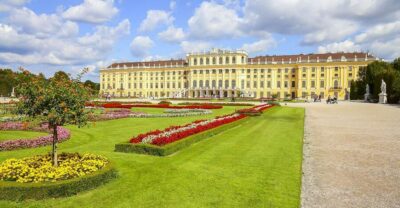
Schönbrunn Palace & Gardens Skip-the-Line Tour
Read our review →
Skip-the-Line Sisi Museum, Hofburg and Gardens Tour
Read our review →
Skip-the-Line Schönbrunn Palace & Gardens Tour
Read our review →
Guided Walking Tour of City Center Highlights
Read our review →