Reviewed · PRIVATE
Vienna: Private Music Tour
Music makes Vienna easier to read. This private walk links the State Opera, Mozart, Beethoven, Johann Strauss, and St. Stephen’s Cathedral in one lively 150-minute introduction. I especially like the behind-the-scenes opera visit and the freedom to shape the walk around your group. The main catch is that the opera entrance fee is not included, and the start time depends on opening hours.
I also like the private format for families or mixed-interest groups. Guides such as Lisa have adjusted the route for a parent needing extra help, a metro stop, and even a short playground break. You should allow some flexibility, though, since the order and timing of the opera visit can change.
In This Review
- Key points at a glance
- Why this Vienna music walk works
- Inside the Vienna State Opera
- Palais Lobkowitz and Beethoven’s Eroica
- The Hofburg Imperial Chapel and the Vienna Boys Choir
- Mozart, his memorial, and his former home
- Johann Strauss and the old dance salon
- Pasqualati House and Beethoven’s Vienna
- What the $541 private price means
- Timing, walking, and family considerations
- Who should book this music tour?
- Practical booking advice
- Should you book it?
- FAQ
- How long does the private music tour last?
- Where does the tour begin?
- Where does the tour finish?
- Is the State Opera entrance fee included?
- Does the tour include hotel pickup and drop-off?
- What languages are available?
- Is this a private tour?
- Is the tour wheelchair accessible?
- Can I choose the starting time?
- What is the cancellation policy?
Key points at a glance
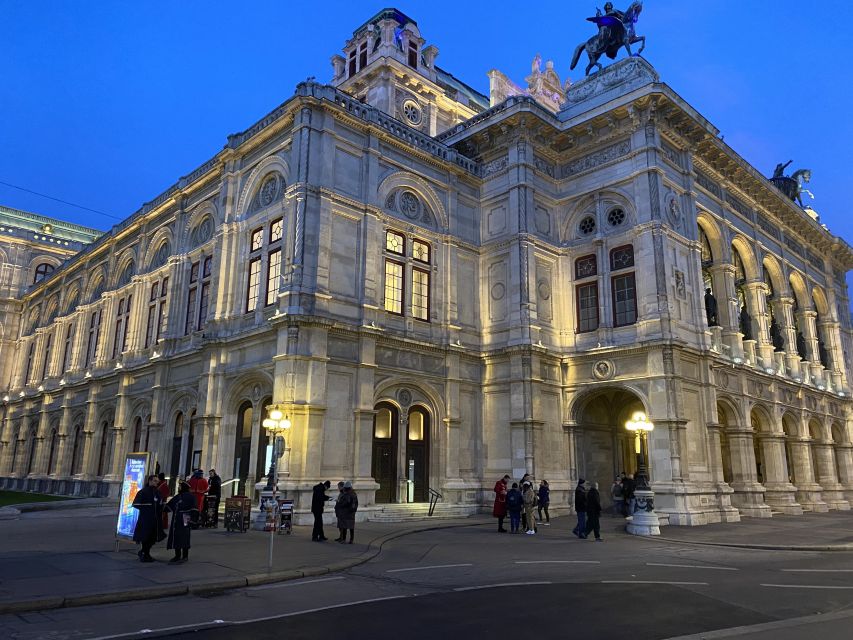
- The State Opera comes first: Begin at Vienna’s grand music temple, with a guided look inside and stories about conductors such as Gustav Mahler.
- The route is private: Your group can include up to 15 people, making the $541 group price more attractive when shared by a larger party.
- Beethoven’s Eroica has a home here: Palais Lobkowitz is tied to the premiere of his Third Symphony and to his main patron.
- The Vienna Boys Choir connection is real and visible: The Hofburg Imperial Chapel is where the choir performs every Sunday.
- The walk covers several major names: Mozart, Beethoven, Strauss, and the Mozart Memorial all appear along the route.
- It works for different abilities and ages: The activity is wheelchair accessible, and the route can be adapted when practical.
Why this Vienna music walk works
Vienna can feel like a city of grand names. Mozart here, Beethoven there, Strauss on a souvenir box, and an opera house looming at the end of every handsome avenue. The trouble is that these names can blur together when you see them on your own.
This tour gives those names a route and a setting. You begin at the Vienna State Opera, then walk through the historic center to places linked with the city’s composers and performers. That order makes sense: first the institution, then the people who filled Vienna’s musical life with sound.
The experience lasts 150 minutes, or two and a half hours. That is long enough for a proper introduction without taking over your whole day. You finish in central Vienna at 1010 Vienna, so you can continue sightseeing, stop for food, or make your way to another attraction.
The private format matters. A group of up to 15 shares one guide, and you are not tied to the pace of strangers. If your family wants more architectural detail, you can ask for it. If children need a short pause, you have a better chance of making that work. One guide, Lisa, adjusted the route for a family member who needed accommodation and helped the group finish near a metro stop. That kind of practical flexibility can be worth more than a long list of stops.
A few more options to weigh up in Vienna
- Vienna: Vivaldi’s Four Seasons Concert in Karlskirche
★ 4.7 · 14,951 reviews - Vienna: Spanish Riding School Training
★ 3.9 · 9,281 reviews - Vienna: Schönbrunn Palace & Gardens Skip-the-Line Tour
★ 4.7 · 7,739 reviews
Inside the Vienna State Opera
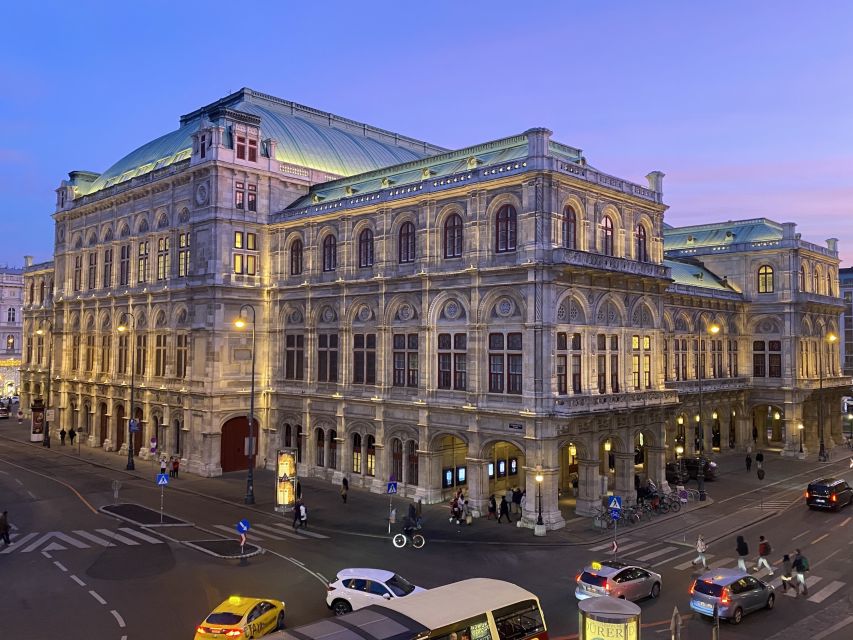
Your guide meets you by the fountain on the left-hand side of the opera house. Do not wander around looking for a tour desk. Go directly to that meeting point and arrive ready for the first major part of the experience.
The guided State Opera visit is the anchor of the tour. You get behind-the-scenes access to one of the world’s best-known opera houses and learn how the building became a major center of music. The tour also brings in important conductors, including Gustav Mahler, so this is not only an architectural visit.
The opera house matters because it gives you a sense of Vienna’s musical scale. This is not simply a place where famous people once performed. It is an institution shaped by conductors, singers, musicians, audiences, and changing ideas about performance. A state-certified guide can connect the rooms and corridors to that larger story.
There is one important cost detail: the opera entrance fee is not included in the listed price. The tour includes the guided visit, but you should confirm the exact ticket arrangement and any current fee before booking. The activity also says you can skip the ticket line, which is useful when the opera is busy, but skipping a line does not mean the entrance charge disappears.
The State Opera’s opening hours and available tour slots control the start time. The local partner tells you when your tour will begin, so do not build a tight restaurant reservation or train connection around an assumed departure hour. Your guide may speak English or German.
Palais Lobkowitz and Beethoven’s Eroica
From the opera, the tour becomes a musical walk through Vienna’s inner city. One valuable stop is Palais Lobkowitz, connected with Beethoven’s Third Symphony, the Eroica, and with the composer’s main patron.
That detail gives you a useful glimpse into how music survived in Beethoven’s time. Great work depended not only on the composer but also on patrons who offered money, space, and social support. A palace can look like another elegant building until you understand that it helped provide the setting for a major musical event.
The Eroica connection also adds a bit of drama to the route. Beethoven’s Third Symphony marked an important change in his work, and hearing about its premiere while standing at the palace makes the composer feel less like a marble statue and more like a working artist with supporters, pressures, and bold ideas.
You will not spend the whole afternoon at each location. This is a city walk, not a full concert-history course. If Beethoven is your main reason for booking, tell your guide early. A private tour gives you a better chance to ask for more detail on his life and music.
The Hofburg Imperial Chapel and the Vienna Boys Choir
The Hofburg Imperial Chapel adds another layer to Vienna’s musical story. The Vienna Boys Choir performs there every Sunday, and the tour explains how this famous choir began.
That is a useful stop even if you are not planning to attend a service or performance. The choir is often treated as a polished symbol of Vienna, but its connection to the imperial chapel shows how musical training grew within court and church settings. You get the background without needing to build a separate visit into your schedule.
Keep in mind that seeing the chapel and learning about the choir is not the same as attending a Sunday performance. The supplied details say the choir performs every Sunday, but they do not promise a performance during this tour. If hearing the choir is essential, you will need to make separate plans.
The Hofburg setting also helps break up the composer-focused stops. Vienna’s music story is not only about solo geniuses. It includes institutions, religious spaces, imperial life, and organized musical training.
A completely different kind of day:
- Vienna: Light of Creation Votive Church Immersive Light Show
★ 4.8 · 6,779 reviews - Vienna Spanish Riding School Guided Tour
★ 4.7 · 6,765 reviews - Vienna: Classical Concert in the World-Famous Musikverein
★ 4.6 · 6,673 reviews - Vienna: Skip-the-Line Sisi Museum, Hofburg and Gardens Tour
★ 4.8 · 5,918 reviews
Mozart, his memorial, and his former home
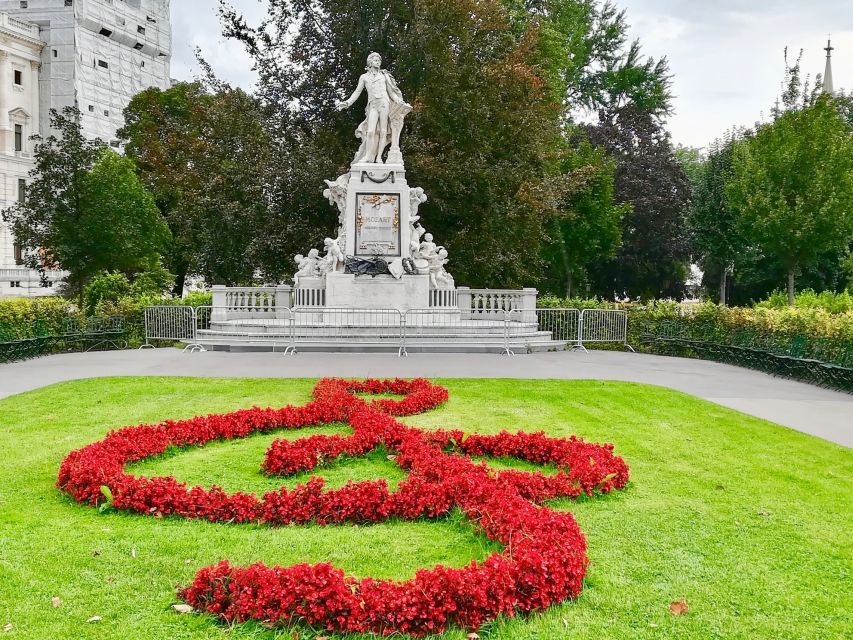
Mozart appears in more than one part of the walk. You visit the Mozart Memorial and see his former home, giving you two different ways to connect with him.
A memorial is public and symbolic. A former residence is more personal, even when the visit is brief. Together, they help you compare the way Vienna remembers its musical figures. One place honors the name, while the other points to ordinary life, domestic space, and the fact that a famous composer once lived within the same city streets you are walking.
You also see St. Stephen’s Cathedral, where Mozart was married. The cathedral is one of Vienna’s major landmarks, so this stop works well for people who want music and general sightseeing in the same outing. You are not spending two and a half hours inside a specialist museum. You are moving through the center and pairing musical stories with major buildings.
The cathedral stop may be especially useful for first-time visitors. You get an iconic Vienna sight while learning a specific Mozart connection, rather than simply taking a photograph and moving on. The tour does not present a full cathedral visit in the information provided, so you should not assume that interior access or an extended guided examination is included.
Johann Strauss and the old dance salon
The former dance salon linked with Johann Strauss brings a lighter mood to the walk. Strauss, known as the Waltz King, made the ladies swoon there, and the stop gives you a glimpse of the social world that helped turn the waltz into a Vienna trademark.
This is a nice counterweight to Beethoven’s more serious reputation and the formal atmosphere of the opera. Music in Vienna was not only heard in grand theaters or imperial chapels. It also belonged to dance floors, parties, and social life.
The dance salon stop is likely to appeal to people who know only the broad image of the Viennese waltz. You can connect the music to the rooms and social customs that made it popular. I would ask your guide how the salon functioned and who used it, since the private format gives you room for those small questions.
As with several stops, the details supplied do not promise a full interior tour at every site. Some places may be viewed from outside or explained as part of the walking route. That is normal for a city tour, but it is worth keeping your expectations realistic.
Pasqualati House and Beethoven’s Vienna
Pasqualati House, the former residence of Ludwig van Beethoven, brings the walk back to the composer. Its value is not simply that Beethoven once lived there. It helps you picture the composer as someone moving through Vienna, relying on patrons, changing residences, and working within the city’s social world.
A stop like this can be more meaningful when paired with Palais Lobkowitz earlier in the route. At the palace, you hear about Beethoven’s patron and a major premiere. At Pasqualati House, you connect that public musical life with the place where the composer lived.
The tour includes several major names in a short period, so you may want to jot down a few notes or ask your guide to repeat names and dates. The experience favors connections and atmosphere over a long, detailed biography of each composer.
That is also why the guide matters so much. Lisa has been praised for bringing energy and for discussing more than music, while Giselle was specifically appreciated for explaining the opera building. A lively guide can keep the route from turning into a list of plaques and dates.
What the $541 private price means
The listed price is $541 per group of up to 15 people. That is a large total for one or two people, but the calculation changes for a family or a full private party. At the maximum group size, the guiding cost works out to about $36 per person before the opera entrance fee.
The value comes from three things: a private guide, a two-and-a-half-hour route, and access to the State Opera as part of a wider central Vienna walk. You are paying for a focused introduction, not just transport between sights.
For a couple, the price may be hard to justify unless music is a top priority or you place a high value on a private guide. For a family, a group of friends, or several relatives traveling together, it becomes easier to defend. A shared public tour could cost less, but it would not offer the same control over pace and questions.
Remember to add the opera entrance fee to your budget. Hotel pickup and drop-off are available only if you select that option, so do not assume they are part of the basic price. The meeting point is central and clear, which may make pickup unnecessary for many people.
Timing, walking, and family considerations
The activity is listed as wheelchair accessible. That is important, but the tour includes a city walk and several historic sites, so you should still discuss any specific mobility needs with the local partner in advance.
The route is suitable for a group that wants sightseeing with a clear theme. It is less suitable if you want to sit indoors for most of the time or visit every composer museum in detail. Expect movement between locations and a steady stream of short historical connections.
Families can benefit from the private setup. Lisa adjusted one family’s route so the group could finish near a metro stop, and the children had time to use a playground. That does not guarantee the same arrangement for every group, but it shows why private guiding can help when your day includes different ages and energy levels.
The tour is offered in English and German. Confirm your preferred language when booking. The guide’s ability to adjust explanations can make a major difference, especially when children or non-specialists are in the group.
Who should book this music tour?
I would recommend it most strongly if you meet one or more of these conditions:
- You want a single introduction to Vienna’s musical landmarks.
- You are traveling with family or friends and can share the group price.
- You prefer a private guide who can adjust the pace and answer specific questions.
- You want the State Opera but also want to see central Vienna beyond one building.
- You enjoy learning how composers fit into Vienna’s social and imperial world.
I would be more cautious if you are traveling alone on a tight budget, already know Vienna’s music history well, or want extended interior visits at each stop. The route covers many names in 150 minutes, so it cannot give every site the attention of a dedicated museum tour.
The perfect audience is not necessarily a classical music expert. You can enjoy this tour with only a passing interest in Mozart or Strauss. The city itself supplies much of the pleasure, and the guide gives the buildings a clear purpose.
Practical booking advice
Book with a flexible schedule. The State Opera’s opening hours and available tour times determine when the experience begins, and the local partner confirms the start time. Keep some breathing room before and after the tour.
Arrive at the fountain on the left-hand side of the opera house. If you have selected hotel pickup and drop-off, confirm that option rather than assuming it is included.
The activity allows free cancellation up to 24 hours before the tour for a full refund. You can also reserve now and pay later, which helps if your Vienna plans are still shifting.
The rating is listed as 5 out of 5 from eight reviews, with praise focused on the guides, the opera interior, energy, flexibility, and the amount of information provided. Lisa and Giselle are two guide names associated with especially positive experiences. Guide quality is central here, so use the booking notes to explain your interests, language, family needs, or mobility concerns.
Should you book it?
Book this tour if you want Vienna’s composers placed into the actual streets, palaces, chapels, and homes connected with them. The State Opera visit gives the experience a strong opening, while Palais Lobkowitz, the Hofburg Imperial Chapel, the Strauss dance salon, Pasqualati House, Mozart’s home, and St. Stephen’s Cathedral keep the walk varied.
Skip it if the $541 group price is too high for your party or if the opera entrance fee pushes the total beyond your comfort level. For a larger group that wants private attention and a flexible pace, the price can be sensible. For one or two budget-conscious people, a less expensive public walk may be the better choice.
FAQ
How long does the private music tour last?
The tour lasts 150 minutes, or two and a half hours.
Where does the tour begin?
It begins at the Vienna State Opera. Your guide waits by the fountain on the left-hand side of the opera house.
Where does the tour finish?
The tour finishes in central Vienna at 1010 Vienna, Austria.
Is the State Opera entrance fee included?
No. The guided State Opera visit is included, but the entrance fee is not included.
Does the tour include hotel pickup and drop-off?
Hotel pickup and drop-off are available if you select that option.
What languages are available?
The tour is available in English and German.
Is this a private tour?
Yes. It is a private group experience for up to 15 people.
Is the tour wheelchair accessible?
Yes, the activity is listed as wheelchair accessible.
Can I choose the starting time?
The exact start time depends on the State Opera’s opening hours and available tour times. The local partner will tell you when your tour begins.
What is the cancellation policy?
You can cancel up to 24 hours in advance for a full refund. You can also reserve now and pay later.
Just added in Vienna
- Vienna: Austrian Wine Tasting Experience★ 4.2 · 2 reviews
- World War II History Vienna Old Town Private Walking Tour★ 4.8 · 9 reviews
- Vienna_ Meet Beethoven Life Private Guided Walking Tour★ 5.0 · 1 review
- Vienna: Wine Tasting Tour★ 4.8 · 61 reviews
- Vienna: Wine Tasting E-Bike Tour★ 4.9 · 46 reviews
- Vienna: Wine Tasting at Schönbrunn Palace★ 4.3 · 71 reviews
- Vienna: Winery and Wine Tasting Tour with a Wine Expert★ 5.0 · 5 reviews
- Vienna: Concert by the Vienna Baroque Orchestra★ 4.6 · 56 reviews
Private, compared.

Wine Tasting Experience in a Private Wine Cellar
Read our review →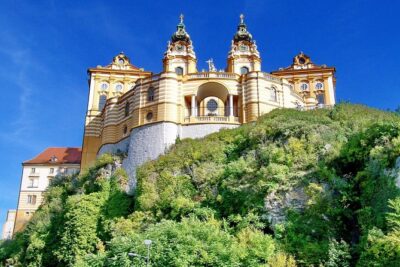
Private Day Tour Trip Salzburg Hallstatt and Melk from Vienna
Read our review →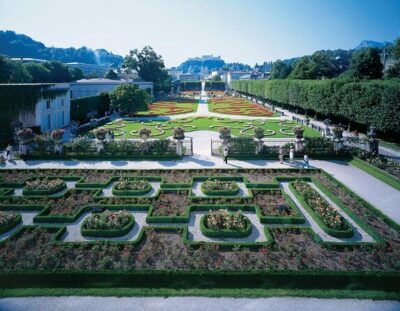
Private Day Tour of Hallstatt and Salzburg from Vienna
Read our review →
Private Hidden Vienna Walk — Stories Behind Quiet Corners
Read our review →