
Reviewed · CLASSICAL CONCERTS AND OPERA
Vienna: Johann Strauss – Immersive Audiovisual Experience Ticket
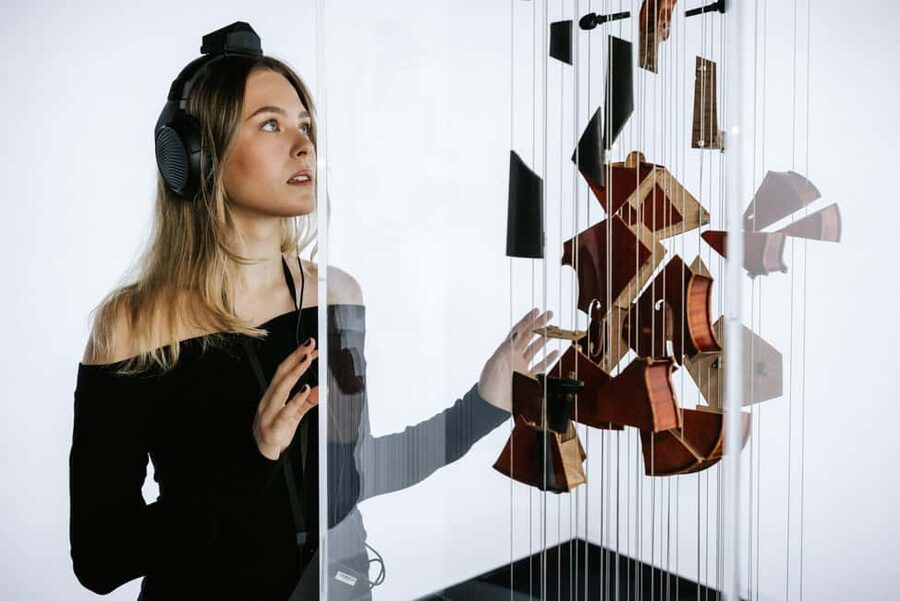
Vienna’s waltz comes alive here. The Johann Strauss Museum turns the life and music of the Waltz King into a 75-minute audiovisual show, mixing projections, interactive displays, headphones, and historical scenes. I especially like the freedom to move through the experience while location-based 3D sound follows you, and I like the composing machine, which lets you create a personal waltz and take home printed sheet music. The main drawback is that much of the experience plays through a large headset, so it may not suit you if you dislike wearing headphones or suffer from motion sickness.
I also like the museum’s broad appeal. You do not need to know much about classical music to follow the story, and the interactive format should work well for families, curious first-time visitors, and people who find traditional museums slow. The staff at the entrance are described as kind and helpful, though the experience depends heavily on technology, so your enjoyment may vary if you prefer original objects and quiet displays.
In This Review
- Key points to know before you go
- What the Johann Strauss Museum experience is really like
- Entering the golden age of Vienna
- Moving through the museum with 3D sound
- Interactive stations that make Strauss easier to understand
- The final room and the most memorable audiovisual moments
- Compose your own waltz on the museum machine
- The Johann Strauss photo booth
- Is $28 a fair price for 75 minutes?
- Timing, opening hours, and ticket choices
- Who should book this Johann Strauss experience?
- Should you book the Johann Strauss Museum?
- FAQ
- How long does the Johann Strauss Museum experience last?
- How much does admission cost?
- What audio-guide languages are available?
- Are headphones included?
- Is the museum wheelchair accessible?
- Can I compose my own waltz?
- Can I get a photo as Johann Strauss?
- What are the opening hours?
Key points to know before you go
- A 75-minute journey through Johann Strauss’s world: The experience follows the composer’s life and music through audiovisual scenes, animations, and interactive stations.
- Location-based 3D audio: Your headphones use high-precision technology to match sound with your position as you move around.
- Make your own waltz: The composing machine lets you create a waltz and take home a personalized sheet of music.
- A souvenir photo with Johann Strauss: A photo booth can place you in the role of the famous composer and print the image on the spot.
- Good for more than classical-music fans: The interactive format gives you a way into Vienna’s musical culture without requiring prior knowledge.
- Plan around your ticket type: Timeslot tickets require you to arrive for the selected time, while flexible weekday and everyday tickets offer more freedom.
What the Johann Strauss Museum experience is really like
The Johann Strauss Museum, called New Dimensions, presents Johann Strauss as more than a composer from an old Vienna concert program. The central idea is that Strauss was one of the first true pop stars. His music reached a wide audience, and the waltz became closely tied to Vienna’s public image.
You do not simply walk past framed information panels. Instead, you move through a series of interactive and audiovisual settings that connect events from Strauss’s life with the music he created. Projections, animations, headphones, and hands-on stations carry much of the presentation.
The experience lasts about 75 minutes. That is long enough to give the subject proper attention but short enough to fit into a busy day of sightseeing. I see this as a useful length for Vienna. You get a focused cultural stop without giving up half a day.
The format also gives you some control. The location-based audio system is designed to recognize where you are in the room, so the sound can change as you move. You are not tied to one fixed spot or forced to stand beside a particular speaker.
That freedom matters. A standard audio tour can feel like a queue with headphones. Here, the audio is part of the room itself, at least in the technical sense. You can move through the virtual settings while the music and narration remain connected to your position.
More Classical Concerts in Vienna
- Vienna: Vivaldi’s Four Seasons Concert in Karlskirche
★ 4.7 · 14,951 reviews - Vienna: Classical Concert in the World-Famous Musikverein
★ 4.6 · 6,673 reviews - Vienna: Classical Concert at St. Stephen’s Cathedral
★ 4.1 · 4,177 reviews
Entering the golden age of Vienna
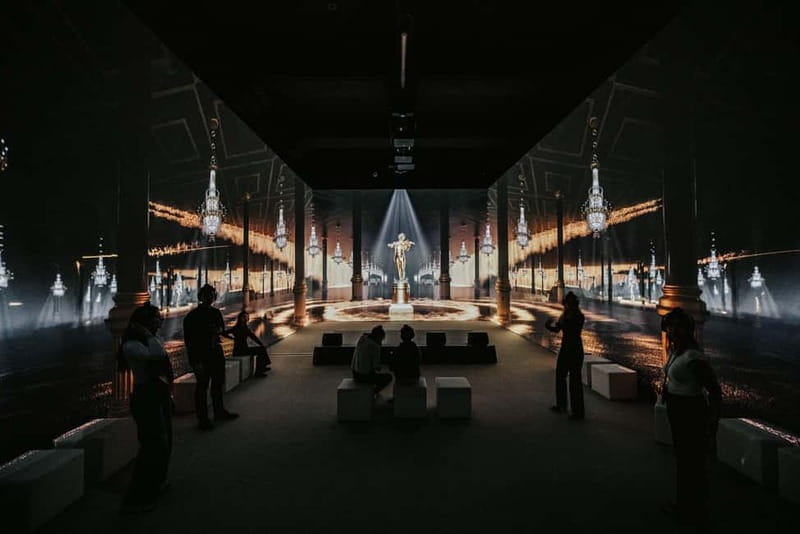
The museum’s subject is the Vienna of Strauss and the golden age of the waltz. The presentation uses historical experiences and audiovisual scenes to give you a sense of the era rather than simply listing dates and names.
You can expect the early part of the visit to establish Strauss’s place in Vienna’s musical culture. Interactive displays cover important phases of his life and show how his music developed. The presentation aims to make the story easy to follow, even if your knowledge of Strauss is limited to The Blue Danube or the idea of the Viennese waltz.
That accessibility is one of the museum’s strengths. You do not have to prepare by reading a biography first. The audio guide and visual material provide the basic context as you go.
Still, this is not a conventional museum packed with original manuscripts, instruments, or personal belongings. The supplied information focuses on multimedia stations, projections, animations, and interactive scenes. If you came hoping for a quiet display of rare objects, you may find the presentation more theatrical than traditional.
For me, the best approach is to treat the visit as a music-and-story experience rather than a collection-based museum. You are coming to hear, see, and interact with Strauss’s world.
Moving through the museum with 3D sound
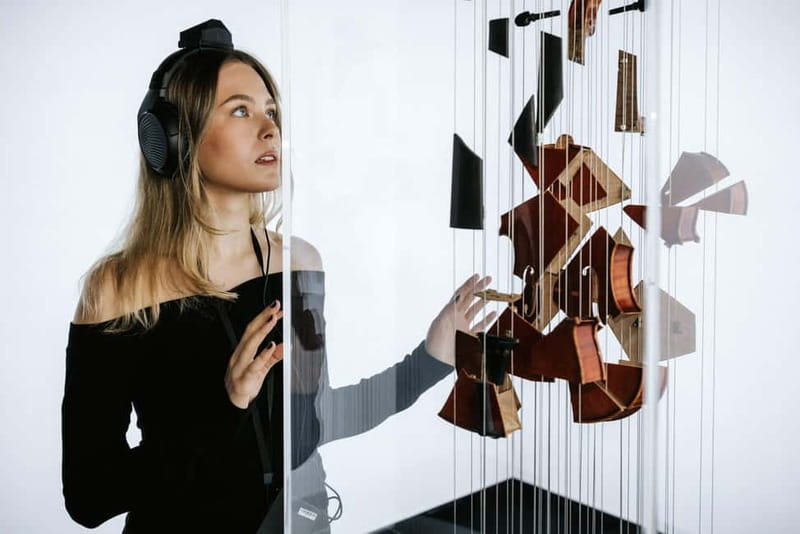
The audio system is the technical heart of New Dimensions. You receive headphones as an audio guide, with language options in Chinese, English, French, German, Italian, Japanese, Korean, and Spanish.
The important feature is not just the number of languages. The system uses location-based 3D sound and high-precision tracking. As you move through the space, the audio guide can position sound in relation to you in real time.
That design is meant to create a stronger feeling of presence. Music and narration do not simply come from a fixed device. They are connected to the virtual scenes around you.
You will need to be comfortable wearing a large headset for much of the visit. One detailed comment specifically advises you to make sure you are happy with that setup. This is useful advice, especially if you dislike headphones, wear glasses, or find extended audio equipment tiring.
The museum also states that the experience is not suitable for people with motion sickness. That warning matters because the combination of projections, movement, and audiovisual effects may feel intense for some people.
If you enjoy technology-based exhibitions, this may be one of the most appealing parts of your Vienna schedule. If you prefer to stand still and read at your own pace, you may want to keep your expectations in check.
Interactive stations that make Strauss easier to understand
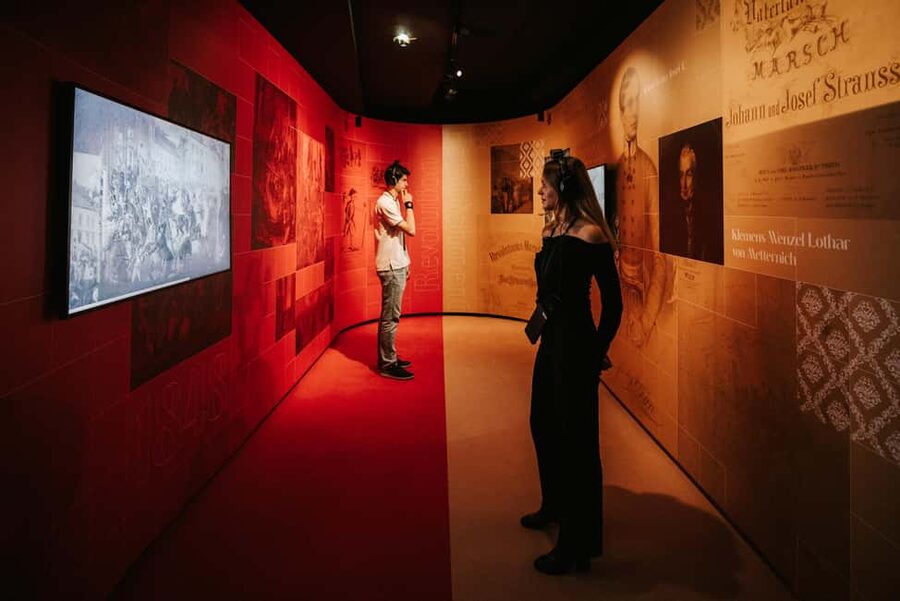
The interactive displays focus on important phases of Strauss’s life and let you explore his music in different ways. The point is not simply to tell you that Strauss was famous. It is to show how his work connected with the culture of Vienna.
Animations bring melodies to life, while multimedia stations offer additional information. These features can help you hear patterns and ideas instead of treating the music as background sound.
This style also suits visitors with different attention spans. You can listen to the narration, watch the projections, or focus on the interactive elements. The museum is designed to keep you involved rather than asking you to absorb a long block of text.
That is especially useful for children and for adults who find traditional museums difficult to follow. One highly enthusiastic assessment came from someone with ADHD, who found the experience unusually engaging and particularly enjoyed the last room. That detail suggests the museum’s changing visual and audio elements can hold attention better than a conventional display.
You should not assume that every moment requires an action, however. The experience still depends on listening and watching. The interactive parts add variety, but they do not turn the entire visit into a game.
A completely different kind of day:
- Vienna: Spanish Riding School Training
★ 3.9 · 9,281 reviews - Vienna: Schönbrunn Palace & Gardens Skip-the-Line Tour
★ 4.7 · 7,739 reviews - Vienna: Light of Creation Votive Church Immersive Light Show
★ 4.8 · 6,779 reviews - Vienna Spanish Riding School Guided Tour
★ 4.7 · 6,765 reviews
The final room and the most memorable audiovisual moments
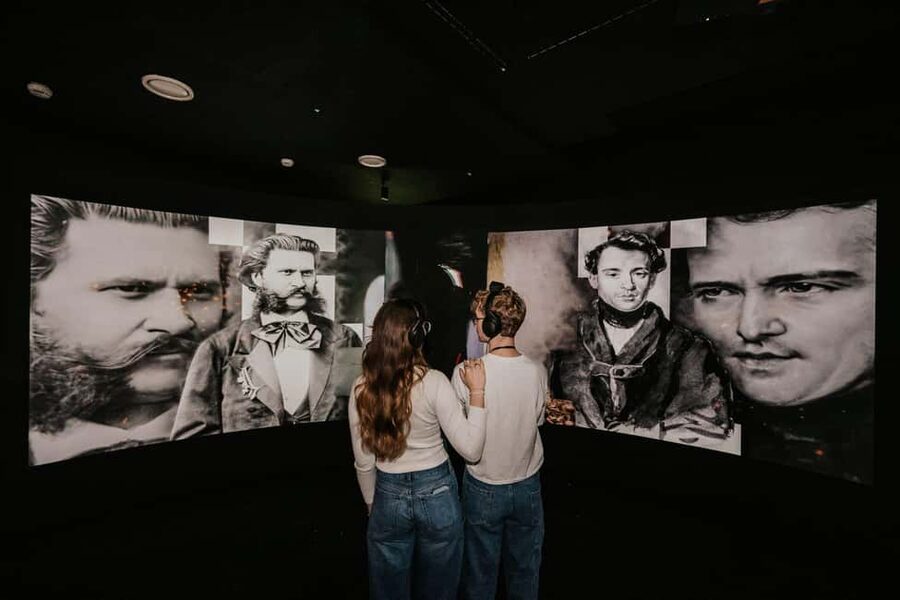
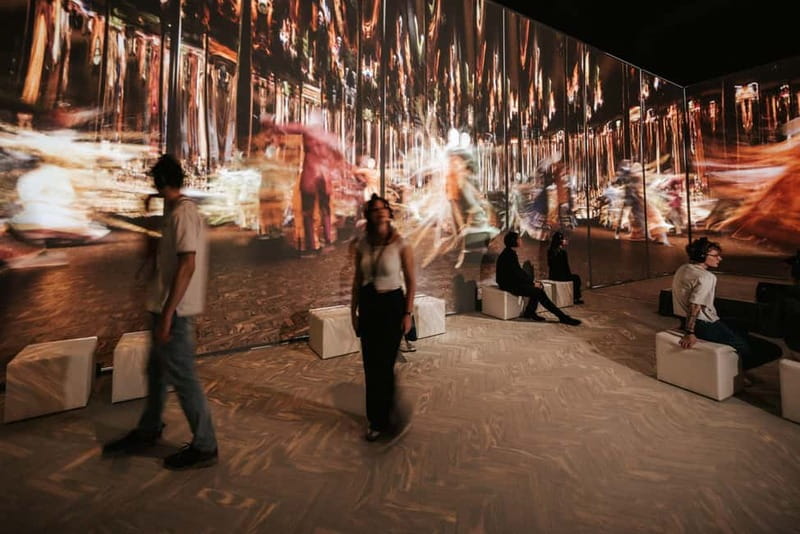
The exhibition builds toward immersive audiovisual scenarios that place you inside Strauss’s musical world. The final room received special praise, and it appears to be one of the strongest parts of the visit.
The exact staging can vary with the presentation, but the goal is clear: connect Strauss’s melodies with large-scale visual scenes and a sense of movement through time. This is where the museum’s technology has the most room to work.
You may find this part especially effective if music affects you physically and emotionally. A familiar melody can feel different when paired with projections, spatial sound, and a room designed around the music.
On the other hand, the sensory impact is also why people prone to motion sickness should avoid the experience. It is not simply a quiet audio lecture. The museum asks you to take in sound, image, motion, and changing surroundings at once.
Give yourself time to focus. The 75-minute visit is structured, so you may not be able to pause every station for as long as you wish. If one section catches your attention, enjoy it, but keep moving so you do not miss the later rooms.
Compose your own waltz on the museum machine
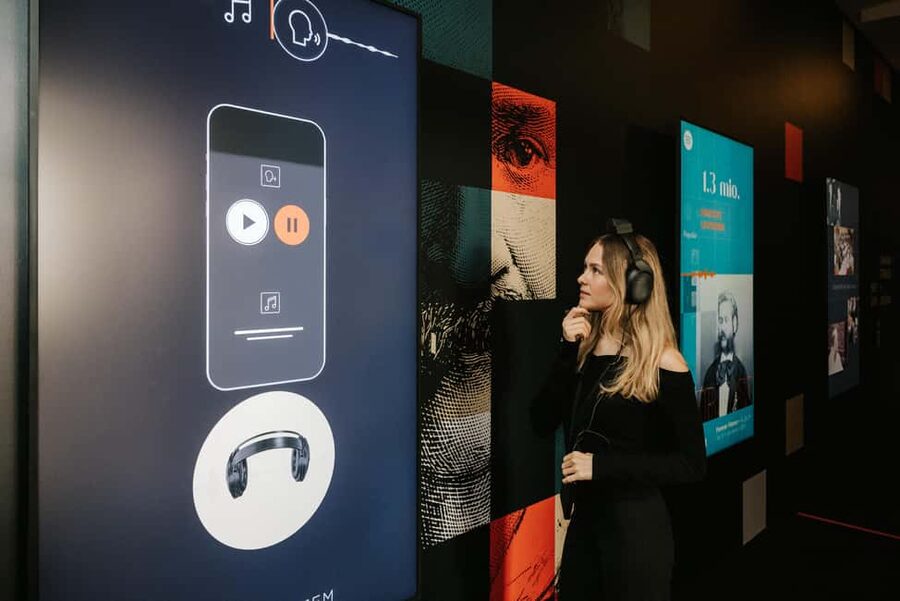
The composing machine is the most distinctive hands-on feature. You can use it to create your own waltz and take home a personalized sheet of music.
This adds real value because it gives you something active to do with Strauss’s musical ideas. Instead of only hearing how a waltz works, you get to make a version of your own.
The finished sheet music also makes a better souvenir than a standard postcard. It connects directly with what you did inside the museum, and it gives you a small record of the visit to take home.
Do not expect to leave as a professional composer. The machine is presented as an innovative way to participate in music history, not as a full music-production studio. The appeal is the simple pleasure of creating something personal in a setting devoted to the waltz.
This is likely to be a favorite stop for families and younger visitors. It can also give adults who know little about music a playful way to understand the structure of a waltz.
The Johann Strauss photo booth
The souvenir area includes a photo booth that lets you take a picture of yourself as Johann Strauss. The image can be printed on the spot.
This is a lighthearted ending to a museum focused on a serious musical figure. It also gives you a physical keepsake, especially useful if you want something more personal than the printed sheet music.
The photo booth may appeal most to children, couples, and groups of friends. You can treat it as a quick souvenir or skip it if you prefer to leave with only the composing-machine printout.
Admission includes access to the souvenir shop and photo booth. That means you do not have to pay a separate entrance fee just to reach this part of the experience, though the information provided does not specify the price of any additional purchases.
Is $28 a fair price for 75 minutes?
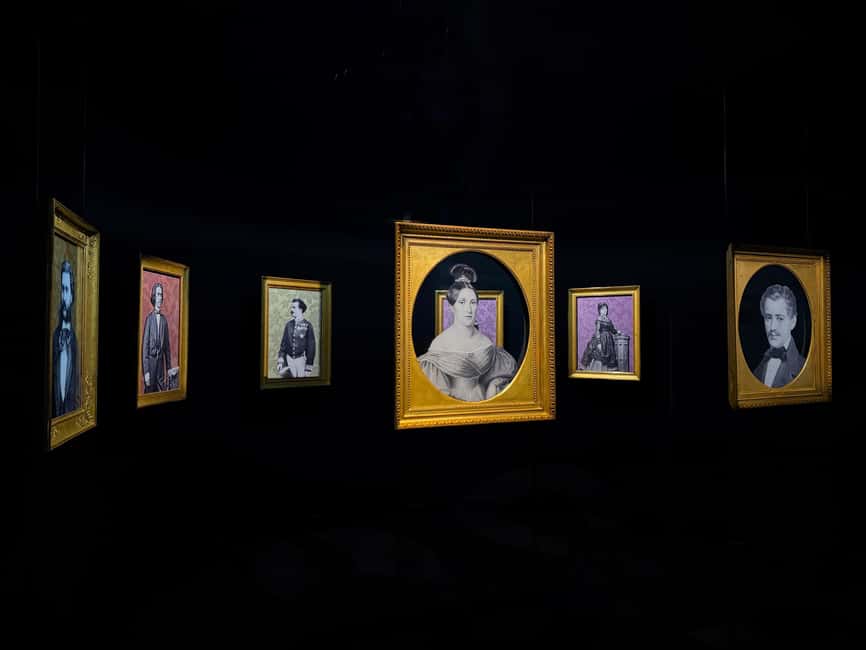
At $28 per person, this is not a bargain basement attraction, but the price is reasonable if you value a polished, technology-led cultural experience.
You are paying for more than entry to a room with information panels. The ticket includes admission, the audio-guide headphones, access to the composing machine, and entry to the souvenir shop with its photo booth. The multilingual audio system also adds practical value if English is not your first language.
The visit lasts about 75 minutes, giving you a clear cost per hour that compares well with many paid museum and entertainment stops in Vienna. The strongest value comes if you use the interactive stations, listen carefully, and try the composing machine rather than treating the museum as a quick photo stop.
The value is less convincing if you want original artifacts or a long, scholarly museum visit. The supplied information does not describe a major collection of objects. Its appeal lies in presentation, sound, and participation.
A rating of 4.8 from 60 assessments indicates strong overall satisfaction, but you should still match the format to your interests. The praise centers on the audio guide, friendly entrance staff, engaging design, and good value. Those are meaningful strengths, but they do not remove the headset and motion-sickness considerations.
Timing, opening hours, and ticket choices
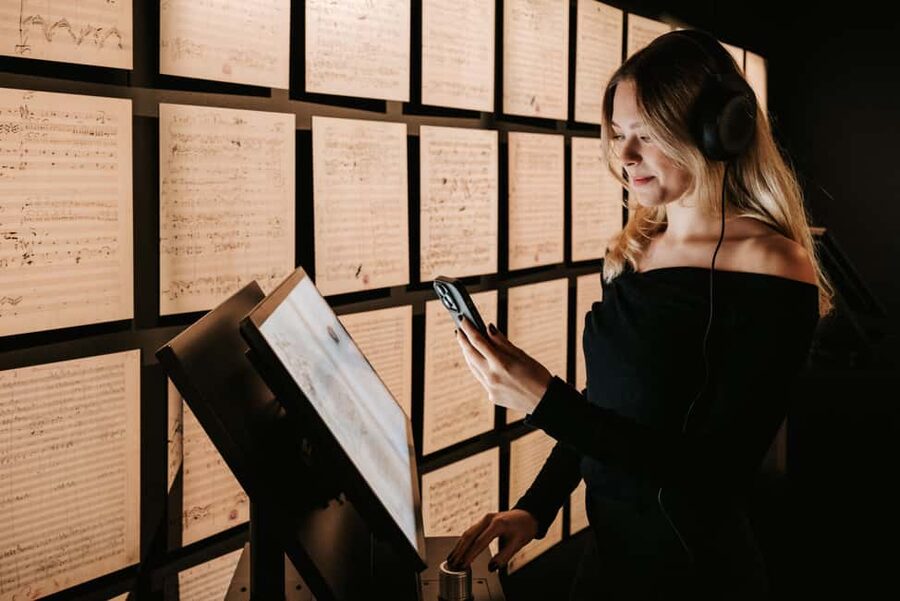
The museum is open from 10:00 a.m. to 6:00 p.m. Sunday through Thursday. On Friday and Saturday, it stays open until 7:00 p.m.
Timeslot tickets require you to follow the selected day and time. Plan to arrive with enough margin to find the entrance and get ready, since a fixed-time ticket gives you less flexibility during a crowded sightseeing day.
A flexible weekday ticket can be redeemed on weekdays, while a flexible everyday ticket can be used on any day. These choices matter if your Vienna plans may change. A fixed timeslot may be best when you are building a tight schedule, while a flexible ticket can reduce the stress of fitting the museum around meals, concerts, and other appointments.
The activity begins and ends at the Johann Strauss Museum, New Dimensions. No transportation is included or required as part of the experience.
The museum is wheelchair accessible. The host or greeter languages are German and English, while the audio guide has the wider selection of languages listed above.
Who should book this Johann Strauss experience?
I would recommend this museum to you if you want a cultural attraction that feels active and modern. It is a particularly good fit for:
- People curious about Vienna’s music and culture
- Classical-music fans who want a new format
- Families looking for something more hands-on
- Visitors who enjoy projections, sound, and interactive displays
- People who find traditional museums hard to follow
- Anyone who wants a personal musical souvenir
You may want to choose another museum if you dislike large headphones, need a quiet environment, or are prone to motion sickness. You may also prefer a more traditional collection if your main interest is seeing original Strauss documents and objects.
The experience works best when you accept its format from the start. Put on the headphones, move through the scenes, listen for the musical connections, and leave time for the composing machine and photo booth.
Should you book the Johann Strauss Museum?
Book it if you want a compact, engaging introduction to Johann Strauss and the waltz, with modern sound technology and a few genuinely personal activities. At $28, the ticket offers solid value for 75 minutes, particularly because the audio guide, composing machine, and photo booth access are included.
Skip it if you are looking for a quiet object-based museum or know that headphones and audiovisual effects will make you uncomfortable. For most curious visitors, though, New Dimensions offers an easy and enjoyable way to connect with one of Vienna’s most famous composers without needing a music degree.
FAQ
How long does the Johann Strauss Museum experience last?
The experience lasts approximately 75 minutes.
How much does admission cost?
The listed price is $28 per person.
What audio-guide languages are available?
The audio guide is available in Chinese, English, French, German, Italian, Japanese, Korean, and Spanish.
Are headphones included?
Yes. Headphones are included and are used as the audio guide throughout the experience.
Is the museum wheelchair accessible?
Yes, the Johann Strauss Museum is wheelchair accessible.
Can I compose my own waltz?
Yes. You can use the composing machine to create your own waltz and take home a personalized sheet of music.
Can I get a photo as Johann Strauss?
Yes. The museum has a photo booth that can take and print a photo of you as Johann Strauss.
What are the opening hours?
The museum is open from 10:00 a.m. to 6:00 p.m. Sunday through Thursday, and from 10:00 a.m. to 7:00 p.m. Friday and Saturday.
Just added in Vienna
- Vienna: Austrian Wine Tasting Experience★ 4.2 · 2 reviews
- World War II History Vienna Old Town Private Walking Tour★ 4.8 · 9 reviews
- Vienna_ Meet Beethoven Life Private Guided Walking Tour★ 5.0 · 1 review
- Vienna: Wine Tasting Tour★ 4.8 · 61 reviews
- Vienna: Wine Tasting E-Bike Tour★ 4.9 · 46 reviews
- Vienna: Wine Tasting at Schönbrunn Palace★ 4.3 · 71 reviews
- Vienna: Winery and Wine Tasting Tour with a Wine Expert★ 5.0 · 5 reviews
- Vienna: Concert by the Vienna Baroque Orchestra★ 4.6 · 56 reviews
Classical Concerts and Opera, compared.
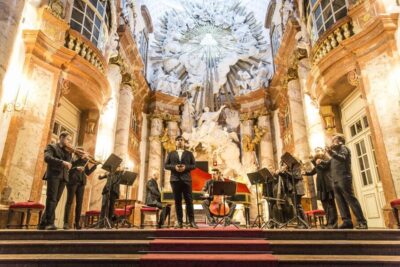
Vivaldi’s Four Seasons Concert in Karlskirche
Read our review →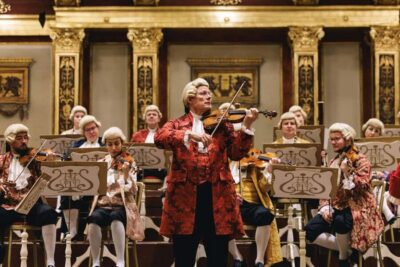
Classical Concert in the World-Famous Musikverein
Read our review →
Classical Concert in St. Anne’s Church (Annakirche)
Read our review →
Browse the lists this tour appears in