
Reviewed · CITY TOURS
Vienna: City of Music Private Walking Tour
Hear Vienna differently. This private three-hour walk links famous sights with the composers who made the city famous, from Mozart’s former home to Beethoven’s many addresses and the grand State Opera. I especially like the private guide, which lets you ask questions and shape the conversation, and the headphone music selections, which bring the streets and buildings to life as you walk. The main drawback is price: $564.72 is a serious cost for a small party, though it becomes much better value when shared by eight to ten people.
I also like the flexible start, with morning or afternoon departures, and the option to meet at your hotel or holiday flat. Guide Annelie has earned particular praise for making the subject personal, using photographs and stories rather than assuming you already know classical music. You should still expect a walking tour, not a concert visit, and admission to places such as Mozarthaus Vienna and the State Opera is not included.
In This Review
- What makes this Vienna music walk worth considering
- Starting at St. Stephen’s Cathedral
- Mozart’s Vienna at Mozarthaus
- Beethoven and the problem of finding a permanent home
- The State Opera and Vienna’s continuing music life
- Beethoven’s Pasqualati House at Mölker Bastei
- The Hofburg and Beethoven’s aristocratic ties
- Hearing Vienna through headphones
- What the private format changes
- Timing, planning, and what is not included
- Who will get the most from this walk?
- Should you book the Vienna City of Music tour?
- FAQ
- How long is the Vienna City of Music Private Walking Tour?
- How many people can join the private tour?
- What language is the tour offered in?
- Can the guide pick me up at my hotel?
- Are public transport tickets included?
- Are admissions to Mozarthaus Vienna and the other buildings included?
- Can I cancel for a full refund?
What makes this Vienna music walk worth considering
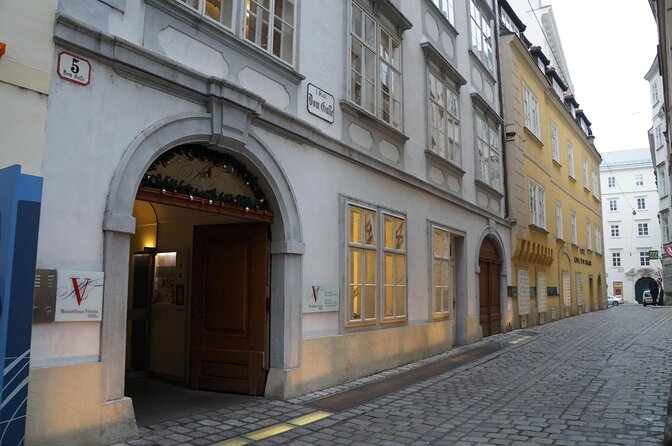
- Mozart’s 1784 to 1787 Vienna home: See the building where Mozart lived during one of his most productive periods, including the years when he wrote major operas and instrumental works.
- Music played along the route: Listen to selected Viennese masterpieces through headphones while standing near the places tied to their composers.
- A real private experience: Only your group participates, with the fee covering up to 10 people.
- Beethoven’s restless Vienna life: Follow the story of a composer who changed apartments almost 60 times, including the Pasqualati House at Mölker Bastei.
- A walk through imperial Vienna: Connect music with St. Stephen’s Cathedral, the Hofburg, the State Opera, and the Habsburg court.
- A guide who can keep things approachable: The tour is designed to work even if you have little formal music training.
Starting at St. Stephen’s Cathedral
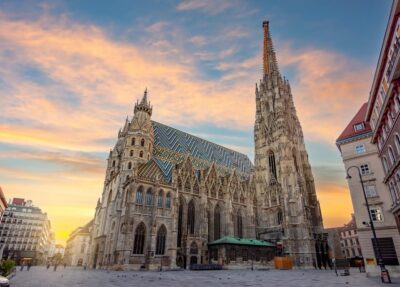
The tour begins in the center of Vienna at St. Stephen’s Cathedral, known locally as Stephansdom. You spend about 20 minutes here, learning how this landmark served as an important performance venue in earlier centuries.
That connection gives the cathedral more meaning than a quick photo stop. Haydn, Mozart, Salieri, and Vivaldi are all linked to Vienna’s musical life, and the cathedral helps show how closely sacred spaces, court life, and public music once overlapped.
The exterior visit is free, which keeps this first stop simple. The itinerary does not promise a full interior tour or a concert, so you should think of this as a historical introduction rather than a cathedral admission visit.
I like this opening because it places music in the middle of ordinary sightseeing. You are not being taken to a distant museum first. You begin among Vienna’s central streets, where the city’s famous composers worked, worshipped, performed, and argued their way through their careers.
More Walking Tours in Vienna
- Vienna: Guided Walking Tour of City Center Highlights
★ 4.7 · 4,989 reviews - Vienna: Vienna Central Cemetery Guided Walking Tour
★ 4.8 · 3,307 reviews - Vienna: Guided Walking Tour of City Highlights & Hidden Gems
★ 4.9 · 2,180 reviews
Mozart’s Vienna at Mozarthaus
From the cathedral, the walk continues to Mozarthaus Vienna, also called Figaro House. Mozart lived here from 1784 to 1787, one of the most important stretches of his Vienna career.
The stop lasts about 20 minutes. The focus is the building and Mozart’s time there, including the operas and instrumental pieces he wrote while living in Vienna. That makes the stop especially useful for understanding Mozart as a working composer, not simply as a name on a souvenir shirt.
Admission to Mozarthaus is not included. You will stroll by or view the site as part of the walking route, so you should budget extra time and money if you want to return for the museum on your own.
That limitation is worth noting. A visitor expecting a long indoor museum visit could feel shortchanged, while someone who wants a guided city walk may appreciate the brisk pace. The tour gives you context first, then you can decide if Mozart’s rooms deserve a separate visit.
Beethoven and the problem of finding a permanent home
Beethoven’s monument provides another short stop, roughly 20 minutes. The subject here is not only his music but his unsettled life in Vienna.
Beethoven lived in nearly 60 different apartments. That fact gives the tour a practical, human angle. Instead of treating him as a distant genius frozen in a statue, the guide can explain his constant movement and the difficult personal life behind the compositions.
His monument is also a useful pause in the walk. You get time to hear about Beethoven’s place in Viennese music before moving toward the grander sites connected with performance and aristocratic support.
For anyone who feels uncertain about classical music, this section may be one of the easiest to follow. You do not need to identify a symphony or understand musical theory. The story of a gifted, difficult, restless man moving around Vienna is clear enough on its own.
The State Opera and Vienna’s continuing music life
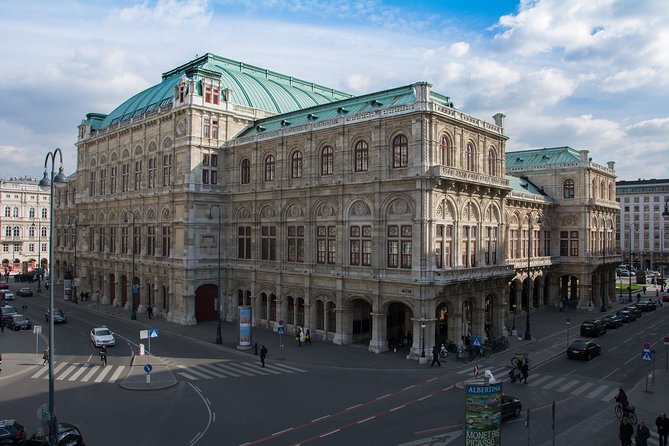
The Wiener Staatsoper, or Vienna State Opera, shows that the city’s musical identity did not end with Mozart and Beethoven. You consider the role of the opera house today, along with the Musikverein concert hall and the Vienna Philharmonic.
The stop lasts about 20 minutes. Admission is not included, and the tour does not promise an opera performance or backstage access. The value is in understanding how Vienna remains a major center for opera and concert music.
This is one of the places where expectations matter. If you want to attend a performance, you need a separate ticket and separate planning. If you want a guide to explain why these buildings matter, the walk gives you a useful introduction without forcing you into a full evening event.
I like the contrast here. The earlier stops focus on composers and their homes. The State Opera shifts your attention to institutions that keep Vienna’s musical tradition active today.
A completely different kind of day:
- Vienna: Vivaldi’s Four Seasons Concert in Karlskirche
★ 4.7 · 14,951 reviews - Vienna: Spanish Riding School Training
★ 3.9 · 9,281 reviews - Vienna: Schönbrunn Palace & Gardens Skip-the-Line Tour
★ 4.7 · 7,739 reviews - Vienna: Light of Creation Votive Church Immersive Light Show
★ 4.8 · 6,779 reviews
Beethoven’s Pasqualati House at Mölker Bastei
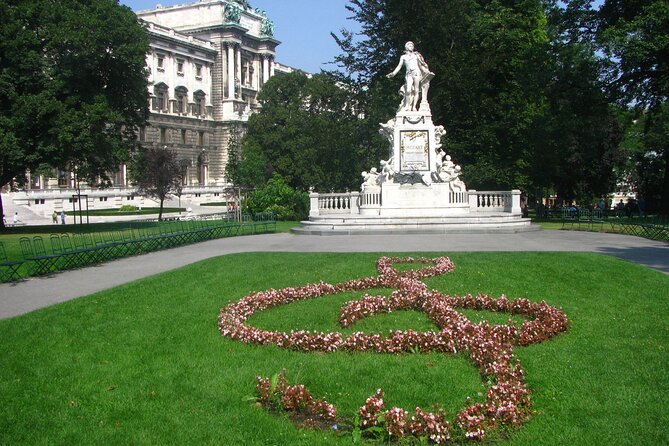
The walk then reaches Mölker Bastei and the Pasqualati House, located opposite the University of Vienna. This is another Beethoven stop, but it adds a more specific setting to the story of his many residences.
Beethoven’s music is presented as a high point of the Classical period and a bridge toward important changes in the Romantic era. That may sound like a formal music lesson, but the route gives the idea a physical setting. You are standing near one of the places where Beethoven lived and worked while Vienna was shaping his career.
The stop takes about 20 minutes. The Pasqualati House admission is not included, and the wording of the experience indicates a pass-by rather than a full museum visit. If you want to see inside, confirm your plans separately.
The location opposite the university also helps keep the walk tied to the wider city. Vienna’s music story is not confined to concert halls. It runs through streets, apartments, churches, court buildings, and academic quarters.
The Hofburg and Beethoven’s aristocratic ties
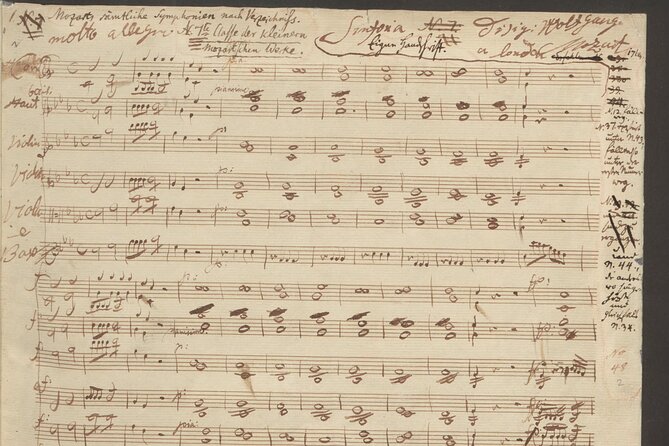
The final major landmark is the Hofburg, the former Habsburg residence. Here the tour turns to Beethoven’s relationship with the aristocracy, particularly Archduke Rudolph, the youngest son of Emperor Leopold II.
Beethoven’s relationship with high-ranking patrons could be strained, but Rudolph became one of his close friends and most important supporters. Rudolph took piano lessons with Beethoven, and Beethoven dedicated the Missa Solemnis to him.
The story shows how music and power worked together in 18th- and 19th-century Vienna. Composers needed patrons, but they were not simply obedient employees. Beethoven’s career reflects both the support and the friction that could come with court connections.
The walk finishes its main circuit at the residence where Rudolph lived and studied. The Hofburg stop takes about 20 minutes, and no separate admission is included. You are seeing the setting as part of the city walk, not touring every imperial room.
Hearing Vienna through headphones
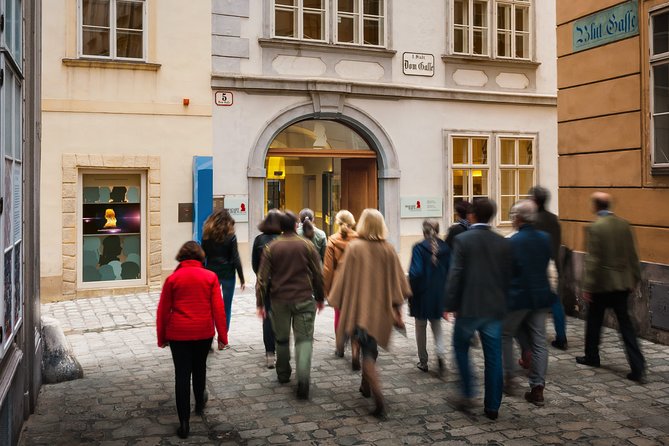
The most unusual feature is the use of headphones during the route. Across the three-hour walk, you pause to listen to selections of Viennese masterpieces while exploring the central sights.
This changes the pace in a good way. A guide can explain that a composer wrote a certain work near a particular building, but hearing the music at the same time gives the place more force. You may find the connection especially helpful if you do not know much about classical music.
The guide does not need to turn the outing into a technical lecture. The strongest version of this tour uses music, photographs, and personal stories to make the people and places easier to picture. Annelie has been praised for doing exactly that, including showing photographs of the composers and adding personal stories.
This approach also suits mixed groups. A classical music fan can ask detailed questions, while someone with little musical training can still follow the human stories and enjoy the listening stops.
The route includes about 45 minutes devoted to the inner city and music pauses, in addition to the shorter landmark stops. You should expect regular walking and standing, with the exact rhythm shaped by your guide and your group’s questions.
What the private format changes
A private tour is more than a smaller group. It gives you room to ask why Mozart left one address, how Beethoven managed his career, or how court support affected musical life without worrying that you are holding up a large crowd.
The guide can also adjust the explanation. If you are new to classical music, you can ask for plain-language background. If your group already knows the composers, you can spend more time on specific works, personal connections, or Vienna’s opera and concert institutions.
The fee is $564.72 per group of up to 10 people. For a full group, that works out to about $56.47 per person. With five people, it is about $112.94 per person, so the value changes sharply with group size.
For a family, friend group, or extended party of eight to ten, the flat fee can make sense. For one or two people, a shared group tour would likely be less costly, if one is available on your dates. The private format is the reason to book this experience, not a low-budget price.
Hotel or holiday-flat pickup is offered, which adds convenience. You can also meet at Café Mozart on Albertinaplatz 2 if you prefer a central starting point. If public transport is needed to reach the tour sites, tram and metro tickets are not included, but the guide can help you buy them.
Timing, planning, and what is not included
The tour lasts about three hours and offers morning or afternoon departures. That gives you useful control over the rest of your day. A morning walk can leave the afternoon open for a museum or concert, while an afternoon departure may fit better after a relaxed start.
The experience is offered in English. Confirmation arrives at booking, and the guide’s photo, phone number, and biography are sent to you before the meeting. That is a helpful touch for finding the right person at a hotel or central meeting point.
The tour is often reserved well ahead, with an average booking lead time of 111 days. You do not need to wait that long, but you should plan early if your Vienna dates are fixed, especially if your group needs a particular morning or afternoon slot.
Keep extra costs in mind. Admission is not included for Mozarthaus Vienna, the State Opera, or the Pasqualati House. The walk is built around outside stops, explanations, and music listening, so do not book it expecting entry into every building.
Free cancellation is available until 24 hours before the start time. Cancellations or changes made inside that window are not accepted for a refund.
Who will get the most from this walk?
I would recommend this tour most strongly to people who want Vienna’s famous composers explained in place, not only inside a museum. It is also a good fit for groups with mixed interests, since the guide can connect music to architecture, imperial politics, personal stories, and everyday city streets.
It suits:
- First-time Vienna visitors who want a strong central-city orientation
- People who enjoy classical music but do not want a formal lecture
- Families and friend groups that can share the private fee
- Visitors planning to attend an opera or concert later
- Anyone who prefers questions and conversation over a fixed group script
It may not be the best choice if your main goal is to enter several museums or attend a live performance. It is also less attractive financially for a very small group unless the private setting matters greatly to you.
The walk is described as suitable for most participants and is near public transportation. Still, you should be comfortable walking and standing for about three hours, since the experience is a city walk rather than a seated tour.
Should you book the Vienna City of Music tour?
Book it if you want context with your sightseeing. The strongest parts are the private format, the headphones with music selections, and the way the route connects Mozart, Beethoven, the Hofburg, St. Stephen’s Cathedral, and Vienna’s opera tradition.
The price is easiest to justify with a larger group. At ten people, the per-person cost is reasonable for a private three-hour guide. At two people, it is a premium experience, so you should decide if personal attention and a flexible conversation are worth the extra money.
I would also book early, keep separate admission money for the indoor sites, and tell your guide how much classical music you already know. If you want Vienna to sound like more than horse carriages and grand façades, this walk gives you a thoughtful way to hear the city.
FAQ
How long is the Vienna City of Music Private Walking Tour?
The tour lasts approximately three hours.
How many people can join the private tour?
The flat group price covers up to 10 people, and only your group participates.
What language is the tour offered in?
The tour is offered in English.
Can the guide pick me up at my hotel?
Yes. The guide can meet you at your hotel or holiday flat. You can also choose a central meeting point at Café Mozart, Albertinaplatz 2.
Are public transport tickets included?
No. If you need to use public transport to reach the tour sites, tram or metro tickets are not included. The guide can help you purchase them if needed.
Are admissions to Mozarthaus Vienna and the other buildings included?
No. Admission to Mozarthaus Vienna, the Wiener Staatsoper, and the Pasqualati House is not included. The experience focuses on the sites as part of the walking route.
Can I cancel for a full refund?
Yes. You can cancel up to 24 hours before the experience start time for a full refund. Cancellations or changes made less than 24 hours before the start time are not accepted.
Just added in Vienna
- Vienna: Austrian Wine Tasting Experience★ 4.2 · 2 reviews
- World War II History Vienna Old Town Private Walking Tour★ 4.8 · 9 reviews
- Vienna_ Meet Beethoven Life Private Guided Walking Tour★ 5.0 · 1 review
- Vienna: Wine Tasting Tour★ 4.8 · 61 reviews
- Vienna: Wine Tasting E-Bike Tour★ 4.9 · 46 reviews
- Vienna: Wine Tasting at Schönbrunn Palace★ 4.3 · 71 reviews
- Vienna: Winery and Wine Tasting Tour with a Wine Expert★ 5.0 · 5 reviews
- Vienna: Concert by the Vienna Baroque Orchestra★ 4.6 · 56 reviews
City Tours, compared.
Guided Walking Tour of City Center Highlights
Read our review →
Guided Walking Tour of City Highlights & Hidden Gems
Read our review →
City Sightseeing Tour in an Electro Vintage Car
Read our review →
Skip-the-Line Schonbrunn Palace Guided Tour and Vienna Historical City Tour
Read our review →

Browse the lists this tour appears in