
Reviewed · CITY TOURS
Vienna: City Highlights Guided Walking Tour & Old Town
Vienna reveals itself one courtyard at a time. This two-hour walk gives you a useful first look at the city center, linking Roman and medieval Vienna with the Hofburg, Jewish quarter, palace gardens, Ring Street, and St. Stephen’s Cathedral. I especially like the small passageways and courtyards, which add texture beyond the famous monuments. I also like the focus on everyday food, including Sacher cake and other Viennese sweets.
The main caution is simple: two hours is not long for a city with this much to explain. One Italian-language rating found the guide kind and helpful but felt the tour offered fewer details than Vienna deserved. I think that is a fair warning. You get a broad introduction, not a detailed study of every building or historical era.
In This Review
- Key points to know before you book
- Starting near Roman Vienna or the city museum
- Medieval lanes and Vienna’s Jewish quarter
- The Hofburg, where imperial Vienna still works
- Palace gardens and 3,000 rose bushes
- Ring Street architecture and the story of Sacher cake
- The Capuchin Crypt and the Habsburg family story
- Finishing at St. Stephen’s Cathedral
- What the $25 price really gives you
- Timing, language, and walking comfort
- Who should choose this Vienna walk?
- Should you book this tour?
- FAQ
- How long does the Vienna walking tour last?
- Where does the tour begin?
- Where does the tour end?
- What languages are available?
- Is the tour wheelchair accessible?
- What should I bring?
Key points to know before you book
- St. Stephen’s Cathedral is the finishing point, making this a handy way to get your bearings in Vienna’s old town.
- The route connects several periods of history, from Ancient Roman Vienna and the Middle Ages to the Habsburg court and modern city life.
- You will see more than major squares, with picturesque passageways, courtyards, the former Jewish quarter, and palace gardens included.
- Sacher cake gets a place in the story, along with suggestions for other cakes to try during your stay.
- The tour costs $25 per person for two hours, a reasonable price if you want a guided introduction rather than museum entry.
- English and Italian tours are offered, with a licensed local guide and wheelchair access listed for the activity.
Starting near Roman Vienna or the city museum
The meeting point depends on the option you book. The two possible starting places are the Art Gallery Carré d’artistes Wien and the Wien Museum Römermuseum.
That second location points to one of the tour’s useful themes: Vienna did not begin with the Habsburgs. Roman Vienna forms part of the city’s early story, and the route uses the historic center to show how the city changed over time. You will not be getting a full archaeological lecture in this short walk, but the Roman and medieval references help put the streets beneath your feet into context.
A variable meeting point means you should check your booking carefully before setting out. Do not assume that every departure begins at the same place. Arrive in the central area with a little time to spare, especially if you are still learning Vienna’s street pattern.
The activity ends back at the meeting point, with the stated drop-off locations around Stephansplatz and Schulerstraße. Since the route finishes at St. Stephen’s Cathedral, you should be well placed to continue sightseeing, find lunch, or explore the surrounding old town on your own.
More Walking Tours in Vienna
- Vienna: Guided Walking Tour of City Center Highlights
★ 4.7 · 4,989 reviews - Vienna: Vienna Central Cemetery Guided Walking Tour
★ 4.8 · 3,307 reviews - Vienna: Guided Walking Tour of City Highlights & Hidden Gems
★ 4.9 · 2,180 reviews
Medieval lanes and Vienna’s Jewish quarter
The walk through the historic center is the heart of the experience. You will hear about Vienna in the Middle Ages and cross the area associated with the medieval Jewish quarter.
This part matters because Vienna’s center can look polished and grand at first glance. Wide streets, formal buildings, and palace façades tend to dominate the first impression. A good guide helps you notice the less obvious traces of the people and communities that shaped the city.
The Jewish history section gives the tour a broader human focus. It moves the story beyond emperors and palace ceremonies and asks you to consider who lived, worked, worshipped, and traded in the old town. Since this is only a two-hour route, the treatment will be an overview rather than an extended history lesson, but it adds an important layer to the walk.
You will also pass through picturesque passageways and stop at one or more tucked-away courtyards. These spaces are a strong reason to choose a walking tour instead of simply following a map between monuments. They give you a chance to see how the old center fits together, with narrow routes and enclosed spaces leading off the main streets.
I would keep your camera ready here. The tour is designed to provide plenty of photo ideas, and the smaller spaces may be more memorable than another grand façade.
The Hofburg, where imperial Vienna still works
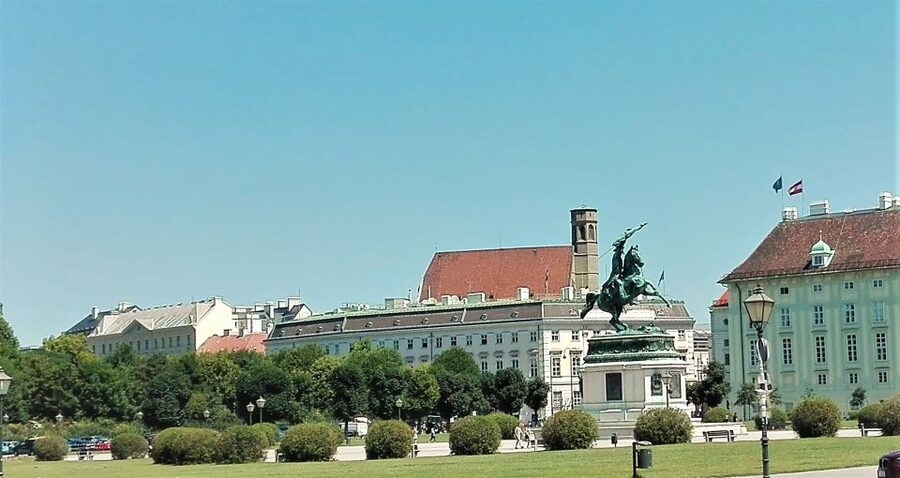
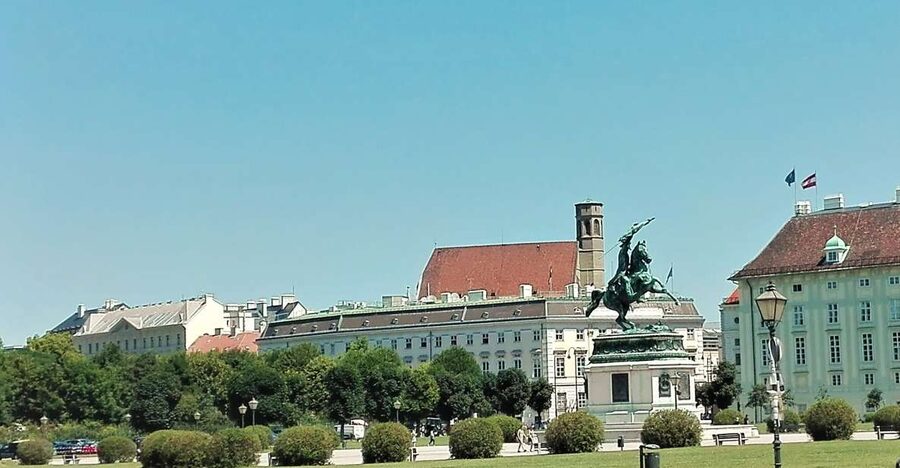
The route continues toward the Hofburg, the former residence of the Habsburgs. This is one of Vienna’s essential sights, but the value of the stop comes from learning how the palace functioned, not simply looking at its grand exterior.
Your guide will explain stories connected with former residents and point out how the complex is used today. The Hofburg is now home to several museums and other important institutions, so it is not just a preserved royal setting. It remains part of the city’s working center.
That contrast is worth noticing. Vienna’s imperial past is not shut away in a single historic building. It appears in the spaces where modern public life continues. A guide can help you separate the old palace residence from its present uses and explain why the area remains so important.
Do not expect entrance to the Hofburg’s museums as part of this activity. The experience is a guided outdoor walk, and the listed inclusions cover the licensed local guide rather than museum admission. If you want to visit an interior afterward, you can treat the walk as a first look and return with more time.
Palace gardens and 3,000 rose bushes
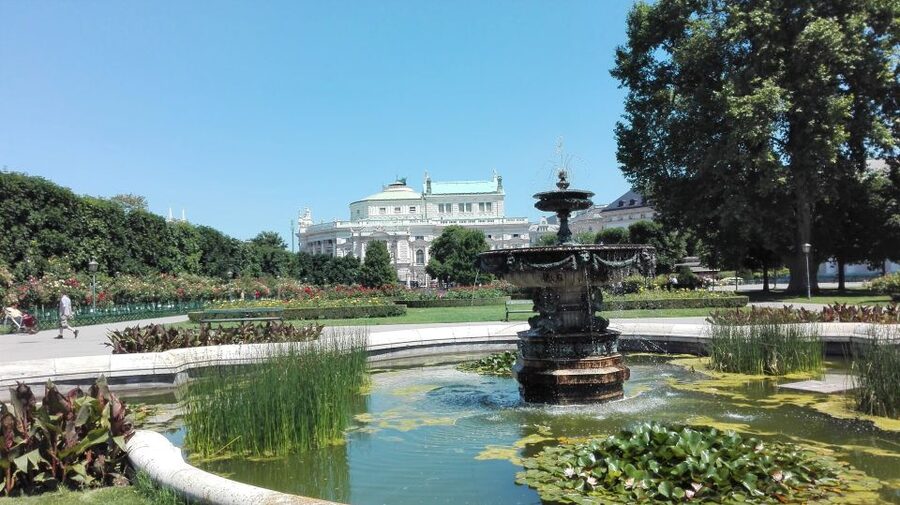
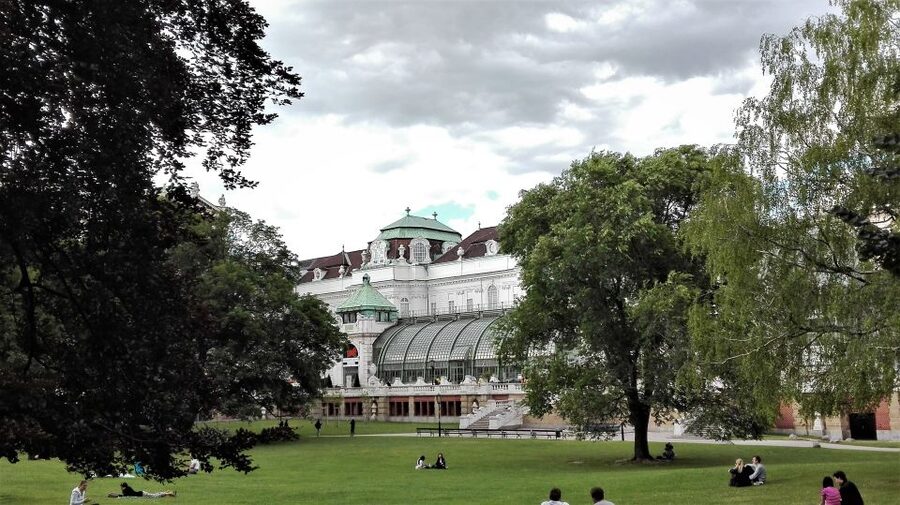
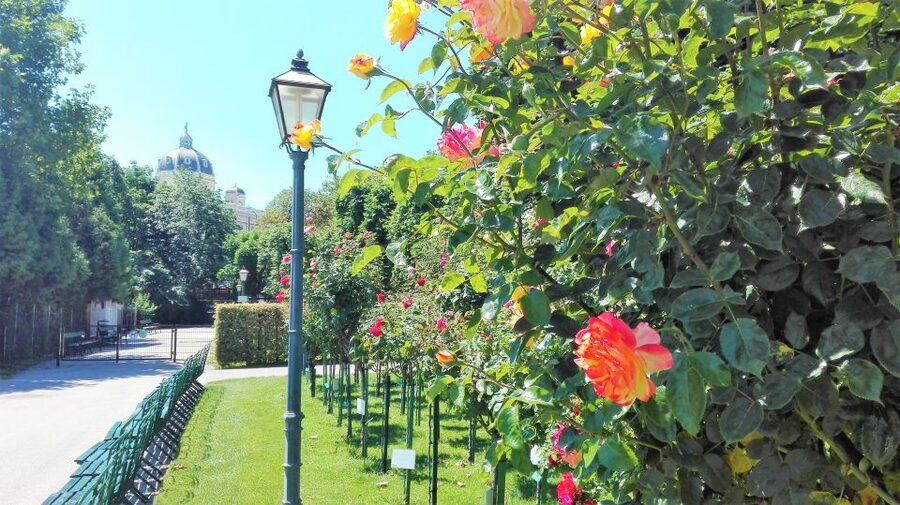
The former palace gardens provide a welcome change from city streets. The walk includes time in these gardens, with the scent of about 3,000 rose bushes as part of the experience.
This is a small but smart inclusion. A two-hour city walk can involve a lot of stone, pavement, and architecture. The gardens give you room to breathe while keeping the focus on Vienna’s courtly past.
The garden stop also helps explain how the Habsburg world worked as a place of ceremony and display. You will hear about the setting as part of the former palace grounds rather than treating it as an isolated public park.
The exact condition of the roses will depend on the season, so do not book solely for full blooms. Still, the gardens offer a pleasant pause and a softer setting for photographs. Wear shoes that can handle a full walking route, since the activity asks you to stay on foot for the entire two hours.
A completely different kind of day:
- Vienna: Vivaldi’s Four Seasons Concert in Karlskirche
★ 4.7 · 14,951 reviews - Vienna: Spanish Riding School Training
★ 3.9 · 9,281 reviews - Vienna: Schönbrunn Palace & Gardens Skip-the-Line Tour
★ 4.7 · 7,739 reviews - Vienna: Light of Creation Votive Church Immersive Light Show
★ 4.8 · 6,779 reviews
Ring Street architecture and the story of Sacher cake
Vienna’s Ring Street gets its own place on the route. The guide will discuss the street’s history and its notable buildings, giving you a chance to understand the grand urban design around the old center.
This is useful because Ring Street can otherwise become a parade of impressive façades with no clear story. You may see grand architecture, but the explanation of why the street was created and how it changed Vienna gives those buildings a purpose.
Food also enters the tour through the story of Sacher cake. You will hear about the famous dessert and learn which other cakes you might try during your stay. That is practical advice, especially if you are planning a visit to one of Vienna’s traditional cafés.
The tour does not include cake or café service, so consider this part a menu of ideas rather than a tasting stop. I like that approach for a short walking tour. It gives you suggestions you can follow later, without using precious sightseeing time for a fixed meal break.
The Capuchin Crypt and the Habsburg family story
Another stop comes near the Capuchin Crypt, the family crypt of the Habsburgs. The walk passes by this important site, connecting the imperial story with a place that served as the final resting place for members of the ruling family.
The crypt is not listed as an included interior visit. That distinction matters if you are hoping to see the tombs themselves. You will get the location and its historical connection during the walk, then you can decide if you want to return for a separate visit.
This stop adds a more personal note to the Habsburg narrative. Palaces show power and ceremony. A family crypt reminds you that even Vienna’s ruling dynasty had a private and final side.
The tour’s historical approach seems broad by design. You will move from Roman beginnings to medieval streets, Jewish history, imperial residences, gardens, architecture, and food. That range is helpful for a first visit, but it also explains the possible weakness: the guide cannot give equal depth to every subject in only two hours.
Finishing at St. Stephen’s Cathedral
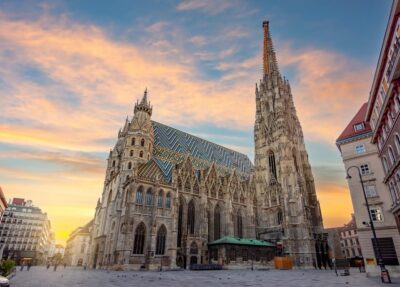
The walk ends at St. Stephen’s Cathedral, Vienna’s best-known landmark and the center of the old town area. This is a sensible final stop because it gives the tour a clear destination and leaves you in one of the city’s most useful areas for further exploring.
You will pass by the cathedral rather than receive a listed interior tour. Even so, ending here gives you an immediate choice. You can continue through the surrounding streets, arrange a separate cathedral visit, or stop for food and coffee nearby.
The cathedral also works as a mental anchor. After two hours of streets, stories, palace buildings, and courtyards, you finish at a place that is easy to recognize on a map. If you are new to Vienna, that can make the rest of your visit less confusing.
I would schedule this tour early in your stay. You will collect ideas for museums, cafés, cakes, palace areas, and streets to revisit. The route is not meant to replace a full day of sightseeing. It is better used as an orientation walk that helps you choose what deserves more of your time.
What the $25 price really gives you
At $25 per person, this is priced as an affordable guided introduction to central Vienna. The value comes from the local guide, the range of subjects, and the chance to connect places that you might otherwise visit separately.
You are paying for interpretation, not admissions. There is no listed entry to the Hofburg museums, the Capuchin Crypt, or St. Stephen’s Cathedral. You also should not expect food or a cake tasting. If you want a compact route through the outdoor historic center, the price is sensible. If you want long interior visits or specialist-level history, you will need additional activities.
The tour is especially useful for someone visiting Vienna for the first time. It covers enough ground to help you understand the old town, while the guide’s suggestions about cakes and later activities can shape the rest of your visit.
The modest price also makes the tour a low-risk choice for a short stay. You can get a local overview without committing half a day or a large part of your sightseeing budget.
Timing, language, and walking comfort
The duration is two hours, and starting times depend on availability. The tour is offered in English and Italian, so choose the language in which you will follow historical explanations most easily.
Comfortable shoes are important. You will walk through the historic center, palace areas, gardens, passageways, and streets before reaching St. Stephen’s Cathedral. Vienna’s center is pleasant for walking, but a short tour can still cover a surprising amount of ground.
Wheelchair access is listed for the activity. Because the route includes passageways, courtyards, streets, and gardens, you should confirm the specific route conditions for your chosen departure if you have particular mobility needs.
The guide is a licensed local guide, and the experience provider is Astrid Stangl. One available rating specifically praised the guide’s kindness and willingness to help, while also asking for more detail. I would take that as a useful description of the tour’s character: friendly, accessible, and broad rather than highly academic.
Free cancellation is available up to 24 hours before the start for a full refund, and you can reserve now and pay later. Those terms are useful when your Vienna plans are still changing, but the main decision should remain the content. Book it for orientation and stories, not for entry tickets or an exhaustive lecture.
Who should choose this Vienna walk?
I would recommend it to first-time visitors who want a readable introduction to Vienna’s center. It suits you if you enjoy history in short sections, like seeing famous sights alongside quieter corners, and want practical suggestions for the rest of your stay.
It also works well for anyone with only a short window in the city. In two hours, you will cover several major themes without spending the whole day indoors.
Families and mixed-age groups may appreciate the changing scenery. The route moves between streets, palace surroundings, gardens, courtyards, food traditions, and a cathedral, so the subject does not remain fixed on one type of monument.
I would be more cautious if you already know Vienna well or want detailed architectural analysis. The tour promises an overview, and one rating found that the information did not go as far as Vienna’s size and importance might deserve. For a specialist history experience, choose a longer or more narrowly focused walk.
Should you book this tour?
Book it if you want a friendly two-hour introduction to Vienna’s historic center for $25. The strongest features are the broad route, the Jewish and medieval history, the Hofburg setting, the palace gardens, and the practical food suggestions.
Skip it if you expect museum entry, a cake tasting, or a detailed account of every period in Vienna’s past. You will see the Capuchin Crypt and St. Stephen’s Cathedral from the route, but the listed experience is an outdoor walking tour.
For most first visits, I think it is a good starting point. Take it early, wear sensible shoes, keep notes on places you want to revisit, and use the final stop at St. Stephen’s Cathedral as the beginning of your own old town exploration.
FAQ
How long does the Vienna walking tour last?
The tour lasts two hours. Starting times depend on availability when you book.
Where does the tour begin?
The meeting point varies by the option selected. The listed starting locations are Art Gallery Carré d’artistes Wien and the Wien Museum Römermuseum.
Where does the tour end?
The activity ends back at the meeting point, with Stephansplatz and Schulerstraße in the Stephansplatz area listed as drop-off locations.
What languages are available?
The tour is offered with a live guide in English or Italian.
Is the tour wheelchair accessible?
Wheelchair access is listed for the activity. The route includes streets, passageways, courtyards, palace areas, and gardens, so confirm route details if you have specific mobility requirements.
What should I bring?
Bring comfortable shoes. The experience is a walking tour through Vienna’s historic center.
Just added in Vienna
- Vienna: Austrian Wine Tasting Experience★ 4.2 · 2 reviews
- World War II History Vienna Old Town Private Walking Tour★ 4.8 · 9 reviews
- Vienna_ Meet Beethoven Life Private Guided Walking Tour★ 5.0 · 1 review
- Vienna: Wine Tasting Tour★ 4.8 · 61 reviews
- Vienna: Wine Tasting E-Bike Tour★ 4.9 · 46 reviews
- Vienna: Wine Tasting at Schönbrunn Palace★ 4.3 · 71 reviews
- Vienna: Winery and Wine Tasting Tour with a Wine Expert★ 5.0 · 5 reviews
- Vienna: Concert by the Vienna Baroque Orchestra★ 4.6 · 56 reviews
City Tours, compared.
Guided Walking Tour of City Center Highlights
Read our review →
Guided Walking Tour of City Highlights & Hidden Gems
Read our review →
City Sightseeing Tour in an Electro Vintage Car
Read our review →
Skip-the-Line Schonbrunn Palace Guided Tour and Vienna Historical City Tour
Read our review →

Browse the lists this tour appears in