
Reviewed · CITY TOURS
Vienna: City Center Guided Walking Tour
Vienna’s grand center rewards a good walking guide. This 150-minute tour links the Hofburg, Spanish Riding School, coffee houses, Beethoven’s Eroica connection, and St. Stephen’s Cathedral in one well-planned route. I especially like the small groups of no more than 15 people and the supplied headsets, which make it easier to follow the guide beside busy streets or in open squares.
I also like the way the tour mixes famous sights with useful local pointers. Guides such as Dace and Alex have been praised for clear storytelling, humor, restaurant and café suggestions, and thoughtful pacing in hot weather. The main tradeoff is simple: you walk a lot and do not enter the attractions, so this is best as an orientation tour rather than a replacement for visiting Vienna’s museums and palaces inside.
In This Review
- Key points to know before you book
- Starting between Vienna’s two great museums
- Walking the Ring Road and Volksgarten
- Heroes Square and the Hofburg’s imperial story
- Burggarten, the private garden, and imperial leisure
- Augustinerkirche and a royal wedding connection
- The Spanish Riding School and Lipizzaner horses
- Beethoven, Lobkowitz Palace, and the Eroica
- Vienna’s coffee houses and the Hotel Sacher
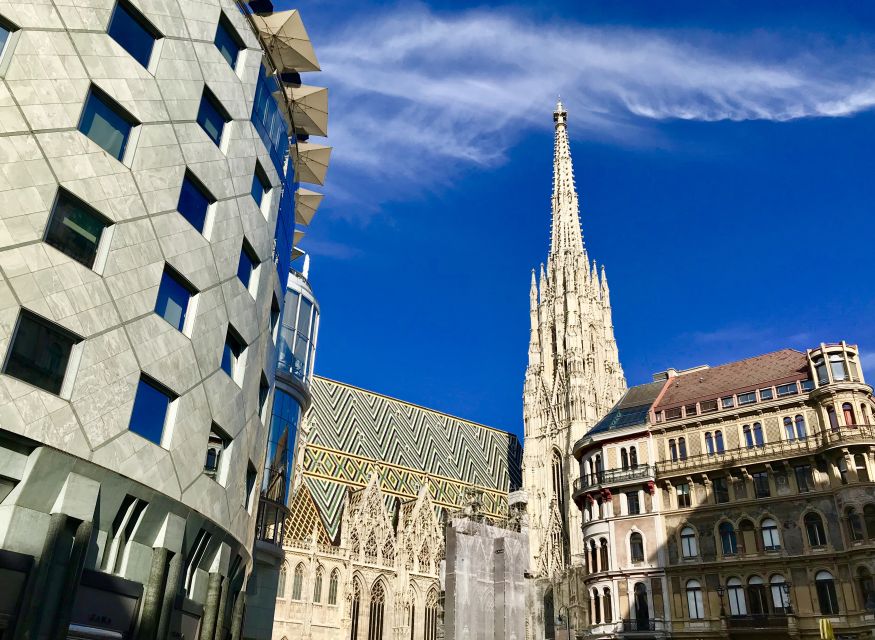
- Graben and the final view of St. Stephen’s Cathedral
- What the 150-minute pace feels like
- Is $74 a fair price?
- Who should book this Vienna walking tour?
- Should you book it?
- FAQ
- How long is the Vienna City Center Guided Walking Tour?
- What language is the tour conducted in?
- Where does the walking tour meet?
- How large is the tour group?
- Are entrance fees included?
- Is the tour suitable for people with mobility impairments?
Key points to know before you book
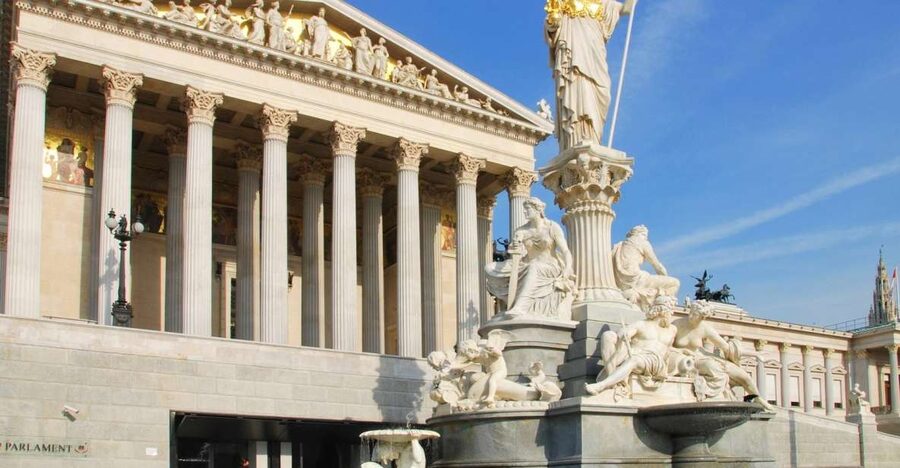
- The route covers Vienna’s imperial core: You walk from Maria-Theresien-Platz past the Ring Road, Volksgarten, Heroes Square, Hofburg Palace, Burggarten, and central churches.
- The tour connects history with famous personalities: You hear about the Habsburg rulers, Napoleon’s marriage, the Lipizzaner horses, and Beethoven’s first conducting of the Eroica symphony.
- Headsets make a real difference: You can hear the English-speaking guide without crowding around or missing details in large squares.
- It is designed for first-time visitors: The route gives you a clear mental map of the center, ending near St. Stephen’s Cathedral and the shopping street Graben.
- The pace is manageable but not idle: Two and a half hours covers a great deal, so some explanations may feel brisk.
- Plan for the weather: The tour operates in rain, cold, and heat. Comfortable shoes, suitable clothing, and water matter.
Starting between Vienna’s two great museums
The meeting point is easy to recognize. Find the statue of Empress Maria Theresa on Maria-Theresien-Platz, between the Kunsthistorisches Museum and the Naturhistorisches Museum. Meet on the side toward which the statue faces, and look for a green Vienna City Walking Tour sign.
This is a useful starting place because you begin among some of Vienna’s grandest public buildings rather than in an anonymous street. It also gives you a first look at the scale of the Habsburg city. If you arrive early, the two museums provide clear landmarks for finding your bearings.
The nearest metro station is Volkstheater on line U3. Tram stops at Burgring serve lines D, 1, 2, and 71. You should arrive ready to walk, with large luggage left elsewhere. Bags and suitcases are not allowed on the tour.
The supplied headsets are one of the more practical touches. In a group, you do not need to stand shoulder to shoulder with the guide to hear. That matters in open plazas, beside roads, and near popular sights where the city itself supplies plenty of noise.
More Walking Tours in Vienna
- Vienna: Guided Walking Tour of City Center Highlights
★ 4.7 · 4,989 reviews - Vienna: Vienna Central Cemetery Guided Walking Tour
★ 4.8 · 3,307 reviews - Vienna: Guided Walking Tour of City Highlights & Hidden Gems
★ 4.9 · 2,180 reviews
Walking the Ring Road and Volksgarten
The route follows part of Vienna’s Ring Road, the grand boulevard that circles the historic center. The Ring is more than a pleasant avenue. It helps explain how Vienna presents its imperial past through monumental buildings, formal gardens, and broad public spaces.
From there, you enter the Volksgarten, one of the loveliest pauses on the route. Its rose garden gives the walk a welcome change of pace. Instead of moving from one stone façade to another, you get flowers, paths, and open air before continuing toward Heroes Square.
I like this combination because it keeps the tour from becoming a parade of buildings. The garden also gives you a quieter setting for the guide’s stories. On a hot day, shaded stops are especially welcome. Alex was praised for choosing shade when possible and allowing time for water refills during a warm walk.
Do not expect a long garden visit. This is still a city overview, and the route has many stops ahead. You will see the Volksgarten as part of a larger walk rather than spend time examining every corner.
Heroes Square and the Hofburg’s imperial story
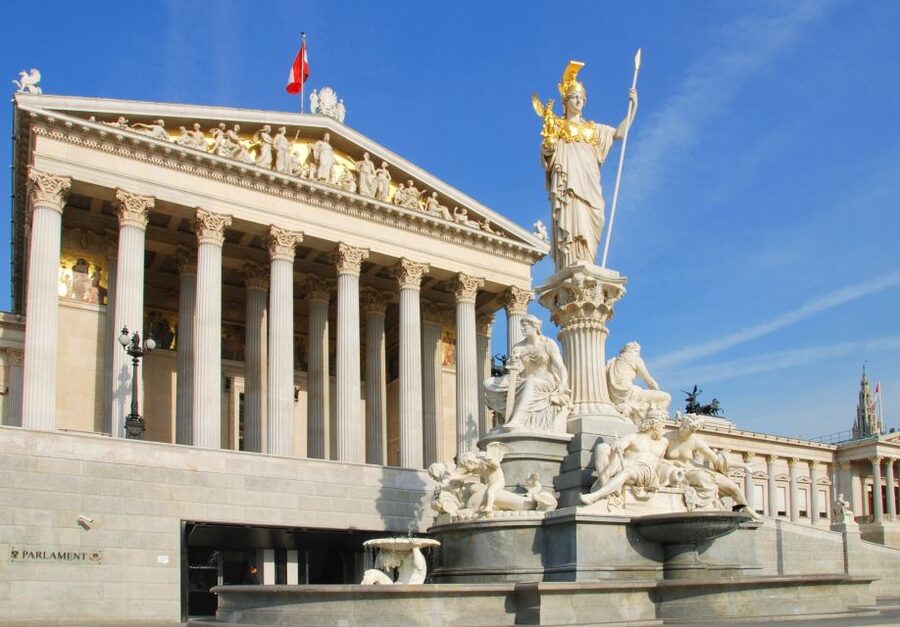
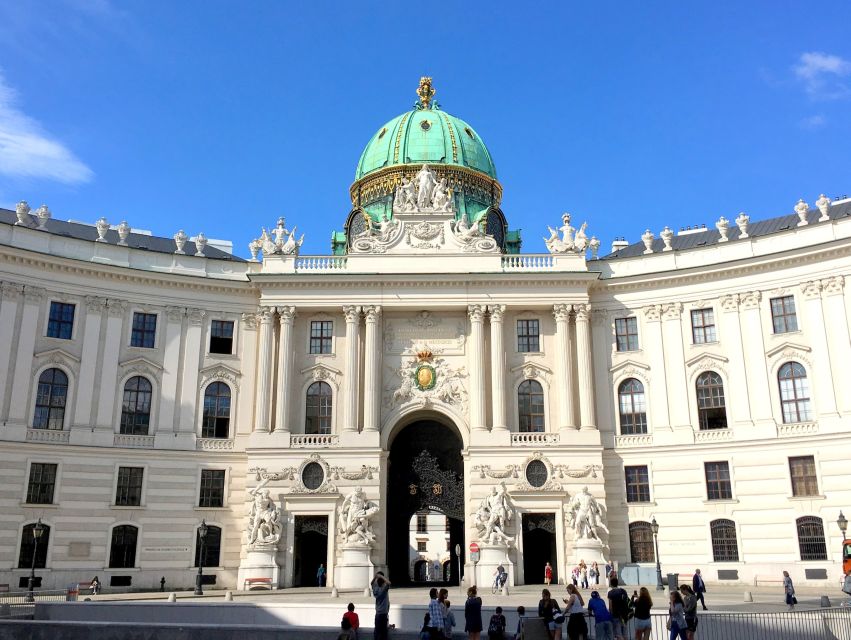
Heroes Square leads you into the heart of Vienna’s imperial setting. The Hofburg Palace occupies a central place in the city and was the seat of Habsburg rule. Here, the guide can connect the buildings around you with the people and political decisions that shaped Austria.
The value of this stop is the context. A palace can look like an impressive collection of wings and courtyards if you only photograph it. With a guide, the Hofburg becomes a place tied to emperors, court life, ceremony, and the long reach of the Habsburg family.
The tour focuses on the exterior experience. Entrance fees are not included, so you do not go inside the palace collections or other paid attractions as part of this walk. That keeps the group moving and allows you to see more of central Vienna, but you should set aside separate time if you want palace interiors, museums, or exhibitions.
The guide’s historical approach is one of the tour’s strongest features. Dace has been praised for using humor while explaining complex subjects, and another guide, also named Dace in the feedback, was appreciated for answering questions and offering a local view of Austria’s past. Names and spellings may vary by guide, but the common thread is clear storytelling rather than a dry list of dates.
Burggarten, the private garden, and imperial leisure
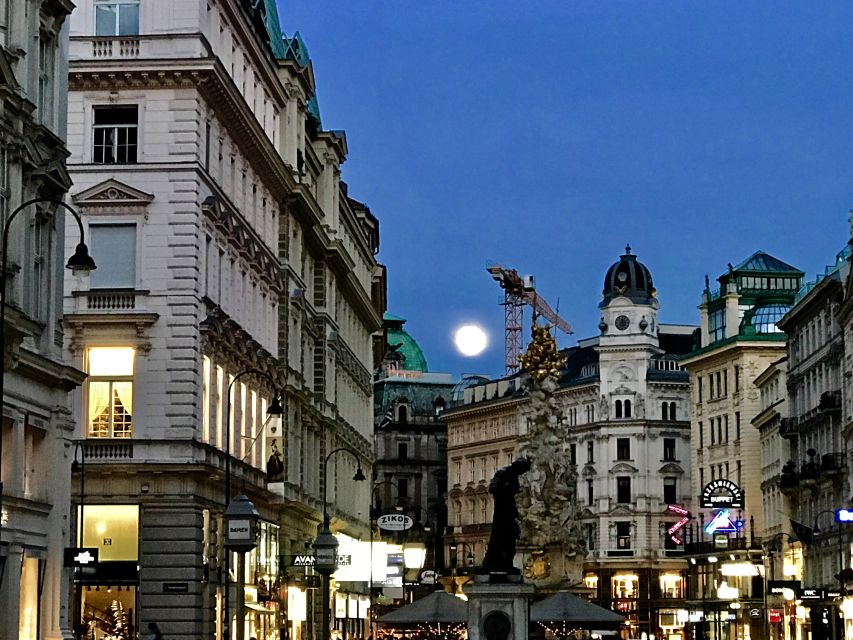
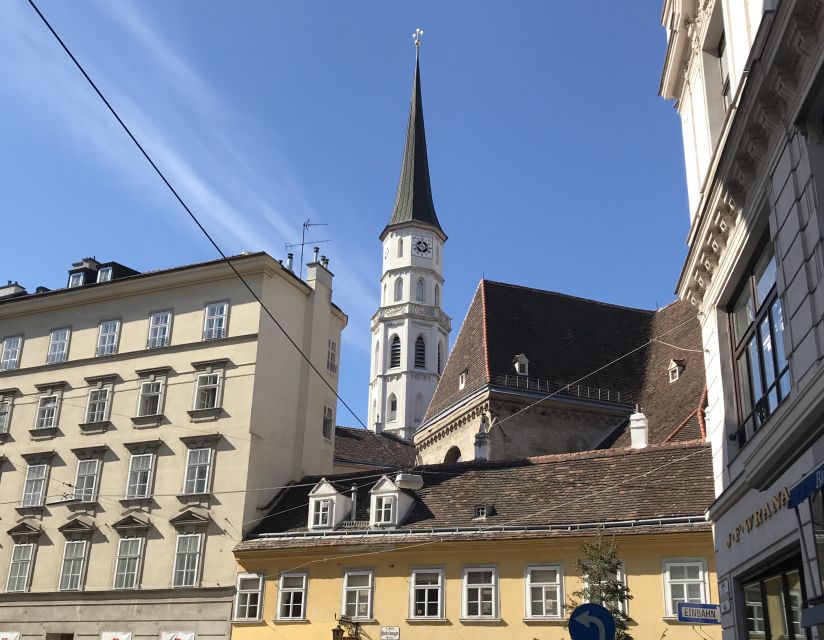
Next comes Burggarten, the former private garden of the emperor. You also see the old butterfly house, a graceful reminder of the court’s more leisurely side.
This part of the walk helps balance the formal power of the Hofburg. The palace tells you about rule and ceremony; the garden hints at how the imperial household used its private spaces. It is a small but useful shift in tone.
You will not be touring the butterfly house as an indoor attraction on this experience. The appeal is seeing it in context, along with the garden and nearby palace buildings. If you are interested in visiting paid sites, ask your guide for suggestions, then return on your own later.
A well-run walking tour should help you decide what deserves more of your time. This route does that. You get a first look at several places, then you can choose one or two for a longer visit rather than trying to see everything at once.
A completely different kind of day:
- Vienna: Vivaldi’s Four Seasons Concert in Karlskirche
★ 4.7 · 14,951 reviews - Vienna: Spanish Riding School Training
★ 3.9 · 9,281 reviews - Vienna: Schönbrunn Palace & Gardens Skip-the-Line Tour
★ 4.7 · 7,739 reviews - Vienna: Light of Creation Votive Church Immersive Light Show
★ 4.8 · 6,779 reviews
Augustinerkirche and a royal wedding connection
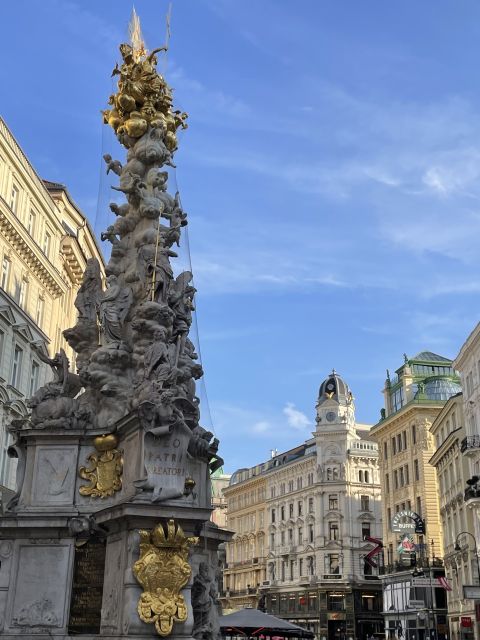
The Augustinerkirche brings another layer of court history. Many imperial weddings took place here, including the marriage of Napoleon to Princess Marie Louise.
That detail gives the church a strong place in the route. It is not presented only as another old building. Its importance comes from the people and ceremonies connected to it, and from its place in the public life of the imperial court.
The stop is primarily a guided exterior and historical visit, not a formal church tour with a separate entrance included. As with the Hofburg, you should not assume that the tour provides time for a full interior visit or worship access.
I find this kind of stop useful for first-time visitors because it shows how closely religion, monarchy, and family politics were linked in Vienna. You get a short, memorable story that helps the city’s grand architecture feel more human.
The Spanish Riding School and Lipizzaner horses
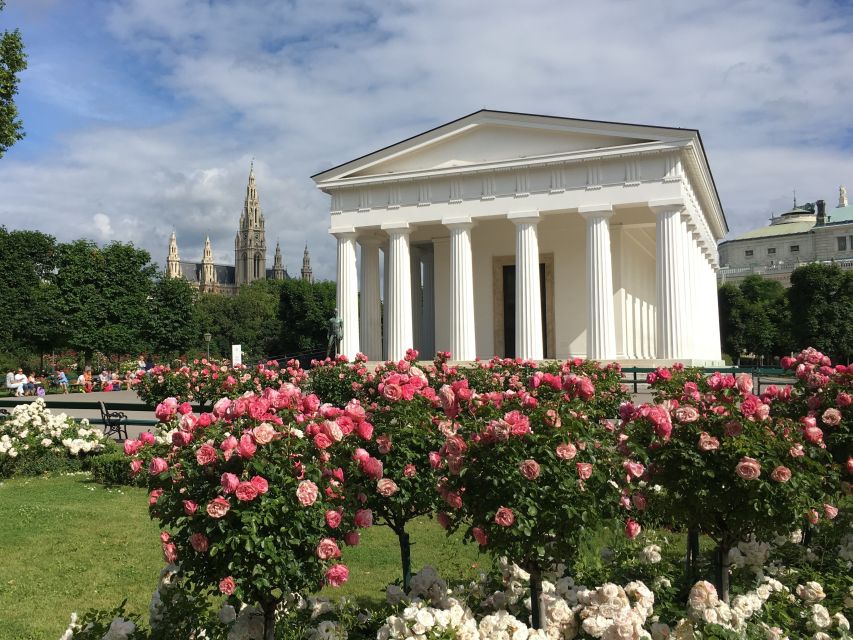
The Spanish Riding School is one of Vienna’s most famous names, and the walking tour introduces you to its home in the Hofburg complex. This is where the Lipizzaner horses are associated with the city’s long equestrian tradition.
You should be clear about what is included. The tour does not include an entrance ticket or a performance. You see the setting and hear about the school, but a morning exercise, performance, or interior visit would require a separate booking.
That limitation is not necessarily a problem. A guided city walk has to choose between depth and range. Here, you receive the location and background, then you can decide if the horses deserve a separate visit during your stay.
For many first-time visitors, simply knowing where the Spanish Riding School is located is useful. The Hofburg complex can feel confusing when you first arrive, and this tour places the school within the larger imperial center.
Beethoven, Lobkowitz Palace, and the Eroica
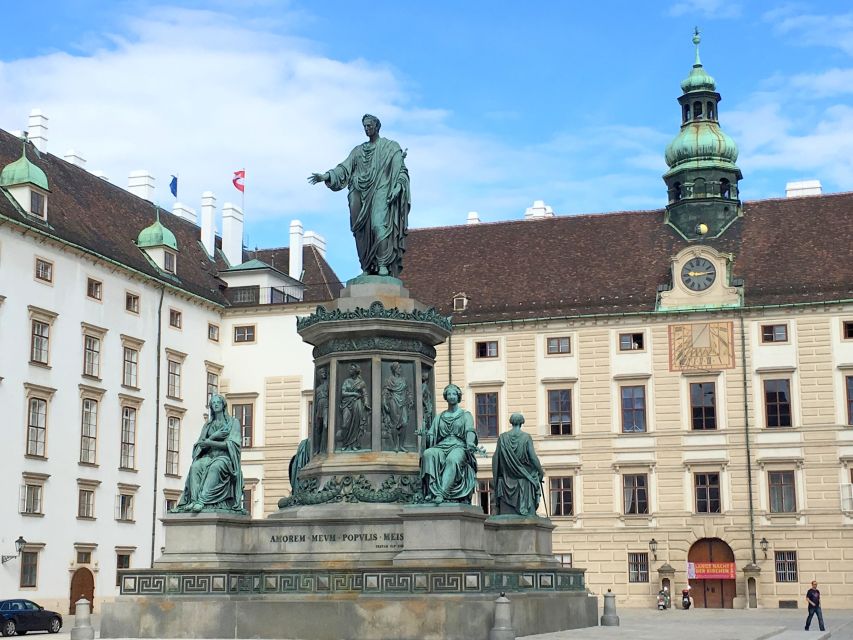
Music history gets a memorable stop at Lobkowitz Palace. This is where Beethoven first conducted his Eroica symphony.
That story gives the route a welcome change from Habsburg politics. Vienna was not only a capital of empire. It was also a working city for composers, performers, patrons, and artists. Lobkowitz Palace helps you connect the grand architecture with the musicians who used these spaces.
You will hear about the palace from the outside rather than attend a concert or enter as part of the tour. Still, it is the kind of detail you might miss if you walked the center alone. The stop also gives classical music fans a clear place to mark for later exploration.
I like the range here. In one afternoon, you move from emperors and royal marriages to Lipizzaner horses and Beethoven. The guide’s job is to keep those subjects connected, and past feedback points to humor, personal anecdotes, and answers to questions as important parts of the experience.
Vienna’s coffee houses and the Hotel Sacher
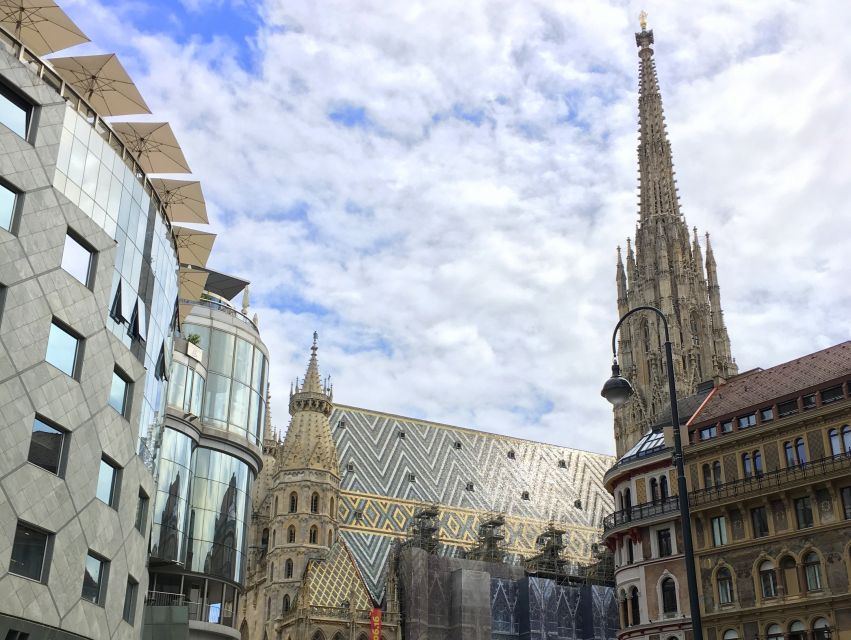
The tour then shows you Vienna’s sweeter side. You pass elegant coffee houses, including Hotel Sacher, famous for Sacher Torte.
This is not a tasting tour, and the price does not include cake or coffee. That is worth remembering if you arrive expecting a food stop. The benefit is knowing where the classic café tradition fits into the city and where you can return for your own treat.
Hotel Sacher is a particularly useful landmark because it combines food, history, and location. You can make a note of it during the walk, then choose another time to stop when you are not trying to keep up with a group.
The central coffee houses also give you a practical sense of Vienna’s rhythm. They are not just photo stops. They are places where you can slow down after the tour, review your notes, and decide which parts of the center to explore next.
Graben and the final view of St. Stephen’s Cathedral
The walk continues along Graben, Vienna’s elegant central shopping street. This section shows you the city in a more modern, everyday setting, with shops and pedestrians replacing palace courtyards and formal gardens.
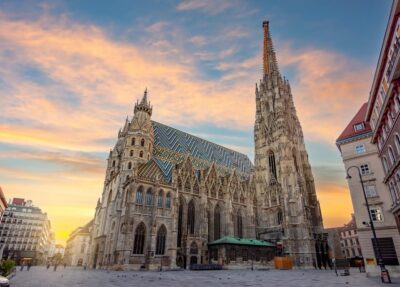
The tour ends beside St. Stephen’s Cathedral, one of the most useful places to finish. The cathedral is easy to recognize, central to the old town, and surrounded by streets you can continue exploring on your own.
Ending here makes the tour practical as well as historical. You are positioned near major sights, cafés, shops, and transport links. If you want to visit the cathedral, you can do so after the guided walk, subject to its opening arrangements and any applicable entrance charges.
The final stretch also helps you connect the city’s major zones. You begin among the two museums and finish in the heart of the inner city. For a first afternoon in Vienna, that is a strong orientation.
What the 150-minute pace feels like
Two and a half hours is a sensible length for a city-center introduction. It is long enough to cover the major imperial sights without taking up an entire day, and short enough to leave room for a museum, meal, or concert afterward.
The route is not slow. You will make frequent stops, listen to explanations, and continue walking. One person found that the amount of history sometimes felt rushed, while others felt the timing was just right. Both reactions make sense: Vienna has far more material than any 150-minute tour can cover.
I would book this early in your stay. The tour can help you identify where you want to return, and the guide’s café and restaurant suggestions may shape the rest of your visit. A solo visitor may also appreciate having an activity that provides an immediate sense of direction.
The tour operates in all weather. Winter cold can feel sharper between tall buildings, and summer sun can make the pavement tiring. Wear comfortable shoes, carry water, and dress for the forecast. The route is not suitable for people with mobility impairments, and children must be accompanied by an adult.
Is $74 a fair price?
At $74 per person, this is not the cheapest way to walk around Vienna. You are paying for a licensed local English-speaking guide, a small group capped at 15, and headsets that make the commentary easier to hear.
The value depends on your plans. If you already know Vienna well and prefer to read signs or explore alone, you may find the price high for an exterior-focused walk. You will not receive entrance fees, food, or performances.
For a first visit, the price is easier to justify. In 150 minutes, you get a structured route through the city center, stories that link otherwise separate sights, and practical suggestions for the rest of your stay. Paying for orientation can save time, especially when Vienna’s imperial center feels grand but confusing at first.
The small group matters too. A maximum of 15 people is more personal than a large city tour, and the audio equipment reduces the usual problem of trying to hear in a crowd. The free cancellation option up to 24 hours before the start, along with the choice to reserve and pay later, adds useful flexibility when your schedule is still moving.
Who should book this Vienna walking tour?
I would recommend it most strongly to:
- First-time visitors who want a clear introduction to the center
- Solo visitors who want an easy way to get oriented
- History and architecture fans who enjoy stories tied to buildings
- Classical music fans interested in Beethoven and Lobkowitz Palace
- Visitors with limited time who want to see many landmarks in one outing
- People who value local café and restaurant suggestions
I would be more cautious if you have limited mobility, dislike walking in poor weather, or want substantial time inside museums and palaces. This is a sightseeing walk, not an indoor attraction package.
The tour also suits families with older children who can manage a moderate amount of walking. Unaccompanied minors are not allowed, and every child must have an adult with them.
Should you book it?
Book this tour if you want Vienna’s center to make sense before you explore it in detail. The route covers the right first-visit landmarks, the guides bring warmth and humor to the imperial stories, and the headsets keep the experience easy to follow.
Skip it if you prefer a self-guided walk or already have a firm plan for the Hofburg, Spanish Riding School, museums, and cathedral. For most first-time visitors, though, the combination of major sights, Beethoven, coffee-house culture, and useful local advice makes $74 reasonable, provided you understand that entrances are extra.
FAQ
How long is the Vienna City Center Guided Walking Tour?
The tour lasts 150 minutes, or two and a half hours.
What language is the tour conducted in?
The live tour guide provides the tour in English.
Where does the walking tour meet?
Meet by the statue of Empress Maria Theresa on Maria-Theresien-Platz. The statue is between the Kunsthistorisches Museum and the Naturhistorisches Museum, on the side the statue faces. The guide will hold a green Vienna City Walking Tour sign.
How large is the tour group?
The tour is limited to no more than 15 people.
Are entrance fees included?
No. Entrance fees are not included, so visits inside attractions such as the Hofburg, Spanish Riding School, or other paid sites require separate arrangements.
Is the tour suitable for people with mobility impairments?
No. The tour involves a moderate amount of walking and is not suitable for people with mobility impairments. It operates in all weather, so you should dress appropriately.
Just added in Vienna
- Vienna: Austrian Wine Tasting Experience★ 4.2 · 2 reviews
- World War II History Vienna Old Town Private Walking Tour★ 4.8 · 9 reviews
- Vienna_ Meet Beethoven Life Private Guided Walking Tour★ 5.0 · 1 review
- Vienna: Wine Tasting Tour★ 4.8 · 61 reviews
- Vienna: Wine Tasting E-Bike Tour★ 4.9 · 46 reviews
- Vienna: Wine Tasting at Schönbrunn Palace★ 4.3 · 71 reviews
- Vienna: Winery and Wine Tasting Tour with a Wine Expert★ 5.0 · 5 reviews
- Vienna: Concert by the Vienna Baroque Orchestra★ 4.6 · 56 reviews
City Tours, compared.
Guided Walking Tour of City Center Highlights
Read our review →
Guided Walking Tour of City Highlights & Hidden Gems
Read our review →
City Sightseeing Tour in an Electro Vintage Car
Read our review →
Skip-the-Line Schonbrunn Palace Guided Tour and Vienna Historical City Tour
Read our review →

Browse the lists this tour appears in