
Reviewed · CYCLING TOURS
Vienna by Bike 3-Hour All-In-One City Bike Tour in English
Vienna opens up on two wheels. This three-hour ride links the city’s grand imperial boulevards with lively, oddball sights that are too far apart for a short walk. I especially like the easy pace and the chance to cover the Ringstrasse, Prater, and Danube canal in one outing. The main consideration is that the route focuses on the city around the historic center, so it is not a substitute for a walking tour inside Vienna’s old town.
I also like the guides’ personal touch. Marko, Lisa, Jan, Horst, Robert, Karl, and others have been praised for mixing history with humor, local tips, and careful attention at crossings. The only regular complaint is that a three-hour ride can feel a little light on comfort stops, and larger groups may make questions harder to ask.
In This Review
- Key points to know before you ride
- Why a bicycle is a smart way to see Vienna
- Starting at Franz Josefs Kai near Schottenring
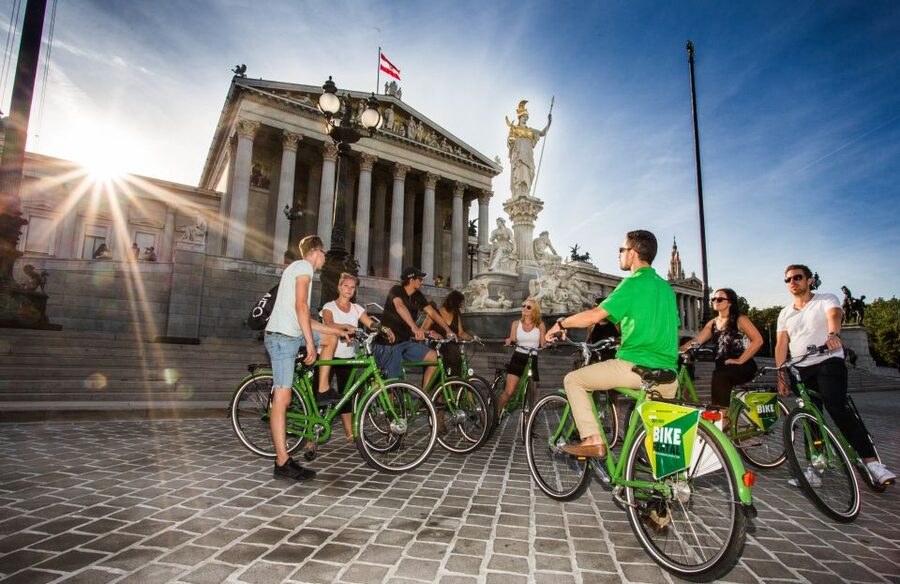
- Ringstrasse: Vienna’s imperial showpiece
- Heroes’ Square and the darker side of Vienna’s past
- Karlskirche and Karlsplatz
- Hundertwasserhaus: Vienna gets wonderfully strange
- Prater Park and the giant Ferris wheel
- Along the Danube canal and back toward the city
- The guide is the heart of the experience
- Pace, safety, weather, and comfort
- Is $55 a fair price?
- Who should book this Vienna bike tour?
- Should you book it?
- FAQ
- How long is the Vienna bike tour?
- What language is the tour conducted in?
- Where does the tour meet?
- What sights does the tour include?
- Are bicycles provided?
- What should I wear?
- What happens if it rains?
- Can I cancel the booking?
Key points to know before you ride
- The Ringstrasse is the backbone: You will see the Opera House, Rathaus, Parliament, Vienna University, the Hofburg, and Heroes’ Square in one broad sweep.
- The route covers serious ground: Past riders report covering more than 10 kilometers, mostly on easy cycle paths and well-surfaced streets.
- The tour mixes grand and quirky Vienna: Imperial buildings lead to the colorful Hundertwasserhaus, the Danube canal, and Prater’s giant Ferris wheel.
- Guides make the difference: Marko, Jan, Horst, Lisa, and Robert are praised for clear history, humor, and safe group handling.
- Rain does not automatically cancel the ride: The tour runs in all weather, with rain ponchos supplied when needed.
- It is best early in your stay: You get a useful map of the city and ideas for the next two days.
Why a bicycle is a smart way to see Vienna
Vienna is walkable, but its famous sights spread across a wide circle. The Ringstrasse alone takes you past a parade of major buildings, while Prater and Hundertwasserhaus sit well beyond the usual palace-and-cathedral circuit.
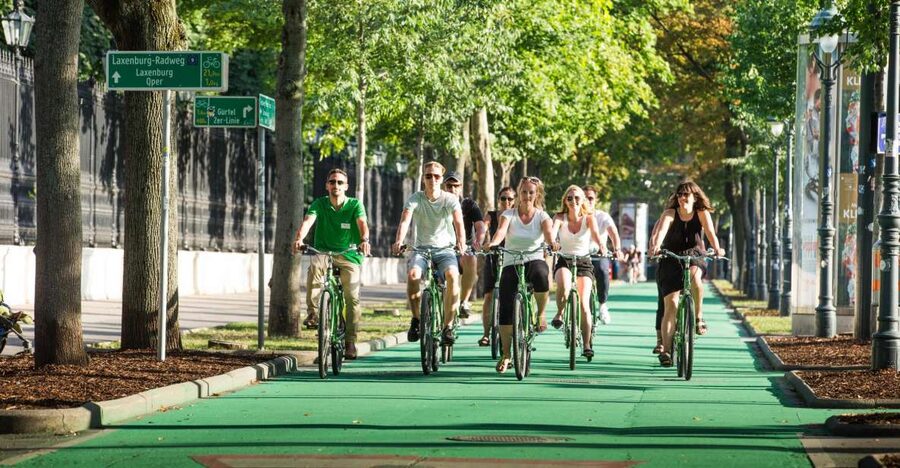
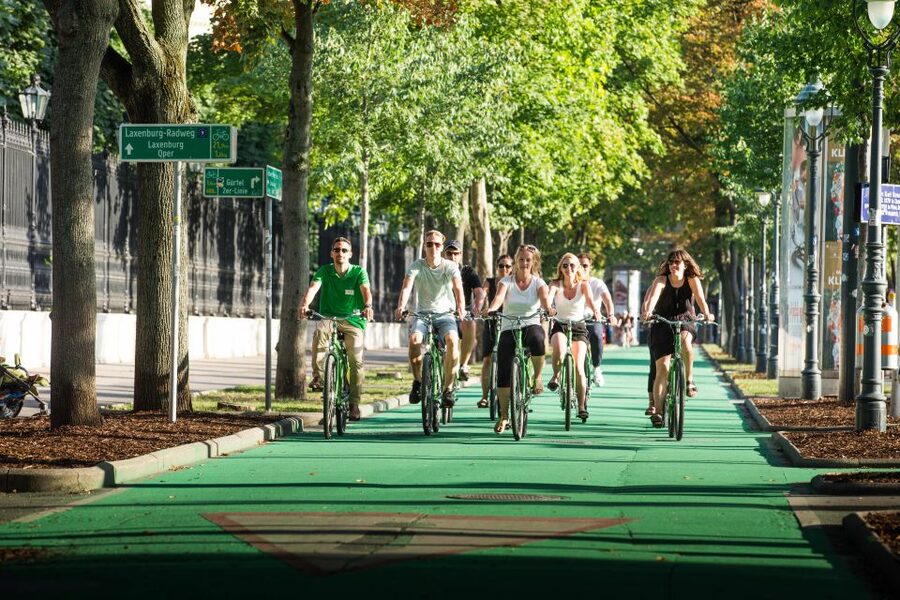
A bicycle solves that problem without turning sightseeing into a bus ride. You keep moving, feel the city’s scale, and stop close to the buildings instead of watching them through glass. You also get a bit of exercise without facing a demanding route. The ride is largely flat, and the pace is described as safe and leisurely.
That balance matters. Some city bike tours stop every few minutes, leaving you with more standing than cycling. This one gives you real time in the saddle, with regular pauses for pictures and explanations. If you want a workout, you will get one, but the point is sightseeing rather than speed.
The bikes are modern city models described as comfortable and easy to handle. Helmets are available, and the bikes have earned repeated praise for good condition and comfortable seats. An e-bike option has also been available for riders who need extra help, though you should confirm that option when booking.
More Bike Tours in Vienna
- Classic Vienna: 3-Hour Guided Bike Tour
★ 4.7 · 1,846 reviews - Wachau Valley Wine Tasting Bike Tour from Vienna
★ 5.0 · 829 reviews - Vienna City Bike Tour
★ 4.5 · 599 reviews
Starting at Franz Josefs Kai near Schottenring
The meeting point is Franz Josefs Kai, 45, in Vienna’s first district. Schottenring station, served by the U2 and U4 subway lines, is the nearest useful landmark.
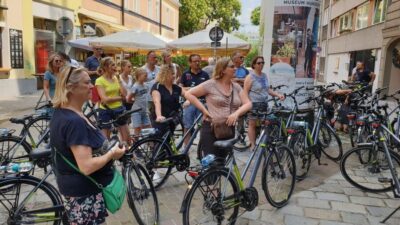
Arrive early enough to find the meeting point, choose a bike, and get settled. One past group began a few minutes late while waiting for late arrivals, so arriving 15 minutes ahead is sensible. That small delay is not a dealbreaker, but it is worth knowing if you have a tight afternoon plan.
The tour is in English, with an English and German-speaking guide listed for the experience. The live tour language is English. If English is your second language, pay attention during the first history talks, since one rider found a fast delivery and unusual pronunciation harder to follow. The guides generally receive strong marks for clear explanations, but listening while riding in city traffic can take effort.
Ringstrasse: Vienna’s imperial showpiece
The first major stretch takes you along the Ringstrasse, the broad boulevard that encircles Vienna’s historic core. This is where the tour makes its case. You get a quick visual lesson in how the Habsburg capital presented its power.
The route passes the Neo-Renaissance Vienna Opera House, whose grand façade fits the boulevard’s theatrical mood. You also see the Gothic Rathaus, with its tall central tower and elaborate façade. Nearby, the Parliament buildings recall the political world of the Austro-Hungarian Empire.
Vienna University and the Imperial Palace add more pieces to the same picture. Rather than treating each building as an isolated photo stop, a good guide explains how the Ringstrasse was shaped by the ambitions of the imperial city. Jan has been praised for connecting architecture with major political events, while Robert is known for giving enough detail without overwhelming the group.
This part is especially useful on your first day. You begin to understand the city’s layout, the role of the Ring, and the relationship between the palace, government buildings, and public institutions. The stops also give you time to take photos without rushing back to a moving group.
Heroes’ Square and the darker side of Vienna’s past
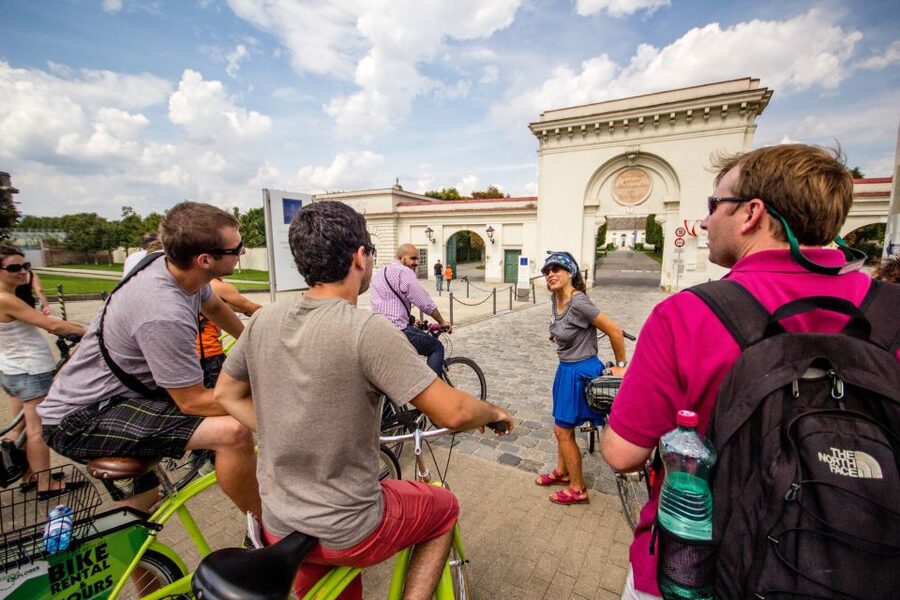
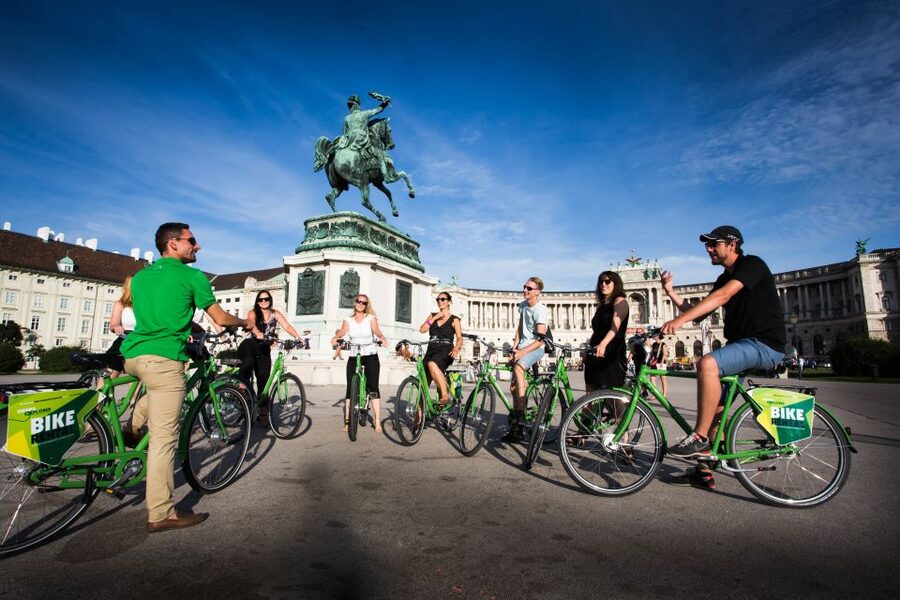
The ride continues to Heroes’ Square, or Heldenplatz, a grand open space beside the Hofburg. The square is strongly tied to Austria’s imperial past, but it also carries a difficult 20th-century memory.
The tour addresses Hitler’s 1938 Anschluss speech there, when Nazi Germany announced the annexation of Austria. This is an important inclusion because Vienna can otherwise seem like a city devoted only to imperial elegance, music, and coffeehouses.
Some guides bring this period into a wider discussion of Austrian politics, war, occupation, and family experience. Robert, for example, has been praised for handling political and wartime subjects with care, including personal family history. The quality of this stop depends partly on your guide, but the subject gives the route more weight than a simple architecture circuit.
Do not expect a long museum visit here. This is an outdoor stop within a moving bike tour. If you want a full study of Austria’s Nazi period, you will need separate time at museums and memorial sites.
A completely different kind of day:
- Vienna: Vivaldi’s Four Seasons Concert in Karlskirche
★ 4.7 · 14,951 reviews - Vienna: Spanish Riding School Training
★ 3.9 · 9,281 reviews - Vienna: Schönbrunn Palace & Gardens Skip-the-Line Tour
★ 4.7 · 7,739 reviews - Vienna: Light of Creation Votive Church Immersive Light Show
★ 4.8 · 6,779 reviews
Karlskirche and Karlsplatz
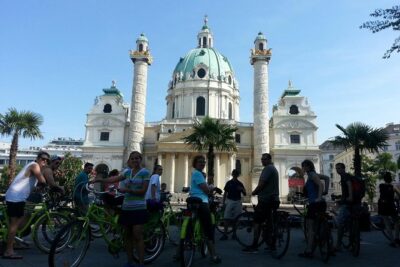
Karlskirche, facing Karlsplatz, gives the ride another striking architectural pause. Its columns and domes create a very different look from the Gothic Rathaus and Neo-Renaissance Opera House.
This contrast is one of the pleasures of the route. Vienna’s public buildings do not all speak in the same architectural language. A guide can help you notice the change from imperial display to religious monument, then set it against the modern city moving around the square.
The tour includes stops at important sights rather than interior visits at every building. That keeps the ride moving, but it also means you should not book this experience expecting detailed access inside Karlskirche or the Opera House. Treat these moments as orientation and photo stops, then return later if a particular building deserves more time.
Hundertwasserhaus: Vienna gets wonderfully strange
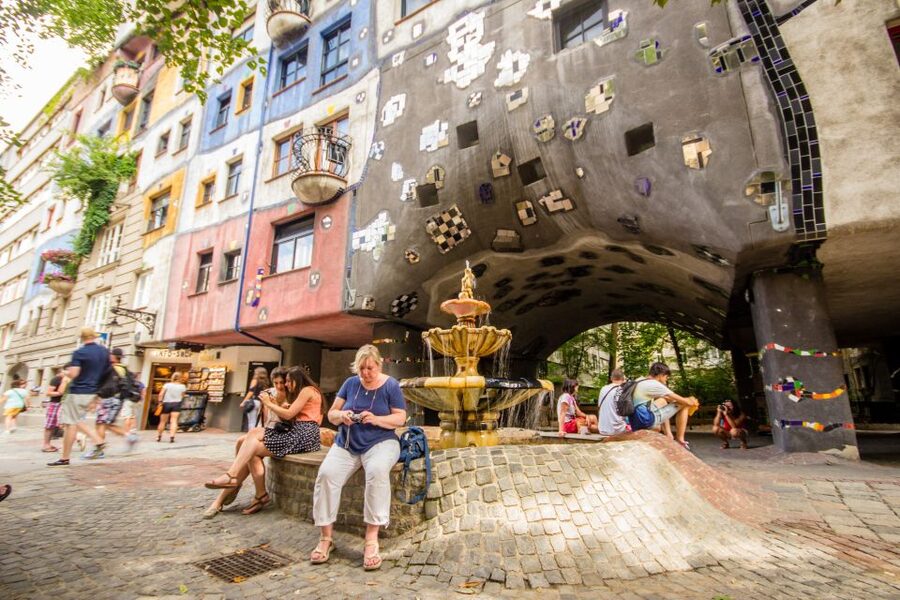
After the imperial center, the route heads toward Hundertwasserhaus, one of Vienna’s most unusual apartment complexes. Its uneven lines, bright colors, irregular windows, and playful surfaces make a sharp break from the formal Ringstrasse.
This is the point where the tour shows you a less polished, more eccentric side of the city. You move from monumental buildings designed to project authority to architecture that seems determined to ignore straight lines.
The stop is valuable because it broadens your idea of Vienna. The city is not only palaces, statues, and concert halls. It also has room for experimental design and public spaces with a sense of humor. Bring a camera, since the building rewards close attention to small details.
The route does not present Hundertwasserhaus as a hidden secret. It is a well-known sight, and the surrounding area may feel less ceremonial than the Ring. That is part of its appeal. You get a change of mood and a glimpse of a Vienna that many first-time walking routes skip.
Prater Park and the giant Ferris wheel
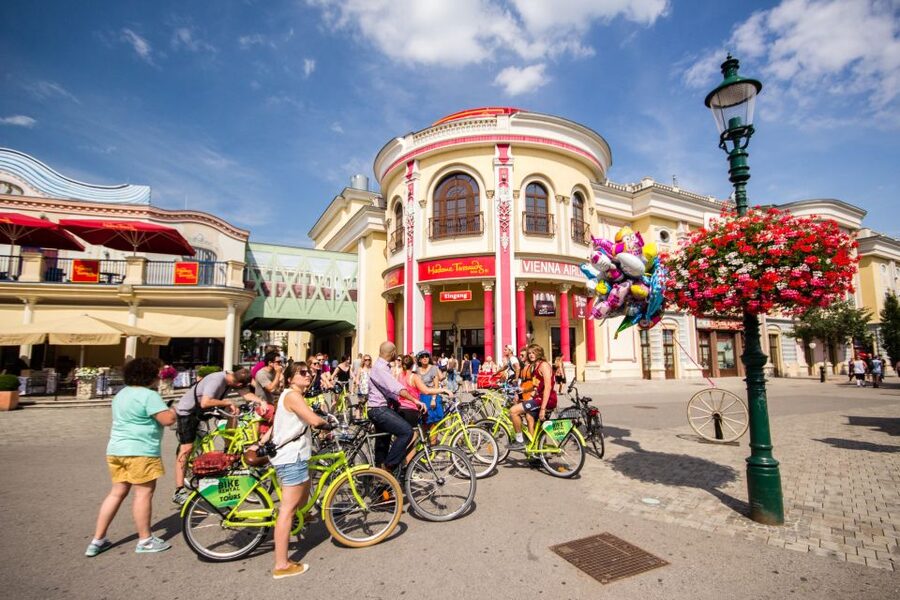
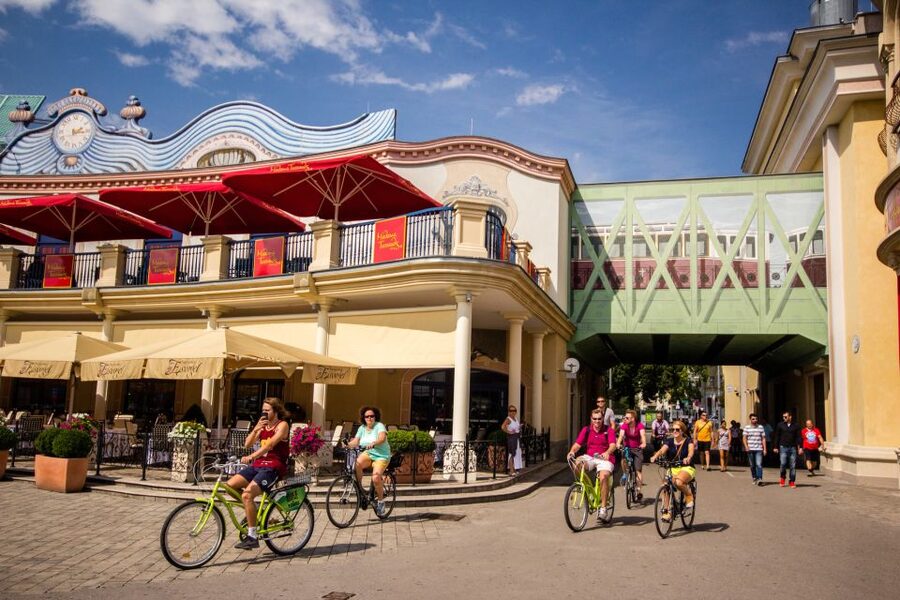
The ride to Prater adds distance and variety. Prater is known for its giant Ferris wheel, one of Vienna’s most recognizable symbols. Seeing it from the bicycle gives the tour a lively finish after the formal architecture of the center.
A guide may also use Prater to share smaller local details. One particularly memorable explanation concerns why some parts of the park have trees but no bushes. Details like this give the ride a local texture that a standard list of dates and building names cannot provide.
The Ferris wheel itself is a separate attraction, not simply part of the bike tour. You stop to admire it, take pictures, and hear about the area, then continue riding. If you want to ride the wheel, plan that for another time or check how it fits your schedule.
For families, Prater can be a strong part of the route. A 12-year-old on one outing kept trying to do wheelies, and the guide handled the situation patiently. That does not mean the ride is designed as a children’s activity, but it suggests that a family with confident young cyclists can enjoy it.
Along the Danube canal and back toward the city
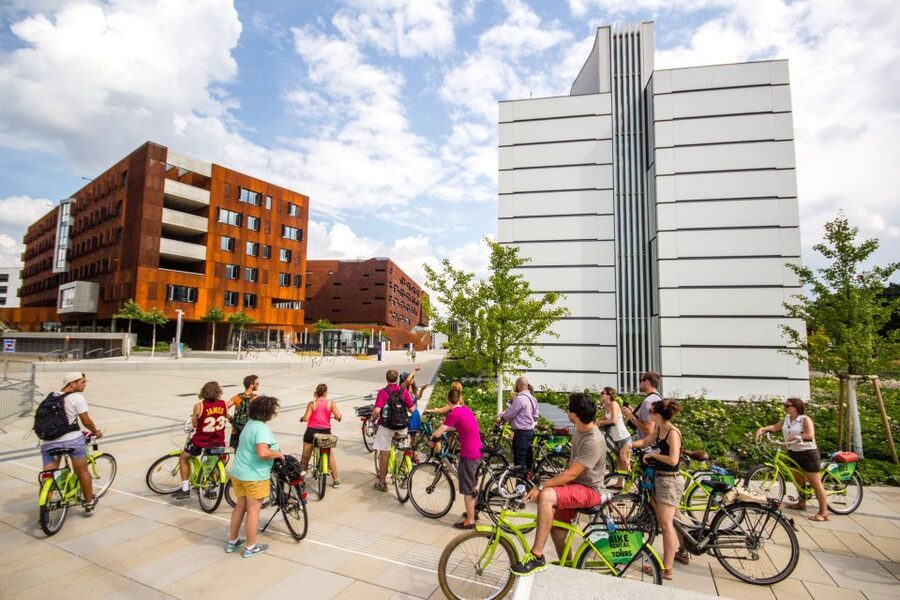
The return leg follows the banks of a sidearm of the Danube, identified in the route as the Danube canal. This section changes the view again. Instead of monumental façades and formal squares, you get water, open air, and a more everyday side of Vienna.
The canal is also a practical part of the route. It helps connect the outer sights with the starting area without simply retracing every street. Several riders have especially enjoyed this section, along with the Museum Quarter area included on some guide routes.
Cycling beside the water can feel calmer than riding through the central boulevards, but you still need to follow the guide and watch other path users. The tour uses safe, well-surfaced routes, yet this remains a city ride, not a traffic-free park excursion.
The guide is the heart of the experience
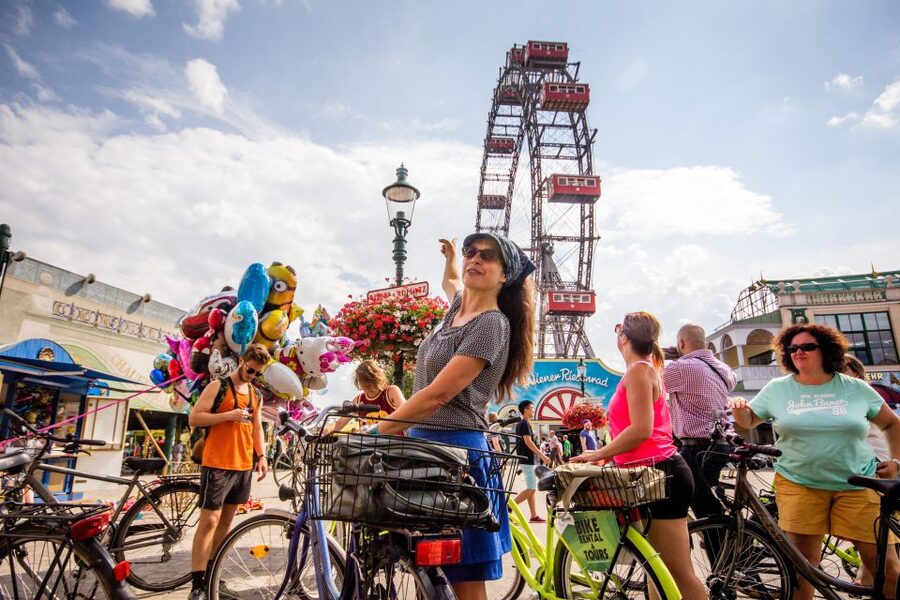
The bikes get you from place to place, but the guide determines how much you take away. The strongest guides combine a clear route with stories that explain why a place matters.
Marko is praised for answering questions ranging from Austrian politics to the meaning of numbers on trees. Jan is often described as both entertaining and excellent at reducing complicated history to clear stories. Horst brings humor and a local’s affection for Vienna, while Lisa is praised for energy, warmth, and a strong knowledge of the city.
Other guides, including Robert and Karl, receive praise for patient answers and thoughtful discussions of difficult subjects. That range suggests a well-established operation, but each departure will have its own personality. If you prefer a quiet, tightly scripted tour, a lively guide may feel more informal than expected.
Group size can affect the experience. One departure had 14 people, and another rider found it harder to ask questions when a few participants took up much of the guide’s attention. On the other hand, introductions at the start can help the group connect and make the ride feel friendly rather than anonymous.
Pace, safety, weather, and comfort
The route is mostly flat and described as suitable for easy cycling. Guides keep an eye on the oldest and youngest riders, manage intersections, and set a speed that allows the group to stay together. You should still be comfortable riding a bicycle in an urban setting.
Wear clothes that allow easy movement. The instructions ask for comfortable clothing, and that is enough for most riders. You do not need to dress for a mountain bike trip, but avoid anything that restricts your legs or makes a three-hour ride awkward.
The tour operates in all weather. Rain ponchos are provided when conditions turn wet, and one group completed a rainy outing looking rather like yellow bananas but stayed reasonably dry. Still, poor weather can affect visibility, comfort, and the length of stops. One sudden downpour caused a tour to end halfway, with a free bike rental offered for the next day as compensation.
That flexibility is helpful, but I would avoid placing this tour on the same day as a nonrefundable evening concert or dinner. Allow some breathing room after the ride.
Is $55 a fair price?
At $55 per person, the tour costs more than renting a bicycle and following a map. You are paying for a modern bike, a guide, route planning, safety management, and three hours of context.
The value is strongest if you have only two or three days in Vienna. You cover the Ringstrasse, central landmarks, Hundertwasserhaus, Prater, and the canal in one outing. Doing that independently would require more route planning and a good sense of city cycling.
It is less compelling if you already know Vienna well or want extended interior visits. The tour moves from sight to sight, so you will not have time to study every façade or enter each major building. One rider considered it overpriced, even while praising the guide and the route.
Free cancellation up to 24 hours before departure and the option to reserve now and pay later reduce the risk of booking around uncertain weather. Still, the real value comes from using the tour as an introduction, then returning to the places that catch your interest.
Who should book this Vienna bike tour?
I would choose this ride for first-time visitors who want a broad view quickly. It suits couples, families with capable young riders, and anyone who learns best by seeing a city while moving through it.
It is also a good match for history fans. The route links Habsburg architecture with the Anschluss, wartime memory, local politics, and modern urban design. You get more than a string of photo stops.
You may want a different activity if you dislike bicycles, need frequent comfort breaks, or want to spend most of your time inside the old town. The Ringstrasse is the main focus, and the route does not enter every central street or monument.
Should you book it?
Book it if you want to get your bearings fast and see Vienna’s grand center plus sights farther out. The comfortable bikes, mostly flat route, regular stops, and strong guide reputation make $55 reasonable for a first visit.
I would book an earlier departure during a short stay, keep the afternoon flexible, and note the sights you want to revisit on foot. Skip it only if weather is likely to be miserable, cycling in city traffic makes you uneasy, or your priority is detailed indoor sightseeing. For most active visitors, this is a smart and enjoyable way to meet Vienna.
FAQ
How long is the Vienna bike tour?
The tour lasts three hours.
What language is the tour conducted in?
The live tour is conducted in English. The guide is listed as English and German-speaking.
Where does the tour meet?
Meet at Franz Josefs Kai, 45, 1010 Vienna. The nearest subway station is Schottenring, served by lines U4 and U2.
What sights does the tour include?
The route includes the Ringstrasse, Vienna Opera House, Rathaus, Parliament, Vienna University, the Imperial Palace, Heroes’ Square, Hundertwasserhaus, Karlskirche, Prater Park, the giant Ferris wheel, and the Danube canal.
Are bicycles provided?
Yes. Comfortable, modern city bikes are included. Helmets have also been available on departures, and an e-bike option may be available for riders who need extra assistance.
What should I wear?
Wear comfortable clothing that allows you to pedal easily.
What happens if it rains?
The tour operates in all weather conditions, and rain ponchos are provided in wet weather. One tour was stopped by a sudden downpour, so severe conditions can still affect the outing.
Can I cancel the booking?
You can cancel up to 24 hours in advance for a full refund. A reserve-now, pay-later option is also available.
Just added in Vienna
- Vienna: Austrian Wine Tasting Experience★ 4.2 · 2 reviews
- World War II History Vienna Old Town Private Walking Tour★ 4.8 · 9 reviews
- Vienna_ Meet Beethoven Life Private Guided Walking Tour★ 5.0 · 1 review
- Vienna: Wine Tasting Tour★ 4.8 · 61 reviews
- Vienna: Wine Tasting E-Bike Tour★ 4.9 · 46 reviews
- Vienna: Wine Tasting at Schönbrunn Palace★ 4.3 · 71 reviews
- Vienna: Winery and Wine Tasting Tour with a Wine Expert★ 5.0 · 5 reviews
- Vienna: Concert by the Vienna Baroque Orchestra★ 4.6 · 56 reviews
Cycling Tours, compared.
Wachau Valley Wine Tasting Bike Tour from Vienna
Read our review →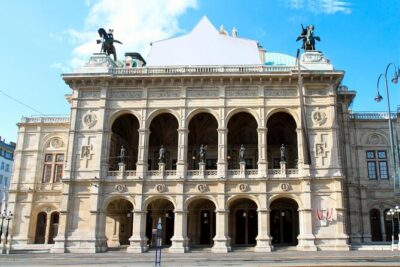
Grape Grazing: Wachau Valley Winery Biking Tour
Read our review →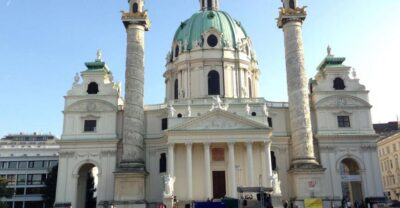
Browse the lists this tour appears in