Reviewed · VIENNA TOURS
The devilish Vienna
Vienna has a dark side. This two-hour evening walk turns the polished center into a stage for ghosts, witches, vampires, and grim legends, moving from Stephansplatz through old lanes, crypts, torture sites, and plague stories. I like the tight route through central Vienna, and I like that the tales connect famous landmarks with stranger local folklore.
The strongest part is the performance. Stefan is described as both a great guide and a compelling performer, which matters on a story-led walk. The main consideration is tone: this is theatrical spooky history, not a scholarly tour, and some stories involve torture, death, mass burial, and disturbing legends.
In This Review
- Key points about the dark side of Vienna
- Starting at Stephansplatz with a pact from the devil
- Josefsplatz and Vienna beneath the streets
- Michaelerplatz and the mystery of the mummies
- Neuer Markt and the Imperial Crypt
- Rauhensteingasse, torture, witches, and Mozart
- Blutgasse and the curse of the Templars
- Fleischmarkt and the fate of Dear Augustine
- How the storytelling affects the experience
- Is $45.38 a fair price?
- What kind of evening should you expect?
- Who should book The Devilish Vienna?
- FAQ
- Where does The Devilish Vienna tour begin?
- Where does the tour end?
- How long does the experience last?
- How much does the tour cost?
- How many people can join the tour?
- Is the tour available with a mobile ticket?
- What places are covered during the walk?
- Does the tour include entrance tickets?
- Can service animals join the tour?
- What happens if the weather is poor?
- Can I cancel for a full refund?
Key points about the dark side of Vienna
- A compact central route: The walk begins at Stephansplatz and covers several major historic squares and lanes on foot.
- Stories beneath famous landmarks: You hear about cellars, bunkers, canals, prison dungeons, crypts, and plague pits hidden below Vienna’s elegant streets.
- Mozart’s eerie final chapter: Rauhensteingasse brings together the composer’s death house, the Requiem, and the famous gray boat legend.
- A strong theatrical touch: Stefan is praised for combining guiding with performance, making this more than a simple facts-and-dates walk.
- A small-group setting: The group is limited to 20 people, a useful size for hearing a storyteller in narrow city streets.
- Good value for a themed evening: At $45.38 per person, the price is reasonable if you want a focused, atmospheric activity rather than a standard city overview.
Starting at Stephansplatz with a pact from the devil
The meeting point is Stephansplatz 5, in front of one of Vienna’s most recognizable landmarks. This is a practical place to begin because it sits in the heart of the inner city and is close to public transportation.
The opening story concerns St. Stephen’s Cathedral and its uneven towers. The north tower is only about half as high as the south tower, and the explanation offered here is not simply a matter of construction history. You hear the tale of Master Buxbaum and his pact with the devil, along with the demonic symbols said to appear on the cathedral’s exterior.
This sets the tone well. You are not signing up for a conventional architectural tour. The buildings are real, but the guide looks for the curses, symbols, legends, and strange stories attached to them.
I like this opening because it gives you an immediate sense of place. St. Stephen’s Cathedral is already dramatic by daylight. At night, the same stonework becomes a backdrop for a story about ambition, punishment, and the devil.
The drawback is that the tour may not satisfy you if you want detailed architectural analysis or documented religious history. The approach is best understood as folklore presented around real places.
A few more options to weigh up in Vienna
- Vienna: Vivaldi’s Four Seasons Concert in Karlskirche
★ 4.7 · 14,951 reviews - Vienna: Spanish Riding School Training
★ 3.9 · 9,281 reviews - Vienna: Schönbrunn Palace & Gardens Skip-the-Line Tour
★ 4.7 · 7,739 reviews
Josefsplatz and Vienna beneath the streets
The first stop is Josefsplatz, where the focus shifts from grand imperial Vienna to the city below ground. The location is linked with The Third Man, the classic film involving Harry Lime’s mysterious death and a chase through Vienna’s sewer system.
That connection gives the stop two layers. You get the cinematic Vienna of shadowy passages and underground escapes, then the older stories of cellars, bunkers, and canals beneath the city. The walk does not simply point out a film location. It uses the film to introduce Vienna’s underworld, both literal and imagined.
I find this one of the more appealing early stops because it connects popular culture with the physical structure of the city. Vienna is often presented through palaces, music, and coffeehouses. This story reminds you that old cities also have tunnels, forgotten rooms, and infrastructure hidden from daily view.
The stop lasts about 10 minutes. That is enough time for a focused story, but not enough for an extended film discussion or an underground visit. You should expect to remain above ground while hearing about what lies below.
Michaelerplatz and the mystery of the mummies
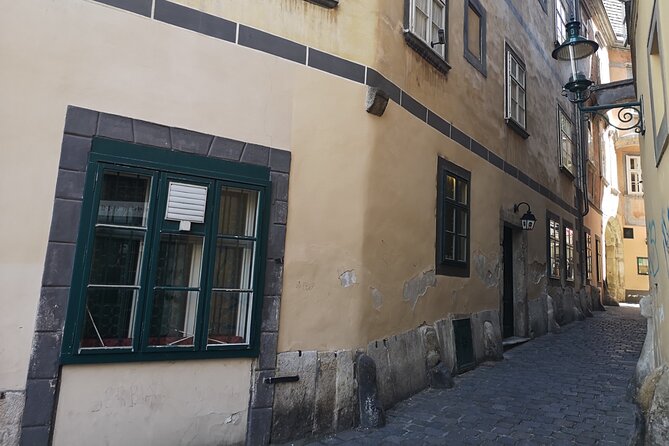
At Michaelerplatz, the subject is the Michaelergruft and the unusual condition of the bodies associated with it. The guide explains historical facts and legends about the mummification of bodies in the crypt.
This is a good example of how the tour mixes evidence with mystery. The subject is not just a ghost tale. It begins with a real burial site and then explores the questions and legends surrounding the mummies.
Michaelerplatz is also an effective setting because it is one of the city center’s most visually striking squares. You are surrounded by important imperial buildings, yet the attention turns downward, toward the dead beneath the church. That contrast is central to the tour’s appeal.
The stop is scheduled for roughly 10 minutes. I would expect a concise account rather than a full visit to the crypt. If you are particularly interested in the Michaelergruft, you may want to explore it separately when it is open, instead of assuming this walking tour includes admission.
Neuer Markt and the Imperial Crypt
The next stop at Neuer Markt deals with the Imperial Crypt, also called the Capuchin Crypt. It is presented as one of Central Europe’s most important cemeteries, with a long connection to Vienna’s ruling family.
The darker material concerns hidden prison dungeons beneath the Capuchin church and the harsh punishment associated with the Capuchin monks. This moves the story away from royal ceremony and toward confinement, discipline, and fear.
I like the contrast here. The Imperial Crypt is commonly associated with elaborate coffins and imperial remembrance. This tour adds a more unsettling layer by asking what else may have been beneath or around the religious complex.
The stop lasts about 15 minutes. That should give the guide time to place the crypt in context and tell the more disturbing legends without making the stop feel rushed. Still, the tour does not include an admission ticket, so you should not expect to enter the crypt as part of the walk.
A completely different kind of day:
- Vienna: Light of Creation Votive Church Immersive Light Show
★ 4.8 · 6,779 reviews - Vienna Spanish Riding School Guided Tour
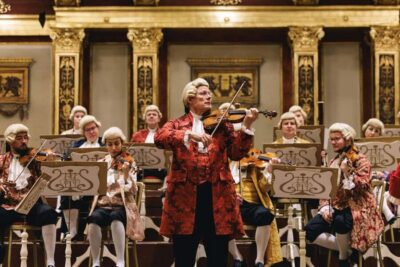
★ 4.7 · 6,765 reviews - Vienna: Classical Concert in the World-Famous Musikverein
★ 4.6 · 6,673 reviews - Vienna: Skip-the-Line Sisi Museum, Hofburg and Gardens Tour
★ 4.8 · 5,918 reviews
Rauhensteingasse, torture, witches, and Mozart
Rauhensteingasse is the longest stop, at about 20 minutes, and it brings together two very different stories.
At number 10, the former Malefizspitzbubenhaus is described as an infamous torture prison. This is also where Elisabeth Plainacher, said to be Vienna’s only witch, was imprisoned and tortured.
The story is likely to be one of the tour’s grimmest. It deals with the way accusations of witchcraft could become tools of punishment. The title of Vienna’s only witch sounds dramatic, but the important point is the human cost behind the legend. You are hearing about a real place associated with imprisonment and cruelty, not just a playful Halloween-style story.
At number 8, the subject changes to Mozart’s death house. The legend says that a ghostly gray boat commissioned the Requiem and then drove Mozart toward his death. This tale also connects with scenes from the film Amadeus.
The Mozart material should appeal even if you are not normally interested in horror tours. It links music history, film, superstition, and one of Vienna’s most famous residents. The gray boat is an especially strange image, and it gives the story a memorable visual hook.
There is a practical limitation here. You will be standing in a public street, looking at exterior locations rather than taking a dedicated tour of Mozart’s home. The value comes from the storytelling and the setting, not from interior access.
Blutgasse and the curse of the Templars
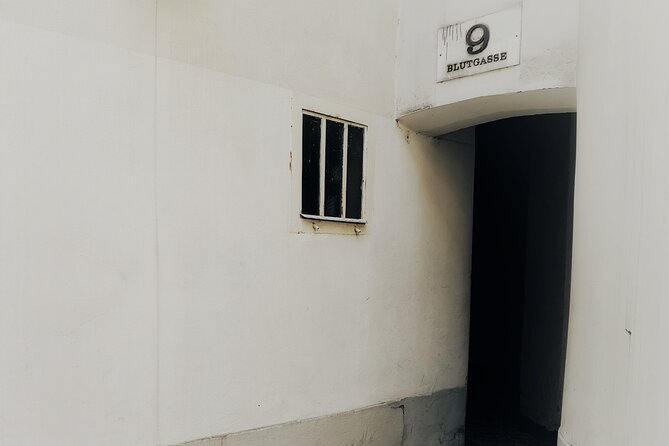
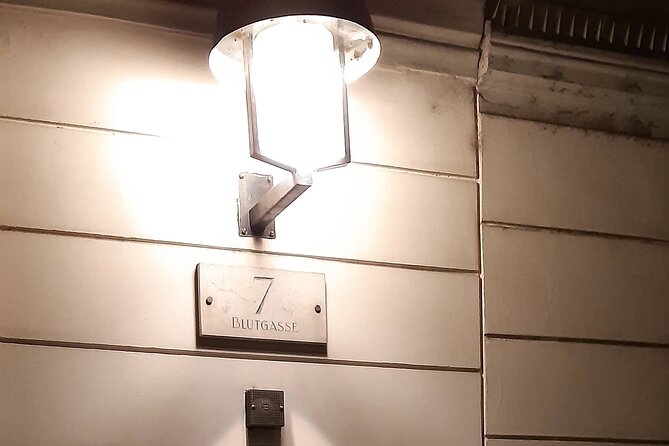
Blutgasse, or Blood Alley, supplies one of the tour’s most direct names. The story connects the lane with a supposed massacre of Knights Templar and a curse said to have remained over the place.
This is exactly the kind of tale that works well on a night walk. The narrow street name becomes part of the mystery, and the guide can turn an ordinary passage into a scene of betrayal and violence.
You should keep in mind that the tour presents legends alongside historical material. A dramatic explanation for a street name is not automatically a proven explanation. That does not make the story useless. Folklore shows how a city remembers fear, crime, and religious conflict, even when the facts have been reshaped over time.
At about 15 minutes, this stop has room for the story to develop. It also breaks up the larger landmark stops with a quieter lane, which helps the route feel like a search for overlooked corners rather than a parade of famous monuments.
Fleischmarkt and the fate of Dear Augustine
The final section runs from Fleischmarkt toward Dr. Ignaz Seipel Platz and lasts about 20 minutes. Here you hear the story of Dear Augustine, who was reportedly thrown alive into a plague pit.
The tale is dark, but it also points toward historical reality. People in Vienna were sometimes buried alive during plague periods, and measures were taken to prevent that from happening. This gives the story more weight than a simple ghost anecdote.
I appreciate this part because it shows how legends can preserve real fears. Before modern medical knowledge and reliable ways to confirm death, a plague pit could represent both public necessity and personal terror.
The route ends on Fleischmarkt, 1010 Vienna. Since the tour begins and ends in the central district, you remain close to major streets and public transportation. The exact end point is useful to know if you have dinner plans or another evening activity afterward.
How the storytelling affects the experience
The tour depends heavily on its guide. Stefan is specifically praised for being both a guide and a performer, and that is the right skill set for this subject. A list of dates would not make tales of gray boats, devilish bargains, or plague pits memorable. Timing, voice, and atmosphere matter.
The small maximum group of 20 people helps. You are not part of a giant crowd being moved between landmarks. A group this size should make it easier to hear the stories and stay connected with the guide, especially in narrow lanes.
The mobile ticket keeps the practical side simple. Confirmation arrives at booking, and the activity is near public transportation. Service animals are allowed, and most people can take part.
The route requires walking and standing for about two hours. The information does not specify the exact distance or surface conditions, so I would plan for ordinary inner-city walking rather than assume every section will be easy for everyone.
Is $45.38 a fair price?
At $45.38 per person, this is not the cheapest way to spend two hours in Vienna. You can walk through these central streets without paying anything, of course.
The price makes more sense if you value interpretation. You are paying for a guide to connect scattered places into one dark narrative, explain local legends, and perform the material in a way that is difficult to recreate with a guidebook.
I see it as a good value for:
- A first evening in Vienna, when you want a distinctive introduction to the old center
- People who enjoy folklore, ghost stories, crime, and unusual history
- Fans of The Third Man, Amadeus, Mozart, or Vienna’s underground stories
- Couples and friends looking for a theatrical night activity
- Visitors who have already seen the major palaces and want a different side of the city
It is weaker value if you want museum admission, interior access, academic source material, or a broad overview of Vienna. The walk visits the locations but does not include entrance tickets.
The tour is booked an average of 35 days ahead, which suggests that planning early is sensible, especially if your dates are fixed. The maximum group size is 20, so reserving ahead may also help you avoid disappointment.
What kind of evening should you expect?
This is a spooky city walk, not a scare attraction with actors jumping from dark corners. The supplied description promises frightening stories, but the experience is built around places, legends, and performance.
Some subjects are genuinely unpleasant. Torture, witch trials, mummified bodies, plague pits, and burial alive are not light entertainment for everyone. I would be cautious about bringing young children unless you already know they enjoy grim historical stories.
The weather matters. The activity requires good weather, and a poor-weather cancellation may lead to another date or a full refund. Since the tour takes place outdoors, bring clothing suited to the evening and shoes you can walk in comfortably.
Free cancellation is available up to 24 hours before the start time. If you cancel later, the payment is not refunded, and changes made within that same period are not accepted. A minimum number of people is also required, so the operator may offer another date or a full refund if that number is not reached.
Who should book The Devilish Vienna?
I would choose this tour if you enjoy cities after dark and prefer stories with a little bite. It offers a fresh way to see central Vienna, especially if you have already visited St. Stephen’s Cathedral, the Imperial Crypt, or the Mozart sites during the day.
The strongest reason to book is the guide’s performance style. Stefan’s combination of storytelling and theatrical delivery appears to be the feature that makes the walk memorable, rather than the simple fact that it visits famous streets.
I would skip it if you dislike supernatural stories, want carefully separated fact and fiction, or prefer to spend your evening inside museums and concert halls. The tour openly blends history, folklore, film references, and legend.
For everyone else, it is a focused and reasonably priced way to meet Vienna’s less polished personality. You finish with a different mental picture of the city: not only imperial squares and grand music, but also crypts, dungeons, curses, tunnels, and old fears that never quite disappeared.
FAQ
Where does The Devilish Vienna tour begin?
It begins at Stephansplatz 5, 1010 Vienna, Austria.
Where does the tour end?
The tour ends on Fleischmarkt in Vienna’s 1010 district.
How long does the experience last?
The walking tour lasts approximately two hours.
How much does the tour cost?
The listed price is $45.38 per person.
How many people can join the tour?
The maximum group size is 20 people.
Is the tour available with a mobile ticket?
Yes. The experience includes a mobile ticket.
What places are covered during the walk?
The route includes Stephansplatz, Josefsplatz, Michaelerplatz, Neuer Markt, Rauhensteingasse, Blutgasse, Fleischmarkt, and the area toward Dr. Ignaz Seipel Platz.
Does the tour include entrance tickets?
The stops are listed with free admission tickets, and no separate paid entry is included in the experience details.
Can service animals join the tour?
Yes. Service animals are allowed.
What happens if the weather is poor?
If the experience is canceled because of poor weather, you are offered a different date or a full refund.
Can I cancel for a full refund?
Yes. You can cancel up to 24 hours before the experience start time for a full refund. Cancellations made less than 24 hours before the start are not refunded.
Just added in Vienna
- Vienna: Austrian Wine Tasting Experience★ 4.2 · 2 reviews
- World War II History Vienna Old Town Private Walking Tour★ 4.8 · 9 reviews
- Vienna_ Meet Beethoven Life Private Guided Walking Tour★ 5.0 · 1 review
- Vienna: Wine Tasting Tour★ 4.8 · 61 reviews
- Vienna: Wine Tasting E-Bike Tour★ 4.9 · 46 reviews
- Vienna: Wine Tasting at Schönbrunn Palace★ 4.3 · 71 reviews
- Vienna: Winery and Wine Tasting Tour with a Wine Expert★ 5.0 · 5 reviews
- Vienna: Concert by the Vienna Baroque Orchestra★ 4.6 · 56 reviews
Vienna Tours, compared.
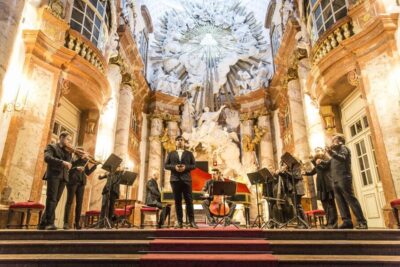
Vivaldi’s Four Seasons Concert in Karlskirche
Read our review →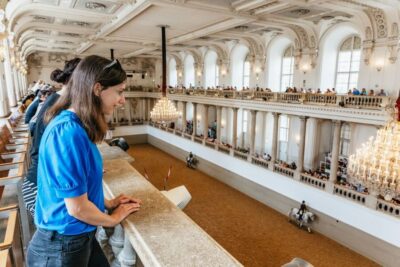
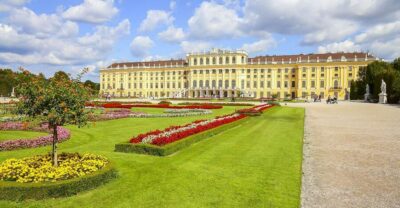
Schönbrunn Palace & Gardens Skip-the-Line Tour
Read our review →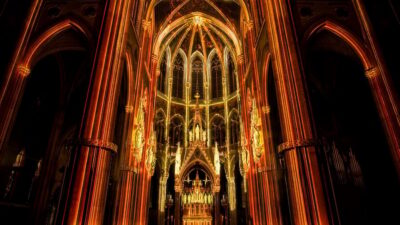
Light of Creation Votive Church Immersive Light Show
Read our review →
Classical Concert in the World-Famous Musikverein
Read our review →
Skip-the-Line Sisi Museum, Hofburg and Gardens Tour
Read our review →