
Reviewed · CLASSICAL CONCERTS AND OPERA
STATE OPERA – PRIVATE guided tour (tickets included)
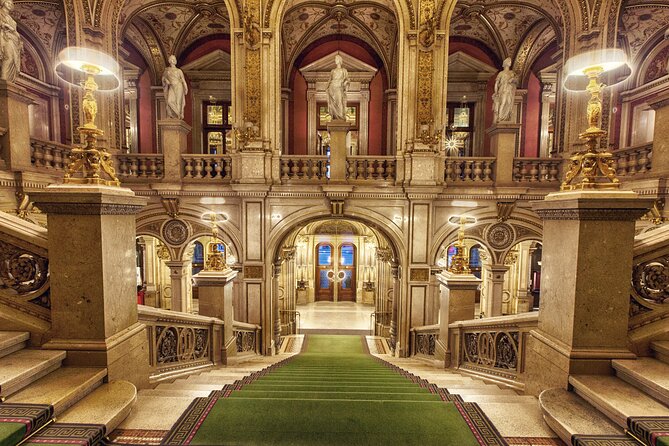
Vienna’s grandest curtain rises before the music starts. This private State Opera tour gives you 90 minutes inside one of Europe’s famous opera houses, with architecture, artists, stagecraft, and local stories all part of the visit. I especially like the private format, which lets your group shape the conversation, and the guide’s focus on how the opera actually works, from daily set changes to storage and staffing. The tour also includes admission, so you are not left sorting out a separate ticket.
The main thing to consider is the $267 price. That can be a fair deal for a private group that wants a personal guide, but it may feel steep if you are mainly hoping to admire the building on your own. The tour is also focused on areas open to the public, so it should not be treated as a full backstage access experience.
In This Review
- Key points at a glance
- Entering Vienna State Opera at Opernring 2
- The old opera house and its difficult beginning
- Seeing the modern areas rebuilt after World War II
- From famous names to the opera’s living tradition
- Opera Ball traditions and Vienna’s social side
- How the stage changes from one day to the next
- What Giselle adds to the experience
- Is the $267 price good value?
- Timing, meeting point, and cancellation
- Who should book this private opera tour?
- Final call: book it for a personal look at Vienna’s musical heart
- FAQ
- Where does the private State Opera tour begin?
- Where does the tour end?
- How long does the tour last?
- Are admission tickets included?
- Is this a private activity?
- Is the meeting point near public transportation?
- What is the cancellation policy?
Key points at a glance
- A private visit to Vienna State Opera: Only your group participates, giving you more freedom to ask questions and follow your interests.
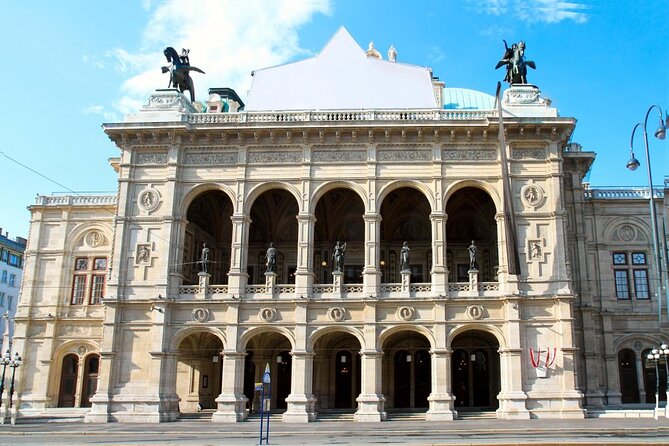
- A 90-minute route through the opera house: You see the old, highly decorated sections as well as the modern areas rebuilt after the Second World War.
- Stories about major performers: The discussion may include Placido Domingo, Montserrat Caballé, José Carreras, Gustav Mahler, Herbert von Karajan, Rudolf Nureyev, and Margot Fonteyn.
- Behind-the-scenes opera work: Your guide explains how stage sets change each day, where sets are kept, and how many people support the institution.
- A guide praised for warmth and flexibility: Giselle is described as funny, professional, communicative, and able to adjust the tour to a group’s interests.
- Simple meeting arrangements: Meet at Vienna State Opera, Opernring 2, 1010 Vienna, and finish at the same place.
Entering Vienna State Opera at Opernring 2
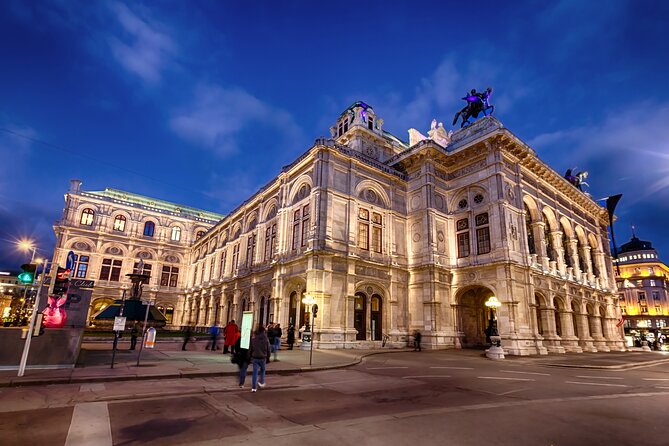
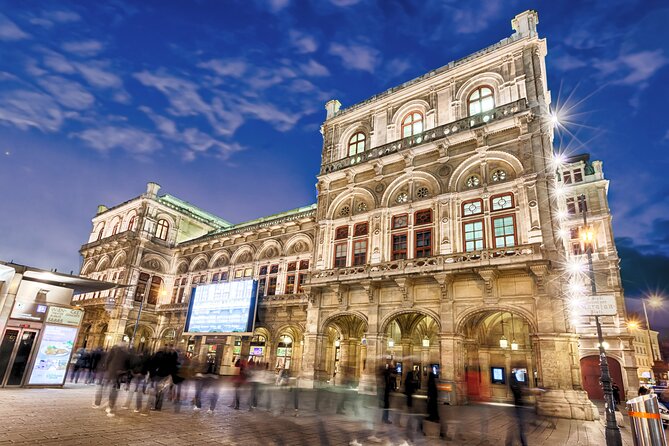
The tour begins at Vienna State Opera, one of the most recognizable buildings on Vienna’s Ringstrasse. The meeting point is Opernring 2, in the city’s 1010 district, and the area is close to public transportation. That makes this a practical stop to fit into a day of sightseeing around central Vienna.
I like the location because it gives the tour a clear anchor. You do not need to search for a side entrance in an unfamiliar neighborhood. You meet at the opera itself, then spend the next hour and a half learning why this building matters to Vienna’s musical life.
The guide presents the opera as more than a pretty façade. Vienna has long been tied to classical music, and the State Opera is at the center of that tradition. The tour connects the building to the people who performed and worked there, while also showing how an opera house functions as a large daily operation.
Because this is a private tour, your group can ask questions as they come up. That matters in a place filled with details. One person may care most about architecture, another about singers, and someone else may want to know how the stage changes from one production to the next. Giselle has been praised for adapting easily to personal interests, so the private format is likely to work best when you speak up about what you want to know.
More Classical Concerts in Vienna
- Vienna: Vivaldi’s Four Seasons Concert in Karlskirche
★ 4.7 · 14,951 reviews - Vienna: Classical Concert in the World-Famous Musikverein
★ 4.6 · 6,673 reviews - Vienna: Classical Concert at St. Stephen’s Cathedral
★ 4.1 · 4,177 reviews
The old opera house and its difficult beginning
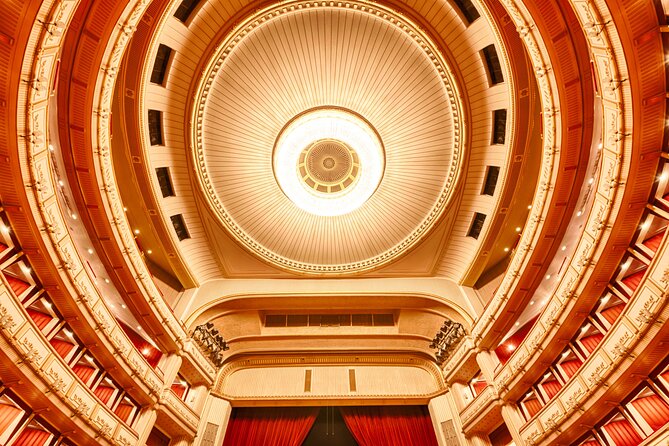
One of the most interesting parts of the visit is the building’s troubled early story. The State Opera was built about 150 years ago, but its arrival caused a major scandal. The dispute became so severe that it even contributed to the death of one of the architects.
That detail gives the building an edge. You are not simply looking at ornate halls and elegant decoration. You are also hearing about public opinion, artistic pressure, and the risks faced by the people who created Vienna’s monumental architecture.
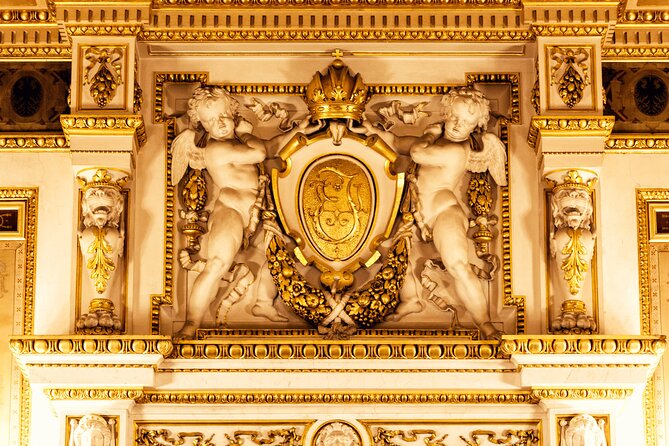
The old sections are described as very pompous, which is exactly the sort of setting that makes an opera tour worthwhile. Expect grand design and a strong sense of ceremony. The building was meant to impress, and the tour helps explain how its scale and decoration fit the culture of the period.
I would pay attention to the contrast between the building’s outward grandeur and the practical work happening behind it. Opera can look effortless from a seat in the audience, but the tour shifts your attention toward the people, spaces, and systems that make each performance possible.
Seeing the modern areas rebuilt after World War II
The route also includes modern parts of the opera house, built after the Second World War. This gives the visit a useful contrast: one part reflects the grand style of the original building, while another shows how the institution changed after wartime damage and rebuilding.
That difference is valuable because it keeps the tour from becoming a single-note look at old Vienna. You get to compare the pomp of the historic interiors with the later reconstruction. The result is a building that carries several periods at once.
Your guide can use this contrast to explain how a major cultural institution survives political change, war, rebuilding, and shifts in artistic taste. The information provided does not specify every room or architectural feature on the route, so you should expect a guided look at the public areas rather than a guaranteed visit to every working department.
This is also where a private tour has an advantage. If the difference between the older and newer spaces interests you, you can ask for more context. In a larger group, the guide has to keep moving at one pace. Here, your group has more room for conversation.
From famous names to the opera’s living tradition
The tour includes stories about performers and directors connected with the State Opera. Names mentioned include Placido Domingo, Montserrat Caballé, José Carreras, Gustav Mahler, Herbert von Karajan, Rudolf Nureyev, and Margot Fonteyn.
That list covers singers, conductors, composers, and dancers, so the discussion is not limited to one branch of performance. You may hear about the demands of singing on this stage, the role of a conductor, or the discipline behind major dance performances.
I particularly like that the tour can connect famous names with your own interests. One guest who described the experience had a musical background and was able to discuss Beethoven with Giselle. That suggests the conversation can rise above a basic list of dates and names when your group already knows the subject.
At the same time, you do not need to be an opera expert. The tour is designed to explain the institution and its performers in an approachable way. If you know little about opera, the guide’s stories can give you a clearer sense of why this building matters. If you already enjoy classical music, you can use the private setting to ask more focused questions.
A completely different kind of day:
- Vienna: Spanish Riding School Training
★ 3.9 · 9,281 reviews - Vienna: Schönbrunn Palace & Gardens Skip-the-Line Tour
★ 4.7 · 7,739 reviews - Vienna: Light of Creation Votive Church Immersive Light Show
★ 4.8 · 6,779 reviews - Vienna Spanish Riding School Guided Tour
★ 4.7 · 6,765 reviews
Opera Ball traditions and Vienna’s social side
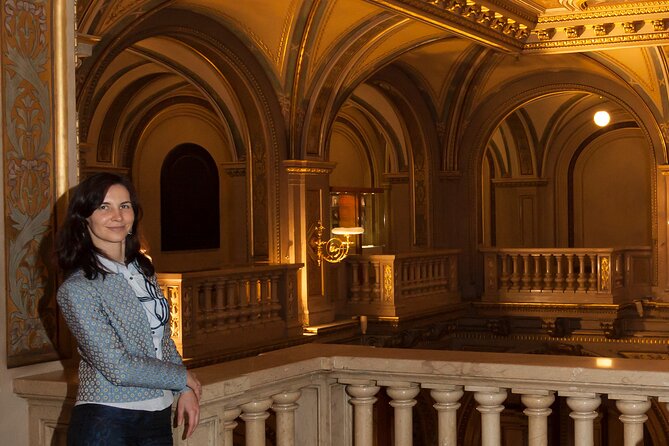
The State Opera is also tied to the Vienna Opera Ball, one of the city’s best-known formal events. The tour explains how the ball is celebrated, including the role of wealthy people and local politicians.
This adds a social layer to the visit. Opera is not only about performances and composers. It is also part of Vienna’s public image, elite traditions, and civic life. The ball helps show how the opera house can function as both a performance venue and a stage for the city itself.
I find this kind of detail useful because it places the building in present-day Vienna, not only in the past. You are not just hearing about an old institution preserved behind velvet ropes. You are learning how it remains part of the city’s annual calendar.
The tone may appeal to you if you enjoy local customs and social history along with architecture. If you want a tour focused only on music theory or individual productions, the Opera Ball section may feel like a side trip. In a private group, though, you can steer the discussion toward the areas that interest you most.
How the stage changes from one day to the next
The most practical part of the tour may be the explanation of stage operations. Opera productions can require different scenery, props, and technical arrangements, and the guide explains how the sets change daily.
You also learn where the stage sets are stored. That is the kind of question many people have after seeing an opera, yet it is easy to overlook during a standard architectural visit. The answer helps you picture the scale of the work taking place outside the audience’s view.
The tour also covers how many people work for this famous institution. No exact total is provided in the tour details, but the subject itself shows how much labor sits behind a performance. Singers and musicians receive the applause, yet an opera house depends on a much larger team.
This part makes the visit useful even if you do not plan to attend a performance. You gain a better understanding of why opera productions involve so much planning and why the building needs more than a beautiful auditorium. The tour turns a grand cultural venue into a working organization.
Keep your expectations clear, though. The route covers all areas open to the public, not every restricted workroom or technical space. You should think of this as an informed look at the opera house and its public areas, with explanations of backstage systems, rather than a full technical backstage inspection.
What Giselle adds to the experience
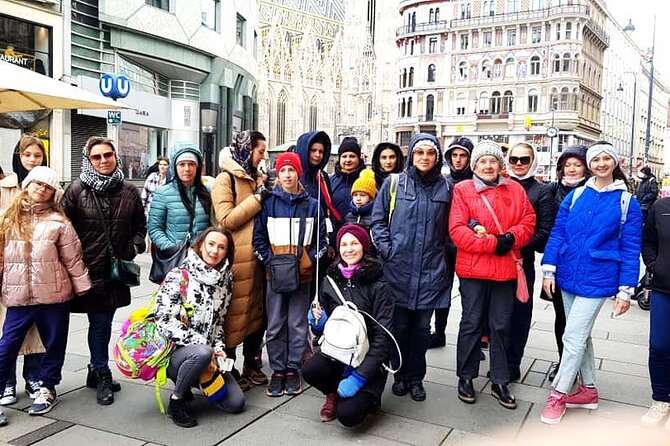
Giselle Tours Vienna provides the guide for this private visit. The strongest pattern in the available feedback is praise for Giselle’s manner as well as her command of Vienna’s history and music.
She is described as kind, funny, professional, and easy to communicate with before the meeting. One group appreciated her ability to change direction based on its wishes and interests. That is important for a private tour, since the value depends partly on the guide listening to your group instead of giving the same fixed talk to everyone.
Her replies to visitors also show a warm, playful style. She joked that her guests were the nobility of Vienna, which fits the formal surroundings without making the tour stiff. Another group praised her for answering questions with a fun and complete explanation.
That balance should suit you if you want serious information without a dry lecture. You can expect history, music, and practical opera details, but also a personal tone. The strongest praise is not aimed only at facts. It is aimed at the way Giselle makes people feel welcomed and included.
The tour has received a five-star rating from 14 reviews, with 100 percent recommending it. That is a small sample, so I would not treat it as a guarantee. Still, the consistency is useful: the guide’s professionalism, warmth, flexibility, and subject knowledge receive repeated approval in several languages, including English and Spanish.
Is the $267 price good value?
At $267, this is a premium experience. The key question is how many people are in your private group and how much you value a personal guide. The price includes admission and a private 90-minute visit, but the supplied details do not say whether the amount is charged per person or for the entire group. Confirm that point before booking.
For a couple or small family, the price may be worthwhile if you want a focused introduction to Vienna’s opera culture and prefer not to join strangers. A private tour can also be a good choice for people with different interests, since the conversation can shift between architecture, performers, the Opera Ball, and stagecraft.
For a solo visitor, the cost is harder to justify unless the personal format is especially important to you. If your main aim is to see the interior and take in the decoration, a lower-cost public visit or another ticketed option may offer better value, though those alternatives are not part of this experience.
I would judge the price by the quality of the conversation, not only by the time inside. Giselle’s ability to adapt, explain musical subjects, and respond to questions is central to the tour’s value. The included admission also keeps the arrangement simple.
Timing, meeting point, and cancellation
The visit lasts approximately one hour and 30 minutes. That is long enough for a substantial introduction without taking over your entire day, and the fixed meeting point makes it easy to place before or after other central Vienna sights.
You meet at Vienna State Opera, Opernring 2, 1010 Wien, Austria. The tour ends back at the meeting point. Since the location is near public transportation, you can reach it without needing a special transfer arrangement.
A mobile ticket is provided, which means you should keep the booking information available on your phone. Confirmation normally arrives at booking, unless you reserve within one hour of the start time. In that case, confirmation is sent as soon as possible and remains subject to availability.
Free cancellation is available up to 24 hours before the start time for a full refund. Within 24 hours, cancellations and changes are not accepted for a refund. The cut-off follows Vienna’s local time, so check the time carefully if you are arranging your plans from another time zone.
Who should book this private opera tour?
I would recommend this experience most strongly to:
- Families or friends who want their own guide and pace
- Music lovers interested in singers, conductors, composers, or dancers
- First-time visitors who want context before attending an opera
- Architecture fans who enjoy comparing the old and rebuilt sections
- People who like local customs, including the Opera Ball
- Visitors who prefer conversation and questions over a fixed group lecture
It may be less suitable if you want a full performance, a long technical backstage visit, or the lowest possible price. It also may not satisfy someone who only wants a quick photo stop inside the opera house.
The experience suits a group that wants the building explained as a living institution. You will hear about famous artists, but also about workers, storage, changing sets, public ceremonies, and the daily demands of keeping the opera running.
Final call: book it for a personal look at Vienna’s musical heart
Book this tour if you want a private, guide-led introduction to Vienna State Opera and value the chance to ask questions. Giselle’s warm style, musical background, and flexibility are the biggest reasons to choose it, while the old and modern sections give the visit a useful historical contrast.
Think twice if $267 stretches your budget or if you mainly want to see the interior without a detailed explanation. For the right group, though, this is a thoughtful way to understand the State Opera as architecture, workplace, social stage, and home to famous performances.
FAQ
Where does the private State Opera tour begin?
It begins at Vienna State Opera, Opernring 2, 1010 Wien, Austria.
Where does the tour end?
The experience ends back at the meeting point at Vienna State Opera.
How long does the tour last?
The tour lasts approximately one hour and 30 minutes.
Are admission tickets included?
Yes. Admission to the State Opera is included.
Is this a private activity?
Yes. Only your group participates in the tour.
Is the meeting point near public transportation?
Yes. The meeting point is near public transportation.
What is the cancellation policy?
You can cancel at least 24 hours before the start time for a full refund. Cancellations or changes made within 24 hours are not refunded or accepted.
Just added in Vienna
- Vienna: Austrian Wine Tasting Experience★ 4.2 · 2 reviews
- World War II History Vienna Old Town Private Walking Tour★ 4.8 · 9 reviews
- Vienna_ Meet Beethoven Life Private Guided Walking Tour★ 5.0 · 1 review
- Vienna: Wine Tasting Tour★ 4.8 · 61 reviews
- Vienna: Wine Tasting E-Bike Tour★ 4.9 · 46 reviews
- Vienna: Wine Tasting at Schönbrunn Palace★ 4.3 · 71 reviews
- Vienna: Winery and Wine Tasting Tour with a Wine Expert★ 5.0 · 5 reviews
- Vienna: Concert by the Vienna Baroque Orchestra★ 4.6 · 56 reviews
Classical Concerts and Opera, compared.
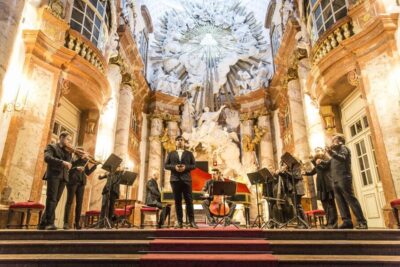
Vivaldi’s Four Seasons Concert in Karlskirche
Read our review →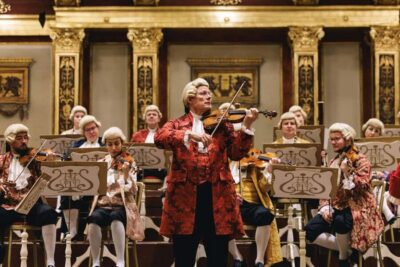
Classical Concert in the World-Famous Musikverein
Read our review →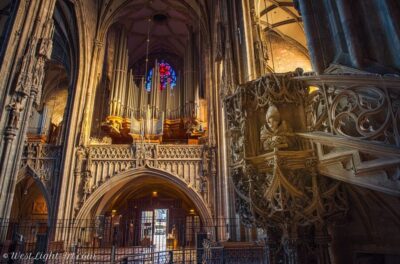
Classical Concert in St. Anne’s Church (Annakirche)
Read our review →
Browse the lists this tour appears in