Reviewed · TOURS
Small Group Tour; Central Europe & the Balkans – Vienna to Tirana
Fourteen days, eight countries, one busy road trip. This tour links grand capitals, wine towns, Ottoman bazaars, Orthodox monasteries, and Adriatic coastlines in one sweeping route from Vienna to Tirana. I especially like the intimate group size, listed as a maximum of 10 people and often described as limited to 8, along with the private transportation and hotel pickup.
I also like the balance between famous sights and places you could easily miss on your own, such as Rust, Sremski Karlovci, Zvornik, Gjakova, and Mrizi i Zanave. The main drawback is the pace: you cover a lot of ground, and several days involve long drives with only short visits in each town. The price is also substantial, at $4,881.23 per person, so you should be comfortable paying for convenience and structure rather than bargain travel.
In This Review
- Key points before you book
- Day 1: Vienna to Rust and Bratislava
- Day 2: Bratislava’s Old Town and Castle Hill
- Day 3: Győr and the Austro-Hungarian borderlands
- Day 4: Budapest, the Danube’s grand capital
- Days 5 to 7: Subotica, Novi Sad, and Serbian wine country
- Day 8: Belgrade and the Drina River at Zvornik
- Day 9: Sarajevo and Mostar
- Day 10: Kotor’s stone lanes and fortified setting
- Day 11: Budva, Sveti Stefan, and Shkoder
- Day 12: Mrizi i Zanave and Prizren
- Day 13: Gjakova, Decan Monastery, and Rahovec
- Day 14: Kruja and the final drive to Tirana
- Is $4,881.23 a fair price?
- Who will enjoy this route most?
- Should you book the Vienna to Tirana tour?
- FAQ
- How long is the tour from Vienna to Tirana?
- What countries does the tour visit?
- What is the maximum group size?
- Is accommodation included?
- Are meals included?
- Is transportation provided?
- Are entrance fees included?
Key points before you book
- A cross-border route from Vienna to Tirana: You move through Austria, Slovakia, Hungary, Serbia, Bosnia and Herzegovina, Montenegro, Albania, and Kosovo.
- Small-group travel: The maximum is listed as 10 people, with other tour information describing groups of up to 8. That should make border crossings, hotel pickups, and walking tours easier to manage.
- Two nights in Kosovo: The program includes Prizren, Gjakova, Decan Monastery, and Rahovec, with breakfast included throughout the trip.
- Strong cultural variety: Expect Catholic churches, Orthodox monasteries, mosques, synagogues, Ottoman bazaars, Austro-Hungarian architecture, and reminders of the Yugoslav War.
- Private transport is central to the experience: You are not piecing together buses and border crossings yourself, but you will spend plenty of time on the road.
- Meals are mostly your responsibility: Breakfast, tourist taxes, fuel, road charges, and entry fees for listed sites are included. Lunches, dinners, drinks, snacks, souvenirs, and personal spending are not.
Day 1: Vienna to Rust and Bratislava
The journey begins with a hotel pickup in Vienna at 11 a.m. That is useful if you have already spent time exploring Austria’s capital, since this tour does not provide a full Vienna sightseeing program. You begin with a short transfer before heading toward Burgenland.
Rust is a pleasant first stop. This small town is known for its preserved center, colorful houses, flower boxes, wine shops, and views toward Lake Neusiedl. The drive through the surrounding vineyards gives you an early taste of the quieter side of Austria, away from the grand museums and imperial buildings of Vienna.
I like the idea of starting with Rust because it eases you into the trip. You can walk the old streets, browse small shops selling wood and other natural-material crafts, or sit near the vineyards with regional wine and a meal. The visit is about two hours, so you should see the center comfortably, but you will not have time for a long winery visit.
From Rust, you continue toward Bratislava. The first day is not overloaded with formal admissions, but it does establish the rhythm of the tour: scenic driving, short guided walks, and free time for your own food and purchases.
A few more options to weigh up in Vienna
- Vienna: Vivaldi’s Four Seasons Concert in Karlskirche
★ 4.7 · 14,951 reviews - Vienna: Spanish Riding School Training
★ 3.9 · 9,281 reviews - Vienna: Schönbrunn Palace & Gardens Skip-the-Line Tour
★ 4.7 · 7,739 reviews
Day 2: Bratislava’s Old Town and Castle Hill
Bratislava is compact enough to explore on foot, and the tour focuses on the historic center. You will see the Old Town Hall area, churches, cultural institutions, and the medieval street plan.
Michael’s Gate is one of the clearest reminders of the city’s former defenses. It is the only medieval gate still preserved from Bratislava’s old fortifications, making it a worthwhile stop even if you do not spend much time inside museums.
The walk then heads uphill to Bratislava Castle. The castle dates to the ninth century and looks across the Danube and the city. Admission is included, and the elevated position gives you one of the better photo stops of the trip’s early days.
The schedule allows about an hour at each main stop, followed by free time for coffee. Bratislava’s traditional cafés are part of the city’s appeal, and this pause lets you set your own pace. I would use it for a light meal as well, since most food beyond breakfast comes from your own budget.
Day 3: Győr and the Austro-Hungarian borderlands
Győr, known as the City of Rivers, offers a smaller-scale contrast with Bratislava. Its center has Baroque buildings, colored façades, churches, and pedestrian streets lined with cafés and restaurants.
The Town Hall is easy to spot because of its 59-meter tower with a green roof. The Cathedral of the Virgin Mary brings a much older layer to the walk, while the gray-domed synagogue shows how Jewish communities shaped Central European towns before the upheavals of the twentieth century.
Baross Gábor Way is the natural place for free time. You can stop for Hungarian food, coffee, or the local blueberry beer mentioned in the program. The stop is only about three hours in total, so this is a sampler rather than a full Győr visit.
That pattern is worth understanding. The tour gives you a useful first look at many places, but it is not designed for travelers who want long museum visits or several unplanned hours in each city.
Day 4: Budapest, the Danube’s grand capital
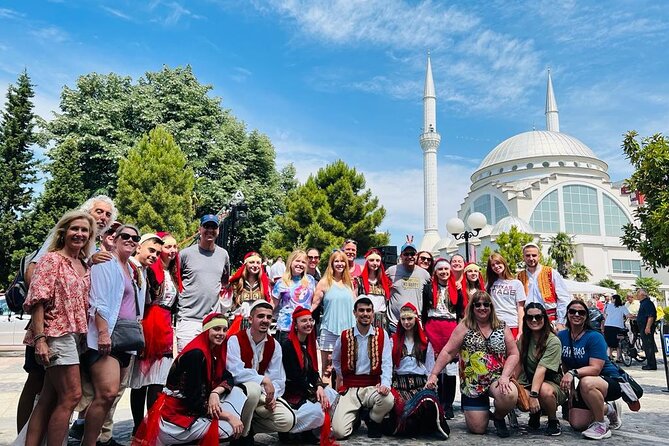
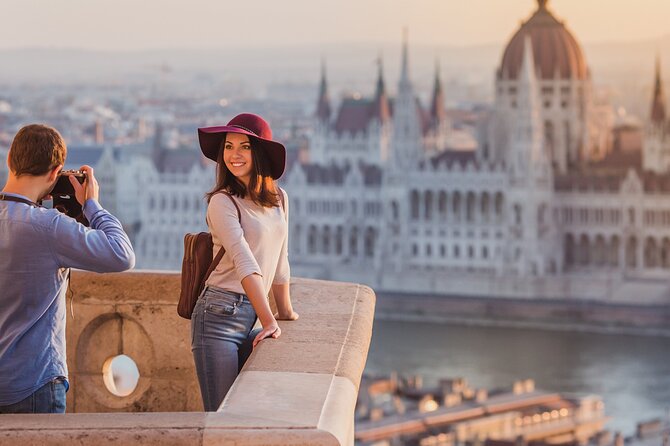
Budapest receives a fuller treatment than Győr, though the scheduled sightseeing remains brisk. The route takes in Saint Stephen’s Basilica, the Opera, Parliament, Heroes’ Square, and Fisherman’s Bastion.
The city’s basic geography is part of the experience. Buda rises on one side of the Danube, while Pest spreads across the flatter opposite bank. You will cross bridges and walk through the historic Buda Castle area, a UNESCO World Heritage site included in the tour.
The castle district offers fine views, but the city’s greatest pleasure may come after the formal tour ends. You have a free evening to see Budapest at night, and that is valuable because the itinerary gives you little daytime freedom in the capital.
Two hours for the broad city tour and one hour at Buda Castle cannot cover everything. Still, this is enough for orientation and major sights, especially if your goal is to sample several countries rather than focus on one city.
A completely different kind of day:
- Vienna: Light of Creation Votive Church Immersive Light Show
★ 4.8 · 6,779 reviews - Vienna Spanish Riding School Guided Tour
★ 4.7 · 6,765 reviews - Vienna: Classical Concert in the World-Famous Musikverein
★ 4.6 · 6,673 reviews - Vienna: Skip-the-Line Sisi Museum, Hofburg and Gardens Tour
★ 4.8 · 5,918 reviews
Days 5 to 7: Subotica, Novi Sad, and Serbian wine country
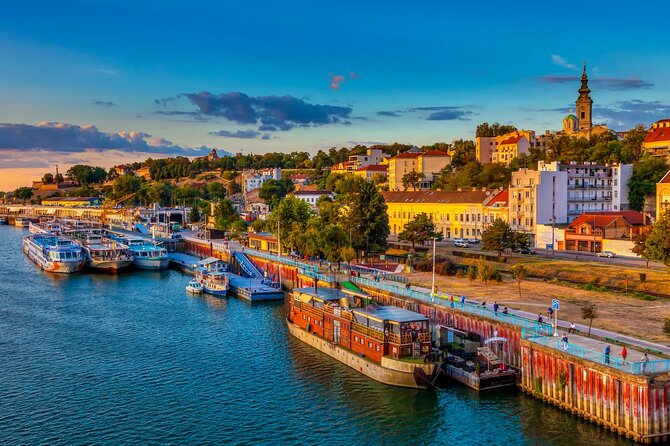
Crossing into Serbia, you begin with Subotica, a city shaped by its Austro-Hungarian past. Its decorated buildings and colorful architecture give the center a different feel from Budapest or Bratislava, while the relaxed streets invite a slower coffee break.
The City Hall dominates the central square. The program also includes the Cathedral of St. Teresa of Avila and Subotica Synagogue. Because these sites are close to the center, the walking tour can cover a good amount of ground in roughly two hours.
Novi Sad receives three hours, making it one of the more generous city visits. The old town’s pedestrian streets, especially Zmaj Jovina and Dunavska, are suited to an easy walk. Petrovaradin Fortress, often called the Gibraltar on the Danube, adds a larger historical setting and broad river views.
You overnight in Novi Sad, which gives this stop more breathing room than the short visits earlier in the trip. That overnight matters. It means you are not simply stepping out of the vehicle for a photograph before moving on.
The following day takes you to Sremski Karlovci, a small Baroque town tied to Serbian culture, religion, and wine production. The Four Lions fountain comes with a local legend: drink from it and you are supposed to return and marry in Karlovci.
The wine tasting is not listed as an included cost, so set aside money if you want to sample the region’s cellars. The town visit lasts about three hours and offers one of the trip’s more personal encounters with local traditions.
Day 8: Belgrade and the Drina River at Zvornik
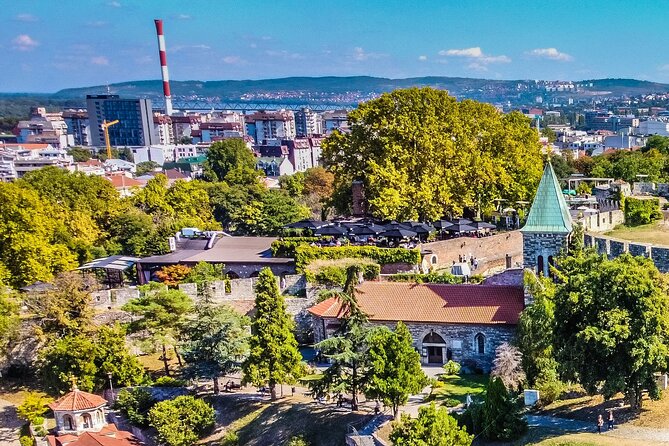
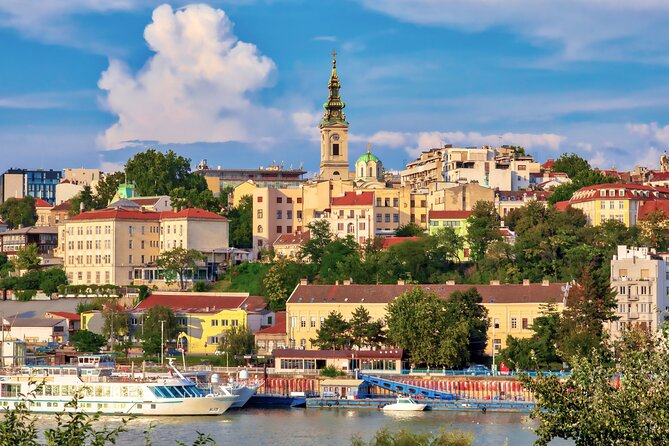
The day begins with Belgrade’s fortress and Kalemegdan Park, located where the Sava and Danube meet. The Pobednik monument, dating from 1913, is one of the main landmarks within the upper fortress.
You then walk along Knez Mihailova toward Republic Square. This gives you a quick introduction to Belgrade’s social center, but two things are worth noting: the schedule calls the stop Zvornik even though the description begins with Belgrade, and the supplied timing suggests only about an hour for the combined visit.
That inconsistency should be clarified with the operator before departure. The route itself then continues toward Bosnia and Herzegovina, with a stop in Zvornik on the Drina River. The town brings a change of scenery and a useful pause before Sarajevo.
Day 9: Sarajevo and Mostar
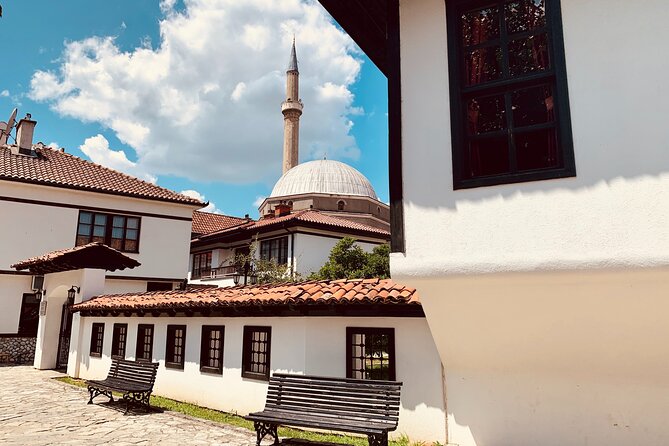
Sarajevo is one of the most meaningful stops on the route. The walking tour moves through Ottoman and Austro-Hungarian quarters, with markets, mosques, churches, and synagogues close together. That mix explains why Sarajevo is often called the European Jerusalem.
You will also see physical reminders of the Yugoslav War, including bullet holes and cannon marks. The program notes uneven ground and ruins, so comfortable walking shoes are important. This is not a polished postcard city tour. Its value comes partly from confronting the difficult past alongside the city’s daily life.
Latin Bridge is tied to the assassination of Archduke Franz Ferdinand, the event that helped trigger World War I. The guide’s explanation here can help connect local streets to a wider European story.
Later, you continue to Mostar and its famous Stari Most, the Old Bridge. The bridge is part of a UNESCO World Heritage site and leads into a bazaar of cobbled lanes, mosques, shops, and cafés. One hour is short for Mostar, but it covers the central old town and gives you time to see the bridge from different angles.
Day 10: Kotor’s stone lanes and fortified setting
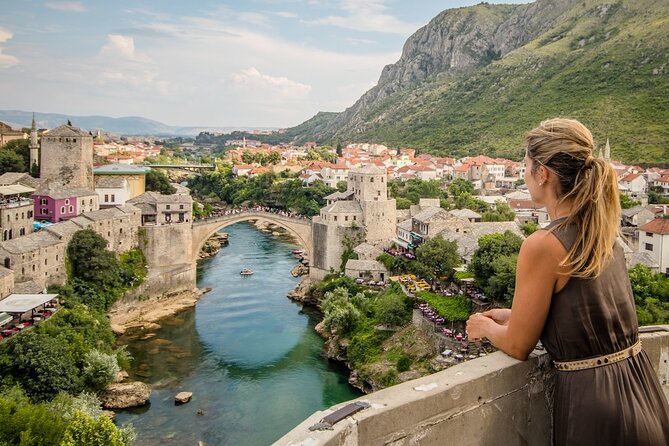
Kotor is one of the trip’s strongest visual stops. Its UNESCO-listed old town is enclosed by mountains and defensive walls, with narrow cobbled lanes that twist past churches and old buildings.
The deliberately confusing street plan once helped frustrate attackers. Today, it makes wandering enjoyable, though you should pay attention to where you are going. The tour includes Saint Luke’s Church and leaves you an afternoon to explore independently.
Three hours is a fair amount of time for Kotor’s old town, but it may not be enough if you hope to tackle every major climb or museum. The program does not promise a full fortress-wall hike, so ask your tour leader how much independent walking is realistic during the free period.
Day 11: Budva, Sveti Stefan, and Shkoder
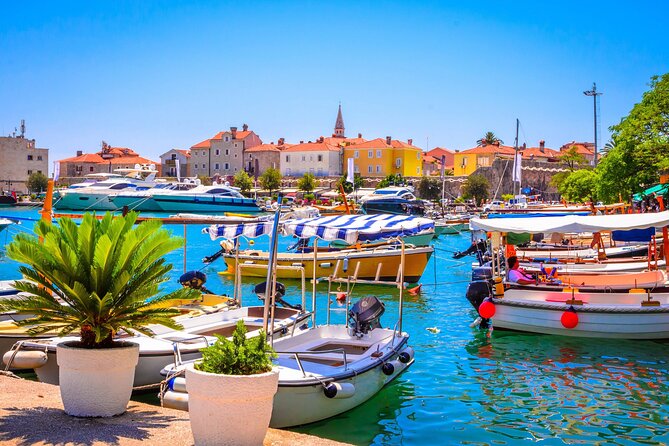
Budva gives you a coastal Montenegro stop, with a clear split between modern Budva and the older walled center. The walking tour focuses on the old town, including Saint Ivan Church and Saint Mary’s Church.
You then pause near Sveti Stefan. The former fishing settlement now functions as an exclusive residential resort, and the island cannot be visited. This is a photo stop, not a full attraction visit, so keep expectations in check.
After crossing into Albania, you reach Shkoder, one of the oldest cities in the country. Rozafa Castle is the main attraction, with wide views toward the lake and the rivers running toward the Adriatic.
The Venetian influence is easy to notice in the city’s architecture. If you happen to join in February, the program notes Shkoder’s carnival, including handmade Venetian masks produced locally. That seasonal detail makes February especially interesting, although the tour does not guarantee festival dates or special access.
Day 12: Mrizi i Zanave and Prizren
Mrizi i Zanave is an agro-tourism farm built around local products and slow food. You will learn how the family business adapted old communist-era buildings for storage and processing, and how its work created jobs for more than 400 people in the surrounding area.
A traditional lunch is not included, but this is one of the places where paying for a meal makes sense. The farm also sells fresh produce and preserved regional foods, giving you a chance to support a local business rather than eat only at standard roadside stops.
In the afternoon, you enter Kosovo and reach Prizren. The river, old bridges, mosques, churches, and Ottoman-era streets give the city a distinct character. Sinan Pasha Mosque is included, with detailed arabesque decoration, and Kalaja Fortress provides a view over the town.
Prizren is one of the better places for free wandering. If your timing falls in August, the Dokufest short film festival adds a major cultural event, though festival attendance is not part of the listed inclusions.
Day 13: Gjakova, Decan Monastery, and Rahovec
Gjakova’s old bazaar is among the best stops for handmade goods. It has been destroyed and rebuilt more than once, including after the Balkan Wars, World War II, and the Kosovo War. Today, its shops sell traditional crafts and local products.
Decan Monastery brings a different kind of visit. Orthodox monks still live there and produce food such as cheese. The monastery’s frescoes, connected to fourteenth-century life and Byzantine painting, helped earn it UNESCO status in 2004.
Security and access rules at monasteries can change, so follow your tour leader’s instructions and dress respectfully. The program lists the visit as about an hour, which is enough for an introduction but not a long religious or art-history study.
Rahovec Valley closes the day with wine country. Grapes have been grown here since Illyrian times, and vineyards sit on gentle hills between 350 and 520 meters above sea level. September brings the annual wine festival, but tastings and festival activities are not listed as included.
Day 14: Kruja and the final drive to Tirana
Kruja is tied to Albanian resistance against Ottoman expansion in the fifteenth century. Its position on rocky high ground gives the town a dramatic setting, while the old bazaar offers one of the trip’s best shopping opportunities.
The Medieval Old Bazaar has wooden houses and narrow lanes filled with carpets, jewelry, and handmade souvenirs. This is the place to spend your remaining shopping money, though lunches and purchases are your responsibility.
Kruja Castle includes a walk through paths once used by locals to leave the fortress unnoticed during attacks. Admission is included, and the visit takes about an hour. After free time for food and shopping, you drive to Tirana, where the tour ends with hotel drop-off.
Is $4,881.23 a fair price?
The cost is high, but it covers a lot: 13 breakfasts, 3-star hotel accommodation based on double, twin, triple, or quadruple occupancy, private transport, a professional tour leader, fuel, road charges, international car insurance, tourist taxes, hotel pickup in Vienna, hotel drop-off in Tirana, and entry fees for the listed included sites.
The value depends on how you would otherwise travel. If you prefer arranging eight countries, several border crossings, hotels, fuel, and regional transport yourself, the tour removes a large amount of work. If you normally travel cheaply by public bus and stay in simple rooms, the price will feel steep.
Room occupancy matters. The quoted price is calculated on shared double, twin, triple, or quadruple rooms in 3-star hotels. Confirm the supplement for a private room before paying.
The non-refundable cancellation policy is a serious consideration. You should also carry your own health and travel insurance. Weather, strikes, holidays, temporary closures, or other outside events can change the schedule.
Who will enjoy this route most?
I would recommend it to you if you want a guided introduction to Central Europe and the Balkans, prefer small groups, and value private transport over complete independence. It suits curious sightseers who enjoy architecture, food, religion, wine, and twentieth-century history in equal measure.
It is less suitable if you want several nights in each city, long museum visits, a beach holiday, or a relaxed schedule. The route is active, border-heavy, and road-based. You should also be comfortable walking on cobbles and uneven ground, especially in Sarajevo, Kotor, Mostar, old bazaars, and fortress areas.
Should you book the Vienna to Tirana tour?
Book it if the range is the point. You will see grand Central European capitals, Serbian wine towns, Sarajevo’s layered past, Mostar’s bridge, Montenegro’s fortified coast, northern Albania, and Kosovo’s religious and cultural sites in one organized journey.
Before booking, clarify the group size, exact hotel arrangements, the Day 8 Belgrade and Zvornik wording, private-room pricing, and how much time is allowed at each border. If those details suit you, this is a practical way to cover a large and fascinating part of Europe without managing every transfer yourself.
FAQ
How long is the tour from Vienna to Tirana?
The tour lasts approximately 14 days. It begins with hotel pickup in Vienna and ends with hotel drop-off in Tirana.
What countries does the tour visit?
The route travels through Austria, Slovakia, Hungary, Serbia, Bosnia and Herzegovina, Montenegro, Albania, and Kosovo.
What is the maximum group size?
The additional information lists a maximum of 10 travelers, while the tour highlights describe the group as limited to 8. Confirm the exact number with Choose Balkans before booking.
Is accommodation included?
Yes. Accommodation with breakfast is included for all overnights. Prices are calculated for double, twin, triple, or quadruple room occupancy in 3-star hotels.
Are meals included?
Thirteen breakfasts are included. Lunches, dinners, drinks, snacks, and personal food purchases are not included.
Is transportation provided?
Yes. Private transportation is included, along with petrol, road taxes, and international car insurance. Hotel pickup is provided in Vienna, and hotel drop-off is provided in Tirana.
Are entrance fees included?
Entry tickets for the listed included sites are covered. Personal spending, souvenirs, meals, drinks, and anything not specifically mentioned remain your responsibility.
Just added in Vienna
- Vienna: Austrian Wine Tasting Experience★ 4.2 · 2 reviews
- World War II History Vienna Old Town Private Walking Tour★ 4.8 · 9 reviews
- Vienna_ Meet Beethoven Life Private Guided Walking Tour★ 5.0 · 1 review
- Vienna: Wine Tasting Tour★ 4.8 · 61 reviews
- Vienna: Wine Tasting E-Bike Tour★ 4.9 · 46 reviews
- Vienna: Wine Tasting at Schönbrunn Palace★ 4.3 · 71 reviews
- Vienna: Winery and Wine Tasting Tour with a Wine Expert★ 5.0 · 5 reviews
- Vienna: Concert by the Vienna Baroque Orchestra★ 4.6 · 56 reviews
Tours, compared.
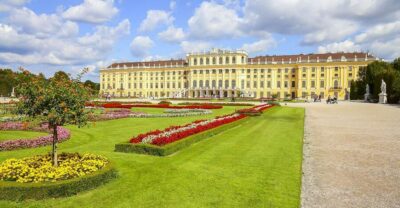
Schönbrunn Palace & Gardens Skip-the-Line Tour
Read our review →

Skip-the-Line Sisi Museum, Hofburg and Gardens Tour
Read our review →
Skip-the-Line Schönbrunn Palace & Gardens Tour
Read our review →
Guided Walking Tour of City Center Highlights
Read our review →