
Reviewed · SCHONBRUNN PALACE TOURS
Schönbrunn Palace and Gardens Tour
Historic grandeur comes with a personal touch. This Schönbrunn tour pairs small-group guiding with the palace’s most memorable rooms, from Maria Theresa’s music room to Franz Joseph’s private suite. I like the way historians turn dates into family stories, and I like the chance to see both the formal gardens and the imperial interiors. The main catch is price: at $181.41 per person, palace admission is still extra.
The tour is offered in English at 10am or 2pm, with a group advertised as limited to six people and a maximum of eight listed in the practical details. Guides such as Katarina, Biljana, Elisabeth, Kristina, and Wolfgang have earned especially warm praise for their storytelling and ability to adjust the pace. You should also follow the ticket instructions carefully, since buying admission separately or using a Vienna Card may cause entry-timing problems.
In This Review
- Key points to know before booking
- Why Schönbrunn deserves a half-day
- Starting with the gardens and the Gloriette
- Inside the palace: from ceremony to private life
- Maria Theresa, the Millions Room, and Mozart
- What the small group changes
- Price, tickets, and practical value
- Choosing the right departure and pace
- Who should book this Schönbrunn tour?
- Should you book it?
- FAQ
- How long does the Schönbrunn Palace and Gardens Tour last?
- What departure times are available?
- Is palace admission included in the tour price?
- How large is the tour group?
- Where does the tour begin?
- Does the tour include hotel pickup and drop-off?
- Is the tour offered in English?
- Can I cancel for a refund?
Key points to know before booking
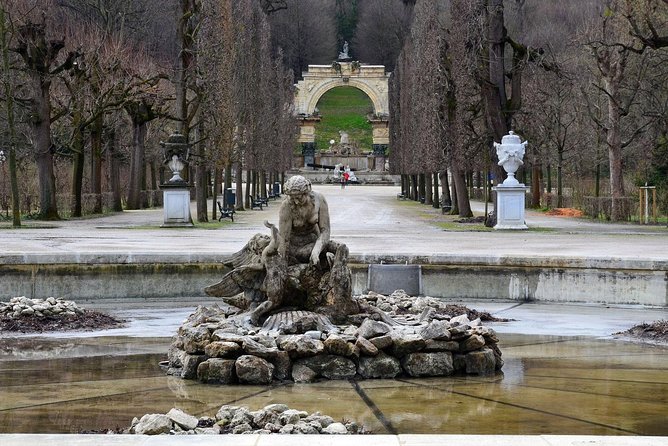
- The gardens provide the grand opening: You begin with Baroque paths, formal planting, and a walk toward the hilltop Gloriette.
- The palace rooms tell several Habsburg stories: Maria Theresa, Franz Joseph, and Empress Elisabeth each come into focus through different apartments and salons.
- Mozart’s performance room is included: The music room recalls the six-year-old Mozart performing before the imperial family.
- The group is genuinely small: The experience is designed for no more than six people, although the stated maximum is eight.
- Admission costs extra: Your guide helps purchase the Schönbrunn Palace and Park ticket, but it is not included in the tour price.
- The best guides add personal detail: Photos, maps, drawings, folklore, royal gossip, and advice about Vienna can make the visit far more vivid than a standard audio tour.
Why Schönbrunn deserves a half-day
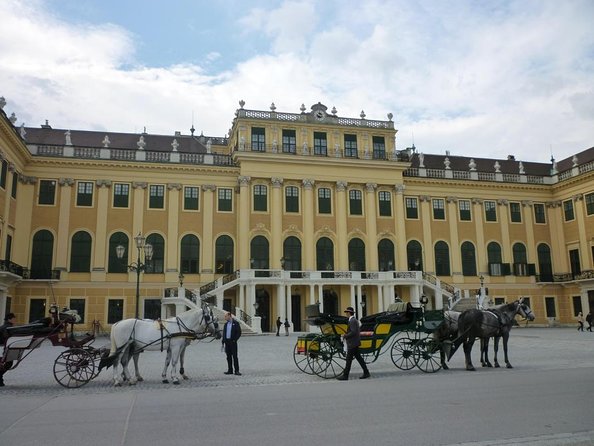
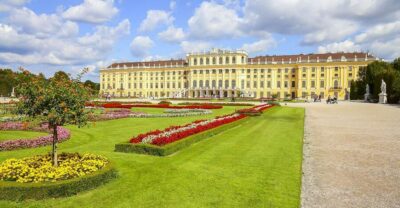
Schönbrunn was the Habsburgs’ summer residence, but that plain description undersells the place. It was also a stage for imperial ceremony, a family home for a remarkably large royal household, and a setting where Austria displayed its power to visiting dignitaries.
The palace was built in the High Baroque style to rival Versailles. The comparison is useful, though Schönbrunn has its own character. Versailles is a monument to French royal theatre. Schönbrunn feels more closely tied to the daily life of the Habsburg family, with rooms connected to children, marriages, work, illness, music, and court ritual.
I think a guide matters here because the rooms are beautiful but not always self-explanatory. Without context, you see gilt decoration, polished furniture, and painted ceilings. With a good historian, you begin to understand who used each room, why it mattered, and what the decoration was trying to communicate.
The tour lasts about two and a half hours according to the main details, while the itinerary describes roughly three hours including the gardens. Plan for a substantial morning or afternoon rather than a quick visit. The tour ends inside the palace, leaving you free to continue exploring Vienna afterward.
More Schonbrunn Palace tours:
- Vienna: Schönbrunn Palace & Gardens Skip-the-Line Tour
★ 4.7 · 7,739 reviews - Vienna: Skip-the-Line Schönbrunn Palace & Gardens Tour
★ 4.8 · 5,411 reviews - Vienna: Mozart and Strauss Concert at Schönbrunn
★ 4.5 · 2,364 reviews
Starting with the gardens and the Gloriette
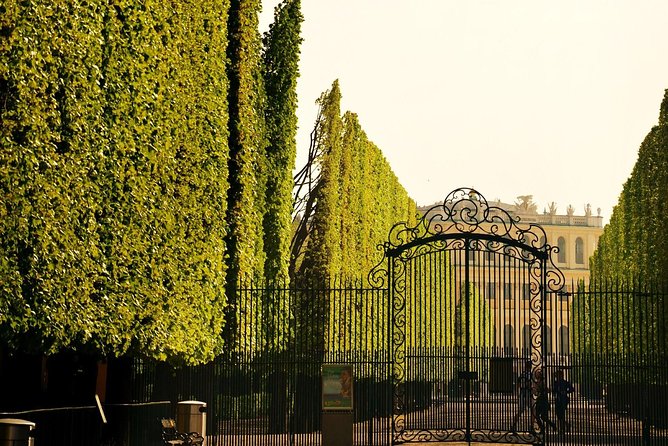
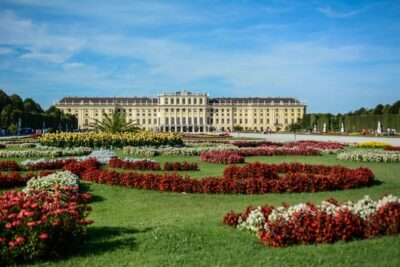
The opening garden walk takes about 30 minutes. It is not simply a stroll past flowers. The guide explains the Baroque idea that nature and architecture should be arranged together, with paths, views, sculptures, and buildings working as one planned composition.
The Gloriette is the visual prize. It sits on a hill above the palace and offers views toward Vienna’s surrounding woods. The walk gives you a chance to understand the palace’s position before you enter it. From above, Schönbrunn reads as a carefully ordered imperial setting rather than just a grand building with a large lawn.
The Gloriette also links the garden to Maria Theresa’s political world. It recalls the military victories that helped make her reign, from 1740 to 1780, a high point for Habsburg influence. That connection gives the garden a little more weight. The view is not only decorative. It reflects how the monarchy wanted power to be seen.
One useful historical detail is that Maria Theresa opened the park to the general public in 1779. That was a smart gesture toward her subjects and a way to make imperial grandeur feel slightly less remote. The palace still preserves traces of the family’s private life, including memories of royal children who spent their summers there.
The garden portion is also the least consistent part of the experience. One account praised the gardens and the walk to the hilltop, while another found the indoor guiding much stronger and felt left without enough direction outside. If the gardens are important to you, say so at the start and ask your guide what you should notice or where you should walk after the formal tour.
Season matters too. In autumn, the grounds can still be lovely. In winter, cold weather and bare planting may make the garden walk less appealing. One visitor chose not to continue outside during a particularly cold winter visit. You should dress for standing and walking outdoors, especially at the 10am departure.
Inside the palace: from ceremony to private life
The indoor portion is where this tour earns its strongest praise. You move through roughly 40 rooms, depending on the route and the guide’s pacing. The rooms are not treated as a blur of royal decoration. Instead, they form a story about how the Habsburg court worked and how its family members lived within it.
The Franz Joseph and Elisabeth apartments introduce one of the palace’s most familiar couples. Franz Joseph married the Bavarian princess Elisabeth in 1854. She is better known as Sisi, a nickname that has become almost inseparable from her public image.
Sisi disliked the formal demands of court life and the ornate surroundings that came with them. That tension becomes easier to grasp as you pass through lavish rooms. The palace was designed to impress, but living inside that splendour could feel restrictive. A good guide uses the rooms to show the difference between imperial status and personal freedom.
Franz Joseph’s private suite adds another layer. You see where the emperor’s official role met his daily routine. The dining room recalls state dinners, with precious tableware and the famous imperial napkins folded in a fleur-de-lis pattern. Small details like this help you picture the ceremony behind the polished surface.
The Hall of Ceremonies is grander and more public. It hosted major Baroque celebrations, including the wedding of Crown Prince Joseph. Scenes of those events were painted by Martin van Meytens, giving you a visual record of the court performing itself for guests and posterity.
The so-called Porcelain Room is more unusual. It served as Maria Theresa’s office and was decorated to imitate precious china, with drawings influenced by the imperial children. It is the sort of room that rewards a guide’s explanation because its playful appearance hides a complicated mixture of court taste, family activity, and imperial display.
Maria Theresa, the Millions Room, and Mozart
Maria Theresa’s rooms are among the most memorable stops. She ruled for 40 years and made Schönbrunn a centre of court life and imperial policy. She also had 16 children, a fact that changes the way you imagine the palace. This was not only a ceremonial residence. It was a crowded royal household with children, tutors, servants, illnesses, celebrations, and losses.
The Hall of Ceremonies, Gobelin Salon, and Feketin Room show the court at its most lavish. The rooms differ in decoration and purpose, which helps prevent the visit from becoming a parade of interchangeable gold and mirrors. Your guide should explain how Maria Theresa used the palace and which spaces were reserved for formal events or private work.
The Millions Room is one of the visual highlights. Its name refers to the enormous price paid for its decoration in gold ducats. Indo-Persian miniatures sit within Rococo frames, while carved rosewood from the Antilles adds warmth and texture. The result combines Oriental and European decorative ideas in a way that feels both elegant and excessive.
Then comes the music room, the stop with the easiest story to remember. Six-year-old Wolfgang Amadeus Mozart performed there before royalty. Standing in the room connects the palace to Vienna’s musical past, but the scene also reveals how the imperial court used concerts, child prodigies, and cultural display to reinforce its prestige.
This is where a strong guide can make a real difference. Guides have used old photographs, drawings, maps, and extra images to help visitors picture rooms and people as they once were. One guide even added local café advice at the end, which is the sort of small, practical touch I appreciate after a history-heavy visit.
A few more options to weigh up in Vienna
- Vienna: Vivaldi’s Four Seasons Concert in Karlskirche
★ 4.7 · 14,951 reviews - Vienna: Spanish Riding School Training
★ 3.9 · 9,281 reviews - Vienna: Light of Creation Votive Church Immersive Light Show
★ 4.8 · 6,779 reviews - Vienna Spanish Riding School Guided Tour
★ 4.7 · 6,765 reviews
What the small group changes
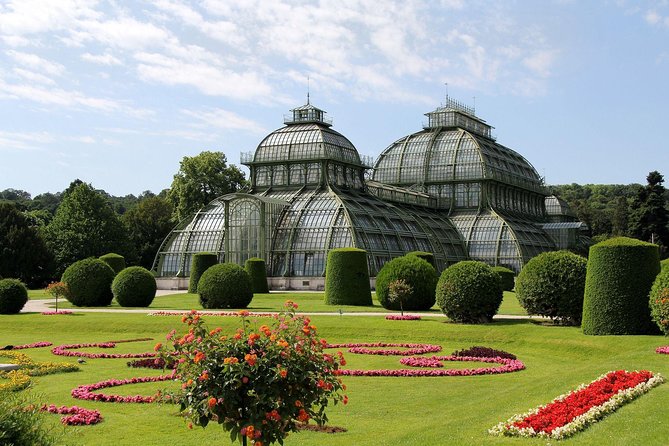
The group size is one of the tour’s best features. The experience is described as limited to six people, with a maximum of eight in the additional information. Either way, this is much more personal than a large group following a flag through the palace.
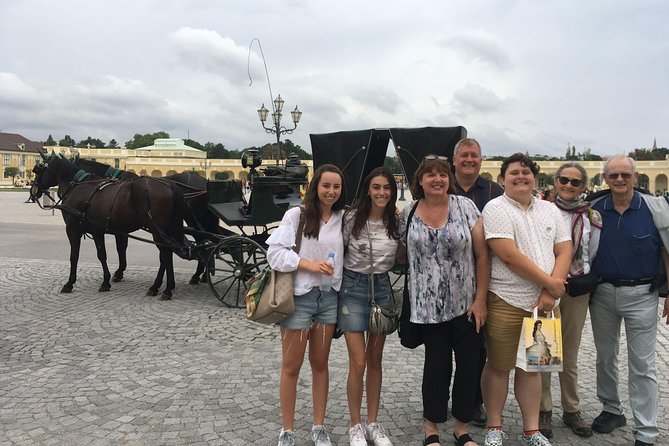
A small group lets you ask why a room was used, how a marriage worked, or what happened to a particular member of the Habsburg family. Guides can also watch the pace more closely. Biljana was praised for adjusting to older visitors, while other guides were singled out for making the tour work well for families and younger adults.
The personal element can be considerable. On one departure, a guide had only two people to lead, making the experience feel almost private. That is not something you should count on, but it shows the advantage of booking a very small group.
The guide quality appears to be the central strength. Katarina was repeatedly praised for making stories come alive and for explaining the Habsburg dynasty in a clear, engaging way. Biljana was described as energetic, patient, and especially strong on both historical fact and folklore. Kristina, Elisabeth, Selin, Stephan, Wolfgang, Annelie, and Edward Mueller also received strong personal praise.
There was one important weakness: one person had difficulty hearing the guide and felt an audio tour might have worked better. That seems unusual given the overall response, but it is still worth considering if you have hearing concerns. A small group helps, yet palace rooms can be busy and acoustics are not always perfect. Stay close to the guide and speak up early if you cannot hear.
Price, tickets, and practical value
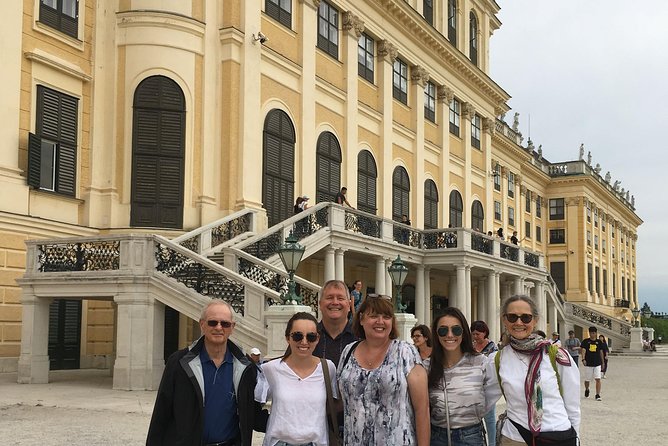
At $181.41 per person, this is a costly way to see Schönbrunn, especially since the palace and park admission ticket is not included. Your guide helps buy the entrance ticket, which reduces some of the hassle, but you should include that extra charge in your total budget.
The price makes most sense if you place a high value on expert explanation and a small group. You are not paying only to enter a palace. You are paying for a historian who can connect Maria Theresa’s family life, Franz Joseph’s routine, Sisi’s unhappiness, the court’s ceremonies, and Mozart’s performance into one coherent visit.
It is less convincing value if you mainly want to walk through rooms at your own pace or if you already have a strong understanding of Habsburg history. In that case, the admission ticket and an audio option may be enough. The strongest reason to choose this tour is the guide’s ability to answer questions and add human detail.
Do not buy your palace ticket independently before checking the tour instructions. One person nearly received a later entry time after using a Vienna Card and purchasing separately. Because the guide buys tickets for the reservation, separate arrangements may interfere with the planned entry. The meeting point is the Group Center Schönbrunn at Schloss, 1130 Wien. The exact brown building can be hard to identify from across the street, so allow time to find it and look carefully for the meeting-point information.
The tour is near public transportation, and most people can participate. Hotel pickup and drop-off are not included. Confirmation arrives at booking, and free cancellation is available up to 24 hours before the local start time. Changes or cancellations inside that window are not accepted for a refund.
Choosing the right departure and pace
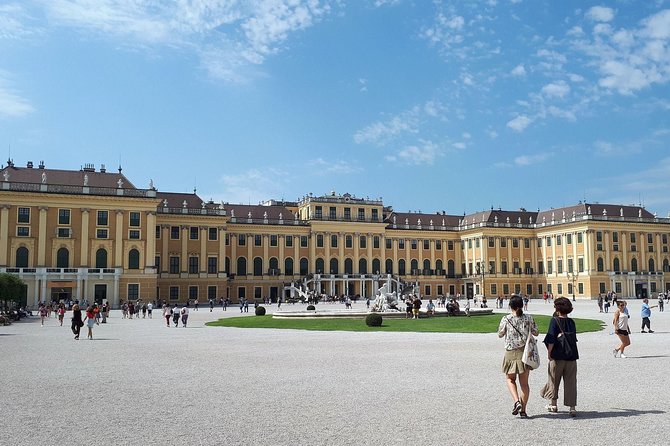
The 10am departure is a good fit if you want to use the rest of the day in Vienna. It may also suit you if you want to see the gardens before they become tiring later in the day. The 2pm option works well if you prefer a slower morning or are pairing Schönbrunn with another activity earlier.
Both choices require attention to the clock. Meet a little before the selected start time. The tour begins outdoors, then moves into the palace, and it finishes inside after the main visit. You are not returned to a hotel, so plan your next stop from Schönbrunn.
The pace is generally manageable, but you will spend time walking and standing. The garden route includes the approach toward the Gloriette, and the palace visit covers many rooms. If you need a gentler pace, mention it at the beginning. The guides have shown a willingness to adjust, especially for older participants.
Who should book this Schönbrunn tour?
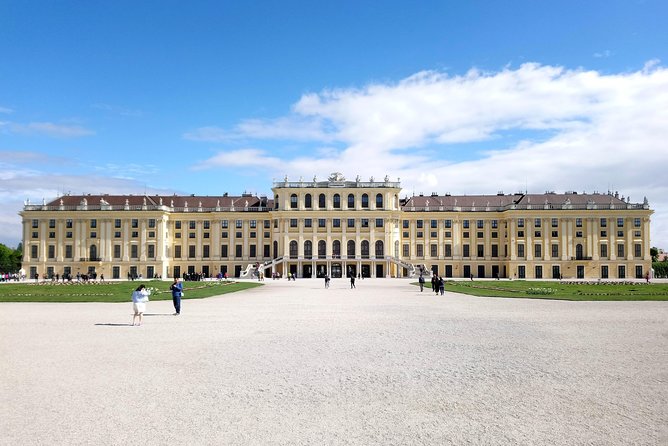
I would choose this tour if you want the palace to make sense, not just look impressive. It suits first-time visitors to Schönbrunn, families with curious children or young adults, and anyone who enjoys history told through personalities rather than a list of dates.
It is also a strong choice for people who prefer conversation. Guides have responded to individual interests, used visual material, and offered advice about restaurants, local dishes, cafés, and other places to visit in Vienna.
I would hesitate if you are very price-sensitive, want guaranteed garden coverage, or prefer complete independence. The garden explanation may be lighter than the palace portion, and admission is extra. Winter visitors should also decide how much outdoor time they really want.
Should you book it?
Book it if you want a personal history lesson inside one of Vienna’s grandest palaces and can accept the added admission cost. The small group, historian guides, room-by-room explanation, and Mozart connection give the visit more meaning than a simple self-guided walk.
Before booking, confirm the meeting point, follow the ticket instructions, and tell the guide if the gardens are a priority. If those details suit you, this is a strong half-day choice, backed by a 4.9 rating and 98 percent recommendation rate from 120 ratings.
FAQ
How long does the Schönbrunn Palace and Gardens Tour last?
The tour is listed as approximately two hours and 30 minutes. The detailed route describes about 30 minutes in the gardens followed by roughly two hours and 30 minutes inside the palace, so you should allow close to three hours.
What departure times are available?
You can choose between a 10am departure and a 2pm departure.
Is palace admission included in the tour price?
No. Schönbrunn Palace and Park admission is not included. The guide assists with purchasing the entrance tickets.
How large is the tour group?
The experience is described as a small-group tour limited to six people. The additional details list a maximum of eight participants.
Where does the tour begin?
The meeting point is Group Center Schönbrunn, Schloss, 1130 Wien, Austria.
Does the tour include hotel pickup and drop-off?
No. Hotel pickup and drop-off are not included. The meeting and ending point is at Schönbrunn.
Is the tour offered in English?
Yes. The tour is offered in English.
Can I cancel for a refund?
Yes. You can cancel at least 24 hours before the local start time for a full refund. Cancellations or changes made less than 24 hours in advance are not accepted for a refund.
Just added in Vienna
- Vienna: Austrian Wine Tasting Experience★ 4.2 · 2 reviews
- World War II History Vienna Old Town Private Walking Tour★ 4.8 · 9 reviews
- Vienna_ Meet Beethoven Life Private Guided Walking Tour★ 5.0 · 1 review
- Vienna: Wine Tasting Tour★ 4.8 · 61 reviews
- Vienna: Wine Tasting E-Bike Tour★ 4.9 · 46 reviews
- Vienna: Wine Tasting at Schönbrunn Palace★ 4.3 · 71 reviews
- Vienna: Winery and Wine Tasting Tour with a Wine Expert★ 5.0 · 5 reviews
- Vienna: Concert by the Vienna Baroque Orchestra★ 4.6 · 56 reviews
Schonbrunn Palace Tours, compared.
Schönbrunn Palace & Gardens Skip-the-Line Tour
Read our review →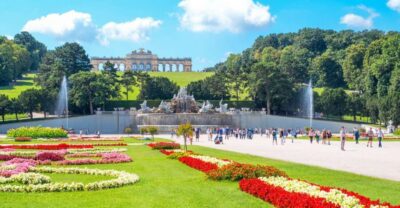
Skip-the-Line Schönbrunn Palace & Gardens Tour
Read our review →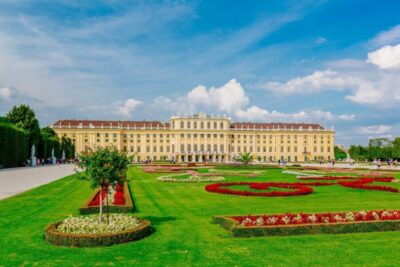
Bus & Schönbrunn Palace Skip-the-Line Guided Tour
Read our review →
Skip the Line Schönbrunn Palace and Gardens Guided Tour
Read our review →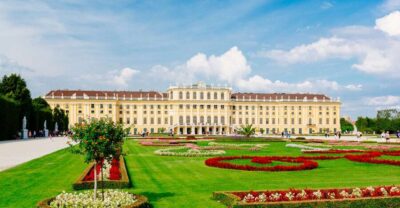
Schönbrunn Palace & Garden Skip-the-Line Guided Tour
Read our review →
Panorama Train Tickets to explore Schönbrunn Palace
Read our review →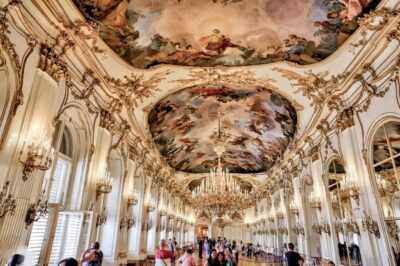
Skip-the-Line Schönbrunn Palace and Gardens Tour
Read our review →Browse the lists this tour appears in