Reviewed · PRIVATE
Private Spooky Vienna Ghost Tour
Vienna gets stranger after sunset. This private 90-minute walk gives you a fresh way to see the old center, mixing Habsburg burial customs, plague stories, medieval crimes, and local legends with the city’s grand landmarks. I like the family-friendly format and the chance to ask a private guide questions along the way. I also like that the tour does more than chase ghosts, it uses eerie stories to explain Vienna’s past.
The main drawback is the price for a small party. At $396.48 for up to 15 people, the cost works out well for a full group, but it feels steep for one or two people. You also need to be comfortable walking outdoors at night, and one booking problem reported by a customer shows that confirmation details deserve a quick check before you set out.
In This Review
- Key points to know before booking
- Why Vienna’s dark side works so well
- Meeting at Helmut-Zilk-Platz at 7:30 pm
- Habsburg burial customs: an unsettling royal opening
- St. Michael’s Church and the aristocratic catacombs
- The Plague Column and Vienna’s fear of disease
- Blood Alley and the crimes of medieval Vienna
- Augustin and Vienna’s plague musician
- Medieval lanes and legends that refuse to disappear
- St. Stephen’s Cathedral and the final legends
- Lisa’s role in the experience
- A private walk for up to 15 people
- What the 90-minute length means
- Who should book this tour?
- Booking timing and cancellation
- My verdict: a playful, useful look at old Vienna
- FAQ
- Where does the Private Spooky Vienna Ghost Tour begin?
- What time does the tour start?
- Where does the tour end?
- How long is the tour?
- How many people can join the private tour?
- Is the tour offered in English?
- Is this ghost tour suitable for children?
- What sights and subjects are included?
- Can I cancel for a full refund?
Key points to know before booking
- Habsburg history with a creepy twist: Learn about the burial rituals of one of Europe’s most powerful royal families.
- A central Vienna route: The walk begins at Helmut-Zilk-Platz and ends at St. Stephen’s Cathedral.
- Stories at famous sights: The Plague Column, St. Michael’s Church, Blood Alley, and Vienna’s main cathedral all take on a darker character.
- Private group setting: Your party alone takes part, with space for up to 15 people.
- A strong guide makes the difference: Lisa receives especially warm praise for her energy, storytelling, historical insight, and practical city tips.
- Good for families: The stories can be spooky, but the tour is designed for all ages.
Why Vienna’s dark side works so well
Vienna is often presented through palaces, classical music, coffeehouses, and polished imperial streets. Those are all real parts of the city, but they tell only the respectable half of the story. A ghost tour adds the less tidy material: illness, death, punishment, superstition, aristocratic burial customs, and legends that survived long after the original events.
I like this approach because the supernatural stories are not treated as a substitute for history. Ghosts may be a matter of belief, but the locations, institutions, and past events give the walk its substance. You see familiar places while hearing why they mattered to people who lived in a far less comfortable Vienna.
The tone also seems to land between serious history and playful storytelling. That is important for a family outing. You can enjoy the strange tales without signing up for a horror production designed only to frighten you.
A few more options to weigh up in Vienna
- Vienna: Vivaldi’s Four Seasons Concert in Karlskirche
★ 4.7 · 14,951 reviews - Vienna: Spanish Riding School Training
★ 3.9 · 9,281 reviews - Vienna: Schönbrunn Palace & Gardens Skip-the-Line Tour
★ 4.7 · 7,739 reviews
Meeting at Helmut-Zilk-Platz at 7:30 pm
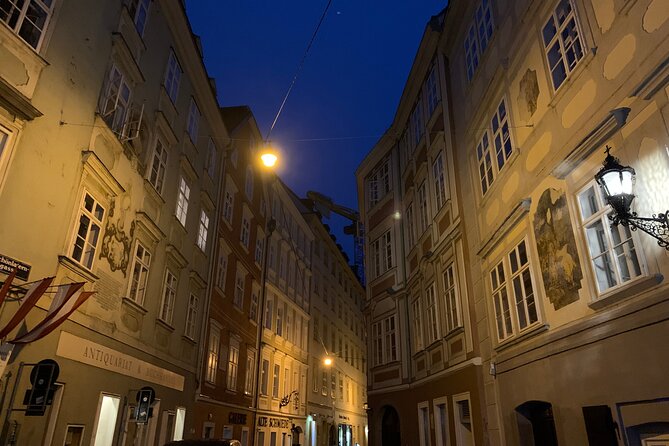
The tour begins at Helmut-Zilk-Platz in Vienna’s central 1010 district. The 7:30 pm start gives the experience an evening mood without making it a very late-night activity. It is a useful time for families who want to finish dinner or an afternoon of sightseeing before meeting the guide.
You should arrive with enough time to locate the meeting point. The tour is a mobile-ticket experience, and confirmation is provided when you book. Since one booking reportedly suffered from a communication problem between the booking platform and the operator, I would keep the confirmation handy and check the meeting details before leaving your hotel.
The route ends at St. Stephen’s Cathedral on Stephansplatz. That is a practical finish in the heart of Vienna, near public transportation and many places to eat or continue your evening. The exact order of the stories can vary, but the supplied route includes several central landmarks and historic lanes rather than a trip out to a distant suburb.
Habsburg burial customs: an unsettling royal opening
One of the strongest subjects on the walk is the burial ritual of the Habsburgs. This is a good choice for the beginning of a dark-history tour because it shows how unusual death could be at the highest level of society.
The Habsburgs shaped much of central European history, so their treatment of the dead offers more than a spooky anecdote. It gives you a glimpse of royal ceremony, religious practice, and the way rulers used ritual to preserve status even after death.
The story also helps set the tone. This is not simply a collection of haunted-house tales. You are looking at real customs and beliefs that can feel eerie to modern eyes, especially when connected to a powerful dynasty and the grand center of Vienna.
St. Michael’s Church and the aristocratic catacombs
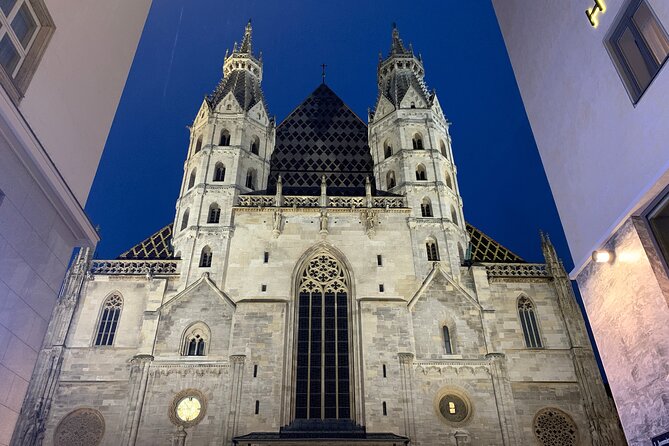
St. Michael’s Church brings the tour into one of Vienna’s most atmospheric religious settings. The church is associated with aristocratic catacombs, which adds a strong sense of place to the discussion of burial and remembrance.
The important practical point is that the route includes the church as a story stop, but the information provided does not promise entry into the catacombs. You should think of this part as an exterior or location-based explanation unless your guide tells you otherwise.
That limitation does not make the stop unhelpful. Hearing about underground burial spaces while standing near an old church gives the story a physical anchor. It also shows how Vienna’s religious buildings were tied to the city’s ruling families and social order.
A completely different kind of day:
- Vienna: Light of Creation Votive Church Immersive Light Show
★ 4.8 · 6,779 reviews - Vienna Spanish Riding School Guided Tour
★ 4.7 · 6,765 reviews - Vienna: Classical Concert in the World-Famous Musikverein
★ 4.6 · 6,673 reviews - Vienna: Skip-the-Line Sisi Museum, Hofburg and Gardens Tour
★ 4.8 · 5,918 reviews
The Plague Column and Vienna’s fear of disease
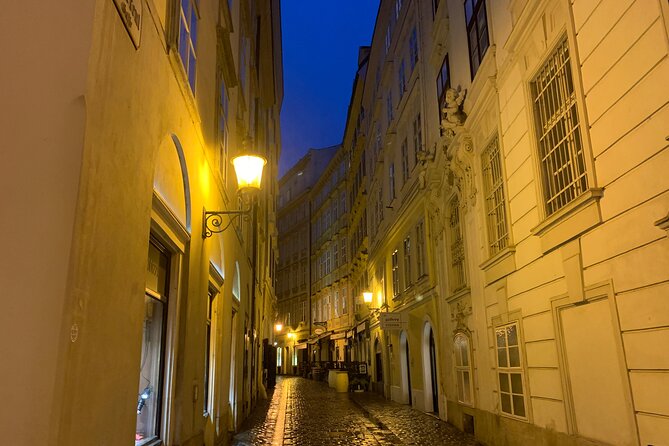
The Plague Column is one of the most recognizable monuments in central Vienna, but its meaning changes when you hear it through the lens of epidemic disease. The stop connects the city’s grand public art with the fear and loss caused by bubonic plague.
This is where the tour’s mix of beauty and discomfort works best. A monument can look decorative when you pass it during a daytime stroll. At night, with the story of plague in mind, it becomes a reminder of how quickly ordinary life could be overturned.
The subject may be intense for younger children, but the tour is presented as suitable for all ages. Parents should still use their judgment, especially if a child is sensitive to stories about sickness, death, or frightening legends.
Blood Alley and the crimes of medieval Vienna
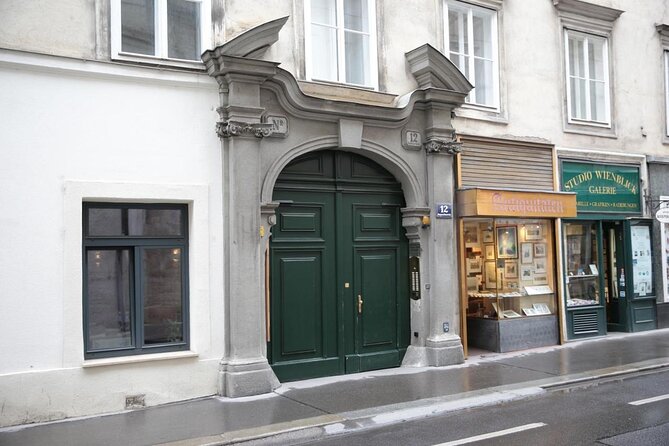
Blood Alley brings a harsher edge to the walk. Its name points toward Vienna’s history of violence and punishment, and the route uses the area to discuss a former place for executions in the Middle Ages.
This part should appeal to anyone who wants more than ghost folklore. Medieval cities were not gentle places, and public punishment was part of how authorities displayed power. Learning about that system in the actual historic center makes the past feel close rather than abstract.
I would expect this section to be more disturbing than amusing. The experience is family-friendly, but family-friendly does not mean every story is mild. If you want only light legends and harmless ghost jokes, this may be the portion to consider carefully.
Augustin and Vienna’s plague musician
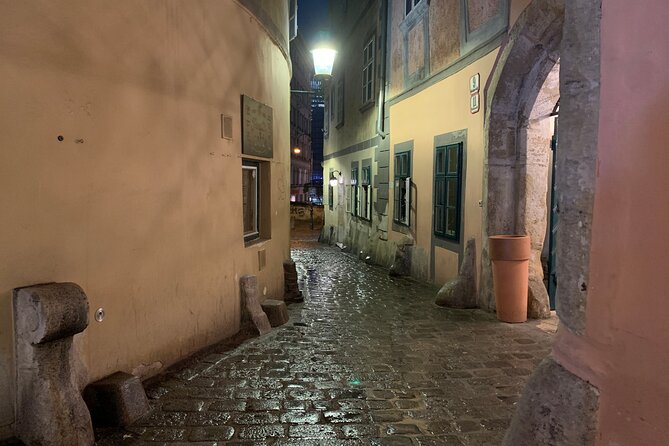
The tour also explores the home of Augustin, the famous musician linked with Vienna’s bubonic plague history. His story adds a human and almost theatrical figure to the disease section of the walk.
A musician connected with plague-era Vienna gives the tour a different rhythm. Instead of hearing only about monuments, rulers, and public tragedy, you get a local character whose legend has lasted because it combines hardship, personality, and performance.
This is the sort of story that helps a walking tour stay lively. It gives you someone to remember, not just a date or a monument. The supplied details do not spell out every part of Augustin’s tale, so the guide’s storytelling will shape how much humor, legend, or historical context you get at this stop.
Medieval lanes and legends that refuse to disappear
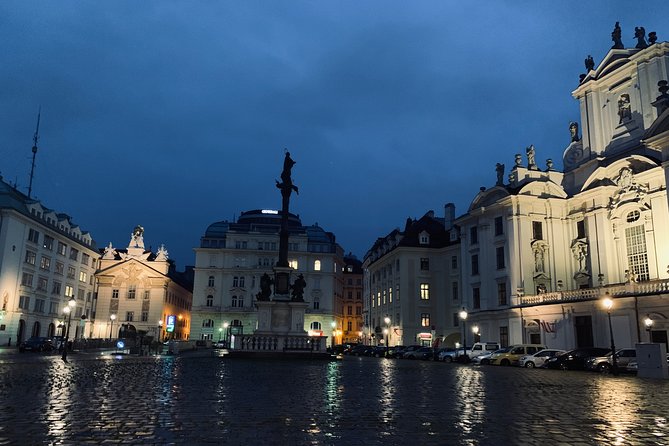
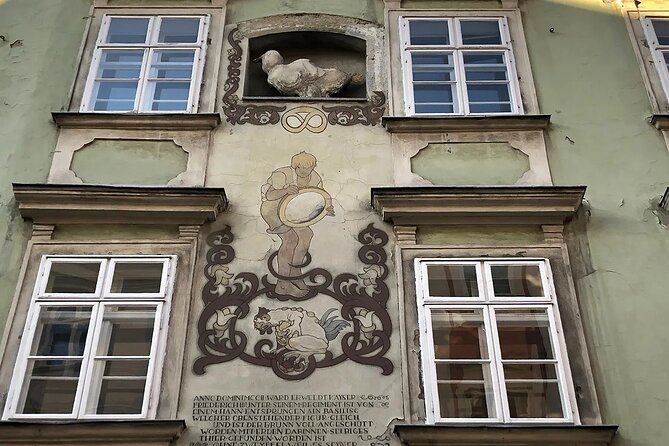
The route includes a medieval alley and a home connected with a famous legend. Narrow historic lanes are useful settings for this kind of tour because they make the city feel less polished and more layered.
You may find that the smallest locations produce the best moments. A major landmark can explain public history, but an old alley can suggest how ordinary people moved through the city, spread rumors, and attached stories to particular doorways or corners.
The exact legend is not identified in the tour details, so I would not book this expecting a specific famous character or event. Instead, treat it as part of the broader pleasure of seeing Vienna from an offbeat angle.
St. Stephen’s Cathedral and the final legends
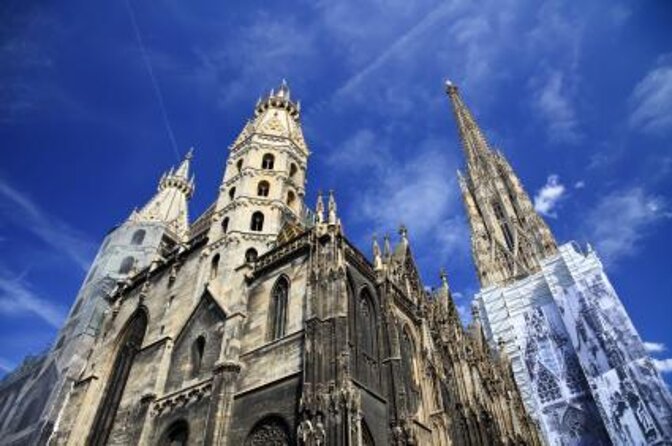
The walk ends at St. Stephen’s Cathedral, Vienna’s main landmark. The cathedral is already one of the city’s essential sights, but the ghost-tour treatment focuses on the spooky legends surrounding it.
That makes the finish satisfying. You end at a place you may already have planned to see, but with a different set of associations. The cathedral becomes more than an architectural highlight or a photo stop. It carries stories, beliefs, and fears from the city’s long past.
Because the tour finishes at Stephansplatz, you can easily continue your evening from there. The information provided confirms the central location and nearby public transportation, but it does not include a specific restaurant recommendation or a promise of cathedral entry.
Lisa’s role in the experience
Lisa is the guide most strongly associated with the tour’s praise. Her strengths are clear: high energy, warm delivery, strong storytelling, and the ability to answer questions without losing the flow of the walk.
That matters more on a ghost tour than it does on a simple point-to-point city walk. The guide has to create mood, explain context, and know when to be funny. A flat delivery would make even the best story feel like a school lecture. Lisa’s style appears to be lively without becoming forced.
She also adds general Vienna advice beyond the ghost stories. That can be useful early in a stay, when you are still deciding what to see and how to spend your time. One particularly positive account describes the guide as helpful with questions about the city’s past and present, not just the planned stops.
The praise is not limited to adults. One family said its children kept discussing the stories the next morning. Another person said the tour was frightening enough to cause nightmares, while the children loved it. That tells you the tone can be genuinely spooky, even though the activity is listed as family-friendly.
A private walk for up to 15 people
The private format is one of the experience’s best features. Only your group participates, so you are not sharing the walk with a large public crowd or being pushed through a fixed group dynamic.
A group of 15 is the maximum, which makes this suitable for an extended family, a group of friends, or a small organization. You can ask questions as they occur, and the guide can respond to the interests of your party. The reviews also describe a pace that felt comfortable and allowed time for questions.
The tradeoff is cost. At $396.48 per group, the value improves as your party gets larger:
- Two people: about $198.24 each
- Four people: about $99.12 each
- Eight people: about $49.56 each
- Fifteen people: about $26.43 each
For a couple, this is a premium evening walk. For a family or group of eight to 15, the price is much easier to justify because you are buying private attention rather than two individual tickets to a standard tour.
What the 90-minute length means
The advertised duration is about one hour and 30 minutes. That is long enough to cover several central locations, but short enough to fit into a busy Vienna itinerary.
I see the length as a strength. You get a focused theme without giving up an entire evening. It also helps families, since younger children may enjoy the stories but lose interest during a much longer walk.
The route is still a walking experience, and the details do not provide a vehicle or seated sections. Wear comfortable shoes and dress for the evening weather. Since the activity starts at 7:30 pm, conditions can change before you finish, especially outside the warmer months.
Who should book this tour?
I would consider it a strong choice for several kinds of visitors:
- Families who want a memorable activity beyond museums and palaces
- First-time visitors who want to connect famous sights with unusual stories
- Repeat visitors looking for a different view of central Vienna
- Small groups who can share the private price
- Anyone who enjoys legends, old crimes, plague history, and spooky folklore
- People who prefer a guide-led walk with room for questions
It may not suit you if you dislike walking at night, prefer strictly documented history with no legends, or want access inside every building mentioned. The tour mixes historical material with ghost stories, so you should enjoy both fact and folklore.
The experience is offered in English. Service animals are allowed, and most people can participate. The supplied details do not promise a fully step-free route, specific seating, or interior access at the churches and other sites, so ask the operator if those points matter to you.
Booking timing and cancellation
The tour is often reserved about 27 days ahead, which suggests that you should not leave a preferred evening until the last minute, especially if you need a particular date for a family group.
Free cancellation is available if you cancel at least 24 hours before the start time. Cancellations or changes made inside that 24-hour window are not accepted for a refund, and the cut-off follows Vienna’s local time.
My verdict: a playful, useful look at old Vienna
I would book the Private Spooky Vienna Ghost Tour if I wanted a central walking tour with personality and a darker theme. The Habsburg burial customs, St. Michael’s catacombs, plague stories, Blood Alley, medieval executions, Augustin, and the legends of St. Stephen’s Cathedral create a varied route rather than one repeated ghost story.
The strongest reason to choose it is the guide. Lisa’s energy and storytelling receive unusually consistent praise, and the private setup gives her room to tailor the evening to your group. The main caution is the price for a small party, plus the need to confirm the meeting arrangements carefully.
For a full group, this looks like good value. For two people, book it because you specifically want a private, story-driven evening, not because it is the cheapest way to see Vienna. If spooky history sounds fun and you like seeing famous places from a less polished angle, this is a smart addition to your Vienna plans.
FAQ
Where does the Private Spooky Vienna Ghost Tour begin?
The tour begins at Helmut-Zilk-Platz, 1010 Wien, Austria.
What time does the tour start?
The scheduled start time is 7:30 pm.
Where does the tour end?
The tour ends at St. Stephen’s Cathedral, Stephansplatz 3, 1010 Wien, Austria.
How long is the tour?
The experience lasts approximately one hour and 30 minutes.
How many people can join the private tour?
The private tour can include up to 15 people in your group.
Is the tour offered in English?
Yes. The tour is offered in English.
Is this ghost tour suitable for children?
Yes. It is described as family-friendly and suitable for all ages. The stories are still spooky and can include subjects such as plague, death, and medieval executions.
What sights and subjects are included?
The route includes Habsburg burial rituals, St. Michael’s Church and its aristocratic catacombs, the Plague Column, Blood Alley, Augustin’s home, a former medieval execution site, a medieval alley linked to a famous legend, and spooky legends connected with St. Stephen’s Cathedral.
Can I cancel for a full refund?
Yes. You can cancel for a full refund up to 24 hours before the experience begins. Changes or cancellations made less than 24 hours before the start time are not accepted for a refund.
Just added in Vienna
- Vienna: Austrian Wine Tasting Experience★ 4.2 · 2 reviews
- World War II History Vienna Old Town Private Walking Tour★ 4.8 · 9 reviews
- Vienna_ Meet Beethoven Life Private Guided Walking Tour★ 5.0 · 1 review
- Vienna: Wine Tasting Tour★ 4.8 · 61 reviews
- Vienna: Wine Tasting E-Bike Tour★ 4.9 · 46 reviews
- Vienna: Wine Tasting at Schönbrunn Palace★ 4.3 · 71 reviews
- Vienna: Winery and Wine Tasting Tour with a Wine Expert★ 5.0 · 5 reviews
- Vienna: Concert by the Vienna Baroque Orchestra★ 4.6 · 56 reviews
Private, compared.
Wine Tasting Experience in a Private Wine Cellar
Read our review →
Private Day Tour Trip Salzburg Hallstatt and Melk from Vienna
Read our review →
Private Day Tour of Hallstatt and Salzburg from Vienna
Read our review →
Private Hidden Vienna Walk — Stories Behind Quiet Corners
Read our review →