
Reviewed · CITY TOURS
Private Jewish Vienna Inner City Tour
Vienna’s Jewish story reaches far beyond one memorial. This private walk connects medieval settlement, imperial life, modern thought, the Shoah, and today’s community in a compact city-center route. I especially like the private format, which lets you shape the conversation, and the wide range of languages, including English, German, Hebrew, French, Italian, and Spanish.
The route also makes two valuable connections: Jewish figures helped shape Vienna’s music, ideas, commerce, and politics, while places such as Judenplatz and the Stadttempel show how much has been lost and rebuilt. My main caution is that museum and synagogue admission is not included, so this is best understood as a guided outdoor introduction rather than a complete museum visit.
In This Review
- Key points to know before booking
- Why this two-hour walk matters
- Beginning at the Judenplatz Holocaust Memorial
- Medieval Vienna at Judenplatz and Hoher Markt
- The Jerusalem-Stiege and Desider-Friedmann-Platz
- Seeing the Stadttempel and Vienna’s religious life
- The Vienna Wiesenthal Institute for Holocaust Studies
- Graben, Kohlmarkt, and Jewish court suppliers
- The Jewish Museum Vienna as the final stop
- The people behind Vienna’s Jewish story
- What the private format adds
- Timing, language, and practical details
- Who should book this Jewish Vienna tour?
- Should you book the Private Jewish Vienna Inner City Tour?
- FAQ
- Where does the tour begin?
- Where does the tour finish?
- How long does the experience last?
- How much does the tour cost?
- Are museum and synagogue tickets included?
- Is this a private tour?
- What languages are available?
- Is the tour wheelchair accessible?
- Can the itinerary be changed?
Key points to know before booking
- Judenplatz sets the tone: The tour begins at the Holocaust Memorial, then reaches the medieval Jewish quarter and its central square.
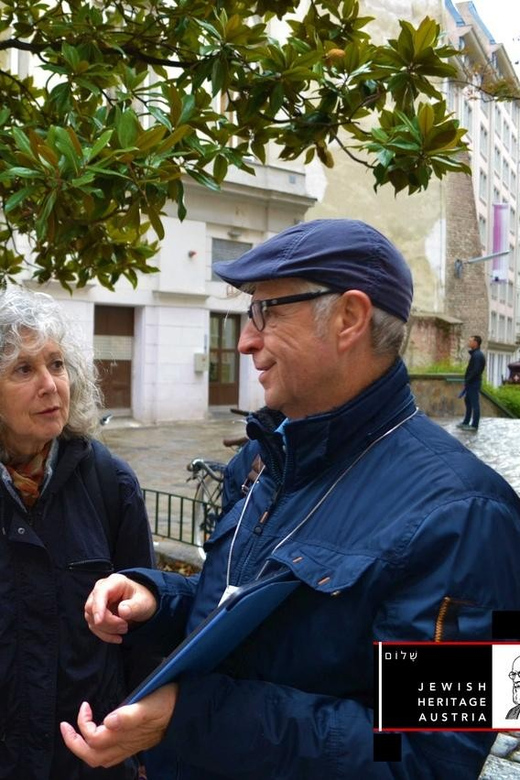
- A private guide means flexibility: Your group can request changes to the route, within the two-hour time limit.
- The history spans centuries: Expect medieval settlement, Habsburg court suppliers, the Fin de Siècle, the interwar years, the Shoah, and contemporary Jewish Vienna.
- Several major institutions are viewed from outside: Entry to the Jewish Museum, Stadttempel, Vienna Wiesenthal Institute, and other sites costs extra.
- The price works best for a group: At $434 for up to 10 people, the per-person cost drops to $43.40 when fully booked.
- It is a true city-center walk: The route is wheelchair accessible and links many stops without requiring public transport.
Why this two-hour walk matters
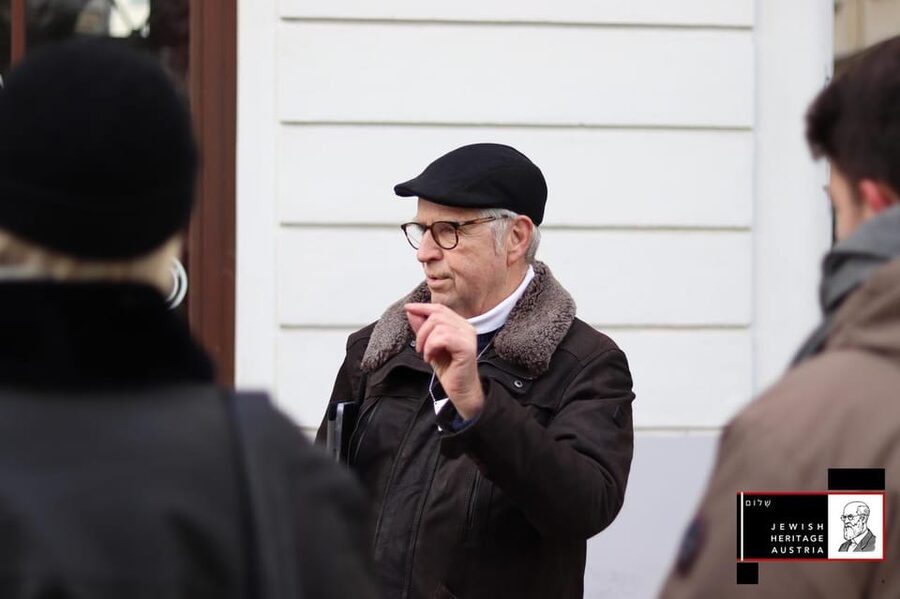
Vienna can look polished and imperial at first glance. Its Jewish past is easy to miss unless someone points out the addresses, squares, stairways, and memorials tucked into the center. This tour gives you that missing layer.
I like the way the route moves through several periods rather than treating Jewish Vienna as a story that begins and ends with the Shoah. You start with the first Jewish settlers in medieval Vienna, then follow the community through imperial service, intellectual life, political upheaval, persecution, and renewal.
That broad timeline matters. It shows Jewish Austrians not only as victims of history, but also as merchants, artists, suppliers, writers, thinkers, religious leaders, and political figures. The tour specifically brings in Sigmund Freud, Gustav Mahler, and Theodor Herzl, along with the Jewish court suppliers whose work helped furnish the Habsburg court.
The experience lasts two hours, so the guide must keep the pace moving. That is useful if you have limited time in Vienna, but it also means you will not receive a full lecture at every stop. Think of this as a strong orientation with historical depth, not a replacement for visiting every museum on the route.
A few more options to weigh up in Vienna
- Vienna: Vivaldi’s Four Seasons Concert in Karlskirche
★ 4.7 · 14,951 reviews - Vienna: Spanish Riding School Training
★ 3.9 · 9,281 reviews - Vienna: Schönbrunn Palace & Gardens Skip-the-Line Tour
★ 4.7 · 7,739 reviews
Beginning at the Judenplatz Holocaust Memorial
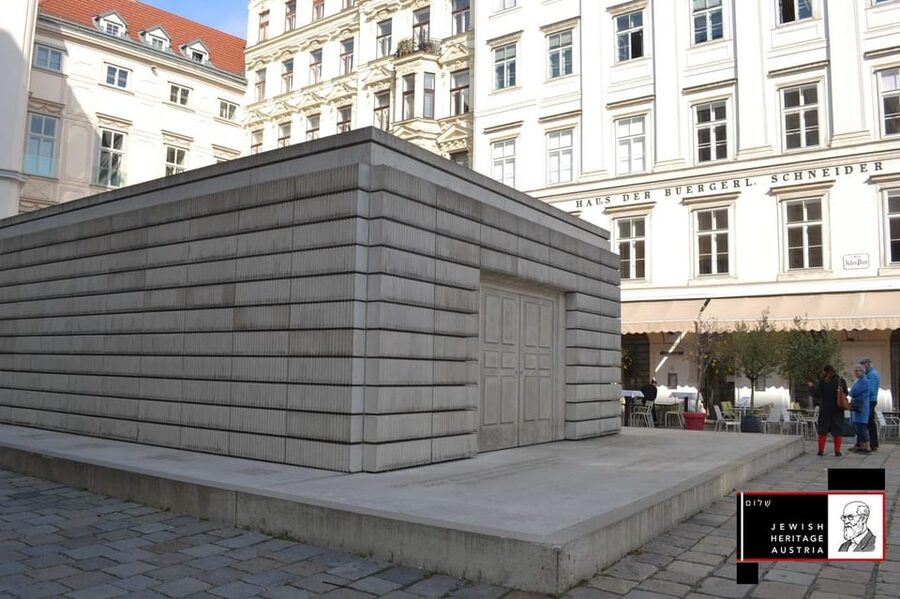
The starting point is the Judenplatz Holocaust Memorial, also known as the memorial to the Austrian Jewish victims of the Shoah. Its stark form immediately changes the mood of the walk.
Beginning here is a deliberate choice. You are not eased into the subject with a general introduction to Vienna. Instead, you confront the destruction of Austrian Jewish life first, then work backward and forward to understand what came before and what continues today.
At Judenplatz, the guide explains the medieval Jewish quarter and the community that lived here centuries ago. This square is especially important because the memorial shares space with evidence of earlier Jewish life, including the medieval synagogue excavation below the plaza.
The scheduled visit here lasts about 25 minutes, making it the longest single stop. That gives your guide room to explain the Shoah, the medieval community, and the meaning of the memorial without rushing every sentence.
I would arrive ready for a serious conversation. This is not a light sightseeing stop, and the subject can be painful. Its value comes from facing Vienna’s past clearly, without separating the city’s elegance from the violence that took place within it.
Medieval Vienna at Judenplatz and Hoher Markt
From Judenplatz, the route continues through the old center toward Hoher Markt. You see how close the Jewish quarter was to the civic and commercial heart of Vienna.
The 10-minute stop at Hoher Markt helps place Jewish life within the wider medieval city. Jewish residents contributed to trade and the economy, yet their position remained vulnerable to the decisions of rulers, religious authorities, and city leaders.
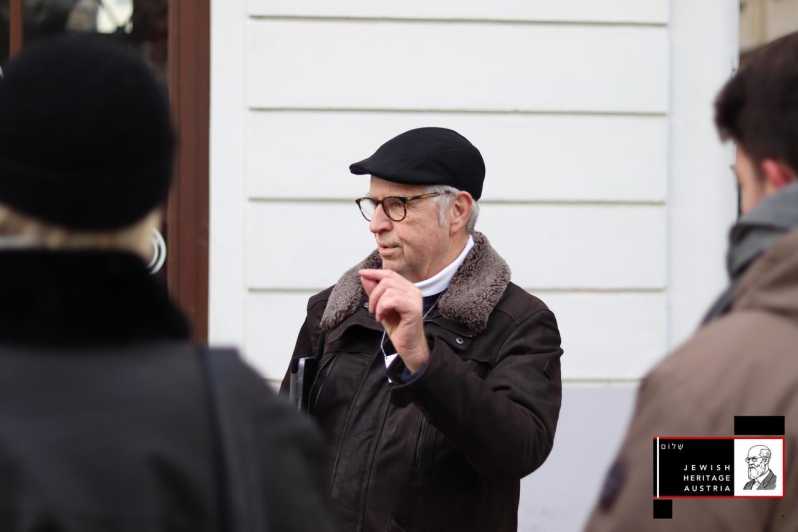
This is where a guide adds real value. A casual walk through central Vienna can make the old town feel like one continuous collection of grand buildings. A Jewish history guide helps you notice how power, commerce, religion, and daily life overlapped in a very small area.
The stop is brief, so do not expect an extended examination of every building. Its role is to connect the memorial and square with the wider city around them.
The Jerusalem-Stiege and Desider-Friedmann-Platz
The short stop at Jerusalem-Stiege lasts about five minutes. Even with limited time, this location adds another layer to the route by linking Vienna’s Jewish story with names and references that reach beyond Austria.
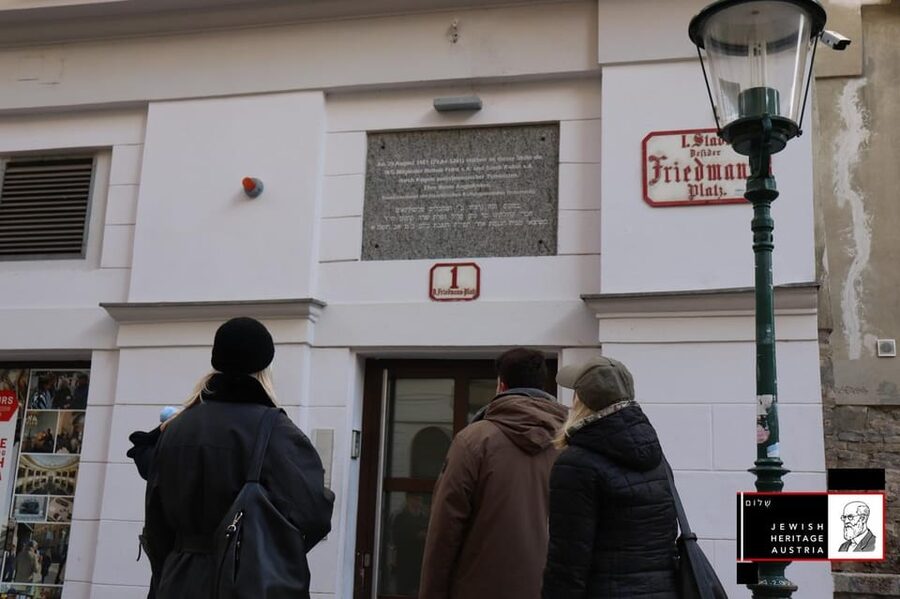
Next comes Desider-Friedmann-Platz, where the guide spends about 10 minutes. The square is named for Desider Friedmann, a major figure in Austrian Jewish communal life. Here, the tour can turn from medieval history toward the institutions and people who shaped Jewish Vienna in the modern period.
These smaller stops are useful because they keep the walk from becoming a parade of only famous museums. You are also following names, public spaces, and local memory through the streets.
The tradeoff is simple: five or ten minutes is enough for context, but not enough for a long historical discussion. If a particular place interests you, ask your guide to spend more of the available time there. The private format makes that request possible.
More city tours in Vienna:
- Vienna: Guided Walking Tour of City Center Highlights
★ 4.7 · 4,989 reviews - Vienna: City Cruise with Optional Lunch
★ 3.4 · 3,982 reviews - Vienna: City Cruise
★ 3.3 · 2,978 reviews - Vienna: Guided Walking Tour of City Highlights & Hidden Gems
★ 4.9 · 2,180 reviews
Seeing the Stadttempel and Vienna’s religious life
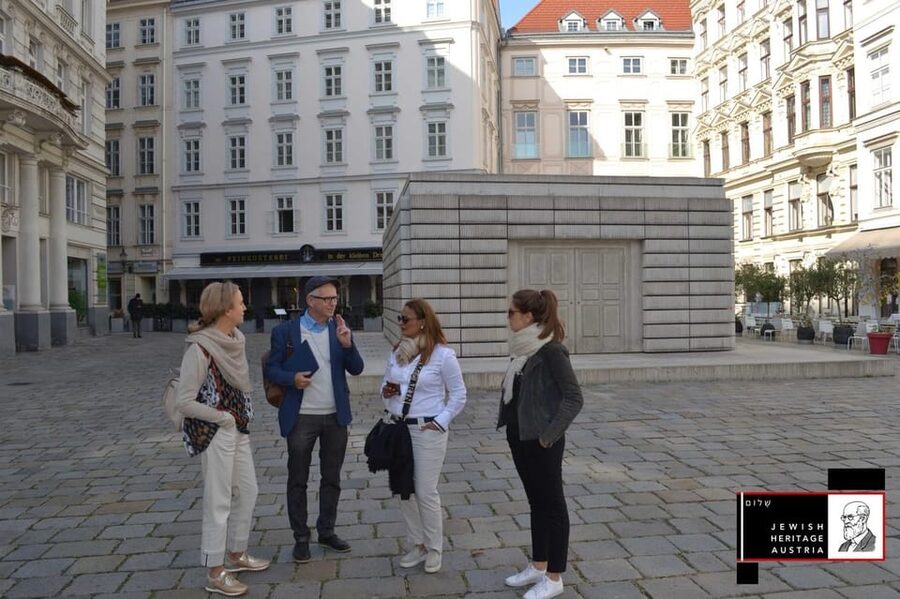
The Stadttempel receives about 15 minutes on the route. This is Vienna’s main synagogue and one of the most important Jewish religious sites in the city.
The tour listing treats this as a sightseeing stop, and entry is not included. You should not assume that the walking tour takes you inside for a service or a guided visit. If you want to see the interior, you will need to arrange and pay for a separate visit.
Even from the outside, the synagogue helps explain the place of Jewish religious life within Vienna. It also gives the guide an opportunity to discuss the survival of Jewish institutions and the continuing presence of Jewish life in the city.
The exact access arrangements for a separate visit are not provided here, so check current conditions before planning your day around entry. For the walking tour itself, the important point is that the Stadttempel is part of the story, but not an included indoor attraction.
The Vienna Wiesenthal Institute for Holocaust Studies
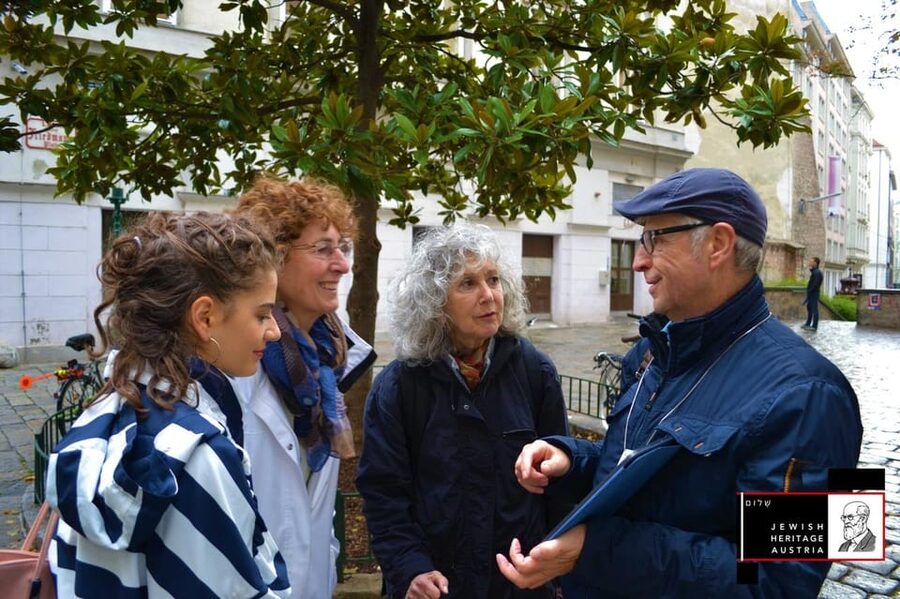
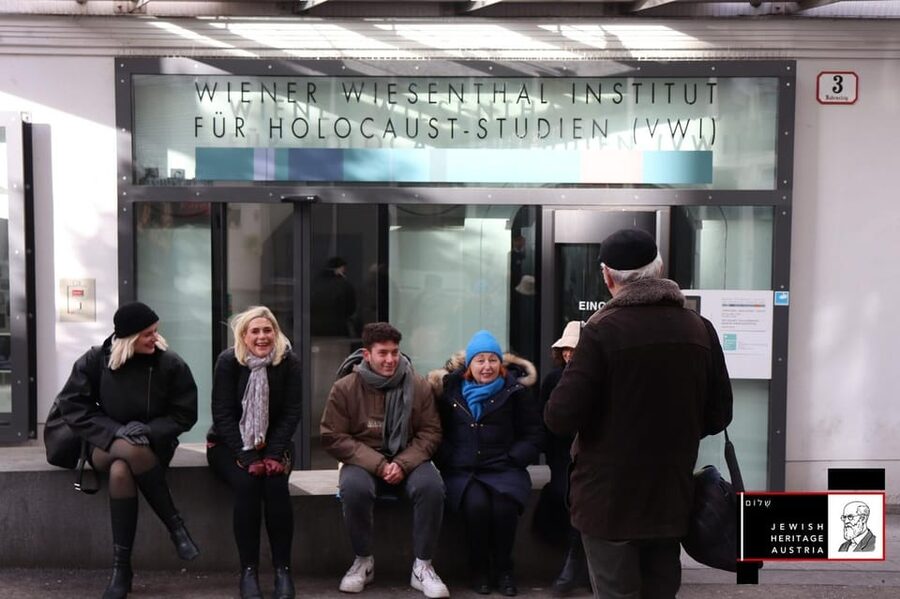
The route then passes the Vienna Wiesenthal Institute for Holocaust Studies, with about 10 minutes set aside for sightseeing.
The institute is tied to the study and documentation of the Holocaust, making it a natural continuation after Judenplatz. The guide can help connect a public memorial with the ongoing work of research, remembrance, and historical accountability.
Again, this is not an included institute tour. You are seeing the site as part of the walking route, not receiving admission to its programs or exhibitions.
I appreciate this distinction because it keeps expectations clear. A two-hour walk can introduce you to the city’s key Jewish locations, but serious study requires more time. If the subject is central to your visit, you may want to return separately for a museum or institute visit.
Graben, Kohlmarkt, and Jewish court suppliers
The walk next reaches Graben and Kohlmarkt, two of Vienna’s best-known central streets. These are major shopping and ceremonial areas today, surrounded by the grand architecture associated with imperial Vienna.
Here, the guide discusses Jewish court suppliers and their role in serving the Habsburg dynasty. This is one of the more unusual parts of the tour because it links Jewish economic activity directly to the splendor of the imperial court.
Court suppliers provided high-quality goods and services to the ruling household. Their work helped shape the material world of the Habsburg court, even as Jewish communities faced restrictions and prejudice at different times.
The point is not to turn Vienna’s imperial display into a simple story of cooperation. The relationship between Jewish residents and the monarchy was complex. Jewish professionals could gain status and opportunity while antisemitism remained a serious force.
Graben and Kohlmarkt also help you read the city with fresh eyes. You are walking through streets most people associate with luxury shops and imperial ceremony, while hearing about the Jewish people whose labor and enterprise supported that world.
The Jewish Museum Vienna as the final stop
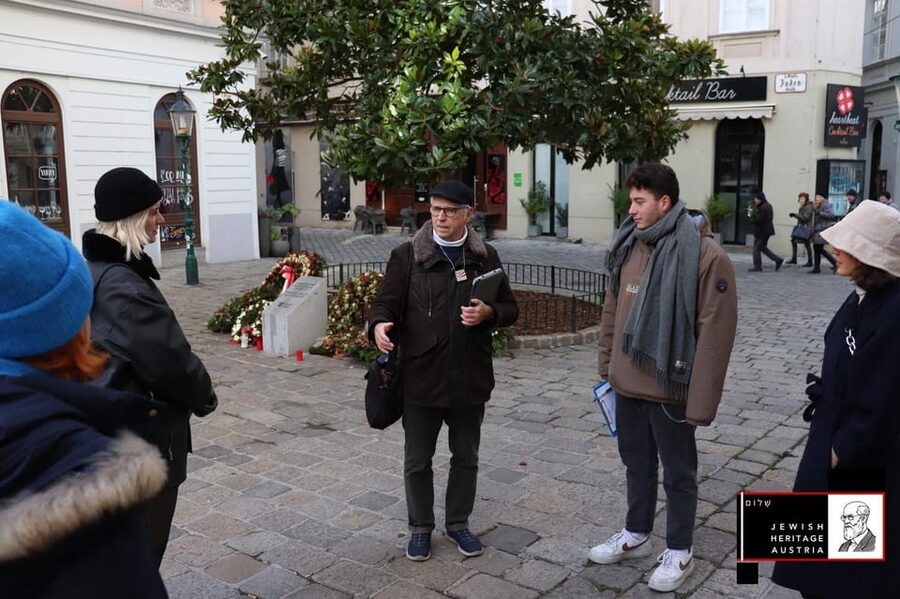
The tour finishes at the Jewish Museum of the City of Vienna, often called the Jewish Museum Vienna. The route gives you a brief sightseeing stop of about 10 minutes, but admission is not included.
This is an important practical detail. The museum is not simply the indoor ending of the walk. You need a separate ticket or tour if you want to enter. The walking experience can leave you with useful context before a museum visit, which may make the exhibits easier to understand.
The museum is described as holding artifacts and stories about Austrian Jewry. After walking through Judenplatz, Hoher Markt, the Stadttempel area, and the central streets, you will have a clearer sense of why those objects and accounts matter.
If you have only two hours in your schedule, ending here is convenient. You can continue with a museum visit if time and opening hours allow, or return another day with the historical framework already in place.
The people behind Vienna’s Jewish story
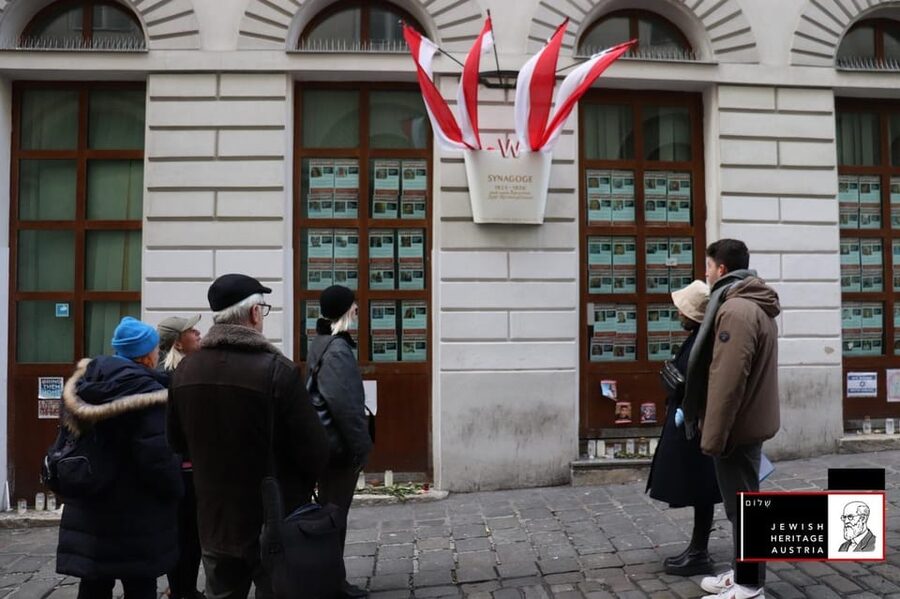
One strength of this tour is its attention to individuals. Vienna’s Jewish history becomes easier to remember when it is connected to real lives and work.
Sigmund Freud represents the city’s role in modern psychology and intellectual life. Gustav Mahler points to the Jewish contribution to Vienna’s musical culture. Their names also place Jewish Vienna within the wider Fin de Siècle period, when the city was full of artistic experimentation, new ideas, and social tension.
Theodor Herzl adds a political dimension. As the founder of modern Zionism, he connects Vienna with a movement that changed Jewish history far beyond Austria.
The guide also brings attention to less familiar figures, such as Jewish court suppliers. That balance is welcome. A tour based only on famous men can feel narrow, while a tour that includes business, religion, public memory, and civic life gives you a fuller view of the community.
The interwar period is another key part of the discussion. Vienna was a center of modern thought, but it was also marked by political conflict and growing antisemitism. Understanding that tension helps explain why the Shoah was not an isolated break from an otherwise peaceful past.
What the private format adds
This is a private group of up to 10 people, with a guide reserved for your party. That changes the experience in practical ways.
You can ask questions without waiting for a large group to catch up. You can also request changes to the itinerary, as long as they fit within the two-hour period. The provider specifically invites you to contact them if you want to adjust the route.
That flexibility is valuable for families, small groups, and visitors with a particular interest in genealogy, religious history, architecture, the Shoah, or modern Vienna. A guide may be able to spend more time on the subjects that matter most to you.
The limitation is price. The total cost is $434 per group, not $434 per person. For 10 people, that works out to $43.40 each, which is reasonable for a private guide in central Vienna. For two people, the cost is $217 each, so a small private group must decide how much personal attention is worth.
The price includes the walking tour and value-added tax. It does not include admission to the Jewish Museum Judenplatz, the Stadttempel Synagogue, the Vienna Wiesenthal Institute for Holocaust Studies, or the Jewish Museum on Dorotheergasse.
Timing, language, and practical details
The walking route takes two hours and begins at the Judenplatz Holocaust Memorial. It ends at the Jewish Museum of the City of Vienna.
You should bring a passport or identification card. The tour is wheelchair accessible, which is helpful for a route through the central city, though the guide can give the best practical advice if you want to adjust the stops.
Live guiding is available in German, English, Hebrew, French, Italian, and Spanish. Hebrew is a particularly useful option for visitors seeking a Jewish historical perspective in their first language, while English makes the experience accessible to most international visitors.
The activity allows cancellation up to 24 hours before the start for a full refund. You can also reserve now and pay later, which helps if your Vienna schedule is still changing.
I would schedule this early in your stay if Jewish Vienna is a major interest. The walk provides a useful map of places to revisit, especially the museums and synagogue. If you already know the city center well, you can use the private format to focus more tightly on the subjects you care about.
Who should book this Jewish Vienna tour?
I would recommend it to anyone who wants Jewish history to be part of a first visit to Vienna rather than a separate side trip. The route is central, compact, and serious without requiring a full day.
It suits families with older children, small adult groups, heritage travelers, students, and visitors interested in the relationship between Jewish life and the Habsburg city. The multilingual guide option also makes it a practical choice for international groups.
It may be less suitable if you want extensive indoor visits. The tour passes several important institutions, but admission is not included. You should budget extra time and money if you want to enter the museums, synagogue, or institute.
It is also not a casual sightseeing stroll. The Shoah is central to the story, and the walk asks you to consider both Jewish achievement and Jewish persecution. That seriousness is part of its value, but it is worth knowing before you book.
Should you book the Private Jewish Vienna Inner City Tour?
Book it if you want a focused introduction to Jewish Vienna, prefer a private guide, and value the ability to ask questions or alter the route. The strongest parts are the opening at Judenplatz, the connection between Jewish life and imperial Vienna, and the way the tour carries the story into the present.
For a full group of up to 10, the $434 price is easier to justify. For one or two people, compare it with a group walking tour if cost is your main concern.
My practical advice is to treat this as the first chapter of your Jewish Vienna visit. Take the two-hour walk for context, then choose one museum or institution for a separate visit. That combination gives you both the city streets and the deeper evidence preserved indoors.
FAQ
Where does the tour begin?
It begins at the Judenplatz Holocaust Memorial in central Vienna.
Where does the tour finish?
The tour finishes at the Jewish Museum of the City of Vienna.
How long does the experience last?
The private walking tour lasts two hours.
How much does the tour cost?
The price is $434 for a private group of up to 10 people.
Are museum and synagogue tickets included?
No. Entry to the Jewish Museum Judenplatz, Stadttempel Synagogue, Vienna Wiesenthal Institute for Holocaust Studies, and Jewish Museum Dorotheergasse is not included. Tickets and tours can be purchased separately.
Is this a private tour?
Yes. It is a private group experience with a guide for your group, up to 10 people.
What languages are available?
Live guiding is available in German, English, Hebrew, French, Italian, and Spanish.
Is the tour wheelchair accessible?
Yes, the activity is listed as wheelchair accessible.
Can the itinerary be changed?
Yes. The experience is tailored to your group, and you can contact the provider if you want to request changes to the itinerary.
Just added in Vienna
- Vienna: Austrian Wine Tasting Experience★ 4.2 · 2 reviews
- World War II History Vienna Old Town Private Walking Tour★ 4.8 · 9 reviews
- Vienna_ Meet Beethoven Life Private Guided Walking Tour★ 5.0 · 1 review
- Vienna: Wine Tasting Tour★ 4.8 · 61 reviews
- Vienna: Wine Tasting E-Bike Tour★ 4.9 · 46 reviews
- Vienna: Wine Tasting at Schönbrunn Palace★ 4.3 · 71 reviews
- Vienna: Winery and Wine Tasting Tour with a Wine Expert★ 5.0 · 5 reviews
- Vienna: Concert by the Vienna Baroque Orchestra★ 4.6 · 56 reviews
City Tours, compared.
Guided Walking Tour of City Center Highlights
Read our review →
Guided Walking Tour of City Highlights & Hidden Gems
Read our review →
City Sightseeing Tour in an Electro Vintage Car
Read our review →
Skip-the-Line Schonbrunn Palace Guided Tour and Vienna Historical City Tour
Read our review →

Browse the lists this tour appears in