Reviewed · TOURS
Hotrod Vienna Daylight Tour The most famous & fastest Tour Vienna
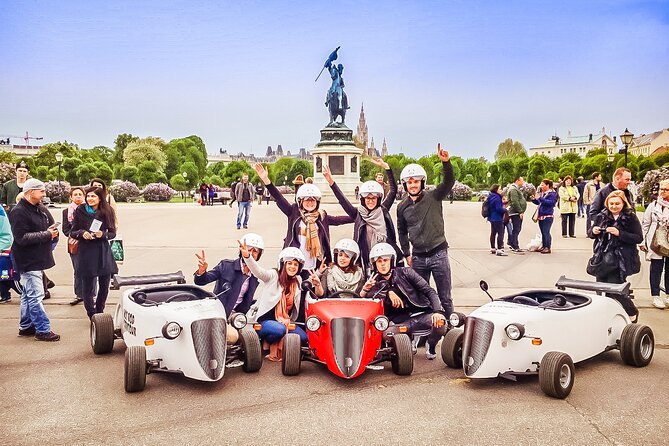
Vienna gets wonderfully weird here. The Hotrod Vienna Daylight Tour lets you drive a tiny, open road vehicle through the city center, with trams, taxis, pedestrians, and grand imperial buildings all sharing the same streets. I like the small groups of no more than 10 people and the fact that every person drives their own car. I also like the cheerful attention you receive from people along the route. You will be photographed, waved at, and watched as if you are leading a very small parade.
The main drawback is simple: this is more driving adventure than sightseeing tour. You must focus on traffic, and the engine noise can make the commentary hard to hear. If you want long stops, detailed history, or quiet time with Vienna’s great buildings, choose a walking tour instead.
In This Review
- Key points before you book
- What the Hotrod Vienna tour really is
- Starting at Judengasse 4
- Schwedenplatz: old Vienna meets the Danube Canal
- The Ringstraße and the first grand views
- Stadtpark and the Golden Johann Strauss Memorial
- Vienna State Opera from behind the wheel
- Hofburg, Heldenplatz, and the imperial center
- Town Hall, Burgtheater, University, and Schottentor
- The photo stop and return to Judengasse
- How safe and demanding is the drive?
- Noise, traffic, weather, and timing
- Is $181.48 a fair price?
- Who should book this tour?
- Should you book Hotrod Vienna?
- FAQ
- How long does the Hotrod Vienna Daylight Tour last?
- Where does the tour start and finish?
- What sights are included on the route?
- Do I need a driving license?
- Is insurance included?
- What happens if the weather is poor?
- Can I cancel for a full refund?
Key points before you book
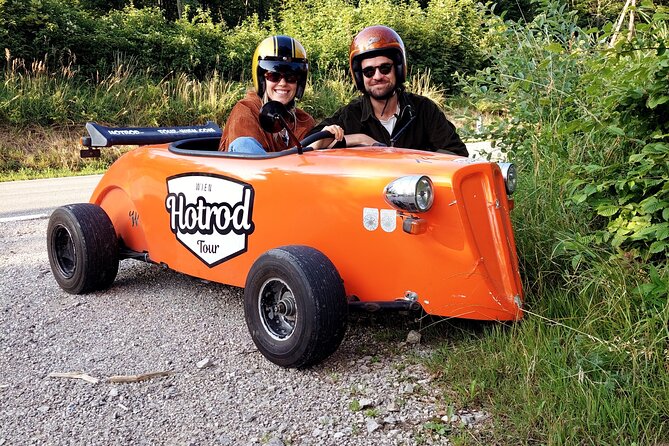
- You drive your own hot rod: One driver per car means nobody sits on the sidelines.
- The route covers central Vienna: Expect Schwedenplatz, the Ringstraße, Stadtpark, the State Opera, Hofburg, Heldenplatz, City Hall, and Schottentor.
- The fun is the attention: People often smile, wave, film, and take photos as the group moves through town.
- Bring your physical driving license: A valid license is obligatory, and the minimum age is 18.
- Allow about 90 minutes: Preparation, safety instructions, walking to the cars, practice, driving, and the photo stop all fit into the scheduled time.
- Budget for the insurance deductible: Comprehensive insurance is included, but the standard accident deductible is €500. A reduction to €250 costs an extra €10.
What the Hotrod Vienna tour really is
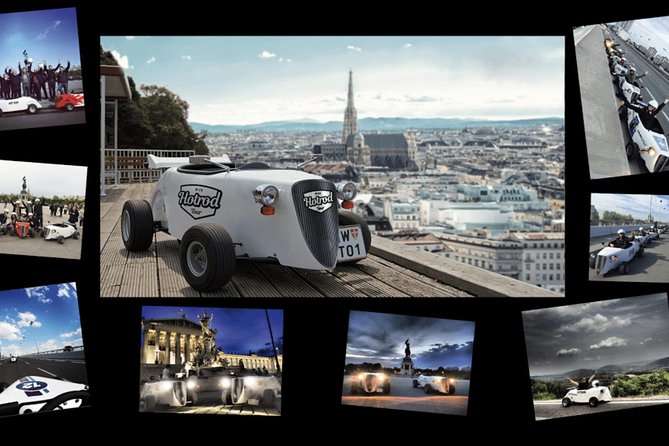
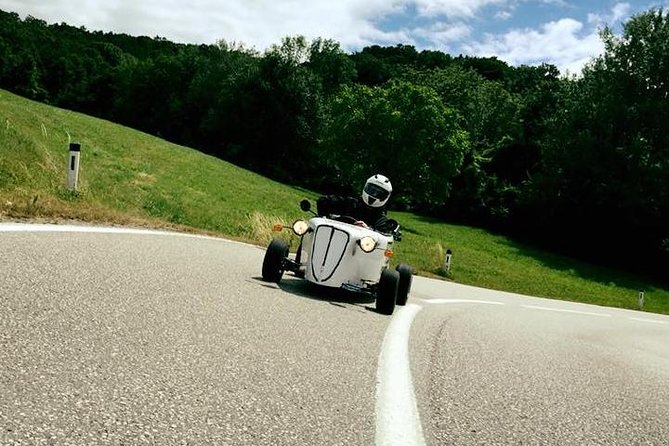
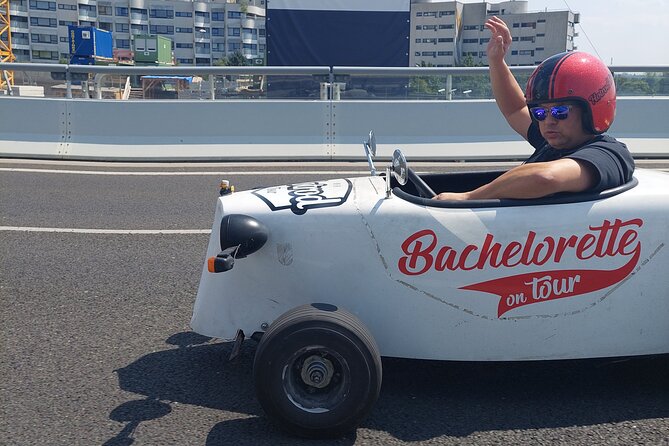
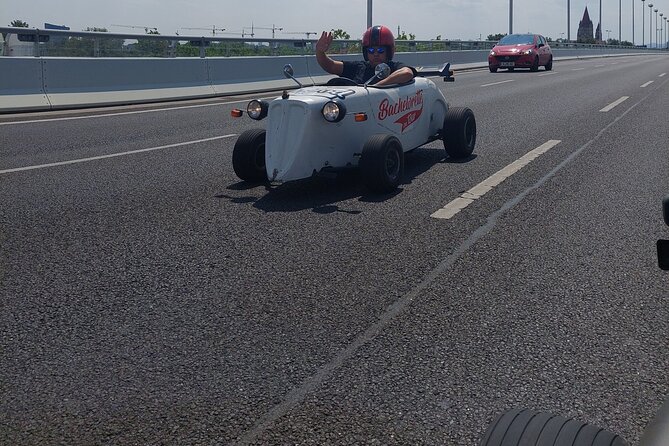
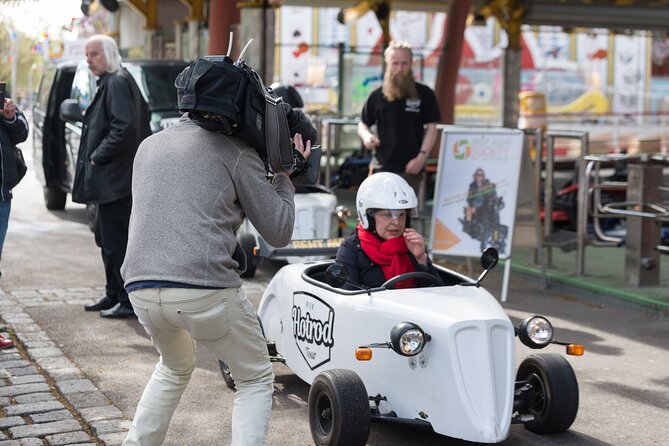
Think of this as a guided city drive with go-kart energy, not a standard sightseeing bus. The cars are low, small, noisy, and built to attract attention. You drive on public roads with other vehicles and trams, following a guide who keeps the group together by headset or walkie-talkie.
That combination gives the tour its charm. You are not simply looking at Vienna through a window. You are handling the steering wheel, watching traffic, and feeling the odd contrast of sitting beside a tram in a car that looks closer to a miniature racer than a normal vehicle.
I would not book this as your only introduction to Vienna. Driving demands concentration, and you will not study every façade as carefully as you would on foot. But as a change of pace after museums and palaces, it is hard to beat.
The tour is offered in English and has a maximum group size of 10. That matters on city streets. A smaller convoy is easier to manage, and the guide can keep a closer eye on the drivers.
A few more options to weigh up in Vienna
- Vienna: Vivaldi’s Four Seasons Concert in Karlskirche
★ 4.7 · 14,951 reviews - Vienna: Spanish Riding School Training
★ 3.9 · 9,281 reviews - Vienna: Schönbrunn Palace & Gardens Skip-the-Line Tour
★ 4.7 · 7,739 reviews
Starting at Judengasse 4
The meeting point is at Judengasse 4 in Vienna’s first district, only a few minutes from the famous Anchor Clock. This is a handy central location near public transportation, and it places you right in the historic core before the engines even start.
The first part is practical. You receive a briefing, a helmet, and a headset or walkie-talkie connection so the guide can communicate with the group. The safety talk is not filler. You need to understand how to handle the car, stay in formation, and deal with ordinary city traffic.
A short practice period in a car park has been part of the operation described by participants. That is useful if you have never driven one of these vehicles. The cars may look simple, but the setting is not a private track. You will soon be sharing Vienna’s roads with cars, bicycles, and trams.
The actual driving portion is generally about an hour, while the full appointment lasts roughly 90 minutes. The extra time covers preparation, walking to and from the cars, and the introductory practice.
Schwedenplatz: old Vienna meets the Danube Canal
The first city section takes you through Schwedenplatz, a busy link between the old town and the newer parts of Vienna. The Danube Canal is close by, with street art, bars, and a more contemporary city feel.
This is a good place to understand the tour’s appeal. Vienna is often presented through imperial buildings and formal squares, but the canal area adds a less polished, more everyday side. From a hot rod, you see it quickly, with the added amusement of people turning their heads to watch the convoy.
Do not expect to stop and explore Schwedenplatz. This is a moving view. You get a quick look at the setting, then your attention returns to the road.
The Ringstraße and the first grand views
As the route moves toward the city entrance and the Ringstraße, the mood changes. The lively canal area gives way to the grand architectural belt built around Vienna’s historic center.
The Ringstraße is one of the city’s defining roads. It curves around the old town and passes major public buildings, parks, palaces, museums, and theaters. Driving it gives you a useful sense of how Vienna’s central districts fit together.
This is also where the difference between a hot rod tour and a conventional city tour becomes clearest. You can cover a lot of ground and see the buildings from several angles, but you will not have much time to stop, read signs, or listen to a long explanation.
The route gives you a fast visual survey. I would use it to mark places you want to revisit later on foot.
A completely different kind of day:
- Vienna: Light of Creation Votive Church Immersive Light Show
★ 4.8 · 6,779 reviews - Vienna Spanish Riding School Guided Tour
★ 4.7 · 6,765 reviews - Vienna: Classical Concert in the World-Famous Musikverein
★ 4.6 · 6,673 reviews - Vienna: Skip-the-Line Sisi Museum, Hofburg and Gardens Tour
★ 4.8 · 5,918 reviews
Stadtpark and the Golden Johann Strauss Memorial
The convoy passes Stadtpark, the green center of the inner city. Its best-known landmark is the gilded monument to Johann Strauss, the composer closely linked with Vienna’s waltz tradition.
The park provides a welcome change from stone façades and traffic. It also shows how carefully Vienna places gardens and open spaces within the central district. From the car, you get a brief contrast between leafy paths, formal monuments, and the surrounding Ringstraße buildings.
This is one of the places where you may wish for more time. The tour includes a photo stop, but not a series of long sightseeing breaks. If the Strauss monument interests you, note its location and return later when you can walk through the park at your own pace.
Vienna State Opera from behind the wheel
The Vienna State Opera is one of the route’s major landmarks and a key stop on any first visit to the city. Its ornate façade and long musical history make it a natural centerpiece of the Ringstraße circuit.
You see the opera house as part of the moving city scene, not as an interior visit. That distinction matters. This tour does not include admission, a performance, or time to examine the building closely.
Still, approaching the opera in a little hot rod is memorable. You are surrounded by elegant architecture while operating a noisy miniature vehicle, an amusing clash of Vienna’s formal and playful sides. The guide supplies commentary through the headset, though engine and traffic noise can interfere.
If the commentary matters greatly to you, try to stay close to the guide and speak up if the audio becomes unclear. Several people found the headsets useful for staying together but less reliable for catching every historical detail.
Hofburg, Heldenplatz, and the imperial center
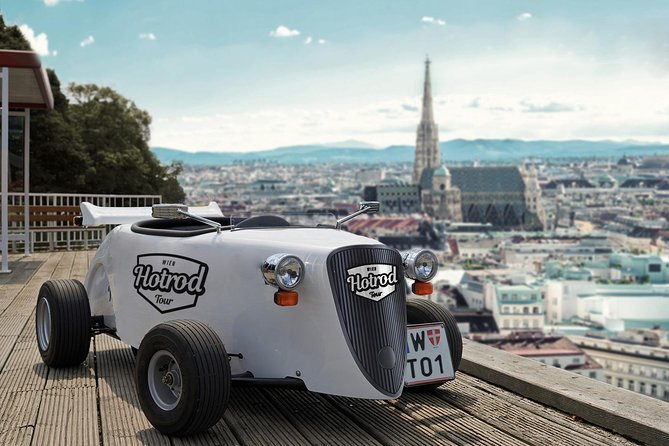
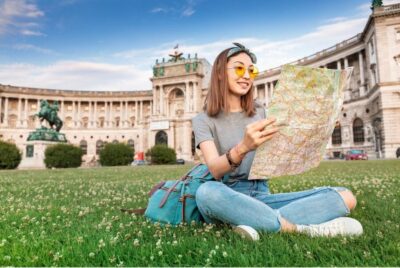
The Hofburg was the Habsburgs’ winter residence and remains the heart of Vienna’s imperial story. The route includes a photo stop with views toward the Hofburg and Heldenplatz, giving you a chance to pause and capture the grand setting.
This is probably the strongest sightseeing moment of the tour. Heldenplatz opens out before the palace, and the large scale of the buildings gives you a clear sense of Habsburg power. Nearby are the Spanish Riding School and the Sisi Museum, both worth returning to if you have time.
The stop is mainly for photographs rather than a guided palace visit. You will not tour the state rooms or learn the full story of the Habsburg court here. Instead, the guide points out the setting while you get a short break from the road.
I like this balance. The tour remains focused on driving, but the photo stop gives you at least one proper pause at a major landmark.
Town Hall, Burgtheater, University, and Schottentor
The route continues along another impressive section of the Ringstraße. Vienna City Hall brings a Gothic silhouette to the city center, while the Burgtheater and University of Vienna add more examples of the grand 19th-century architecture built along the ring.
This part is best enjoyed as a sequence of views. You move past one landmark after another, with the guide identifying what you are seeing. The city’s architecture is large enough to remain impressive even when viewed quickly.
Again, keep your expectations realistic. You are the driver, not a passenger with an uninterrupted view. At intersections and traffic lights, your first job is to drive safely. If you want to learn the details of each building, use this tour as a preview and come back later with a map or walking route.
The oddest moment may be waiting at a traffic light beside a tram full of people. You are low to the ground, visible but tiny, while passengers look down at the unusual cars. That is part of the show.
The photo stop and return to Judengasse
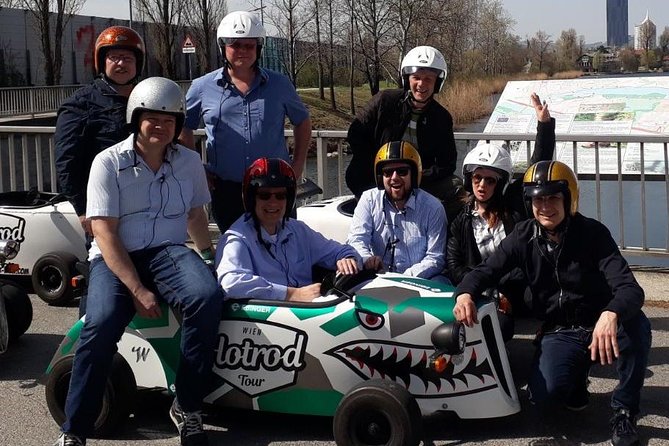
The tour finishes back at Judengasse 4. Before or after the drive, you have a final chance to take photos with the hot rods, which is worth doing. The cars are the main attraction, and a few pictures help preserve the memory better than a rushed shot of a building.
The return route brings the group back to the starting point rather than leaving you in another district. That makes planning easier, especially if you have a dinner reservation or another activity nearby.
Do not expect a dramatic racing finish. This is a supervised road tour, not a track session. The excitement comes from being part of a small convoy in unusual cars, not from reaching extreme speeds.
How safe and demanding is the drive?
You need a moderate level of physical fitness, although the bigger issue is confidence behind the wheel. The cars are low, and you must remain alert in city traffic. A previous go-kart experience may help, but it is not presented as a formal requirement.
Height and fit deserve attention. One person around 5 feet 7 inches could just reach the pedals, while a driver around 6 feet 1 inch reported fitting comfortably. Another person at 6 feet 2 inches found the car very tight. If you are tall or broad, contact the operator before booking rather than assuming the car will suit you.
The guide provides safety instructions, helmets, and communication equipment. Guides praised by name include Alan, Rufat, Ryan, Martin, Mari, Mary, Lela, and Patrick. The most useful guide behavior is not theatrical commentary. It is a clear briefing, a steady pace, and careful management of the group.
The cars are insured with fully comprehensive coverage, but the standard deductible is €500. You can pay €10 to reduce that amount to €250. That does not remove all financial responsibility, so read the terms before you drive.
Noise, traffic, weather, and timing
The cars are loud. That is part of their character, but it can make the headset difficult to hear. If learning about Vienna is your main goal, this may frustrate you. If you mainly want to drive, the limited commentary will matter less.
Traffic also changes the character of the tour. A Sunday or a time with lighter traffic may feel easier and more relaxed. A busy evening tour can demand more concentration and leave less attention for the buildings around you.
Weather is important because the activity requires good conditions. Rain can delay or cancel the tour. If poor weather causes cancellation, you are offered another date or a full refund. I would avoid booking this as the one fixed activity that your entire Vienna schedule depends on.
Wear practical clothing and secure your belongings. The cars are open and the ride can be bumpy. One phone reportedly slipped from a pocket during the drive and was later returned by a helpful passerby. That is a lucky ending, not a storage plan.
Is $181.48 a fair price?
At $181.48 per person, this is an expensive way to see city landmarks. A walking tour, tram ride, or public transport day ticket will give you more historical information for much less money.
The value comes from the driving itself. You are paying for the car, guide, helmet, communication equipment, insurance, preparation, and the novelty of driving through central Vienna. You also get an activity that feels very different from the city’s usual palace and museum program.
I consider the price fair for a special occasion, especially if you love cars or want one memorable activity during a longer stay. I would not call it a bargain, and I would hesitate if your budget is tight or if you mainly want cultural detail.
The 90-minute schedule helps the value. You are not committing half a day, and the central meeting point keeps transport costs and wasted time low.
Who should book this tour?
You are a strong match if you enjoy:
- Driving unusual vehicles
- Go-kart-style fun on public roads
- Small-group activities
- A little attention from the public
- Fast views of central Vienna
- Doing something different from museums and walking tours
It can suit older drivers too. A 75-year-old participant had a great time, and people in their mid-60s described the briefing as reassuring. Age alone is not the concern. You need to be at least 18, hold a driving license, reach the controls, and feel comfortable in traffic.
I would skip it if you want a quiet ride, long photo stops, detailed history, or a relaxed view of the city. I would also think twice if you dislike noisy engines, have trouble hearing through headsets, or feel uneasy driving beside trams.
Should you book Hotrod Vienna?
Book it if you want a memorable driving story, not a traditional tour lesson. The route covers many of Vienna’s major sights, but the real attraction is the unusual vehicle, the small convoy, and the smiles you receive from people on the street.
For the best chance of enjoying it, bring your physical license, choose a time with lighter traffic if possible, check the weather forecast, keep your phone secure, and consider the €10 deductible reduction. Then return later to the Hofburg, Stadtpark, or State Opera if you want a closer look.
My verdict: this is a high-priced but genuinely distinctive Vienna activity. Car lovers should give it serious thought. Everyone else should book only if the idea of driving a tiny hot rod through the imperial center sounds more appealing than another standard sightseeing loop.
FAQ
How long does the Hotrod Vienna Daylight Tour last?
The activity lasts approximately 1 hour and 30 minutes. This includes preparation, the safety briefing, walking to the cars, practice, the drive, and the photo opportunity.
Where does the tour start and finish?
It starts at Judengasse 4, 1010 Vienna, Austria, and returns to the same meeting point at the end.
What sights are included on the route?
The route includes Schwedenplatz, the Danube Canal area, the Ringstraße, Stadtpark, the Vienna State Opera, Hofburg, Heldenplatz, Vienna City Hall, Burgtheater, the University of Vienna, and Schottentor.
Do I need a driving license?
Yes. A driving license is obligatory, and you should bring the physical license with you. The minimum age is 18.
Is insurance included?
Fully comprehensive insurance is included, with a €500 deductible. You can reduce the deductible to €250 for an additional €10.
What happens if the weather is poor?
The activity requires good weather. If it is canceled because of poor conditions, you will be offered a different date or a full refund.
Can I cancel for a full refund?
Yes, if you cancel at least 24 hours before the scheduled start time. Cancellations or changes made less than 24 hours before the start are not refunded or accepted.
Just added in Vienna
- Vienna: Austrian Wine Tasting Experience★ 4.2 · 2 reviews
- World War II History Vienna Old Town Private Walking Tour★ 4.8 · 9 reviews
- Vienna_ Meet Beethoven Life Private Guided Walking Tour★ 5.0 · 1 review
- Vienna: Wine Tasting Tour★ 4.8 · 61 reviews
- Vienna: Wine Tasting E-Bike Tour★ 4.9 · 46 reviews
- Vienna: Wine Tasting at Schönbrunn Palace★ 4.3 · 71 reviews
- Vienna: Winery and Wine Tasting Tour with a Wine Expert★ 5.0 · 5 reviews
- Vienna: Concert by the Vienna Baroque Orchestra★ 4.6 · 56 reviews
Tours, compared.
Schönbrunn Palace & Gardens Skip-the-Line Tour
Read our review →
Skip-the-Line Sisi Museum, Hofburg and Gardens Tour
Read our review →
Skip-the-Line Schönbrunn Palace & Gardens Tour
Read our review →
Guided Walking Tour of City Center Highlights
Read our review →