Reviewed · TOURS
Gems of Vienna-Tour
Vienna reveals its layers one street at a time. I like the way this two-hour walking tour links Roman Vienna, the Late Middle Ages, and the Belle Époque instead of treating the city as one polished imperial postcard. I also like the small group, capped at 10 people, which should make it easier to hear your guide and ask questions. The main consideration is the short length: you will get a focused introduction to central Vienna, not a full survey of the city.
The tour begins at Saint Stephen’s Cathedral at 10:00 a.m. and returns there after exploring the historic center. It is offered in English with a local licensed guide, and the price is $41.70 per person. That is a fair rate for a guided walk if you want context and orientation, though visitors who prefer to wander alone may find two hours and a fixed route restrictive.
In This Review
- Key things to know before booking
- Starting beneath Saint Stephen’s Cathedral
- Roman Vienna beneath the modern city
- From the Late Middle Ages to a quieter church
- Belle Époque Vienna beyond the postcard
- Secret courtyards and passages in central Vienna
- Why the small group changes the walk
- Is $41.70 a fair price?
- Who will enjoy this two-hour walk?
- Practical timing and cancellation advice
- Should you book Gems of Vienna?
- FAQ
- Where does the tour begin?
- What time does the tour start?
- How long does the experience last?
- What language is the tour offered in?
- How many people can join the tour?
- Where does the tour end?
Key things to know before booking
- Roman, medieval, and Belle Époque Vienna in one walk: The route connects several distinct periods rather than focusing only on the grand imperial era.
- A maximum of 10 people: The small group should offer a more personal setting than a large city walk.
- A 10:00 a.m. start at Saint Stephen’s Cathedral: This gives you a clear meeting point in the center and places the tour early in your day.
- Secret courtyards and hidden passages: The walk includes less obvious spaces that you might miss while sightseeing on your own.
- An English-speaking local licensed guide: The guide is central to the experience, especially when explaining how the city changed over time.
- Free cancellation up to 24 hours ahead: You can cancel for a full refund if you meet the stated deadline.
Starting beneath Saint Stephen’s Cathedral
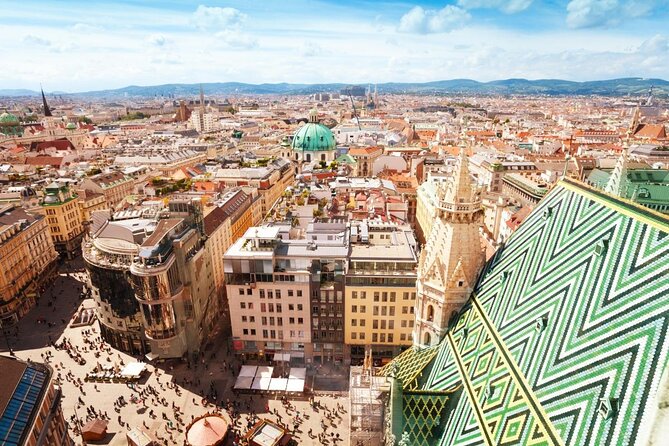
Saint Stephen’s Cathedral is a practical and memorable place to begin. Its address, Dom zu St. Stephan, 1010 Wien, places you in Vienna’s central district, near public transportation and surrounded by some of the city’s best-known streets and buildings.
Starting here gives the tour an immediate sense of place. You are not meeting in an anonymous side street or outside a distant attraction. The cathedral helps you find the right area, and the tour then returns to this same meeting point at the end.
The 10:00 a.m. start also matters. You can use the walk as your first major activity in Vienna, then continue exploring central sights afterward. Since the tour lasts about two hours, it should leave much of the afternoon free. If you have a train, museum reservation, or other timed activity, allow extra time beyond the stated finish.
The meeting point is simple, but you should still arrive early enough to identify your guide and settle in. The supplied information does not give a detailed landmark or exact corner around the cathedral, so do not plan to arrive at the last second.
A few more options to weigh up in Vienna
- Vienna: Vivaldi’s Four Seasons Concert in Karlskirche
★ 4.7 · 14,951 reviews - Vienna: Spanish Riding School Training
★ 3.9 · 9,281 reviews - Vienna: Schönbrunn Palace & Gardens Skip-the-Line Tour
★ 4.7 · 7,739 reviews
Roman Vienna beneath the modern city
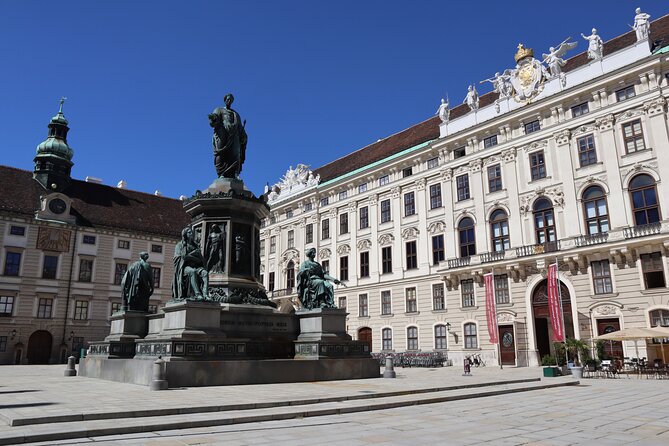
One of the tour’s best features is its attention to Vienna before the imperial image most people know. Your guide explains Roman-era Vienna and how the settlement looked in earlier days, helping you picture a city very different from the one you see today.
That historical layering is valuable because Vienna can otherwise feel almost too polished. Wide streets, grand façades, cafés, and formal squares make it easy to think only about music, monarchs, and nineteenth-century elegance. This walk pushes the clock back much further.
You will not simply hear a list of dates. The point is to connect the older city with the streets and buildings around you. A local guide can explain how traces of earlier periods survive beside later construction, giving the center more depth than a quick photo stop provides.
The tour does not promise a museum visit or an archaeological site with a separate admission. Instead, the Roman material appears as part of the walking experience. That makes it easy to fit into a short visit, though anyone seeking a detailed study of Roman archaeology will need a more specialized experience.
From the Late Middle Ages to a quieter church
The route includes an unknown church from the Late Middle Ages. The church is not named in the supplied details, and that mystery is part of the appeal. Rather than leading you only through Vienna’s headline sights, the walk takes you into a place that you might overlook without local guidance.
The word unknown should not lead you to expect a major cathedral or a grand ceremonial interior. The value is the change of pace. After seeing prominent central buildings, you get a chance to consider a less familiar piece of Vienna’s religious and architectural past.
Entering a church also adds an indoor moment to what is otherwise a street-based walk. Conditions can vary at any historic religious site, so the experience may depend on access at the time of the visit. The available details confirm that you enter a Late Medieval church, but they do not promise a particular interior display, service schedule, or length of time inside.
For you, this part will suit a slower style of sightseeing. If you prefer to tick off famous landmarks as quickly as possible, the unannounced church may feel like a detour. I see it as a useful reminder that the city’s character is not limited to its most photographed buildings.
Belle Époque Vienna beyond the postcard
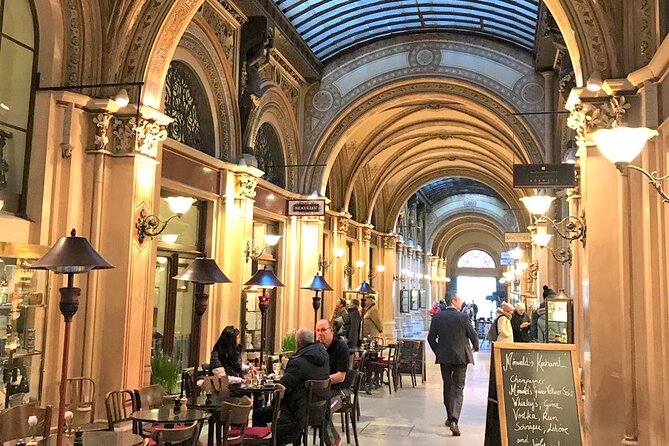
The walk also introduces you to Vienna’s Belle Époque. This period brings the city closer to the familiar image of elegant architecture, cultivated public life, and ornate urban design, but the tour places it within a longer story.
That matters because the Belle Époque did not appear out of nowhere. By seeing it alongside Roman and medieval traces, you can better understand Vienna as a city built in layers. A decorated façade becomes more interesting when you know what came before it and why the center changed over time.
The tour’s strength is comparison. You move between different eras within a compact central area, so the city’s changes become easier to grasp. You are not spending two hours on one historical period or one famous personality. Instead, the walk gives you a broad framework for understanding the center.
The trade-off is depth. With Roman history, medieval buildings, Belle Époque sights, a church, courtyards, and passages all included in roughly two hours, each subject will receive only a portion of the guide’s time. You should book this as an engaging overview, not a specialist architecture lecture.
A completely different kind of day:
- Vienna: Light of Creation Votive Church Immersive Light Show
★ 4.8 · 6,779 reviews - Vienna Spanish Riding School Guided Tour
★ 4.7 · 6,765 reviews - Vienna: Classical Concert in the World-Famous Musikverein
★ 4.6 · 6,673 reviews - Vienna: Skip-the-Line Sisi Museum, Hofburg and Gardens Tour
★ 4.8 · 5,918 reviews
Secret courtyards and passages in central Vienna
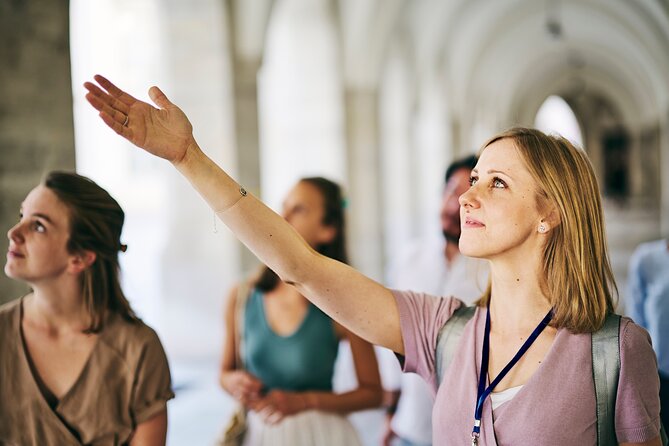
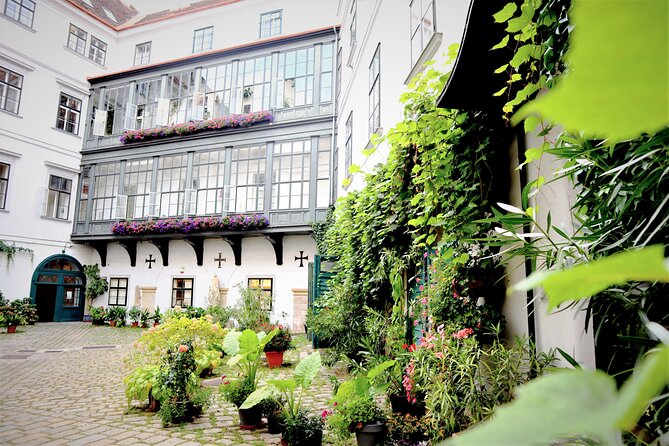
The promise of a secret courtyard and hidden passages gives the tour its most personal flavor. Vienna’s center is full of grand public spaces, but smaller passageways can show you a different side of the city. They offer scale and atmosphere that a large square cannot.
These spaces are also where a local guide earns the fee. You can walk through the central district by yourself, but you may not know which entrance to try or which courtyard is worth a closer look. A guide turns an ordinary-looking doorway into part of the city’s story.
The description does not name the courtyard or passages, so you should not expect a specific landmark that you can research in advance. That lack of detail is not necessarily a problem. It means the experience depends more on the guide’s route and storytelling than on a fixed list of famous stops.
Keep your expectations practical. The tour includes these places as part of a walking route, not as a separate attraction with exhibits or admission. You are paying for access to a more carefully chosen path and for the explanation that connects these smaller spaces to Vienna’s past.
Why the small group changes the walk
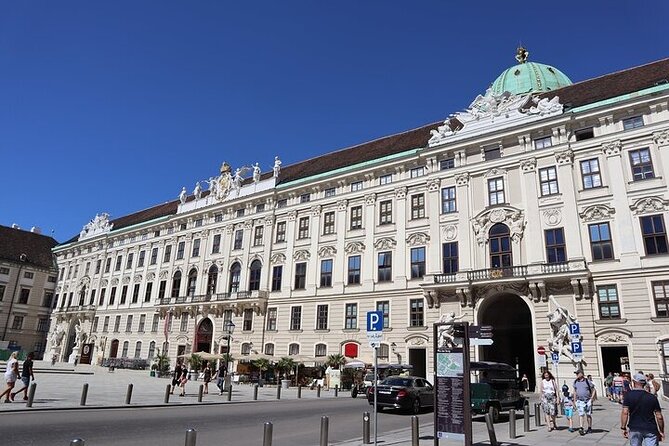
The group has a maximum of 10 people. That is one of the clearest advantages of this experience.
In a compact historic district, a large crowd can make a walking tour tiring. You may end up at the back, miss a comment, or hesitate to interrupt with a question. A group of 10 gives the guide a better chance to speak with you directly and adjust the pace when needed.
The small size also suits the less obvious parts of the route. A narrow passage or quiet courtyard is more pleasant with a handful of people than with a large crowd. You can pay attention to details without feeling as if you are part of a moving parade.
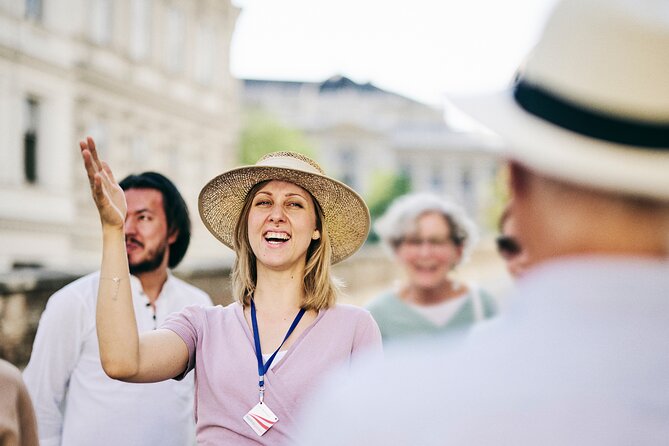
Still, small group does not guarantee a private tour. Other people will join you, and the guide’s style will shape the experience. The available feedback gives special praise to Lisa-Marie, described as funny and knowledgeable by one participant, who called the experience the best tour they had taken. That is a strong sign that guide personality can make a major difference here.
Because only a few public comments are available and the overall rating is 4.1 from nine reviews, I would keep the praise in perspective. Lisa-Marie clearly made a strong impression on at least one person, but guide availability for your specific date is not confirmed. The licensed local guide remains the key variable.
Is $41.70 a fair price?
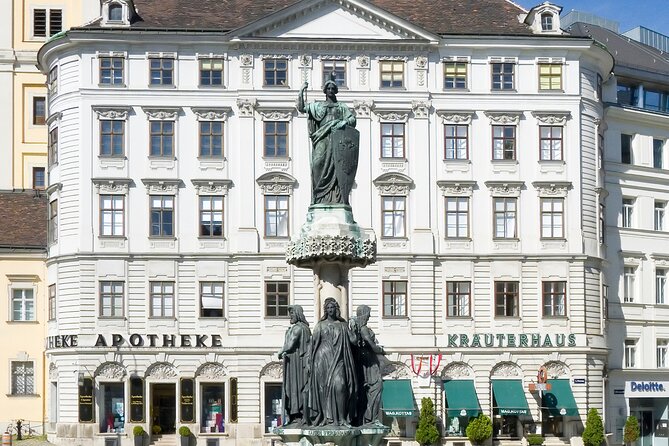
At $41.70 per person, this is not the cheapest way to see Vienna’s center. You can walk around the main streets without paying anything, and many exterior sights are free.
The price becomes easier to justify if you value interpretation. You are paying for an English-language guide, a planned route through several eras, entry into a Late Medieval church, and access to courtyards and passages you might not locate alone. The small group also gives the tour more value than a mass-market walk with dozens of people.
There are no listed admission fees for the two-hour activity. That keeps the cost clear, but it also means you should not expect a major ticketed attraction to be bundled into the price. The tour is primarily about the guide, the route, and the stories.
I would call it good value for a first morning in Vienna, especially if you want a quick orientation before exploring on your own. It is less attractive if your main goal is museum entry, a long interior visit, or an exhaustive look at the city’s monuments.
Who will enjoy this two-hour walk?
I would recommend the tour to you if you want to understand Vienna’s historic core without committing to a half-day activity. It works especially well for a first visit, when you need a sense of how the central district fits together.
History-minded visitors should appreciate the range of periods. The walk moves from ancient Rome to the Late Middle Ages and then to the Belle Époque, giving you several reference points for later sightseeing.
It also suits people who like smaller experiences. A 10-person limit, an English-speaking local guide, and less obvious locations create a more intimate feel than a standard large-group city tour.
You might choose something else if you want a highly specialized subject, such as music history, imperial court life, or detailed Roman archaeology. The route covers a lot in two hours, so its purpose is connection and orientation rather than exhaustive detail.
The activity says most people can participate, but it does not provide specific accessibility details about surfaces, steps, or the church and passages. If you have mobility concerns, ask the provider before booking rather than assuming every section will be easy.
Practical timing and cancellation advice
The activity begins at 10:00 a.m., lasts about two hours, and ends back at Saint Stephen’s Cathedral. Since the route is on foot, wear shoes suitable for city walking and leave room in your schedule for a few minutes of delay at the end.
The tour is offered in English and uses a mobile ticket. Confirmation is received at booking, which makes it a simple option to arrange before your day in Vienna.
Free cancellation is available until 24 hours before the local start time. If you cancel less than 24 hours ahead, you will not receive a refund, and changes made inside that period are not accepted. This is useful flexibility, but only if you watch the deadline carefully.
Should you book Gems of Vienna?
Book this walk if you want a compact, guide-led introduction to Vienna’s central district, with more than the usual grand façades. The best reasons are the Roman context, the Late Medieval church, the Belle Époque architecture, and the chance to see courtyards and passages that are easy to miss.
I would be especially comfortable recommending it to a first-time visitor who values stories over entrance tickets. The small group and the positive impression created by Lisa-Marie add appeal, though the exact guide for your date is not guaranteed.
Skip it if you prefer a self-guided stroll or need a long, detailed tour of one subject. At two hours, this is a smart starting point, not the final word on Vienna. For many visitors, that is precisely the point: get your bearings, notice the city’s layers, then spend the rest of the day following the details that caught your attention.
FAQ
Where does the tour begin?
It begins at Saint Stephen’s Cathedral, Dom zu St. Stephan, 1010 Wien, Austria.
What time does the tour start?
The tour starts at 10:00 a.m.
How long does the experience last?
It lasts approximately two hours.
What language is the tour offered in?
The tour is offered in English.
How many people can join the tour?
The activity has a maximum of 10 participants.
Where does the tour end?
It ends back at the meeting point, Saint Stephen’s Cathedral.
Just added in Vienna
- Vienna: Austrian Wine Tasting Experience★ 4.2 · 2 reviews
- World War II History Vienna Old Town Private Walking Tour★ 4.8 · 9 reviews
- Vienna_ Meet Beethoven Life Private Guided Walking Tour★ 5.0 · 1 review
- Vienna: Wine Tasting Tour★ 4.8 · 61 reviews
- Vienna: Wine Tasting E-Bike Tour★ 4.9 · 46 reviews
- Vienna: Wine Tasting at Schönbrunn Palace★ 4.3 · 71 reviews
- Vienna: Winery and Wine Tasting Tour with a Wine Expert★ 5.0 · 5 reviews
- Vienna: Concert by the Vienna Baroque Orchestra★ 4.6 · 56 reviews
Tours, compared.
Schönbrunn Palace & Gardens Skip-the-Line Tour
Read our review →

Skip-the-Line Sisi Museum, Hofburg and Gardens Tour
Read our review →
Skip-the-Line Schönbrunn Palace & Gardens Tour
Read our review →
Guided Walking Tour of City Center Highlights
Read our review →