Reviewed · TOURS
Fall in Love with Vienna Tour- the best of Vienna on foot!
Vienna rewards curious walkers. The Fall in Love with Vienna Tour packs the city center’s grandest sights, coffee houses, music landmarks, and Habsburg stories into roughly three hours. I like the small-to-medium group size and the way guides such as Nicoletta and Moritz adjust the pace, answer questions, and help with photos. You also get useful ideas for museums, restaurants, concerts, and cafés after the tour.
I especially like the route’s range. You move from Mozart and Saint Stephen’s Cathedral to the Hofburg, Spanish Riding School, Café Central, and the Opera House without paying museum admission along the way. The main caution is the amount of walking, about 5 kilometers according to one guest, and a group of up to 18 can make it harder to hear in crowded streets.
In This Review
- Key points to know before booking
- Why this works as a first look at Vienna
- Mozart, wafers, and Saint Stephen’s Cathedral
- Baroque Vienna around Peterskirche and the plague column
- The Hofburg, Sisi, and imperial Vienna
- Roses, Greek columns, and Vienna’s public buildings
- Beethoven and Vienna’s old coffee-house world
- Spanish Riding School and the imperial heart collection
- Albertinaplatz, Sacher cake, and the Opera
- What the guide adds to the experience
- Walking comfort, timing, and value at $72.59
- Who should book this Vienna walking tour
- Final verdict: a useful and personable introduction
- FAQ
- How long does the Fall in Love with Vienna Tour last?
- Where does the tour start?
- Where does the tour end?
- Is admission to the museums included?
- How large is the group?
- Is the tour available in English?
Key points to know before booking
- A strong first-day overview: The route covers Vienna’s central sights, making it easier to plan the rest of your stay.
- About 25 historic stops: You see palaces, churches, cafés, monuments, museums, and music sites from the outside, with short explanations at most locations.
- Coffee culture is part of the tour: From Julius Meinl and Café Landtmann to Café Central, Demel, and Hotel Sacher, food and café traditions receive real attention.
- Guides add practical help: Nicoletta, Moritz, and Reka are praised for clear advice, photos, questions, and help with local transport.
- An extra café break runs January through November: This 30-minute pause gives you time for coffee, apple strudel, and questions.
- You need comfortable shoes: The route is mostly easy and flat, but Vienna’s cobblestones can be uneven.
Why this works as a first look at Vienna
Vienna can feel like several cities at once. It is an imperial capital, a center of classical music, a café city, and a place where grand public buildings sit close together. This walking tour gives you a useful map in your head before you start exploring on your own.
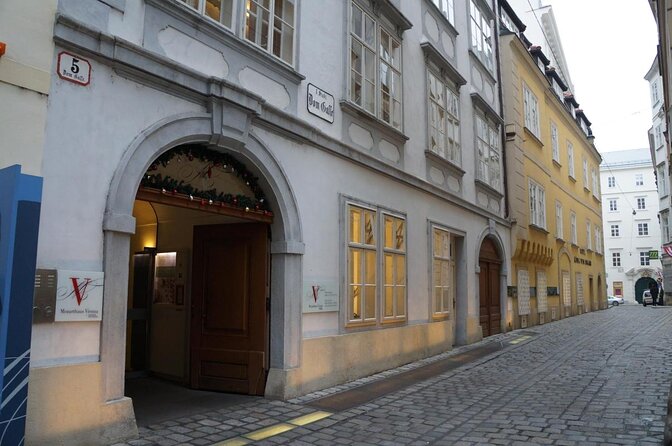
The meeting point is at Mozarthaus Vienna on Domgasse 5, close to Saint Stephen’s Cathedral in the old center. From there, the route crosses the historic heart of Vienna and ends near the State Opera on Herbert-von-Karajan-Platz.
That start and finish are practical. You begin among central sights and finish beside major public transport links and the Ringstrasse. If you take the tour early, you can spend the afternoon returning to the places that caught your interest.
The pace is built around short stops rather than long lectures. Most stops last five to ten minutes, so you hear the key story, take a few pictures, and keep moving. That approach is useful if you want to see a lot without standing in one place for twenty minutes at every monument.
The tradeoff is depth. You will not fully tour the Hofburg, Sisi Museum, Albertina, or any other museum during the walk. Instead, you get orientation and background, then decide where to spend your own time.
A few more options to weigh up in Vienna
- Vienna: Vivaldi’s Four Seasons Concert in Karlskirche
★ 4.7 · 14,951 reviews - Vienna: Spanish Riding School Training
★ 3.9 · 9,281 reviews - Vienna: Schönbrunn Palace & Gardens Skip-the-Line Tour
★ 4.7 · 7,739 reviews
Mozart, wafers, and Saint Stephen’s Cathedral
The opening stop is Mozarthaus Vienna, one of Mozart’s former residences. The guide introduces Mozart’s life in Vienna from outside the building, and the location gives the tour an immediate connection to the city’s music story.
The tour does not include entry to Mozarthaus. That is fine for a first orientation, but you should plan a separate visit if you want rooms, exhibits, and a closer look at Mozart’s years in Vienna. Concert tickets may also be arranged on request, although those tickets are not part of the tour price.
The route then passes a central wafer and candy shop near Saint Stephen’s Cathedral. This is a small but useful food stop, especially if you want an edible souvenir. The shop carries Neapolitan-style wafers and other sweets, with plenty of choice.
Saint Stephen’s Cathedral, known locally as Stephansdom, is one of Vienna’s essential landmarks. The cathedral dates back to the 11th century and dominates the center with its scale and Gothic character. The stop is short, so treat it as an introduction rather than a full church visit.
If the cathedral interests you, note its location carefully. You will be able to return later without difficulty, and the surrounding streets are among the easiest places in Vienna for further independent wandering.
Baroque Vienna around Peterskirche and the plague column
Next comes the Pestsäule, or Plague Column, a tall Baroque memorial connected with Vienna’s plague epidemic. The monument was ordered by Emperor Leopold II as an expression of thanks for divine help during the crisis.
This stop gives the guide a chance to explain how religion and imperial power shaped Vienna’s public spaces. The monument is detailed and crowded with sculptural figures, so a short explanation helps you know what to look for instead of simply passing it by.
Peterskirche provides another quick look at Baroque Vienna. The Roman Catholic church was rebuilt after the original structure was destroyed in the 16th century. Inside, it has the decorative feel of an art gallery, with the theatrical design typical of high Baroque churches.
The tour also touches on Julius Meinl on Kohlmarkt, one of the central coffee stops in the city. This is where the guide explains how coffee culture took root in Vienna. The location sits on one of the city’s most expensive shopping streets, so you get a glimpse of modern luxury alongside older imperial architecture.
St. Michael’s Church follows, with origins reaching back to the 12th century. The route does not present these churches as isolated sights. Instead, it connects them to Vienna’s religious, commercial, and political center.
The Hofburg, Sisi, and imperial Vienna
The Hofburg is the major history section of the tour. This enormous palace complex served the Habsburg rulers for roughly 700 years, and the guide explains where figures such as Elisabeth, Franz Joseph, and Maria Theresa lived.
You hear about the palace’s growth, the people who worked there, and the habits and odd stories associated with the Habsburg court. This human detail matters. Grand palaces can become a blur of marble and gold, but stories about daily life make the buildings easier to understand.
The Sisi Museum is connected with the Imperial Apartments and focuses on Empress Elisabeth. The tour explains her public image and personal story, but entrance is not included. You can return later if you want the museum displays and apartments at a slower pace.
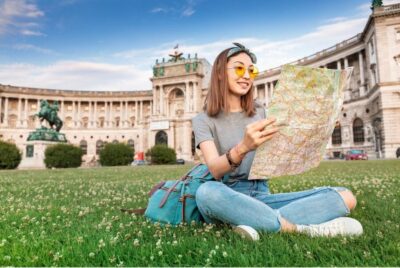
Heldenplatz, the Heroes’ Square, forms another major palace viewpoint. It serves as an entrance to the Winter Palace and is bordered by six museums and the palace’s largest ballroom. From here, the scale of the imperial center becomes clear.
This part of the tour is especially valuable for first-time visitors because Vienna’s palace complex can be confusing. A guide helps you separate the Hofburg’s different sections and decide which museum or interior is worth your time.
A completely different kind of day:
- Vienna: Light of Creation Votive Church Immersive Light Show
★ 4.8 · 6,779 reviews - Vienna Spanish Riding School Guided Tour
★ 4.7 · 6,765 reviews - Vienna: Classical Concert in the World-Famous Musikverein
★ 4.6 · 6,673 reviews - Vienna: Skip-the-Line Sisi Museum, Hofburg and Gardens Tour
★ 4.8 · 5,918 reviews
Roses, Greek columns, and Vienna’s public buildings
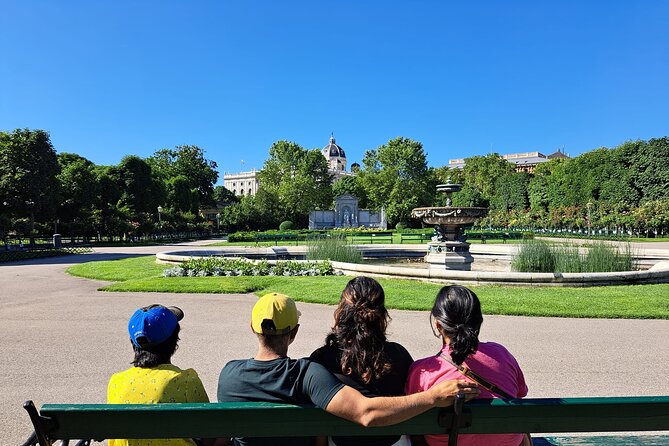
The walk continues into Volksgarten, or the People’s Garden. Created in 1821, it is one of the best-preserved parks in central Vienna and is known as the Garden of the 1000 Roses.
The garden provides a welcome change from stone streets and palace façades. It is also a good place for pictures, especially if the roses are in season. In the middle of the park, a Greek-style temple recalls the Habsburg emperors’ interest in Greece.
The route then reaches the Pallas-Athene-Brunnen in front of the Austrian Parliament. The fountain depicts the goddess Athena and gives the guide another chance to explain the symbols in Vienna’s monumental architecture.
Vienna City Hall comes next, with its elaborate Neo-Gothic design. The guide points out how the building is used for festivals throughout the year, including the city’s largest Christmas market.
Burgtheater, the former royal theater, was built in the 18th century under Empress Maria Theresa. It adds theater to the tour’s growing list of Viennese cultural traditions.
Café Landtmann is nearby. This famous coffee house is associated with Sigmund Freud, and the stop helps place Vienna’s café culture within the city’s intellectual life. You do not need to stop for a drink here, but you can mark it for later.
Beethoven and Vienna’s old coffee-house world
The Beethoven Pasqualatihaus is one of the composer’s former residences. Beethoven lived in several places around Vienna, and this stop gives you a quick connection to that personal side of his career.
Again, the tour focuses on location and story rather than museum entry. If you are a serious music fan, you will need more time elsewhere, but the stop is useful for building a music-themed route through the city.
Schottenkirche dates from the 13th century and includes a monastery and museum. The church helps explain the early religious foundations of Vienna and offers another chance to see the city’s layered architecture.
Palais Ferstel is one of the route’s most attractive architectural passages. The complex includes cafés, restaurants, shops, and a fountain, and you can walk through the passage while the guide points out its design.
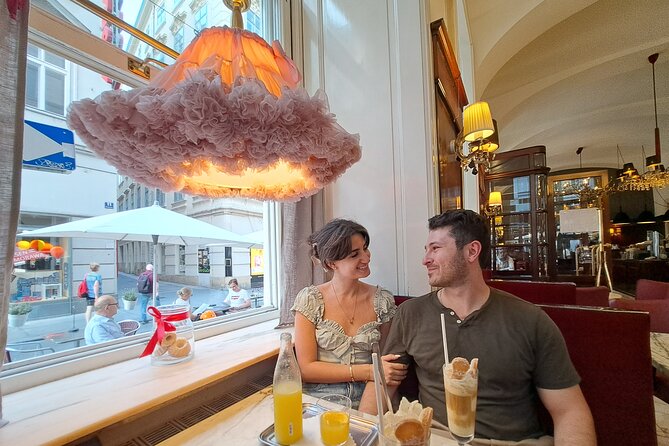
Café Central sits inside an old palace and is among Vienna’s best-known coffee houses. The tour presents it as a place to return to, not as a guaranteed café meal included in your booking. Expect the famous name to bring interest, and possibly a queue, though the supplied tour details do not promise a particular wait time.
Demel Vienna, just outside the Winter Palace, was a favorite cake shop of Empress Elisabeth. The stop is a treat for anyone interested in Viennese sweets, with chocolates, pancakes, and cakes made on site.
The coffee and dessert section is one of the tour’s strongest features. You get more than a parade of monuments. You learn where Vienna’s café traditions fit into daily life and where you might spend time after the walk.
Spanish Riding School and the imperial heart collection
The Spanish Riding School introduces one of Vienna’s oldest equestrian traditions. The guide traces its roots to Emperor Maximilian and explains the school’s role in building a strong military presence.
You hear about the training of the Lipizzaner horses and the importance of this institution to Austrian identity. The walking tour does not include a riding performance or stable admission, so plan separately if you want to see the horses in action.
Augustinerkirche is a smaller church with an unusual imperial connection. A chapel inside holds the hearts of 50 Austrian emperors and empresses, preserved there since the 17th century.
That detail is easy to miss on a normal sightseeing walk. It is exactly the sort of unusual historical fact that makes a guide useful, particularly in a city where grand buildings can distract you from smaller stories.
Albertinaplatz, Sacher cake, and the Opera
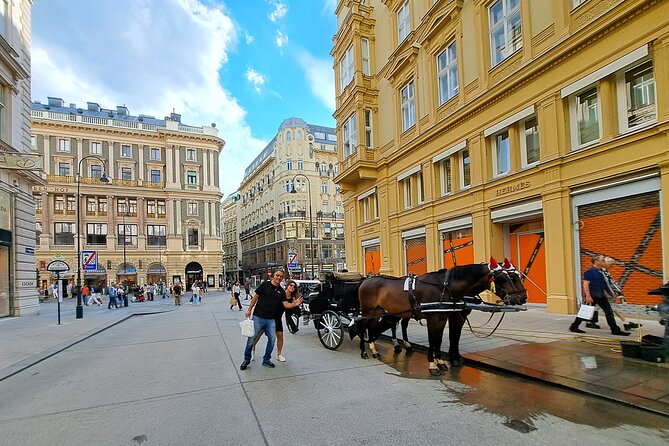
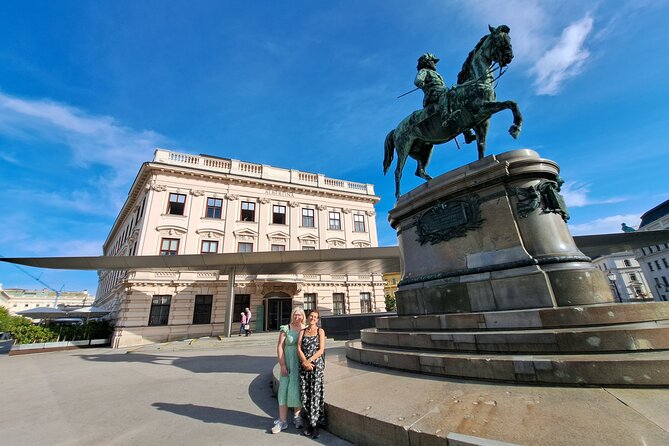
The final stretch reaches Albertinaplatz, the last section of the Winter Palace. The area includes the Albertina museum, a memorial for Vienna’s Jewish community, and the city’s central tourist information office.
This is a practical part of the route. You are close to places where you can gather more information, visit an art collection, or continue exploring central Vienna.
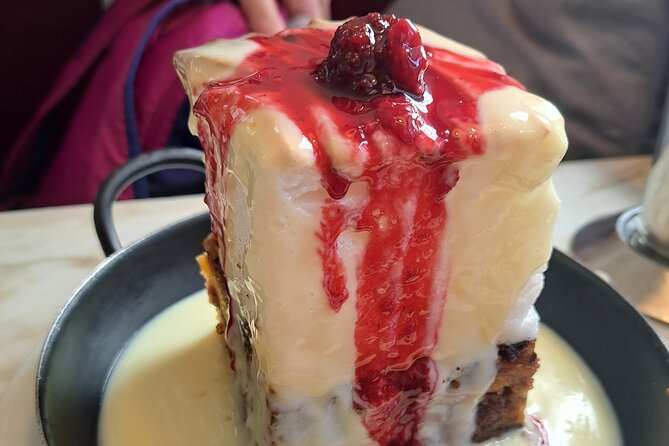
Hotel Sacher is the birthplace of Sacher cake. The guide explains the story behind the dessert and points out where you can taste the original version. Cake is not included, so budget separately if you want to make the stop a snack break.
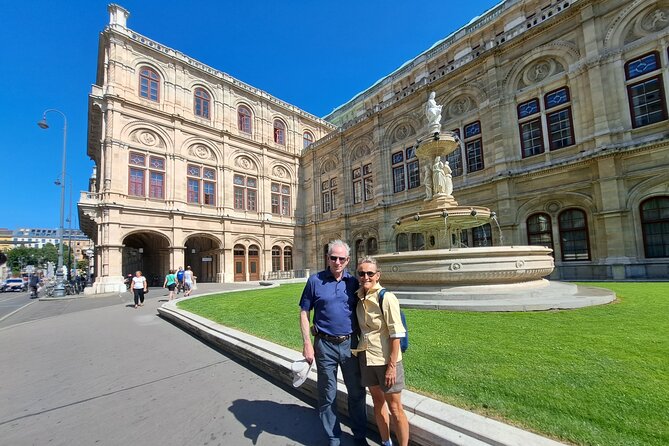
The tour ends at the Wiener Staatsoper, or Vienna State Opera, built in 1869 on the Ringstrasse. The Opera is one of the city’s must-see buildings and attracts large numbers of visitors each day.
Ending here is convenient. You are close to the Ringstrasse, central transit, and several major sights. You can continue walking, find lunch, visit a museum, or return to one of the cafés introduced earlier.
What the guide adds to the experience
The guide is the main reason to choose this walk over a self-guided route. Nicoletta, also spelled Nicoleta in some tour material, receives especially strong praise for her command of Vienna, friendly manner, and ability to tailor the walk to a group’s interests.
Moritz has also been singled out for being considerate with an older member of the group and extending the tour so nobody was left behind. Reka is mentioned for making the experience personal and memorable.
These details point to a useful strength: the guides do more than recite dates. They take pictures, answer questions, suggest places to eat and visit, and offer advice for the days that follow. One guide even helped a group purchase subway tickets after the walk, which is well beyond simply pointing at a station.
The extra information package and city map are practical additions. You can use them to mark museums, cafés, concert halls, and restaurants that you want to explore later.
There is one important group-size warning. The stated maximum is 18 people, and the tour is described as small to medium. That is more personal than a 40 or 50-person group, but it is not the same as a private walk. One person found a group of 17 difficult to hear in crowded areas.
Walking comfort, timing, and value at $72.59
At $72.59 per person, this tour is not the cheapest way to see Vienna’s center. Its value depends on how much you want a guide to connect the sights and help plan the rest of your visit.
You are paying for three hours with an English-speaking guide, a carefully arranged route, practical suggestions, a map, and a printed information package. You are not paying for museum admission, food, drinks, concert tickets, or tips.
I think the price makes the most sense on your first day, especially if you have limited time. A good introduction can prevent wasted hours and help you choose one or two museums instead of trying to see everything.
The route is mostly easy and has no hills, but it covers about 5 kilometers. Cobblestones and crowded streets are the main physical concerns. Wear shoes with solid support, bring water on hot days, and choose the early morning departure if you want cooler streets and fewer crowds.
Morning and afternoon departures are available. The early option has a useful advantage: you may finish before the city becomes busiest. From January through November, the tour includes an extra 30-minute break at a traditional Viennese coffee house. That gives you time to sit, order something, and ask questions without trying to talk while walking.
The tour requires moderate physical fitness. If you need frequent rests, tell the guide at the start. The route can be adjusted in pace, but it remains a substantial walk.
Who should book this Vienna walking tour
I would choose this tour if you are visiting Vienna for the first time, have only a day or two, or prefer a guide to explain the city before you tackle museums alone.
It suits people who enjoy history, music, architecture, coffee houses, and local food traditions in equal measure. Families can also find it useful, especially if an adult wants a clear route and a few interesting stories for children. The short stops keep the walk moving, though younger children still need to manage the distance.
This is less suitable if you want long interior visits. The tour passes the Sisi Museum, Hofburg, Spanish Riding School, Albertina, Mozarthaus, and other sites, but entrance fees are not included.
It may also disappoint you if you expect a silent, highly intimate experience. Groups can reach 18 people, and city-center noise can make listening harder. Ask questions when you can, stay near the guide, and consider booking an early departure.
Final verdict: a useful and personable introduction
I would book Fall in Love with Vienna Tour for the first morning or afternoon of a Vienna stay. Its best qualities are the broad route, the personal guidance, the strong café and music focus, and the useful advice you receive for later.
The tour does not replace a full palace visit, museum tour, or concert. It does something more modest and practical: it helps you understand how Vienna’s center fits together.
Book it if you want to see many landmarks, hear the stories behind them, and leave with a clear plan for the rest of your visit. Skip it if you prefer exploring alone or already know exactly which interiors you want to visit. For most first-time visitors, the combination of coverage and human guidance makes the $72.59 worthwhile.
Free cancellation is available up to 24 hours before the start time. The tour may be rescheduled or refunded if poor weather or an insufficient number of bookings causes cancellation.
FAQ
How long does the Fall in Love with Vienna Tour last?
The guided walking tour lasts approximately three hours. From January through November, an extra 30-minute break at a traditional Viennese coffee house is included.
Where does the tour start?
The meeting point is Mozarthaus Vienna, at Domgasse 5, 1010 Vienna, Austria.
Where does the tour end?
The tour ends on Herbert-von-Karajan-Platz in front of the Vienna State Opera, near the Ringstrasse.
Is admission to the museums included?
No. Entrance fees to museums are not included. The tour visits or passes sites such as the Sisi Museum, Hofburg, Mozarthaus, and Albertina, but you must pay separately if you choose to enter.
How large is the group?
The maximum group size is 18 people. The experience is described as a small to medium-sized group tour.
Is the tour available in English?
Yes. The tour is offered in English and includes a mobile ticket.
Just added in Vienna
- Vienna: Austrian Wine Tasting Experience★ 4.2 · 2 reviews
- World War II History Vienna Old Town Private Walking Tour★ 4.8 · 9 reviews
- Vienna_ Meet Beethoven Life Private Guided Walking Tour★ 5.0 · 1 review
- Vienna: Wine Tasting Tour★ 4.8 · 61 reviews
- Vienna: Wine Tasting E-Bike Tour★ 4.9 · 46 reviews
- Vienna: Wine Tasting at Schönbrunn Palace★ 4.3 · 71 reviews
- Vienna: Winery and Wine Tasting Tour with a Wine Expert★ 5.0 · 5 reviews
- Vienna: Concert by the Vienna Baroque Orchestra★ 4.6 · 56 reviews
Tours, compared.
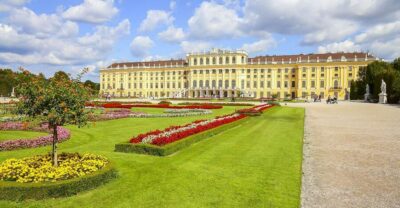
Schönbrunn Palace & Gardens Skip-the-Line Tour
Read our review →
Skip-the-Line Sisi Museum, Hofburg and Gardens Tour
Read our review →
Skip-the-Line Schönbrunn Palace & Gardens Tour
Read our review →
Guided Walking Tour of City Center Highlights
Read our review →